

In This Article
QUICK ANSWER · CAPITAL PLANNING
How Should an Owner Select a Site for a Food Manufacturing Plant?
Screen candidate sites against the approved production and commercial requirements, eliminate unresolved essential constraints, then compare the full investment and operating consequences. Utility availability, wastewater arrangements, logistics, workforce, building fit and expansion conditions belong in the same decision. A low property price or attractive building area is not proof of a suitable food plant site.
Use a matrix with documented evidence, clear score direction and an action register for unknowns. Weighted preference scores should compare viable candidates; they must not compensate for a site that cannot support an essential requirement. The illustrative matrix below uses invented sites and judgments, not real locations or investment recommendations.
A site decision can appear to be a real estate choice until the process concept reveals what the property must support. The available electrical connection may not match the production plan. The building may contain enough area but not a workable flow. A distant site may offer a favorable purchase price while creating a different distribution and staffing commitment.
Food manufacturing site selection should therefore begin with the business and production basis. This guide organizes a practical owner’s matrix, from early screening through a reviewable commitment decision. It identifies the questions to investigate and the evidence needed, without claiming that one score or one universal location rule can replace project-specific site and specialist work.
1. Write the Production and Commercial Site Brief First
Define the products, package formats, saleable volume, operating calendar and initial and later scenarios. Add the customer and supplier geography, distribution conditions and business reasons for considering a location. The site search should respond to those requirements rather than let a favored property determine the factory by default.
Separate essential conditions from preferences. A requirement that the operation must satisfy should be a gate or a clearly defined investigation, while a preference can enter a weighted comparison. Record who can confirm or change the requirement.
Disruptive Process Solutions (DPS) can connect an agreed production basis with conceptual layouts, utilities and capital scope. That work gives owners a clearer site brief: what must fit, what services are required and which future options deserve consideration. The comparison becomes more useful when candidates are tested against the same factory rather than different assumptions chosen to suit each property.
2. Use Essential Gates Before Scoring Attractive Features
Identify conditions that could prevent the site from supporting the intended operation. The relevant property, environmental, infrastructure and other due-diligence specialists should define and investigate the actual requirements. Do not treat an unknown condition as a confirmed pass because the property is otherwise appealing.
Distinguish three statuses: demonstrated acceptable, unresolved with a defined investigation, and unsuitable under the current concept. The owner may choose to investigate an unresolved candidate, but the decision paper should show the exposure and the point at which another commitment would depend on the finding.
Only compare preference scores for candidates that meet the required gate basis for the decision being made. A high logistics score cannot make unavailable essential infrastructure acceptable. Keeping this separation prevents a matrix from producing a precise-looking recommendation that hides the constraint most likely to change the project.
3. Compare Greenfield, Existing-Building and Other Credible Candidates
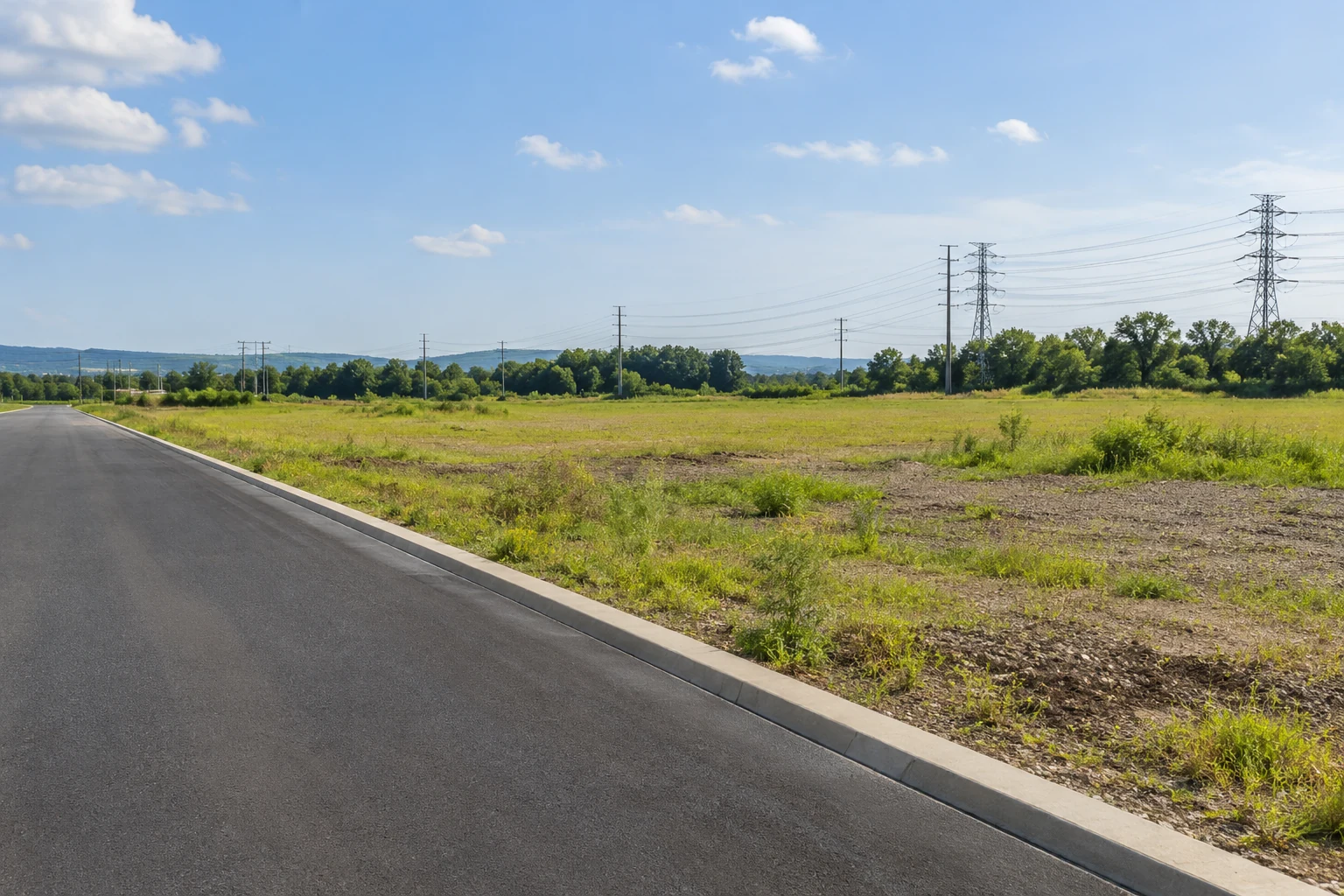
Candidate types can offer different assets and constraints. An existing building may provide useful structure or connections but require adaptation. A new development site can offer layout freedom while requiring a broader development and infrastructure scope. Neither category is automatically faster or less expensive.
CRB’s greenfield-versus-brownfield discussion emphasizes site conditions and priorities. Apply that principle by defining what each candidate actually includes and what the production concept needs to add. An existing connection should not receive credit for capacity not demonstrated, and open land should not receive credit for development that has not been investigated.
Keep the same product, demand and evaluation horizon across candidates. If one location changes the operating or logistics plan, describe that effect explicitly. The site search should identify the best support for the business commitment, not simply select the property with the most attractive headline characteristic.
4. Translate Customer and Supplier Geography into Operating Consequences
Map the significant inbound and outbound flows, delivery frequency and handling requirements. Identify the routes and locations that matter to the actual business. A single straight-line distance to the largest customer is not a complete logistics comparison.
Consider order and inventory implications. A site farther from a channel may require a different dispatch rhythm or stock strategy. A location near one ingredient source may change exposure if the approved supplier mix changes. Use commercial and logistics evidence rather than assume every mile has the same cost and service consequence.
Show which effects enter the operating model and which remain qualitative. Where freight or distribution costs are estimated, state the basis and period. The owner should be able to understand how the location supports the intended service promise and what tradeoff it creates relative to another candidate.

5. Confirm Utility Availability at the Required Conditions and Timing
Develop the concept utility requirement from the production sequence. Identify supply conditions at major package boundaries and simultaneous demands across preparation, production, cooling and cleaning. Average annual consumption or installed-equipment totals do not by themselves establish the required supply and distribution system.
Obtain the relevant provider and specialist evidence for each candidate. State available capacity, required work, responsibilities and timing. Where information remains provisional, record the assumption and the next confirmation rather than treat a nearby line or connection as a guaranteed resource.
DPS’s utility coordination can connect the process concept with a site comparison. The useful output is a load and interface basis that makes candidate differences visible. An apparently inexpensive site can require a different capital commitment or launch sequence once its infrastructure is tested, so those questions should be investigated before a binding property or equipment decision depends on them.
6. Investigate Wastewater as an Early Site Constraint
The nature and timing of discharge depend on the actual production and cleaning plan. Identify the relevant flows and characteristics with the appropriate project specialists, then engage the receiving provider or authority about the requirements that apply to the proposed operation.
An existing sewer connection is not proof that the future discharge arrangement is suitable. The study should identify collection, separation, treatment or other scope where needed, together with responsibilities and the evidence supporting the assumption. This guide does not determine a discharge classification or provide a permit conclusion.
Include unresolved wastewater questions in the site gate register. If the answer could change required infrastructure, available area or timing, the owner should know before treating a property as ready for food manufacturing. A site comparison is stronger when this work appears alongside the production concept rather than after the building has already been selected.
7. Test Building Fit with the Complete Material and People Flow
Prepare a conceptual test fit for each serious candidate. Include receiving, ingredient and packaging storage, preparation, production, packing, finished goods and shipping. Add the movement of people and waste and the separation and access appropriate to the actual food operation.
For an existing building, investigate relevant dimensions, structure, floor and drainage conditions, access and retained systems with the project team. For a new site, examine the buildable arrangement and the infrastructure and circulation the concept requires. Neither gross area nor an attractive facade establishes functional fit.
Record compromises and their consequences. Longer transfers, awkward staging or constrained dispatch can affect operating cost and flexibility even where the equipment fits. A test fit should explain how the business operates, not only demonstrate that a list of machine rectangles can be placed inside the property boundary.
8. Review Workforce and Support-Resource Access
Identify the roles and coverage the operating concept requires, including production, supervision, quality, warehouse and relevant support. Assess recruitment and training with appropriate local evidence and the company’s staffing plan. Do not infer available manufacturing capability from a broad regional population statistic alone.
Consider the launch organization as well as mature staffing. A new location may require recruitment before operating evidence or customer volume is established. If key staff must relocate or support another operation, include the actual resource and timing assumptions in the transition plan.
Compare the resulting operating and readiness commitments across sites. A location can be attractive for one labor model and difficult for another. Keep evidence and assumptions separate so the matrix does not assign a strong workforce score based only on an informal impression during a site visit.
9. Assess Receiving, Shipping and Construction Access Together
Review how ingredients and packaging arrive and how finished goods leave under the representative order pattern. Identify staging, dock activity, internal circulation and dispatch requirements. The appropriate project team should confirm the actual site and access conditions relevant to the operation.
Also consider how the plant will be built and expanded. Equipment delivery and construction materials may use routes needed by the operating business. A phased concept should show how later work can occur and what temporary arrangement or interruption it requires.
Do not treat unused yard space as automatically available for every purpose. Its practical use depends on the site arrangement and the applicable conditions. The site brief should identify the flows it must support now and the specific options being preserved, allowing the owner to compare access as a defined operating requirement rather than a vague convenience score.
10. Value Expansion Space Through a Specific Future Concept
State what a credible later phase would add: product families, another line, more staffed time, storage or a different dispatch requirement. Test the site against that scenario rather than assign a general future-proof label because the property appears large.
Identify the likely next constraint. More process space may have little value if utility supply, vehicle circulation or another support function cannot grow with it. Conversely, a modest physical provision can preserve an option that would otherwise be difficult to create later.
Price the early provisions and distinguish them from complete future capability. DPS’s phased capital planning can help connect those choices with infrastructure and operating consequences. The owner should understand what expansion option is actually preserved and what work, evidence and disruption would still be required to exercise it.
11. Compare the Full Site-Related Commitment Rather than Purchase Price
Include the acquisition or lease basis and the defined development, building adaptation, infrastructure and facility work each candidate requires. Identify transaction, investigation, owner and other relevant costs explicitly. Financial treatment should follow the company’s method, but the comparison boundary must remain consistent.
An inexpensive property can require substantial work to support the concept, while a more expensive candidate may contain useful confirmed assets. Neither relationship should be assumed from the asking price. Use a traceable scope register and appropriate project evidence.
Foth’s food plant cost guidance identifies project, material and location differences as relevant variables. A candidate comparison should therefore explain the operation and site basis behind its allowance. Do not use a generic building rate as if it covered the complete food manufacturing investment or all required infrastructure at every location.
Extend the comparison beyond the initial site outflow where location changes recurring costs. The same production volume may imply different freight, staffing, utility or occupancy commitments at another candidate. Use the company's financial method and the same planning horizon, keeping current evidence separate from provisional assumptions. Do not allow a favorable acquisition allowance to stand in for the whole life of the location decision. If a proposed incentive or recovery amount is material, have the relevant advisers confirm the conditions and timing before treating it as available funding. An owner should understand both the upfront scope and the recurring commitment created by choosing that site, including which assumptions could materially change the preference.
| Cost Area | Question to Resolve | Evidence or Owner |
|---|---|---|
| Property commitment | What is paid, when and under which conditions? | Owner commercial and property advisers |
| Building or development | What work creates the required usable facility? | Concept scope and relevant specialists |
| Utilities and wastewater | What supply, distribution or treatment is required? | Provider and engineering evidence |
| Access and circulation | What supports operation and construction? | Site concept and required investigations |
| Launch and transition | What changes because this location is selected? | Operating and cash plan |
12. Investigate Readiness Timing Instead of Assuming a Site Is Immediate
Map the milestones between site commitment and commercial production. They can include investigations, provider work, design, procurement, construction, installation and readiness activities. The actual requirements should be defined by the project and relevant specialists.
An existing building may still need substantial work, while a new site may depend on external infrastructure timing. Record the evidence behind each milestone and identify which commitments rely on another party. A seller’s availability date and a factory’s production-ready date answer different questions.
Compare the business response to delay. Temporary supply, inventory or a revised customer launch may be possible, but those options carry conditions and costs. Include them consistently rather than assume every candidate reaches production on an ideal schedule. The owner needs a credible operating path as well as a property transaction date.
13. Set Matrix Weights from the Owner’s Priorities
Choose a concise set of preference criteria that reflect the actual business: logistics, workforce, utility and site economics, layout fit or future options. Avoid overlapping criteria that count the same benefit several times. Explain why the weights match the owner’s priorities.
State the score direction and evidence standard. In the illustration below, one means weak relative fit and five means strong relative fit among candidates already assumed to pass essential gates. A lower utility score describes a less favorable confirmed scope or cost, not permission to accept unavailable required supply.
Keep the rationale alongside each score. A numerical matrix is a discussion aid, not an objective measurement produced by the property itself. It should expose tradeoffs and make assumptions reviewable. If the ranking depends on a weakly supported judgment, the next action should be to improve the evidence rather than treat the result as a final answer.
| Criterion | Example Evidence | Comparison Question |
|---|---|---|
| Workforce | Role requirements and local recruitment evidence | How well can the operating organization be supported? |
| Logistics | Actual flows and proposed service pattern | How does the site support customer and supplier needs? |
| Utility economics | Confirmed supply and required upgrade scope | What investment and operating consequence follows? |
| Functional fit | Coordinated concept test fit | How well does the site support the sequence? |
| Future options | Specific phase concept and constraints | Which credible options remain practical? |
14. Visualize an Invented Weighted Site Comparison
Use five illustrative weights: workforce 20, logistics 25, utility economics 25, functional fit 20 and future options 10, totaling 100. Each criterion is scored from one to five, with five representing stronger relative fit. All three invented candidates are assumed to pass essential gates before this preference exercise.
Site A scores 4, 5, 2, 3 and 2, producing 67 points. Site B scores 3, 3, 5, 4 and 4, producing 76. Site C scores 5, 2, 3, 4 and 3, producing 67. Each weighted contribution equals the criterion weight multiplied by the score divided by five.
The scores are arbitrary teaching judgments, not assessments of real locations. Site B’s higher total does not remove the need to examine its evidence or funding implications. If an essential finding changes, reassess viability before applying the score. The matrix helps explain a preference; it cannot authorize an unsuitable site.
| Criterion | Weight | Site A | Site B | Site C |
|---|---|---|---|---|
| Workforce | 20 | 4 | 3 | 5 |
| Logistics | 25 | 5 | 3 | 2 |
| Utility economics | 25 | 2 | 5 | 3 |
| Functional fit | 20 | 3 | 4 | 4 |
| Future options | 10 | 2 | 4 | 3 |
| Weighted result | 100 total | 67 | 76 | 67 |
15. Test Whether Uncertain Evidence Could Change the Ranking
Review the criteria with the largest weights and the least certain scores. Ask what finding would move a candidate materially. A utility confirmation, revised logistics cost or different phase concept can be more consequential than small refinements to several well-supported preferences.
Change assumptions transparently and retain the original case. Do not adjust weights simply to make a preferred property win. If the owner’s strategic priorities genuinely change, record the change and reevaluate the candidates against the revised brief.
Use sensitivity to direct investigation. A close result may justify more focused work on one important uncertainty, while a candidate failing an essential requirement may need to be excluded or redesigned. This turns the matrix into a decision process rather than an exercise producing a final number with more precision than the underlying evidence supports.
16. Sequence Due Diligence Around Commitment Risk
Assign each investigation to the relevant specialist or provider and identify the decision it supports. Site, property, environmental, engineering and commercial questions may require different expertise. This guide organizes the owner’s process rather than provide conclusions on those subjects.
Obtain material findings while the business still has a practical response. An infrastructure issue discovered before a binding site commitment has a different consequence from the same finding after major orders depend on the location. Link evidence dates to the investment and transaction schedule.
Keep unresolved conditions in an action register with responsibility and consequences. A candidate may remain under consideration while work continues, but its status should be clear to everyone using the matrix. A conditional preference should not silently become an unconditional site decision through repeated internal presentations.
| Workstream | Responsible Input | Decision Supported |
|---|---|---|
| Production brief | Owner commercial, product and operating teams | Comparable candidate screening |
| Utility and discharge basis | Engineering team and relevant providers/specialists | Infrastructure feasibility and scope |
| Property and building conditions | Relevant property, site and building specialists | Conditional or binding site commitment |
| Candidate investment scope | Planning and cost team with owner review | Comparable capital authorization |
| Outstanding conditions | Named action owners and decision authority | Whether the next commitment may proceed |
17. Maintain a Site Evidence Register and Comparable Data Room
For each candidate, retain current drawings, provider information, investigations, cost allowances and commercial assumptions with dates and owners. Identify superseded information so the design team does not use an earlier service or building assumption after it has changed.
Record conflicts rather than choose the most attractive figure without explanation. A marketing brochure, informal conversation and written technical confirmation can describe different levels of evidence. The matrix should identify the basis actually used and the work still required.
Dennis Group’s public site-search service places location work within broader project planning, while Stellar’s food facility offering integrates design and construction considerations. These are useful reminders that a site decision crosses disciplines. The owner still needs a project-specific evidence set and a common production basis to compare candidates responsibly.
18. Prepare a Site Recommendation with Conditions and Alternatives
The recommendation should state the preferred candidate, the principal tradeoff, the supporting evidence and the conditions attached to the next commitment. Include the essential gate status, cost boundary, readiness schedule and sensitivities that could change the preference.
Preserve the credible alternative. If a condition on the preferred site is not resolved as expected, the owner should know whether another candidate remains practical and what additional work it needs. Avoid treating the site search as finished merely because one score is highest.
Explain what the next authorization permits and what remains open. A targeted investigation or refined test fit is different from approving the final property and plant investment. The decision paper should make that distinction reviewable, allowing the project to progress while material uncertainties are addressed in the right sequence.
19. Carry the Site Basis into Design and Procurement
Once a candidate is selected, retain the requirements and conditions that supported the decision. Design and supplier scopes should use the same product, calendar, utility and layout assumptions. A later change can alter site suitability even when the original property decision was well supported.
Identify who reviews changes that consume reserved space, alter material routes or increase utility demand. A local design simplification can affect the phase option or operational flow that helped the site win the comparison. Make that consequence visible before implementation.
Keep the evidence register available through delivery and launch. The purpose is continuity: the factory being built should remain connected to the business and site commitment the owner approved. A matrix has little lasting value if its assumptions disappear when the preferred location moves into detailed design.
20. Ask DPS to Test Candidate Sites Against Your Actual Factory
Bring the product and package range, demand scenarios, operating calendar, candidate information and the reasons location matters to the business. Include existing drawings, provider correspondence and the status of relevant investigations, marking gaps clearly.
Agree on a planning scope connecting conceptual test fits, process and utility requirements, installed-cost implications and phases. Ask DPS to distinguish confirmed findings from assumptions and identify the specialist or owner inputs needed for the next decision. The study should make site differences concrete rather than rank properties on area and price alone.
The useful outcome is a location decision with an understandable operating and investment basis: what the site supports, what must be added, when it can become useful and what conditions remain. That gives the owner a stronger foundation for the food plant than a property selection made before the manufacturing requirements were defined.
21. Food Manufacturing Site Selection FAQ
Is the cheapest property usually the best food plant site?
Not necessarily. Compare the complete scope required to support the production and commercial brief, including infrastructure, building work, logistics, people and readiness. A low acquisition price can coexist with a larger operating or capital commitment.
Should utilities be checked before site commitment?
Material supply assumptions should be investigated early enough to inform the commitment. Define process-based requirements and obtain relevant provider or specialist evidence. A nearby connection is not proof that required capacity and conditions are available on the intended schedule.
Does an existing sewer connection establish wastewater suitability?
No. The actual discharge and applicable requirements need project-specific assessment with the relevant specialists and receiving provider or authority. Include unresolved collection or treatment scope in the site decision rather than assume suitability.
Can a weighted score compensate for a failed essential gate?
No. The illustrated matrix compares preference among invented candidates assumed to pass essential gates. If a material requirement fails, revisit viability before using the score. A high logistics rating cannot create required infrastructure.
What do the 67, 76 and 67 scores represent?
They are arbitrary weighted teaching judgments using stated weights and a one-to-five direction. They do not assess real sites or predict investment results. Use actual evidence, owner priorities and sensitivity before making a location decision.
How should future expansion space be valued?
Define a specific future concept and test its utilities, access, material flow and installation consequences. Price early provisions separately from complete future capability. Vacant area alone does not establish an unlimited expansion option.
Who should perform site due diligence?
Use the relevant property, environmental, engineering, infrastructure and commercial specialists for the actual questions and requirements. The owner should connect their findings in a common evidence register and decision schedule.
What can DPS help connect during site selection?
A defined planning engagement can link the production basis with conceptual layouts, utilities, installed-cost implications and phases. Provide consistent demand and product information, candidate data and known constraints so the comparison evaluates the actual factory.
22. Sources and Calculation Notes
Research checked October 27, 2026. Numerical planning examples are original illustrative calculations, not supplier quotations, market averages or DPS customer results.
- Dennis Group — Site Search. Location work as part of broader project planning.
- Stellar — Food and Beverage Design and Construction. Integrated food facility planning and delivery context.
- CRB — Greenfield vs brownfield developments. Site conditions, infrastructure and project priorities.
- Foth | Food Plant Engineering — FAQ. Project and geographic cost variables.
- DPS — Capital Planning and Feasibility. Relevant concept, site and utility planning scope.
Editorial draft prepared for DPS. Project-specific product, process, site and financial assumptions require confirmation before investment approval.