
We Build Profitable Projects.
End-to-end process engineering, design-build-manage delivery, and complete system integration for food & beverage manufacturers across North America.
Combined Annual Revenue of Companies We Support
Trusted by some of the world’s largest organizations, including companies with annual revenues exceeding $100 billion and nationwide operations serving millions of end users.
Design-Build-Manage Delivery
Single-point accountability from concept through operations — one team, one contract, one standard of excellence.
Engineering
Custom process design, automation engineering, and facility planning tailored to your production goals and regulatory requirements.
Construction
Full general contracting capabilities — managing trades, schedules, and budgets with rigorous quality oversight and safety protocols.
Full Lifecycle
100% client focus — embedded teams delivering integrated solutions from initial feasibility through commissioning and ongoing support.
End-to-End Engineering & Project Delivery
From feasibility to commissioning — integrated solutions that drive profitability at every stage of your capital project.
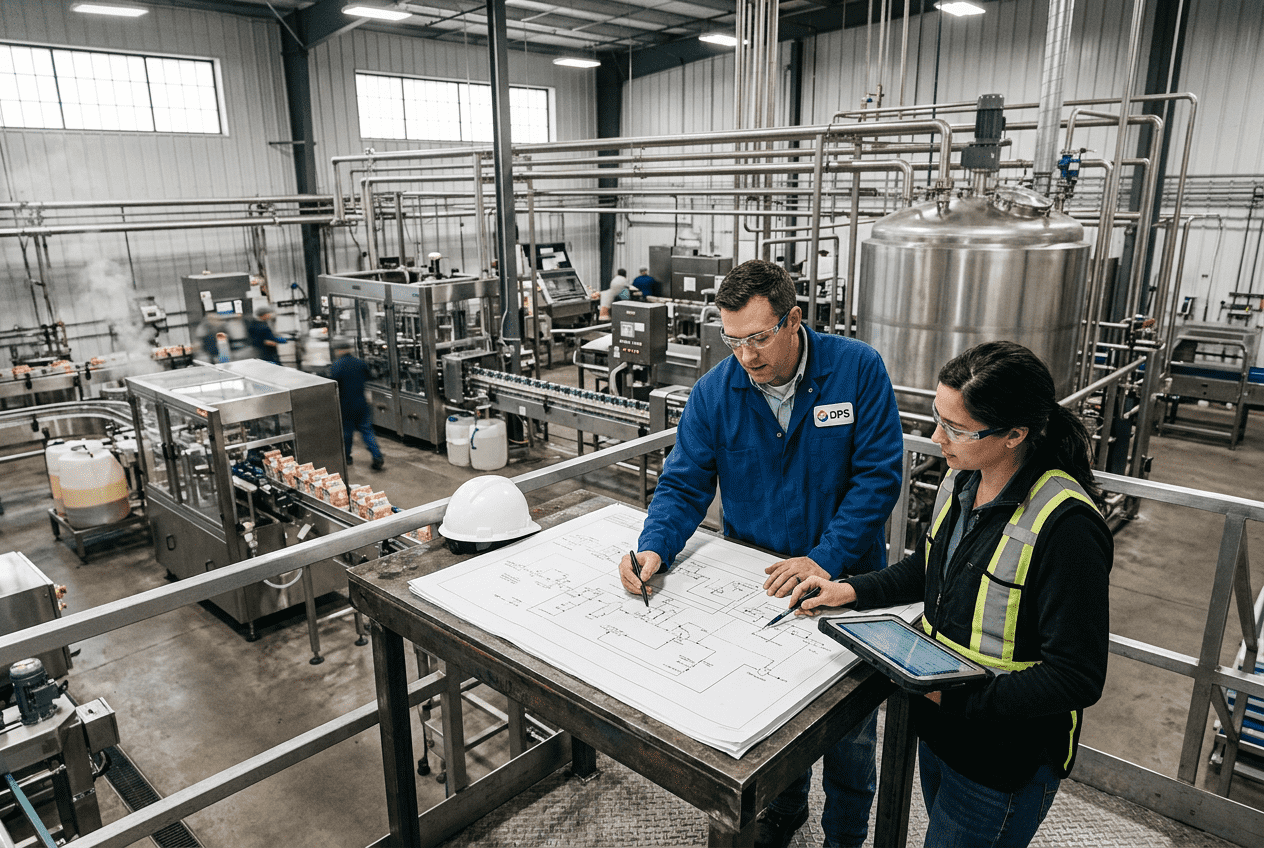
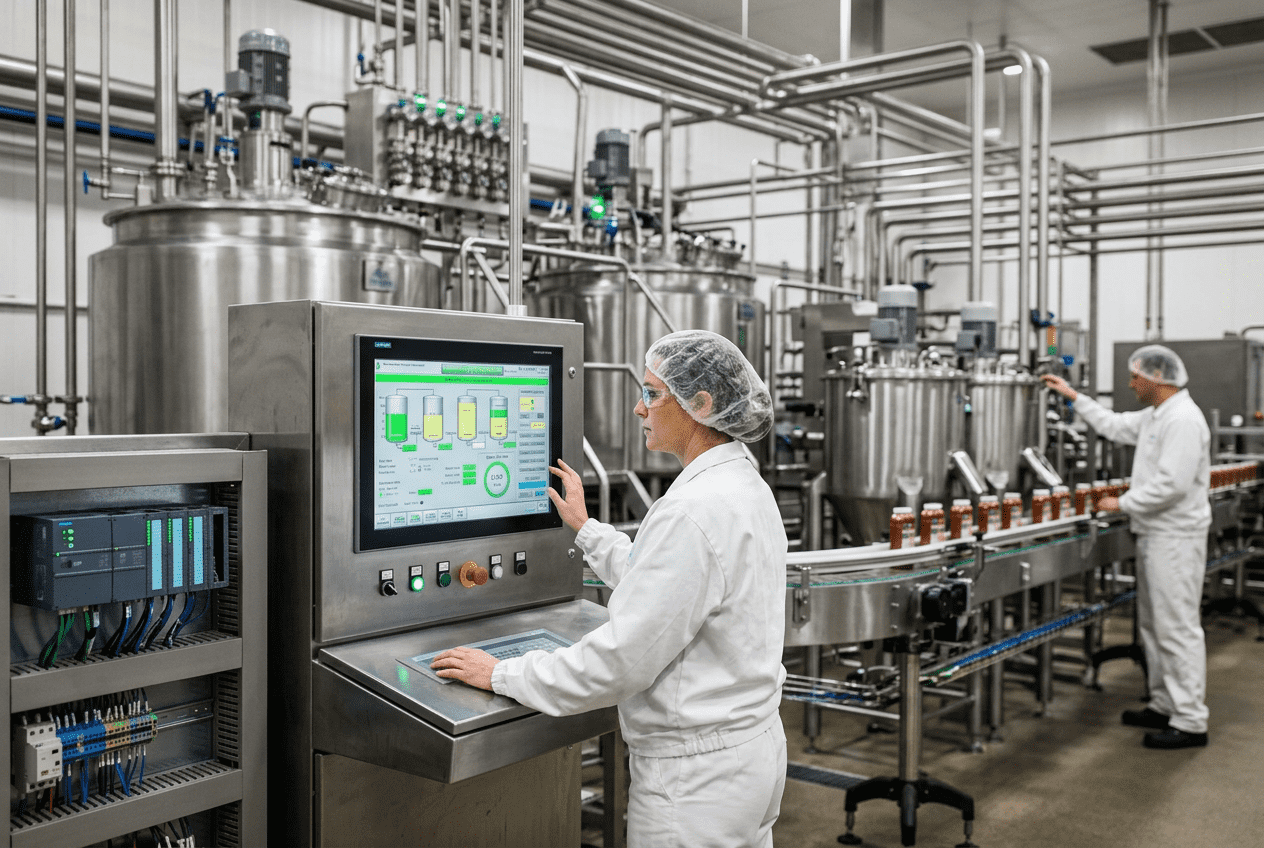
Process Design
Custom-engineered process systems, facility layouts, and automation architecture tailored to your production goals and regulatory environment.

Capital Planning
Strategic project evaluation, ROI modeling, and portfolio planning before you commit a dollar to design or equipment procurement.

Owner’s Representation
On-site advocacy protecting your interests across the entire project lifecycle — from feasibility through commissioning and operations.
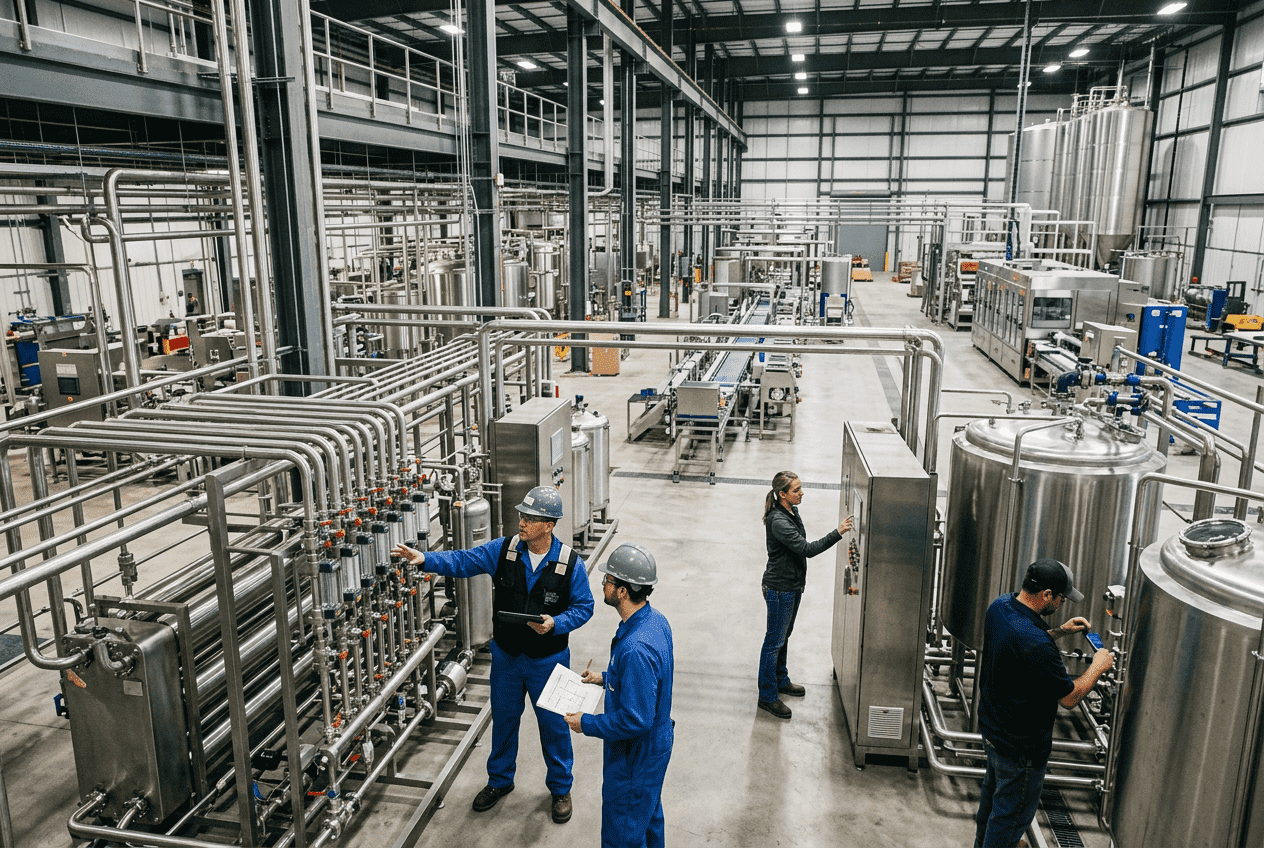
General Contracting
Full GC capabilities — managing subcontractors, trades, and construction sequencing with rigorous oversight and safety compliance.
Automation & Controls
PLC programming, SCADA architecture, recipe management, and batch control for FDA- and USDA-regulated manufacturing environments.
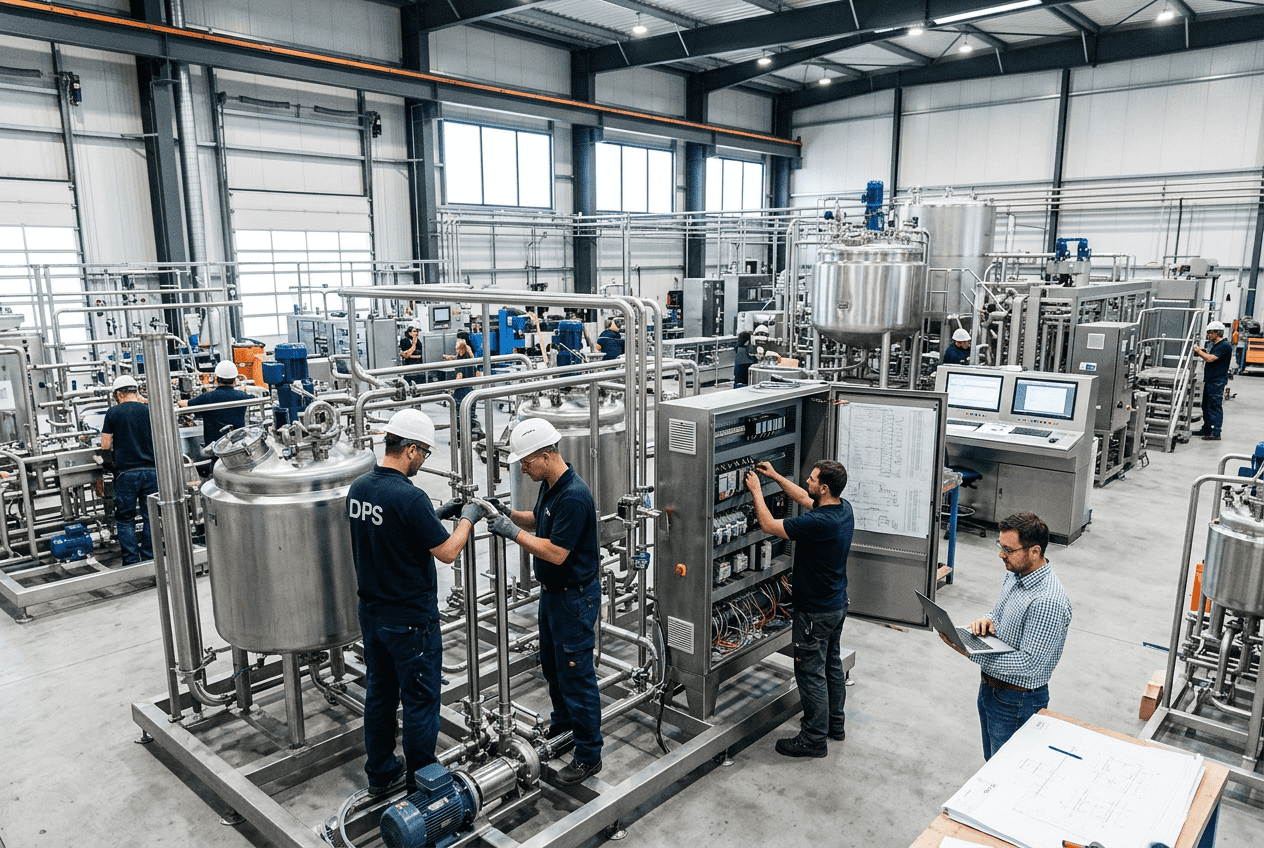
Installation & Integration
Complete physical installation — utilities, process equipment, controls, and full commissioning — delivered as a single integrated scope.
Deep Expertise in Food & Beverage
DPS maintains dedicated engineering teams for each vertical — ensuring real expertise on every project, every time.
Aseptic Beverage Processing
Full aseptic processing and fill systems with sterile controls for shelf-stable beverages.
Beer & Brewing
Complete brewhouse, fermentation, cellaring, and packaging systems for craft and commercial breweries.
Spirits & Distilling
Stills, mashing, grain handling, barrel management, and bottling for distilled spirits production.
Wine
Crush-to-bottle process engineering including cold stabilization, filtration, and barrel room integration.
Kombucha
Fermentation vessels, carbonation control, and packaging lines for live-culture functional beverages.
RTD Beverages
High-speed blending, filling, and packaging for ready-to-drink cocktails, seltzers, and functional beverages.
Soft Drinks
Complete carbonation systems, syrup rooms, and multi-format filling lines for CSD and still beverages.
Juice & Functional
HPP, flash pasteurization, and cold-chain processing for premium juice and functional beverage lines.
Dairy Beverages
HTST/UHT processing, ESL systems, and aseptic packaging for milk, shakes, and dairy-based beverages.
Protein Processing
Complete beef, pork, and poultry lines from primary breakdown through cooking, smoking, and packaging.
Prepared Foods
Complete processing lines for soups, ready meals, and food ingredients — from batching through packaging.
Sauces & Marinades
High-shear mixing, emulsification, and hot-fill systems for sauces, dressings, and marinades.
Dairy
Cheese, yogurt, cream, and cultured product systems with automated CIP and process control.
Aseptic & Retort
Shelf-stable thermal processing systems with retort validation and full FDA 21 CFR 113 compliance.
Co-Packing & Contract Manufacturing
Flexible contract manufacturing facilities with rapid SKU changeover and multi-client traceability systems.
Proving the Model at Scale
A complete beverage co-packing facility — from syrup room to shipping dock — engineered for Day 1 profitability.
- Complete syrup room, boiler, compressor, cooling tower & full utility installation
- Flexible production and re-packaging across multiple SKUs and brand partners
- DPS deeply embedded in business model design and operational strategy
- Scalable architecture from 20M to 80M cases with planned expansion phases
Technical Depth That Drives Results
Full-spectrum engineering, process technologies, and utility systems — all under one roof, one team, one standard.
Engineering Disciplines
Six core engineering disciplines work in concert on every project.
Beverage Process
Complete liquid processing expertise across all beverage categories.
Food Process
Protein to plant-based, ambient to frozen — built at production scale.
Utility & Automation
The invisible backbone of every facility — engineered and installed in-house.
Built for Every Scenario
From greenfield builds to compliance overhauls — DPS delivers integrated solutions across every project type.
Greenfield Build
Complete new facility development from site selection through commissioning — single-source accountability for your entire capital project.
Expansion & Scale-Up
Strategic capacity expansion within existing facilities — minimizing production disruption while maximizing throughput and capability.
Equipment Relocation
Cross-facility machinery moves with zero production gaps — from dismantling and shipping through reinstallation and process validation.
Line Retrofit & Modernization
Targeted line upgrades to improve throughput, add capability, or meet new regulatory standards — without full facility downtime.
Bottleneck Optimization
Constraint analysis and targeted fixes to unlock hidden capacity in existing lines — often delivering 20%+ gains without capital expenditure.
Compliance & Regulatory Overhaul
Facility upgrades engineered to meet FDA, USDA, SQF, and BRC requirements — from audit readiness through full certification.
DPS-Manufactured Process Equipment
Every piece of DPS equipment is designed, fabricated, and tested in our own facility — ensuring seamless integration with your process system and single-point accountability from day one.
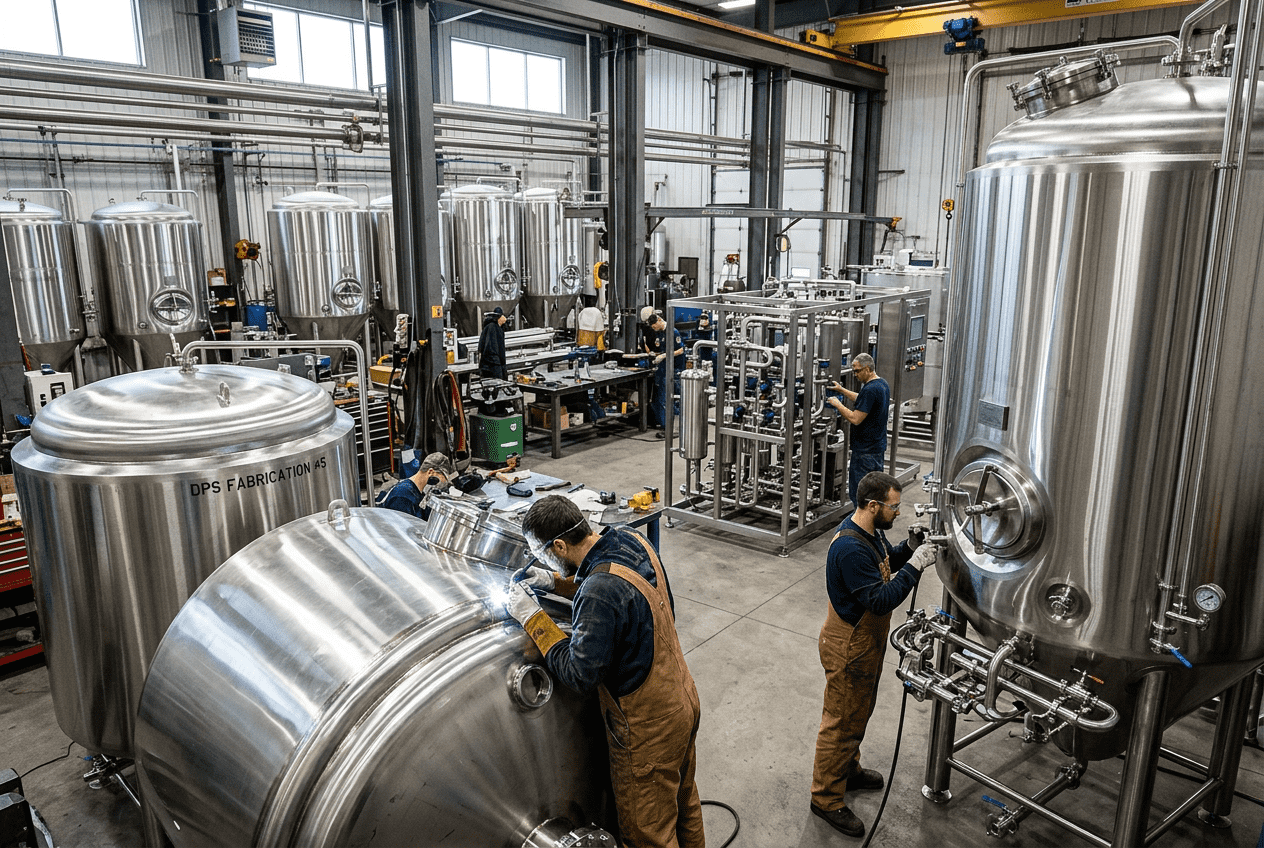
Processing & Storage Tanks
Up to 12,000 gallons
CIP Systems
Custom sanitary solutions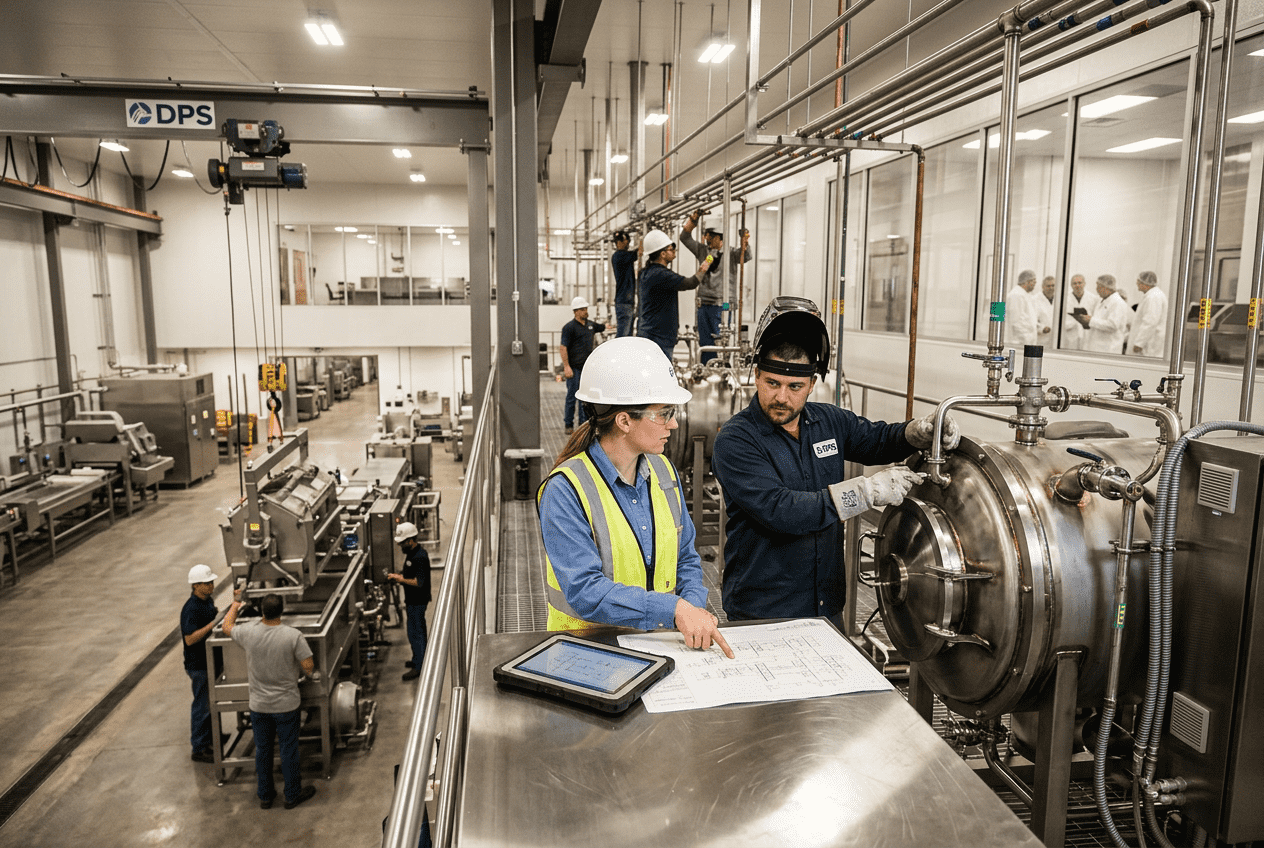
Marination Tumblers
Protein flavor penetration
Cooking Kettles
Industrial processing vessels
What Makes Us Different
Not just a contractor — an operational partner invested in your long-term success.
Radical Honesty
We turn down profitable projects that don’t serve our clients’ best interests. We’ve walked away from seven-figure engagements when the math didn’t work — because the right project at the wrong price is still the wrong project.
Business-First Thinking
We act as operational advisors, not just engineers. Before drawing a single line, we model your unit economics — because a beautiful facility that doesn’t hit your margin targets is just an expensive mistake.
Client Pre-Qualification
We select our clients as carefully as they select us — ensuring alignment on timeline, budget, and ambition before we commit resources. A mutual discovery process that sets every project up for success.
In-House Manufacturing
Our own equipment fabrication facility means zero finger-pointing between vendors. One team designs it, builds it, installs it — and stands behind every weld, every valve, and every line of code.
What Our Clients Say
Real feedback from manufacturing leaders across North America.
From the DPS Engineering Desk
Technical guidance, capital planning strategies, and real-world execution insights for food and beverage manufacturers.
-
PLC Retrofit for Food Plants: Migration Planning Without a Long Shutdown
A PLC retrofit for a food plant replaces or modernizes obsolete programmable logic controllers, operator interfaces, control networks, electrical panels, and production data systems without requiring a prolonged plant shutdown. The goal is not simply to install newer hardware. A successful food manufacturing controls retrofit improves reliability, sanitation support, batch consistency, traceability, operator usability, maintenance response time, and future production capacity. For U.S. food and beverage manufacturers, a retrofit should begin with an operational and business case rather than a hardware list. The best migration plan identifies the production constraints that are costing the plant money, determines which assets can be upgraded during sanitation windows or scheduled maintenance, and establishes a phased commissioning strategy. This reduces the risk of an extended outage while preserving food safety controls and production continuity. Disruptive Process Solutions (DPS) helps processors develop retrofit programs that connect capital decisions to measurable operating outcomes. Whether a facility is running legacy Allen-Bradley, Siemens, Modicon, GE, Omron, or mixed-vendor controls, the objective is to create a supportable, secure, and scalable automation platform that fits the plant’s production requirements. Typical PLC retrofit priorities include: A food plant PLC retrofit is the engineered replacement, redesign, or modernization of the automation layer that controls a manufacturing process. The scope can range from replacing one unsupported PLC in a packaging line to updating an entire facility’s process control, supervisory control, electrical distribution, network architecture, historian, and recipe management environment. Unlike a simple “like-for-like” controls replacement, a food industry automation retrofit should account for how the line actually runs. A legacy system may have undocumented program changes, bypassed safety logic, manual recipe workarounds, unreliable signals, or disconnected utilities. Modernization is an opportunity to correct these issues before they become chronic production losses or compliance risks. Food plants commonly retrofit controls in facilities producing prepared meals, sauces, dressings, dairy products, protein products, beverages, shelf-stable products, frozen foods, baked goods, ingredients, and co-packed consumer packaged goods. In high-throughput markets such as Chicago, Dallas-Fort Worth, Atlanta, Los Angeles, New Jersey, Central California, and the Carolinas, plants often need upgrades that fit tightly scheduled production calendars. A retrofit can include a single production cell or multiple systems: Each scope calls for a different migration plan. The most successful projects separate what must be changed during downtime from what can be engineered, panel-built, configured, tested, and validated while the plant continues to run. At ports and distribution hubs such as Savannah, Georgia; Houston, Texas; Long Beach, California; Newark, New Jersey; and Memphis, Tennessee, production interruptions can rapidly affect inventory commitments and outbound logistics. For these facilities, PLC migration planning must align with raw material availability, cold storage capacity, customer demand, labor coverage, and carrier schedules. Before selecting a PLC family, manufacturers should define the operational problems the retrofit must solve. Replacing obsolete hardware without resolving process logic, operator workflow, or maintenance constraints can preserve the same inefficiencies in a newer panel. Common warning signs include frequent nuisance trips, no available spare processors, repeated HMI failures, undocumented field changes, inconsistent product quality, extended sanitation cycles, poor alarm response, manual production records, and limited visibility into downtime. A plant may also have difficulty recruiting technicians willing to support outdated software platforms. The table should become the basis of the project’s functional requirements specification. It is also useful when presenting a capital request to leadership, because it connects technical deficiencies to production, labor, quality, and risk outcomes. For example, a processor may initially believe it needs a major capacity expansion to increase output. A controls assessment can reveal that poor sequencing, excessive equipment interlocks, slow setpoint changes, or inadequate buffer management are the actual bottlenecks. DPS has seen situations where PLC programming improvements created significant throughput gains before new equipment was required. A resilient food plant control system uses layers. The PLC controls the equipment in real time. The HMI gives operators a clear way to run and troubleshoot the process. SCADA provides supervisory visibility across multiple lines or areas. The industrial network connects devices securely. Data systems collect meaningful production, quality, utility, and maintenance information. DPS brings technological capabilities in PLC programming, electrical and controls engineering, SCADA development, recipe management, energy monitoring, process integration, and automation commissioning. The architecture should be selected based on risk, available maintenance skills, installed equipment, plant standards, and expansion plans—not simply on the newest available platform. A robust migration often retains selected field devices if they are reliable and compatible, while replacing the control processor, I/O infrastructure, HMI, and network. This can reduce cost and shorten downtime. However, field devices should be evaluated individually. An old temperature transmitter, control valve positioner, or VFD may create hidden reliability problems that undermine the value of a new PLC system. For process applications such as blending, thermal processing, fermentation, cooking, retort, cheese production, sauce manufacturing, and aseptic processing, the control architecture should provide clear separation between automatic sequences, manual operations, permissives, safety functions, and quality-critical control loops. The following illustrative planning trend shows how food manufacturers are shifting retrofit spending from emergency hardware replacement toward connected, data-enabled controls modernization. This trend does not mean every plant needs a large enterprise platform. A small co-packer may need a focused PLC/HMI upgrade with secure remote support and batch reporting, while a multi-site processor may need common standards, historian integration, and portfolio-level production analytics. Learn more about DPS automation and controls engineering services for food and beverage facilities. Recipe and batch control are central to a food plant retrofit whenever product quality depends on repeatable ingredients, temperatures, timing, agitation, pressure, fill volume, cook profiles, or cleaning parameters. A modern system should control who can create, approve, download, and modify recipes. It should also record what was actually executed during production. For manufacturers operating under FDA, USDA, SQF, BRCGS, customer-specific, or internal quality requirements, traceability must be engineered into the process rather than reconstructed after an issue occurs. The right solution can connect lot numbers, ingredient additions, process parameters, operator actions, alarms, quality checks, and finished-goods records. Alarm modernization deserves particular attention. Many legacy systems treat every event as equally urgent. That creates alarm floods during a fault, making it difficult for operators to identify the true initiating cause. A retrofit should define alarm priorities, deadbands, delays, suppression rules, response guidance, and acknowledgment expectations. Operators need alarms that are actionable, not merely numerous. Traceability requirements vary by product type. A dairy facility may prioritize pasteurization records and allergen changeover verification. A protein processor may focus on raw material lots, cook temperatures, yield, and packaging records. A sauce or dressing manufacturer may need strong control of formula revisions, ingredient additions, Brix, pH, and allergen handling. In each case, data design should follow the hazard analysis and operational workflow. Most food plants are not blank-slate facilities. They operate with a mix of equipment vintages, OEM controls, field modifications, packaged skids, utility systems, and manually operated processes. A PLC retrofit must integrate this reality rather than assume every asset can be standardized immediately. Manufacturing capabilities at DPS include process equipment design and integration for tanks, CIP systems, cooking vessels, marination systems, pasteurization, blending, utilities, thermal processing, refrigeration interfaces, water treatment, and production support systems. This process knowledge matters because a controls project is only effective when the automation logic reflects the physical process, cleaning requirements, mechanical constraints, and operator actions. For example, a new PLC controlling a CIP system must understand tank levels, chemical concentration, return conductivity, supply temperature, flow verification, pump protection, valve feedback, circuit routing, and production release logic. It must also coordinate with process equipment so that cleaning does not begin while a product path remains active. Integration planning should include a detailed I/O list, communication map, cause-and-effect matrix, panel schedule, network diagram, operating narratives, and responsibility matrix. The plant also needs a clear decision about which vendor packages remain autonomous and which functions should be brought under common supervisory control. Facilities upgrading sanitation infrastructure can pair controls modernization with new or expanded custom CIP systems for food processing. Integrating CIP controls, process valves, tanks, and production schedules early often avoids costly rework later. Food manufacturing controls are operational technology systems. They require a cybersecurity approach that protects production availability, food safety functions, intellectual property, recipes, and plant data. Cybersecurity should be designed into the PLC retrofit from the start rather than added after commissioning. Practical controls include network segmentation between IT and OT environments, managed industrial switches, firewalls, asset inventory, role-based access, strong authentication, remote-access approval procedures, backup management, patch governance, and incident response planning. The appropriate level of protection depends on plant size, connectivity, customer requirements, and operational risk. Validation is equally important. A retrofit should be documented and tested in a manner appropriate to the product, process, and regulatory environment. The project team should establish what evidence is needed before production release: design review, factory acceptance testing, site acceptance testing, I/O checkout, dry runs, water runs, product trials, alarm testing, backup recovery testing, and operator training records. Compliance does not come from a PLC brand. It comes from disciplined system design, documented controls, verified operation, controlled changes, and trained personnel. FDA-regulated, USDA-inspected, SQF-certified, BRCGS-certified, and customer-audited facilities may have different documentation needs, but all benefit from clear electronic records and reliable operating procedures. The demand pattern above is an illustrative planning index. Beverage and protein facilities often prioritize uptime, high-speed packaging integration, thermal-process records, and utilities. Prepared foods, sauces, and dairy plants frequently place additional emphasis on recipe management, allergen control, batch documentation, and CIP verification. The cost of a PLC retrofit depends on the number of control panels, I/O points, field devices, safety circuits, network components, HMI screens, SCADA functions, data requirements, documentation quality, and commissioning constraints. The least expensive initial quote is not always the lowest-cost project. An under-scoped retrofit can create missed functionality, emergency field changes, delayed start-up, and recurring maintenance problems. For many food plants, the largest value drivers are avoided downtime, higher throughput, reduced scrap, faster changeovers, less manual reporting, reduced maintenance risk, and improved process consistency. A retrofit budget should compare the full cost of continuing with legacy controls against the staged cost of modernization. Downtime planning is where retrofit projects are won or lost. The recommended approach is to perform as much work as possible before the production cutover. This includes field surveys, panel fabrication, off-line programming, HMI development, simulation, factory acceptance testing, cable preparation, labeling, documentation, and operator training. During the outage, the team should follow a detailed cutover schedule with named owners, test points, spares, rollback criteria, and escalation contacts. In plants with limited shutdown windows, systems can be migrated by area, panel, machine group, or utility subsystem. Temporary gateways or parallel control arrangements may be used when technically appropriate and safe. By 2026 and beyond, food manufacturers are expected to place greater value on phased modernization, energy-aware operations, digital batch records, secure remote support, and systems that can adapt to labor constraints. Sustainability initiatives will increasingly affect automation decisions through water use, chemical use, refrigeration optimization, waste reduction, and utility monitoring. DPS delivers PLC retrofit food plant projects through a practical Design Build Manage approach. The process begins with understanding the client’s commercial objectives, operational pain points, production constraints, available capital, and risk tolerance. The final solution may include controls modernization alone, or it may be coordinated with process upgrades, utility work, equipment relocation, capacity expansion, or sanitation improvements. DPS service capabilities include process engineering and design, capital planning, owner’s representation, project management, general contracting support, equipment supply, controls integration, installation coordination, commissioning, and start-up support. This full-scope approach allows food and beverage manufacturers to manage complex projects with fewer gaps between the process, mechanical, electrical, and automation disciplines. The DPS project method is designed to support facilities across the United States and Canada, including processors operating in Raleigh-Durham, Charlotte, Atlanta, Nashville, Chicago, Minneapolis, Dallas, Houston, Denver, Phoenix, Seattle, Los Angeles, and the Central Valley. DPS combines a lean project-focused team with a vetted network of local trades and specialized partners. Clients seeking a broader facility roadmap can also use DPS food process engineering and design services to align controls investments with future capacity, sanitation, utility, and equipment plans. DPS is particularly effective when a retrofit must support profitability rather than merely replace hardware. The team evaluates whether a programming correction, process adjustment, utility change, or targeted equipment modification can remove a bottleneck before recommending a larger capital expenditure. This comparison is an illustrative planning framework, not a vendor rating. It demonstrates why processors should compare retrofit partners on engineering depth, process knowledge, shutdown execution, documentation, and commissioning support—not only on equipment pricing. Planning, engineering, panel fabrication, programming, and testing may take several weeks or months depending on scope. The actual production outage can often be limited to a weekend, sanitation window, or phased series of short shutdowns when the project is thoroughly prepared in advance. Yes. Many projects retain motors, valves, sensors, drives, and OEM packages that remain reliable and compatible. However, field devices should be surveyed and tested because unreliable instrumentation can limit the benefit of a new PLC system. Standardization can simplify training, spare parts, programming standards, and long-term support. However, the decision should consider existing installed assets, local support, OEM constraints, lifecycle status, cybersecurity needs, and plant-specific technical skills. The best time is usually a planned maintenance shutdown, seasonal production gap, major sanitation period, or coordinated equipment installation. Plants should avoid scheduling a high-risk cutover during peak demand periods unless a detailed contingency plan is in place. A properly engineered retrofit can improve control of critical parameters, recipe execution, CIP verification, alarm response, electronic records, access permissions, and traceability. It does not replace food safety programs, but it can strengthen the consistency and documentation of those programs. Often, yes. Improved sequencing, reduced interlock delays, better line coordination, accurate setpoints, improved operator visibility, and faster fault recovery can remove production constraints. A controls assessment should be completed before assuming a major equipment expansion is necessary. At minimum, the project should include current and updated electrical drawings, network diagrams, I/O lists, PLC and HMI backups, operating narratives, alarm lists, panel schedules, test records, training materials, spare-parts recommendations, and change-control documentation. Ask about food and beverage process experience, controls platform knowledge, electrical and network engineering capabilities, field installation coordination, shutdown planning, FAT and SAT procedures, cybersecurity practices, documentation standards, commissioning resources, and post-start-up support. -
SCADA for Food Manufacturing: Architecture, Data, Cybersecurity, and ROI
Food manufacturers need automation systems that do more than display process values. A well-designed SCADA platform connects equipment, operators, recipes, quality records, utilities, maintenance information, and business decisions into one dependable operating environment. For facilities in the United States, a food manufacturing SCADA system can support safer production, stronger traceability, lower operating risk, and more profitable capital investments. A SCADA system for food manufacturing is a supervisory platform that collects data from PLCs, sensors, drives, process skids, packaging lines, utilities, and plant networks. It gives operators and managers a real-time view of production while recording the information needed for recipes, batches, alarms, sanitation, quality verification, maintenance, and product traceability. In a modern U.S. food or beverage plant, SCADA typically sits above PLC and HMI controls. PLCs execute machine logic, HMIs provide local operator interaction, and SCADA coordinates plant-wide visibility, historian data, reporting, alarming, user access, and integration with systems such as ERP, MES, laboratory information systems, and maintenance platforms. The right architecture depends on the process. A ready-to-eat protein facility may prioritize cooker verification, sanitation interlocks, allergen control, and USDA-ready records. A dairy processor may require continuous temperature, flow, pasteurization, CIP, and separator data. A sauce, dressing, or beverage producer may focus on recipe management, Brix control, batching accuracy, changeovers, and tank inventory. In every case, the system should be designed around operational and financial outcomes rather than software features alone. For manufacturers expanding in regions such as the Midwest protein corridor, California’s Central Valley, North Carolina’s food and beverage market, Texas processing hubs, or port-connected production centers near Savannah, Houston, Newark, and Los Angeles, SCADA can provide a scalable automation foundation without forcing a complete replacement of existing equipment. SCADA stands for Supervisory Control and Data Acquisition. In food manufacturing, it is the software and network layer that supervises production assets, gathers data from the floor, provides visual process screens, records critical events, and helps personnel make faster, more consistent decisions. A food manufacturing SCADA system is not one single device. It is a coordinated environment that may include industrial servers, virtual machines, operator workstations, engineering workstations, industrial Ethernet switches, firewalls, PLCs, remote I/O, barcode scanners, SQL databases, historians, reporting tools, and remote-support procedures. The system may cover one packaging line or an entire multi-building campus with processing, refrigeration, wastewater, boiler, CIP, and warehouse operations. SCADA is particularly valuable where production depends on repeatable processing conditions. Examples include HTST pasteurization, UHT processing, retort cooking, fermentation, marination, blending, high-shear mixing, dehydration, smoking, carbonation, filling, and clean-in-place operations. It can capture the conditions that matter: time, temperature, pressure, flow, conductivity, pH, Brix, speed, weight, valve position, sanitation sequence, alarms, operator actions, and lot identifiers. The market is moving toward connected manufacturing, but the most useful systems remain practical. Operators need clear graphics, controls personnel need maintainable logic, quality teams need usable records, and leadership needs trustworthy production and downtime information. A SCADA project succeeds when the plant can make better decisions at 2:00 a.m. on a production shift, not merely when a dashboard looks impressive in a conference room. The chart provides an illustrative planning view of continued U.S. investment in connected food automation. Drivers include labor constraints, retailer documentation requirements, product complexity, energy costs, food-safety expectations, and the need to increase throughput without proportionally increasing headcount. Before selecting a SCADA platform, define the operational problems that have measurable cost or risk. Installing new screens without resolving those issues creates another layer of complexity. The best projects begin with a current-state assessment of production losses, manual records, quality risks, and maintenance limitations. This table shows why a SCADA scope should be tied to plant performance. A manufacturer does not need every capability on day one. However, the architecture should allow the system to grow from one high-value process area to additional lines, utilities, warehouses, and sites without requiring a redesign. Common high-priority use cases include identifying recurring filler faults, reducing mixer wait time, verifying cook and cool windows, controlling allergen changeovers, monitoring refrigeration temperatures, proving CIP completion, calculating material yields, and locating the source of frequent conveyor stops. These are operational problems that can be measured in labor hours, scrap, lost capacity, customer risk, or utility expense. Demand is especially high in sectors where process variability, compliance records, multiple SKUs, sanitation complexity, and line speed make manual management difficult. Beverage co-packers, dairy operations, protein processors, and high-volume prepared-food facilities often benefit from connected control environments because their production constraints span more than one piece of equipment. A reliable control architecture separates responsibilities. The PLC is responsible for deterministic machine and process control. The HMI gives operators local access to equipment status, commands, setpoints, and guided procedures. SCADA provides supervisory control, system-wide visualization, data collection, alarms, reporting, and integration. Network and data layers provide secure communication, resilience, and usable long-term records. In a well-designed facility, critical safety functions remain in properly designed safety circuits and safety-rated control systems. SCADA should not replace safety engineering. Instead, it should make safety status clear, record relevant events, and ensure that process permissives are visible and controlled according to approved operational requirements. The table highlights an important buying principle: software cannot compensate for weak field instrumentation, unreliable wiring, undocumented PLC logic, or an unmanaged network. A successful food manufacturing SCADA project evaluates the full control stack, from sensor accuracy through reporting requirements. For brownfield facilities, the first task is often to map existing PLC families, proprietary OEM controls, communication protocols, remote-access paths, and unmanaged switches. Older lines may communicate through serial connections, Modbus, EtherNet/IP, PROFINET, OPC UA, or vendor-specific interfaces. Integration is usually possible, but the scope should distinguish between monitored data, controlled data, and systems that must remain isolated due to safety, warranty, or operational constraints. Disruptive Process Solutions supports the technological side of these projects through control-system engineering, PLC programming, automation design, SCADA development, panel and field integration, and commissioning. Its automation and controls engineering services are intended to connect process intent to dependable plant-floor execution, rather than treating SCADA as a standalone IT project. Recipes and batch management are central to food manufacturing automation because they convert product specifications into repeatable operating instructions. A recipe may define ingredient targets, temperatures, mixer speeds, hold times, valve routes, Brix limits, cook profiles, sanitation rules, and packaging settings. A batch record captures what actually occurred during production. The appropriate level of batch functionality depends on the process. A high-volume beverage syrup room may need precise automated batching and tank allocation. A protein marination line may need formula control, lot tracking, tumbler cycle verification, and allergen changeover controls. A prepared-food facility may need ingredient scale interfaces, cook-step confirmations, and electronic review of critical control data. Alarm design deserves special attention. An alarm should communicate a condition that requires timely awareness or action. If operators see hundreds of repetitive messages during a routine upset, they may miss the event that actually threatens safety, production, or equipment. Alarm rationalization identifies meaningful alarm priorities, expected operator response, deadbands, delays, shelving rules, and escalation procedures. Traceability should be designed from the material flow, not from the database outward. Start with how ingredients enter the site, where they are sampled, which tanks or rooms receive them, how they are transformed, when packaging is applied, and how finished goods leave the facility. This approach is important for plants receiving materials through major logistics hubs such as the Port of Houston, Port of Savannah, Port of Los Angeles, Chicago rail terminals, or regional cold-chain centers in Dallas, Atlanta, and Indianapolis. For sanitation-intensive processing, automated CIP records can be equally important. A properly designed system can document circuit selection, chemical concentration, return conductivity, flow, temperature, phase time, valve confirmation, deviations, and final rinse conditions. DPS also designs and integrates custom CIP systems for food and beverage plants, allowing CIP hardware and automation requirements to be developed together. Most SCADA investments in the United States are brownfield projects. The facility already has production equipment, OEM panels, operators who understand local workarounds, and utility systems that cannot be taken offline casually. The goal is to improve coordination without creating new production risks. Integration planning should begin with a site survey and an equipment inventory. This includes asset names, controller models, firmware versions, network addresses, panel condition, available drawings, electrical capacity, instrument condition, protocol support, and operational ownership. The survey should also document who owns each equipment package: the manufacturer, the system integrator, plant maintenance, corporate automation, or a third-party service provider. The table illustrates why a food SCADA implementation often extends beyond the production line. Utilities affect product quality, uptime, sanitation, energy cost, and regulatory risk. Steam pressure instability can slow cooking. Inadequate chilled water can limit filling or cooling. Compressed-air losses can affect actuators and packaging reliability. Wastewater process issues can create operational and environmental exposure. DPS brings manufacturing capability to this integration work because the team understands both process equipment and plant infrastructure. Its projects can include tanks, process skids, cooking vessels, utility systems, blending and batching equipment, pasteurization, water treatment, refrigeration interfaces, and sanitary installation. This helps ensure the automation design reflects how materials and utilities actually move through the facility. For facilities considering expansion, a broader food and beverage process engineering design review can identify whether automation is the true constraint. In some cases, a control rewrite, additional instrumentation, or better sequence logic delivers more capacity than a major equipment purchase. In other cases, SCADA reveals a physical bottleneck that should be addressed before software is added. This area chart shows the operational shift from disconnected logs toward electronic, contextualized records. The objective is not to eliminate operator judgment. It is to give skilled teams better information, consistent instructions, and faster access to the facts needed to run the plant safely and profitably. Food manufacturing controls are operational technology, or OT. These systems must remain available, predictable, and secure. Cybersecurity for SCADA is therefore not limited to antivirus software. It requires asset visibility, network segmentation, access control, backups, patch procedures, vendor remote-access rules, incident response, and clear ownership between IT, OT, engineering, and operations. A practical approach separates the business network from the control network and limits communication paths to only those required for operations. Remote access should be authenticated, approved, logged, time-limited, and disabled when not needed. Unmanaged remote connections, shared passwords, exposed PLCs, and undocumented vendor modems create unnecessary risk. Validation should be proportional to risk. A process controlling pasteurization, allergen handling, metal detection interfaces, retort processing, or regulated quality records needs more formal testing and documentation than a noncritical production display. Food manufacturers may need to align system design with FDA requirements, USDA expectations, preventive controls, customer specifications, SQF or BRCGS programs, and internal quality standards. Validation typically includes functional requirements, design specifications, input/output checks, factory acceptance testing when applicable, site acceptance testing, alarm verification, recipe testing, user acceptance testing, backup verification, training records, and final turnover documents. Where electronic records or signatures carry regulatory significance, the project team should define requirements early rather than trying to retrofit audit trails and approvals after commissioning. By 2026, more U.S. manufacturers are expected to prioritize cyber-resilient architecture, secure remote support, edge data collection, and AI-assisted anomaly detection. Policy pressure around cybersecurity, supply-chain resilience, water use, energy performance, and food-safety documentation will continue to influence capital decisions. Sustainable automation will increasingly mean measuring and reducing wasted water, steam, refrigeration load, chemicals, product, and idle machine time. SCADA budgets vary widely because the platform is only one part of the project. Cost drivers include the number of assets, protocol conversions, PLC upgrades, network remediation, I/O additions, instrumentation, server requirements, cybersecurity, recipe complexity, reporting, validation, site conditions, and commissioning windows. For many projects, the largest financial mistake is evaluating only the upfront software price. A lower-cost application may become expensive if it requires excessive custom work, lacks maintainable documentation, cannot integrate with existing equipment, or forces a shutdown later for network and PLC remediation. Conversely, a high-end architecture can be excessive for a small line with limited data needs. The right scope matches the operational risk and growth plan. ROI should be calculated from baseline data whenever possible. If a plant does not know its current downtime, changeover time, scrap rate, utility intensity, or labor spent on manual records, the first phase may need to establish that baseline. A short discovery effort can prevent a capital project from being justified with assumptions that operations cannot verify. Downtime planning is equally important. Food plants often have narrow shutdown windows between production campaigns, seasonal demand peaks, and customer commitments. A staged implementation can reduce risk: first install network infrastructure and servers, then add passive data collection, then migrate selected controls, then commission recipe or batch functions during planned outages. Temporary parallel operation may be appropriate when replacing a critical legacy system. This comparison chart is a buying framework rather than a ranking of specific companies. Food manufacturers should evaluate suppliers according to the project’s actual needs. A simple historian project may only require a focused automation integrator. A greenfield production expansion may benefit from a partner that can coordinate process design, equipment, utilities, controls, construction, and startup under a single accountable plan. Disruptive Process Solutions delivers SCADA and automation projects as part of a broader Design Build Manage approach. The company works with food and beverage manufacturers across the United States and Canada, helping clients plan capital projects around operational performance, financial returns, and long-term scalability. Its service capabilities include feasibility planning, process engineering, owner’s representation, project management, general contracting coordination, equipment supply, installation management, controls integration, commissioning, and startup support. This approach is useful when a SCADA project affects more than one discipline, such as a new processing line that requires sanitary piping, power distribution, utility upgrades, panels, instrumentation, process skids, network architecture, and operator training. DPS is especially suited to manufacturers that need a business-minded partner rather than a vendor focused only on installing software. The team evaluates whether automation is the right capital solution, where the real bottleneck exists, and how the project should be phased to protect production. In one capacity analysis, a client’s planned major expansion was reconsidered after controls limitations were identified as a key constraint. Improving PLC programming increased capacity more effectively than the initially assumed equipment investment. For food and beverage operations, DPS can support SCADA applications across protein processing, prepared foods, sauces and dressings, dairy, co-packing, aseptic processing, brewing, distillation, juice, functional beverages, carbonated products, and fermentation. Typical applications include recipe and batch control, tank farm management, CIP monitoring, pasteurization data capture, cooker and smoker integration, retort records, blending controls, utility dashboards, energy monitoring, and alarm management. The company’s operating model is designed for rapid decisions and coordinated execution. With headquarters in Cary, North Carolina, a West Coast office in Lake Forest, California, and a vetted national partner network, DPS can support projects from the Southeast and Mid-Atlantic through the Midwest, Texas, the Mountain West, and California. This geographic reach is valuable for multi-site food manufacturers that need consistent standards while respecting local construction, utility, and regulatory conditions. A typical DPS engagement begins with a discovery process that identifies current constraints, available data, required outcomes, and project risks. The team then develops a practical roadmap covering controls architecture, process requirements, equipment interfaces, network needs, compliance expectations, installation sequencing, commissioning, and ROI measures. The outcome is intended to be a production-ready system that operators can run, maintenance teams can support, and leadership teams can use to make capital decisions with confidence. A PLC controls equipment and executes programmed logic. An HMI is usually a local operator screen connected to a machine or skid. SCADA supervises multiple PLCs and HMIs, provides plant-wide visibility, stores historical data, manages alarms, supports reports, and can integrate with enterprise systems. Yes. Many projects connect to existing PLCs, drives, instruments, and OEM panels. The scope should begin with an assessment of controller condition, communication capability, cybersecurity, available documentation, and the operational risk of making changes to the legacy line. SCADA can capture ingredient lot numbers, batch IDs, processing conditions, packaging information, operator actions, and finished-good lot records. When integrated correctly, it creates a faster path for investigating quality events and tracing material movement through the process. SCADA itself is not universally required. However, it can support compliance programs by providing controlled recipes, electronic records, alarm histories, CIP documentation, critical process trends, user access controls, and more consistent documentation. Downtime depends on the scope. Passive data collection and network upgrades may be completed with little production impact, while PLC replacements, panel modifications, and recipe cutovers may require planned shutdown windows. A phased plan reduces risk for high-output facilities. Recipe and batch control are highly valuable for sauces, dressings, beverages, dairy products, marinades, prepared foods, bakery fillings, fermentation, aseptic products, and any process where ingredient order, quantity, time, temperature, speed, or hold conditions affect quality and safety. Choose a partner that understands your process, existing equipment, production schedule, food-safety requirements, utility systems, cybersecurity responsibilities, and financial goals. Request clear scope definitions, testing plans, documentation standards, change-control practices, training requirements, and post-startup support expectations. Key trends include secure remote operations, edge computing, AI-assisted maintenance insights, stronger cyber segmentation, electronic batch records, connected quality systems, energy and water monitoring, digital work instructions, and more integrated reporting across production, maintenance, quality, and supply-chain functions. -
Recipe Management Systems: Reduce Batch Variation and Changeover Errors
A recipe management system is an automation framework that controls, records, and verifies the steps required to make a product consistently. In U.S. food and beverage plants, it typically connects PLCs, HMIs, SCADA platforms, production equipment, quality checks, ingredient systems, CIP systems, and business data. Instead of relying on handwritten instructions, spreadsheets, tribal knowledge, or operators manually entering setpoints, the system delivers approved production parameters to the equipment. It can control ingredient additions, mixing times, temperatures, flow rates, fill volumes, hold times, agitation speeds, CIP sequences, alarm responses, and packaging changeover settings. For a manufacturer producing sauces in Chicago, dairy beverages in Wisconsin, ready-to-drink products in New Jersey, protein products in Georgia, or co-packed beverages near the Ports of Los Angeles and Long Beach, recipe management can reduce avoidable variation between shifts, plants, and product runs. It also creates a stronger audit trail for FDA, USDA, SQF, BRCGS, customer, and internal quality requirements. The right solution is not always the most complex platform. A practical recipe management system should match the plant’s product portfolio, existing automation maturity, downtime windows, cybersecurity posture, operator needs, compliance risk, and capital plan. Disruptive Process Solutions (DPS) designs solutions that connect profitable manufacturing outcomes to realistic engineering execution. A recipe management system is a structured way to define, approve, execute, secure, and report the manufacturing instructions for a product. In a food or beverage environment, a recipe may include material quantities, ingredient tolerances, production sequence logic, equipment settings, quality targets, sanitation requirements, process limits, packaging formats, and operator prompts. Recipes are commonly organized at several levels. A master recipe identifies the approved process definition. A site recipe adapts that definition to local equipment. A control recipe is the specific production instruction used for an individual batch, lot, line, or order. This hierarchy allows a company to protect product standards while accounting for differences between a blending room in Cary, North Carolina, and a co-packing line in California, Texas, or Ontario. Recipe management is especially useful where a plant makes frequent product changes, runs multiple pack sizes, handles allergens, manages variable raw materials, or uses complex thermal, blending, fermentation, batching, marination, cooking, filling, or CIP processes. It can be applied to a small craft producer with a few vessels or to a national manufacturer operating multiple plants and dozens of SKUs. This recipe hierarchy helps prevent operators from changing critical parameters without authorization. It also allows plants to compare target values against actual process performance and identify whether variation started with ingredients, equipment, utilities, programming, or operator workflow. Most recipe management projects begin with a production problem, not a software problem. A plant may be experiencing inconsistent batches, excessive startup scrap, unplanned changeover delays, missed additions, difficult investigations, lost institutional knowledge, or inconsistent cleaning execution. The automation system should address the highest-value operational risks first. For example, a beverage producer may find that different shifts use slightly different blend sequencing or water volumes. A sauce manufacturer may have multiple operators selecting manual mix times. A protein processor may need better control of marinade application and tumbler settings. A dairy plant may need verified pasteurization, hold, and diversion records. In each case, a recipe system can create repeatable execution rules while preserving appropriate operator flexibility. The following chart shows a planning-level illustration of how adoption of structured recipe and batch control may grow across U.S. food and beverage operations. Actual adoption varies by product complexity, capital availability, labor availability, customer requirements, and installed control platforms. A reliable recipe management system is an architecture, not simply an HMI screen. The PLC must execute deterministic control logic. The HMI must give operators clear instructions and useful status. The SCADA layer typically coordinates batch execution, alarm management, reporting, historian connectivity, user access, and supervisory visualization. Network and data architecture must support availability, security, maintenance, and future expansion. In many U.S. plants, the installed environment is mixed. A facility may use Rockwell Automation PLCs on packaging lines, Siemens controls in a process area, legacy Wonderware or AVEVA SCADA screens, standalone OEM skid controls, and separate laboratory or ERP systems. DPS evaluates what can be retained, what should be upgraded, and what must be isolated or integrated. At the equipment level, reusable phases such as “charge water,” “dose ingredient,” “heat to setpoint,” “agitate,” “hold,” “transfer,” and “CIP rinse” should be designed with clear permissives, status signals, exception handling, and manual recovery procedures. At the supervisory level, the system should manage production order data, version-controlled recipes, electronic records, and performance reporting. DPS brings controls engineering experience across PLC programming, SCADA development, network planning, commissioning, and process system integration. Through its automation and controls engineering services, DPS helps manufacturers define a platform that serves current operations without creating an unnecessarily rigid or costly environment. Recipe control should be designed around the product and the risk. A low-risk dry blend may need controlled ingredient verification and lot capture. A high-acid beverage may need Brix, pH, temperature, and fill control. A retort operation may require detailed thermal process records. A dairy or aseptic line may need extensive sanitation, diversion, time-temperature, and equipment-status verification. A batch record should show more than a final “pass” or “fail.” It should document the selected recipe version, batch identifier, production order, material lots, actual quantities, target values, operator actions, equipment used, start and completion times, alarms, deviations, holds, rework decisions, and quality release status. This record supports process improvement as well as traceability. Alarm design is equally important. Plants often have too many unprioritized alarms, which can cause operators to ignore meaningful events. Recipe management should distinguish critical process deviations from maintenance notices, advisory messages, and expected sequence transitions. Alarm priorities, deadbands, delays, shelving rules, and response instructions should be rationalized during the project. For facilities using clean-in-place systems, sanitation recipes should be managed with the same discipline as production recipes. CIP circuits may require controlled water recovery, chemical concentration, temperature, conductivity, flow, time, return conditions, and final rinse verification. DPS can integrate recipe and traceability logic with custom or existing CIP systems for food and beverage plants so operators can confirm that the correct circuit and cleaning sequence were executed before production begins. Few plants begin with a blank slate. A recipe management project may need to connect legacy vessels, skid-mounted pasteurizers, OEM fillers, tank farms, ingredient rooms, boilers, refrigeration systems, compressors, water treatment assets, and warehouse systems. Integration planning starts with a field audit of equipment capability, available signals, communication protocols, sanitation boundaries, and mechanical constraints. Utilities deserve special attention because process consistency depends on them. Inconsistent steam pressure can affect cook profiles. Variable glycol temperature can disrupt fermentation or cooling. Unstable compressed air can cause actuator problems. Poor process-water control can influence Brix, flavor concentration, and batch volume. Recipe systems can capture utility conditions as contextual data and block a critical step when a required utility is unavailable or outside defined limits. DPS integrates process equipment, utilities, controls, and commissioning as one coordinated scope. Its manufacturing and integration capabilities include custom tanks, CIP skids, cooking vessels, marination equipment, process piping, electrical systems, automation panels, and plant-wide utility connections. That integrated approach reduces the risk of a controls design that does not match actual field conditions. A detailed process engineering and design assessment should precede major controls changes. It allows the project team to identify hidden bottlenecks, validate process flow, confirm utility capacity, and determine whether automation alone will solve the issue or whether mechanical modifications are also necessary. Recipe management increases connectivity and data availability, so it must also increase discipline around cybersecurity. Food and beverage manufacturers should segment operational technology from business networks, use managed switches and firewalls, apply role-based access, manage passwords and accounts, control remote access, maintain backups, and document recovery procedures. Cybersecurity does not need to stop plant operations. It should be designed around production realities. An operator needs fast access to execute a batch. A maintenance technician needs controlled diagnostic access. A process engineer needs a secure way to propose recipe changes. A trusted service provider may require time-limited remote access through approved pathways. The system should provide each role the minimum access required to perform its job. Validation requirements vary by application. FDA-regulated food production, USDA-inspected operations, SQF-certified facilities, BRCGS-certified plants, aseptic systems, pharmaceutical-adjacent operations, and customer-specific programs may require different levels of documentation, testing, review, and record retention. A practical validation package typically includes user requirements, functional specifications, design documentation, test protocols, alarm testing, backup verification, operator training, and final acceptance records. By 2026, manufacturers are increasingly expected to demonstrate stronger cyber resilience, faster traceability, more transparent supplier controls, and measurable sustainability performance. Recipe management can support these trends by recording energy-intensive steps, water use, CIP cycles, material losses, rework causes, and out-of-spec events. The objective is not simply more data; it is usable data that helps a plant reduce waste and make defensible operating decisions. Budget planning should separate software, controls hardware, electrical installation, mechanical modifications, engineering, commissioning, operator training, validation, and contingency. The least expensive proposal may not be the lowest-cost project if it excludes field verification, documentation, commissioning support, or post-startup troubleshooting. For many plants, a phased implementation is the best financial and operational approach. Phase one may standardize batch screens and capture critical data. Phase two may integrate ingredient verification and CIP records. Phase three may connect to ERP, warehouse, laboratory, maintenance, or enterprise reporting systems. This reduces downtime risk and allows the organization to prove value before expanding scope. The bar chart below provides an illustrative view of where recipe management demand is often strongest in U.S. manufacturing. Scores represent relative planning demand, not market share. Downtime planning should include site surveys, panel fabrication, software development, factory acceptance testing when appropriate, pre-staging, installation sequencing, dry testing, water runs, product trials, and hypercare support. Plants near high-volume distribution hubs such as Dallas-Fort Worth, Atlanta, Columbus, Memphis, Inland Empire California, and the New York-New Jersey corridor often schedule automation work around narrow customer delivery windows. A detailed shutdown plan is essential. DPS delivers recipe management projects through a Design Build Manage approach that connects process, controls, utilities, construction, equipment, and business objectives. Rather than treating recipe software as an isolated controls scope, DPS evaluates how the proposed system will affect throughput, quality, labor, sanitation, utility demand, maintenance, and future capacity. Technologically, DPS supports PLC programming, HMI development, SCADA configuration, batch control, alarm management, data collection, network design, and controls commissioning. The team can define functional requirements, map equipment phases, establish recipe structures, configure user roles, develop reports, and support startup. The goal is a clear operating environment that production teams can use under real shift conditions. From a manufacturing perspective, DPS engineers and integrates processing systems for beverage, food, dairy, protein, aseptic, fermentation, distillation, cooking, blending, retort, water treatment, and CIP applications. This matters because recipe logic must reflect physical process realities: tank geometry, pump performance, valve response, heat-transfer limits, utility capacity, ingredient handling, hygienic design, and line constraints. From a service perspective, DPS provides feasibility planning, process design, owner’s representation, project management, general contracting where licensed, equipment supply, installation coordination, controls integration, commissioning, and startup support. Founded in Cary, North Carolina, with a West Coast presence in Lake Forest, California, DPS serves food and beverage manufacturers throughout the United States and Canada through an agile network of qualified engineering and installation partners. A typical DPS project begins with discovery. The team documents current state, production goals, control assets, pain points, compliance needs, and commercial priorities. DPS then develops a practical roadmap that may include immediate programming improvements, targeted instrumentation upgrades, recipe platform development, utility improvements, equipment modifications, and future expansion phases. The area chart illustrates a common operational trend: as a manufacturer shifts from manual records toward connected recipe execution, the share of information captured automatically can increase while reliance on paper and memory declines. When comparing potential suppliers, manufacturers should consider more than software brand familiarity. The strongest partner understands processing, mechanical integration, utilities, sanitation, construction logistics, controls engineering, and production economics. This is particularly important for capital projects involving expansion, relocation, co-packing startups, or modernization of an operating plant. Recipe management is valuable for beverage bottlers, breweries, distilleries, dairy plants, sauce and dressing producers, prepared-food manufacturers, protein processors, co-packers, aseptic processors, ingredient manufacturers, and facilities with frequent SKU changes or strict traceability needs. Yes. Many projects retain existing PLC hardware and add structured programming, HMI improvements, SCADA connectivity, historian functions, network upgrades, and batch reporting. The feasibility depends on controller capacity, communication capability, condition, supportability, and safety requirements. No. Some plants need a full supervisory batch platform, while others benefit from a simpler recipe structure implemented directly in PLC and HMI systems. The appropriate solution depends on batch complexity, product risk, number of SKUs, reporting requirements, and growth plans. It can link raw-material lots, actual ingredient weights, process parameters, equipment assignments, operator actions, alarms, quality checks, and finished-goods batches. This makes investigations faster and supports focused corrective action when a quality or customer issue occurs. CIP execution should be connected to production scheduling, allergen controls, sanitation verification, and equipment availability. Managing CIP recipes helps confirm that the correct circuit, chemical sequence, temperatures, flow conditions, and rinse requirements were completed before product is introduced. Start by documenting product families, current recipes, pain points, existing automation assets, utility constraints, downtime windows, quality requirements, and desired reports. Then prioritize the highest-value production area for an initial phase. A structured assessment can reveal whether the constraint is software, instrumentation, equipment capacity, process design, or operator workflow. For manufacturers seeking better repeatability, faster changeovers, stronger traceability, and more profitable capital decisions, DPS can develop a recipe management approach that fits the plant’s process, automation maturity, and long-term growth plan. -
ISA-88 Batch Control for Food and Beverage Manufacturers
ISA-88 batch control is a structured automation approach for running repeatable, traceable production processes in food and beverage manufacturing. It separates the recipe from the equipment logic, allowing manufacturers to make multiple products, sizes, flavors, or formulations on shared assets without rebuilding PLC code for every change. For United States manufacturers, an ISA-88 batch control system can improve recipe consistency, reduce operator-dependent variation, shorten changeovers, document production history, support CIP coordination, and create a scalable foundation for plant growth. It is especially valuable for beverage blending, brewing, dairy processing, sauces, marinades, prepared foods, fermentation, aseptic processing, protein processing, and co-packing operations. A well-designed ISA-88 solution typically combines PLC control, HMI screens, SCADA visibility, recipe management, batch reporting, alarms, historian data, user access control, and integration with business or quality systems. The goal is not simply to automate valves and pumps. The goal is to make production safer, more repeatable, more measurable, and more profitable. Disruptive Process Solutions (DPS) designs and delivers practical batch automation projects for food and beverage manufacturers throughout the United States and Canada. From Cary, North Carolina, and Lake Forest, California, DPS supports facilities from the Southeast and Midwest manufacturing corridors to West Coast beverage hubs, Gulf Coast ports, and large co-packing operations near Chicago, Dallas, Atlanta, Los Angeles, and the Port of Savannah. ISA-88, commonly called S88, is a batch control standard that provides a common structure for defining products, equipment, procedures, and production records. It is useful when a facility must make multiple SKUs using shared tanks, mixers, pasteurizers, fermenters, fillers, cooking vessels, or utility systems. Rather than embedding every product-specific instruction directly in a PLC program, ISA-88 organizes production into reusable models. A master recipe describes how a product should be made. A control recipe applies that master recipe to a specific production order. The system then executes procedural steps through physical equipment modules such as pumps, valves, tanks, heat exchangers, CIP circuits, and dosing skids. This approach is important in food and beverage plants because production requirements change frequently. A beverage plant may alternate between carbonated drinks, functional beverages, juices, syrups, and seasonal flavors. A sauce manufacturer may produce allergen-containing and non-allergen formulations on the same blending line. A dairy plant may schedule different fat contents, cultures, temperatures, and filling formats. Without a consistent batch framework, every variation can create engineering effort, operator workarounds, and traceability risk. The table above shows why ISA-88 is more than a software purchase. It is an operational model. When phases such as “charge ingredient,” “mix to time,” “heat to setpoint,” and “transfer to filler” are standardized, the same building blocks can be used across recipes and future capacity additions. In the United States market, ISA-88 batch control is increasingly relevant for plants managing retailer requirements, co-manufacturing contracts, private-label production, allergen segregation, lot genealogy, sanitation verification, and high SKU growth. It can also help create common automation standards across multiple facilities after acquisition or expansion. This market-growth illustration reflects the direction many manufacturers are taking: replacing isolated machine automation with connected, recipe-driven process control. Growth is being driven by labor constraints, product proliferation, food safety documentation, rising utility costs, and the need to expand capacity without proportionally expanding headcount. A batch control project should begin with plant problems, not screen preferences. The right system must solve the production, quality, maintenance, and business issues that limit throughput or create risk. In many legacy plants, the core issue is not that equipment is old; it is that the control philosophy is fragmented, undocumented, or dependent on experienced operators. The table demonstrates that batch automation should be evaluated as a business system. A plant may believe it needs a larger tank farm or another blending line, yet the true bottleneck may be sequence timing, manual verification, CIP availability, transfer routing, or poor alarm management. DPS routinely evaluates the process and controls constraints before recommending major capital spending. For example, a co-packer near Dallas may lose production time because operators wait for manual approval before transferring product between blend tanks and pasteurization. A brewery in North Carolina may struggle with fermenter scheduling because CIP status is not visible across the cellar. A sauce plant in the Midwest may experience frequent recipe deviations because ingredient additions are manually tracked. Each problem requires a different batch-control design, but all benefit from a disciplined ISA-88 structure. Reliable batch control begins with a clear automation architecture. The PLC should provide deterministic equipment control and safety-related interlocks. The HMI should support local operation, maintenance, and troubleshooting. SCADA should provide supervisory recipe execution, plant-wide visualization, alarm management, batch reports, historian access, and user management when appropriate. The architecture must fit the plant’s scale. A small sauce kitchen with two blend tanks may need a compact PLC and HMI system with electronic batch reports. A regional beverage co-packer may need redundant SCADA servers, segmented industrial networks, multiple production cells, historian storage, ERP connectivity, and remote support controls. A multi-site manufacturer may require a common template that can be deployed across plants in California, Texas, Wisconsin, Pennsylvania, and Georgia. DPS brings technological capabilities across PLC programming, SCADA development, controls engineering, electrical integration, recipe management, batch reporting, energy monitoring, and process-system automation. Its team can align control platforms with the practical requirements of tanks, CIP systems, pasteurizers, utilities, fermentation equipment, cookers, fillers, refrigeration systems, and process water infrastructure. Learn more about DPS automation and controls engineering services for food and beverage facilities. The architecture table is intended as a planning framework. Every layer should have an owner, a documented purpose, and a support strategy. Projects often fail when a new SCADA layer is added without addressing instrument reliability, valve feedback, network capacity, or the maintenance team’s ability to troubleshoot the finished system. Network design should also consider facility geography. Plants near port and distribution centers such as Long Beach, Houston, Newark, Savannah, and Seattle may operate extended hours to accommodate supply schedules. Those facilities need resilient network infrastructure, backup procedures, and clearly defined degraded-mode operation when a server, remote connection, or enterprise interface is unavailable. Recipe management should allow authorized users to create, approve, version, release, and retire formulas without undermining production control. A recipe is not simply a list of ingredients. It includes targets, tolerances, process conditions, phase logic, timing, hold conditions, sequencing rules, quality checks, and instructions for operator intervention. For food and beverage applications, batch records should capture what was made, where it was made, which ingredients were used, who initiated or adjusted the batch, when key events occurred, what exceptions were accepted, and whether the required processing parameters were achieved. This information supports internal quality systems, customer requirements, investigations, and recall response. This table highlights the difference between data collection and usable traceability. Recording thousands of tags is not enough if the plant cannot quickly identify the ingredients, process deviations, and downstream finished lots connected to a specific batch. The best batch records are searchable, understandable, and reviewed as part of routine operations. Alarm design deserves equal attention. Food and beverage plants often suffer from alarm flooding, nuisance alarms, and unclear priorities. A critical high-temperature deviation, loss of flow during pasteurization, or open-path sanitation conflict should never be buried among low-value communications alarms. Alarm rationalization should define priority, consequence, operator action, escalation, and maintenance responsibility. The industry-demand comparison is directional rather than a forecast. Co-packers and beverage manufacturers frequently rank highly because they manage high SKU counts, frequent changeovers, customer-specific formulations, and compressed production schedules. Dairy, sauce, brewery, and prepared-food operations also benefit strongly when shared equipment must execute tightly controlled recipes. Most ISA-88 projects are not greenfield projects. They are modernization programs that must connect new controls to existing tanks, pumps, valve manifolds, scales, cookers, fermenters, fillers, boilers, chillers, compressors, refrigeration systems, and CIP equipment. Integration starts with field verification, not assumptions based on outdated drawings. Legacy equipment can often remain useful when its mechanical condition is sound and the control interface can be safely upgraded. A 20-year-old blend tank may receive new instrumentation, automated valves, a VFD-controlled agitator, load cells, and a standardized PLC module. A manual CIP skid may be modernized with conductivity measurement, return-temperature verification, automated chemical dosing, and validated route control. DPS has manufacturing capabilities that extend beyond control programming. The company designs and integrates tanks up to 12,000 gallons, custom CIP systems, marination tumblers, cooking vessels, utility systems, and process equipment packages. This enables DPS to coordinate mechanical design, piping, electrical work, controls, commissioning, and operations requirements as one project team. Manufacturers considering sanitation upgrades can review DPS custom CIP system solutions as part of a broader batch-control strategy. The integration table illustrates a key design principle: batch control should understand utility availability and sanitation status, not just product processing steps. A recipe should not begin a heating phase if steam capacity is unavailable, initiate a transfer if the destination tank is not ready, or schedule allergen-sensitive production if the required CIP cycle has not been completed. For a major expansion, the process design should account for future units, spare I/O, network capacity, panel space, sanitary routing, and recipe scaling rules. DPS supports this work through process engineering and design services, connecting process requirements with controls logic before construction begins. Food and beverage batch systems increasingly sit at the intersection of operational technology, quality systems, and enterprise data. This makes cybersecurity an operational requirement. A ransomware event, unauthorized recipe change, compromised remote connection, or failed network switch can disrupt production, jeopardize product records, and create significant recovery costs. Cybersecurity should be designed into the project scope. Practical controls include network segmentation, managed remote access, multi-factor authentication where feasible, unique user accounts, least-privilege roles, secure backups, patch-management procedures, approved vendor access, asset inventories, and incident-response planning. A plant does not need unnecessary complexity, but it does need defined ownership and tested recovery procedures. Validation and compliance needs vary by product and market. Food and beverage facilities may operate under FDA, USDA, SQF, BRCGS, customer quality programs, sanitation requirements, allergen-control programs, and internal corporate standards. Pharmaceutical or aseptic applications can demand more formal electronic records, audit trails, change control, and computerized system validation. The trend-shift chart reflects the ongoing movement away from paper-based and isolated operation toward connected batch execution. By 2026 and beyond, manufacturers will increasingly expect systems to support secure data exchange, real-time production visibility, digital quality records, energy analysis, remote expert support, and better scheduling across shared equipment. Sustainability will also influence batch control design. Automated sequencing can reduce water, chemical, steam, compressed air, and product losses by controlling CIP cycles, preventing overfills, optimizing transfer paths, and reducing rework. For plants facing wastewater constraints or high utility costs in water-stressed regions of California, Texas, Arizona, and parts of the Southeast, these improvements can be commercially meaningful. ISA-88 batch automation budgets vary widely because the project scope can range from a small control upgrade to a multi-line plant modernization. The largest cost drivers are often not the SCADA license or PLC hardware. They include field instrumentation, valve automation, electrical upgrades, panel fabrication, network infrastructure, mechanical modifications, process shutdown windows, commissioning, and training. Manufacturers should avoid asking only, “What does the software cost?” A better question is, “What level of operational control, traceability, capacity, and risk reduction will the finished system deliver?” A low-cost system that preserves manual workarounds and lacks maintainable documentation can become expensive over time. The investment table should be used to build a complete business case. Quantify expected improvements in throughput, yield, labor, rework, giveaway, sanitation time, utility consumption, unplanned downtime, quality holds, and product-loss events. A plant that gains even a few production hours per week during a high-demand season may justify automation more quickly than one focused only on labor savings. Downtime planning is equally important. DPS typically recommends phased implementation where possible: verify and document the existing system, build and test controls offline, install during scheduled maintenance windows, commission individual units, complete water runs and CIP testing, then execute controlled production trials. This approach reduces the risk of a large cutover disrupting a facility’s most profitable operating period. This supplier-comparison chart is a planning illustration, not a universal vendor ranking. It shows why manufacturers should compare project partners by scope coverage, not only by programming rate. A controls-only firm may be an excellent fit for a defined PLC upgrade, while a larger process expansion may benefit from an integrated partner that can coordinate equipment, utilities, piping, electrical work, control narratives, installation, and startup. DPS delivers ISA-88 batch control as part of a broader design-build-manage approach. The process begins by understanding commercial objectives: required capacity, expected SKU growth, operational constraints, customer commitments, product characteristics, facility limitations, and desired return on capital. The controls strategy is then developed around the actual manufacturing process rather than around a generic software template. DPS service capabilities include capital planning, feasibility studies, owner’s representation, process engineering, controls engineering, equipment supply, general contracting where licensed, project management, installation coordination, commissioning, and system integration. This structure helps reduce the handoff problems that often occur when a manufacturer separately manages process designers, equipment vendors, mechanical contractors, electricians, controls programmers, and startup teams. A typical DPS batch-control project follows a disciplined path: DPS is particularly effective for manufacturers that need an honest operating partner rather than a vendor that simply agrees with the first proposed solution. In one client situation, DPS identified PLC limitations as the true capacity bottleneck instead of recommending a planned major expansion. Reprogramming the control system improved output substantially and helped the client redirect capital toward higher-value investments. For a new beverage co-packing facility, a batch-control approach can connect syrup rooms, blending, boilers, compressors, cooling towers, process water, CIP, filling support, and production reporting into one scalable operating model. For a prepared-food plant, the same approach can coordinate ingredient staging, batching, cooking, cooling, allergen segregation, sanitation, and lot traceability. For a brewery or distillery, it can standardize fermentation, transfer, CIP, and utility use while preserving process flexibility. The best result is not a complex dashboard. It is a plant where people understand what the system is doing, why it is doing it, how to respond when something changes, and how production data supports better decisions. That is where smart capital meets smart manufacturing. No. Large multi-site manufacturers gain significant value from standardization, but smaller plants can also benefit when they run multiple recipes, have recurring quality variation, need better traceability, or rely heavily on operator knowledge. The system should be sized to the process and business case. Often, yes. Existing PLCs, tanks, pumps, valves, and skids can be retained if they are reliable, supportable, and suitable for the required control strategy. A site assessment should confirm electrical condition, available I/O, network compatibility, instrumentation quality, and mechanical limitations before finalizing the scope. Common applications include soft drinks, juices, functional beverages, beer, spirits, kombucha, dairy products, sauces, dressings, marinades, soups, prepared foods, protein products, plant-based foods, aseptic products, and co-packed consumer packaged goods. It can connect ingredient lots, formula versions, equipment use, critical process parameters, operator actions, alarms, exceptions, intermediate product, finished goods, and production timestamps within a searchable batch record. The exact level of traceability depends on the plant’s equipment and integration scope. It does not eliminate the need for skilled people. Instead, it captures proven operating practices, provides guided workflows, reduces repetitive manual work, and makes it easier to train new team members. Experienced operators remain essential for judgment, quality decisions, troubleshooting, and continuous improvement. Timing depends on equipment condition, production complexity, shutdown availability, software scope, instrumentation upgrades, and integration requirements. A focused modernization can be completed in phases, while a new facility or multi-line conversion requires a longer design, installation, testing, and startup plan. Gather current process flow diagrams, P&IDs, equipment lists, electrical drawings, PLC backups, recipe documents, sanitation procedures, production schedules, quality records, downtime data, and known operational pain points. If documents are incomplete, a structured discovery phase should be part of the project scope. Key trends include secure remote support, better OT cybersecurity, digital batch records, integration with MES and ERP systems, energy and water monitoring, AI-assisted production analysis, stronger audit trails, sustainability reporting, and modular automation templates that support fast expansion across multiple facilities.
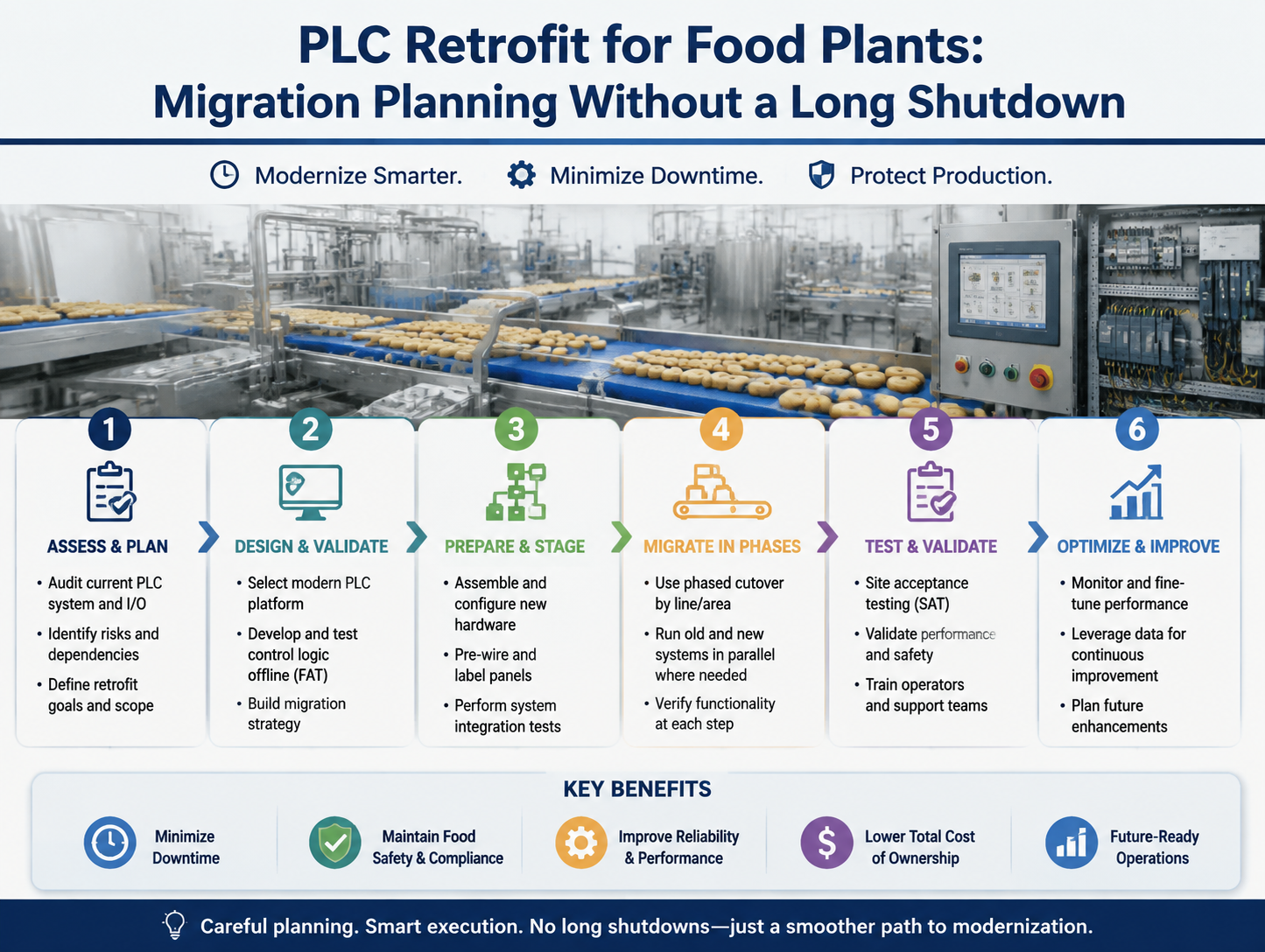
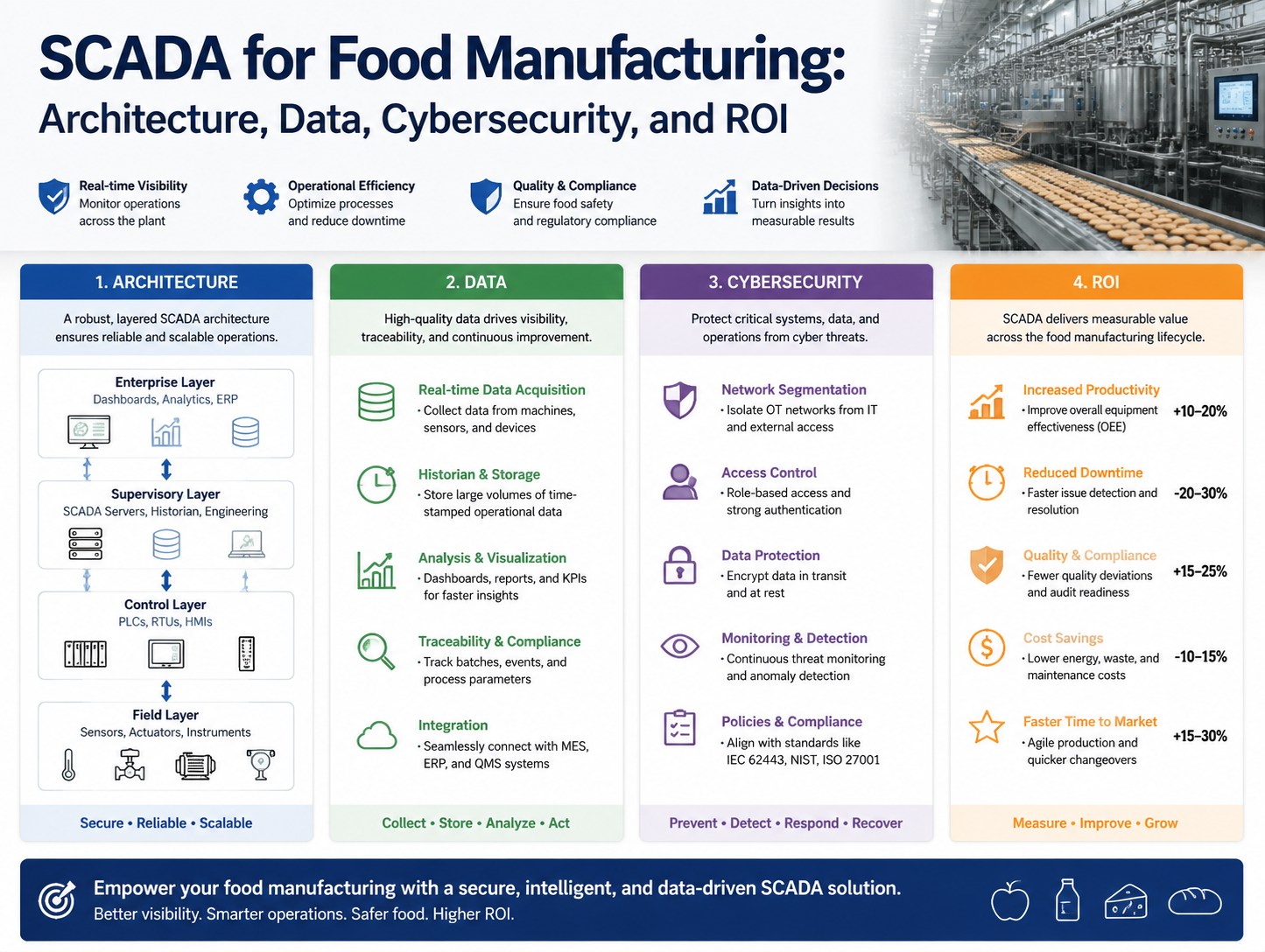
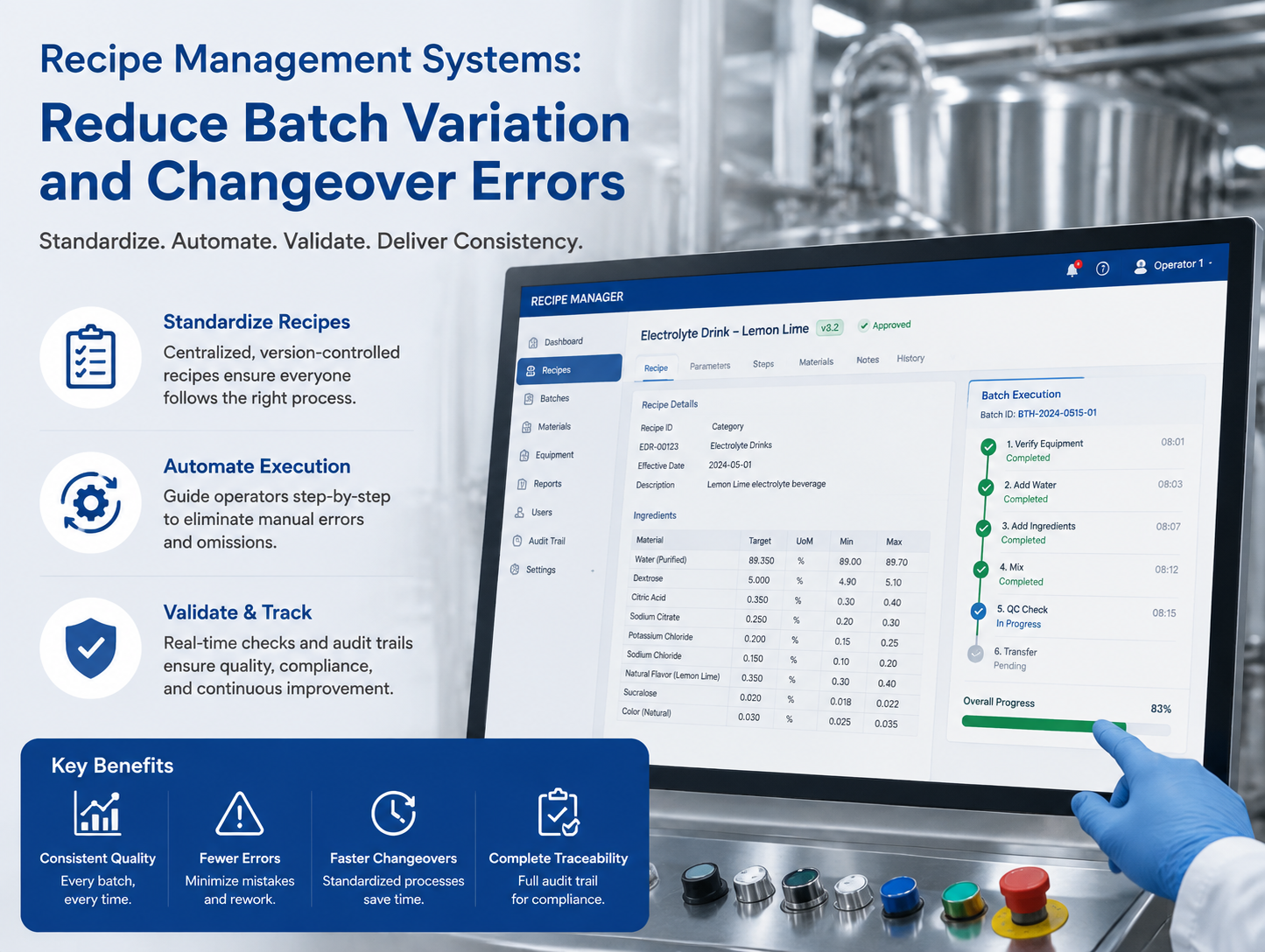
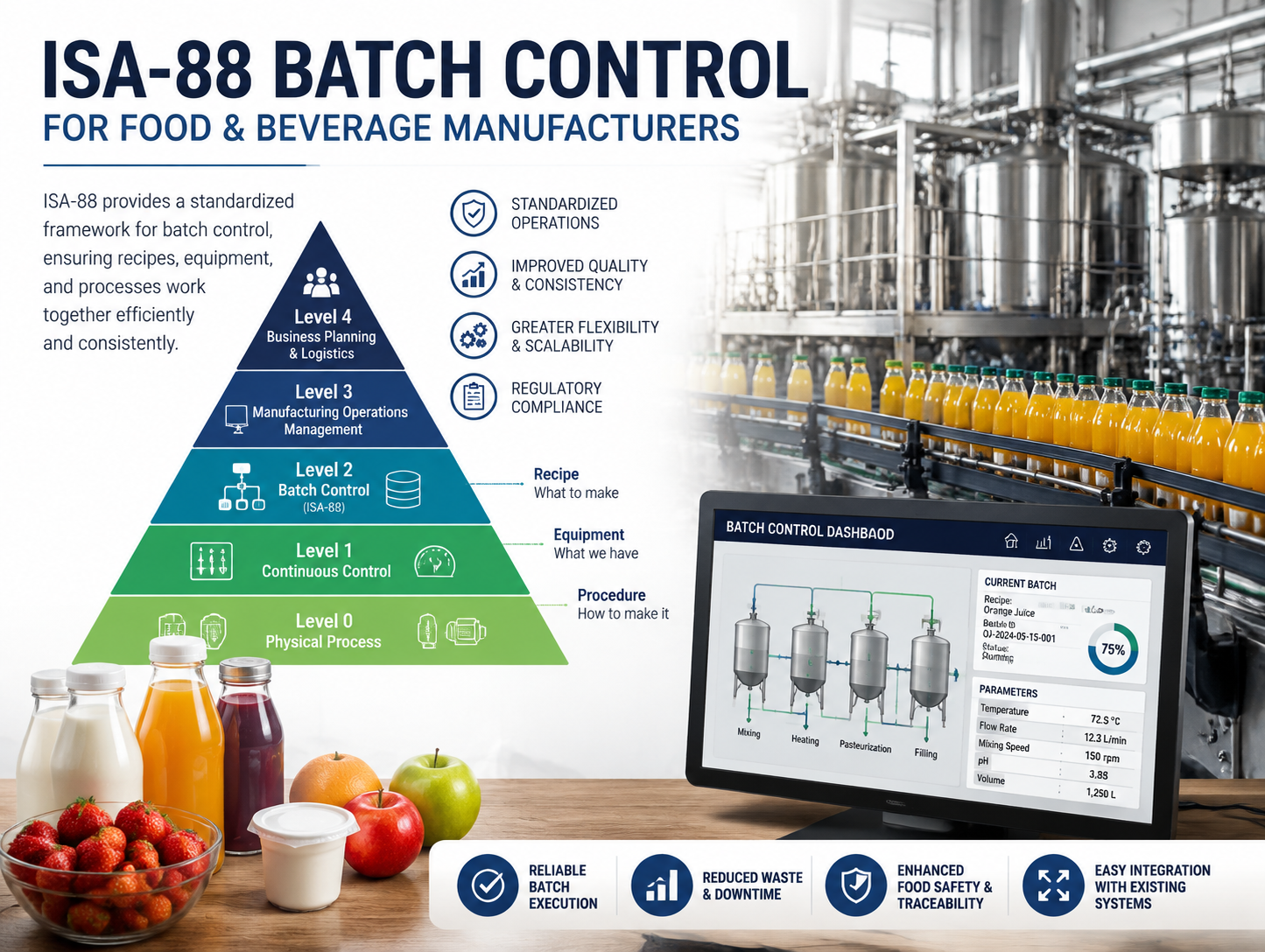
Need Help Planning Your Next Capital Project?
Whether you’re evaluating engineering partners or scoping a new facility — DPS delivers honest, rigorous guidance. Let’s start a conversation.

