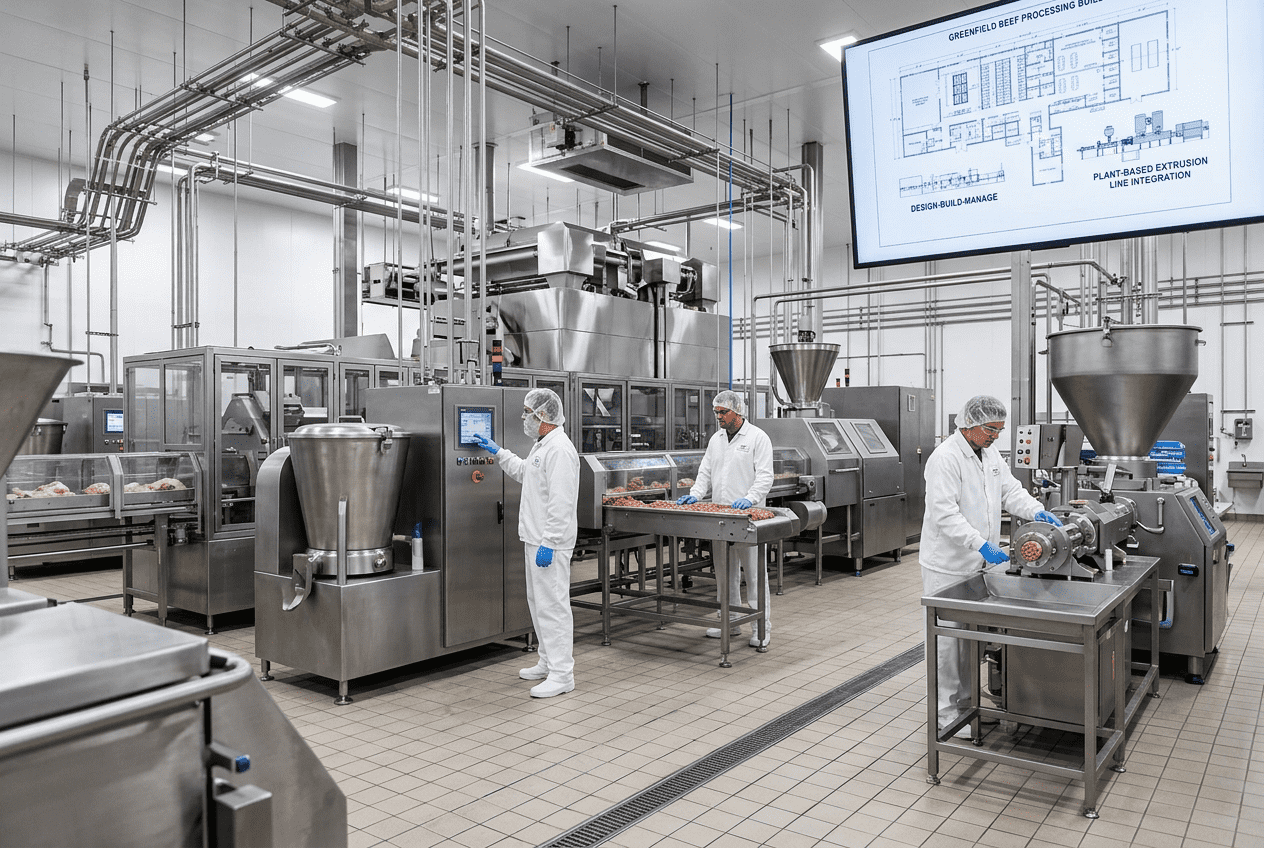
Food Grade Storage Tanks
[trp_language language=”en_US”]
Food-Safe Stainless Storage Tanks in the United States
For U.S. food and beverage manufacturers, food-safe stainless storage tanks are not just vessels for holding ingredients or finished goods. They directly affect compliance, shelf life, sanitation, labor efficiency, utility consumption, and long-term plant profitability. Whether a facility stores dairy, sauces, spirits, edible oils, sweeteners, beverage bases, protein slurries, or aseptic ingredients, the right tank specification should be based on food-contact requirements, corrosion resistance, cleanability, temperature control, venting, batch flow, and realistic production growth.
Across the United States, storage needs vary by region and product mix. A dairy processor in Wisconsin may prioritize insulated jacketed tanks for cold chain stability. A beverage co-packer near Atlanta or Dallas may need surge tanks and day tanks that support high-speed filling. A sauce manufacturer in California’s Central Valley may focus on heat retention and pumpability. Facilities shipping through Houston, Savannah, Newark, Long Beach, or Seattle often need bulk storage layouts that support receiving, inventory turnover, and export timing. In all cases, tank design decisions should connect process engineering, sanitation, operations, and capital planning.
Manufacturers that want better outcomes usually benefit from working with a partner that understands more than equipment alone. Disruptive Process Solutions approaches tank systems from a business and operations standpoint, helping processors align storage infrastructure with throughput, compliance, and expansion goals across the United States and Canada.
Quick Answer

The best food-safe storage tank for a U.S. processing plant is usually a stainless steel tank designed around the specific product’s chemistry, viscosity, temperature sensitivity, sanitation method, and turnover rate. In most applications, 304 stainless works well for general food ingredients, while 316L is preferred for corrosive, acidic, saline, high-chloride, or more sanitation-intensive products. Sealed tanks are generally better than open-top tanks when oxygen pickup, microbial exposure, odor control, product loss, or allergen protection matter. Capacity should be sized around receiving volume, production buffering, cleaning windows, and future growth, not just current batch size.
Plants with viscous or temperature-sensitive products often need insulation, jackets, or heat tracing. Facilities storing oxidation-sensitive liquids may also need filtered breathers or nitrogen blanketing. Good design also supports FIFO inventory rotation, internal inspection access, and reliable clean-in-place or manual cleanout procedures. The most cost-effective storage tank is rarely the cheapest tank; it is the one that supports uptime, quality, compliance, and profitable scale.
In the U.S. market, demand for hygienic stainless storage systems continues to grow because of expansion in ready-to-drink beverages, high-protein foods, sauces, fermentation, dairy alternatives, and co-manufacturing. States such as Texas, North Carolina, California, Illinois, Georgia, and Pennsylvania remain active hubs for processing investment. Ports and inland distribution corridors around Los Angeles, Houston, Chicago, Memphis, and New Jersey continue to shape how companies plan raw ingredient and finished product storage.
The chart below reflects a realistic market view of installed demand growth for hygienic food and beverage storage tank projects in the United States.
Where the U.S. market is headed
By 2026, many food and beverage plants are expected to place more emphasis on hygienic automation, traceability, energy efficiency, and sustainability. That means tank projects will increasingly include level instrumentation, load cells, automated valves, recipe control, SCADA visibility, insulated shells, low-loss venting, and better CIP verification. Storage assets are becoming smarter and more integrated into overall production economics rather than being treated as passive utility equipment.
What buyers should evaluate first
- Stored product chemistry and chloride exposure
- Required hold time and inventory turns
- Open handling versus closed sanitary transfer
- Need for agitation, blending, recirculation, or homogenization
- Ambient, chilled, or heated storage requirements
- Washdown environment and cleaning method
- Future throughput expansion over a three- to five-year horizon
FDA Food-Contact Requirements for Stainless Steel Storage Tanks

In the United States, FDA expectations for food-contact equipment focus on materials that are safe, durable, cleanable, and suitable for intended use. Stainless storage tanks used in food and beverage facilities are generally selected because they are non-toxic, corrosion-resistant, smooth, and maintainable. However, compliance is not simply about choosing stainless steel. It also depends on weld quality, surface finish, drainability, gasket materials, dead-leg control, cleaning access, and the overall sanitary design of the tank and connected piping.
Processors that operate under FDA, USDA, SQF, or BRC expectations should treat the tank as one component in a hygienic system. That includes no product traps, cleanable nozzles, appropriate slopes for complete drainage, compatible elastomers, and documentation for materials and fabrication. A tank that uses acceptable metal but poor sanitary detailing can still create major compliance and quality risks.
| Requirement Area | What U.S. Processors Should Verify | Why It Matters |
|---|---|---|
| Food-contact metal | Stainless steel grade is appropriate for the stored product and cleaning chemicals | Prevents corrosion, contamination, and premature failure |
| Surface finish | Smooth interior finish suitable for product and cleaning method | Reduces product hold-up and bacterial harborage |
| Weld quality | Ground, blended, and sanitary interior welds | Supports cleanability and inspection acceptance |
| Drainability | Sloped bottoms, low-point drains, minimal dead zones | Improves product recovery and CIP effectiveness |
| Gasket compatibility | Food-contact elastomers resist oils, acids, heat, and cleaning chemicals | Avoids leakage, swelling, and contamination |
| Access and inspection | Manways, spray devices, sight options, and safe entry provisions | Supports maintenance, validation, and audit readiness |
| Documentation | Material certificates, fabrication records, equipment drawings | Helps with validation, audits, and internal quality systems |
The table above shows that FDA-oriented tank selection is broader than a material choice. For example, a syrup or dairy processor may use the same basic tank geometry, but if one application has high soil load and the other has allergen segregation, their sanitary detailing may differ significantly.
Common U.S. compliance concerns
U.S. plants often discover problems in three areas: poor cleanability, poor drainage, and material mismatch. In Midwest dairy and prepared-food plants, failure to fully drain can create residue and microbial risk. In coastal locations or facilities using aggressive cleaning chemicals, under-specified alloys may pit faster. In beverage and ingredient plants that switch SKUs frequently, insufficient access for inspection or validation can increase downtime and audit exposure.
How engineering decisions affect compliance
Good hygienic design starts early. Through process engineering and system integration services, storage tanks can be matched to plant utilities, CIP design, automation strategy, and sanitation workflows. That reduces the chance of installing a compliant-looking tank that performs poorly in real production.
| Food Segment | Typical Tank Priority | Common Compliance Focus |
|---|---|---|
| Dairy | Full drainability and temperature control | Biofilm prevention and validated cleaning |
| RTD beverages | Closed transfer and surge stability | Flavor carryover and microbiological control |
| Sauces and dressings | Heat retention and pumpability | Viscous residue removal and allergen control |
| Edible oils | Oxidation control | Light and oxygen exposure management |
| Protein processing | Heavy-duty sanitary design | Washdown durability and USDA expectations |
| Aseptic ingredients | Sealed architecture and sterile interfaces | Environmental isolation and validation |
This comparison highlights that the same “food-grade tank” label can mean very different specifications across industries. Buyers should define product risk first, then align the tank design to that risk.
304 vs 316L: Selecting the Right Grade for Your Stored Product

One of the most common questions in tank procurement is whether 304 or 316L stainless steel is the better choice. In the United States, 304 stainless is widely used because it offers strong corrosion resistance for many food and beverage products at a more economical cost. It is often suitable for water, sugar solutions, many neutral pH ingredients, dry ingredient slurries, and a broad range of general-purpose storage duties.
316L, however, offers stronger resistance in harsher environments because of its molybdenum content and low-carbon composition. It is frequently chosen for acidic products, saline ingredients, high-chloride exposure, aggressive cleaning environments, fermented products, and applications where corrosion risk could threaten quality or service life. While 316L costs more upfront, it can be the lower-cost option over the life of the system if it avoids pitting, weld deterioration, or premature replacement.
| Factor | 304 Stainless | 316L Stainless |
|---|---|---|
| Initial cost | Lower | Higher |
| General food use | Very good | Excellent |
| Acid resistance | Moderate to good | Better |
| Chloride resistance | Moderate | Higher |
| Weld corrosion risk | Good when properly fabricated | Better in more demanding service |
| Best fit | Economical, broad-use storage | Critical, corrosive, or long-life service |
| Typical U.S. use case | Water, sweeteners, many beverage bases | Brines, acidic sauces, dairy CIP-intensive systems |
The table makes the commercial tradeoff clear: 304 is often sufficient, but 316L adds protection where chemistry or cleaning severity justifies it.
When 304 is usually appropriate
- Municipal or treated water storage
- Many syrup and sweetener applications with controlled chemistry
- Short-duration storage of neutral products
- Budget-sensitive projects where corrosion risk is low
- Plants with well-managed CIP chemistry and low chloride exposure
When 316L is usually worth the premium
- Tomato-based, acidic, or vinegar-containing products
- Brines, marinades, and high-salt solutions
- Dairy and beverage facilities with aggressive sanitation cycles
- Coastal plants with elevated corrosion exposure
- High-purity or high-value products where contamination risk is unacceptable
- Long-life assets expected to support expansion over many years
Manufacturers near coastal trade corridors such as Long Beach, Miami, Norfolk, or Savannah often pay closer attention to corrosion resilience due to ambient conditions and shipping-driven operating patterns. Inland plants in Chicago, Kansas City, or Indianapolis may still require 316L if product chemistry or cleaning chemicals are the main concern. Geography matters, but product chemistry matters more.
Buying advice for the U.S. market
If you are comparing quotes, do not evaluate metal grade in isolation. Ask about shell thickness, head construction, finish, weld treatment, nozzle arrangement, insulation, jacket design, and support structure. Some low-price tanks use an acceptable alloy but reduce value elsewhere. Reviewing processing equipment capabilities in the context of your specific application can prevent expensive under-specification or overspending on features that add no return.
Open-Top vs. Sealed Storage: Oxygen, Light & Contamination Control
The choice between open-top and sealed storage affects product quality more than many first-time buyers expect. Open-top tanks can be practical in some batching, ingredient staging, or manually loaded operations. They are easier to access and may reduce capital cost. However, they expose product to airborne contamination, operator handling variation, oxygen ingress, light exposure, evaporation loss, and odor transfer. In modern food and beverage production, sealed storage is often the better option whenever quality consistency and sanitation control matter.
Sealed tanks are especially valuable for flavor-sensitive beverages, edible oils, dairy ingredients, fermented products, aseptic intermediates, and any formulation where oxygen pickup can affect color, aroma, shelf life, or nutritional profile. They also help with allergen segregation and environmental control in high-throughput plants.
| Storage Style | Main Advantage | Main Limitation | Typical Use |
|---|---|---|---|
| Open-top, non-jacketed | Simple access and lower cost | Higher contamination and oxygen exposure | Short staging of low-risk ingredients |
| Open-top with cover | Improved splash and debris control | Still not fully sealed | Batch prep in controlled rooms |
| Sealed atmospheric tank | Better hygiene and product protection | Needs proper venting | General food and beverage storage |
| Sealed insulated tank | Thermal stability plus contamination control | Higher capital cost | Dairy, sauces, beverage bases |
| Sealed tank with nitrogen blanketing | Excellent oxidation control | Added utility and controls | Oils, flavors, sensitive liquids |
| Sealed aseptic-compatible design | High product protection | Requires strict validation | Aseptic and high-care applications |
This table shows why open-top tanks are now mostly limited to lower-risk or highly controlled uses. Sealed configurations better support consistency, especially in facilities making premium or shelf-sensitive products.
Light and oxygen exposure by product category
Oxygen and light are major quality drivers for oils, natural colors, botanical beverages, vitamins, hop-sensitive drinks, and some dairy-based formulations. A processor in Portland producing functional beverages may lose aroma intensity from avoidable air exposure. A California edible oil packer may see flavor degradation from unnecessary headspace oxygen and light ingress. For those products, sealed stainless storage with low-oxygen handling is not optional; it is part of the quality system.
Industry demand by application
The U.S. market shows strongest demand for sealed sanitary storage in beverage, dairy, and sauce applications, with growing adoption in plant-based foods and fermentation.
Application examples
- Bulk receiving tanks for sweeteners and oils
- Day tanks feeding fillers, cookers, or mix systems
- Surge tanks between pasteurization and packaging
- Fermentation support tanks and bright product hold
- Intermediate product hold during schedule balancing
- Finished liquid storage before tanker loading or packaging
Capacity Planning: Bulk Storage, Day Tanks & Surge Capacity Strategies
Tank sizing should start with process reality, not catalog volume. Many plants buy tanks based on nominal batch size and later discover that receiving schedules, cleaning windows, filler uptime, and production variability require far more usable capacity. Good capacity planning usually balances three layers: bulk storage for raw material or finished goods, day tanks for active production supply, and surge tanks to absorb short-term line imbalance.
Bulk storage is common for sweeteners, water, milk, oils, beverage concentrates, wine, spirits, and ingredient slurries. Day tanks are smaller and closer to the process, feeding mix systems, cookers, fillers, or packaging lines. Surge tanks help manage transition points, such as between HTST systems and fillers or between batching and high-speed packaging. Plants in major logistics markets like Houston, Chicago, Atlanta, and New Jersey often benefit from larger receiving buffers because transportation timing can be less predictable.
| Capacity Layer | Typical Function | Planning Focus |
|---|---|---|
| Bulk storage | Holds inbound ingredients or outbound finished liquids | Delivery frequency, inventory days, tanker timing |
| Day tank | Feeds daily or shift production | Batch size, line rate, refill timing |
| Surge tank | Absorbs short operational variation | Line protection and downtime reduction |
| Buffer tank | Supports process changeovers | Schedule flexibility and CIP sequencing |
| Hold tank | Temporary post-process residence | Release timing and quality checks |
| Expansion reserve | Future throughput growth | Three- to five-year capacity plan |
This framework helps buyers avoid a common error: installing enough tank volume for today’s best-case run but not enough for cleaning downtime, receiving delays, or future business wins.
Simple U.S. planning rule of thumb
Many successful projects size storage to cover normal run rate plus practical contingencies. For example, a beverage co-packer may want enough day tank volume to protect a filler through flavor changeovers and enough surge volume to avoid starving downstream packaging. A sauce plant may need extra hold time because heating, cooling, and viscosity stabilization are slower than filler speed.
| Scenario | Production Condition | Recommended Planning Logic |
|---|---|---|
| Single-SKU steady run | Minimal changeover | Lower surge need, moderate day tank coverage |
| High-SKU beverage plant | Frequent flavor changes | More buffer and flexible day tank arrangement |
| Sauce and dressing plant | Viscosity and heating delays | Larger working volume and thermal hold margin |
| Dairy operation | Strict sanitation windows | Redundancy for cleaning and release timing |
| Co-manufacturer | Demand swings by customer | Extra reserve capacity and modular design |
| Export-oriented processor | Shipping variability | More finished-goods hold and tanker loading flexibility |
These planning patterns are especially important for plants serving large retail or foodservice accounts where missed shipments can erase margin fast.
Case-driven sizing support
On major projects, storage should be integrated with utilities, controls, and layout. That is where experience matters. DPS regularly supports capital planning, process design, and execution strategies that tie tank sizing to profitable throughput rather than isolated equipment decisions. Examples of project thinking and operating context can be seen in selected client case studies and project work.
Temperature Control for Viscous Products: Heat Tracing & Insulation Options
Temperature control is essential when products become difficult to pump, mix, meter, or drain as they cool. Viscous materials such as chocolate components, syrups, peanut-based mixes, sauces, edible fats, glazes, and some dairy concentrates often need controlled warmth to remain processable. Other products may need chilled storage to preserve quality or microbiological stability. In both cases, the tank should be designed around the true operating window, not just a nominal storage temperature.
Common temperature-control options include insulation, dimple or full jackets, electric heat tracing, steam tracing, hot water circulation, and recirculation loops. The best approach depends on product sensitivity, required response speed, utility availability, cleaning needs, and cost of temperature drift. Uniformity matters as much as target temperature. A tank that holds average temperature but creates hot spots, crusting, or cooled dead zones can still fail operationally.
| Option | Best For | Key Advantage | Limitation |
|---|---|---|---|
| Mineral wool or foam insulation | Holding temperature | Reduces heat gain or heat loss | Does not actively heat product |
| Electric heat tracing | Piping, small tanks, viscosity support | Flexible installation | Needs controls and even application |
| Steam jacket | Fast heating duty | High energy transfer | Can overheat sensitive products if poorly controlled |
| Hot water jacket | Gentler heating | Better temperature moderation | Slower response than steam |
| Glycol jacket | Cooling or balanced temperature control | Stable control for many products | Requires supporting utility system |
| Recirculation loop with heat exchanger | Large tanks or uniformity-critical products | Excellent consistency | More piping, pumping, and controls |
The table shows why temperature control should be selected by process behavior. If a product only needs to avoid overnight thickening, insulation and mild tracing may be enough. If the product’s viscosity sharply changes near its process limit, an actively controlled jacket or recirculation system is usually safer.
Viscous products and operational risks
In U.S. sauce, dressing, confectionery, and ingredient plants, poor temperature control often causes more than pump issues. It can increase batch variation, create partial drainage losses, slow CIP, and change fill accuracy. A kettle-fed line in Ohio or a syrup room in North Carolina may lose significant efficiency if day tanks cool faster than expected between shifts.
Technology capabilities that improve thermal performance
Advanced projects increasingly combine storage tanks with automation, PLC programming, and SCADA monitoring so operators can see temperature trends, alarm thresholds, and level conditions in real time. This broader technological capability is one reason many processors look beyond standalone tank vendors and prefer integrated engineering teams that understand utilities, controls, and plant operations together.
Trend shift toward smarter thermal storage
The U.S. market is moving toward more instrumented and energy-aware temperature-controlled tanks, especially in premium foods, dairy alternatives, and co-packing environments.
Tank Venting & Atmosphere Control: Filtered Breathers, Nitrogen Purge
Even atmospheric food tanks need proper venting. When tanks fill, drain, heat, cool, or CIP, pressure changes occur. Without correct venting, a tank may experience contamination risk, vacuum damage, odor migration, excess moisture exposure, or product oxidation. Vent design is often underestimated during procurement, yet it is critical for both sanitary performance and vessel protection.
Filtered breathers are common for hygienic atmospheric tanks. They help limit airborne contamination while allowing pressure equalization. For more sensitive products, nitrogen blanketing or purge systems can reduce oxygen in the headspace, support aroma retention, and lower oxidation. The right atmosphere strategy depends on product sensitivity, shelf-life target, plant utility availability, and operator discipline.
| Venting Method | Primary Purpose | Best Use Case |
|---|---|---|
| Open vent | Basic pressure equalization | Low-risk non-sensitive service only |
| Filtered breather | Air exchange with contamination reduction | General food and beverage storage |
| Pressure-vacuum vent | Protects tank from pressure swings | Closed atmospheric or semi-closed systems |
| Nitrogen blanket | Reduces oxygen exposure | Oils, flavors, wine, sensitive beverages |
| Continuous nitrogen purge | Maintains low oxygen environment | High-value oxidation-sensitive products |
| Sterile vent arrangement | High sanitary isolation | Aseptic or high-care environments |
This venting comparison shows that atmosphere control can be as important as vessel construction. A premium oil stored in a well-made tank can still degrade if breathing is uncontrolled.
When nitrogen blanketing pays off
Nitrogen is commonly justified when oxidation reduces flavor, color, nutrient retention, or sellable life. This often applies to wine, spirits finishing, edible oils, natural flavor systems, and certain functional beverages. In large coastal distribution markets such as California and Florida, where products may spend longer in mixed logistics channels, protecting shelf life upstream can have strong financial value.
Future policy and sustainability trend for 2026
Looking toward 2026, U.S. processors are expected to face stronger pressure to reduce food waste, improve energy efficiency, and document process control. Better venting and atmosphere management support those goals by reducing oxidation losses, minimizing product disposal, and allowing more predictable quality performance. Sustainability in storage is no longer just about lower utility use; it also includes better product preservation and reduced rework.
First-In-First-Out (FIFO) Design for Ingredient & Product Storage
FIFO is one of the most practical principles in food-safe storage design. It helps prevent aged inventory, quality drift, lot confusion, and sanitation risk. Yet many plants still rely on manual workarounds because tank farms, piping paths, or scheduling logic were not designed for orderly product rotation. A true FIFO-friendly system uses both physical layout and control logic to ensure older material is consumed or shipped before newer material when the process requires it.
For ingredients, FIFO is especially important for sweeteners, oils, dairy components, flavor bases, liquid eggs, and time-sensitive slurries. For finished products, it matters in beverage hold, sauce accumulation, and bulk tanker loading. Facilities with multi-tank farms near major freight corridors like Memphis, Columbus, and Harrisburg often benefit from clear routing and inventory visualization because shipment timing can vary by customer and carrier availability.
Key elements of FIFO design
- Dedicated receiving and discharge logic
- Clear tank identification and lot status visibility
- Automation to prevent accidental out-of-sequence use
- Drainable transfer lines with minimal cross-contamination risk
- Batch records connected to tank assignment
- Appropriate surge and reserve capacity so operators are not forced into poor rotation
Manufacturing capabilities that support FIFO performance
Tank quality also depends on fabrication capability. Processors typically gain more value when tanks are built with sanitary internals, practical nozzle orientation, strong structural detailing, and compatibility with CIP and automation interfaces. DPS supports projects with in-house equipment manufacturing for select processing assets, including storage and processing tanks up to 12,000 gallons, which can help align fabrication details with actual plant operating needs rather than generic catalog assumptions.
Comparison of storage approaches
This comparison illustrates why many modern U.S. plants prefer integrated systems over isolated vessels. Better routing, controls, and sanitary design improve both daily execution and audit confidence.
Industries where FIFO mistakes are most costly
- Dairy, where freshness and sanitation windows are tight
- RTD beverage, where flavor consistency drives customer retention
- Sauces and dressings, where viscosity and allergen changeovers complicate sequencing
- Fermented products, where age and dissolved gas conditions matter
- Co-manufacturing, where multiple brands and lot controls share the same asset base
Inspection Protocols: Internal Access, Cleanability & Preventive Maintenance
A storage tank should be easy to inspect, easy to clean, and practical to maintain. Too many tanks are purchased based on shell volume and alloy alone, while access, validation, and serviceability are treated as secondary details. Over time, those details often have a bigger effect on cost than the purchase price does. Preventive maintenance reduces unplanned downtime, preserves sanitary performance, and extends vessel life.
Inspection protocols should address visual access, internal surface condition, gasket wear, vent performance, instrument calibration, weld integrity, insulation condition, and structural supports. Tanks storing viscous or sticky materials should also be checked for residue zones, poor spray coverage, and drain inefficiencies. In high-throughput facilities, preventive maintenance planning should coordinate with sanitation windows and production scheduling.
| Inspection Item | What to Check | Typical Frequency |
|---|---|---|
| Interior surfaces | Pitting, discoloration, residue, finish damage | Routine and after anomalies |
| Weld seams | Cracks, corrosion initiation, roughness | Scheduled inspection |
| Manways and gaskets | Seal condition, compression, damage | Each service interval |
| Vents and breathers | Filter condition, blockage, integrity | Regular replacement cycle |
| Level and temperature instruments | Calibration, response, signal quality | Per quality program |
| Supports and exterior shell | Movement, corrosion, insulation damage | Periodic structural review |
| CIP devices | Spray pattern, rotation, flow performance | Validated maintenance cycle |
Each inspection item has a direct quality or uptime impact. For example, a clogged breather can create contamination risk or vessel stress. A worn gasket can lead to hidden leakage and environmental exposure. A failed spray device can cause cleaning verification failures.
Cleanability standards in practice
Internal access is important even in CIP systems. Plants should be able to verify weld quality, residue removal, and mechanical condition without excessive confined-space burden or operational delay. Tank geometry, spray coverage, and line routing should be evaluated together. Good preventive maintenance is not just about fixing components; it is about preserving hygienic design performance.
Service capabilities that matter in tank projects
Many processors need more than fabrication support. They need process engineering, capital planning, owner’s representation, general project oversight, installation coordination, utility integration, controls support, and commissioning. DPS is known for combining those service capabilities under a design-build-manage approach, which helps food and beverage manufacturers execute storage projects with stronger alignment between engineering intent and field results.
Local supplier evaluation checklist
When comparing suppliers in the United States, buyers should look beyond location. A shop near Charlotte, Milwaukee, Fresno, or Houston may be convenient, but convenience does not replace process understanding. Evaluate:
- Food and beverage sanitary experience
- Documentation and material traceability
- Ability to integrate controls, CIP, and utilities
- Field installation and commissioning support
- Responsiveness during startup and after handoff
- Understanding of FDA, USDA, SQF, and BRC expectations
FAQ
What is the best stainless steel for food-safe storage tanks in the United States?
For many general applications, 304 stainless steel is a strong and economical choice. For acidic, salty, chloride-exposed, or sanitation-intensive products, 316L is often the better long-term option.
Are open-top tanks acceptable for food use?
They can be acceptable in limited, controlled applications, but sealed tanks are usually better for contamination control, oxygen reduction, and consistent product quality.
Do all food-grade tanks need insulation?
No. Insulation is needed when temperature stability affects quality, viscosity, safety, or utility performance. Ambient products with low sensitivity may not require it.
When should I use nitrogen blanketing?
Use it when oxygen exposure harms flavor, aroma, color, nutrients, or shelf life. It is common for edible oils, flavors, wine, certain beverages, and other oxidation-sensitive liquids.
How much storage capacity should a plant have?
That depends on delivery frequency, batch size, line rate, changeovers, sanitation windows, and growth plans. Capacity should account for bulk storage, day tanks, and surge protection rather than one simple volume target.
Can one tank design work for every industry?
No. Dairy, sauces, proteins, beverages, fermentation, and aseptic products all impose different sanitary, thermal, and corrosion demands. The right design is application specific.
What makes a tank easier to clean?
Smooth interior finishes, sanitary welds, complete drainability, effective spray devices, minimal dead legs, proper nozzle placement, and access for inspection all improve cleanability.
How often should food-safe tanks be inspected?
Inspection frequency depends on product risk, sanitation severity, and plant quality programs. Most facilities combine routine operator checks, scheduled preventive inspections, and deeper periodic reviews.
What are the biggest mistakes buyers make?
Common mistakes include undersizing for growth, ignoring venting, underestimating cleanability needs, choosing the wrong alloy, and buying tanks without considering controls, utilities, and process integration.
How can a processor choose the right project partner?
Look for a firm that understands food and beverage operations, not just metal fabrication. The best partners connect tank design to throughput, sanitation, automation, utilities, installation, and profitability.
For U.S. processors planning a new tank farm, a plant expansion, or a targeted storage upgrade, success usually comes from aligning food safety, operating discipline, and capital efficiency from the start. A well-designed stainless storage tank system supports compliance, protects product quality, lowers waste, and gives a facility room to scale with confidence.
[/trp_language]
Complete Company Portfolio
About the Author: Disruptive Process Solutions (DPS)
The DPS team combines process engineering expertise with real-world food and beverage manufacturing experience. Our content focuses on process optimization, production efficiency, facility improvements, and practical solutions that help manufacturers operate more effectively in a rapidly evolving industry.
Share