In This Article
QUICK ANSWER · CAPITAL PLANNING
Should a New Food Plant Use Batch or Continuous Processing?
Choose batch or continuous food processing by comparing the same product range, saleable annual output and operating calendar. Batch operation can accommodate distinct recipes and smaller campaigns; continuous operation can suit sustained demand for a stable product and process. Neither approach guarantees lower installed cost, better quality or higher annual output. Cleaning, changeovers, intermediate storage, utilities, staffing and packaging determine what the complete facility can deliver.
Prepare an operating schedule for both options before requesting equipment prices. Where the portfolio combines a common base with several finished variants, a hybrid arrangement may deserve comparison as well.
A company planning its first factory often starts with a simple assumption: batch is flexible, continuous is efficient. That description is too broad for a capital decision. A continuous line with frequent product changes can spend valuable calendar time preparing for short runs. A batch process with carefully coordinated mixing, treatment and packaging can support more volume than an isolated vessel calculation suggests.
The useful question is how each production architecture will supply the business. This guide compares batch vs continuous food processing from an owner’s perspective: product commitments, demand patterns, installed scope, operating economics and future expansion. It is a screening framework, not a thermal-process specification. Product safety and process acceptance must be established for the actual formulation and operating conditions.
1. Define the Boundary: A Batch Machine Is Not the Whole Production System
In batch processing, a defined quantity moves through one or more operations as an identifiable lot. In continuous processing, material flows through an operation over time. A plant can combine both: ingredients may be prepared in batches while thermal treatment and filling operate continuously. Calling the whole factory “continuous” can hide the work that supplies and receives that flow.
Map each step from ingredient receipt to saleable finished goods. Identify where material accumulates, where a lot is released and where production can pause. Include ingredient preparation, product treatment, holding, packaging and cleaning. The capital comparison should cover this complete operating boundary rather than only the most visible processing machine.
Use language that everyone on the project interprets consistently. A supplier’s continuous mixer may still depend on batch-prepared ingredients; a batch cooker may discharge into a buffer that supports steady filling. Record the proposed architecture on a block flow diagram and ask the supplier to explain its operating sequence. That conversation often exposes differences that a quotation title does not reveal.
2. Use the Product Portfolio to Test the Required Flexibility
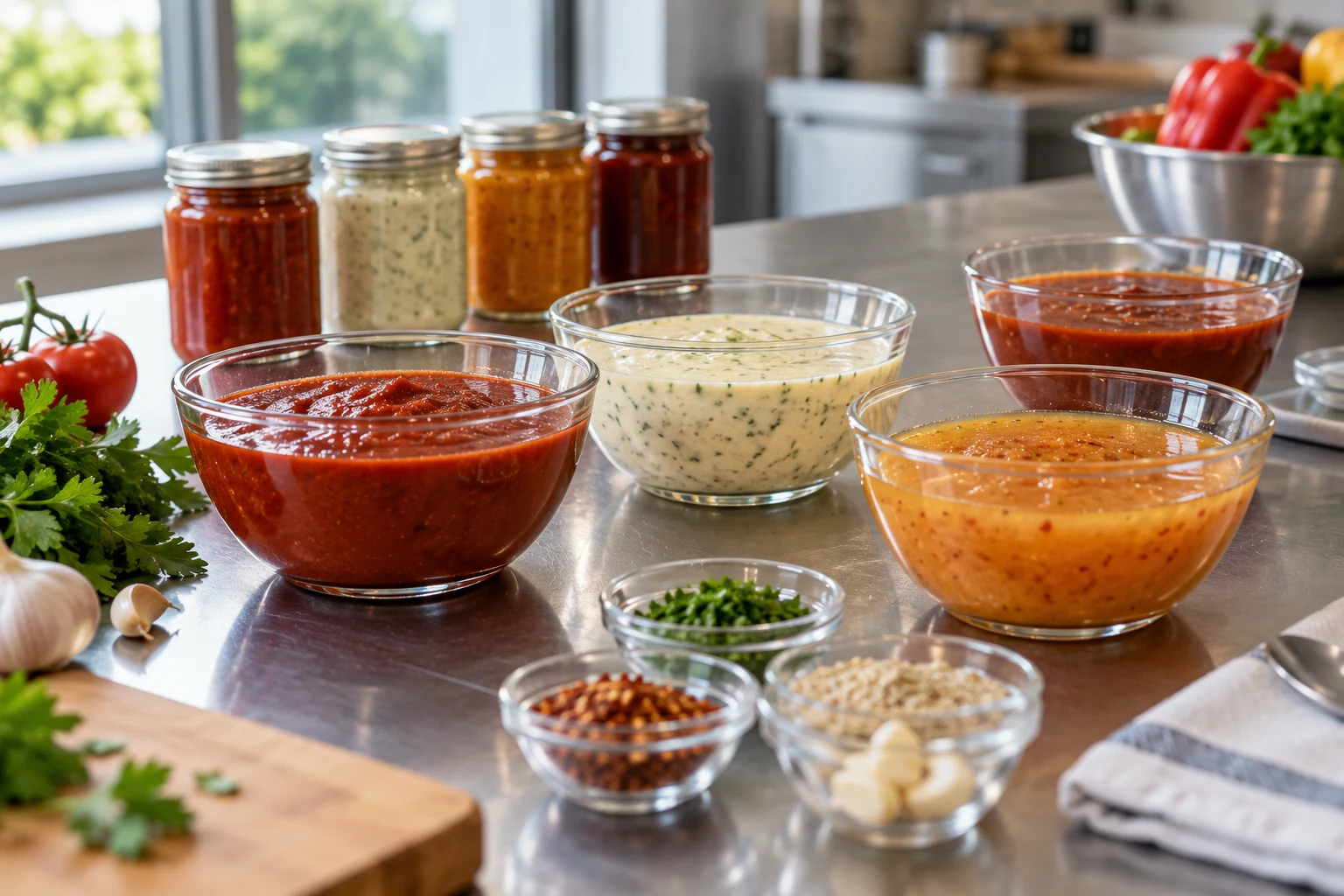
List the products the plant must make at launch and the credible additions it may need later. Describe meaningful differences: ingredient behavior, allergen profile, viscosity, particulates, preservation route, target package and quality criteria. Counting flavors alone is not enough. Two flavors sharing a common base may be easier to schedule than two products with different preparation and cleaning requirements.
For each family, identify minimum practical campaigns and the cost of producing more than the customer can accept. A process that favors a long stable run may create excess inventory when demand arrives in small fragmented orders. Conversely, a highly flexible arrangement may carry more vessels, transfers and operating steps than a narrow portfolio actually needs.
Disruptive Process Solutions (DPS) can connect this product definition to a conceptual process scope during capital planning. The useful deliverable is an explicit operating envelope: which products the proposed plant will support, what changes require additional work, and which assumptions still need trials. That gives owners a defensible basis for comparing alternatives without assuming unlimited flexibility.
3. Translate Annual Demand into Campaigns Before Choosing an Architecture
Annual demand does not specify how production must occur. A product selling steadily throughout the year can have a different manufacturing schedule from a seasonal item with the same annual sales. Customer order size, delivery frequency, minimum remaining shelf life and available storage all influence the campaign plan.
Build a representative production month that includes the actual order pattern. Group compatible products where justified, then show how the plant will respond to an urgent order or a missed delivery. The exercise should reveal whether a long campaign is commercially useful or merely convenient for the proposed machinery.
Keep initial demand separate from the mature forecast. A line sized around a later sales target may operate very differently during the first year. Test whether smaller campaigns, temporary outsourcing or staged investment offer a better initial fit. The purpose is not to select the smallest possible factory; it is to avoid committing to an operating pattern that depends on sales the business has not yet established.
| Question | Batch Option | Continuous Option |
|---|---|---|
| Short orders | Check practical batch size and surplus inventory | Check minimum stable run and startup losses |
| Many product families | Map recipe and cleaning transitions | Map line transitions and common-base opportunities |
| Stable large campaigns | Coordinate repeated batches and buffers | Test sustained operation at demonstrated duty |
| Uncertain first-year demand | Test utilization at smaller campaigns | Test turndown, launch volumes and outsourcing alternatives |
4. Compare Productive Calendar Time Rather than Brochure Capacity
For a batch option, calculate the complete occupied cycle: charging, preparation, treatment, discharge and the tasks required before the next batch. Some activities may overlap across vessels, but overlap needs a real resource and sequence. Do not assume that the same operator or utility can serve two simultaneous tasks without checking the schedule.
For a continuous option, distinguish scheduled hours from stable production hours. Startup, changeover, planned cleaning, quality holds and transitions can reduce the time available for saleable output. A quoted instantaneous flow rate answers a different question from annual production capacity.
Use one calendar for both concepts, including holidays and the agreed staffing pattern. If one proposal requires additional operating days or a different cleaning window, show that change explicitly. A fair comparison does not give one option more time while describing the resulting volume advantage as a technology benefit. The schedule is part of the investment basis and should be approved alongside the equipment scope.
5. Visualize a Transparent Batch-Versus-Continuous Capacity Example
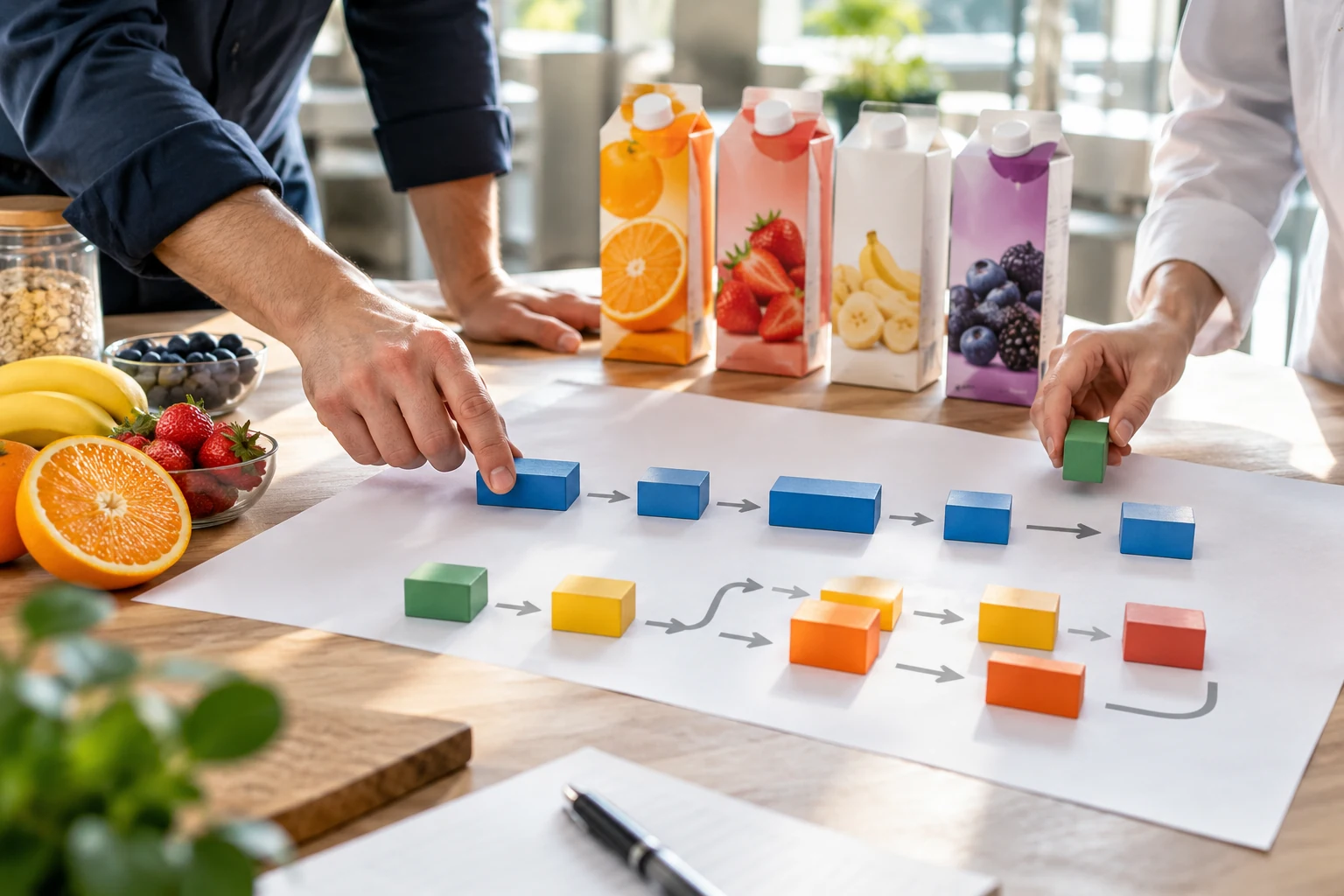
Consider an invented scheduling example with 4,000 scheduled hours per year. A batch concept delivers 8,000 pounds per completed cycle, occupies four hours per cycle, and has 3,200 hours available for those cycles after planned interruptions. Its modeled annual output is 800 cycles multiplied by 8,000 pounds, or 6.4 million pounds.
The continuous concept has an assumed stable rate of 2,500 pounds per hour. With 3,000 stable production hours after its own planned interruptions, modeled output is 7.5 million pounds. These inputs are arbitrary teaching assumptions, not a performance comparison between actual suppliers. They show why both time and rate must be visible.
If the business needs only 5 million saleable pounds, both concepts clear that simplified annual requirement. The next questions concern campaign fit, product acceptance, bottlenecks and cost. If cleaning or changeovers remove additional time, recalculate the relevant concept. Do not apply a second generic efficiency factor to losses already deducted from the schedule.
| Input or Result | Batch Concept | Continuous Concept |
|---|---|---|
| Scheduled hours/year | 4,000 | 4,000 |
| Productive hours after stated interruptions | 3,200 | 3,000 |
| Production basis | 8,000 lb per 4-hour cycle | 2,500 lb per stable hour |
| Modeled annual output | 6,400,000 lb | 7,500,000 lb |
6. Make Product Acceptance a Gate Before Comparing Economics
An architecture is useful only if it can produce the required product consistently. Define the attributes that matter to the customer and the food safety team, then identify which operating variables could affect them. Product trials should address the range of formulations and operating conditions the business intends to sell, rather than only a favorable demonstration recipe.
Treat preparation, transfer and holding as part of the product experience. A formulation may change during a long campaign or while waiting for packaging. Mixing, heating, cooling and residence-time behavior need product-specific evaluation. This guide does not provide a safe thermal schedule or establish that a product will tolerate a particular process.
Agree on how trials will be judged and what evidence will be retained. If a proposed option depends on an unproven ingredient substitution, record that dependency in the business case. A lower capital allowance should not earn approval while the product acceptance question remains unresolved. The decision team should know which findings are demonstrated and which are still assumptions.
7. Include Intermediate Storage and the Packaging Interface
Process capacity and packaging capacity rarely match perfectly throughout every shift. Batch discharge may arrive faster than a filler can consume it. A continuous upstream operation may need a steady outlet even when packaging stops briefly. Buffers can help coordinate these differences, but they add space, controls, cleaning requirements and product-management decisions.
Describe each buffer by its purpose and operating limits. Is it absorbing a normal batch discharge, decoupling two operations, allowing a quality decision, or protecting a production campaign from short interruptions? A vessel with no defined scheduling role is difficult to justify, while an omitted buffer can make an attractive process concept impractical.
Test the packaging mix as part of this exercise. A format change can stop the downstream line while upstream work continues. The team must decide whether to hold product, slow production or end the campaign. Assign those actions to the operating sequence and include the necessary infrastructure in both estimates. Comparing only the core processor purchase price misses this system-level investment.
8. Treat Cleaning and Changeovers as Designed Operating Events
Cleaning is a planned use of plant time, utilities and labor. Define which circuits and areas must be cleaned between products, between campaigns and at other required intervals. The cleaning program should be developed for the intended soils, ingredients and equipment. A vendor’s standard cycle description is not proof that it suits every product in the portfolio.
Batch and continuous concepts may divide cleaning work differently. More vessels can create more circuits while also allowing selected tasks to overlap; a continuous arrangement can have a different restart sequence. Neither observation establishes a universal advantage. Evaluate the actual proposed sequence and the resources it needs.
Tetra Pak’s cleaning handbook is a useful technical reference for why equipment, cleaning conditions and operating arrangements must be considered together. For an owner’s comparison, ask for a cleaning responsibility matrix and a time allowance tied to the representative production schedule. Keep food safety verification separate from the arithmetic: a shorter assumed cleaning window creates no economic benefit unless the required outcome remains demonstrable.
9. Compare Simultaneous Utility Demand and the Initial Operating Load
A continuous process can present a sustained utility demand; a batch sequence may create distinct peaks during charging, heating, cooling or cleaning. The site needs to support the actual combinations that occur, including shared utilities with packaging and other production areas. Average annual consumption alone does not establish connection or generation capacity.
Prepare a time-based load schedule for both concepts. Identify which loads are simultaneous and which can be scheduled apart without harming the delivery plan. Include production startup and cleaning because those events can coincide with other important demands. If a concept relies on sequencing to avoid an infrastructure upgrade, that sequencing must be achievable in normal operation.
DPS’s process engineering scope includes utility calculations and facility coordination. In this comparison, that work should show how each concept changes central utility requirements, distribution and expansion provisions. The result may support a different capital choice from the one suggested by equipment prices alone. Require confirmation of available site capacity before treating either infrastructure concept as fully funded.
10. Batch vs Continuous Capital Cost: Compare Equivalent Installed Scope
Request separate schedules for equipment supply, installation, interconnections, utilities, automation and system acceptance. Batch and continuous quotations can package these responsibilities differently. One may include a coordinated skid while another lists individual components. Normalize the scope before drawing conclusions about which concept is less expensive.
Include the spaces and support systems the operating method requires. Ingredient staging, intermediate holding, access, cleaning infrastructure and packaging buffers can change the building scope. An option that reduces one machine allowance may increase several other packages. The estimate should show those consequences with enough detail for the owner to challenge them.
Use the same pricing period and the same commercial boundary. Freight, taxes, supplier attendance and owner-provided work should be identified once. Foth’s cost guidance emphasizes that food plant cost depends on the operation, project and location; it does not supply a universal cost ranking. A transparent package register is therefore more informative than applying an unsupported installation multiplier to two unrelated purchase quotes.
| Package | Ask of the Batch Proposal | Ask of the Continuous Proposal |
|---|---|---|
| Preparation and treatment | Cycle equipment, transfers and required staging | Feed preparation, stable-flow requirements and transitions |
| Buffering and filling | Discharge coordination and hold requirements | Decoupling strategy and permitted interruptions |
| Utilities and cleaning | Peak sequence, circuit scope and concurrency | Stable demand, startup and cleaning/restart sequence |
| Controls and acceptance | Batch records and cross-vessel coordination | Flow control, transitions and complete-system testing |
11. Model Operating Economics at the Volume the Business Can Sell
Estimate operating costs using the agreed schedule and product mix. Separate ingredients, packaging, direct operating labor, utilities, cleaning consumables, product losses and other relevant costs. Where an item is already included in a supplier’s service charge or an internal overhead allowance, identify the overlap before adding it again.
Labor assumptions deserve particular attention. More automation may change the type of work rather than eliminate a complete position. A batch concept may permit shared staffing only when simultaneous tasks are compatible. Build a role-and-time model across the shift instead of assigning a generic headcount to each technology.
Compare contribution and cash requirements under initial, expected and higher demand. Extra available capacity is valuable only when the business can use it profitably or needs it to protect service. GAO’s cost-estimating guide supports documenting assumptions and testing sensitivity; the operating comparison here applies that principle to a production decision. It does not turn an uncertain sales forecast into guaranteed investment return.
12. When a Hybrid Process Deserves Its Own Comparison
A hybrid concept can combine batch ingredient preparation with a common downstream processing and packaging route. It may suit a portfolio sharing a base while retaining controlled additions or differentiated finishing steps. The idea deserves consideration when it matches the product and schedule; it should not be treated as a compromise that automatically captures every advantage.
Trace material identity, inventory and control responsibilities through the hybrid arrangement. Determine where a batch begins and ends, how changes are separated, and which records connect preparation to finished goods. Product transitions need a defined disposition and acceptance basis, especially where ingredients or customer requirements differ.
Price the extra coordination the hybrid requires. Additional holding, transfer paths or control functions can offset an apparent equipment saving. Conversely, an architecture that supports future products without replacing the whole line may preserve a useful option. Give the hybrid a complete scope and schedule of its own rather than inserting it as an unpriced note beside the two principal alternatives.
13. Plan Expansion Around the Actual Constraint
A batch plant may expand by adding a parallel preparation or treatment resource; a continuous plant may expand through another train, a different operating calendar or a revised line. Those possibilities depend on product behavior and the connected systems. Do not describe expansion as “easy” without testing utilities, room access, packaging and staffing.
Identify the first likely constraint at the later demand level. If packaging becomes limiting before processing, additional process equipment may create little saleable capacity. If storage or distribution limits campaigns, extending production time can worsen inventory congestion. The expansion concept should respond to the whole business flow.
For a new facility, separate provisions worth installing initially from equipment that can wait. Reserved space, access routes and selected utility connection points can preserve choices, but every provision has a cost. Ask for a phased scope with clear demand triggers and a statement of what adding capacity would interrupt. This makes future flexibility a priced decision rather than a brochure adjective.
14. Build a Decision Matrix with Pass/Fail Gates and Economic Tradeoffs
Start with non-negotiable gates: accepted product quality, food safety requirements, customer packaging commitments, site suitability and an achievable operating plan. An option failing a gate should return for redesign or evidence gathering. A weighted score cannot compensate for inability to make the intended product.
For the viable concepts, compare installed investment, operating cost, working-capital implications, launch complexity and the value of future flexibility. State the scoring basis and show the evidence behind each assessment. Keep uncertain inputs visible so decision makers can see whether the ranking would change when assumptions move.
Record why the preferred option wins for this business at this stage. The answer might be lower commitment during an uncertain launch, stronger fit for long stable campaigns, or better use of a shared base. It should not be that continuous processing is always modern or batch processing is always adaptable. The selected architecture must earn approval through the actual product and demand basis.
| Gate | Evidence to Request | Decision if Unresolved |
|---|---|---|
| Product acceptance | Trials covering the intended formulation envelope | Fund targeted trials before route commitment |
| Calendar fit | Campaign schedule including changes and cleaning | Revise the operating concept |
| Site infrastructure | Utility schedule and confirmed available capacity | Investigate supply or price upgrades |
| Investment comparison | Normalized scope register and sensitivity | Resolve exclusions before authorization |
15. Plan Lot Identity and Product Recovery Across the Chosen Sequence
The production method changes where material identity must be recorded, but it does not remove the need to connect ingredients with finished goods. Ask how the proposed arrangement identifies a batch, a continuous production interval, a transition and any product held for a quality decision. Operations and quality should agree on these boundaries before the controls scope is finalized.
Product recovery also affects the comparison. Identify material remaining in preparation vessels, transfers, buffers and the downstream line at campaign end. State whether it can become saleable product, requires an approved alternative disposition, or becomes a loss. Avoid assigning every concept the same recovery percentage simply because actual trials have not yet been performed.
Develop a mass-balance worksheet for the trial or demonstration campaign. Record what enters the defined system, what becomes acceptable finished product and what remains elsewhere. This is an evidence-gathering plan, not a prediction of guaranteed yield. Its value is to expose where the architecture creates a different operational responsibility and where the business model needs a measured input rather than a generic assumption.
16. Ask Suppliers to Return Comparable Operating Information
A procurement inquiry should request more than capacity and price. Ask each supplier to describe the required product preparation, stable operating range, cycle or campaign assumptions, normal transitions and the information used to establish performance. Specify the product envelope and request identification of anything outside the demonstrated basis.
Require the response to distinguish product-contact equipment, support utilities, package controls and plant-level integration. Identify owner-provided items and the conditions needed for acceptance testing. Where the proposal depends on another supplier’s package, record the interface and who confirms that the two operating sequences are compatible. This prevents a nominally complete proposal from depending on an unpriced connection.
The owner should keep a clarification log and circulate the same substantive answers to all bidders in the comparison. Revise the estimate and schedule when an important boundary changes. A lower bid with an unresolved process assumption can be a useful option to investigate, but it is not yet a comparable capital commitment. Close the material clarifications before recommending an architecture for authorization.
17. Turn the Comparison into an Engineering Brief for DPS
An effective brief asks an engineering team to resolve specific choices. Provide the product families, customer volumes, campaign assumptions, packaging formats and candidate site information. Add the existing supplier proposals and list their exclusions. Identify whether the immediate decision concerns architecture, site commitment, capital approval or a later expansion phase.
Ask DPS to define the work needed to compare the concepts consistently: process flow options, representative schedules, equipment and utility boundaries, facility implications and an estimate basis. Agree on product trials and specialist input where the manufacturing route remains uncertain. The scope should identify what the study will deliver and which findings depend on outside confirmation.
Finish the planning exercise with an option register and a decision record. Keep the selected production basis available for later design and procurement, so a change in volume or product mix can be assessed against the reason the option was chosen. That continuity helps the business move from an appealing process idea to a coordinated factory investment.
18. Batch vs Continuous Food Processing FAQ
Is continuous food processing always cheaper than batch processing?
No. Compare the complete installed scope and operating schedule at the same saleable volume. Continuous operation may require different preparation, buffering, controls and launch resources. Batch operation may carry more vessels or handling steps. Supplier quotations and site conditions determine the actual project comparison.
Can a factory combine batch and continuous operations?
Yes, a conceptual arrangement may use batch preparation followed by a continuous downstream operation. Its suitability depends on the product, transitions, material tracking, holding conditions and packaging schedule. Give the hybrid a complete engineering scope rather than assuming it inherits every advantage.
What capacity number should owners compare?
Compare saleable output over the same calendar and product mix. State scheduled hours, cycle times or stable rates, planned interruptions, yield and campaign assumptions. A maximum instantaneous machine rating is not a complete annual-capacity statement.
How do many SKUs affect the choice?
SKU count alone is insufficient. Examine what changes between products, including ingredients, allergens, preparation, packaging and cleaning. Small orders and short shelf-life requirements can make excess campaign output costly. Group products only where the approved production and quality basis permits it.
Do buffers solve every mismatch between processing and filling?
No. Buffers have product, space, cleaning and control limits. Define their scheduling role and the conditions under which product may be held. If normal interruptions exceed that role, the process, packaging arrangement or operating plan needs further work.
Can the example annual outputs be used to size my plant?
No. The 6.4 and 7.5 million pound outputs come from invented teaching inputs. They illustrate calendar arithmetic and are not vendor performance data, safe-process parameters or a proposed plant capacity. Replace every input with product-specific evidence.
Should an owner buy for the five-year forecast immediately?
Evaluate the initial and later operating cases separately. Compare staged investment, reserved provisions and credible outsourced supply where appropriate. Expansion capacity has value only when it supports an achievable commercial plan and its connected infrastructure is available.
What should I send DPS for a process-architecture comparison?
Send the product range, demand by family, campaign pattern, packaging requirements, operating calendar and candidate site data. Include quality acceptance criteria, supplier information and unresolved decisions. Ask for clearly scoped deliverables and identify the evidence needed before capital approval.
19. Sources and Calculation Notes
Research checked October 27, 2026. Numerical planning examples are original illustrative calculations, not supplier quotations, market averages or DPS customer results.
- CRB — Food and beverage production strategy. Early alignment of production requirements and capital objectives.
- Tetra Pak — Cleaning of dairy equipment. Cleaning as a coordinated equipment and operating consideration; no cycle parameters adopted.
- Foth | Food Plant Engineering — FAQ. Project-specific cost variables, not a batch/continuous price benchmark.
- U.S. GAO — Cost Estimating and Assessment Guide. Documenting assumptions, technical basis and sensitivity.
- DPS — Capital Planning and Feasibility. Relevant planning scope; same-day company evidence retained by the project.
Editorial draft prepared for DPS. Project-specific product, process, site and financial assumptions require confirmation before investment approval.