
In This Article
QUICK ANSWER
How Can a Food Plant Order Early without Freezing Bad Assumptions?
Release only the work supported by sufficiently defined requirements, and state what remains on hold. Product duty, equipment geometry, building access, service conditions and controls interfaces do not always mature together. An early purchase can protect a schedule, but an unresolved connection or receiving duty can consume the apparent gain through redesign.
A practical food plant equipment procurement strategy links each release to the design information it commits. Ask suppliers what they can begin, which decisions must be frozen and how a later change affects their actual work sequence. Do not assume one order date means every technical decision is settled.
The decision often becomes urgent while the product range or building layout is still developing. That makes it particularly important to identify which uncertainty affects the purchase and which detail can reasonably remain open. Long-lead equipment creates a real planning tension: wait too long and installation may be delayed; buy too early and the project can lock in an unsuitable arrangement. The answer is a package-specific release plan connected to the factory's engineering and installation needs.
For a food plant, a nominal equipment duty is only the beginning. The package must fit through the building, connect to available services, hand product to a defined destination and participate in the intended control and cleaning sequence. DPS's process engineering, custom cookers and capital-planning capabilities can help make those dependencies concrete before commitment.
1. Separate the Purchase Decision from Fabrication Release
Map the supplier's actual decision sequence before assuming the equipment is one indivisible commitment. Commercial reservation, detailed engineering, material procurement, fabrication, shipment and site installation may have different prerequisites. Which separations are possible depends on the supplier and the agreed order terms.
For each stage, identify the information that becomes expensive to change afterward. A process duty may need to be settled before major design work; final connection locations may be required before a particular fabrication activity. Do not invent a universal freeze point across all packages.
Ask the supplier for its required-data schedule and the effect of missing information. Link that schedule to the project engineering plan so drawings and owner decisions arrive when they are useful. An early purchase does not help if the supplier cannot proceed because critical inputs remain unavailable.
Define the owner decision behind each release. State what is accepted, what is provisional and which activity is still held. Keep the technical decision traceable to the relevant product and design issue rather than relying on an email saying proceed.
During feasibility, use this map to identify the packages that genuinely need earlier attention. Some may require product trials or external connection data before a responsible order is possible. That prerequisite can control the schedule more than the advertised fabrication period.
The procurement plan should explain which commitment buys time and which unresolved assumption could take that time back. This makes early ordering a deliberate engineering choice rather than a reaction to a long lead-time warning.
2. Freeze the Product Duty Before Committing the Cooking Package
DPS's kettles and cookers offering links cooking vessels with formulation, agitation, steam and condensate, CIP, product transfer and recipe controls. A procurement brief should define those relevant interfaces rather than ordering a nominal volume and developing the operating duty later.
Identify the controlling products, usable batch requirements and receiving operation. Product character and required handling need to be understood by the responsible specialists and supplier. Any thermal process must be established for the actual product; an early order does not justify replacing that work with a generic setting.
Then distinguish firm inputs from unresolved choices. A selected product family might be stable while the final discharge destination is not. Ask the supplier which engineering or fabrication activities can proceed under that condition and what must wait for the receiving arrangement.
Keep the cleaning and controls boundaries in the same enquiry. If the package assumes an external resource or signal, identify who provides it and when the supplier needs the corresponding data. A purchase that excludes those interfaces can appear complete while the plant integration remains undecided.
Use a product trial as a gate where the duty cannot be established confidently from available information. State the question the trial must answer and which procurement decision depends on the result.
The goal is not to delay every order until every detail is final. It is to protect the decisions that determine whether the purchased package can perform the intended task inside this factory.
3. Obtain the Interface Data Needed by Building and Services
Equipment procurement and building design exchange information in both directions. The supplier needs site conditions and process requirements; the building and utility teams need equipment geometry, loads, connection requirements and installation provisions. Treat those exchanges as scheduled deliverables, not eventual attachments to the purchase order.
A DPS process-engineering package can connect equipment documentation, flow diagrams, layout, utility loads and controls requirements. For procurement, ask for a common issue of the data used to release the package and the design receiving that package.
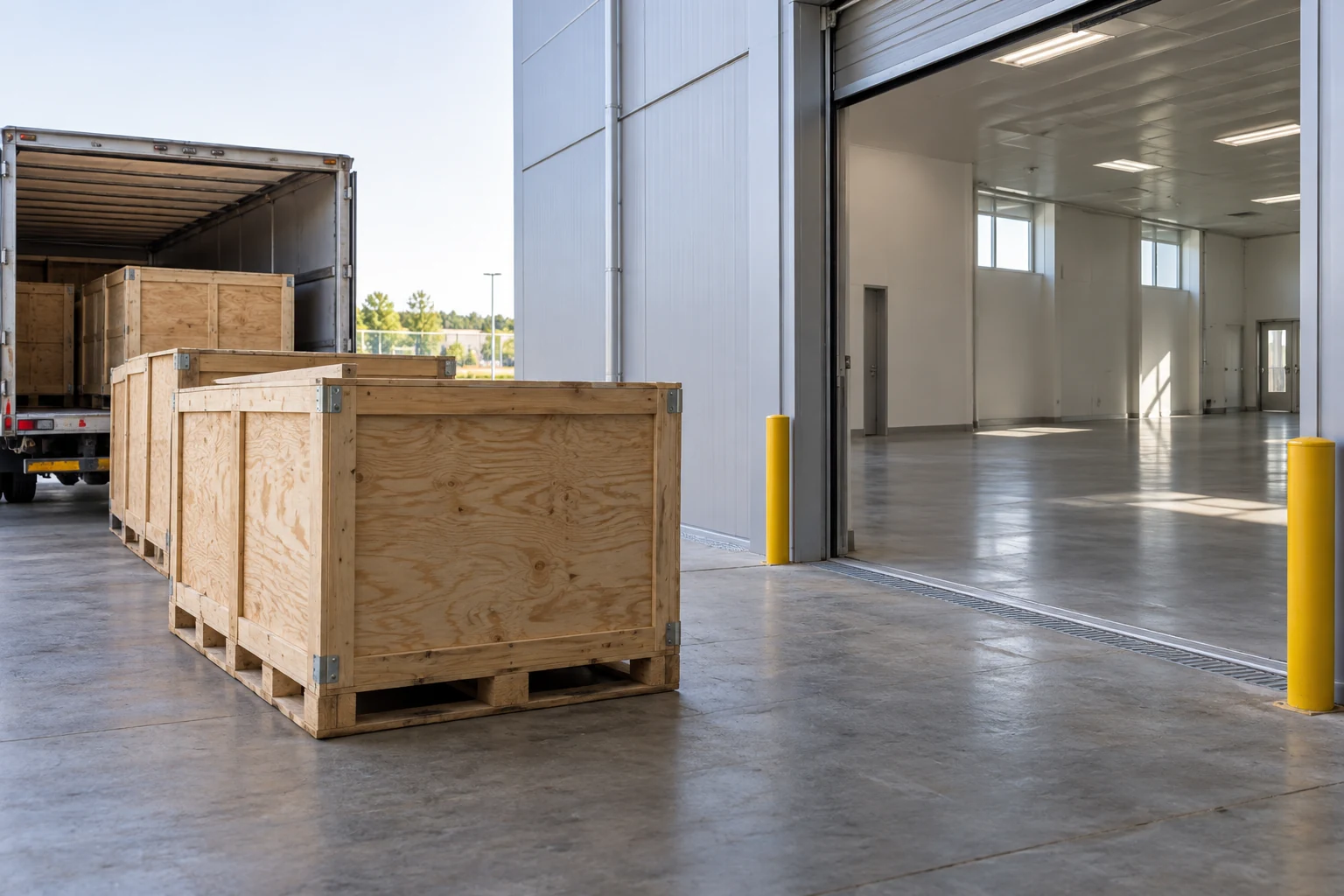
Review the delivery and installation route before final geometry is committed. Check the planned opening, handling route, installation sequence and space occupied during the work. An equipment outline that fits its final footprint may still be impossible to place through the available route.
Track changes to connection information with the people who use it. A revised nozzle, electrical requirement or package control boundary can affect another designer's completed work. Confirm the downstream effect before treating the supplier drawing as an isolated approval.
Use explicit data status. A firm envelope with provisional service requirements should not be treated as a fully confirmed package. Identify which building decisions can use that envelope and which must wait for the services issue. Ask each interface owner to state when data is needed and what decision it supports. This turns the procurement schedule into an integrated design sequence and exposes where an early fabrication release would be relying on an unverified site assumption.
4. Compare Waiting vs Bounded Early Release
There are more choices than order everything now or wait for final design. A bounded early release can authorize specific work while retaining a hold on decisions that remain uncertain. Its value depends on the supplier's actual sequence and a clear description of the retained boundary.
| Approach | Potential Value | Main Exposure |
|---|---|---|
| Wait for defined interfaces | Reduces reliance on unresolved inputs | May move the actual critical package later |
| Bounded early release | Starts supported work while holding specified decisions | Needs supplier agreement and active data delivery |
| Unrestricted early release | Commits the package sooner | Late changes can affect completed work |
Use the decision record to show what an early release actually permits. A reserved production slot is different from released fabrication, and both differ from a final design approval. Keep that language consistent between technical and commercial teams.
Identify the information still required and its deadline. A hold without an owner or release condition can become an invisible delay. The supplier and project team should agree what evidence removes it and how the completion forecast will then be updated.
Evaluate options against the real critical path. If building access or utility completion controls installation, accelerating a package may not accelerate the factory. Earlier delivery can instead create storage and protection obligations.
Ask the supplier to explain where a retained hold sits in its own work plan. If every remaining task depends on that decision, the partial release may have little schedule value. If independent work can proceed, document exactly which activities gain time. The preferred strategy protects useful schedule progress without pretending uncertainty has disappeared. It should be understandable to the owner, designer, supplier and field team from the same written release description.
5. Model the Consequence of a Late Interface Change
Use a simple dependency sketch to test whether early buying remains worthwhile under a plausible changed input. The purpose is to expose the mechanism, not to assign an invented probability or claim a universal change premium.
In an illustrative example, release at Week 6 followed by an assumed eight-week package duration and two-week installation gives readiness at Week 16. Releasing at Week 3 gives Week 13 if inputs remain suitable. If an unresolved interface later adds four weeks to that early path, readiness becomes Week 17.
| Scenario | Arithmetic | Ready |
|---|---|---|
| Later defined release | 6 + 8 + 2 | Week 16 |
| Early unchanged release | 3 + 8 + 2 | Week 13 |
| Early release plus assumed change | 3 + 8 + 4 + 2 | Week 17 |
The assumed four-week effect must not be reused as a market benchmark. On a real package, the supplier should explain which completed activities are affected and whether the change alters the actual completion path. Not every revision adds time in the same way.
Illustrative readiness week
Later defined · 16
Early unchanged · 13
Early changed · 17
This exercise directs attention to the unresolved input that matters. Clarifying one connection or receiving duty may protect more schedule than advancing an otherwise premature order date.
Review the same sketch after supplier information arrives. Replace assumed durations with the package-specific sequence and identify which changed activities overlap with other work. The owner needs the resulting readiness date and its dependencies, not an accumulation of every quoted delay added mechanically to the original completion date. Carry the result into the release decision: define which remaining changes are tolerable and which must be resolved before irreversible work proceeds.
6. Investigate Site Interfaces Before Locking Package Geometry
The procurement lesson is the importance of site information before a package becomes difficult to change. In a constrained bakery, a connection route or underground service can affect where equipment can be placed and how it can be installed. Buying around an assumed route can create redesign even when the process duty is correct.
The account does not establish a cooker lead time or a particular cooking installation. Use it to identify the investigations needed for the proposed purchase: existing service locations, access, receiving conditions and the work that requires a released production area.
Distinguish a known interface from an assumed one in the equipment enquiry. If the site team has not established the actual connection condition, ask whether that uncertainty affects geometry, service selection or installation sequence. Resolve the critical assumption before the corresponding fabrication activity is released.
Keep outage planning connected to buying. A package ready for shipment is not necessarily ready for installation during the owner's available window. Prepared services, isolation and field access may determine whether that window can be used.
The decision is therefore more precise than buy early: buy the supported scope early enough, while completing the enabling investigations and work that make its arrival useful.
7. Control Changes Across the Supplier and Project Documents
A supplier revision should trigger a review of the design that depends on it. Identify affected piping, supports, services, controls, layout and receiving duties. The technical effect should be understood before the owner decides whether to accept the commercial consequence.
Use one current package data issue with a visible change record. Show what changed, why it changed and which parties have incorporated it. A revised supplier drawing in an inbox is not evidence that the field installation documents now reflect the same arrangement.
Separate clarification of an existing requirement from a new owner request in the project record. The contractual treatment depends on the agreement, but the engineering team still needs to identify the actual cause and consequences. This helps avoid repeated decisions about the same unresolved interface.
For a proposed change, ask the supplier to describe affected work and the resulting forecast, not just an isolated extra price. A small component revision can have a schedule consequence if it interrupts a critical activity; another change may be absorbed without moving readiness.

Confirm who can instruct the supplier and who must review the integrated impact first. Multiple informal directions can undermine an otherwise clear release plan.
The objective is a traceable technical decision that remains consistent through procurement, fabrication and installation, rather than a large collection of individually approved but incompatible documents.
8. Approve Procurement Against the Whole Installed Outcome
DPS's capital-planning service connects equipment and utility scope, installed-cost alternatives and phased investment. For procurement decisions, use that work to distinguish the package price from the cost and conditions needed to make it operable.
The owner should see what the purchase commits, what remains outside the order and which site or product decisions can still change the forecast. Include installation, connections, controls integration and commissioning responsibilities appropriate to the option.
Set the release decision around evidence. The process duty should be sufficiently defined for the work authorized; critical site assumptions should be investigated; the supplier's remaining data requirements should have owners and dates. If a condition is not met, define the supported partial release or the action needed to proceed.
Align procurement milestones with the real installation and startup plan. Shipment, mechanical placement, connected services and integrated operation are different events. The business model should use the relevant operating milestone rather than equating delivery with production.
Before releasing the final hold, check that changed information has reached the building and field documents. A well-controlled purchase can still fail at installation if the project is using an earlier geometry or service assumption.
This creates a defensible buying strategy: early commitments purchase useful progress, retained holds protect unresolved decisions and every release moves the project toward the same accepted operating duty. The owner gains visibility into both the schedule opportunity and the change exposure.
Food Plant Equipment Procurement FAQ
Should all long-lead equipment be ordered immediately?
No. Identify the actual critical path and the information each package needs. An early order helps only when supported work can proceed and site readiness will make the delivery useful.
Can an order be placed before every detail is final?
Sometimes. Agree the supported work, retained holds and release conditions with the supplier. Do not assume a commercial order automatically authorizes every engineering and fabrication activity.
Which cooker requirements should be defined early?
Establish controlling products, usable batch, required process and receiving duty. Coordinate agitation, services, cleaning, transfer and controls interfaces that affect the selected package.
What should a supplier provide with a changed drawing?
Identify the revision, affected duty or connections, work already influenced and the resulting price or schedule forecast. The project team then reviews the integrated effect before authorizing it.
Does early delivery guarantee earlier production?
No. Building access, prepared services, installation and integrated startup may still control the operating date. Include storage or protection obligations if equipment arrives before the site is ready.
What should the owner request from DPS before release?
A coordinated process and equipment-interface basis linked to installed scope and the procurement sequence. Focus on critical assumptions, required supplier data and the work that can responsibly proceed.
Sources and Calculation Notes
DPS services, equipment and project statements use the sources below. Numerical examples are original teaching calculations, not customer results, supplier quotations or sizing recommendations.
- DPS — Process Engineering & Design. Process documents, utility loads and equipment interfaces.
- DPS — Capital Planning & Feasibility. Operating scenarios and phased investment.
- DPS — Kettles & Cookers. Current cooking-vessel offering and interfaces.
- DPS published project — Confidential Client — Pie Bakery Facility Overhaul. Project-specific account, attributed to DPS.
Research reviewed October 27, 2026.