Bakery Facility Renovation Cost: Complete Installed Scope.
Compare proposals with the same product duty, supplier boundaries and acceptance basis. The amount below is a transparent planning example, not a market price range, supplier estimate or DPS quotation.
The defined scope assumes applicable freight, procurement charges and taxes are included in the owner’s estimate. Add missing civil, land / shell, OEM, environmental, validation and permitting costs explicitly. Site and field conditions, duty, production access and quoted supplier scope determine actual price. Financing is excluded.
Worked Operating Case
Illustrative savings-only case: no incremental sales volume is assumed. Annual baseline energy savings are $65,000, water / cleaning savings $12,000, maintenance savings $30,000 and avoided paid labor 1,500 h × $40 × 80% = $48,000. Deduct $25,000 additional fixed operating cost. Enter actual metering, work orders and payroll evidence before using this case for a decision.
Calculated from these assumptions: steady annual net benefit $130,000; year-one net cash $106,750; cash payback 3.92 years; five-year NPV at 10% is −$14,584. Change the assumptions below to test a different case.
Pie & Bakery Facility Engineering: New-Facility Cost and Utilization Case.
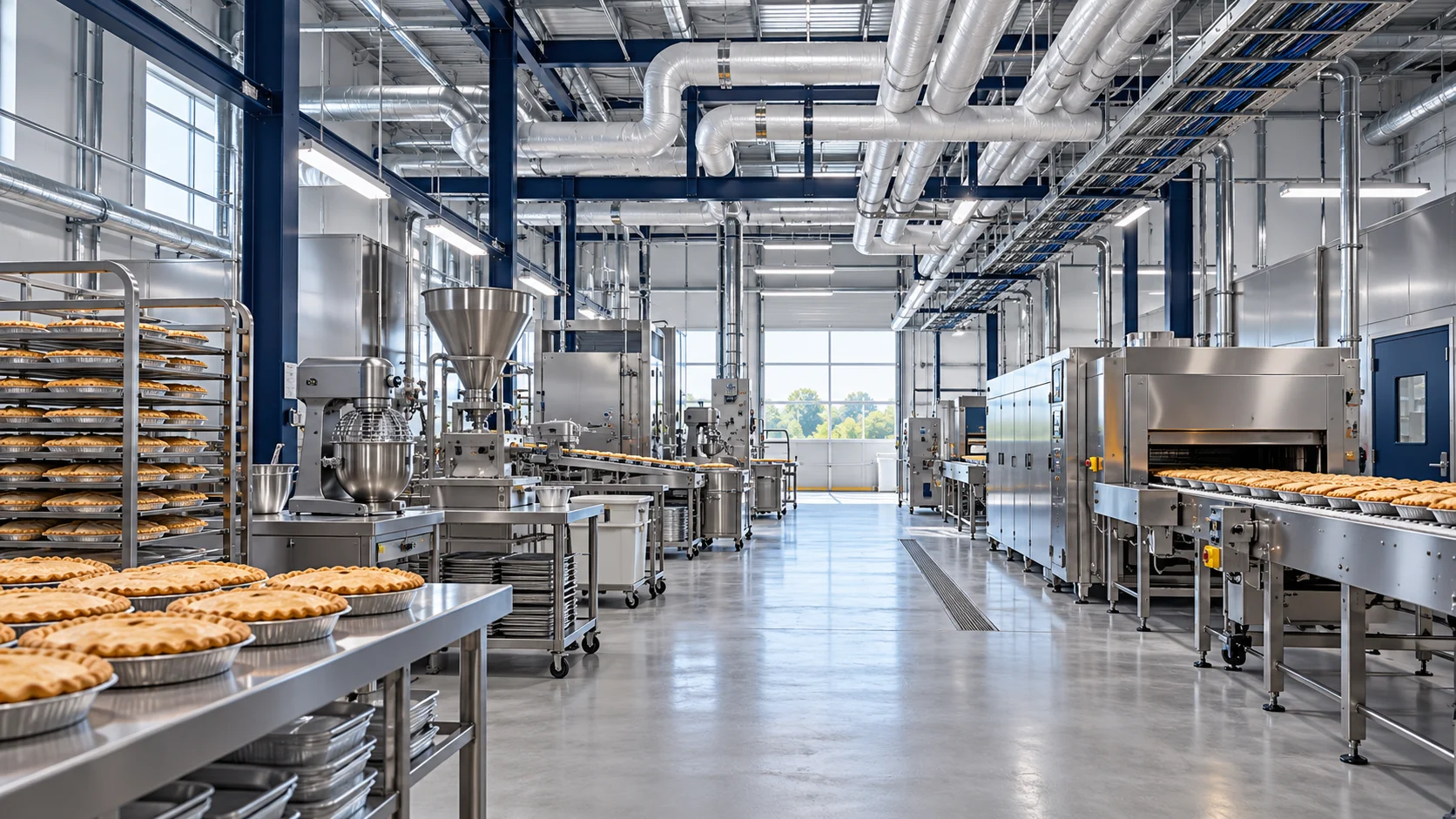
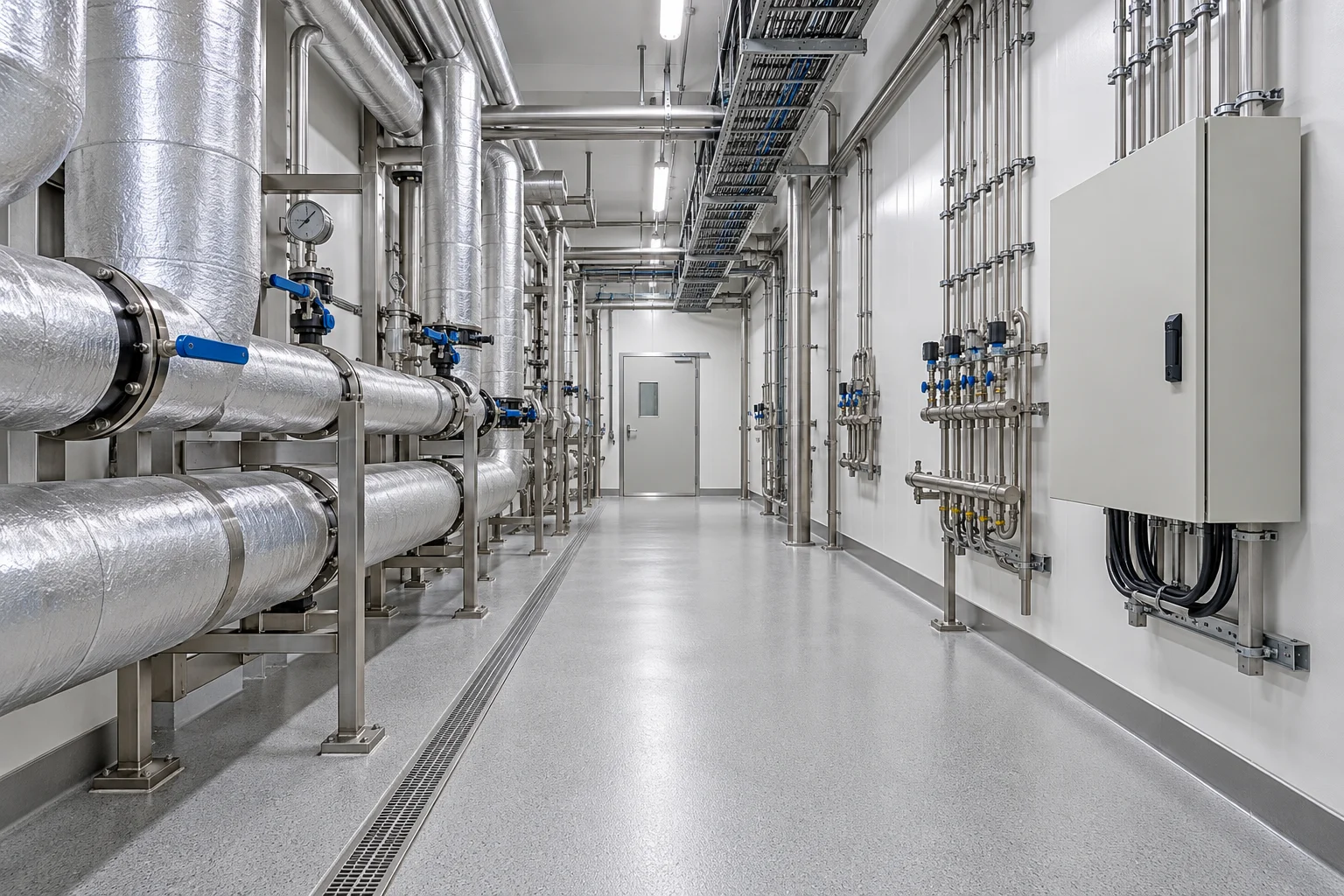
Assumed whole new bakery operation for comparison, broader than DPS’s published infrastructure case: the $4.5M defined scope includes owner-procured specialist dough / oven / forming / packaging packages as applicable, refrigeration / utilities, engineering, integration, installation and commissioning. The $3.0M separate site allowance covers the assumed facility boundary. Including an OEM cost is not a claim that DPS manufactures that machine.
The $1.2M additional annual fixed cost assumes $800,000 fixed payroll / supervision, $250,000 occupancy and overhead, and $150,000 service / other fixed operation. Product ingredients, packaging and incremental production costs are already in $2.70/kg variable cost.
Scheduled capacity is 250 days × 7 hours/day × 1,800 good kg/h; 60% realization and the 2,000,000 kg demand ceiling determine sold output. Historical material, payroll, energy, cleaning and maintenance savings are all zero. Startup expense covers separate pre-production activities; the year-one ramp already models unrealized gross operating benefit. Do not charge the same launch loss twice.
Use the New-facility example button below to inspect and change all assumptions. A negative NPV is a reason to revisit scope, utilization, contribution, timing or the decision horizon; it is not hidden by forcing a faster payback.