
In This Article
QUICK ANSWER
What Determines a Workable Ice Cream Factory Plan?
Plan the factory around finished products and their production calendar, then balance mix preparation, freezing, filling, hardening and released cold storage as connected stages. A freezer rating alone cannot establish saleable capacity. Vessel turnaround, pack format, air incorporation, hardening occupancy and shipping inventory can change which stage limits the operation.
Prepare a product-specific operating basis before comparing equipment quotations. It should connect each planned product to its mix requirements, package, verified process conditions, utility duties and release route. Use that basis to separate a genuine production constraint from a calendar or interface problem.
Ice cream factory planning becomes expensive when a project buys individual machines before deciding how their outputs fit together. A mix quantity measured in liters does not translate directly into the same liters of aerated finished product. A completed pack still needs its specified hardening and storage route before dispatch.
The owner's investment decision is therefore a chain: what must be sold, how it moves through the factory, which interface limits that movement and what scope removes the limitation. DPS's vessel and engineering capabilities can support defined parts of that chain, alongside specialist freezing, refrigeration and packaging suppliers. For a new facility, this distinction helps the owner commission a coordinated design rather than several independent procurement exercises. For an expansion, it helps reveal whether the next dollar should go into mix flexibility, downstream thermal capacity or the movement of finished inventory.
1. Start with Products, Packs and a Real Production Calendar
Define the sellable unit first. A tub, individual cup and inclusion-rich product may use the same upstream mix infrastructure but create different filling speeds, material movements and downstream handling. Converting every product to a single advertised line rate conceals those differences.
Build a representative week containing product runs, changeovers, cleaning, mix availability and dispatch commitments. Identify which activities can overlap and which depend on the same vessel, people or destination. A plant designed around one uninterrupted campaign can have a very different effective capacity when commercial demand requires several short runs.
The Tetra Pak Dairy Processing Handbook describes mix preparation, ageing, freezing and hardening as connected process stages. Use that sequence to organize the planning model, while leaving product-specific temperatures, residence requirements and equipment duties to the responsible process and refrigeration specialists.
Ask the commercial team which products must be available concurrently and which can share a campaign. That answer affects mix storage and frozen inventory before it affects the choice of a particular freezer. Record the smallest commercially useful batch as well as the largest; a large vessel can be a poor fit for a small, frequently requested product.
For the first investment review, show both a typical calendar and a limiting credible calendar. A decision based only on the easiest product can leave the owner with enough installed machinery but insufficient usable production time for the actual sales program.
2. Size the Mix System Around Usable Batches and Turnaround
The mix area must deliver the right product to freezing at the right time. Its planning basis includes usable batch quantity, preparation and holding requirements, cleaning turnaround, transfer availability and the number of products that must remain separately identifiable. Summing the nominal volume of several tanks does not establish that capability.
DPS offers custom process and storage vessels integrated with piping, CIP and controls. For an ice cream project, a useful equipment brief connects each vessel's duty with its product family, usable operating volume, transfer destination and cleaning boundary.
Consider a vessel that is full but cannot discharge because the receiving operation is occupied. It supplies inventory, yet it is unavailable for the next mix. The downstream delay can propagate into the preparation schedule. Conversely, adding another vessel may create little value if the shared transfer route remains the actual bottleneck.
Put those relationships into a vessel occupancy chart. Show when a vessel receives, holds, transfers, cleans and becomes ready again. Link the chart to valves, route selection and the receiving asset's readiness rather than assuming that a transfer starts as soon as a batch is complete.
The resulting design question is concrete: does another vessel create the required product flexibility, or does the project first need a different transfer arrangement or campaign order?
3. Translate Mix Flow into Finished Packs Before Choosing Capacity
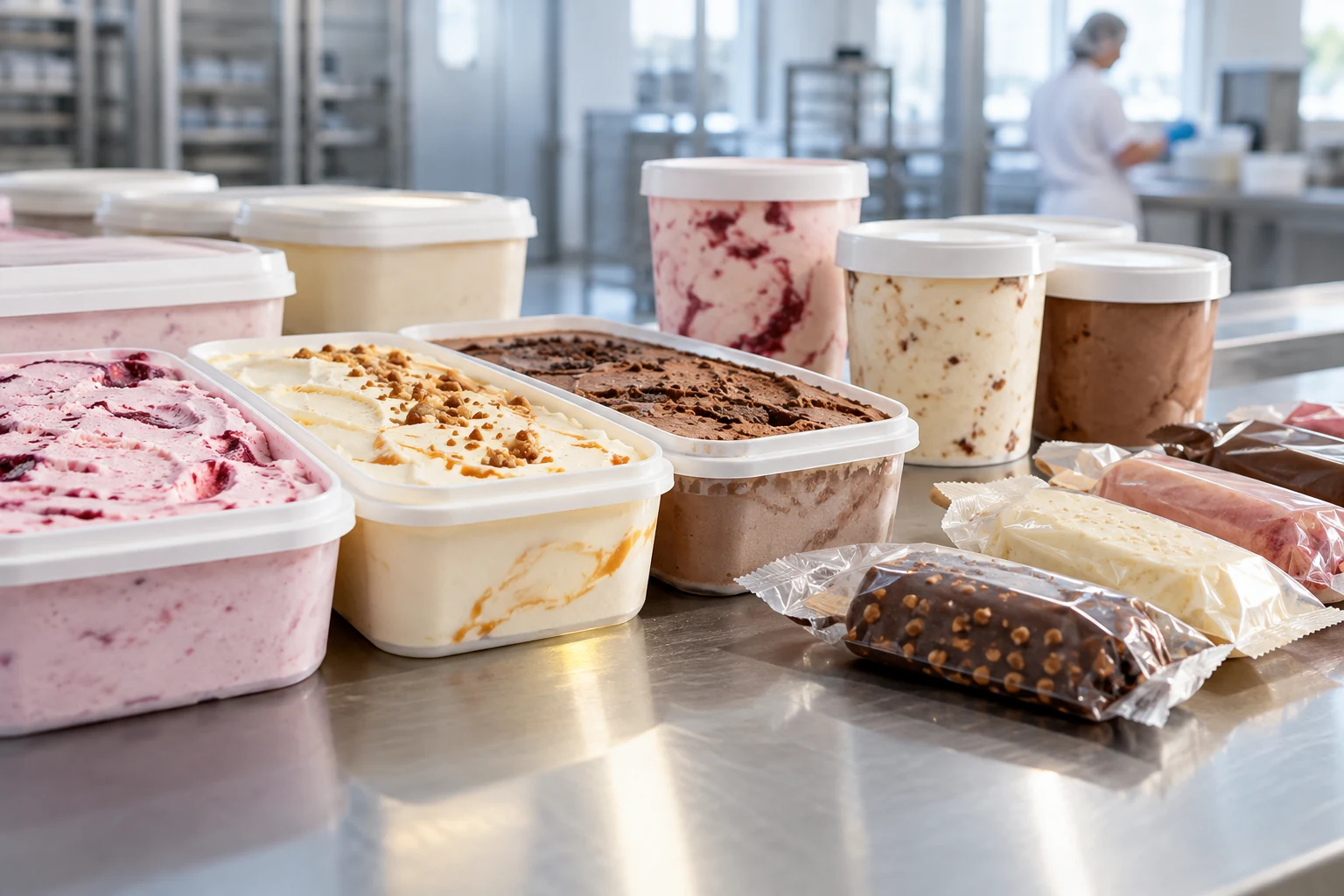
Air incorporation changes finished volume relative to mix volume. The handbook calls this relationship overrun. For planning, distinguish mix flow, finished volume, pack count and mass; they answer different questions. A package handling system moves packs, while a mix vessel holds the unaerated feed.
Take an invented comparison with 500 liters per hour of mix and a half-liter pack. At assumed 50 percent overrun, finished volume is 500 × 1.50 = 750 liters per hour, or 1,500 packs. At assumed 80 percent, it becomes 900 liters or 1,800 packs. Neither value is a recommended formulation or setting.
| Quantity | Scenario A | Scenario B |
|---|---|---|
| Mix flow | 500 L/h | 500 L/h |
| Assumed overrun | 50% | 80% |
| Finished volume | 750 L/h | 900 L/h |
| Half-liter packs | 1,500/h | 1,800/h |
| At assumed two-hour occupancy | 3,000 packs | 3,600 packs |
If a simplified hardening route holds every pack for two hours, the corresponding in-process occupancy is 3,000 versus 3,600 packs. The actual process must establish suitable residence, loading pattern and thermal conditions for the product and package. This calculation specifies none of them.
Illustrative simultaneous pack occupancy
A · 3,000 packs
B · 3,600 packs
Packs per hour × assumed two hours. No actual factory duty is represented.
The investment insight is the unit conversion: the same upstream mix flow can create a different downstream handling demand. It does not follow that refrigeration duty changes by the same percentage. Product composition, incoming condition, packaging and thermal requirements need their own engineering calculation.
Keep the volume conversion with the product definition. Otherwise a later recipe decision can silently change the pack demand used to order downstream equipment. Check whether packaging, conveyors and handling positions were quoted in packs, cases or product volume; conversion errors can otherwise survive several apparently consistent supplier schedules.
4. Compare Hardening Capacity vs Frozen Storage Capacity
Hardening and frozen storage serve different jobs. Hardening continues the required freezing of product after forming or filling. Storage holds released inventory under the required conditions until dispatch. Both involve cold space, but treating them as interchangeable floor area obscures their duty and movement patterns.
A hardening system needs a product-specific loading and residence basis, an entry condition and a defined exit criterion. A storage plan needs inventory policy, SKU locations, order assembly and shipping access. A room selected only by pallet count does not answer how freshly packed product reaches its required condition.
| Decision | Hardening | Frozen Storage |
|---|---|---|
| Primary job | Achieve specified product condition | Hold suitable released inventory |
| Planning driver | Product, package, loading and residence | Peak inventory, SKU mix and dispatch |
| Movement issue | Entry, occupancy and controlled exit | Putaway, picking and loading |
| Acceptance evidence | Agreed product and process checks | Storage and handling requirements |
Review the transfer between the two. A restricted exit or unavailable storage destination can hold product in the hardening route longer than planned, reducing available positions for incoming production. Merely buying a faster filler can intensify that mismatch.
Define the handoff in the process documents: who authorizes movement, which product state is required, how lot identity is retained and where a delayed or held load goes. Give the layout team the actual handling unit and clearance needs.
During supplier comparison, keep thermal capability separate from inventory space. The owner may need more of either, but the justification and the acceptance evidence should match the specific constraint.
5. Use Shipping Peaks to Plan Cold-Store Space and Access
Average daily output is not a cold-store inventory model. Production may finish before trucks arrive, several products may need to be picked together and a held lot may occupy a location while replacement production continues. Storage space must reflect the timing and identity of the inventory that actually remains inside.
Build an opening-stock, production, release and dispatch balance by product family. Review the maximum accumulation within the week, not just the closing balance. Include the handling space required to assemble orders without blocking the route from hardening to storage.
A practical expansion question is whether extra space can be reached without crossing the busiest existing movement. A future room shown as an empty rectangle on a master plan may be difficult to use if its access depends on a congested dispatch aisle. Reserve the connection and the movement route together.
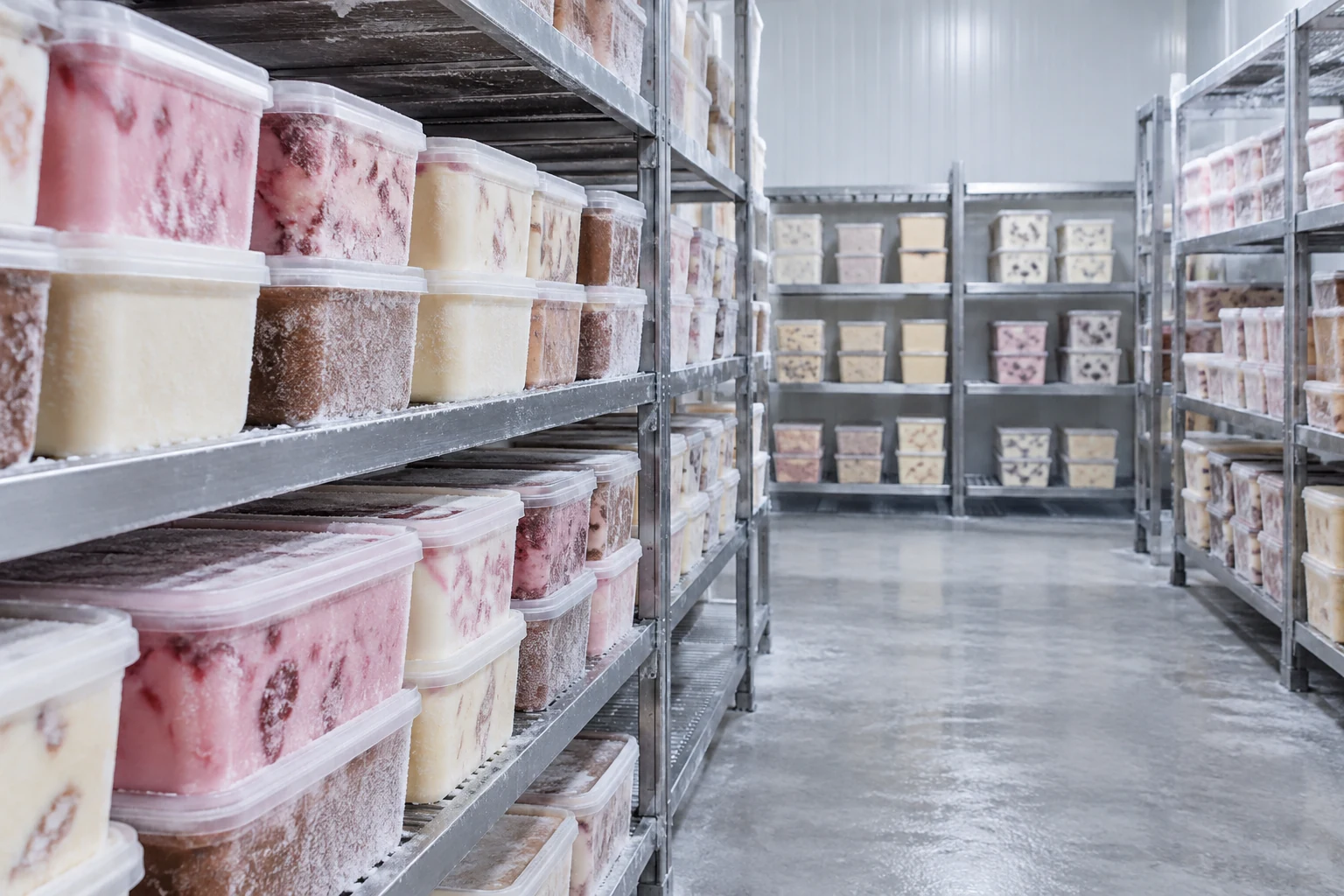
Do not treat a storage expansion as permission to lengthen every product's holding time. Quality and commercial requirements still determine what inventory policy is acceptable. Likewise, a nominal location occupied by blocked, held or unsuitable stock is not automatically available to the next load.
Ask for a layout review using the actual shipping unit, peak order profile and production handoff. That exercise connects storage investment to a specific operational constraint and can reveal whether a dispatch arrangement creates more value than adding undifferentiated floor area.
6. Release Connected Systems Against One Readiness Milestone
The useful lesson for factory planning is the shared system boundary. Production equipment can be physically installed while remaining unavailable because its cleaning, refrigeration or service connection is incomplete. For a new build, that relationship should shape package release and commissioning order before the owner compares isolated equipment completion dates.
Map which systems must be ready for a particular product trial. If a process vessel is available but the required cleaning circuit or refrigeration interface is not, the trial cannot demonstrate the intended operating sequence. Identify that dependency in the engineering schedule rather than discovering it when the production team arrives.
For an operating-site expansion, build the connection plan around the actual sanitary interruption the owner can release. Separate preparatory work, isolation, final connection, verification and restart responsibilities. The Phoenix account describes one particular coordinated window; its reported result is not a standard duration for a new factory or another expansion.
Use this distinction in the bid documents. Ask the process, refrigeration, controls and building teams to show their shared prerequisites. Their individual scopes can then be assessed against a common readiness milestone instead of several unrelated definitions of mechanical completion.
That changes a capital decision: an apparently inexpensive package can be less attractive if its interfaces create additional commissioning stages or a production interruption that another arrangement avoids.
7. Connect the Production Calendar to Utilities and Controls
The production model should identify simultaneous service demands across normal running, changeover, cleaning and startup. Refrigeration is one part of that picture. Water, heating services, compressed air, electrical supply and return arrangements also depend on which events coincide and on the connected equipment requirements.
A DPS process-engineering package can connect the flow diagrams, equipment documentation, layout, simultaneous utility loads and controls requirements. For this project, request a traceable link from the product calendar to each significant service duty and operating interface.
The controls narrative should explain the handoffs. When is mix available for transfer? Which destination can receive it? How is the correct route selected? What happens when filling or hardening cannot accept product? A drawing that shows connected pipes is useful, but it does not by itself define those operating responses.
Keep supplier responsibilities explicit at the package boundary. A vessel supplier, freezer specialist and refrigeration contractor may each provide controls within their own scope. The project still needs an agreed owner for the integrated sequence and for the evidence demonstrating that the interfaces work together.
Test delayed destinations and product transitions as well as the ideal steady run. These conditions are often where a theoretical rate becomes a real capacity problem. Record any restriction that changes the production calendar so the final acceptance basis remains consistent with the investment case.
The objective is an operable sequence with understandable constraints. Adding automation without a shared process basis can simply execute an unsuitable schedule more consistently.
8. Buy the First Phase Against a Visible Expansion Trigger
Separate the capacity needed for the first sales program from the infrastructure and access worth reserving for later growth. A first-stage vessel arrangement might support the initial campaign mix while a future product family requires another independent holding position. The trigger should be a product and calendar condition, not merely a forecast percentage.
DPS's capital-planning and feasibility work can connect operating scenarios with equipment, utility scope and phased investment. Ask for alternatives that explain which constraint each phase removes and which later interface must remain accessible.
The first commitment package should contain the product matrix, vessel occupancy chart, mix-to-pack conversion, hardening basis, inventory profile and utility interfaces. These documents let specialist suppliers quote against the same operating requirement. They also make an expensive omission easier to recognize before it becomes construction work.
Reserve future connections selectively. A useful provision has a defined destination, isolation arrangement, access route and later activation sequence. Oversizing every service without knowing the next product can add cost while preserving the wrong flexibility.
Compare each option using saleable production under the intended calendar, installed scope and the consequences of later change. Keep cold space, thermal duty and package throughput as distinct quantities throughout that comparison.
The resulting approval is specific: this phase supports these products through these connected stages, and this event triggers the next investment. That is a stronger basis for a new ice cream factory than purchasing a collection of machines with individually attractive ratings.
Ice Cream Factory Planning FAQ
Is freezer capacity the factory's saleable capacity?
No. Mix readiness, filling, hardening, cleaning, storage and release can constrain the connected operation. Compare the full product calendar rather than a single machine rating.
Can mix liters be used directly as finished-pack volume?
Air incorporation changes the relationship. Use the product's defined overrun and pack size for a planning conversion, and retain mass and thermal calculations separately.
Can cold storage replace hardening?
Do not assume it can. Hardening must achieve the product's specified condition; storage holds appropriate inventory. Establish both duties and their handoff with the responsible specialists.
How should the required hardening capacity be specified?
Define product, package, incoming condition, loading and required exit condition with the responsible specialists. Establish suitable residence and thermal duty for that basis, then check occupancy and transfer capacity against the intended production calendar.
What can DPS supply within this project?
DPS describes custom process and storage vessels plus engineering and capital-planning services. Define the relevant vessel, piping, cleaning and controls interfaces alongside specialist freezing, refrigeration and packaging packages.
Which expansion provision should be decided early?
Reserve access and connection arrangements for the most credible next constraint: another product position, hardening capacity or storage and dispatch movement. Tie the provision to a defined phase scenario.
Sources and Calculation Notes
DPS services, equipment and project statements use the sources below. Numerical examples are original teaching calculations, not customer results, supplier quotations or sizing recommendations.
- DPS — Process Engineering & Design. Process documents, utility loads and equipment interfaces.
- DPS — Capital Planning & Feasibility. Operating scenarios and phased investment.
- DPS — Tanks & Vessels. Current vessel offering and integration boundaries.
- DPS published project — Albertsons Phoenix — Ice Cream Plant Upgrade. Project-specific account, attributed to DPS.
- Tetra Pak — Dairy Processing Handbook: Ice Cream. Connected ice cream processing stages.
Research reviewed October 27, 2026.