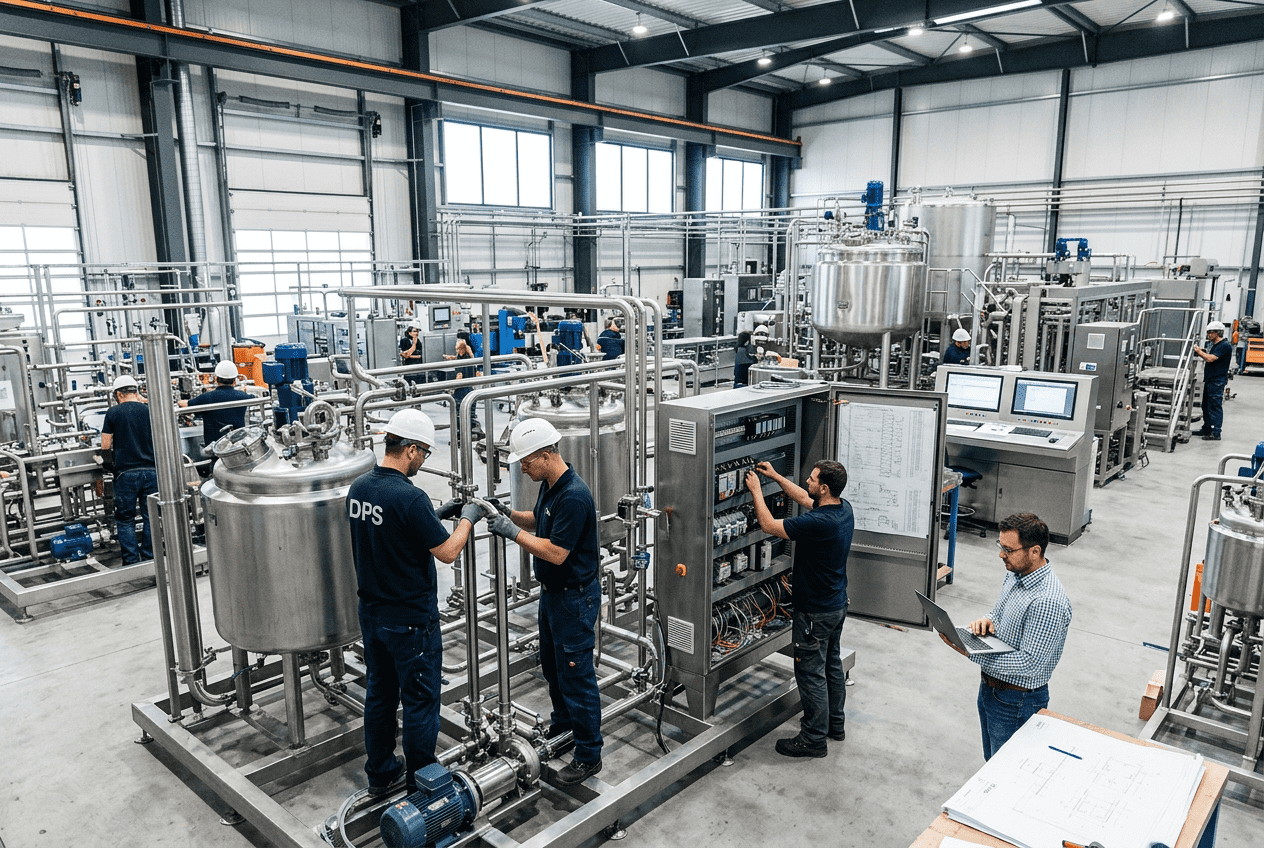

In This Article
When Should a Food Plant Choose Modular Skids over Site-Built Systems?
Use modular process skids where a defined package boundary allows useful fabrication and testing away from the site; use site-built work where the actual layout, connections and installation constraints favor it. Compare the complete installed function, including receiving equipment, utilities, controls and site acceptance.
Offsite prefabrication, a supplied skid and a factory-tested whole plant are different propositions. A prefabricated pipe section can reduce field fabrication without being a complete skid. A skid can be tested within its stated boundary while still requiring substantial site integration and verification.
A packaged system can arrive looking finished while its product connections, utility support and operator sequence remain incomplete. A site-built alternative can look slower while fitting a difficult route with less module-handling work. The decision should follow the actual boundary and installation plan, rather than assume that one label guarantees speed, lower cost or production readiness.
1. Distinguish a Skid, Prefabrication and the Complete System
A skid typically groups defined equipment and connections into a transportable package. Offsite prefabrication is broader: it can include pipework or assemblies prepared before installation without producing a self-contained operating package. A complete process system may contain either approach, plus field connections, utilities and controls outside the supplied boundary.
Write that boundary on the concept drawing. Identify product connections, utility endpoints, cleaning interfaces, control exchanges and the receiving equipment. Ask which items ship together, which are installed separately and which functions can actually operate within the package before the site interfaces are complete.
This distinction matters when comparing quotations. A “modular CIP system” might include station functions but exclude distribution to the cleaning objects. A site-built estimate might already include those routes. The equipment descriptions sound comparable while the installed responsibilities differ substantially. Normalize the boundary before evaluating the headline totals.
Use plain descriptions in the procurement record: a packaged station to defined endpoints; prefabricated distribution sections with field closure pieces; or an integrated installed system including specified site work. Each can be a sensible choice. The owner should know which promise is being purchased and which work remains, instead of assuming that prefabrication transfers responsibility for the complete operating plant to the fabricator.
Ask for separate shipping and installed arrangement drawings when they differ. A component removed for transport still needs an assigned site assembly and checking step before the package reaches its intended operating configuration.
2. Use the Cleaning Function to Locate the Package Boundary
For a cleaning system, distinguish station functions from the connected objects and distribution. A compact package does not eliminate the supply and return routes, receiving-equipment requirements or the plant sequence that assigns a circuit. Those relationships affect the installed scope even when major station components arrive together.
DPS’s CIP offering describes custom design and fabrication with process circuits, vessels, piping, controls and third-party equipment interfaces. That scope supports a package discussion grounded in actual connections. It does not mean every offered system ships as one universal skid or includes every site function automatically.
An Alfa Laval supplier example describes frame-mounted modular CIP equipment assembled and tested before delivery. This illustrates a possible supplier approach, not the configuration of a DPS project or evidence that final plant acceptance can occur without the receiving installation.
Ask the bidder to mark the test boundary as well as the shipping boundary. If the test uses simulated downstream states, identify which actual interfaces remain to be demonstrated at site. The owner can then value the preparation performed offsite while retaining a realistic plan for connecting and checking the complete system.
Name the receiving object on the package drawing. A generic outlet labeled “to process” can conceal the real route length, return duty and signal ownership that the connected installation must support.
3. Compare Modular and Site-Built Options at the Same Endpoint
The comparison should include the same process duty and the same installed endpoints. A module can concentrate assembly and testing in a controlled fabrication setting; site-built work can accommodate actual building routes and field-fit connections. Both require a reliable process basis and a coordinated installation sequence.
Evaluate shipment and placement early. The package’s shipping envelope, lifting and movement requirements can differ from its final operating footprint. The owner needs a feasible path from delivery to installed position, including the point when that path becomes unavailable as other building or production work progresses.
For a site-built alternative, identify what must be measured or completed before fabrication. Field fitting can accommodate certain conditions, but it still needs qualified work, access and checks. Do not treat adaptability as permission to leave process interfaces undefined until construction. The benefit should be tied to a specific layout condition.
The table compares genuine differences rather than a finished modular option against an unplanned field job. A mixed approach may be strongest: package repeatable station functions, prefabricate known routes and retain defined closure work for the actual site. Decide the allocation by function and interface, then price the resulting fabrication, handling and field duties.
Where an opening limits module size, compare a split package as an explicit alternative. Include its additional site assembly rather than assume the delivery restriction makes either all-modular or all-field fabrication inevitable.
| Decision | Modular/Package Approach | Site-Built Approach |
|---|---|---|
| Fabrication location | Defined assemblies prepared offsite | More assembly occurs within the site installation |
| Dimensional dependency | Shipping envelope and early interface dimensions matter | Field conditions can inform fabrication; access and sequence matter |
| Pre-delivery checks | Defined package functions can be checked within test boundary | Site-stage checks follow installed work and available interfaces |
| Placement | Transport and lifting path must suit the package | Parts/assemblies need their own delivery and work routes |
| Remaining integration | Field closure, utilities and plant functions still assigned | Installed routes and plant functions likewise assigned |
4. Separate Field Work Reduction from Project Duration
Consider a hypothetical matched system with forty-eight labor-hours of fabrication work. In a modular concept, that fabrication occurs offsite, followed by eight field labor-hours for fit-up, twelve for tie-ins and eight for site checks: twenty-eight field hours and seventy-six total stated labor-hours.
In an invented site-built concept, the forty-eight fabrication hours occur on site, followed by the same twelve tie-in hours and eight checking hours. That totals sixty-eight field labor-hours. The modular concept moves fabrication away but includes eight additional fit-up hours in this illustration, so its stated total is higher while its field work content is forty hours lower.
These are arbitrary labor inputs, not prices, benchmarks or elapsed installation durations. Crew sizes, task dependencies, access windows, transport, lifting and preparation are not modeled. Dividing one field total by another cannot establish that the production outage or project schedule falls by the same proportion.
Use a real work breakdown to identify the field tasks that occupy constrained space or require production isolation. The owner can then decide whether moving those tasks offsite has value. The comparison should not credit the package with avoiding tie-ins or site checks simply because fabrication occurred elsewhere. A shorter field work list and a shorter required production interruption are related questions that need separate evidence.
Ask which tasks are on the critical production-isolation path. Forty field labor-hours moved elsewhere can have little effect on that path if the remaining tie-in or release dependency still governs the window.
5. Prove the Delivery Path and Closure Work Before Fabrication
A module arrangement should be reviewed against the actual site before dimensions are fixed. Trace the shipping route, unloading position, movement path and final placement. Identify the stage when building openings or access routes change. A package that fits its final room can still be difficult to install at the scheduled point in construction.
Identify the closure pieces and connections that depend on installed measurements. Assign who measures, fabricates, installs and checks them. If all remaining field work is described as “hookup,” important fit-up or control responsibilities may remain invisible even though the package itself is well engineered.
DPS general contracting describes process-critical piping, equipment installation, controls and commissioning coordinated with specialist building trades. For this decision, constructability review should connect package preparation to the field sequence, including the specific local execution arrangements applicable to the project.
Use one difficult interface as a review exercise. A station outlet is fixed by the package while the receiving route is constrained by an existing overhead service. Establish the final routing and adjustable closure boundary before releasing incompatible dimensions. The same exercise can justify retaining a defined site-built portion. It provides a concrete reason for the chosen fabrication strategy rather than an assumption that the whole system should use one method.
Record when field measurements become reliable. Fabricating a closure section from provisional drawings can create rework; waiting for a measured endpoint may preserve fit while changing the fabrication and installation sequence.
6. Prepare the Tie-Ins That Remain After Offsite Fabrication
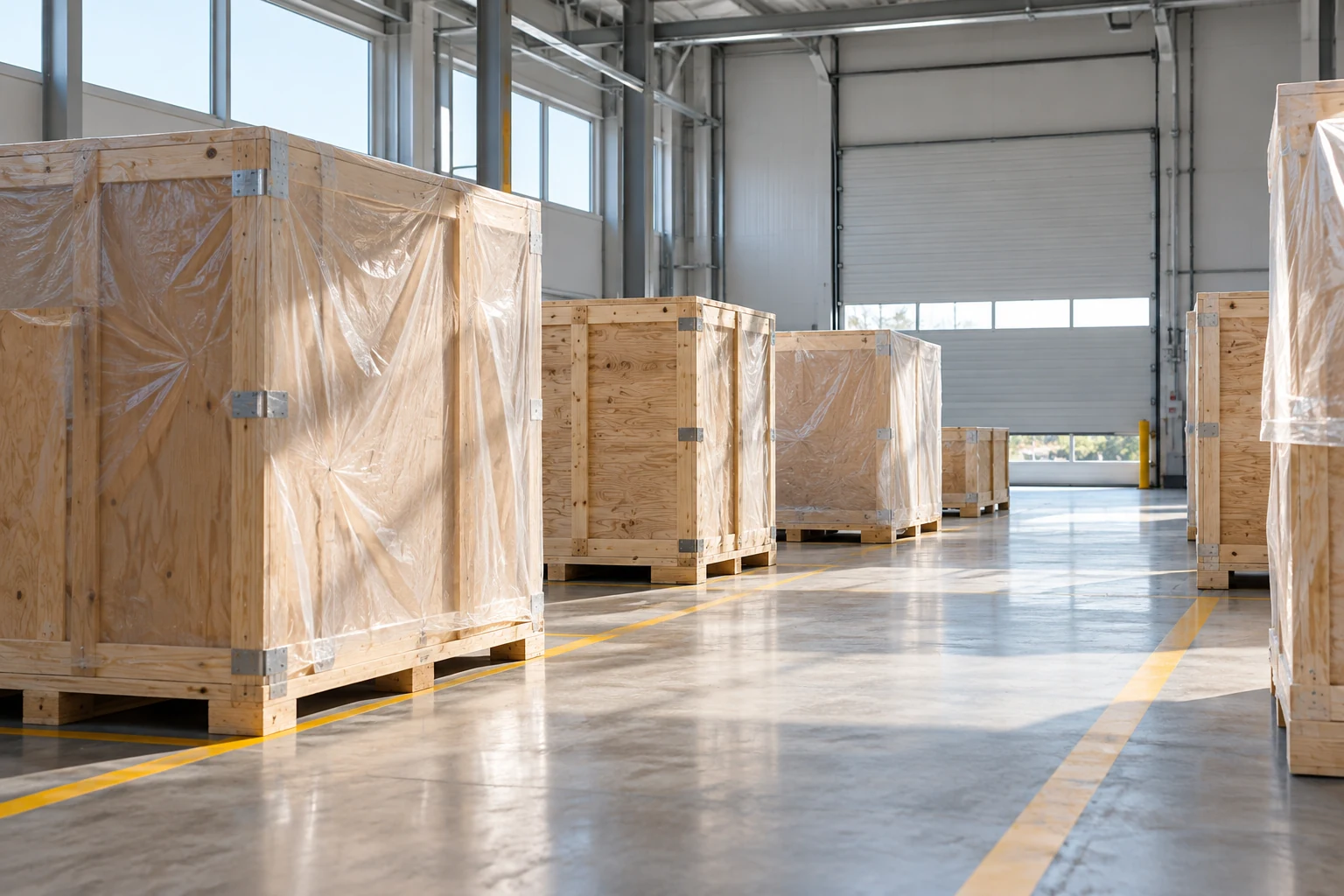
DPS describes offsite preparation and staged CIP/air connections at Albertsons, with three planned interruptions each under four hours and no reported unplanned interruption. The published execution account joins prefabrication with prepared site interfaces.
The application is specific: moving fabrication away from production does not remove the connection window. The owner must identify which retained equipment or utility becomes unavailable, what has been prepared beforehand and what must be established before the affected function returns to its assigned duty.
Develop a tie-in sheet for each stage, referencing the actual connection and responsible package. Include the starting condition, isolation responsibility, prepared assemblies, closure work and required checks. This allows the project team to distinguish a physical connection completed from a connected function ready for the next operation.
The case supports a preparation approach, not a claim that an entire plant was factory tested or that another system can use the same interruption duration. Apply the method to the proposed package: identify the offsite work that genuinely reduces activity in the constrained area and the field tasks that remain. A procurement promise becomes useful when it can be traced to that work breakdown and the actual operating handover.
Before the connection window, walk the prepared assembly to its destination conceptually: available route, tools, support and responsible crew. A finished spool stored nearby is not the same as a ready-to-execute connection activity.
7. Assign Factory Checks and Site Acceptance Separately
Factory checks can demonstrate the functions and construction represented by the agreed test arrangement. They should state the equipment present, simulated interfaces, test conditions and resulting open items. Site acceptance addresses the actual installation and connected operation within its defined scope. Neither term should be used without an agreed boundary.
For a hypothetical packaged cleaning station, a shop sequence may demonstrate selected internal actions using simulated object-ready states. At site, the real object and route must provide the intended interface. The responsible team establishes the necessary checks for that installation. A successful simulated signal does not prove the receiving vessel is correctly connected or ready for use.
DPS process engineering includes process documents, equipment information and controls specifications. Linking those deliverables to the acceptance plan helps the owner identify which responsibilities belong to the package supplier and which require the integrated site team.
Carry open items into a release register with an assigned owner and consequence. Some may concern documentation; others can prevent the next installation or operating stage. The table gives illustrative boundaries, not a complete qualification protocol. The procurement decision should identify who demonstrates the complete required function and with what connected equipment, rather than rely on the phrase “factory tested” to cover work outside the factory.
Agree who receives the factory test record and converts unresolved interfaces into site actions. Without that handover, a documented limitation can remain known to the supplier but absent from the owner’s commissioning plan.
| Item | Offsite Demonstration Boundary | Remaining Site Responsibility |
|---|---|---|
| Internal sequence | Agreed package actions with stated test arrangement | Verify behavior with actual connected equipment |
| Physical route | Supplied connections and agreed fabricated sections | Closure pieces, final route and installed interfaces |
| Utility support | Specified package requirements and available test support | Actual site conditions for the intended duty |
| Open items | Document observed issues and assigned action | Resolve relevant items before the affected release stage |
8. Choose the Fabrication Strategy by the Constraint It Solves
The owner’s decision should name the constraint being addressed: limited field access, production interruption exposure, transport restrictions, uncertain site dimensions or repeatable package functions. A module is valuable when its defined preparation solves that constraint after the remaining installation work is included.
Bring the process duty, layout, proposed boundaries and actual access conditions into a DPS review. Ask for a matched package-versus-site-built comparison with fabrication allocation, field closure scope, installation sequence and acceptance ownership. A hybrid alternative can be included where it provides a better response than forcing every part of the system into one procurement label.
Keep the selected assumptions in the order: shipping envelope, approved interface dimensions, required owner information and the exact test arrangement. If a late site change affects one of those assumptions, review the affected connection and work sequence before accepting a substitution or reroute. This preserves the reason the fabrication strategy was chosen.
At approval, the owner should be able to explain what arrives ready, what gets finished on site and who demonstrates the connected function. Those answers are a stronger basis for capital planning than an unqualified speed claim. They also give installation and operations teams a common view of what the equipment purchase does—and what the project must still complete.
Preserve the selected package boundary in change control. Moving one valve or instrument across that line can affect fabrication, wiring, software and acceptance ownership, even when the physical alteration appears small.

FAQ
Is prefabricated piping the same as a modular skid?
No. Prefabrication can prepare individual assemblies; a skid groups defined functions in a package. Describe the actual supplied boundary rather than treat the terms as interchangeable.
Does factory testing eliminate site acceptance?
No. Establish what the factory arrangement represented and which real utilities, receiving equipment and interfaces still require site checks.
Can a modular option use more total labor?
It can. The illustration has more stated total labor but less field work. Actual value depends on scope, site constraints, costs and the tasks occupying the constrained window.
What should be checked before fixing module dimensions?
Review the shipping envelope, unloading and placement routes, connection locations, service access and installation sequence against the actual site.
When is a hybrid approach useful?
When repeatable package functions suit offsite preparation while defined routes or closure pieces depend on field conditions. Assign the boundary and acceptance responsibilities for both portions.
How should the owner compare schedule claims?
Use the actual task sequence, crews, dependencies and production isolation requirements. Labor-hour differences alone do not establish elapsed duration or the required interruption.
Sources and Calculation Notes
Checked October 27, 2026. DPS case statements are attributed company reports, not independently audited performance. The numerical illustration is hypothetical; concept photographs are not project documentation.
- DPS — CIP Systems — Custom connected CIP design and fabrication scope.
- DPS — General Contracting — Process installation, field coordination and commissioning scope.
- DPS — Process Engineering and Design — Documentation and interface requirements.
- DPS — CIP and Air Upgrade — Prepared and staged tie-in example with planned interruptions.
- Alfa Laval — CIP Station — Supplier example of modular assembly and pre-delivery testing; not a DPS configuration.