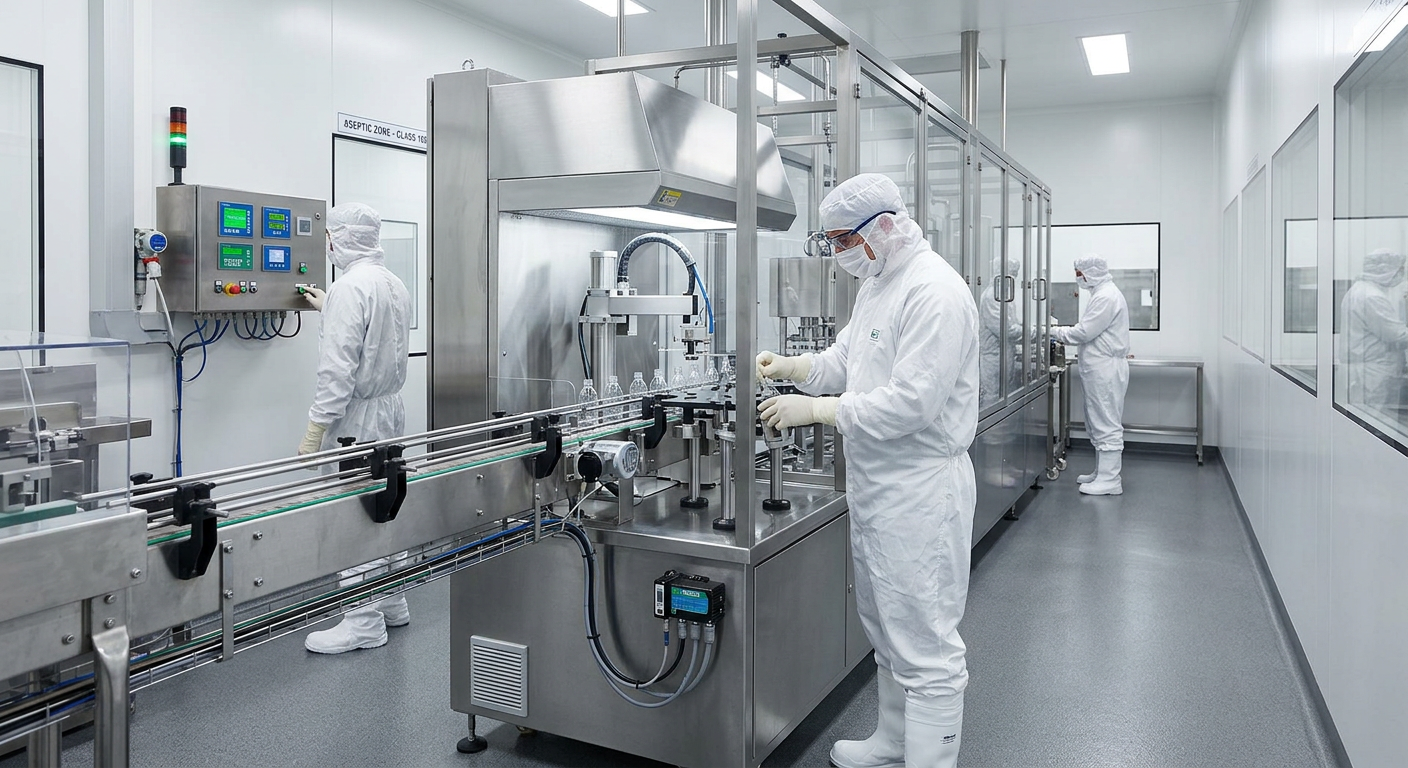
Clean Room Design for Aseptic Food and Beverage Processing
[trp_language language=”en_US”]
Aseptic Clean Room Solutions for U.S. Food and Beverage Processing
Quick Answer

If you are planning a clean room aseptic food beverage project in the United States, the best path is to work with suppliers and engineering firms that understand hygienic zoning, FDA-aligned sanitary design, air handling, microbial control, utility integration, and line commissioning as one coordinated system. For most U.S. manufacturers, the most practical options include CRB, Stellar, E.A. Bonelli + Associates, AES Clean Technology, G-CON, and Disruptive Process Solutions. These companies are relevant because they combine facility design knowledge, process utility planning, and regulated-environment execution that matters for aseptic dairy, ready-to-drink beverages, sauces, functional drinks, and shelf-stable liquid foods.
For buyers who need fast decisions, here is the short list: CRB is strong for large integrated food and life-science style clean environments; Stellar is a recognized U.S. design-build partner for food plants and cold-chain aware infrastructure; E.A. Bonelli + Associates is widely known in sanitary food plant design; AES Clean Technology and G-CON are useful when modular or controlled-environment cleanroom delivery is important; and Disruptive Process Solutions is especially attractive for manufacturers that want a lean, project-focused partner capable of process engineering, equipment integration, utilities, controls, and execution management under one model. Qualified international suppliers, including Chinese manufacturers with relevant U.S.-accepted material documentation, sanitary fabrication capability, and dependable pre-sales and after-sales support, can also be considered for selected room components or equipment packages when cost-performance is a priority.
The right supplier depends on your product risk, fill technology, package format, target shelf life, and audit exposure. In beverage hubs such as California, Texas, North Carolina, Illinois, Wisconsin, and New Jersey, manufacturers typically choose partners that can align cleanroom envelope design with CIP, sterilization, compressed air, chilled water, steam, filtration, automation, and startup support from day one.
United States Market for Aseptic Clean Room Food and Beverage Projects

The U.S. market for aseptic processing environments is expanding as brands push for longer shelf life, fewer preservatives, improved product stability, and more flexible packaging. This is especially visible in dairy alternatives, protein beverages, low-acid ready-to-drink products, cultured beverages, coffee drinks, liquid nutrition, and premium sauces. Manufacturers near Los Angeles, Chicago, Dallas-Fort Worth, Atlanta, Charlotte, Philadelphia, and the Inland Empire increasingly prioritize facility layouts that reduce contamination risk while keeping throughput high.
Demand is also being shaped by retailer expectations and co-packer competition. National grocery and club channels expect reliable fill quality, lot traceability, sanitation consistency, and repeatable startup performance. As a result, clean room aseptic food beverage design is no longer limited to mega-factories. Mid-sized processors, private-label manufacturers, and contract packers are now investing in cleaner zoning, positive-pressure spaces, hygienic personnel flows, washdown-compatible finishes, and higher-grade filtration systems.
Port access and ingredient logistics matter as well. Projects near the Port of Long Beach, Port of Los Angeles, Port of Houston, Port Newark-Elizabeth, Savannah, and inland rail hubs often favor scalable cleanroom systems because imported ingredients, packaging materials, and co-manufacturing contracts can create variable production patterns. A facility that can handle multiple SKUs and maintain microbial discipline across changeovers has a commercial advantage.
Another market driver is labor efficiency. In a competitive labor environment, processors are looking for room designs that simplify gowning, maintenance access, sanitation, and automated monitoring. The most successful projects integrate room pressure cascades, environmental monitoring, automation alarms, and utility redundancy into a single operating philosophy rather than treating the clean room as a stand-alone construction item.
The chart above illustrates a realistic growth pattern for U.S. project activity related to aseptic and clean processing environments. The rise reflects growing investment in high-care beverage rooms, shelf-stable liquid food lines, sanitary utilities, and flexible co-packing infrastructure.
What a Clean Room Means in Aseptic Food and Beverage Processing

In food and beverage manufacturing, a clean room for aseptic applications is not simply a sealed room with filtered air. It is a controlled processing environment designed to manage airborne particles, microorganisms, personnel traffic, material transfer, condensation risk, and sanitation compatibility around a sterile or near-sterile process. In practice, this can include filler enclosures, high-hygiene filling suites, sterile packaging zones, ingredient make-up areas, airlocks, gowning spaces, and segregated support corridors.
The exact configuration depends on the product. A low-acid aseptic beverage line may require a very different room strategy than a dairy aseptic line, a retorted sauce operation, or a high-care ready-to-drink nutritional beverage plant. Key design variables include room classification targets, temperature and humidity control, pressure relationships, drain strategy, cleanable wall systems, floor-to-wall transitions, lighting, door hardware, maintenance access, and compatibility with sanitation chemicals.
In the United States, buyers should think of cleanroom design as a business decision as much as an engineering decision. The room must support product safety, audit readiness, uptime, sanitation turnaround, and future expansion. A room that looks impressive on paper but creates difficult maintenance access, poor pallet flow, or condensation hotspots can quietly destroy profitability.
Main Product Types and Project Configurations
There is no single “best” clean room type for all aseptic food and beverage plants. The right approach depends on process risk, budget, speed to market, and expansion plans. The categories below are the ones most often considered by U.S. processors.
| Configuration Type | Best For | Core Features | Advantages | Limitations | Typical U.S. Users |
|---|---|---|---|---|---|
| Conventional stick-built cleanroom | Large permanent plants | Custom walls, HVAC integration, utility coordination | Highly tailored layout and scalability | Longer construction timeline | Major beverage plants, dairy processors |
| Modular panel cleanroom | Fast-track expansions | Factory-finished panels, clean joints, quick assembly | Faster installation and easier retrofit | May limit extreme customization | Co-packers, specialty beverage sites |
| Ballroom clean environment | Flexible multi-line operations | Large open controlled space | Adaptable for future line changes | Can increase HVAC load | Multi-SKU beverage facilities |
| Isolated filler suite | Critical fill zones | Pressure cascades, transfer airlocks, localized control | Lower risk around the most sensitive step | Requires disciplined material flow | Aseptic fillers, dairy drinks |
| Modular pod or pod-based enclosure | Speed and validation-oriented installs | Pre-engineered controlled environment modules | Shorter deployment time | Higher unit cost in some layouts | Pilot plants, premium RTD projects |
| Hybrid hygienic processing zone | Plants balancing cost and control | Selective high-care design around critical nodes | Good value for mid-sized operations | Needs strong zoning discipline | Sauces, functional beverages, liquid foods |
This table shows why many U.S. buyers prefer hybrid solutions. Instead of overbuilding the entire plant, they invest heavily around the highest-risk operations such as sterile hold, filler zones, packaging feed, and controlled personnel entry. That usually delivers a better return than applying cleanroom-level expense to low-risk utility or warehouse areas.
How Buyers Should Evaluate Suppliers
When comparing clean room aseptic food beverage suppliers in the United States, buyers should focus on five factors: sanitary design experience, process integration capability, construction execution, validation support, and long-term service responsiveness. A beautiful room package is not enough if the supplier cannot coordinate HEPA strategy with filler operation, utility loads, condensate management, and maintenance access.
It is also important to evaluate whether the supplier understands the difference between food-grade clean design and pharmaceutical assumptions. Some technologies transfer well from pharma, especially around controlled environments and modular construction, but food and beverage plants bring unique realities such as aggressive washdown, sugar loading, acids, flavor oils, sticky residues, allergen segregation, forklift interfaces, and high-volume packaging flows.
Buyers should ask practical questions: Who owns the pressure map? Who coordinates HVAC with equipment heat loads? Who verifies room recovery time after door openings? Who integrates CIP skid placement with room cleaning? Who aligns environmental monitoring with operational workflow? And who remains accountable when startup reveals unexpected airflow dead zones or utility conflicts?
Top Suppliers Serving the United States
The companies below are relevant options for cleanroom and aseptic processing projects in the U.S. market. Some are broad engineering firms, some are modular cleanroom specialists, and some are integration-focused partners. Each has strengths depending on plant size, product category, and delivery model.
| Company | Service Region | Core Strengths | Key Offerings | Best Fit | Notes |
|---|---|---|---|---|---|
| CRB | Nationwide United States | Integrated design, regulated environments, complex facilities | Facility design, engineering, construction support, process coordination | Large greenfield or brownfield projects | Useful where clean environments and process systems must be tightly coordinated |
| Stellar | Nationwide with strong Southeast presence | Design-build food and beverage expertise | Plant engineering, construction, refrigeration, utilities, process support | Processors wanting one major delivery partner | Strong for food plant infrastructure and expansion work |
| E.A. Bonelli + Associates | United States food production regions | Sanitary food facility planning | Food plant design, hygienic layouts, utility planning | Processors needing specialized food design knowledge | Known in dairy and food manufacturing circles |
| AES Clean Technology | United States | Modular cleanroom systems | Cleanroom modules, wall systems, ceiling systems, controlled environment design | Fast-track cleanroom builds | Good for modular delivery and controlled environment packages |
| G-CON | United States | Podular controlled environment solutions | Prefabricated cleanroom pods and enclosures | Projects prioritizing deployment speed | Can suit pilot or specialty production areas |
| Disruptive Process Solutions | All 50 U.S. states and Canada | Process engineering, utilities, integration, project execution | Design-build-manage delivery, equipment integration, controls, installation, commissioning | Manufacturers needing a nimble partner from planning to startup | Strong fit for aseptic beverage, food processing, and utility-heavy projects |
The value of this comparison is that it separates room-only suppliers from full execution partners. Many food and beverage projects fail because the selected provider can deliver a room shell but not the utility network, process equipment tie-ins, controls integration, or startup discipline needed for real production.
Industry Demand by Segment
Demand for aseptic clean environments is not equal across all food and beverage segments. Liquid categories with higher value per unit, sensitive formulations, export distribution, or ambitious shelf-life targets usually justify stronger clean environment investments. The bar chart below shows a realistic comparison of project demand intensity across U.S. sectors.
The strongest demand is concentrated in ready-to-drink beverages and co-packing because those sectors face intense competition, short launch windows, and strict quality expectations from brand owners and retailers. Dairy drinks and plant-based beverages also remain important because formulation sensitivity and shelf-life performance can make room control more valuable.
Industries That Commonly Use These Solutions
Aseptic and clean processing environments are used across a broad range of industries in the United States. While beverage often receives the most attention, many adjacent food categories have similar contamination-control and hygienic-design needs.
| Industry | Typical Products | Why Cleanroom Control Matters | Common Facility Features | Operational Priority | Typical Geography |
|---|---|---|---|---|---|
| Dairy beverages | Milk-based drinks, flavored dairy, cream products | Microbial sensitivity and shelf-life control | High-care filling, clean utilities, chilled processing | Safety and freshness | Wisconsin, California, Texas, Idaho |
| Plant-based beverages | Oat, almond, soy, blended drinks | Stable filling and contamination reduction | Aseptic filler zones, filtration, blending rooms | Consistency and scaling | California, Pacific Northwest, Midwest |
| Liquid nutrition | Protein drinks, meal replacements, fortified liquids | High-value formulations and strict quality demands | Controlled ingredient handling, sterile transfer | Brand protection | Northeast, Midwest, Southeast |
| Sauces and dressings | Cooking sauces, emulsions, condiments | Hygienic filling and shelf stability | Targeted high-care packaging zones | Packaging reliability | Texas, Illinois, Georgia, New Jersey |
| Coffee and tea beverages | Cold brew, milk coffee, tea concentrates | Flavor stability and packaging hygiene | Controlled filler rooms, sanitation-friendly finishes | Throughput | California, New York, North Carolina |
| Co-packing operations | Multi-brand and mixed-SKU production | Rapid changeovers and audit readiness | Flexible zoning, gowning, environmental monitoring | Versatility | Nationwide, especially logistics hubs |
This table matters because it shows that cleanroom investment should match business model. A private-label co-packer near Chicago or Dallas may need more flexible zoning than a single-brand dairy plant in Wisconsin, even if their line capacities are similar.
Applications Across the Production Flow
Clean room aseptic food beverage systems can apply at different points in the production flow, not just at final filling. In many projects, the best return comes from protecting the most critical transitions. These commonly include sterile ingredient addition, post-UHT transfer, aseptic surge tanks, filler bowls, cap handling, packaging material staging, and product-contact maintenance activities. In advanced facilities, gowning rooms, material airlocks, and clean maintenance corridors are all used to preserve control around these nodes.
Applications vary by package type. Cartons, PET bottles, pouches, cups, and bag-in-box formats each create different contamination risks and airflow patterns. That is why supplier selection should always consider package handling, cap or closure sterilization, filler enclosure geometry, and room recovery after operator intervention.
Buying Advice for U.S. Processors
Start with commercial goals before talking about room class. Ask what shelf life you need, what product families will share the line, what future SKUs are planned, and whether the plant will serve national retail, foodservice, export, or e-commerce channels. Those answers should shape the room strategy. Too many projects begin with generic cleanroom language and end with expensive redesigns.
Next, define your contamination-control philosophy. Decide where sterile boundaries exist, how personnel and materials move, and what cleaning and maintenance activities must occur without compromising the controlled zone. This process should involve operations, QA, engineering, sanitation, maintenance, and packaging together.
Third, verify total cost, not just room price. HVAC energy, filter replacement, downtime from hard-to-clean details, room balancing complexity, spare parts, automation integration, and validation support can outweigh the initial room package difference. A lower bid can become the highest cost option if startup is delayed or operating discipline becomes difficult.
Fourth, choose suppliers with food and beverage execution depth. A partner that understands hygienic weld quality, sloped surfaces, moisture control, clean utility routing, and washdown reality will be more useful than one bringing a purely generic cleanroom mindset.
Finally, plan expansion from the start. In markets such as Southern California, central Texas, and the Carolinas, many processors outgrow initial assumptions within two to three years. Smart projects leave room for future filler additions, extra air handling, utility redundancy, and packaging line extensions.
Trend Shift in U.S. Project Priorities
Project priorities are shifting from simple contamination control toward broader operational intelligence. The area chart below reflects how U.S. buyers are increasingly weighting data visibility, sustainability, and flexibility alongside traditional hygienic design.
This shift explains why modern U.S. buyers increasingly ask for integrated sensors, pressure trending, filter monitoring, utility dashboards, batch traceability, and room designs that support multiple package sizes or product categories. The clean room is becoming part of a digital manufacturing strategy, not just a compliance feature.
Case Study Patterns Seen in the Market
Although every project is unique, several recurring patterns appear across successful U.S. installations. One common case is the regional beverage co-packer that needs to increase line flexibility without compromising hygiene. In these projects, a hybrid high-care room around ingredient handling and filling allows the plant to run more SKUs while protecting the most sensitive zones.
Another pattern is the dairy or nutrition processor upgrading an older facility. Here, the challenge is often retrofitting modern pressure relationships, cleanable surfaces, and utility separation into a constrained footprint. The most successful retrofits use phased construction, modular room elements, and careful shutdown planning.
A third pattern is the new-build project designed for future scale. These facilities may open with one aseptic line but reserve infrastructure for additional lines, larger syrup rooms, expanded boiler and compressor capacity, and digital monitoring upgrades. This is especially common in Texas, North Carolina, Arizona, and California, where fast-growing beverage networks need room to scale.
For examples of project thinking and execution style relevant to capital-intensive manufacturing, buyers can review the company’s food and beverage project example, explore another integrated execution case, and look at a further client-focused project story that reflects how planning, design, and delivery decisions affect long-term plant performance.
Local and Regional Supplier Comparison
The comparison below is useful for buyers who want a practical view of how supplier types differ. It does not claim one company is universally best; rather, it helps identify the best fit by project profile.
| Supplier | Project Type Fit | Engineering Depth | Construction/Installation Support | Utility/Process Integration | Ideal Buyer Profile |
|---|---|---|---|---|---|
| CRB | Large complex facilities | Very strong | Strong | Strong | Enterprise manufacturers building or expanding major plants |
| Stellar | Design-build food projects | Strong | Very strong | Moderate to strong | Processors wanting broad plant delivery capability |
| E.A. Bonelli + Associates | Sanitary food plant design | Strong | Moderate | Moderate | Food manufacturers prioritizing layout and hygienic planning |
| AES Clean Technology | Modular cleanroom environments | Moderate to strong | Strong | Moderate | Facilities needing fast modular room deployment |
| G-CON | Podular clean environments | Moderate | Strong | Moderate | Pilot, specialty, or high-speed deployment projects |
| Disruptive Process Solutions | Utility-heavy process integration and execution | Strong | Strong | Very strong | Manufacturers needing process, equipment, controls, and project management alignment |
This table highlights a key point: room infrastructure alone does not guarantee a successful aseptic project. Buyers in the United States often need a partner who can connect room design to process realities such as boilers, compressed air, cooling towers, RO water, CIP, automation, and commissioning.
Our Company Perspective
Disruptive Process Solutions brings a particularly practical fit to clean room aseptic food beverage projects in the United States because the company combines process engineering, equipment integration, utilities, controls, and execution management rather than treating the room as an isolated package. DPS supports manufacturers across all 50 states and Canada from its Cary, North Carolina headquarters and West Coast presence in Lake Forest, California, giving it real operating reach in the same regions where beverage, dairy, protein, sauce, and co-packing investments are accelerating. Its technical scope covers structural, mechanical, plumbing, electrical, process, and controls engineering, along with PLC programming, SCADA, commissioning, and turnkey installation. On the product side, DPS also manufactures selected process equipment such as tanks, CIP systems, tumblers, and cooking vessels, which helps it align materials, sanitary fabrication standards, and performance testing with broader project objectives. For buyers with different procurement models, DPS can support direct end users, multi-site operators, co-packers, brand owners, and channel partners through flexible design-build-manage delivery, owner’s representation, equipment supply, installation, and regional project execution rather than forcing a single rigid contract style. Just as important, the company’s U.S. physical presence, local trade coordination model, and both pre-sale planning and after-sale execution support provide concrete assurance that customers are working with an established North American operator, not a remote exporter. More about the company’s operating model can be found on the about DPS page, and buyers interested in process hardware can review the equipment capabilities overview.
Product and Supplier Comparison by Key Buying Factors
The chart below compares realistic buyer priorities when selecting among project approaches. It helps show why integration capability usually matters as much as room hardware.
For many U.S. processors, this comparison reflects reality: quick room delivery is valuable, but process integration, utility coordination, and on-site execution support have a greater impact on startup performance and profitability.
Future Trends for 2026 and Beyond
Looking ahead, the U.S. clean room aseptic food beverage market will be shaped by three major trends. The first is smarter automation. More projects will use integrated pressure monitoring, environmental sensors, digital maintenance alerts, and production-to-facility data links so operators can detect deviations before they become contamination or downtime events.
The second is sustainability with measurable operating value. Cleanrooms are energy-intensive, so future projects will increasingly focus on optimized air change strategies, heat recovery, smarter fan control, lower-water sanitation methods, and utility systems designed around total plant efficiency. As energy costs and corporate reporting pressures rise, sustainability will move from a branding topic to a capital-approval requirement.
The third is regulatory and customer scrutiny. Retailers, auditors, and large brand owners are demanding better traceability, more disciplined hygienic zoning, and stronger evidence that facilities can protect product quality through scale-up. That does not necessarily mean every plant will adopt pharmaceutical-style cleanroom models, but it does mean more food and beverage facilities will formalize their controlled-environment design logic.
Another trend is blended sourcing. U.S. manufacturers are becoming more open to combining domestic engineering and installation with international sourcing for selected room panels, air handling components, or stainless process skids where documentation, support, and lead times are acceptable. For the right scope, that can improve project economics without sacrificing performance.
FAQ
What is the main benefit of a clean room in aseptic food and beverage processing?
The main benefit is better control of contamination risk around critical processing and filling steps, which supports product safety, shelf life, line reliability, and audit readiness.
Does every aseptic beverage line need a full cleanroom?
No. Some lines perform best with a targeted high-care or isolated filler suite rather than a full plant-wide cleanroom. The correct level depends on product risk, packaging, operational discipline, and commercial goals.
What should U.S. buyers ask suppliers first?
Ask how the supplier will coordinate room design with HVAC, process equipment, CIP, automation, maintenance access, sanitation, and startup accountability. That reveals whether they understand the project as a whole system.
Are modular cleanrooms a good choice for food and beverage plants?
Yes, especially for fast-track expansion, retrofit projects, or facilities that want reduced installation time. However, they still need proper integration with washdown, drainage, utilities, and line operations.
Can international suppliers be used for these projects?
Yes, qualified international suppliers can be a strong option for selected components or equipment packages when they provide suitable documentation, sanitary fabrication quality, and dependable service support in the U.S. market.
Why do many projects underperform after installation?
Common reasons include weak airflow planning, poor personnel and material flow design, inadequate utility coordination, difficult sanitation details, and lack of ownership during commissioning and startup.
How early should a cleanroom strategy be decided?
Ideally during feasibility or concept design, before equipment is fully locked in. Early planning avoids conflicts in layout, utilities, construction sequencing, and future expansion.
[/trp_language]
Complete Company Portfolio
About the Author: Disruptive Process Solutions (DPS)
The DPS team combines process engineering expertise with real-world food and beverage manufacturing experience. Our content focuses on process optimization, production efficiency, facility improvements, and practical solutions that help manufacturers operate more effectively in a rapidly evolving industry.
Share