Food Manufacturing Engineering Services
[trp_language language=”en_US”]
Food Plant Engineering Services for U.S. Manufacturers
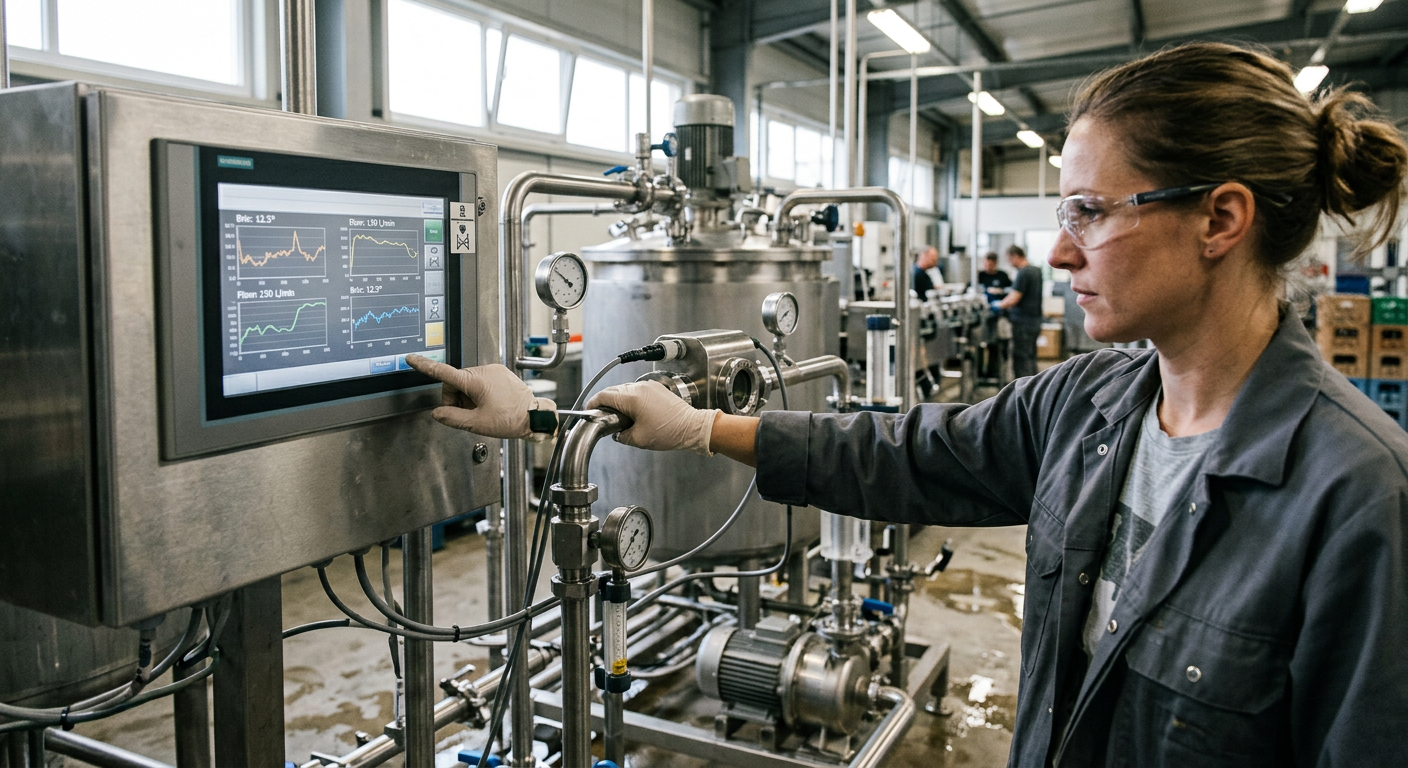
Food manufacturing engineering services help processors design, upgrade, automate, maintain, and optimize production systems so plants can run safely, efficiently, and profitably. In the United States, these services often cover process design, utilities, equipment integration, controls, food safety compliance, packaging line improvements, capacity expansion, and plant modernization. For food and beverage companies operating in regions such as the Midwest protein corridor, California beverage hubs, Texas distribution networks, the Carolinas, and the Northeast cold-chain markets, the right engineering partner can directly affect throughput, labor use, uptime, and audit readiness.
Quick Answer

Food manufacturing engineering services in the United States include process engineering, facility layout, automation integration, utility design, sanitary system design, compliance support, line optimization, preventive maintenance planning, and project execution. Manufacturers typically hire engineering specialists when they need to increase capacity, improve Overall Equipment Effectiveness, reduce downtime, support allergen segregation, modernize controls, install new equipment, or prepare for FDA, USDA, FSMA, SQF, BRC, and ISO-aligned audits.
For most U.S. processors, the best results come from an engineering firm that understands both design and plant-floor reality. That means knowing how a sauce batching system behaves during startup, how a protein line loses time during changeovers, how a brewery or RTD plant scales utilities, and how packaging equipment, CIP, refrigeration, compressed air, and SCADA all interact in the real world. This matters whether the facility is in Chicago, Fresno, Charlotte, Dallas-Fort Worth, Atlanta, or near logistics gateways such as the Port of Los Angeles, Port of Houston, Savannah, or New Jersey.
Companies looking for a partner often want one team that can take a project from concept through commissioning. That includes feasibility, capital planning, equipment specification, controls architecture, installation support, commissioning, startup, and production ramp-up. This integrated approach reduces handoff risk and helps protect project profitability.
| Engineering Need | Typical Plant Trigger | Common U.S. Outcome | Primary KPI |
|---|---|---|---|
| Capacity expansion | Demand growth from retail or foodservice | Higher output without major disruption | Units per hour |
| Automation upgrade | Manual processes causing inconsistency | Better control and visibility | Yield and downtime |
| Compliance improvement | Upcoming audit or customer requirement | Reduced risk exposure | Audit findings |
| Utility modernization | Steam, glycol, or air bottlenecks | Stable plant support systems | Uptime |
| Line efficiency work | Low OEE or chronic minor stops | Improved throughput | OEE |
| Allergen control redesign | Cross-contact concerns | Safer and faster changeovers | Changeover time |
| Equipment relocation | Plant consolidation or footprint shift | Lower capital than greenfield build | Schedule adherence |
The table above shows why engineering services are often tied to measurable business outcomes rather than abstract technical goals. A good project should improve line economics, not simply add hardware.
The Full Range of Food Manufacturing Engineering Services Explained

The full range of food manufacturing engineering services stretches from early planning to post-startup performance support. At the front end, manufacturers may need feasibility studies, process mapping, budget development, utility load analysis, and conceptual layouts. During design, they may need piping and instrumentation diagrams, sanitary design review, process flow development, controls narratives, electrical single-lines, and equipment procurement support. During execution, they may need project management, trade coordination, installation oversight, FAT and SAT planning, startup assistance, and operator training.
In practice, food plants usually require a mix of disciplines rather than a single specialty. A meat processor adding marination capacity may need stainless tanks, transfer pumps, tumblers, chilled water upgrades, floor drainage review, electrical distribution, and HMI changes. A dairy or aseptic beverage operation may need homogenization integration, CIP logic, recipe control, and hygienic zoning. A shelf-stable foods manufacturer may need retort, steam, condensate, water treatment, packaging synchronization, and thermal process support.
Manufacturers in the United States also face regional realities. Water and wastewater constraints can be significant in California. Labor pressures can drive automation investments in the Southeast and Midwest. Cold storage expansion near major interstate corridors can reshape utility planning. Export-oriented producers near ports may prioritize traceability and documentation for customer audits. Engineering services have to fit those site-specific conditions.
From a technology perspective, many projects now involve interconnected systems rather than isolated machines. Disruptive Process Solutions, for example, is known for combining process, mechanical, electrical, structural, plumbing, and controls knowledge so plants can align production goals with utilities, installation, and operating data. On the technology side, that can include PLC programming, SCADA, recipe and batch control, energy management logic, and integration across processing and support systems. You can learn more about its broader capabilities on the engineering services page.
| Service Category | What It Covers | Best Fit | Typical Benefit |
|---|---|---|---|
| Process engineering | Flows, balances, equipment sizing, product paths | New lines and expansions | Stable production design |
| Facility engineering | Layouts, utilities, drainage, support areas | Retrofits and greenfield projects | Better use of plant footprint |
| Controls engineering | PLC, HMI, SCADA, recipes, alarms | Automation and visibility upgrades | Less manual intervention |
| Project management | Budget, schedule, vendors, site execution | Multi-trade installations | Lower project risk |
| Compliance support | FSMA, sanitation, documentation, zoning | Audit-driven upgrades | Improved readiness |
| Commissioning and startup | Testing, tuning, training, ramp-up | Equipment launches | Faster time to production |
| Owner representation | Client advocacy across project phases | Complex capital programs | Stronger decision control |
This table matters because many plants underestimate the overlap between service categories. A controls problem may really be a process design issue. A packaging choke point may really be a utility stability issue. A useful engineering team sees the whole system.
The market growth trend above reflects rising demand for modernization, automation, and compliance-driven upgrades across U.S. food and beverage facilities heading into 2026.
Automation Engineering: PLCs, SCADA, and MES Integration

Automation engineering is one of the highest-value segments within food manufacturing engineering services because it influences throughput, consistency, labor efficiency, traceability, and troubleshooting speed. In food plants, PLCs control machine-level operations, SCADA provides plant-wide monitoring and supervisory control, and MES functions connect production execution with data collection, scheduling, lot tracking, and reporting. When these systems are integrated well, operators can manage production with more confidence and managers can make better decisions faster.
In many older U.S. plants, automation is fragmented. Individual fillers, cookers, conveyors, or mixers may run on separate logic with limited data sharing. Recipe changes may rely on operator memory, paper logs, or spreadsheet instructions. Alarms may exist without root-cause context. That creates downtime, quality variation, and weak traceability. Integration solves these issues by connecting process assets, packaging systems, utilities, and reporting layers.
PLCs are especially important for timing-critical and process-sensitive operations. In protein processing, they can synchronize conveying, portioning, tumbling, and chilling support. In beverage plants, they can control syrup rooms, blending, carbonation, tank management, CIP sequencing, and filler interfaces. In dairy or aseptic applications, automation logic must also support sanitary sequencing, temperature control, batch integrity, and exception handling.
SCADA becomes valuable when a site needs visibility across multiple systems, shifts, or product families. It can centralize data from boilers, compressors, process vessels, retorts, pasteurizers, pumps, VFDs, and packaging assets. MES-level capabilities then build on this foundation to support genealogy, performance analysis, and electronic production records.
DPS has developed a reputation for controls work that ties directly to production economics rather than technology for its own sake. Its process and controls teams support PLC programming, SCADA integration, utility coordination, and startup execution across food and beverage systems. That practical orientation is useful when a plant needs improvements that operators can actually sustain on the floor.
| Automation Layer | Main Role | Example in Food Plant | Business Impact |
|---|---|---|---|
| Field devices | Sensing and actuation | Flowmeters, valves, temperature probes | Reliable process inputs |
| PLC | Machine and process control | Mixer sequencing, filler timing | Repeatable operation |
| HMI | Operator interface | Recipe selection, alarm review | Lower operator error |
| SCADA | Supervisory monitoring | Tank farm and utility dashboard | Faster response to issues |
| MES | Production execution and records | Lot traceability and downtime capture | Better compliance and analytics |
| ERP connection | Planning and business integration | Material usage and scheduling | Improved cost control |
| Analytics layer | KPI and trend reporting | OEE and yield dashboards | Continuous improvement |
The table above shows why automation should be designed as a stack, not a stand-alone PLC project. When integration is incomplete, many of the financial benefits remain unrealized.
The bar chart indicates strong automation demand in beverage, protein, and aseptic applications, where traceability, speed, and recipe control are especially important.
Choosing an Engineering Partner With Manufacturing Floor Experience
Choosing an engineering partner is not just about credentials or software capability. In food manufacturing, floor experience matters because projects must survive real operating conditions: sanitation windows, labor turnover, compressed schedules, changing production plans, and aging infrastructure. A design that looks efficient on paper can fail if it ignores washdown access, traffic flow, allergen zoning, valve maintenance access, forklift paths, or how operators actually run a line on second shift.
Manufacturers should evaluate engineering partners based on several practical criteria. First, do they understand the specific product category, such as proteins, sauces, dairy, brewing, RTD beverages, or aseptic systems? Second, can they coordinate utilities, processing, controls, packaging, and installation as one operating system? Third, do they communicate budget and schedule risk honestly? Fourth, can they support both strategic planning and urgent execution? Fifth, have they worked across multiple U.S. jurisdictions and regulatory environments?
DPS is a strong example of the type of partner many U.S. manufacturers seek when they want execution tied to business outcomes. Rather than functioning only as a designer, the company operates through a design-build-manage model that combines planning, construction coordination, and rigorous project oversight. For plants seeking a long-term capital partner, this approach can reduce gaps between concept, procurement, installation, and startup. More background on the company can be found on its about page.
A good partner should also challenge assumptions. Sometimes the real constraint is not equipment size but controls logic, scheduling sequence, utility instability, or poor line balance. A firm with manufacturing floor experience can identify lower-cost fixes before a client commits to unnecessary capital.
| Selection Criterion | Why It Matters | Warning Sign | Best Practice |
|---|---|---|---|
| Category expertise | Food processes behave differently by product | Generic proposals | Ask for similar project examples |
| Plant-floor experience | Design must work during real operations | Limited startup history | Interview field execution leads |
| Controls capability | Many bottlenecks are logic-related | Automation outsourced blindly | Review in-house integration approach |
| Compliance fluency | Food safety cannot be retrofitted later | Weak sanitation understanding | Discuss audit and zoning strategy |
| Project delivery model | Handoffs create delays and cost growth | Fragmented responsibility | Favor integrated execution |
| Commercial honesty | Capital decisions need transparency | Always agrees with client | Choose a partner willing to push back |
| Geographic reach | Multi-site clients need consistency | Limited coverage | Confirm national support capability |
The buyer takeaway is simple: the best engineering partner is rarely the one with the most polished presentation. It is the one that understands how the line actually runs at 2 a.m. during a difficult SKU change and still protects your economics.
Preventive Maintenance Engineering vs. Break-Fix Approaches
Many food plants still spend too much money reacting to failures instead of engineering them out. A break-fix approach focuses on restoring equipment after a problem occurs. Preventive maintenance engineering, by contrast, designs reliability into the operation through asset criticality analysis, maintenance planning, spare strategy, condition monitoring, controls diagnostics, and better maintainability.
In food and beverage plants, break-fix is particularly expensive because failures often ripple into sanitation, product loss, labor overtime, and schedule disruption. A failed pump may stop a blending room. A refrigeration issue may affect product safety windows. A PLC fault may halt multiple assets if interlocks are not designed clearly. An unreliable retort, pasteurizer, or filler can compromise output across the day’s run plan.
Preventive maintenance engineering starts with critical assets and failure modes. It asks which systems create the highest operational or food safety risk: boilers, compressors, CIP skids, retorts, pumps, fillers, homogenizers, conveyors, refrigeration compressors, and controls hardware are common examples. Then it aligns maintenance intervals, alarm strategy, parts stocking, and operational checks around actual production risk.
Engineering also improves maintenance by making systems easier to access, diagnose, and isolate. Better instrumentation, labeled piping, documented logic, remote access support, and clear utility segregation all reduce downtime. For multi-site manufacturers in the United States, standardizing these practices across plants can improve technician effectiveness and reduce spare complexity.
| Approach | Short-Term Cost | Long-Term Cost | Effect on Production |
|---|---|---|---|
| Break-fix only | Looks lower initially | High due to repeated failures | Frequent disruptions |
| Time-based preventive maintenance | Moderate | Lower than break-fix | More predictable uptime |
| Condition-based maintenance | Higher setup cost | Efficient over time | Fewer surprise events |
| Reliability-centered engineering | Strategic investment | Often lowest total cost | Best uptime stability |
| Controls diagnostics upgrade | Moderate | Reduces troubleshooting waste | Faster recovery |
| Critical spare strategy | Inventory carrying cost | Prevents premium downtime | Improved repair speed |
| Maintenance standardization | Training and planning cost | Lower enterprise variability | Better shift-to-shift consistency |
This comparison shows why preventive maintenance engineering is not just a maintenance department issue. It is a production, quality, and capital efficiency issue.
OEE Improvement Strategies Through Manufacturing Engineering
OEE improvement is one of the clearest ways food manufacturing engineering services create financial value. OEE combines availability, performance, and quality, making it useful for identifying where profit is being lost. The engineering challenge is not simply to measure OEE, but to determine which design, control, maintenance, utility, and workflow changes will raise it sustainably.
Availability losses often come from long changeovers, startup instability, equipment failures, CIP duration, or poor utility reliability. Performance losses often come from minor stops, poor synchronization, conservative line speeds, and material flow interruptions. Quality losses may come from off-spec batches, fill variation, thermal inconsistency, damaged packaging, or startup waste.
Engineering strategies for OEE improvement include line balancing, bottleneck analysis, conveyance redesign, recipe optimization, HMI simplification, alarm rationalization, utility stabilization, hygienic design upgrades, and better data collection. In prepared foods, this may involve reducing feeder interruptions or stabilizing cook-chill timing. In beverage, it may mean improving syrup room sequencing or filler changeover logic. In proteins, it may involve debottlenecking marination, slicing, or packaging handoff points.
DPS has positioned itself around practical profitability, not just project completion. Its teams work across process, controls, utilities, and installation, which is exactly the cross-functional structure needed for real OEE gains. In many plants, the largest improvements come from fixing system interaction rather than buying more equipment.
The area chart highlights a strong shift toward automation-led OEE programs in U.S. food manufacturing as plants seek better visibility and faster root-cause analysis heading into 2026.
| OEE Loss Area | Typical Cause | Engineering Response | Expected Benefit |
|---|---|---|---|
| Availability | Frequent unplanned downtime | Reliability upgrades and diagnostics | More run time |
| Availability | Long sanitation windows | CIP optimization and sanitary redesign | Shorter turnaround |
| Performance | Minor stops | Controls tuning and line balancing | Smoother flow |
| Performance | Utility instability | Air, steam, glycol, or power improvements | Stable speed |
| Quality | Startup scrap | Recipe and process sequencing improvements | Higher first-pass yield |
| Quality | Fill or thermal variation | Instrumentation and process control upgrades | Reduced defects |
| All three | Poor data visibility | SCADA and KPI dashboards | Faster decisions |
The table above is useful because OEE problems are often categorized incorrectly. Plants may blame operators for losses that are actually rooted in engineering design.
Engineering for Allergen Control and Changeover Efficiency
Allergen control is a core engineering issue in modern U.S. food manufacturing, not just a sanitation or quality issue. As product portfolios expand, plants increasingly run dairy, tree nut, soy, wheat, egg, sesame, peanut, or other allergen-containing SKUs on shared equipment. That raises the need for physical segregation, hygienic design, validated cleaning, traffic control, and sequencing strategies that reduce both food safety risk and lost production time.
Engineering for allergen control begins with plant layout and product flow. Raw materials, rework, utensils, mobile equipment, waste streams, and employee movement must be considered. Airflow, drainage, access points, and storage zoning can all influence cross-contact risk. On the equipment side, dead legs, difficult-to-clean surfaces, hollow bodies, poor gasket choices, and inaccessible transfer points can all slow validation and increase exposure.
Changeover efficiency is closely related. A line that is hard to clean, hard to inspect, or difficult to reconfigure will consume labor and lose valuable production hours. Better engineering can support faster teardown, easier cleaning verification, cleaner product transitions, and more predictable startups. This is especially important in co-packing, where SKU complexity can be extreme and customer requirements are strict.
DPS works across food and beverage sectors where allergen control, CIP, hygienic design, and product-family changeovers are central concerns. Its manufacturing capabilities span systems such as mixing, cooking, marination, tanks, vessels, CIP, aseptic and thermal processing infrastructure, and integrated utilities. That kind of range matters when allergen control must be designed at the system level rather than applied after installation. More on its equipment side is available at the equipment page.
| Allergen/Changeover Challenge | Engineering Risk | Recommended Solution | Operational Result |
|---|---|---|---|
| Shared piping paths | Cross-contact during transfer | Dedicated circuits or validated separation | Safer product segregation |
| Hard-to-clean equipment | Long sanitation and residue retention | Sanitary redesign and better access | Faster cleaning |
| Complex SKU scheduling | Excessive wash cycles | Sequence by allergen ladder | Higher run efficiency |
| Poor traffic flow | Cross-zone contamination | Zoning and route redesign | Lower audit risk |
| Manual recipe setup | Wrong product settings | Automated recipe management | Fewer startup errors |
| Unclear verification | Delayed release | Integrated validation checkpoints | Shorter QA hold time |
| Slow reassembly | Extended changeover time | Toolless or simplified component design | Quicker return to production |
For U.S. plants supplying retailers, club stores, or national restaurant chains, this table reflects a critical reality: allergen control and changeover speed are now commercial capabilities, not back-room technical topics.
Case Study: Manufacturing Engineering Line Efficiency Gains
A useful case example in food manufacturing engineering is when a company initially assumes it needs large capital spending to gain output, but the real bottleneck is controls logic and system coordination. This type of situation is common across the United States, especially in facilities that have expanded in phases and now operate with layered legacy systems.
One notable example associated with DPS involved a client preparing to invest roughly $3 million for only about a 20 percent capacity increase. After technical review, the team determined the actual bottleneck was not the physical equipment footprint but PLC programming limitations. By reworking the controls approach, the plant achieved an estimated 30 percent output increase without the planned capital spend. That result did more than improve production. It strengthened trust, reduced unnecessary spending, and led to a larger follow-on project involving equipment relocation in Texas.
This kind of case highlights several important lessons. First, not all capacity constraints are mechanical. Second, controls and process sequencing can be hidden value drivers. Third, an engineering partner willing to tell a client not to spend money unnecessarily is often more valuable than one eager to sell more scope. Fourth, line efficiency gains can create strategic momentum for broader modernization.
For a broader view of project examples and execution style, manufacturers can review the company’s project case studies.
The comparison chart illustrates why integrated partners with plant-floor execution knowledge often outperform design-only providers in food manufacturing settings.
| Case Factor | Before Review | After Engineering Analysis | Business Effect |
|---|---|---|---|
| Planned capital spend | $3 million expansion concept | Capital avoided initially | Preserved cash |
| Expected output gain | 20% increase | Reassessed bottleneck | Better planning accuracy |
| Actual constraint | Assumed equipment limitation | PLC programming issue | Sharper root-cause diagnosis |
| Implemented solution | New equipment under consideration | Controls reprogramming | Lower complexity |
| Achieved result | Uncertain ROI | 30% output increase | Higher line productivity |
| Relationship outcome | Transactional project inquiry | Expanded partnership | Larger follow-on work |
| Strategic lesson | Spend first | Diagnose first | Smarter capital allocation |
This example is especially relevant for U.S. manufacturers facing inflation, labor pressure, and tight ROI standards. Often, the smartest project is the one that solves the right problem before major capital is committed.
Standards and Certifications: ISO 9001, FSMA, and BRC Compliance
Compliance is a major reason manufacturers hire food engineering specialists. In the United States, compliance expectations commonly involve FDA and USDA requirements, preventive controls under FSMA, customer audit programs, and globally recognized schemes such as BRCGS and SQF. ISO 9001 is different in that it focuses more broadly on quality management systems, documentation discipline, corrective action, and process consistency. Together, these frameworks influence how engineering decisions are made.
From an engineering standpoint, compliance affects materials of construction, cleanability, zoning, drainability, access, process controls, traceability, calibration strategy, change control, documentation, and validation. A poorly designed line may still run product, but it can struggle during audits because it lacks segregation, records, alarm clarity, sanitary access, or procedural consistency.
Food and beverage companies in the United States increasingly need partners who understand how engineering choices influence audit outcomes. For example, a BRC-minded redesign may require better hygienic zoning and documented maintenance controls. A FSMA-focused project may emphasize preventive controls, validation logic, and traceability. An ISO-aligned operation may prioritize standardized records, training interfaces, and corrective action support. In multi-site networks, standardization becomes even more valuable.
DPS supports projects that must operate within FDA, USDA, SQF, and BRC environments and has experience spanning food, beverage, aseptic, and specialty applications. Its service capabilities include capital planning, process design, owner representation, project and program management, installation coordination, and system integration, which is helpful when compliance must be built into both project scope and execution discipline.
| Standard or Framework | Main Focus | Engineering Impact | Typical Plant Priority |
|---|---|---|---|
| ISO 9001 | Quality management systems | Documentation and process consistency | Controlled change management |
| FSMA | Preventive controls and food safety | Hazard-oriented design decisions | Risk reduction |
| BRCGS | Food safety and site standards | Zoning, hygiene, records, maintenance | Retail customer confidence |
| SQF | Food safety and quality certification | Systematic verification support | Customer approval |
| FDA expectations | Regulatory compliance | Sanitary design and process control | Legal and operational readiness |
| USDA oversight | Meat and poultry requirements | Traffic flow, sanitation, records | Inspection compatibility |
| Customer audit programs | Brand-specific supplier expectations | Traceability and execution detail | Commercial retention |
The table demonstrates that standards are not just paperwork. They shape engineering choices from floor slope to control architecture.
Looking toward 2026, three trends stand out. First, digital traceability will expand, pushing more plants toward integrated MES-style data capture, recipe control, and electronic records. Second, sustainability pressure will increasingly influence water reuse, heat recovery, compressed air efficiency, wastewater planning, and energy management. Third, policy and customer expectations around supply chain resilience, hygienic design, and documented preventive controls will continue to tighten. Plants that modernize now will be better positioned for both audits and operating margins.
For U.S. manufacturers near major production and trade zones like California’s Central Valley, the Midwest meat corridor, the Carolinas, the Gulf Coast, and major port-driven distribution markets, these trends will influence capital planning over the next several years. Engineering services will increasingly be judged not only by project completion, but by measurable operational resilience.
FAQ
What are food manufacturing engineering services?
They are technical and project delivery services that help food and beverage plants design, improve, automate, and maintain production systems. They often include process design, controls, utilities, compliance, equipment integration, installation, and startup support.
When should a U.S. manufacturer hire a food engineering firm?
Common triggers include capacity expansion, aging controls, repeated downtime, audit preparation, allergen risk, utility bottlenecks, new product launches, or relocation and consolidation projects.
What is the difference between process engineering and automation engineering?
Process engineering focuses on how product moves and transforms through the plant, including equipment, thermal steps, transfers, and balances. Automation engineering focuses on how systems are controlled, monitored, and integrated through PLCs, HMIs, SCADA, and MES-style data systems.
Why is plant-floor experience so important?
Because food plants do not operate in ideal theoretical conditions. Sanitation schedules, labor variation, maintenance limits, and real production pressure affect whether a design actually works. Floor experience helps engineers create solutions that operators can sustain.
How can engineering improve OEE?
Engineering can increase availability by reducing downtime, increase performance by balancing lines and improving controls, and increase quality by stabilizing recipes, thermal processes, and fill accuracy. Better data visibility also speeds root-cause correction.
Can allergen control be improved through engineering, not just procedures?
Yes. Layout, piping segregation, traffic flow, equipment cleanability, zoning, and recipe control all affect allergen risk and changeover speed. Strong engineering can reduce both audit exposure and lost production time.
Do food plants really need SCADA or MES integration?
Not every facility needs full MES immediately, but many benefit from at least better PLC standardization, HMI design, data collection, and SCADA visibility. As 2026 approaches, traceability and KPI transparency are becoming more important in the United States market.
What should buyers ask before selecting an engineering partner?
Ask about category-specific experience, startup history, controls capability, compliance familiarity, multi-discipline coordination, project delivery model, and how they identify bottlenecks before recommending capital spending.
What kinds of plants benefit most from integrated engineering support?
Protein processors, dairy plants, aseptic operations, prepared foods manufacturers, co-packers, breweries, RTD producers, and facilities with mixed product portfolios tend to gain the most because they have complex interactions between process, utilities, controls, and compliance.
How does DPS fit into this market?
DPS serves food and beverage manufacturers across the United States and Canada with an integrated design-build-manage approach. The company supports process and controls engineering, capital planning, owner representation, project management, installation, system integration, and branded process equipment for plants that want practical, profitability-focused execution.
In summary, food manufacturing engineering services are most valuable when they connect technical design to plant economics. U.S. manufacturers need partners that can improve throughput, lower risk, support compliance, and guide smarter capital decisions across both immediate projects and long-term growth plans.
[/trp_language]
Complete Company Portfolio

About the Author: Disruptive Process Solutions (DPS)
The DPS team combines process engineering expertise with real-world food and beverage manufacturing experience. Our content focuses on process optimization, production efficiency, facility improvements, and practical solutions that help manufacturers operate more effectively in a rapidly evolving industry.
Share

