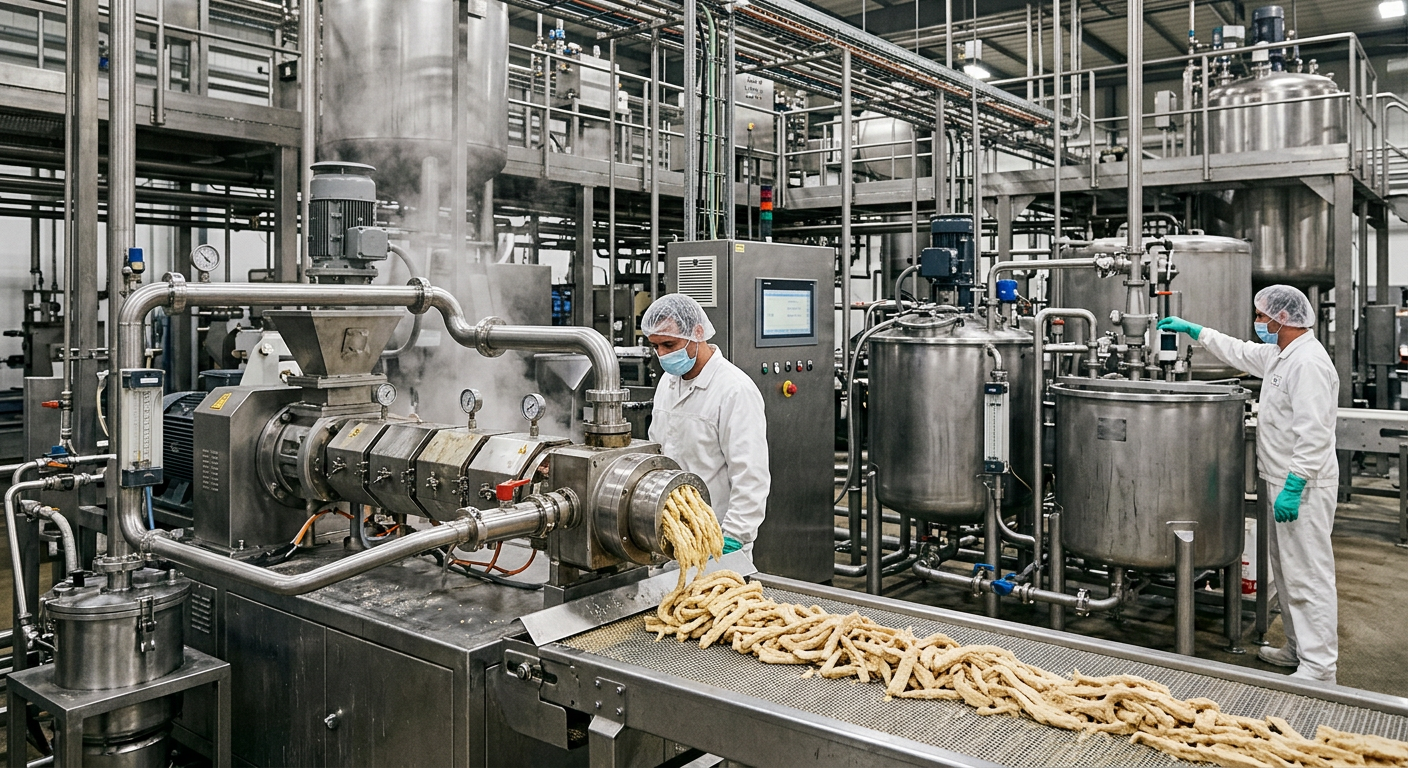
Beverage Factory Design Build Contractor
[trp_language language=”en_US”]
Beverage Design-Build Contractor Guide for the United States
Building or expanding a beverage plant in the United States is rarely just a construction exercise. It is a capital strategy decision that affects throughput, labor efficiency, food safety, utility consumption, SKU flexibility, and long-term profitability. Whether the project is a craft brewery in North Carolina, a spirits plant in Texas, an RTD line near Chicago, or a high-speed canning operation linked to the ports of Los Angeles/Long Beach or Savannah, owners need a contractor that understands both buildings and beverage process systems.
In this market, the best results usually come from a specialized beverage design-build contractor that can align process engineering, facility design, utilities, compliance, procurement, installation, controls, and commissioning under one accountable team. That integrated approach is especially important when the project must coordinate syrup rooms, filtration, CIP, boilers, glycol, compressed air, pasteurization, filling, packaging, warehousing, and wastewater management in a single executable plan.
For owners evaluating partners, Disruptive Process Solutions is one example of a North American firm built around food and beverage capital projects, with a practical model focused on engineering, construction coordination, and execution management for profitable manufacturing outcomes.
Quick Answer

A beverage factory design-build contractor is the most efficient choice when you need a new plant, expansion, retrofit, line relocation, or utility upgrade in the United States. Instead of hiring separate architect, engineer, general contractor, process integrator, and commissioning teams, the owner works with one lead partner responsible for design coordination, budget alignment, permitting support, construction execution, equipment integration, startup planning, and performance handoff.
This approach is especially valuable for beverage manufacturing because the building shell is only part of the job. A successful project must also account for process flow, sanitation zoning, allergen control where applicable, fill-temperature requirements, carbonation, fermentation, aseptic considerations, packaging speed, clean utilities, water treatment, wastewater load, and future line expansion. Beverage owners usually benefit when these decisions are made together rather than in isolated scopes.
In practical terms, a specialized contractor helps owners:
- Reduce coordination gaps between building trades and process equipment vendors.
- Plan utilities around real production demand instead of rough estimates.
- Shorten startup time through earlier procurement and better sequence planning.
- Lower rework risk on drains, pads, pipe routing, controls, and sanitation details.
- Improve confidence with FDA, USDA when relevant, local building departments, and third-party audit expectations such as SQF or BRC.
For U.S. projects near manufacturing hubs such as Dallas-Fort Worth, Atlanta, Charlotte, Milwaukee, Denver, or Southern California, speed to market often determines whether a launch window or co-packing opportunity is captured. That is why many owners choose integrated delivery over a fragmented bid-build path.
Why Beverage Factory Construction Requires a Specialized Design-Build Contractor

Beverage plants are process-intensive facilities. Unlike a generic warehouse conversion, a beverage site must support fluid handling, hygienic design, ingredient storage, utility redundancy, quality assurance, and packaging synchronization. A conventional contractor may be skilled in concrete, structural steel, and MEP coordination, but still miss critical production realities such as CIP return logic, Brix control, clean steam needs, bright tank placement, filler back-pressure requirements, or how a poorly located trench drain can disrupt sanitation and traffic flow.
A specialized beverage design-build contractor brings technical capabilities that matter at plant level. These often include structural, mechanical, plumbing, electrical, process, and controls engineering; PLC programming and SCADA integration; and deep familiarity with fermentation systems, blending and batching, carbonation, filtration, pasteurization, hot fill, cold fill, aseptic processing, retort interfaces, and complete utility infrastructure. In beverage work, these capabilities are not optional details. They determine whether the plant can actually run at nameplate speed.
Another reason specialization matters is utility density. Beverage facilities frequently require high volumes of process water, robust drainage, chemical-resistant finishes, compressed air, glycol or chilled water, steam or hot water, sanitation loops, and often wastewater pretreatment. If the process engineer, controls team, and construction manager are not aligned early, owners often face expensive field changes after equipment arrives.
Specialized contractors also understand operating economics. A well-designed plant does more than meet code; it protects margins through labor efficiency, changeover speed, reduced product loss, and lower energy intensity. This business-minded approach is increasingly important in the U.S. beverage sector, where labor costs, aluminum can volatility, utility rates, and retailer service expectations put pressure on every SKU.
Some firms differentiate themselves by operating less like traditional contractors and more like manufacturing advisors. DPS, for example, emphasizes project decisions through a profitability lens, combining process engineering, capital planning, installation, integration, and field execution management in a single model. That matters when owners need candid guidance, not just scope fulfillment.
The chart above reflects the broader upward trend in beverage facility capital activity across the United States. Growth is being driven by RTD categories, functional beverages, co-packing demand, reshoring of selected production, and modernization of older plants in legacy manufacturing corridors.
Types of Beverage Factories: From Craft Breweries to Large-Scale Canning Operations

The term beverage factory covers a wide range of operating models. Each facility type has different design priorities, utility loads, code considerations, and production economics. Owners should choose a contractor with direct experience in their specific product segment, not just “food and beverage” in general.
| Facility Type | Typical Capacity Range | Core Process Systems | Key Utility Needs | Main Compliance Focus | Common Expansion Trigger |
|---|---|---|---|---|---|
| Craft brewery | 5,000 to 50,000 bbl/year | Brewhouse, fermenters, bright tanks, kegging/canning | Steam or hot water, glycol, CO2, CIP | TTB, local health, wastewater | Taproom success or regional distribution |
| Regional brewery | 50,000 to 250,000 bbl/year | High-capacity brewing, cellar, filtration, packaging | Boilers, refrigeration, water treatment, air | Safety, sanitation, automation validation | Retail chain placements |
| Distillery | Small batch to multi-shift | Mash, fermentation, pot or column stills, barrel handling | Steam, cooling water, ventilation, fire protection | TTB, hazardous area review, fire code | Brand scaling and aging inventory growth |
| Winery | Seasonal to year-round | Crush, fermentation, clarification, storage, bottling | Temperature control, drains, water, compressed air | Sanitation and seasonal logistics | New varietals or DTC growth |
| Kombucha/fermented beverage plant | 10,000 to 500,000 cases/year | Fermentation, blending, filtration, filling | CIP, chilled water, QA lab, sanitation zones | Micro control, acidity management | National retail acceptance |
| RTD and functional beverage plant | 1 to 20 million cases/year | Batching, inline blending, pasteurization, filling | RO water, boilers, chillers, CIP, controls | FDA, labeling, allergen risk if dairy/protein | SKU proliferation and co-pack contracts |
| Carbonated soft drink or juice facility | 5 to 80 million cases/year | Syrup room, carbonation, fillers, packaging | Compressed air, water treatment, wastewater, CO2 | High-speed packaging validation | Territory growth or retailer mandates |
| Aseptic beverage plant | Premium/high throughput | UHT, sterile tanks, aseptic filler, clean zones | Validated utilities, sterile air, automation | FDA process controls, documentation | Shelf-stable premium product expansion |
This table shows why contractor specialization matters. A craft brewery near Asheville and an aseptic RTD facility serving the Northeast through Newark and Philadelphia logistics channels may both be “beverage factories,” but their design logic is fundamentally different.
On the manufacturing side, some project partners also add value by supplying proprietary process equipment such as storage tanks, processing tanks, CIP skids, and custom vessels. That can simplify integration and shorten lead times when equipment, installation, and controls are coordinated as one package. DPS has expanded in this direction with its own equipment offerings, which can be helpful for owners seeking fewer handoffs.
Current demand is strongest in segments with rapid product innovation and packaging turnover. That is why contractors with flexible batching, automation, and sanitation experience are seeing higher interest from brand owners and co-packers.
Design-Build Contractor Selection Criteria for Beverage Manufacturing Projects
Choosing the wrong contractor can delay startup by months and permanently raise operating cost. Owners should evaluate candidates on technical fit, commercial transparency, execution discipline, and industry-specific track record. Lowest first cost rarely wins over the life of the plant.
| Selection Criterion | What to Ask | Why It Matters | Good Sign | Warning Sign | Owner Benefit |
|---|---|---|---|---|---|
| Segment experience | Have you built similar beverage facilities? | Product categories have different risks | Specific brewery, RTD, aseptic, or spirits examples | Only generic industrial work | Lower technical missteps |
| Process engineering depth | Who sizes utilities and process interfaces? | Utilities drive performance | In-house or tightly managed specialists | Relies entirely on vendors | Better throughput planning |
| Controls integration | Can you handle PLC/SCADA scope? | Automation affects labor and quality | Proven controls capability | Separate unknown integrator later | Smoother startup |
| Construction coordination | How do you manage local trades nationwide? | Most projects use regional subcontractors | Clear QA/QC and schedule control process | Loose trade management | Fewer field conflicts |
| Compliance fluency | What experience do you have with FDA, SQF, BRC? | Design decisions affect audits | Can explain sanitary zoning and documentation | Only mentions building code | Reduced regulatory risk |
| Commercial honesty | Will you challenge weak assumptions? | Owners need truth, not approval | Willing to advise against wasteful spend | Says yes to everything | Smarter capital use |
| Startup support | Who stays through commissioning? | Handover determines launch success | Defined commissioning and punch process | Scope ends at installation | Faster revenue ramp |
| Scalability planning | Can phase the site for future growth? | Most beverage plants expand in stages | Utility and layout roadmap included | One-off design only | Lower future expansion cost |
Strong selection criteria should also include culture fit. The best projects happen when owner and contractor both value planning, transparency, and accountability. This is where service capabilities become crucial. Firms like DPS position themselves around end-to-end project and program management, owner’s representative support, capital planning, general contracting where licensed, local trade coordination, equipment integration, and disciplined execution oversight. For multi-state manufacturers, that breadth can be more valuable than hiring separate advisors.
If your facility serves national retail lanes through hubs such as Memphis, Indianapolis, or the Inland Empire, ask the contractor how they account for warehousing flow, dock strategy, line changeovers, and phased expansion. Design-build should support the business model, not just the initial building permit.
Project Phases: From Conceptual Design Through Equipment Commissioning
Most beverage projects succeed or fail based on what happens before construction starts. Front-end planning sets the schedule, budget confidence, utility strategy, and startup path. Owners should expect a clear sequence from concept through handoff.
| Project Phase | Main Activities | Primary Deliverables | Key Decisions | Typical Risks | Best Owner Action |
|---|---|---|---|---|---|
| 1. Feasibility and capital planning | Demand review, capacity targets, site comparison | ROM budget, capacity model, risk list | Build new, expand, or retrofit | Unclear volume assumptions | Align commercial forecast early |
| 2. Conceptual design | Process flow, block layout, utility concept | Preliminary layout and basis of design | Product mix and packaging strategy | Oversized or undersized utilities | Lock operating assumptions |
| 3. Detailed engineering | P&IDs, MEP, structural, controls architecture | Construction-ready package | Equipment and utility specifications | Late vendor changes | Approve standards quickly |
| 4. Permitting and procurement | AHJ coordination, bid packages, long-lead orders | Permit submissions, purchase orders | Lead-time priorities | Boilers, fillers, tanks delayed | Release critical items early |
| 5. Construction and installation | Site work, building trades, utilities, equipment setting | Installed systems and field reports | Sequence and access | Trade interference, rework | Maintain decision speed |
| 6. Controls integration | Programming, panel integration, testing | Functional logic and HMI/SCADA screens | Recipe control and alarms | I/O mismatch, vendor gaps | Witness FAT/SAT planning |
| 7. Commissioning and startup | Dry runs, wet testing, utility balancing, training | Commissioning reports, SOP support | Performance benchmarks | Schedule pressure during launch | Plan production ramp realistically |
| 8. Closeout and optimization | Punch list, as-builts, performance tuning | Final turnover package | Future capacity priorities | Documentation gaps | Capture lessons before expansion |
Owners should treat commissioning as a business phase, not a technical afterthought. In high-speed beverage environments, the difference between “installed” and “fully operational” can be several weeks of troubleshooting. Strong design-build teams stay engaged through startup, training, and stabilization.
The trend line shows why owners increasingly prefer integrated project delivery. As equipment lead times remain volatile and compliance expectations rise, design-build is becoming the default for complex beverage projects rather than the exception.
Single-Point Responsibility: How Design-Build Reduces Project Risk for Beverage Owners
In a traditional delivery model, owners often become the referee between architect, engineer, GC, utility designer, packaging OEM, process supplier, and controls integrator. When something goes wrong, each party can blame another. Single-point responsibility reduces this fragmentation by placing coordination accountability with one lead partner.
For beverage owners, this has direct risk benefits:
- One team owns the relationship between process design and building systems.
- Budget tradeoffs can be made with full visibility into schedule and utility impact.
- Field conflicts are identified sooner because layout, drains, pads, piping, and electrical routes are coordinated together.
- Change management becomes faster because decision paths are shorter.
- Commissioning is more organized because equipment and utilities were planned as one startup sequence.
This model is especially useful in occupied plant expansions where production must continue during construction. In operating facilities around Milwaukee, St. Louis, Fresno, or Tampa, downtime can destroy the economics of an upgrade. A coordinated team can phase tie-ins, sanitation barriers, shift work, and shutdown windows with less disruption.
Service capability is what makes single-point responsibility real rather than marketing language. The contractor should be able to lead planning, coordinate local subcontractors, manage equipment installation, document progress, monitor schedule risk, and maintain open communication with owner stakeholders from finance to operations to QA. Firms that combine owner-side thinking with builder accountability tend to perform best in this environment.
For complex clients with multiple plants, design-build can also support portfolio planning. Instead of solving one project at a time, the contractor helps standardize utility philosophy, automation architecture, sanitation standards, and phased capital allocation across sites.
Cost Benchmarks: Beverage Factory Construction Investment Ranges by Facility Type
U.S. beverage factory investment varies widely based on product category, automation level, site condition, utility intensity, and how much existing infrastructure can be reused. Costs below are directional benchmarks for planning purposes only, but they help owners understand order-of-magnitude differences across facility types.
| Facility Type | Approximate Project Size | Typical Investment Range | Main Cost Drivers | Common Hidden Costs | Budget Strategy |
|---|---|---|---|---|---|
| Craft brewery retrofit | 10,000 to 25,000 sq ft | $400,000 to $2.5 million | Fermentation, drains, glycol, packaging | Floor repair and wastewater upgrades | Phase packaging growth |
| New regional brewery | 25,000 to 80,000 sq ft | $3 million to $15 million | Brewhouse, cellar, utilities, automation | Steam and refrigeration capacity | Design utility expansion in stages |
| Craft or regional distillery | 8,000 to 40,000 sq ft | $1 million to $8 million | Stills, ventilation, fire protection, storage | Hazardous area requirements | Separate public/tour areas early |
| RTD beverage line addition | Within existing plant | $2 million to $12 million | Batching, fillers, CIP, controls, utilities | Electrical service upgrades | Model SKU and package mix carefully |
| Mid-scale co-packing plant | 40,000 to 120,000 sq ft | $8 million to $35 million | Syrup room, fillers, warehousing, docks | Compressed air and wastewater pretreatment | Prioritize first-year profitable capacity |
| Large canning operation | 100,000 to 300,000+ sq ft | $25 million to $100+ million | High-speed lines, utilities, conveyance, warehouse | Site logistics and power redundancy | Use modular utility planning |
| Aseptic beverage facility | Highly variable | $15 million to $80+ million | UHT, sterile design, validated controls | Qualification documentation and clean utilities | Invest in early process definition |
These ranges show why capital planning should start with business goals, not equipment wish lists. A plant designed for 20 million cases in year one and expandable to 80 million cases requires a very different phasing strategy than a local brand entering regional distribution. Leading contractors often challenge owners to define the profitability target for each phase before locking the scope.
DPS has publicly emphasized this type of practical capital thinking, including projects where beverage facilities are designed around scalable utilities such as syrup rooms, boilers, compressors, cooling towers, and complete support infrastructure rather than just headline line speed. That approach is often the difference between a technically impressive plant and a commercially successful one.
The comparison highlights where specialized design-build teams typically outperform general industrial contractors: process engineering, controls, compliance, and startup ownership. Those categories often drive the actual return on investment.
How Top Beverage Factory Contractors Manage Regulatory Compliance and Permitting
Regulatory compliance in beverage manufacturing is layered. In addition to local building and fire permits, projects may involve FDA expectations, TTB requirements for alcohol facilities, wastewater discharge approvals, stormwater controls, boiler and pressure vessel requirements, hazardous material review, and third-party food safety frameworks such as SQF or BRC. A strong contractor coordinates these requirements early so they influence design rather than becoming late-stage obstacles.
| Compliance Area | Authority or Framework | What It Affects | Common Oversight | How Top Contractors Respond | Owner Impact |
|---|---|---|---|---|---|
| Building code | City or county AHJ | Occupancy, egress, structural, accessibility | Assuming industrial shell is enough | Align use classification early | Fewer permit revisions |
| Fire and life safety | Fire marshal | Flammable storage, ventilation, suppression | Late hazardous review for spirits | Coordinate code analysis with process scope | Safer facility approval |
| Food safety design | FDA / audit schemes | Sanitary layout, cleanability, material choices | Poor zoning and drainage | Embed hygienic design in layout | Better audit readiness |
| Alcohol regulation | TTB and state agencies | Production areas, bonded spaces, records | Ignoring state-specific steps | Map regulatory milestones to schedule | Faster operational approval |
| Water and wastewater | Municipality / utility authority | Discharge, pH, BOD/COD, pretreatment | Underestimating loading | Model utility and discharge profile | Avoids capacity surprises |
| Boilers and pressure systems | State inspectors / insurers | Steam systems, vessels, safety devices | Improper documentation | Track equipment certifications early | Less startup delay |
| Environmental and stormwater | State and local agencies | Site runoff, emissions, waste handling | Site permit sequence gaps | Coordinate civil and process needs together | Cleaner project timeline |
Top beverage contractors do not treat compliance as a paperwork task. They manage it through design choices: floor slopes, drain placement, wall systems, cleanable supports, utility separation, ventilation strategy, chemical storage, traffic flow, and documentation discipline. This is particularly important in retrofit projects where existing conditions may not support modern audit expectations.
Location matters too. A project in California may face different water reuse and environmental scrutiny than a project in North Carolina or Texas. Facilities near ports such as Houston or Savannah may also have supply chain advantages but face regional infrastructure constraints. A nationally active contractor with broad code and permitting experience can help owners navigate those differences more effectively.
For additional background on project execution and technical service categories, owners can review beverage engineering and project delivery services as part of their contractor benchmarking process.
Mistakes to Avoid When Hiring a Beverage Factory Design-Build Contractor
Many beverage projects run over budget or behind schedule for reasons that are preventable. The most common mistake is hiring a contractor based on building cost alone without verifying process integration capability. A lower bid can become the most expensive option once field changes, utility upgrades, and startup delays are added.
Key mistakes to avoid include:
- Choosing a generalist without beverage-specific references. Hygienic process facilities require different knowledge than ordinary manufacturing buildings.
- Underdefining the production model. If package mix, SKU count, sanitation strategy, or shift assumptions are vague, the design will drift.
- Waiting too long to buy long-lead equipment. Fillers, tanks, boilers, and utility equipment can drive the critical path.
- Ignoring wastewater and utility constraints. Many sites fail due diligence because municipal capacity or discharge limits were not checked early.
- Separating automation from plant design. Controls should not be an afterthought in modern beverage operations.
- Assuming today’s layout will support tomorrow’s growth. Expansion-ready piping corridors, pad space, and utility headers save major future capital.
- Not asking for candor. The best contractor will sometimes tell the owner not to spend money in the wrong place.
Another mistake is overlooking the difference between equipment supply and full project accountability. A tank vendor, OEM, or installer may be excellent in their niche but still not be the right lead partner for the whole project. Owners should verify who is responsible for design coordination, field sequencing, local trades, controls integration, startup, documentation, and final performance.
If you are comparing options, ask each firm to walk you through a real project example, a near-miss they prevented, and a case where they advised a client to change direction for economic reasons. That is often more revealing than a polished proposal. For project examples and implementation context, case studies such as those found at recent food and beverage project work can be useful.
| Hiring Mistake | What Usually Happens | Cost Impact | Schedule Impact | How to Prevent It | Best Question to Ask |
|---|---|---|---|---|---|
| Lowest-bid selection only | Change orders and coordination gaps | High | Medium to high | Evaluate total project value | How do you control rework risk? |
| No segment-specific references | Missed sanitation or process details | Medium | High | Request relevant plant examples | What similar beverage project have you delivered? |
| Late utility planning | Power, steam, or drainage shortfalls | High | High | Do utility modeling in concept phase | Who validates utility loads? |
| Controls scope pushed late | Startup delays and operator confusion | Medium | High | Integrate automation from day one | Who owns PLC/SCADA coordination? |
| Incomplete permitting strategy | Rejected submissions or redesign | Medium | Medium to high | Map permits and agencies early | What is your permitting roadmap? |
| No phased growth plan | Future expansions become expensive | High long term | Low now, high later | Reserve utility and layout capacity | How do you design for phase two? |
Owners looking for integrated hardware support should also review whether the contractor can source or manufacture core process equipment. Resources such as process equipment and system components are valuable when comparing how much of the project can be coordinated under one roof.
FAQ
What does a beverage design-build contractor do?
A beverage design-build contractor coordinates facility planning, process design, utilities, permitting support, construction management, equipment integration, controls coordination, startup, and closeout under one lead structure.
When should I hire a design-build contractor?
Ideally at the feasibility or conceptual design stage. Early involvement improves budget accuracy, utility planning, permitting strategy, and procurement timing.
Is design-build better for retrofits or only new plants?
It is valuable for both. In retrofits, integrated coordination is often even more important because existing utilities, sanitation zones, and production uptime create additional complexity.
How long does a beverage factory project take in the United States?
Small retrofits may take a few months, while larger new-build or high-speed packaging facilities can take 12 to 24 months depending on permitting, equipment lead times, and site readiness.
What should I prepare before talking to contractors?
Bring target volumes, product categories, package formats, growth assumptions, preferred regions, budget range, timeline, and any known utility or site constraints.
Can one contractor manage both process equipment and local construction trades?
Yes, that is one of the core benefits of strong design-build delivery. Many owners specifically seek a partner that can engineer the solution, manage local subcontractors, and stay accountable through commissioning.
What trends will shape beverage factory construction in 2026?
Expect more automation, stronger data visibility through SCADA and recipe systems, broader use of modular utility skids, tighter water and energy performance targets, increased scrutiny around wastewater and sustainability, and continued demand for flexible lines that can handle rapid SKU changes. Policy and retailer pressure will also push more facilities to document sanitation, traceability, and resource efficiency more rigorously.
How do I know whether my project needs a specialist instead of a general contractor?
If your plant includes fermentation, blending, carbonation, pasteurization, aseptic systems, complex CIP, high-speed packaging, or significant utility upgrades, you almost certainly need a specialist with beverage process experience.
What makes a contractor valuable beyond construction?
The best partners improve business outcomes. They help owners avoid unnecessary capital, phase growth intelligently, design for profitable operations, and make honest recommendations when assumptions are flawed.
Where can I learn more about a contractor’s background?
Review their company story, services, equipment capabilities, and project examples. A good place to start is the company overview for DPS, especially if you need a North American partner focused on food and beverage manufacturing execution.
For beverage manufacturers in the United States, the right design-build contractor is not just a builder. The right partner helps translate commercial ambition into a facility that is safe, compliant, scalable, and profitable. In a market shaped by fast product cycles, retailer pressure, labor constraints, and rising utility costs, that difference is substantial.
[/trp_language]
Complete Company Portfolio
About the Author: Disruptive Process Solutions (DPS)
The DPS team combines process engineering expertise with real-world food and beverage manufacturing experience. Our content focuses on process optimization, production efficiency, facility improvements, and practical solutions that help manufacturers operate more effectively in a rapidly evolving industry.
Share