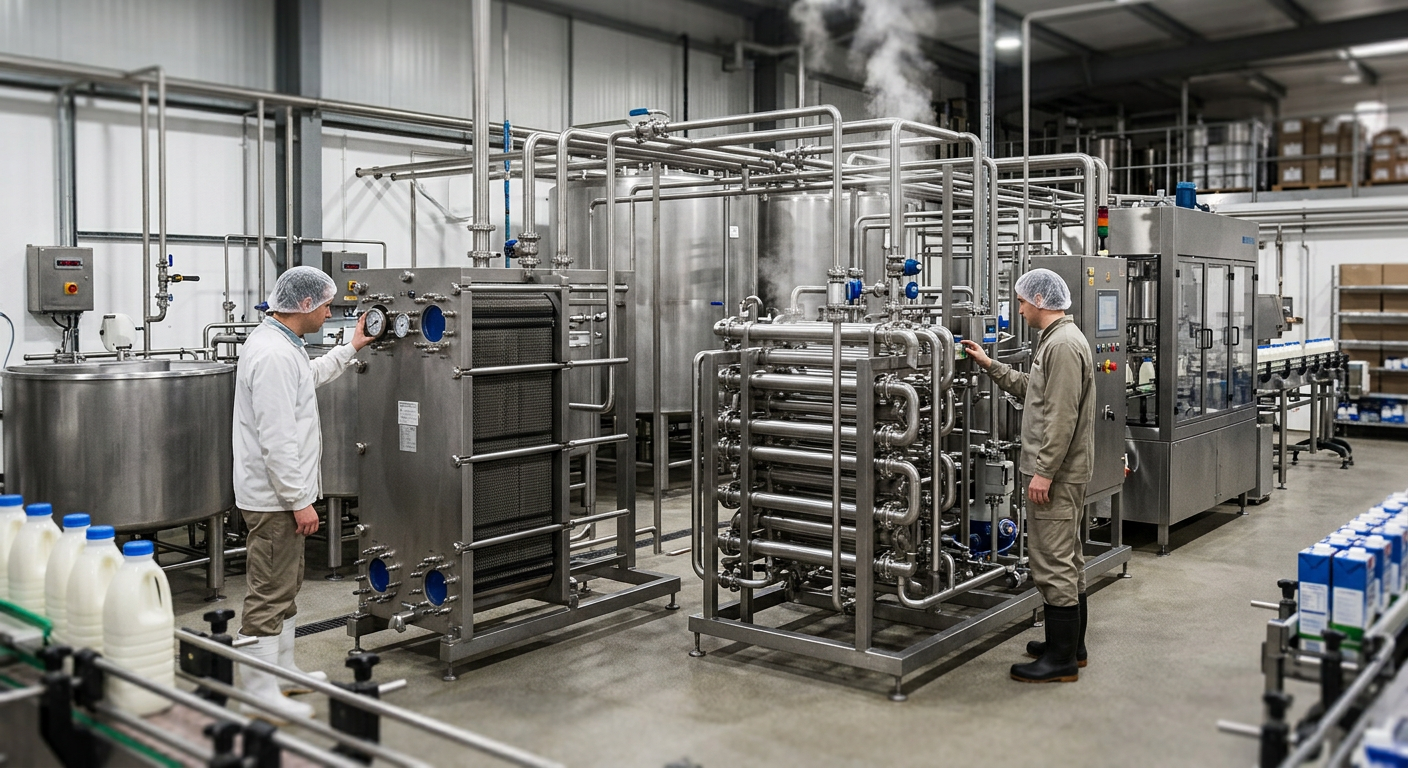
Food Plant Feasibility Study Services
[trp_language language=”en_US”]
Food Plant Feasibility Guide for United States Manufacturers
Food manufacturers in the United States face a costly question before expanding, relocating, or building a new facility: will the project produce profitable, compliant, and scalable operations? A food plant feasibility study answers that question with evidence. It tests commercial demand, process fit, equipment needs, utility loads, workforce realities, capital cost, operating cost, regulatory exposure, and execution risk before major money is committed. For companies planning projects in markets such as Texas, California, the Midwest, the Southeast, or major logistics corridors tied to the ports of Los Angeles, Long Beach, Houston, Savannah, and Newark, a disciplined feasibility analysis can prevent expensive overbuilding, under-sizing, or compliance mistakes.
This guide explains how a feasibility study works, what it should include, how buyers should compare service providers, and why an engineering-led approach matters when evaluating beverage, dairy, protein, prepared foods, sauces, aseptic, retort, and co-packing operations across the United States.
Quick Answer

A food plant feasibility study is a pre-project analysis used to determine whether a new plant, expansion, retrofit, equipment line, or facility relocation makes business sense in the United States. It typically covers market demand, product mix, process design, equipment selection, layout, utilities, labor, food safety compliance, environmental considerations, CAPEX, OPEX, schedule, and risk.
For most manufacturers, the study should deliver a decision-ready roadmap rather than a generic report. The best outcome is not simply a “yes” to build. It may also identify that a lower-cost debottlenecking strategy, automation upgrade, controls reprogramming, or phased expansion will create better returns than a full capital project.
| Decision Area | Key Question | Why It Matters | Typical U.S. Concern | Output | Buyer Benefit |
|---|---|---|---|---|---|
| Market demand | Will volume support investment? | Prevents oversizing | Regional retail and foodservice shifts | Demand forecast | Better revenue confidence |
| Process fit | Can the line make required SKUs? | Protects product quality | Multi-SKU flexibility | Process concept | Fewer redesigns |
| Plant layout | Will people, materials, and utilities flow efficiently? | Improves throughput | Existing building constraints | Block layout | Higher operational efficiency |
| Utilities | Are steam, water, power, refrigeration, and air adequate? | Avoids hidden infrastructure cost | Peak summer loads and local utility lead times | Utility matrix | Accurate budgeting |
| Compliance | What regulations apply? | Reduces shutdown and recall risk | FDA, USDA, FSMA, SQF, BRC expectations | Compliance gap list | Safer project execution |
| Financial return | Will ROI justify capital spend? | Supports executive approval | Interest rates and labor inflation | CAPEX/OPEX model | Stronger investment case |
The table above shows why feasibility work should be tied to practical business decisions. In the U.S. market, where food plants often face labor shortages, utility constraints, and rising construction costs, each row becomes a major source of either value or risk.
What Is a Food Plant Feasibility Study?

A food plant feasibility study is a structured investigation completed before detailed engineering and construction begin. Its purpose is to confirm whether a planned processing operation is commercially viable, technically achievable, financially justified, and legally compliant.
In the United States, this type of study is especially important because food and beverage projects often involve highly regulated processing environments, specialized sanitation requirements, utility-heavy equipment, and strict product integrity standards. A new ready-to-drink beverage line in North Carolina, a protein plant upgrade in Nebraska, a dairy expansion in Wisconsin, or a retort project in California may all require different assumptions, yet each needs the same disciplined front-end evaluation.
A strong study usually applies to one of five common situations:
- Greenfield plant development
- Brownfield expansion or renovation
- Capacity debottlenecking
- Equipment replacement and modernization
- Facility relocation or network rationalization
It should also answer a more strategic question: is this the right project, in the right place, at the right scale, for the right products? That distinction matters. Many manufacturers assume feasibility means proving the project should move forward. In reality, the best studies may recommend resizing the scope, changing processing technology, selecting a different site, or delaying capital until demand stabilizes.
For buyers comparing providers, one warning sign is a consultant who jumps straight to equipment lists without understanding product mix, cleaning strategy, SKU changeover frequency, utility redundancy, and long-term commercial goals. A plant that looks good on paper can still fail in execution if process assumptions are wrong.
Buying Advice for U.S. Owners
Choose a feasibility partner that understands both engineering and manufacturing economics. Owners should ask whether the provider can connect conceptual design with installable systems, local trade coordination, startup realities, and post-study execution. A study is more useful when it is written by people who know what actually happens in U.S. plants from Fresno to Charlotte and from Chicago to Dallas-Fort Worth.
6 Core Components of a Food Plant Feasibility Analysis

While every study should be customized, six core components appear in nearly all successful food plant feasibility analyses.
| Component | Main Focus | Typical Questions | Example Data Inputs | Common Pitfall | Expected Deliverable |
|---|---|---|---|---|---|
| Market feasibility | Demand and competition | Is demand real and durable? | Sales pipeline, customer contracts, category growth | Overestimating launch volume | Demand model and market positioning |
| Technical feasibility | Process and plant design | Can the process be built and run? | SKUs, throughput, cleaning cycles, temperature profiles | Ignoring sanitation zoning | Process flow and concept layout |
| Financial feasibility | Investment and return | What will it cost and earn? | Equipment quotes, labor rates, energy assumptions | Missing indirect costs | CAPEX/OPEX/ROI model |
| Regulatory feasibility | Compliance obligations | What standards govern the plant? | Product classification, jurisdiction, audit targets | Late compliance design changes | Regulatory pathway summary |
| Operational feasibility | Staffing and execution | Can the business operate the plant well? | Shift plans, maintenance model, training needs | Underestimating labor skill needs | Operating readiness assessment |
| Risk feasibility | Uncertainty and mitigation | What could go wrong? | Lead times, utilities, schedule, supplier concentration | No contingency planning | Risk register and mitigation plan |
The six components above work together. Market demand supports sizing. Technical design defines utility and labor requirements. Compliance standards affect layout and equipment selection. Financial models depend on all of them. When one section is weak, the entire study becomes less reliable.
Product Types Commonly Evaluated
In the United States, feasibility studies frequently cover beverage processing, breweries, distilled spirits, wine, kombucha, juices, dairy beverages, RTD products, meat and poultry, seafood, plant-based proteins, prepared foods, sauces, dressings, dairy foods, retort products, aseptic products, and co-packing operations. Each category has unique hygienic design, heating, cooling, filling, traceability, and cleaning requirements.
Market Feasibility: Assessing Demand and Competitive Landscape
Market feasibility tests whether the planned plant has enough demand to justify investment. This is more than a top-line category growth check. It should assess regional distribution access, freight economics, customer concentration, competitive intensity, margin structure, channel mix, and how quickly the facility can ramp.
For example, a beverage plant near Southern California may benefit from population density, port access through Los Angeles and Long Beach, and reduced inbound lead times for some packaging materials. A protein facility in Kansas or Nebraska may be closer to raw material supply. A co-packer in Georgia may gain from Southeast distribution reach through Atlanta and the port of Savannah. These geographic differences influence both plant economics and market risk.
In 2026, market feasibility work is expected to place greater weight on resilience factors such as domestic ingredient sourcing, flexible packaging lines, retailer pressure for shorter lead times, and sustainability expectations from national brands.
| Market Factor | What to Review | U.S. Example | Risk if Ignored | Useful Metric | Action |
|---|---|---|---|---|---|
| Regional demand | Local consumption patterns | High RTD growth in Sun Belt markets | Misplaced facility | Cases or pounds per region | Align site with end market |
| Customer mix | Retail, club, foodservice, private label | Midwest frozen meal contracts | Revenue volatility | % volume by channel | Diversify book of business |
| Competitive density | Nearby plants and co-packers | Heavy beverage competition in Texas | Pricing pressure | Number of regional competitors | Define differentiation |
| Freight economics | Inbound and outbound cost | Higher cost to ship refrigerated products coast to coast | Margin erosion | Cost per pallet mile | Model landed cost |
| Raw material access | Ingredient or livestock proximity | Dairy in Wisconsin, produce in Central Valley | Supply disruption | Supplier distance | Secure regional sourcing |
| Growth scenario | Base, upside, downside demand | Launch plus private-label expansion | Oversized CAPEX | 3-year and 5-year demand curve | Phase capacity |
This market table shows why feasibility should not rely on national demand averages alone. A plant serving refrigerated foods in the Northeast behaves differently from a shelf-stable sauce line serving the Southwest.
Industries with Strong Feasibility Activity
Recent U.S. demand has been especially active in co-packing, functional beverages, aseptic lines, automation upgrades, prepared foods, and protein processing. That is partly due to labor constraints, category diversification, and retailer demand for agile supply bases.
These data points are illustrative but realistic for strategic planning. They reflect the fact that high-growth product categories often demand greater front-end feasibility work because scale, sanitation, utilities, and packaging flexibility all become more complex.
Technical Feasibility: Equipment, Layout, and Utility Requirements
Technical feasibility determines whether the plant can actually produce the intended products safely, efficiently, and at the required volume. This section should convert commercial goals into operating reality.
Core questions include:
- What throughput is required by shift, day, and year?
- What process technology best fits the product and shelf-life target?
- How should raw, RTE, allergen, wet, dry, and packaging areas be separated?
- How will cleaning, CIP, changeover, and sanitation verification be managed?
- What utility infrastructure is needed for startup and future expansion?
- Can the building support structural, mechanical, electrical, and drainage demands?
Technical feasibility is where an engineering-led team adds significant value. For U.S. manufacturers, this often means balancing process performance with real-world building constraints, local permitting, utility company requirements, refrigeration loads, wastewater limitations, and labor skill levels.
When evaluating providers, buyers should prefer teams that understand process engineering, controls, automation, utility systems, and installation integration together. A concept drawing without execution knowledge can create severe downstream cost growth.
| Technical Topic | What Is Evaluated | Common Equipment | Utility Impact | Design Concern | Output |
|---|---|---|---|---|---|
| Receiving and storage | Raw material flow and holding capacity | Silos, tanks, coolers, freezers | Refrigeration, lighting | Dock separation and traffic | Storage strategy |
| Processing | Core transformation steps | Mixers, kettles, HTST, grinders, retorts | Steam, chilled water, power | Sanitary design | Process flow diagram |
| Cleaning systems | Wash cycles and hygiene controls | CIP skids, COP tanks, foaming stations | Hot water, chemicals, drains | Cross-contamination control | Cleaning concept |
| Packaging | Final pack speed and flexibility | Fillers, seamers, cappers, case packers | Compressed air, power | Line balance | Packaging line concept |
| Utilities | Sitewide support systems | Boilers, compressors, glycol, RO, HVAC | Major plant load | Redundancy and expansion | Utility load summary |
| Controls and automation | Monitoring and recipe execution | PLC, SCADA, batch control | Low direct load, high control value | Integration with legacy systems | Automation architecture |
The technical table demonstrates how each area of the plant ties directly to utility demand and operational reliability. For instance, beverage or dairy projects may hinge on CIP design and precise thermal control, while protein and prepared foods rely heavily on sanitation zoning, drainage, and environmental separation.
Applications and Technology Capabilities
Across U.S. food and beverage projects, advanced feasibility studies increasingly evaluate fermentation systems, distillation, pasteurization, UHT, tunnel pasteurization, retort, HPP interfaces, carbonation, inline Brix control, filtration, water treatment, grinding, mixing, emulsification, cooking, smoking, slicing, dairy processing, aseptic design, refrigeration, and integrated SCADA. These technologies must be assessed as a connected system, not as isolated equipment purchases.
A capable engineering partner should also review whether a simple automation change could unlock capacity. In some facilities, the real bottleneck is not a missing piece of stainless equipment but recipe logic, conveyor timing, CIP sequencing, or utility distribution.
Financial Feasibility: CAPEX, OPEX, and ROI Projections
Financial feasibility translates the concept into investment logic. U.S. project sponsors typically need a realistic estimate of total installed cost, operating cost, working capital impact, and payback timing before approving a project.
A thorough model should include direct process equipment, utility systems, controls, structural modifications, MEP work, site work, GC and construction management costs, contingency, startup support, training, permitting, and owner-side costs. OPEX should capture labor, maintenance, utilities, sanitation, packaging loss, waste, ingredients, freight, and quality-related costs.
One of the most common mistakes in U.S. food manufacturing projects is focusing on equipment price while underestimating installation complexity, electrical upgrades, wastewater treatment, HVAC, ammonia or glycol infrastructure, and schedule-related cost growth.
| Financial Element | What It Includes | Typical Cost Driver | Common Oversight | Planning Method | Decision Impact |
|---|---|---|---|---|---|
| Process CAPEX | Core production equipment | Custom sanitary fabrication | Freight and rigging | Vendor budget quotes | Defines scope level |
| Utility CAPEX | Boilers, refrigeration, air, water systems | Capacity and redundancy | Future expansion loads | Load-based estimate | Prevents underbuilding |
| Building and site CAPEX | Structural, drainage, floors, docks, site prep | Existing condition gaps | Drainage retrofit cost | Conceptual construction estimate | Improves cost realism |
| Labor OPEX | Operators, sanitation, maintenance, QA | Skill intensity and shifts | Overtime exposure | Labor model by line | Supports staffing strategy |
| Utility OPEX | Power, gas, water, sewer | Thermal processing loads | Demand charges | Consumption model | Shapes equipment choice |
| ROI metrics | Payback, IRR, NPV | Volume ramp and margin | Slow startup curves | Scenario analysis | Executive go/no-go decision |
The explanation above highlights why total installed cost matters more than isolated equipment pricing. In many projects, hidden utility and integration work can materially change the return profile.
Comparison of Common Project Paths
These comparison scores reflect a frequent U.S. reality: debottlenecking and automation projects often produce faster returns than full greenfield builds, especially when commercial demand is still maturing.
Buying Advice on Financial Review
Ask whether the study includes phased build options, downside scenarios, utility escalation sensitivity, and startup ramp assumptions. The best advisors do not simply estimate cost; they help owners avoid spending capital where it is not needed.
Regulatory and Compliance Feasibility: FDA, USDA, and FSMA Requirements
Regulatory feasibility examines whether the planned facility can meet all applicable U.S. food safety and compliance obligations. Depending on product type, that may involve FDA oversight, USDA inspection, FSMA preventive controls, sanitation design standards, labeling considerations, environmental controls, and third-party audit requirements such as SQF or BRC.
This section should not be treated as a late-stage checklist. Compliance directly affects plant layout, personnel flow, air handling, equipment design, hygienic zoning, allergen segregation, cleaning systems, documentation practices, and startup readiness.
For example, a USDA-inspected protein plant requires a different design and operating structure than an FDA-regulated beverage plant. An aseptic line introduces additional validation and control requirements. A co-manufacturing site handling multiple allergens needs stronger segregation logic than a single-product line.
| Compliance Area | Main Requirement | Who It Commonly Affects | Design Impact | Risk if Missed | Study Output |
|---|---|---|---|---|---|
| FDA registration | Facility and food safety oversight | Most packaged food and beverage plants | Documentation and process controls | Regulatory delay | Registration readiness checklist |
| USDA inspection | Continuous or scheduled oversight | Meat and poultry operations | Room separation and inspection points | Inability to operate | USDA design review summary |
| FSMA preventive controls | Hazard analysis and risk-based controls | Broad food categories | Process monitoring and records | Food safety gaps | PC framework integration |
| Allergen management | Segregation and cleaning validation | Prepared foods, bakery, sauces, snacks | Traffic flow and CIP strategy | Recall exposure | Allergen zoning plan |
| Environmental monitoring | Verification in sensitive zones | RTE, dairy, aseptic-adjacent operations | Hygienic zoning and surfaces | Contamination event | Monitoring concept |
| Third-party certification | SQF, BRC, customer-specific audits | Co-packers and branded suppliers | Facility standards and SOP rigor | Lost contracts | Audit readiness roadmap |
For 2026 and beyond, regulatory feasibility will increasingly include traceability expectations, digital records, water stewardship scrutiny, energy reporting pressure from large customers, and more robust supplier verification frameworks.
Applications Most Sensitive to Compliance Design
Aseptic processing, dairy, ready-to-eat protein, plant-based products, infant-adjacent nutrition systems, acidified foods, and co-packing facilities with multiple customers tend to require deeper regulatory planning. This is where early design discipline prevents expensive rework during commissioning.
Risk Assessment: Identifying and Mitigating Project Risks
Every food plant project carries risk. A feasibility study should identify it early, quantify likely impact, and assign mitigation actions. Good risk analysis covers both project delivery and operating performance.
Typical U.S. risks include long equipment lead times, utility service delays, permitting uncertainty, wastewater discharge limits, labor shortages, site drainage deficiencies, refrigeration complexity, contractor availability, owner decision lag, packaging supply volatility, and slower-than-expected customer ramp.
Risk assessment is especially important in national logistics hubs. For instance, projects around Houston, Chicago, or Southern California may benefit from supply access but still face labor competition, permit queues, and construction resource pressure. Rural sites may gain space and lower land cost but struggle with skilled labor and utility redundancy.
| Risk Category | Example | Likelihood | Impact | Mitigation | Owner Action |
|---|---|---|---|---|---|
| Demand risk | Volume ramp below forecast | Medium | High | Phase capacity and use modular design | Validate customer commitments |
| Equipment lead time | Long wait for fillers or boilers | High | High | Pre-purchase critical items | Approve early procurement strategy |
| Utility capacity | Power or gas service limitations | Medium | High | Confirm with utility providers early | Review site alternatives |
| Compliance risk | Layout fails audit expectations | Medium | High | Front-load hygienic design review | Engage QA and operations early |
| Cost escalation | Construction inflation or change orders | High | Medium | Add contingency and scope discipline | Freeze critical assumptions |
| Startup risk | Delayed commissioning and training gaps | Medium | Medium | Stage FAT, SAT, and operator training | Build realistic startup plan |
This table is valuable because it turns uncertainty into decisions. Risk is not reduced by optimism; it is reduced by visibility, ownership, and contingency planning.
Case Study Logic Owners Should Seek
Strong feasibility providers often bring practical examples of how early analysis changed project direction. In some cases, owners were preparing to spend millions on new capacity when controls changes or targeted equipment replacement could deliver higher throughput for far less capital. That kind of honest recommendation usually signals a partner focused on long-term client profitability rather than short-term project revenue.
To review relevant project experience, many buyers also examine a firm’s food and beverage project case studies to see how studies translate into execution outcomes.
Food Plant Feasibility Study Process Timeline and Deliverables
A typical food plant feasibility study in the United States takes four to twelve weeks depending on project complexity, available data, and how many alternatives are being analyzed. Greenfield projects, multi-line plants, and regulated processing environments usually take longer than focused debottlenecking studies.
The timeline should be structured around clear decision gates. Owners should expect more than a final slide deck. Deliverables should include practical design and business outputs that can guide budgeting, approvals, and next-phase engineering.
| Phase | Typical Duration | Main Activities | Key Stakeholders | Deliverables | Decision Gate |
|---|---|---|---|---|---|
| Project kickoff | Week 1 | Objectives, assumptions, data request | Owner, operations, finance | Study charter | Scope alignment |
| Data gathering | Week 1-2 | Volumes, SKUs, building info, utilities | Operations, QA, engineering | Data log | Input completeness |
| Concept development | Week 2-5 | Process options, layout, utility loads | Engineering, maintenance | Concept package | Select preferred concept |
| Commercial and compliance review | Week 3-6 | Demand, logistics, regulatory fit | Sales, QA, leadership | Market and compliance summary | Confirm business fit |
| Financial modeling | Week 5-8 | CAPEX, OPEX, ROI scenarios | Finance, executive team | Investment model | Go/no-go recommendation |
| Final report and roadmap | Week 8-12 | Risk register, phasing, next steps | All stakeholders | Final feasibility report | Authorize next phase |
The timeline table helps owners understand what should happen and when. If a provider promises a highly technical, multi-variable feasibility study in just a few days, that usually means assumptions will be shallow.
Local Suppliers, Trades, and Regional Execution Reality
Feasibility work in the United States should account for local supplier ecosystems and trade conditions. A project in North Carolina may have different mechanical contractor availability than one in California. Refrigeration support in the Midwest may be easier to source than specialized aseptic trades in a smaller market. Ports, intermodal hubs, and trucking lanes also influence equipment delivery and installation planning.
Owners should ask feasibility partners how they account for regional construction conditions, local code interpretation, utility provider responsiveness, and trusted vendor networks. This matters in markets such as Raleigh-Durham, Charlotte, Atlanta, Nashville, Minneapolis, Omaha, Houston, and the Inland Empire.
Our Company: Service, Manufacturing, and Technology Integration
Disruptive Process Solutions supports food and beverage manufacturers across the United States and Canada with an approach centered on profitable capital planning and executable engineering. Rather than treating feasibility as an isolated document, the firm connects front-end strategy to design, procurement, field execution, and startup support.
On the service side, DPS provides capital planning, feasibility studies, owner’s representative support, project and program management, general contracting functions where licensed, and turnkey installation and system integration. Companies evaluating expansion concepts can review broader engineering and project delivery services to understand how early planning carries through to execution.
On the manufacturing side, DPS also develops branded process equipment such as tanks, custom CIP systems, marination tumblers, and cooking vessels. That gives the team practical insight into fabrication realities, sanitary design details, and integration requirements that directly affect feasibility quality. Additional information on available process equipment capabilities can help buyers understand product fit.
On the technology side, DPS works across process, mechanical, plumbing, structural, electrical, and controls scopes, including PLC programming, automation, SCADA, thermal processes, water treatment, batching, fermentation, aseptic systems, retort, dairy processing, protein systems, and utility infrastructure. This matters because most food plant feasibility failures begin when process, utilities, controls, and building constraints are reviewed in silos rather than as one operating system.
For companies seeking a partner profile and operating philosophy, the company overview provides additional background on its design-build-manage model and national project reach.
What a Strong Final Deliverable Should Include
- Executive summary with go, no-go, or modify recommendation
- Demand and volume assumptions with scenario ranges
- Process flow diagrams and conceptual plant layout
- Utility load estimates and infrastructure gap analysis
- Regulatory and hygienic design considerations
- Order-of-magnitude CAPEX and OPEX
- Risk register with mitigation actions
- Phasing strategy and next-step roadmap
If these elements are missing, the study may be too superficial to guide real investment decisions.
FAQ
How much does a food plant feasibility study cost in the United States?
Costs vary widely by scope. A focused debottlenecking study may be modest, while a multi-line greenfield analysis with layouts, utilities, and financial modeling will be more substantial. The right comparison is not study price alone but the value of avoided capital mistakes.
When should a manufacturer start a feasibility study?
Start as soon as strategic intent is clear and before equipment is committed. The ideal time is before site purchase, lease execution, or long-lead procurement.
Who should be involved internally?
Operations, engineering, maintenance, quality, food safety, finance, supply chain, and executive leadership should all participate. Commercial teams are also important when demand assumptions drive plant size.
Can a feasibility study recommend not building a new plant?
Yes. In many cases, the best answer is to debottleneck an existing line, automate a bottleneck, relocate selected assets, or phase investment over time instead of building a larger facility immediately.
How long does a study usually take?
Many U.S. projects take four to twelve weeks depending on data quality, facility complexity, and number of options considered.
What industries benefit most from this work?
Beverage, dairy, protein, prepared foods, sauces, aseptic, retort, fermentation, and co-packing operations benefit heavily because process performance, compliance, and utilities are tightly linked.
Does location matter that much?
Yes. Freight, labor, raw material access, utility reliability, wastewater rules, and permitting timelines can materially change project economics between regions such as California, Texas, the Midwest, and the Southeast.
What trends should buyers consider for 2026?
Expect greater focus on automation-led capacity gains, digital traceability, flexible multi-SKU lines, energy management, water reuse, workforce efficiency, and stronger customer expectations around compliance and sustainability reporting.
A food plant feasibility study is not just an early planning exercise. In the United States, it is the tool that connects market demand, engineering truth, compliance reality, and financial discipline before major capital is committed. For owners who want profitable projects rather than expensive assumptions, feasibility is where smart capital truly meets smart manufacturing.
[/trp_language]
Complete Company Portfolio
About the Author: Disruptive Process Solutions (DPS)
The DPS team combines process engineering expertise with real-world food and beverage manufacturing experience. Our content focuses on process optimization, production efficiency, facility improvements, and practical solutions that help manufacturers operate more effectively in a rapidly evolving industry.
Share