Beverage Storage Tanks
[trp_language language=”en_US”]
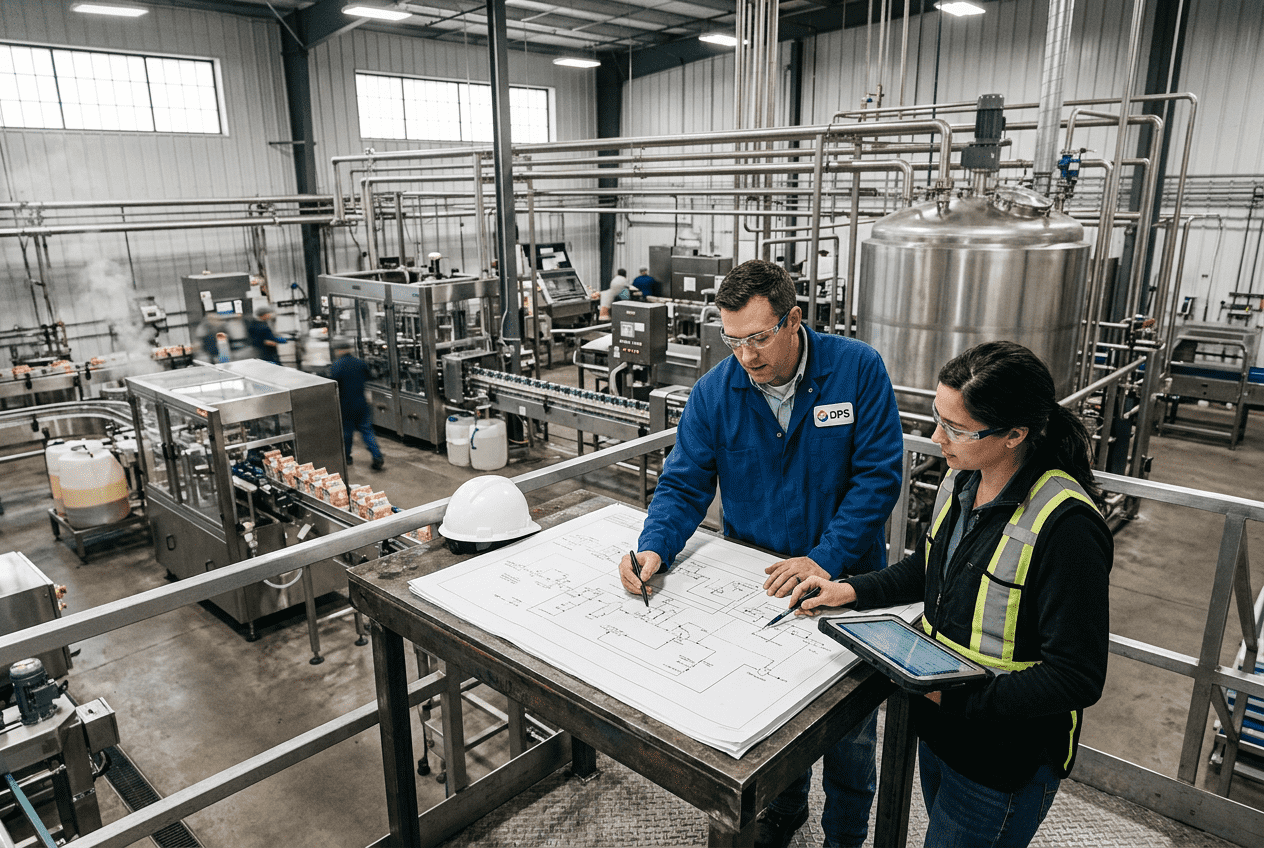
Choosing the right beverage storage tank is not just about gallons and stainless steel. In the United States market, processors need tanks matched to product chemistry, carbonation pressure, temperature demands, sanitation standards, and production scale. Breweries, distilleries, juice processors, RTD producers, dairy beverage facilities, and co-packers all face different storage risks. The best system protects flavor, supports cleaning validation, minimizes downtime, and aligns with long-term capacity planning.
Across the U.S., demand for sanitary beverage tanks continues to rise as processors expand in hubs such as North Carolina, Texas, California, Illinois, Pennsylvania, Florida, and the Midwest logistics corridor. Facilities shipping through the ports of Los Angeles, Long Beach, Houston, Savannah, and Newark often need storage strategies that support both regional distribution and national scaling. For that reason, tank selection increasingly involves engineering, controls, utilities, cleaning systems, and plant layout rather than a simple equipment purchase.
For manufacturers that want a more complete project view, Disruptive Process Solutions approaches tank projects as part of broader processing performance, helping clients connect sanitary design, capital efficiency, and long-term profitability. That perspective matters when a tank affects mixing, blending, carbonation, fermentation, utilities, packaging uptime, and product shelf life all at once.
Quick Answer

Beverage storage tanks should be selected based on beverage type, acidity, alcohol content, carbonation pressure, storage temperature, cleanability, and batch size. For most acidic or alcohol-based beverages in the United States, 316L stainless steel is the preferred material because it offers stronger corrosion resistance and longer service life than 304 in harsh cleaning and product environments. Brite tanks are best for clarified and carbonated beer, maturation vessels support aging and flavor development, and holding tanks work well for intermediate storage before packaging or downstream processing.
If the beverage is sparkling, the tank must be pressure-rated and fitted for carbonation control. If the product is fermented, temperature jackets and insulation become critical. If changeovers are frequent, CIP-ready geometry, spray device coverage, and sanitary connections should be prioritized. Bottom geometry also matters: conical bottoms aid yeast, sediment, or solids removal, while dish bottoms are often effective for finished beverage holding. For processors scaling from pilot lots to national production, tank sizing should be based on packaging speed, fermentation or hold time, peak seasonality, and growth plans through 2026 and beyond.
| Selection Factor | Why It Matters | Best Practice | Common Risk If Ignored | Typical U.S. Use Case | Priority Level |
|---|---|---|---|---|---|
| Beverage chemistry | Acid, alcohol, sugar, and salts affect corrosion | Use 316L for aggressive products | Pitting and premature tank failure | Kombucha, cider, juice, RTD cocktails | High |
| Pressure rating | Needed for carbonation and pressurized transfer | Specify MAWP and relief devices | Operational limits and safety issues | Beer, seltzer, soft drinks | High |
| Temperature control | Stabilizes flavor and microbiological quality | Use jacketed and insulated designs | Inconsistent product quality | Cold brew, beer, dairy beverages | High |
| CIP design | Determines cleanability and validation | Verify spray coverage and drainability | Residue, contamination, long downtime | Multi-SKU co-packers | High |
| Bottom geometry | Affects solids removal and complete draining | Match cone or dish to process need | Yield loss and trapped product | Fermentation versus finished storage | Medium |
| Volume sizing | Drives production flow and working capital | Size to packaging and hold time | Tank bottlenecks or excess idle capital | Growing regional brands | High |
The table above summarizes the first-pass criteria most U.S. beverage producers should evaluate before finalizing specifications. Even when two tanks have the same nominal capacity, their real performance can vary significantly depending on design pressure, jacket zones, internal finish, fittings, controls, and integration with the rest of the line.
Beverage-Specific Storage: Brite Tanks, Maturation Vessels & Holding Tanks

Not all beverage tanks serve the same role. A brite tank is designed for clarified beer or similar finished beverages that need controlled pressure and stable carbonation before packaging. A maturation vessel is often used for aging, conditioning, or flavor integration over time. A holding tank is broader and may be used between pasteurization, blending, filtration, batching, or filling. Understanding these distinctions can prevent overbuying, under-specifying, or creating process bottlenecks.
In U.S. breweries from Asheville to Denver and from Portland to Grand Rapids, brite tanks are typically chosen for their ability to hold beer under pressure while preserving dissolved CO2. In wine and spirits applications, maturation vessels may focus more on residence time, temperature stability, and oxygen management. In juice, dairy beverage, or RTD plants, holding tanks frequently serve as surge buffers that protect packaging line uptime.
| Tank Type | Primary Function | Typical Pressure Need | Typical Beverage | Key Design Features | Best Fit |
|---|---|---|---|---|---|
| Brite tank | Final storage before packaging | Moderate to high | Beer, hard seltzer | Pressure rating, carbonation fittings, polish | Carbonated finished goods |
| Maturation vessel | Aging and flavor development | Low to moderate | Beer, cider, wine, kombucha | Temperature stability, long hold capability | Conditioning and maturation |
| Holding tank | Short-term storage or surge | Low to moderate | Juices, RTD, sauces, dairy beverages | Level controls, sanitary connections | Process balancing |
| Blending tank | Ingredient incorporation | Usually low | Functional beverages, syrup bases | Agitation, load cells, dosing ports | Recipe-based production |
| Unitank | Ferment and condition in one vessel | Moderate | Beer, cider | Conical bottom, jackets, pressure capability | Space-constrained plants |
| Surge tank | Short-duration line buffering | Depends on line | Soft drinks, aseptic products | Fast in/out flow, instrumentation | High-speed filling lines |
This comparison helps clarify that “beverage storage tank” is an umbrella term. A processor packaging non-carbonated juice in Chicago has different storage needs than a craft brewer in Charlotte or a spirit-based RTD co-packer near Dallas. Matching the vessel to the actual process step is one of the most effective ways to improve yield and reduce cleaning time.
From a process engineering standpoint, integrated system design matters as much as tank type. DPS supports beverage manufacturers with process engineering, controls, utilities, and line integration, so storage vessels are evaluated as part of the full production pathway rather than in isolation. That is particularly valuable where carbonation skids, blending systems, glycol loops, or PLC-based recipe control interact directly with vessel performance.
Why 316L Stainless Steel Is Essential for Acidic & Alcohol-Based Beverages

Many U.S. processors begin by asking whether 304 stainless is good enough. In some mild applications it may be. However, for acidic beverages, alcohol-based products, frequent caustic and acid clean cycles, and premium sanitation expectations, 316L stainless steel is usually the safer long-term choice. Its added molybdenum improves corrosion resistance, while the low-carbon composition supports better weld integrity and reduced susceptibility to certain forms of attack in sanitary service.
This is especially important for kombucha, cold brew concentrates, wine, cider, fruit juice, energy drinks, and spirit-based RTDs. These products can present a difficult combination of low pH, sugar, flavor oils, dissolved gases, and aggressive cleaning requirements. Over time, that environment can challenge lower-grade materials, particularly at welds, dead legs, gaskets, and hard-to-clean corners.
| Material | Corrosion Resistance | Best Beverage Fit | Cleaning Tolerance | Lifecycle Expectation | Investment Outlook |
|---|---|---|---|---|---|
| 304 stainless steel | Good | Milder water-based products | Moderate | Acceptable in less aggressive service | Lower upfront cost |
| 316L stainless steel | Very high | Acidic and alcohol-based beverages | High | Longer under harsh CIP regimes | Higher value over time |
| Carbon steel lined | Variable | Limited beverage use | Depends on lining | Risk tied to coating damage | Generally less preferred |
| Plastic tanks | Product dependent | Some low-risk ingredients | Limited versus stainless | Lower durability | Short-term option |
| Glass-lined vessels | Strong chemical resistance | Niche applications | Specialized | Can be sensitive to mechanical damage | Special-purpose investment |
| Hybrid systems | Depends on contact surfaces | Utility or intermediate use | Mixed | Design-specific | Case-by-case |
The table shows why 316L is widely specified when product integrity and uptime matter. While the upfront cost may be higher, that premium is often recovered through lower maintenance, fewer corrosion events, more reliable cleaning, and stronger resale value. In U.S. regions with demanding water chemistry or aggressive cleaning validation standards, the gap between acceptable and optimal material choice becomes even more important.
Sanitary finish also matters. Material grade alone does not guarantee performance. Surface polish, weld quality, passivation, gasket selection, and connection style all influence how the vessel behaves in actual operation. Manufacturers planning for national distribution through major retail channels typically benefit from specifying the sanitary details early, especially where SQF, BRC, FDA, or customer audit expectations are strict.
Carbonation-Ready: Pressure-Rated Tanks for Sparkling Beverages
Any tank used for carbonated beer, hard seltzer, sparkling juice, soda, or RTD cocktails with dissolved CO2 must be designed for pressure service. That means the vessel needs an appropriate maximum allowable working pressure, pressure relief protection, instrumentation, and connections that support safe carbonation and transfer. A non-pressurized or lightly rated tank can become a process constraint, even if it appears to have enough storage volume.
U.S. beverage categories with the fastest line expansions often include carbonated products because they package efficiently and move well in convenience, grocery, and stadium channels. Producers near logistics hubs such as Atlanta, Columbus, Houston, and Southern California often prioritize tanks that support carbonation consistency at scale. Pressure capability also matters if the processor wants flexibility to run both current SKUs and future sparkling launches through the same asset base.
| Beverage Type | Typical Carbonation Need | Recommended Tank Style | Pressure Consideration | Key Fittings | Main Risk |
|---|---|---|---|---|---|
| Beer | Moderate to high | Brite tank | Stable package pressure | Carbonation stone, PRV, sample valve | Foaming and inconsistency |
| Hard seltzer | High | Pressure-rated holding tank | CO2 retention during transfer | Pressure controls, sanitary vents | Loss of sparkle |
| Soft drinks | High | Pressurized finished tank | Line-speed compatible pressure | Inline instrumentation | Flavor variation from gas loss |
| Sparkling water | High | Bright or surge tank | Uniform dissolved gas | CO2 control loop | Flat product |
| RTD cocktails | Variable | Pressure-rated blend/hold tank | Depends on formula | Sanitary agitation, gas inlet | Flavor stripping or separation |
| Sparkling juice | Moderate | Pressurized hold tank | Protect product quality | Temperature and pressure monitoring | Oxidation and foaming |
Pressure rating should never be treated as a generic checkbox. Tank shell thickness, manway design, nozzle reinforcements, relief valve sizing, and instrumentation all affect real operating reliability. Facilities with tunnel pasteurizers, canning lines, or long transfer distances may also need pressure and flow strategies coordinated across upstream and downstream equipment.
Temperature Control for Fermentation, Conditioning & Cold Storage
Temperature is one of the most critical variables in beverage storage. Fermentation tanks require accurate heat removal to manage yeast or bacterial activity. Conditioning vessels need stable temperatures to refine flavor and preserve carbonation. Finished product holding may demand chilled storage to limit microbiological growth, maintain dissolved gas, or protect sensitive flavor systems.
In warm U.S. climates such as Texas, Florida, Arizona, and parts of California, ambient conditions can push poorly insulated tanks outside acceptable process ranges. In colder northern states, seasonal temperature swings can create different control challenges, especially in facilities with mixed indoor and outdoor tank installations. That is why jacket zoning, glycol design, insulation thickness, and controls strategy deserve close review.
| Process Stage | Typical Temperature Range | Common Tank Feature | Control Goal | Examples | Operational Concern |
|---|---|---|---|---|---|
| Primary fermentation | 50°F to 86°F | Multi-zone jacket | Manage metabolic heat | Beer, kombucha, cider | Runaway fermentation |
| Conditioning | 32°F to 50°F | Insulated jacketed vessel | Stability and clarity | Lagers, seltzers | Flavor drift |
| Cold storage | 28°F to 38°F | High-efficiency insulation | Hold finished quality | RTD, dairy beverages | Micro growth or gas loss |
| Warm hold | 60°F to 85°F | Simple insulated storage | Protect blend consistency | Syrups, concentrates | Viscosity change |
| Hot fill buffer | Above 180°F as process requires | Specialized thermal design | Maintain process window | Juices, teas | Thermal shock or hold loss |
| Aseptic intermediate hold | Product-specific | Validated controls and sanitary design | Maintain sterile boundary | Aseptic beverages | Integrity failure |
These ranges are approximate and must be validated for the product and process, but the broader point is clear: temperature control is not optional infrastructure. It affects fermentation quality, packaging performance, energy usage, and shelf stability. A tank with excellent metallurgy but weak jacket design can still become the weakest part of the system.
DPS supports clients with utility integration including glycol systems, refrigeration, compressed air, process controls, PLC programming, and SCADA visibility. That technical capability is especially relevant when temperature-managed vessels must coordinate with fermentation control, blending rooms, syrup systems, or high-speed packaging lines. For producers scaling from regional to national distribution, visibility into tank temperature history can also support stronger quality documentation.
CIP-Ready Design: Spray Ball Coverage, Drainability & Sanitary Connections
In modern U.S. beverage plants, cleaning performance is often the dividing line between a tank that looks good on paper and one that works reliably in production. CIP-ready design means more than adding a spray ball. True cleanability depends on complete wetting, proper flow velocity, no shadow zones, effective drainability, sanitary welds, minimal dead legs, compatible gasket materials, and connection standards that fit the rest of the plant.
This becomes even more important in multi-SKU facilities handling allergens, strong flavors, botanicals, dairy ingredients, fruit particulates, or alcohol. Plants serving retailers and co-packing clients in markets like New Jersey, Chicago, Nashville, and the Research Triangle often need faster changeovers without compromising cleaning verification. Poor drainability can leave trapped product. Inadequate spray coverage can leave residues at the shell top, agitator, or nozzle penetrations.
| Sanitary Feature | Function | Why It Matters | Typical Spec Focus | Failure Mode | Recommended Priority |
|---|---|---|---|---|---|
| Spray ball or rotary spray device | Wets internal surfaces | Supports repeatable CIP | Coverage validation | Unclean zones | High |
| Drainable bottom | Removes rinse and product residue | Reduces carryover and downtime | True low-point outlet | Pooled liquid | High |
| Sanitary tri-clamp or equivalent connections | Clean, inspectable joints | Prevents contamination harborage | Standardized fittings | Leak points and crevices | High |
| Polished interior finish | Limits adhesion | Improves cleanability | Appropriate Ra value | Residue buildup | High |
| Short dead-leg instrumentation | Reduces stagnant zones | Supports sanitation and accuracy | Instrument placement | Biofilm risk | Medium to high |
| Validated gasket materials | Maintains seal integrity | Resists chemistry and heat | EPDM, PTFE, or product-specific | Odor retention or failure | Medium to high |
The best way to read this table is as a reminder that sanitation is a system. A beautifully fabricated tank can still underperform if the CIP skid, return piping, pump sizing, or cleaning recipes are weak. That is why process integration should be addressed alongside vessel specification. Manufacturers exploring broader support for process systems can review engineering and integration services tied to sanitary plant design, utility coordination, and execution.
By 2026, CIP expectations in the United States are likely to move even further toward automation, recipe verification, conductivity tracking, digital record retention, and water-reduction strategies. Sustainability pressure is also pushing processors to lower rinse water use and shorten clean cycles without increasing food safety risk. Tanks that support efficient cleaning will therefore provide both quality and ESG advantages.
Conical Bottom vs. Dish Bottom: Selecting the Right Tank Geometry
Bottom geometry has a direct effect on yield, sediment management, cleaning, and process control. Conical bottom tanks are usually preferred for fermentation or any application where solids, yeast, pulp, or sediment need to collect and be discharged efficiently. Dish bottom tanks, by contrast, are commonly used for finished product storage, blending, or situations where a smoother lower profile is sufficient and full solids handling is less critical.
A U.S. kombucha producer in Oregon handling active cultures may prefer a cone for biomass management. A soft drink manufacturer in Georgia storing filtered finished product may see little value in that geometry and instead favor a dish bottom designed for full drain and simple sanitation. The correct answer depends on what must settle, what must be removed, and how the tank fits into the larger line layout.
| Geometry | Main Advantage | Best Applications | Cleaning Impact | Yield Impact | Trade-Off |
|---|---|---|---|---|---|
| Conical bottom | Excellent solids collection | Fermentation, settling, yeast harvest | Good if properly drained | High product recovery with solids purge | Taller profile and more specialized |
| Dish bottom | Simple finished-product holding | Brite, hold, blend, buffer use | Effective with correct outlet design | Strong for clean finished liquids | Less ideal for heavy solids removal |
| Shallow cone | Balanced drainability | Light sediment beverages | Good | Moderate | Not ideal for dense solids |
| Steep cone | Fast solids discharge | Yeast-intensive fermentation | Good with proper spray coverage | High | May increase vessel height |
| Dished with center outlet | Compact footprint | Short-term holding | Good for low-viscosity products | Moderate to high | Limited solids handling |
| Dished with side outlet | Layout flexibility | Retrofits and utility constraints | Depends on slope and piping | Moderate | Can leave heel volume if poorly designed |
The explanation behind the table is straightforward: solids behavior should drive geometry. Too many processors choose tank bottoms based only on what is common in their industry segment, not on what their actual beverage demands. If your product changes frequently, or if scaling plans include new SKUs, it can be worth testing whether a hybrid fleet of cone and dish bottom tanks delivers more flexibility than a single standardized geometry.
Volume Sizing: From Pilot Batches to Large-Scale Production Storage
Correct sizing is where engineering discipline has the biggest financial impact. A tank that is too small creates packaging delays, labor inefficiency, and extra clean cycles. A tank that is too large ties up capital, floor space, utility capacity, and working inventory. The right size depends on batch frequency, packaging rate, product hold time, lead time for the next process step, seasonality, and projected growth.
Pilot and emerging brands in the United States often start by thinking only in batch gallons. Mature operators think in system hours, line throughput, SKU mix, and service windows. A plant shipping to East Coast distribution from North Carolina or Pennsylvania may size differently from a West Coast producer managing port-driven export schedules near Long Beach or Oakland. Likewise, co-packers with volatile demand need more surge flexibility than single-brand plants with stable runs.
| Production Stage | Typical Tank Strategy | Volume Logic | Main Benefit | Main Risk | Best Planning Approach |
|---|---|---|---|---|---|
| Pilot R&D | Small flexible tanks | Test multiple formulas | Low-risk experimentation | Fast outgrowth | Plan scale-up path early |
| Startup commercial | Limited fleet with high utilization | Protect cash flow | Lower capital barrier | No room for downtime | Match to launch forecast |
| Regional growth | Dedicated plus buffer tanks | Support retailer expansion | Better packaging uptime | Utility strain if undersized | Integrate line and tank planning |
| National scale | Multiple production cells | Run longer campaigns | SKU scheduling efficiency | High capital if poorly phased | Use phased expansion model |
| Co-packing | High-flexibility fleet | Frequent changeovers | Customer responsiveness | Cleaning bottlenecks | Design around CIP capacity |
| Seasonal beverage business | Peak-oriented storage sizing | Absorb demand spikes | Protect service level | Idle assets off-season | Model annual utilization |
For many facilities, sizing should be done with scenario modeling rather than a single forecast. That is where an engineering-led approach becomes valuable. DPS works with beverage manufacturers on capital planning, feasibility, process design, installation, and project execution, helping clients connect storage volume to real profitability rather than simply maximizing stainless on the floor. Manufacturers evaluating custom vessels and broader system capabilities can explore process equipment solutions in the context of complete plant performance.
On the manufacturing side, DPS also designs and supplies branded tanks and process equipment up to 12,000 gallons, including storage vessels and CIP systems. That in-house equipment capability matters because it can shorten coordination gaps between fabrication, site installation, controls integration, and commissioning, particularly in fast-moving expansion projects.
Preventing Flavor Contamination: Dedicated Tanks vs. Multi-Use Systems
Flavor carryover is a major issue in beverage manufacturing, especially in facilities producing multiple SKUs with botanicals, coffee, dairy, alcohol, fruit, sweeteners, or high-aroma ingredients. The decision between dedicated tanks and multi-use systems should be based on contamination risk, cleaning verification, production economics, and scheduling flexibility.
Dedicated tanks are often best for allergen-sensitive products, difficult-to-clean flavors, or premium beverages where even slight carryover can damage brand trust. Multi-use systems can be more capital efficient, but only if CIP performance, scheduling discipline, and validation standards are strong enough to support them. In a U.S. co-packing environment where customer portfolios shift quickly, the wrong choice can create either excess cost or repeated quality incidents.
As a general rule, coffee, dairy, turmeric, strong botanicals, cinnamon, and spirit-based flavor systems tend to linger. Carbonated products also present additional cleaning complexity because gas breakout, foaming, and pressure hardware add variables. Processors serving national retail, club, or foodservice channels should be especially careful where one contamination event could trigger large-scale holds or customer claims.
| Approach | Best Use Case | Capital Impact | Quality Protection | Scheduling Flexibility | Typical Recommendation |
|---|---|---|---|---|---|
| Fully dedicated tanks | Allergen or strong-flavor products | Higher | Very high | Moderate | Best for high-risk SKUs |
| Shared multi-use tanks | Similar low-risk beverages | Lower | Depends on CIP rigor | High | Good for controlled portfolios |
| Dedicated by product family | Grouped flavor categories | Balanced | High | Good | Often the best compromise |
| Dedicated finishing only | Shared upstream, separate final hold | Moderate | High at packaging stage | Good | Useful for RTD lines |
| Shared tanks with intensive CIP validation | Co-packers with frequent changeovers | Moderate | Moderate to high | Very high | Requires strong QA systems |
| Temporary portable storage strategy | Short-term launches or overflow | Variable | Variable | High | Bridge solution, not ideal long-term |
The explanation here is practical: the lowest-cost tank strategy is not always the lowest-cost operating model. Dedicated storage may reduce cleaning, protect product identity, and simplify scheduling. Multi-use tanks may lower initial spending but increase validation burden and changeover downtime. The optimal answer depends on the beverage portfolio and customer service model.
Future trends for 2026 point toward more digital traceability, automated CIP proof, sustainability-focused water reduction, and stronger scrutiny on material compatibility and hygienic design. U.S. processors are also facing continued pressure to scale quickly while reducing labor dependence. As a result, storage tank projects will increasingly be judged on whole-life operating performance rather than purchase price alone.
For companies wanting proof of execution in complex manufacturing environments, reviewing project case studies can help illustrate how engineering, installation, and process integration affect outcomes in real facilities. That kind of experience is important when tank decisions are tied to utilities, automation, site trades, and aggressive production schedules.
FAQ
What is the best material for beverage storage tanks?
For many U.S. beverage applications, especially acidic, alcohol-based, or aggressively cleaned products, 316L stainless steel is the preferred choice because of its corrosion resistance and sanitary durability.
When should I choose a brite tank?
Choose a brite tank when you need final storage of clarified, often carbonated beverage before packaging, especially for beer, hard seltzer, and similar products requiring pressure control.
Do all beverage tanks need to be pressure-rated?
No. Pressure rating is essential for carbonated or pressurized transfer applications, but not every still beverage holding tank requires the same design pressure. The rating should match the actual process.
Is 304 stainless ever acceptable?
Yes, in some milder and less corrosive applications. However, many processors choose 316L to reduce long-term risk, especially where low pH, alcohol, salts, flavor compounds, or aggressive CIP chemicals are involved.
Which bottom is better: conical or dish?
Conical bottoms are usually better for fermentation and solids removal. Dish bottoms are often ideal for finished product storage, blending, or holding cleaner liquids with minimal sediment.
How do I size a beverage storage tank?
Start with packaging rate, process hold time, batch frequency, SKU mix, and growth plans. Then consider cleaning windows, surge requirements, and utility capacity. Sizing should support system flow, not just nominal batch volume.
Can one tank be used for multiple beverages?
Yes, but only if the products are compatible and the CIP system can reliably eliminate flavor, allergen, and microbiological carryover. High-aroma or high-risk products often justify dedicated storage.
What CIP features should I insist on?
Ask for verified spray coverage, true drainability, polished sanitary interiors, minimized dead legs, appropriate gaskets, and connection standards that integrate cleanly with the rest of your plant.
What U.S. market trends are shaping tank purchases through 2026?
Key trends include faster RTD growth, more carbonated product launches, stronger water and energy efficiency targets, increased automation, digital sanitation records, and phased expansion planning instead of one-time oversized builds.
Why work with an engineering-led partner instead of a tank-only vendor?
Because storage performance depends on utilities, controls, plant layout, sanitation, and line integration. An engineering-led partner can help prevent hidden bottlenecks and tie equipment decisions to operating profit.
In summary, beverage storage tank selection in the United States should be approached as a strategic process decision rather than a commodity purchase. The right answer combines beverage-specific tank type, 316L material where needed, pressure capability for sparkling products, reliable temperature control, CIP-ready sanitary design, correct bottom geometry, and realistic volume planning. For processors scaling in competitive U.S. markets, that disciplined approach can improve uptime, protect flavor, and deliver stronger long-term returns.
[/trp_language]
Complete Company Portfolio
About the Author: Disruptive Process Solutions (DPS)
The DPS team combines process engineering expertise with real-world food and beverage manufacturing experience. Our content focuses on process optimization, production efficiency, facility improvements, and practical solutions that help manufacturers operate more effectively in a rapidly evolving industry.
Share