Industrial Food Cookers
[trp_language language=”en_US”]
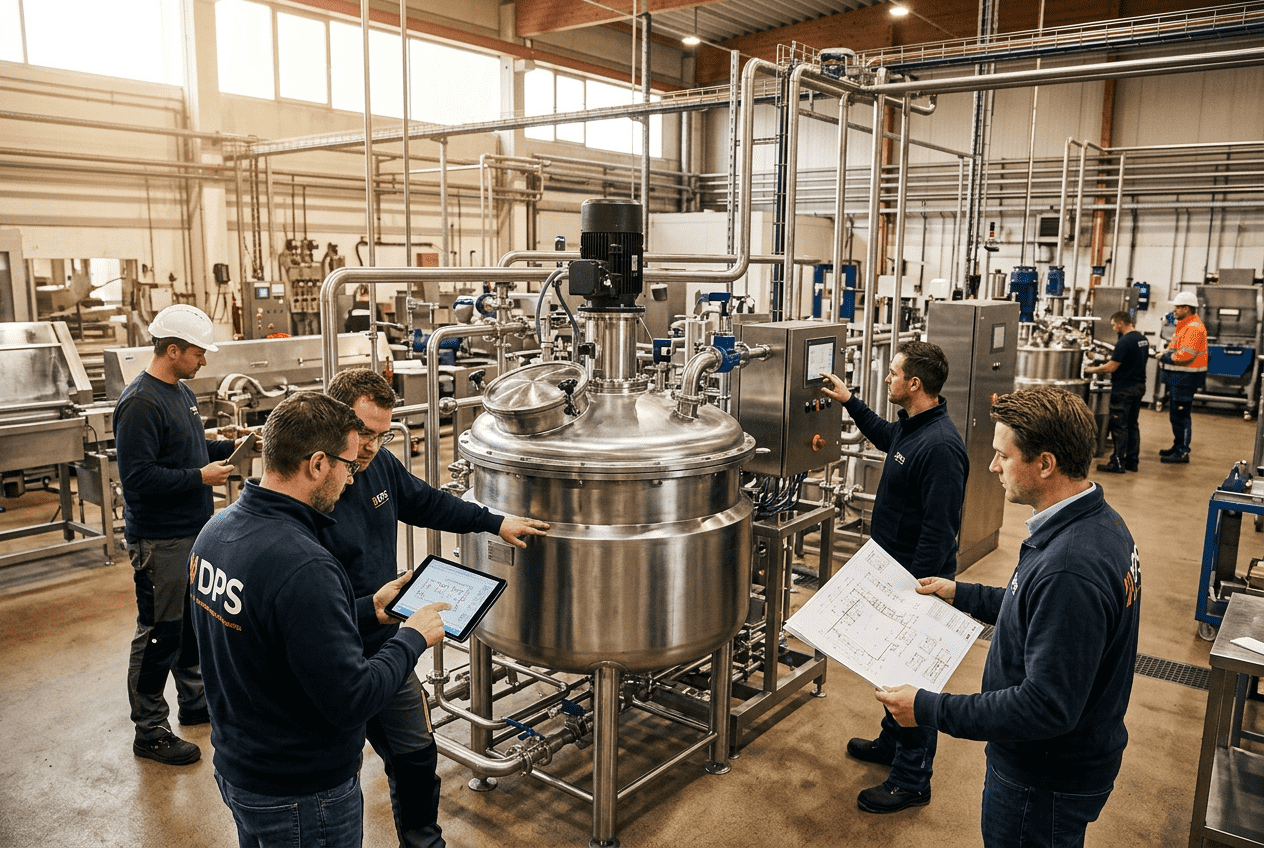
Food processing cooker systems are the thermal backbone of many U.S. food plants. The right industrial cooking solution depends on product viscosity, target lethality or pasteurization level, throughput, package format, sanitation demands, utility costs, and downstream cooling or freezing requirements. For processors in the United States, the best choice is rarely just “buy a cooker”; it is to engineer a complete cooking process that protects food safety, texture, yield, labor efficiency, and long-term profitability.
Across major food manufacturing hubs such as Chicago, Kansas City, Fresno, Dallas, Atlanta, Charlotte, Houston, and the ports of Los Angeles/Long Beach and Savannah, processors are investing in more precise, energy-aware, data-driven thermal systems. Demand is strongest in prepared foods, protein processing, sauces, dairy, aseptic products, and shelf-stable packaged foods. Whether a facility needs a jacketed kettle for sauces, a retort for shelf-stable meals, a smokehouse or oven for proteins, or a continuous cooker for high-volume line production, the purchasing decision should connect process design, utilities, automation, sanitation, and regulatory validation from the beginning.
Quick Answer

Industrial food cookers include kettles, retorts, ovens, fryers, blanchers, scraped-surface systems, and continuous thermal lines. In the United States, processors typically choose among these based on product type, hourly capacity, package format, heating medium, and compliance obligations. High-viscosity sauces often favor steam-jacketed kettles; shelf-stable canned or pouched foods usually require retorts; proteins and prepared meals commonly rely on ovens or smokehouses; and high-output vegetables, grains, pasta, and ready meals often benefit from continuous cookers.
From a capital planning standpoint, buyers should evaluate five issues first: required throughput, critical temperature profile, product sensitivity, utility availability, and integration with chilling or packaging. A cooker that reaches target temperature quickly but causes burn-on, moisture loss, or inconsistent lethality is not an optimized asset. Strong projects align thermal performance with production economics.
For companies seeking broader process planning, equipment integration, and utility design, food and beverage engineering specialists can help define the most commercially sound path before equipment is specified. That is especially important when multiple steps—mixing, cooking, holding, cooling, filling, and CIP—must work as one system rather than isolated machines.
| Decision Factor | Why It Matters | Typical Range | Common Risk if Overlooked | Best Fit Example | U.S. Plant Impact |
|---|---|---|---|---|---|
| Product viscosity | Drives agitation and heat transfer needs | Low to very high | Scorching or poor mixing | Kettle with scraper for cheese sauce | Better yield and texture |
| Package format | Determines post-fill thermal treatment | Bulk, pouch, can, tray | Underprocessing packaged food | Retort for pouched soups | Supports shelf stability |
| Throughput | Sets batch or continuous strategy | 500 lb/hr to 40,000+ lb/hr | Line bottlenecks | Continuous cooker for rice meals | Lowers labor per pound |
| Heating source | Affects cost and control precision | Steam, gas, electric, thermal fluid | High operating cost | Steam jacket in large plants | Improves utility planning |
| Food safety target | Defines temperature and hold profile | Pasteurization to sterilization | Compliance failure | Validated retort schedule | Protects regulatory readiness |
| Cleaning method | Influences uptime and allergen control | COP, semi-CIP, full CIP | Extended sanitation downtime | CIP-ready vessel system | Supports shift efficiency |
The table above summarizes why cooker selection must start with process realities, not only nameplate capacity. U.S. manufacturers dealing with SKU proliferation, retailer audits, labor pressure, and energy volatility benefit from a more engineered approach.
Types of Industrial Food Cookers: Kettles, Retorts, Ovens & Continuous Systems

The main classes of industrial food cookers serve different food categories and thermal objectives. Kettles are versatile for soups, sauces, fillings, jams, gravies, dairy bases, and other pumpable or semi-viscous foods. They may be steam-jacketed, direct-injection, or electrically heated and often include agitation, vacuum options, ingredient dosing, and automated recipe control.
Retorts are used for packaged foods that require thermal sterilization or high-level pasteurization after filling and sealing. They are common in canning, pet food, pouch meals, ready entrees, seafood, vegetables, and institutional products. Batch retorts remain widely used, but rotary, static, water spray, water immersion, and steam-air systems all serve different package and heat transfer conditions.
Ovens and smokehouses dominate in meat, poultry, plant protein, bakery, and prepared meal operations. They can roast, bake, steam-cook, brown, smoke, or finish products before chilling, slicing, or packaging. Airflow, humidity, zone control, and belt loading strongly affect yield and color. In protein-heavy regions such as Arkansas, Georgia, Iowa, Nebraska, and North Carolina, these systems are critical production assets.
Continuous cookers are favored where throughput and consistency outweigh batch flexibility. They include spiral ovens, belt blanchers, screw cookers, hydrostatic systems, continuous steam tunnels, and scraped-surface heat exchangers. They are common in vegetables, grains, pasta, sauces, liquid dairy, confections, and ready meal components.
| Cooker Type | Best For | Heating Style | Typical Capacity | Key Advantage | Main Limitation |
|---|---|---|---|---|---|
| Jacketed kettle | Soups, sauces, fillings | Steam or electric jacket | 50 to 1,500 gallons per batch | Flexible and operator friendly | Lower throughput than continuous |
| Retort | Cans, pouches, trays | Steam, water spray, immersion | Batch rack loads | Enables shelf-stable products | Needs validation and package discipline |
| Oven or smokehouse | Proteins, bakery, prepared meals | Gas, steam, electric | 1,000 to 20,000+ lb/hr | Strong product finish and yield control | Large footprint in some layouts |
| Continuous belt cooker | Vegetables, rice, pasta, meals | Steam, hot air, thermal fluid | 2,000 to 40,000+ lb/hr | High output consistency | Less agile for short runs |
| Scraped-surface system | Viscous and heat-sensitive products | Indirect heated surfaces | 500 to 15,000 lb/hr | Excellent burn-on control | Higher complexity |
| Direct steam infusion/injection | Liquid foods, dairy, beverages | Direct steam | High continuous flow | Rapid heating | Condensate dilution considerations |
In the U.S. market, equipment choice often reflects local product clusters. Tomato processors in California may prefer continuous systems for high-volume sauces. Midwest prepared-food plants often pair kettles with cooling and filling skids. Gulf Coast seafood processors may rely heavily on retort technology for stable packaged products. Matching the cooker to the regional supply chain and labor environment can materially affect project payback.
This growth trend reflects rising investment in prepared meals, protein processing upgrades, automation, and thermal validation tools across the United States.
Direct vs. Indirect Heating: Which Method Suits Your Product & Process

Direct heating transfers energy straight into the product, usually through steam injection, infusion, open flame, or direct contact systems. It provides rapid heat-up and can be highly efficient where fast thermal response matters. Direct methods are common in certain liquid foods, blanching systems, and some kettle operations. However, they may change product moisture content or demand tighter condensate and flavor management.
Indirect heating uses a barrier—such as a vessel jacket, coil, plate, scraped surface, or heat exchanger wall—between the heating medium and the food. This approach is preferred where flavor protection, burn-on control, contamination avoidance, or exact thermal control matters more than the fastest possible heating rate. It is widely used for sauces, dairy, confectionery, and many high-value formulated foods.
There is no universal winner. Direct heat often benefits high-volume, lower-viscosity products that can tolerate dilution or are designed around steam addition. Indirect heat is usually better for viscous, premium, particulate, allergen-sensitive, or highly formulated products where repeatability is more important than speed alone.
| Criteria | Direct Heating | Indirect Heating | Best Product Match | Primary Benefit | Primary Tradeoff |
|---|---|---|---|---|---|
| Heat-up speed | Very fast | Moderate to fast | Liquid foods | Short processing time | Possible dilution |
| Temperature precision | Good | Excellent | Sauces and dairy | Better control of finish | May require more surface area |
| Product contact with heating medium | Yes in many systems | No | High-value formulations | Cleaner separation | Slower energy transfer |
| Suitability for viscous foods | Limited | Strong | Cheese sauce, fillings | Less scorching with scraping | Higher capital cost |
| Maintenance complexity | Moderate | Moderate to high | Depends on design | Flexible system choices | More surfaces to inspect |
| Utility integration | Often steam-centric | Steam, electric, thermal fluid | Multi-utility plants | Broader design flexibility | May need larger utility planning |
As a buying rule, choose direct heating when speed and thermal efficiency dominate, and choose indirect heating when product integrity and exact control dominate. Many U.S. processors ultimately use both in different areas of the same plant.
Batch Cookers vs. Continuous Cookers: Throughput & Flexibility Analysis
Batch cookers remain a strong option for manufacturers managing frequent recipe changeovers, seasonal demand, co-packing schedules, or premium low-volume products. They are easier to pilot, easier to validate during product development, and often cheaper to install at modest capacities. Batch kettles, retorts, smokehouses, and vacuum cookers fit plants that value flexibility and shorter product campaigns.
Continuous cookers are best where output, labor efficiency, and consistency drive the business case. Once dialed in, they reduce operator intervention, support automation, and integrate more smoothly with upstream dosing and downstream cooling or packaging. For large-scale processors around major logistics corridors such as Dallas-Fort Worth, Chicago, central California, and New Jersey distribution zones, continuous lines often unlock better margin at scale.
The hidden variable is total system architecture. A continuous cooker can still underperform if ingredient handling, buffer tanks, chill capacity, or packaging speed are undersized. Likewise, batch systems can outperform expectations when sequencing, CIP planning, and labor deployment are well designed.
| Comparison Point | Batch Cooker | Continuous Cooker | Where Batch Wins | Where Continuous Wins | Operational Note |
|---|---|---|---|---|---|
| Throughput | Moderate | High to very high | Short runs | Base-load production | Check actual net output, not nameplate |
| Recipe flexibility | Excellent | Limited to moderate | Frequent changeovers | Stable SKU mix | Changeover cost matters |
| Capital cost | Lower entry point | Higher | Smaller plants | Large plants | Consider 5-year ownership cost |
| Labor per pound | Higher | Lower | Skilled artisanal production | High-volume operations | Automation narrows the gap |
| Process consistency | Operator dependent | Strong when tuned | R&D and launch phases | Established products | Data capture improves both |
| Expansion path | Add more vessels | Scale line modules | Stepwise growth | Major capacity build-out | Facility footprint can decide |
An anonymized example from the prepared-food segment illustrates the point. A regional manufacturer initially planned a major capacity expansion for cooked sauce and meal bases. Instead of adding large new thermal assets immediately, the process review identified sequencing and controls constraints as the true bottleneck. By redesigning control logic, buffer timing, and operator workflow, the plant improved throughput significantly before larger capital was deployed. That philosophy—solve the process, not just buy a bigger machine—is increasingly important in U.S. manufacturing.
The bar chart shows why supplier selection and system design increasingly focus on prepared foods, proteins, and sauce applications in the United States.
Temperature Uniformity & Control: Critical for Food Safety & Quality
Temperature uniformity is one of the most important performance measures in industrial food cooking. A system that hits target average temperature but leaves cold spots can create safety risk; one that overheats edge zones or thin areas can destroy texture, color, or yield. Uniformity matters in retorts, ovens, kettles, and continuous systems alike.
Key variables include agitation method, airflow balance, steam distribution, vessel geometry, product depth, fill weight, particulate size, belt loading, and sensor placement. Plants should not assume a machine is uniform because the setpoint looks stable on the HMI. Verification through mapping, challenge testing, and process data trending is essential.
For USDA- and FDA-regulated foods, thermal performance must be tied to validated process expectations. In practice, that means tight instrumentation, calibrated sensors, reliable recording, documented hold times, alarm management, and repeatable recipes. It also means thinking beyond the cooker itself. Uneven feed temperature entering a continuous line or inconsistent package stacking in a retort can undo otherwise strong thermal design.
Processors evaluating upgrades often need not just equipment, but controls architecture. That is where broad process and automation capabilities matter. Teams that can combine process engineering with PLC programming, SCADA visibility, recipe management, and utility balancing can materially improve thermal repeatability. Companies offering integrated process engineering and project delivery services are often better positioned to solve the entire cooking step rather than only the machine purchase.
| Uniformity Factor | What to Check | Common Problem | Quality Impact | Safety Impact | Recommended Action |
|---|---|---|---|---|---|
| Sensor calibration | Routine calibration intervals | Drifted probes | Overcooked batches | False lethality confidence | Formal calibration program |
| Agitation | Speed and scraper performance | Settling or burn-on | Texture inconsistency | Localized underheating | Match agitator to viscosity |
| Airflow or steam distribution | Zone balance and circulation | Hot and cold spots | Uneven color | Nonuniform pasteurization | Map and rebalance system |
| Loading pattern | Rack density or belt spread | Blocked heat transfer | Variable doneness | Inconsistent process result | Standardize loading SOPs |
| Recipe control | Automated time-temperature steps | Operator variation | Flavor drift | Missed hold time | Use recipe and batch control |
| Incoming product temperature | Feed consistency | Thermal shock to process | Batch-to-batch variation | Cold center risk | Add buffer tanks or preheat logic |
In 2026 and beyond, thermal mapping, digital historian data, predictive alarms, and tighter model-based control are expected to become standard in larger U.S. facilities. Retailer scrutiny and internal OEE programs are pushing plants to document not just that a product was cooked, but that it was cooked uniformly and efficiently.
Material Construction: 304 and 316L for Different Food Environments
Material selection affects corrosion resistance, cleanability, longevity, and regulatory confidence. In most food applications, 304 stainless steel is the default for structural and product-contact surfaces because it balances cost and performance well. However, 316L becomes important where products are high in salt, acid, chlorides, aggressive cleaning chemistry, or where higher corrosion resistance helps preserve service life.
For example, marinades, brines, seafood, tomato-based products, and some dairy or acidic formulations may justify 316L in product contact zones. Coastal environments near ports such as Houston, Norfolk, Newark, or Long Beach can also influence material strategy due to ambient corrosion conditions, especially in utility or washdown areas. Surface finish, weld quality, drainability, and hygienic design are just as important as the base alloy.
| Material Topic | 304 Stainless | 316L Stainless | Best Application Example | Cost Position | Buyer Guidance |
|---|---|---|---|---|---|
| General corrosion resistance | Good | Very good | Standard sauce kettle vs brine system | 304 lower | Use 304 unless chemistry suggests risk |
| Chloride tolerance | Moderate | Higher | Seafood and salty marinades | 316L higher | Important in salty products |
| Acid handling | Good for many foods | Better for harsh conditions | Tomato and acidic dressings | 316L higher | Review full ingredient profile |
| Weld corrosion resistance | Good | Strong with low carbon | Hygienic vessel fabrication | 316L higher | Focus on weld quality too |
| Cleaning chemical exposure | Good in many CIP programs | Better for aggressive regimes | Frequent caustic and acid cycles | 316L higher | Coordinate with sanitation team |
| Lifecycle value | High when fit is right | High in demanding duty | Long-life critical systems | Application dependent | Base decision on total ownership cost |
Material upgrades should not be specified blindly. The smarter approach is to compare chemistry, sanitation practice, run hours, and expected service life. That avoids overspending on unnecessary alloy while preventing expensive corrosion-related downtime later.
Integration With Cooling, Chilling & Freezing Process Steps
Cooking does not end when heat is applied. In many U.S. food plants, the real success of a cooking system depends on what happens immediately afterward: cooling, chilling, freezing, holding, dewatering, or packaging. A fast, stable thermal process can still fail commercially if post-cook cooling is too slow, causes purge loss, or creates product traffic jams.
Cook-chill lines for soups and sauces may require scraped-surface cooling, plate heat exchange, glycol integration, or chilled water loops. Protein operations often need blast chilling, spiral chilling, or cold-room equalization before slicing or packaging. Frozen meal lines may route cooked components to IQF or spiral freezers. Retort operations may need controlled post-process cooling to protect package integrity and prevent overcooking.
From an engineering standpoint, utility balance matters. Steam demand on the front end must be coordinated with refrigeration, glycol, chilled water, condensate recovery, compressed air, and CIP capacity on the back end. Providers with capabilities in cooking vessels, utility systems, and controls can create smoother thermal-to-cold transitions. Companies offering integrated process equipment solutions often add value by designing vessels, CIP systems, and custom process skids that match the broader line rather than forcing the plant to adapt around disconnected assets.
In 2026, sustainability pressure is increasing interest in heat recovery from cook and cool loops, smarter refrigeration staging, and utility dashboards that show energy per pound produced. Plants in power-constrained or water-stressed regions, including parts of California, Arizona, and Texas, are especially focused on this integration.
| Post-Cook Step | Purpose | Typical Equipment | Main Risk | Best Integration Point | Performance Benefit |
|---|---|---|---|---|---|
| Ambient cooldown | Short stabilization | Holding conveyor or room | Too slow for sensitive foods | Low-risk products only | Simple flow buffer |
| Chilled water cooling | Rapid product pull-down | Heat exchanger or immersion | Water management issues | Liquid and packaged foods | Faster zone transition |
| Blast chilling | Quick core temperature reduction | Blast cell | Uneven airflow loading | Proteins and trays | Better shelf life |
| Spiral chilling | Continuous cooling | Spiral conveyor | Line synchronization problems | High-output products | Labor-efficient flow |
| IQF or freezing | Lock in product state | Tunnel or spiral freezer | Product clumping | Meal components and proteins | Supports long distribution |
| Retort cooling | Stop cooking and protect packaging | Controlled vessel cool cycle | Paneling or seal stress | Shelf-stable packs | Maintains package quality |
Energy Sources Compared: Steam, Gas, Electric & Thermal Fluid Systems
Energy source selection can change both operating cost and cooking performance. Steam remains the dominant heating utility in many U.S. food plants because it provides high heat transfer rates, supports multiple process users, and fits sanitary vessel design well. Gas-fired systems often offer favorable utility economics where natural gas supply is strong, especially for ovens and certain direct-heated assets. Electric systems deliver excellent controllability and are increasingly attractive where decarbonization or local emissions constraints matter. Thermal fluid systems can be useful where precise high-temperature indirect heating is needed without steam condensate issues.
The right answer depends on local utility rates, decarbonization goals, boiler room condition, maintenance capability, and production profile. A Midwest plant with an existing robust boiler system may logically stay steam-based. A greenfield site in the Southeast with utility incentives may consider electric or hybrid solutions. Plants facing air-permitting complexity may prioritize lower-emission options even if first cost is higher.
| Energy Source | Strength | Limitation | Best Equipment Match | Typical U.S. Use Case | Planning Note |
|---|---|---|---|---|---|
| Steam | Efficient heat transfer | Boiler and condensate infrastructure needed | Kettles, retorts, exchangers | Large multi-process plants | Great when steam already exists |
| Natural gas | Often low operating cost | Emissions and burner maintenance | Ovens, smokehouses | Protein and bakery facilities | Review permitting and ventilation |
| Electric | Precise control, cleaner point of use | Higher power demand cost in some regions | Small vessels, specialty systems | Urban or sustainability-driven projects | Check electrical service capacity |
| Thermal fluid | Stable indirect high-temp operation | System complexity | Specialty continuous systems | High-temp oil-based processes | Useful where steam is not ideal |
| Hybrid steam/electric | Flexible and resilient | Higher design coordination | Multi-zone lines | Plants with mixed utilities | Supports phased expansion |
| Recovered heat integration | Energy savings | Engineering effort required | Cook-cool systems | Sustainability-led facilities | Improves long-term ROI |
The area chart reflects a realistic trend: steam remains dominant, but electric and hybrid interest is rising as sustainability goals and grid modernization reshape plant utility decisions.
Regulatory Compliance: USDA, FDA & Pasteurization Validation Requirements
In the United States, compliance requirements for industrial food cookers depend on product category, hazard profile, package format, and regulatory jurisdiction. USDA-regulated meat and poultry products face specific expectations for lethality, stabilization, recordkeeping, and sanitation. FDA-regulated foods must align with preventive controls, process validation, sanitation controls, and applicable low-acid canned food or acidified food requirements where relevant. Pasteurization or sterilization is not just a machine setting; it is a documented and validated process.
Retort systems require especially rigorous process establishment, instrumentation, venting, distribution understanding, and record retention. Ovens and smokehouses in protein plants must support validated time-temperature-humidity relationships. Kettle-cooked sauces or dairy bases may need CCP or preventive control monitoring tied to final cooling and filling conditions. Across all cases, data integrity matters.
Processors often underestimate the documentation side of a cooker purchase. Thermal validation, SOPs, calibration, alarm handling, operator training, and commissioning records are all part of a defensible compliance position. Organizations with experience across FDA, USDA, SQF, and BRC environments can reduce project risk by connecting engineering decisions to audit realities. Complex projects also benefit from firms that can act as owner-side advocates, manage contractors, and coordinate local trades while protecting schedule and compliance goals; practical examples can be seen through selected food and beverage project case studies.
Future policy direction into 2026 points toward stronger digital traceability, more formal verification of preventive controls, energy reporting in some jurisdictions, and continued emphasis on sanitary design and data-backed validation.
This comparison chart highlights a common U.S. procurement reality: the “best” cooker is the one whose strengths align with plant economics, product mix, and validation burden.
FAQ
What is the best industrial cooker for sauces?
For most sauces, gravies, and fillings, a steam-jacketed kettle or scraped-surface system is the best starting point. The final choice depends on viscosity, particulates, batch size, and whether the line is batch or continuous.
When do I need a retort instead of a kettle?
You need a retort when the food is already sealed in a container and requires post-package pasteurization or sterilization, especially for shelf-stable cans, trays, and pouches. A kettle cooks bulk product before filling; a retort thermally processes packaged product.
Is steam always the lowest-cost option?
Not always. Steam is often cost-effective in large U.S. plants with an existing boiler system, but gas, electric, or hybrid options may be better depending on local rates, emissions strategy, and utility infrastructure.
Should I choose batch or continuous cooking?
Choose batch for flexibility, smaller SKU runs, and frequent changeovers. Choose continuous for high-volume output, lower labor per pound, and tighter production consistency. Many facilities use both.
How important is 316L stainless steel?
It is important when products are salty, acidic, chloride-rich, or cleaned with aggressive chemistry. For many standard food applications, 304 is sufficient and more economical.
Can I integrate cooking with chilling and freezing in one project?
Yes, and that is often the smartest approach. Cooking, cooling, glycol, refrigeration, CIP, and controls should be designed as one process system to avoid bottlenecks and quality loss.
What should U.S. buyers ask suppliers before purchasing?
Ask for thermal performance data, validation support, utility loads, sanitation design details, controls scope, spare parts strategy, installation requirements, and references in your specific product category.
How long does a cooker project usually take?
Smaller vessel upgrades may take a few months. Integrated line projects involving utilities, controls, structural work, and commissioning can take much longer, especially if permits, refrigeration, or major building modifications are involved.
What trends will matter most in 2026?
Expect stronger demand for automation, recipe control, digital validation records, energy recovery, hybrid utility systems, hygienic design, and sustainability-driven capital planning.
Who should manage a complex cooking system upgrade?
The best outcomes usually come from a partner that can combine technological, manufacturing, and service capabilities. In practical terms, that means process engineering, utility design, automation, equipment fabrication, installation management, and commissioning under one coordinated strategy. For U.S. manufacturers scaling production or modernizing legacy plants, Disruptive Process Solutions supports this type of end-to-end execution across North America through process design, capital planning, equipment integration, installation oversight, and project management.
For manufacturers in the United States, industrial food cooker selection should be treated as a profit-impacting process decision, not merely an equipment purchase. The most effective projects connect cooker type, heating method, throughput, thermal control, material choice, energy source, cooling integration, and compliance strategy into one business case. That is especially true in today’s market, where labor efficiency, energy performance, food safety documentation, and speed to scale all influence return on capital. A disciplined engineering approach can turn a cooking step from a bottleneck into a competitive advantage.
[/trp_language]
Complete Company Portfolio
About the Author: Disruptive Process Solutions (DPS)
The DPS team combines process engineering expertise with real-world food and beverage manufacturing experience. Our content focuses on process optimization, production efficiency, facility improvements, and practical solutions that help manufacturers operate more effectively in a rapidly evolving industry.
Share