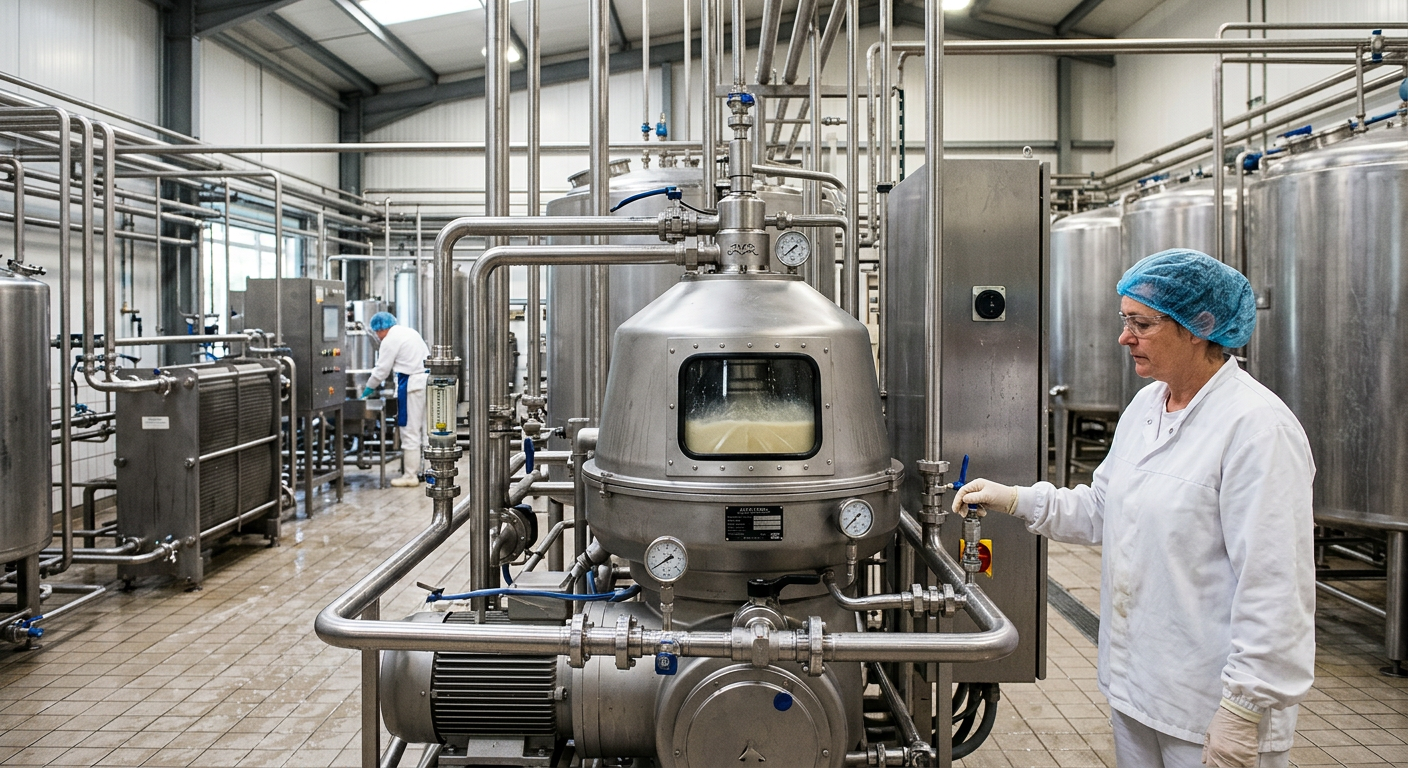
Juice Pasteurization Systems
[trp_language language=”en_US”]
Juice Pasteurization Systems for U.S. Processors
Juice processors in the United States are under pressure to deliver microbiological safety, preserve flavor, reduce energy use, and stay compliant with FDA Juice HACCP rules. The right pasteurization system depends on product type, viscosity, pulp load, shelf-life target, package format, and plant economics. For a clear premium apple juice in Washington, UV may be worth evaluating. For orange juice in Florida with moderate pulp, HTST with a tubular or hybrid heat exchanger is often the practical choice. For shelf-stable ambient distribution through major U.S. retail networks, UHT paired with aseptic filling can create the strongest logistics advantage. The correct decision is rarely about one machine alone; it is about the full processing line, validation strategy, utilities, cleanability, operator workflow, and long-term profitability.
Fast Take: Choosing a Juice Pasteurization System

If you need a direct answer, most refrigerated juice operations in the United States choose HTST or flash-style continuous pasteurization because it balances food safety, flavor retention, throughput, and cost. UHT is usually selected when brands want ambient shelf stability, reduced cold-chain expense, or access to long-distance distribution from hubs such as Chicago, Dallas, Atlanta, Los Angeles, and the Port of Savannah. UV pasteurization is best suited to very clear, low-turbidity juices where premium positioning and minimal heat impact matter. Ohmic heating remains an emerging option for specialized formulations and innovation-driven processors looking beyond conventional heat transfer.
For buyers, five questions narrow the field quickly:
| Decision Factor | Why It Matters | Typical Impact on System Choice |
|---|---|---|
| Juice clarity | UV transmission and fouling behavior depend heavily on suspended solids | Clear juices favor UV or plate HTST; cloudy juices favor tubular systems |
| Viscosity and pulp content | Heat transfer and cleanability change with thickness and particulate load | Low-viscosity products favor plate exchangers; pulpy products favor tubular |
| Shelf-life target | Refrigerated versus ambient determines lethality and downstream packaging | Refrigerated often uses HTST; ambient usually requires UHT or aseptic design |
| Distribution footprint | National shipping economics differ from regional cold-chain models | Broader U.S. distribution may justify higher-capital aseptic systems |
| Plant utilities | Steam, hot water, glycol, compressed air, and CIP availability drive integration cost | Existing infrastructure may make one technology far more economical |
| Regulatory validation burden | Every process needs documented control and verification | Novel technologies can require more extensive validation work |
This table shows why equipment cannot be selected in isolation. The best pasteurizer is the one that fits the full operating model, from raw juice receiving through filler sanitation and distribution.
Across the U.S. market, demand is growing for systems that reduce thermal damage while lowering total cost of ownership. Processors in citrus-heavy Florida, apple-producing Washington, grape and berry regions in California, and multi-SKU co-packing corridors in Texas and the Southeast increasingly look for flexible lines that can switch between NFC juices, concentrates, functional beverages, and juice blends.
HTST, UHT, and Flash Options for Juice System Selection

HTST, UHT, and flash pasteurization are often discussed together, but they serve different commercial goals. In juice applications, “flash” is commonly used to describe rapid continuous heating for a short residence time; in practice, many flash systems are implemented as HTST-style processes. UHT pushes the process to a much higher lethality level and is typically linked to aseptic surge, sterile piping, and aseptic filling.
| Technology | Typical Product Position | Main Benefit | Main Limitation | Best Fit in the U.S. |
|---|---|---|---|---|
| HTST | Refrigerated juices and blends | Strong balance of safety, quality, and cost | Cold-chain still required | Regional and national chilled brands |
| Flash continuous pasteurization | Short-hold high-throughput refrigerated products | Good flavor retention and compact processing | Still depends on exact formulation and filler hygiene | High-output lines in co-packing plants |
| UHT | Ambient shelf-stable juice and drink products | Long shelf life and distribution flexibility | Higher capital and tighter sterile design demands | National retail, export, club store programs |
| Batch pasteurization | Small specialty runs | Lower initial complexity | Lower throughput and less consistency | R&D, pilot, or niche artisan operations |
| Hybrid thermal systems | Variable portfolios | Operational flexibility | More controls and recipe management needed | Multi-SKU processors |
| Aseptic UHT line | Premium shelf-stable or export-ready products | Lowest logistics dependence on refrigeration | Validation and operational discipline are critical | Large producers and sophisticated co-packers |
The table highlights that the right choice is tied to the route to market. A chilled juice brand selling into grocery chains around Raleigh, Charlotte, Nashville, or the Mid-Atlantic may achieve the best economics with HTST. A brand shipping ambient product from a Texas facility to both U.S. coasts may justify UHT because refrigerated freight costs and retail handling constraints are lower.
From a buying perspective, HTST is usually the best starting point when processors want predictable validation, easier integration with conventional fillers, and lower project complexity. UHT makes sense when shelf stability is central to the business model, not simply because it sounds more advanced. Processors should also examine formulation sensitivity; some high-aroma juices may suffer more noticeable sensory change under ultra-high temperature conditions, even with very short hold times.
By 2026, expect U.S. buyers to place more emphasis on recipe flexibility. Producers are increasingly launching juice-plus products with vitamins, botanicals, adaptogens, and dairy-free functional ingredients. That trend favors automation-rich systems with precise temperature control, in-line Brix measurement, recipe management, and validated diversion logic.
Plate Heat Exchangers or Tubular Pasteurizers by Juice Viscosity

Heat exchanger selection is one of the most important design choices in a juice pasteurization system. Plate heat exchangers usually offer excellent thermal efficiency and compact footprint for low-viscosity, low-pulp products. Tubular pasteurizers are more forgiving for juices with fibers, pulp, puree inclusion, or higher fouling risk. In many U.S. plants, the wrong exchanger choice creates more downtime than the wrong pasteurization temperature.
| Juice Type | Typical Viscosity/Pulp Profile | Preferred Exchanger | Reason | Maintenance Consideration |
|---|---|---|---|---|
| Clarified apple juice | Low viscosity, low solids | Plate | High heat transfer efficiency and lower energy use | Gasket inspections and plate cleaning schedules |
| Clarified grape juice | Low to moderate viscosity | Plate | Compact and efficient for clear products | Color and sugar fouling must be monitored |
| Orange juice with pulp | Moderate pulp load | Tubular or hybrid | Better passage for suspended solids | Tube fouling and pump shear control matter |
| Vegetable-juice blends | Moderate to high viscosity | Tubular | Handles variable rheology more reliably | CIP velocity and return temperature are critical |
| Smoothie-style juice drinks | High viscosity, high solids | Tubular or scraped-surface support | Better suited for difficult heat transfer conditions | More frequent validation of cleanability |
| Concentrate reconstitution lines | Variable depending on blend stage | Hybrid | Flexibility across multiple SKUs | Control logic and flow balancing need attention |
This comparison shows why viscosity matters far beyond pumping power. It affects residence time distribution, fouling rate, pressure drop, cleanability, and final flavor consistency.
Plate systems are attractive for many juice processors because they are energy-efficient and easier to package in smaller mechanical rooms. However, narrow channels can become a liability with pulp, fiber, seeds, or unstable particulate load. Tubular systems typically cost more upfront and may have slightly lower thermal efficiency, but they often win on uptime in demanding applications. For a California processor running citrus blends one week and vegetable-fruit blends the next, a tubular or hybrid design can avoid costly production interruptions.
In facilities near agricultural hubs such as Fresno, Bakersfield, Yakima, or central Florida, seasonal raw material variation is real. A system should be designed for the worst reasonable product condition, not just the ideal pilot sample. That means considering peak pulp, Brix swings, enzyme treatment variability, and cold storage behavior.
UV Pasteurization for Clear, Premium Juice Products
UV pasteurization is most compelling when processors want a premium “minimally heated” position for clear juices. It is not a universal replacement for thermal systems. UV performance depends on optical properties such as absorbance, transmittance, turbidity, and path length. That means clarified apple, white grape, or some filtered fruit juices are the usual candidates. Cloudy orange juice is generally not.
In the U.S. premium market, UV has gained attention among brands selling through natural retail, specialty food channels, farm-market networks, and direct-to-consumer refrigerated distribution. The appeal is straightforward: lower thermal impact can help maintain fresh-like notes, lighter color change, and a cleaner premium story. But the validation burden must be taken seriously. The process has to achieve the required pathogen reduction while accounting for product variability over time.
| Evaluation Point | What to Measure | Why It Matters | Best Use Case |
|---|---|---|---|
| UV transmittance | Percent transmission at operating wavelength | Determines whether light can penetrate effectively | Very clear juices |
| Turbidity | Cloudiness and particle count | Suspended solids reduce treatment consistency | Filtered products |
| Flavor sensitivity | Sensory comparison to thermal process | Premium brands may value subtle differences | High-aroma juice SKUs |
| Flow design | Reactor residence and exposure uniformity | Impacts validation confidence | Continuous bottling operations |
| Cleaning needs | Quartz sleeve fouling and sanitation routine | Fouling reduces effectiveness | Plants with disciplined maintenance |
| Regulatory documentation | Hazard analysis and process validation records | Essential for FDA Juice HACCP support | Experienced quality systems |
The main lesson from the table is that UV is a product-specific technology. It should be evaluated with analytical data, not marketing assumptions.
For processors near New York, Boston, Seattle, or San Francisco where premium refrigerated beverages can command higher price points, UV may offer differentiation. Still, many plants adopt it only for certain SKUs while keeping HTST as the backbone technology. That hybrid strategy can be smart: it protects production flexibility and allows premium experimentation without committing the entire portfolio to a narrower process window.
Ohmic Heating as an Emerging Low-Impact Juice Technology
Ohmic heating is often described as a non-thermal or low-impact alternative, but in practice it still uses heat; the difference is how the energy is generated within the product. Electrical resistance produces rapid internal heating, which can improve uniformity and reduce some limitations associated with surface heat transfer. This makes ohmic heating especially interesting for products with particulates or formulations that are difficult to process in traditional exchangers.
In juice applications, ohmic systems remain emerging rather than mainstream in the United States. Capital cost, process familiarity, validation pathways, and workforce readiness all influence adoption. Yet the technology deserves attention for processors developing novel juice blends, high-value functional beverages, or particulate-containing formulations where conventional heating causes quality loss or fouling headaches.
By 2026, adoption may accelerate if three conditions continue to improve: better commercial-scale supplier support, clearer regulatory confidence based on validated performance, and stronger sustainability pressure to reduce wasted thermal energy. Companies serving innovation-heavy beverage portfolios may begin pilot projects first, especially in regions with active food-tech ecosystems such as California, North Carolina, and Texas.
For buyers, the right question is not “Is ohmic better?” but “Where does ohmic solve a problem that conventional thermal equipment cannot solve economically?” If the answer is nowhere, stay with proven thermal systems. If the answer is product integrity, particulate handling, or future portfolio flexibility, the technology may deserve a pilot-scale study.
Holding Tube Design and Time-Temperature Validation Requirements
The holding tube is where many pasteurization systems either earn or lose their credibility. Good temperature control alone is not enough; processors need verified residence time under defined flow conditions. The design must consider flow rate, tube diameter, pressure drop, product rheology, and the location of critical instruments. A system that looks adequate on a P&ID can fail in practice if the time-temperature relationship is not properly validated.
In U.S. juice plants, holding tube design is especially important when processors run multiple products with different viscosities or when they scale from pilot data to commercial throughput. Flow regime affects actual hold performance. Instrumentation placement, legal recording requirements, diversion logic, and fail-safe design are all part of the equation. During audits, documented evidence matters more than assumptions.
| Validation Element | Requirement Focus | Common Risk | Practical Control |
|---|---|---|---|
| Flow rate verification | Confirm worst-case maximum flow | Shortened residence time | Calibrated flow measurement and recipe lockout |
| Temperature sensing | Measure at critical point accurately | False confidence in achieved lethality | Redundant calibrated sensors |
| Holding tube geometry | Known internal volume and sanitary layout | Uncertain real hold time | Documented fabrication and as-built verification |
| Diversion valve logic | Automatic response to low temperature events | Underprocessed product reaching filler | Validated fail-safe control sequence |
| Product changeover | Account for viscosity and density changes | Different residence behavior than validated case | Separate validated recipes or conservative design basis |
| Recordkeeping | Maintain legal processing records | Weak HACCP support | SCADA trend capture and operator signoff |
This table shows that validation is both mechanical and procedural. A compliant system needs engineered hardware and disciplined operating practices.
For processors seeking scalability, this is where experienced engineering support becomes valuable. Disruptive Process Solutions brings process, mechanical, electrical, structural, plumbing, and controls capability to system design, which matters when holding tube performance must align with pump curves, valve sequencing, PLC programming, and SCADA records. That technological capability is especially useful in retrofits where new pasteurization equipment must fit into existing utility and automation architecture.
Energy Recovery for Efficient Juice Pasteurization Operations
Energy recovery is one of the fastest ways to improve the economics of a juice pasteurization system. Regenerative sections in plate or tubular exchangers can transfer heat from outgoing pasteurized product to incoming cold feed, reducing steam or hot-water demand. In an era of volatile utility pricing and sustainability reporting, recovery performance is no longer a secondary feature; it is a primary buying criterion.
Plants in high-throughput regions such as California, Texas, and the Southeast often process enough volume that a few percentage points of recovery translate into major annual savings. Facilities near ports like Los Angeles/Long Beach, Houston, or Newark handling imported concentrates also benefit because concentrated run schedules are often energy-intensive and highly repetitive, making savings easier to capture.
| Energy Strategy | How It Works | Benefit | Watch-Out |
|---|---|---|---|
| Regenerative heat exchange | Outgoing hot product preheats incoming feed | Large utility reduction | Fouling can reduce efficiency over time |
| Hot-water loop optimization | Stabilizes thermal supply and control response | Improves consistency and lowers overshoot | Needs good insulation and pump selection |
| VFD-controlled pumps | Adjusts motor speed to actual flow need | Lower electrical use and gentler product handling | Must be coordinated with validated flow limits |
| Insulation upgrades | Reduces line and tank heat loss | Low-risk savings | Often ignored in older facilities |
| Condensate recovery | Returns usable heat in steam systems | Improves boiler efficiency | Requires sound utility integration |
| Production scheduling | Reduces start-stop losses and changeover waste | Improves total line efficiency | Depends on planning discipline |
Energy performance should be evaluated at the system level. A highly efficient pasteurizer can still underperform if the utility room, piping insulation, and production schedule are poorly managed.
This is also where the manufacturing side of a partner matters. DPS designs and supplies process equipment including custom CIP systems and tanks, which can simplify matching pasteurization skids to upstream balance tanks, downstream surge vessels, and utility support. For processors expanding capacity, integrated equipment strategy often prevents expensive field modifications later.
CIP Integration and Maintenance Scheduling for Pasteurization Equipment
Clean-in-place design is not a supporting detail; it is central to uptime, sanitation, and product quality. Juice systems are vulnerable to sugar films, pectin fouling, pulp accumulation, flavor carryover, and microbiological risk in dead legs or poorly drained zones. The most profitable system is usually the one that can be cleaned predictably with minimal labor and lost production time.
CIP integration should cover tank design, spray coverage, return conductivity, supply temperature, velocity, chemical concentration, circuit segmentation, and verification records. Plate systems may need gasket monitoring and regular opening intervals; tubular systems may require stronger focus on turbulent flow and deposit removal. For plants running allergen-adjacent functional ingredients, validation becomes even more important.
| Maintenance Item | Recommended Focus | Typical Frequency | Why It Protects Performance |
|---|---|---|---|
| Sensor calibration | Temperature, flow, conductivity, pressure | Monthly to quarterly | Supports process control and compliance |
| Gasket inspection | Compression, wear, compatibility | Scheduled shutdowns | Prevents leaks and cross-contamination |
| Pump seal review | Sanitary integrity and wear | Quarterly | Reduces contamination and downtime |
| Holding tube verification | Configuration and flow consistency | At major changes | Preserves validated lethality |
| CIP recipe audit | Time, temperature, chemical strength | Monthly | Keeps cleaning effective as products change |
| Heat transfer performance check | Approach temperatures and pressure drop | Ongoing trend review | Detects fouling before production loss grows |
The explanation is simple: maintenance scheduling is operational risk management. It is cheaper to monitor loss of heat transfer or valve drift early than to deal with a failed run, recall exposure, or unplanned weekend shutdown.
Processors often underestimate the value of integrated services here. Through its design-build-manage model, DPS supports engineering, installation, integration, project management, and owner-focused execution across North America. That service capability helps plants coordinate equipment, local trades, automation, and commissioning under one accountable structure rather than splitting responsibility among disconnected vendors.
Regulatory Compliance: FDA Juice HACCP and Performance Standards
Any juice pasteurization project in the United States must be built around regulatory compliance, not added to it later. FDA Juice HACCP requirements, sanitation controls, validation records, and performance expectations should shape the design from the beginning. The well-known benchmark for juice safety is the required pathogen reduction performance, but actual compliance also depends on monitoring, corrective action, verification, recordkeeping, and a sound hazard analysis.
Processors should treat compliance as a business asset. A line designed correctly from the start moves faster through commissioning, supports smoother audits, and reduces operational ambiguity. This is especially important for co-packers, private-label manufacturers, and multi-state brands supplying large retail chains that expect rigorous documentation.
Three recurring compliance issues deserve attention. First, processors must validate the process for the actual product, not an assumed equivalent. Second, any critical control point needs reliable instrumentation and records. Third, filler sanitation and downstream handling must match the microbiological intent of the pasteurization step. A strong thermal process can be undone by weak post-process hygiene.
Across the market, buyers should also plan for policy and customer expectations through 2026. Sustainability disclosures, water-use scrutiny, traceability digitization, and stronger supplier verification are likely to affect capital planning. Plants that invest in SCADA visibility, recipe security, energy tracking, and robust CIP verification will be better positioned for both regulators and retail customers.
For manufacturers that need a partner beyond equipment supply, learn about the DPS team and its project-first approach. For plants comparing scopes, the company’s engineering and project services reflect the kind of integrated support often needed in regulated juice and beverage work. Processors evaluating skids, tanks, and CIP assets can also review process equipment capabilities in relation to full-line integration. For buyers wanting real execution examples, selected project case studies are useful when benchmarking planning expectations.
In practical terms, the best supplier in the United States is rarely the one with the lowest quoted skid price. It is the one that can align sanitary design, utilities, controls, startup, validation support, service response, and long-term plant economics. That is why local support matters. A processor in North Carolina may need rapid controls troubleshooting; a California site may need field coordination around compressed air and glycol tie-ins; a Texas co-packer may need expansion planning before phase two is fully funded. Supplier reach, technical depth, and honesty during scope definition are often more important than brochure claims.
From a market perspective, U.S. juice processing continues to split into three segments: high-volume commodity production, premium differentiated refrigerated products, and flexible co-packing for emerging brands. Each segment values pasteurization differently. Commodity players emphasize throughput and energy efficiency. Premium brands prioritize sensory retention and clean-label positioning. Co-packers need versatility, quick changeover, and dependable CIP. That is why a one-size-fits-all system rarely performs well across a mixed portfolio.
A useful buying framework is to score options across ten categories: food safety confidence, sensory impact, shelf-life fit, throughput, utility demand, CIP time, maintenance complexity, automation integration, expansion flexibility, and total delivered cost. Many processors discover that the “middle” option wins because it causes fewer hidden downstream expenses. For example, a modestly higher-cost tubular system may outperform a cheaper plate system once downtime, fouling, and SKU variability are considered.
Case-based thinking helps. A refrigerated apple juice processor in Washington may choose a plate HTST line with strong regeneration and in-line quality monitoring. A Florida citrus producer with pulp-heavy SKUs may select a tubular flash pasteurizer with robust CIP and surge handling. A Texas-based co-packer serving national club-store accounts may justify UHT plus aseptic capability because ambient logistics lower cost per case. A premium clear juice brand near the Northeast corridor may test UV on select products while maintaining HTST for mainstream production. The point is not to chase trends but to match processing technology to commercial reality.
Frequently Asked Questions
What is the best pasteurization system for juice?
There is no single best system. HTST is the most common choice for refrigerated juice in the United States, UHT is best for ambient shelf-stable distribution, and UV fits selected clear premium juices.
When should I choose a plate heat exchanger?
Choose a plate system for low-viscosity, low-pulp juices when high thermal efficiency, compact footprint, and lower utility use are priorities.
When is a tubular pasteurizer better?
Tubular designs are usually better for pulpy, viscous, or fouling-prone juices because they handle solids more reliably and often improve uptime.
Is UV pasteurization accepted for juice in the United States?
It can be used when properly validated for the product and process, but it is highly dependent on juice clarity and must support the required food safety objectives under Juice HACCP.
Does UHT always mean better shelf life?
For ambient storage, yes, UHT combined with aseptic handling can provide much longer shelf life. But it also requires higher capital investment and tighter sterile system discipline.
How important is the holding tube?
It is critical. The holding tube and associated flow-temperature controls determine whether the system truly delivers the validated residence time needed for safe processing.
Can energy recovery really change project economics?
Absolutely. On continuous juice lines, regenerative heat recovery can significantly lower steam or hot-water demand and improve total operating cost.
What should be included in a CIP-ready pasteurization design?
Validated cleaning circuits, appropriate velocities, temperature control, conductivity monitoring, sanitary drainability, and recordable cleaning recipes should all be included.
How do I compare equipment suppliers?
Compare more than price. Review process fit, validation support, controls depth, service reach, parts access, commissioning capability, and ability to integrate the full line.
Why do many processors work with an engineering integrator instead of only buying a skid?
Because the pasteurizer is only one part of the project. Utilities, tanks, controls, installation, validation planning, and future expansion often determine whether the investment is truly profitable.
For U.S. juice manufacturers, the best path is a disciplined one: define product needs clearly, validate process assumptions early, and choose a system that supports both compliance and business growth. Whether the answer is HTST, tubular flash, UHT, UV, or a future-facing ohmic application, success depends on integrating technology, manufacturing practicality, and project execution from day one.
[/trp_language]
Complete Company Portfolio

About the Author: Disruptive Process Solutions (DPS)
The DPS team combines process engineering expertise with real-world food and beverage manufacturing experience. Our content focuses on process optimization, production efficiency, facility improvements, and practical solutions that help manufacturers operate more effectively in a rapidly evolving industry.
Share

