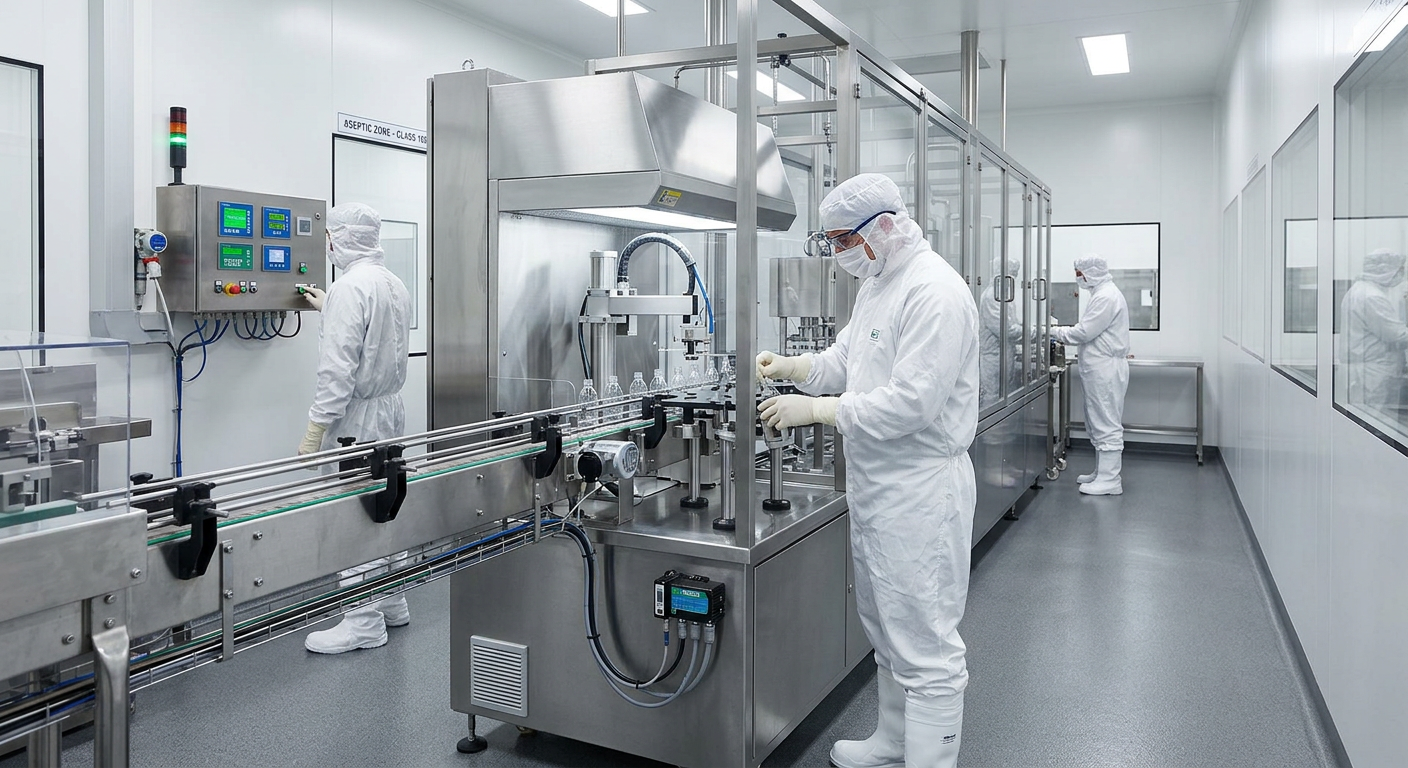
Carbonated Beverage Production Line
[trp_language language=”en_US”]
Carbonated Beverage Line Solutions in the United States
Carbonated beverage manufacturers in the United States need more than a filler and conveyor. They need an integrated production system that protects carbonation, controls foam, handles multiple package formats, minimizes utility costs, and supports profitable growth. Whether the product is sparkling water, CSD, flavored soda, RTD cocktails, kombucha, beer, or functional beverages with CO2, the best line design aligns process, packaging, automation, sanitation, and plant utilities into one coordinated operation.
For plants in major beverage corridors such as Atlanta, Chicago, Dallas-Fort Worth, Southern California, New Jersey, and the Carolinas, line design decisions are also shaped by labor availability, freight access, warehouse flow, utility rates, and distribution speed. Manufacturers shipping through the ports of Long Beach, Savannah, Houston, and Newark often prioritize line flexibility, uptime, and spare parts strategy because packaging components and critical equipment can be affected by supply chain timing.
Quick Answer

A complete carbonated beverage line in the United States typically includes water treatment, ingredient handling, batching, deaeration, carbonation mixing, container supply, rinsing or air cleaning, isobaric filling, capping or seaming, warm-up or pasteurization if required, inspection, labeling, coding, secondary packaging, palletizing, and end-of-line warehouse integration. The highest-performing systems are designed around the true bottleneck, not the nominal filler speed. That means balancing mixer output, filler valve count, labeler speed, packer performance, changeover time, CIP strategy, and utility infrastructure from the start.
For producers evaluating capital investment, the fastest route to a profitable decision is to compare three things together: target annual case volume, SKU complexity, and package mix. A line built for one high-volume PET SKU is very different from a multi-format operation running sleek cans, glass bottles, and multiple PET bottle sizes in the same week.
In practice, many U.S. beverage plants succeed when they treat line engineering as a business case rather than a simple equipment purchase. This is where a project partner with process, utilities, controls, and construction expertise can create outsized value by preventing underbuilt infrastructure, mismatched speeds, sanitation blind spots, and expensive future rework.
| Line Objective | Recommended Focus | Why It Matters | Typical U.S. Use Case |
|---|---|---|---|
| High-speed PET soda | Combiblock, high-speed isobaric filler, wraparound packer | Reduces footprint and labor while preserving throughput | Regional bottlers in Texas and the Southeast |
| Premium glass beverages | Glass handling, pasteurization review, lower breakage design | Protects package quality and operator safety | Craft soda and mixer brands in California and New York |
| Can-based sparkling drinks | Can depalletizer, rinser, seamer, dissolved oxygen control | Critical for shelf life and seam integrity | RTD and energy beverage co-packers |
| Multi-SKU co-packing | Fast change parts, recipe control, modular conveyors | Supports shorter runs and better schedule adherence | Contract packers in the Midwest |
| Utility-constrained facility | Energy recovery, compressed air optimization, smart CIP | Lowers operating cost and avoids future capacity limits | Urban plants with high utility rates |
| Phased expansion | Scalable controls and space planning | Prevents costly retrofit work later | Growing startups scaling into regional distribution |
The table above shows why line selection should begin with commercial reality. A technically impressive machine can still be the wrong investment if it does not match the plant’s product strategy, labor model, and forecasted output.
Complete Carbonated Beverage Line Components and Process Flow

A modern carbonated beverage production line is a coordinated sequence of process and packaging operations. At the front end, incoming water may pass through filtration, softening, reverse osmosis, UV, ozone, or other disinfection steps depending on source quality and product standards. Ingredients are received, stored, metered, and blended in batch or inline systems. Syrup rooms are often designed with hygienic transfer loops, validated ingredient addition, and in-line Brix measurement.
After blending, the product stream usually moves through deaeration before carbonation. Removing dissolved oxygen is essential because oxygen degrades flavor, can destabilize sensitive ingredients, and reduces shelf life. The carbonated product then enters a buffer tank or feeds directly to the filler bowl under controlled pressure. From there, packages are formed or supplied, cleaned, filled, closed, inspected, coded, labeled, packed, palletized, and transferred to warehouse or dispatch.
The exact process flow depends on the package type. PET lines may include blow molding from preforms. Glass lines focus more heavily on depalletizing, bottle inspection, and breakage management. Can lines center on can rinsing, precise filling, seaming, and often tighter oxygen control.
| Process Stage | Primary Equipment | Key Control Point | Main Risk if Poorly Designed |
|---|---|---|---|
| Water preparation | RO, filtration, UV, ozone, tanks | Water chemistry consistency | Flavor variation and scaling |
| Ingredient handling | Syrup tanks, dosing skids, pumps | Accurate metering | Brix drift and rework |
| Deaeration | Vacuum deaerator or membrane system | Low dissolved oxygen | Reduced shelf life |
| Carbonation | Carbonation mixer | Stable CO2 volume and temperature | Foam, fill inconsistency, taste shift |
| Filling and closure | Isobaric filler, capper or seamer | Pressure balance and hygienic sealing | CO2 loss and package defects |
| Inspection and coding | Vision, fill level, torque, code verifier | Defect removal | Returns and compliance issues |
| Secondary packaging | Case packer, tray former, shrink wrapper | Bundle integrity | Warehouse damage |
| Palletizing | Robot or conventional palletizer | Load stability | Transit failures |
In the United States, line integration is especially important because manufacturers often need to fit new equipment into brownfield plants with legacy utilities, existing drains, mixed floor elevations, and active production. A well-engineered process flow is not just about what happens on paper. It must also account for sanitation routing, maintenance access, operator movement, forklift traffic, and future expansion.
Companies looking for a partner that understands this broader picture often review engineering depth before machine brands. A firm such as Disruptive Process Solutions brings a plant-wide perspective by combining process engineering, controls, utilities, and execution planning instead of treating the filler in isolation.
Combiblock Technology: Integrating Blow Molding, Filling, and Capping

Combiblock systems combine blow molding, filling, and capping into one integrated PET packaging platform. For carbonated products, this approach can create meaningful advantages in hygiene, floor space, labor, and container handling. Since bottles move directly from preform heating and blowing to filling and capping with minimal exposure, contamination risk is reduced and conveyor complexity falls.
The main business case for combiblock technology is strongest in high-throughput PET operations. In regions such as the Southeast and Southwest, where large beverage distribution zones support long production runs, this integrated architecture can improve efficiency by reducing empty bottle handling and lowering line footprint. It can also reduce air conveyor length and simplify bottle transfer stability.
That said, combiblock is not automatically the best answer for every plant. A co-packer with frequent format changes or uncertain volume may prefer more modular equipment. The right decision depends on annual case forecast, preform strategy, cap and neck finish standardization, maintenance capability, and planned SKU mix.
| Evaluation Factor | Combiblock Advantage | Potential Limitation | Best Fit |
|---|---|---|---|
| Footprint | Smaller than separate blow-fill-cap layouts | Can require precise layout planning | Space-constrained plants |
| Hygiene | Less bottle exposure before filling | Integrated downtime affects more stages | Quality-focused PET lines |
| Labor | Fewer transfer points and operators | Requires trained technical support | Plants with labor pressure |
| Energy | Potential gains through reduced air conveyance | Blow molding still uses significant utilities | High-volume operations |
| Changeover | Efficient when bottle family is standardized | Complex for broad bottle diversity | Limited format portfolios |
| Scalability | Excellent for large repeatable volume | Higher up-front investment | Regional and national brands |
When evaluating a combiblock, manufacturers should model not only machine speed but total delivered line OEE. A system rated at high speed may underperform if upstream syrup preparation, downstream packaging, or utility capacity cannot sustain continuous production. This is one reason integrated design-build execution has become more valuable in the U.S. market, especially for new beverage plants where boilers, compressors, chilled water, and CIP need to be sized alongside the packaging line.
Isobaric Filling Valves and Foam Control for Carbonated Products
Carbonated beverages must be filled under pressure to maintain dissolved CO2 and avoid foam-related losses. Isobaric filling valves work by equalizing pressure between the container and the filler bowl before liquid enters the package. Proper pressure balance, temperature control, snift timing, and venting design are critical to fill accuracy and product retention.
Foam is one of the most expensive hidden losses on a carbonated line. Excess foam causes underfills, sticky conveyors, label adhesion issues, microbiological housekeeping problems, and reduced throughput. The causes are usually cumulative: warm product, unstable CO2, turbulent fill paths, package defects, inconsistent bottle dimensions, worn valves, poor vent tube settings, or excessive line vibration near the filler discharge.
Effective foam control starts upstream. Product temperature should be tightly controlled, typically colder for higher carbonation products. Container cleanliness, proper pressure setpoints, and consistent closure application also matter. For cans, seam integrity becomes part of the quality equation. For PET, cap torque and neck finish consistency are major variables. For glass, dimensional consistency and chip-free finishes help reduce closure problems and leaks.
Advanced fillers can support better product control through electronic valve management, recipe-driven parameters, and diagnostic feedback. Plants that run multiple products with different carbonation levels benefit from automation that stores pressure, snift, and timing settings by SKU rather than relying on manual adjustment.
Engineering support also matters here. DPS, for example, has deep technological capabilities spanning process, mechanical, electrical, structural, plumbing, and controls engineering, including PLC programming and SCADA integration. In carbonated beverage facilities, that cross-functional capability supports tighter pressure control logic, cleaner HMI recipes, improved alarm management, and better troubleshooting across the line rather than only at the filler.
Bottle Types and Format Flexibility: PET, Glass, and Can Lines Compared
Package format is one of the earliest decisions in a carbonated beverage project because it shapes nearly every downstream choice. PET offers lightweight distribution, broad retail familiarity, and compatibility with blow-fill-cap integration. Glass supports premium positioning, excellent gas barrier performance, and strong shelf presence. Cans offer recyclability, logistics efficiency, and rapid market acceptance for sparkling water, energy drinks, RTDs, and alcoholic beverages.
The tradeoff is that no single format wins on every variable. A United States brand shipping nationwide from a central plant may favor cans due to freight efficiency. A premium mixer company selling through upscale bars and restaurants in cities such as Miami, Las Vegas, and Manhattan may prioritize glass. A high-volume family soda brand distributed through grocery and club channels may stay focused on PET.
| Format | Strengths | Challenges | Typical Speed Potential | Best Commercial Fit |
|---|---|---|---|---|
| PET | Lightweight, lower freight cost, flexible bottle design | CO2 barrier limits on some applications, resin cost exposure | High | Mass retail and large regional distribution |
| Glass | Premium image, strong gas barrier, flavor protection | Breakage, heavier freight, slower handling | Medium | Premium sodas, mixers, specialty beverages |
| Standard can | Good logistics, strong market acceptance, recyclable | Seaming precision required, dent sensitivity | High | Sparkling water, RTD, energy, beer |
| Sleek can | Premium shelf appeal, trend-driven branding | Format-specific supply chain and change parts | High | Functional and lifestyle beverages |
| Large PET | Value pack economics | More foam sensitivity and cap management | Medium to high | Club store and family consumption |
| Returnable glass | Reuse potential and niche sustainability value | Washing, sorting, local logistics complexity | Medium | Localized refill or specialty programs |
The table shows that format flexibility is not just a mechanical issue. It is a commercial strategy issue. Plants serving co-packing networks from Chicago to Phoenix often need to switch between bottle sizes, can heights, label types, and pack patterns with minimal downtime. In those environments, line architecture should emphasize servo changeover, clearly indexed parts, guided setup, quick-release rails, and recipe-based automation.
For manufacturers reviewing integrated equipment and package-specific handling needs, the right path often starts with a plant-wide study rather than a machine quote. That is why many teams begin with engineering and integration services to align packaging choice with utilities, sanitation, labor, and future capacity.
Carbonation Mixer and Deaeration System Integration
Deaeration and carbonation are the heart of carbonated beverage quality. If oxygen is too high or CO2 pickup is unstable, downstream filling cannot fix the problem. In most systems, deaeration lowers dissolved oxygen before the beverage enters a carbonation mixer, where water or finished beverage is combined with CO2 under controlled pressure and temperature. The goal is a repeatable carbonation level that remains stable all the way to the sealed package.
Integration matters because the mixer cannot perform consistently without steady upstream flow, stable temperature, and properly controlled product composition. In higher-end systems, inline density, Brix, conductivity, and flow measurement support more precise recipe execution. Buffer tank sizing should be based on realistic line behavior, including microstops and sanitation transitions.
Plants that expand into functional sparkling beverages often discover that added ingredients change foaming behavior and gas retention. Sweeteners, acids, botanicals, juices, and emulsions can all affect mixer performance. This is where process expertise becomes commercially important. A good integrator helps the manufacturer test assumptions before buying undersized or overcomplicated equipment.
DPS has notable manufacturing capabilities in this area as well. In addition to integrating third-party process systems, the company designs and manufactures selected process equipment such as storage and processing tanks, custom CIP systems, and other stainless assets that fit larger turnkey projects. That matters to beverage clients because carbonated lines often depend on custom tank geometry, skid footprint, connection orientation, and sanitation access rather than off-the-shelf dimensions.
The chart reflects a realistic market trend: manufacturers continue investing in flexible, automation-ready sparkling beverage capacity in response to SKU proliferation, convenience-channel demand, premiumization, and private-label growth.
Changeover Efficiency: Reducing Downtime Between SKUs and Bottle Sizes
Changeover performance separates average lines from profitable ones. A line that runs fast for one SKU but loses hours every week during bottle, cap, label, and case changes will underdeliver on actual saleable output. This is especially true in the United States, where beverage portfolios increasingly include seasonal launches, channel-specific packs, retailer exclusives, and test-market production.
Reducing downtime starts with design. Guide rails should be indexed and repeatable. Change parts should be minimal, light, and easy to identify. HMI screens should show setup values by format. Servo-driven stations can eliminate manual adjustments. Labelers, packers, and lane dividers should be evaluated as seriously as the filler, because many lines lose more time downstream than at the filling carousel.
Operational discipline is equally important. Plants that track changeover by machine center, crew, and package family can identify hidden losses. Standard work, shadow boards, mobile carts for format parts, and pre-staged materials usually deliver quick gains. In multi-shift U.S. operations, digital work instructions and recipe verification reduce dependence on tribal knowledge.
| Changeover Lever | How It Reduces Downtime | Typical Benefit | Priority Level |
|---|---|---|---|
| Recipe-based settings | Loads machine parameters automatically | Less trial-and-error adjustment | High |
| Tool-less change parts | Speeds swap-out and lowers operator strain | Faster restarts | High |
| Servo positioning | Automates width and height changes | Improved repeatability | High |
| Color-coded components | Prevents part mismatch | Fewer setup errors | Medium |
| SMED analysis | Separates internal and external steps | Large cumulative time savings | High |
| Spare format kits | Allows parallel preparation | Reduces waiting time | Medium |
| Operator training | Creates repeatable best practice | Better consistency across shifts | High |
The best changeover programs are designed before steel is cut. They also require coordination across procurement, maintenance, scheduling, and controls. This is where service capability matters. DPS uses an end-to-end project approach that combines design, build, and execution management so clients can align equipment selection, installation, and startup around long-term throughput rather than one-time capital cost alone.
Line Speed Optimization: Balancing Filler, Labeler, and Packer Throughput
Many beverage projects fail to reach expected output because the line was purchased around a headline filler speed instead of balanced throughput. The filler may run at 600 bottles per minute, but if the labeler repeatedly drops to 520, the shrink wrapper to 500, and the palletizer to 480 during peak accumulation, the real line speed is defined by the weakest stable center.
Speed optimization depends on accumulation strategy, conveyor logic, reject handling, and controls integration. Well-placed accumulation can protect the filler from downstream interruptions and protect packers from filler microstops. However, too much accumulation wastes space and can increase package instability, especially for lightweight PET. Simulation and practical operating knowledge are both useful here.
Manufacturers should review not only machine speed but also speed sustainability. Factors include cap supply reliability, label roll change frequency, case blank quality, pallet pattern complexity, and sanitation windows. In many U.S. facilities, the difference between a strong line and a weak one is not the machine brand. It is how well process, packaging, material flow, and utilities were engineered to work together.
The demand mix shown above illustrates why line balancing must reflect category needs. Sparkling water and energy products often require faster package changes and premium label presentation, while classic CSD lines may favor long runs and high-volume efficiency.
Energy-Efficient Line Design and Utility Consumption Reduction
Energy and utility performance now play a central role in beverage line design. Electricity rates, natural gas costs, water use scrutiny, wastewater limitations, and sustainability commitments all influence capital decisions in the United States. By 2026, these pressures are expected to intensify as more states and large retailers push carbon accounting, water stewardship, and packaging sustainability targets.
Energy-efficient design starts with the whole plant. Compressors should be sized and controlled for actual demand profiles, not rough estimates. Blow molding air recovery can generate meaningful savings on PET lines. Pump and fan VFDs reduce unnecessary power draw. Heat recovery can support hot water generation. Smarter CIP reduces water, chemical, and heating loads. Conveyor motors and lubrication strategies also affect consumption.
Utility planning is especially important in new co-packing and expansion projects. A filler upgrade without matching chilled water, compressed air, boiler, or drain capacity often creates a new bottleneck. This is one reason advanced beverage projects increasingly involve firms that can engineer utilities and process together. DPS is active in that space across North America, supporting clients with capital planning, owners representation, project management, proprietary equipment supply, installation, and turnkey system integration across utilities, controls, and process assets.
| Utility Area | Common Waste Source | Improvement Method | Expected Impact |
|---|---|---|---|
| Compressed air | Leaks, poor pressure setpoints, oversized compressors | Leak audits, storage review, staged controls | Lower electric cost |
| Chilled water/glycol | Uninsulated lines, poor load matching | Loop optimization, insulation, VFD pumps | Stable carbonation temperature |
| CIP | Excess rinse time and chemical overuse | Conductivity-based recovery, recipe optimization | Less water and chemistry consumption |
| Steam/hot water | Heat loss and poor condensate return | Insulation, recovery, control upgrades | Reduced fuel consumption |
| Conveyors | Inefficient motors and poor zoning | Smart controls and motor selection | Lower power draw |
| Packaging materials | Overwrap and corrugate excess | Pack pattern redesign | Lower material cost and waste |
| Water use | Rinse inefficiency and cleanup overuse | Nozzle review and sanitation redesign | Reduced wastewater load |
Below is a practical representation of packaging trend shifts influencing utility planning and line design decisions.
This trend suggests continued investment in flexible canning capacity, but PET remains highly relevant for value, club, and family-size formats. Glass retains importance in premium and hospitality-focused segments.
Market, Product Types, Buying Advice, Industries, Applications, Case Studies, Local Suppliers, and Our Company
The U.S. market for carbonated beverage production lines is shaped by retail fragmentation and regional logistics. Club stores, convenience chains, foodservice, e-commerce, and contract manufacturing all demand different production economics. Plants located near Atlanta, Columbus, Indianapolis, Charlotte, Fresno, and Dallas often gain advantages from trucking access and warehouse distribution. Coastal plants near Los Angeles, Oakland, Seattle, Houston, Savannah, and Newark may prioritize imported packaging supply chain resilience and spare parts stocking.
Product types now extend far beyond traditional sodas. Line buyers regularly evaluate equipment for sparkling waters, flavored waters, prebiotic sodas, energy drinks, carbonated juices, hard seltzers, RTD cocktails, kombucha, and premium mixers. Each category changes the line design slightly. Some need tighter oxygen control. Some foam more aggressively. Some use fragile labels or specialty closures. Some require pasteurization or tunnel warming based on formulation and distribution conditions.
Buying advice for U.S. manufacturers is straightforward: define the business model first. Ask what package families will dominate, how many SKUs will run weekly, what utilities are already constrained, and where actual labor pain points exist. Then evaluate whether the line must support phased growth from, for example, 20 million cases to 80 million cases over time. That kind of staged thinking is where strong engineering can avoid expensive missteps.
Relevant industries include soft drinks, craft beverage production, alcoholic RTD, brewing, spirits-based canned cocktails, kombucha, dairy-adjacent sparkling beverages, and functional wellness drinks. Applications range from startup commercialization and contract packaging to major plant expansion, brownfield debottlenecking, and utility retrofit.
Case-study thinking is essential. In one common scenario, a plant assumes it needs a multi-million-dollar equipment expansion to gain output, when the real bottleneck is controls logic, accumulation management, or packaging synchronization. That is why analytical project teams often create more value than pure equipment sellers. A manufacturer can review practical examples and project experience through the company’s project case studies to understand how debottlenecking, relocation, and greenfield execution affect ROI.
Local supplier strategy also matters. U.S. beverage lines depend on domestic fabrication, local mechanical and electrical trades, controls support, spare parts planning, and regionally available sanitation and utility contractors. The strongest project outcomes usually come from a coordinated network rather than one isolated OEM. This is particularly true when the line includes process skids, syrup rooms, boilers, compressed air, cooling towers, water treatment, and warehouse integration.
| Supplier Category | What to Evaluate | Risk If Overlooked | Best Procurement Tip |
|---|---|---|---|
| Filler/OEM | Actual proven speed on similar products | Underperformance at startup | Request reference lines by format |
| Process integrator | Mixing, carbonation, CIP, controls capability | Disconnected upstream and downstream design | Review full-scope project experience |
| Utility contractor | Compressed air, steam, glycol, water expertise | Capacity shortfalls after installation | Model future, not just current, loads |
| Controls provider | Recipe logic, SCADA, alarm management | Long debug periods and operator confusion | Standardize code architecture early |
| Packaging supplier | Label, cap, can, carton consistency | Frequent jams and waste | Validate specifications under production conditions |
| Installer/GC partner | Scheduling, safety, local trade coordination | Project delays and change-order growth | Use a single accountable lead where possible |
As for our company perspective, DPS serves beverage manufacturers across all 50 states and Canada with a business-minded engineering approach focused on profitability, not just installation. Its capabilities span three areas that are especially relevant for carbonated beverage projects:
First, technological capabilities: process engineering, automation, PLC programming, SCADA, sanitary system design, water treatment integration, carbonation and bright systems, pasteurization technologies, and complete utility engineering.
Second, manufacturing capabilities: custom process tanks, CIP systems, and other equipment fabricated to fit the exact layout and operational needs of a project, rather than forcing a plant into generic hardware limits. Manufacturers can review available process equipment at custom equipment solutions.
Third, service capabilities: capital planning, feasibility studies, owners representation, project and program management, general contracting where licensed, equipment supply, installation management, commissioning, and turnkey integration under a design-build-manage model. This matters because beverage producers typically need one accountable team that can align business goals, utilities, process systems, construction execution, and startup performance.
FAQ
What is included in a complete carbonated beverage production line?
A complete line usually includes water treatment, syrup preparation, deaeration, carbonation mixing, container supply, rinsing, isobaric filling, capping or seaming, inspection, coding, labeling, case packing, palletizing, CIP, and supporting utilities.
What package format is best for a new beverage brand in the United States?
It depends on channel and brand position. Cans are popular for sparkling water, energy, and RTD categories. PET remains strong for value and family-size products. Glass works well for premium beverage positioning and foodservice presentation.
Why is deaeration important before carbonation?
Deaeration removes dissolved oxygen, which protects flavor, improves shelf life, and supports more stable carbonation performance. Skipping or undersizing this step can cause quality loss that downstream equipment cannot correct.
How do isobaric fillers reduce carbonation loss?
They equalize package pressure with filler bowl pressure before product enters the container. This reduces turbulence, limits CO2 breakout, and improves fill consistency.
What causes excessive foaming on carbonated lines?
Common causes include warm product, unstable CO2, worn filling valves, poor pressure settings, dirty or inconsistent containers, package handling vibration, and formulation-specific foaming behavior.
Is a combiblock always the best choice for PET?
No. Combiblock systems are excellent for high-volume, standardized PET operations, but plants with highly variable bottle formats or uncertain demand may prefer modular equipment for flexibility.
How can I reduce changeover time between bottle sizes and SKUs?
Use tool-less change parts, servo adjustments, recipe-based automation, clear part identification, and SMED analysis. Also track downtime by machine center to find where time is really being lost.
What is the biggest mistake in line speed planning?
Designing around filler nameplate speed without balancing the labeler, packer, palletizer, accumulation, and utility systems. Real throughput depends on the entire line’s stable operating speed.
How important are utilities in beverage line design?
They are critical. Inadequate chilled water, compressed air, steam, process water, drains, or electrical distribution can limit line performance more than the packaging equipment itself.
What trends should manufacturers watch through 2026?
Expect more demand for can flexibility, smarter automation, stronger sustainability reporting, lower water and energy intensity, digital maintenance tools, better line data visibility, and designs that support retailer and regulatory pressure on efficiency and packaging performance.
How should I evaluate a project partner?
Look for proven beverage process knowledge, utility engineering depth, controls expertise, installation management, startup support, and a record of solving plant-wide bottlenecks rather than only selling equipment.
For U.S. beverage manufacturers, the right carbonated beverage line is the one that delivers repeatable product quality, commercial flexibility, and measurable operating profit. That outcome comes from integrated engineering, realistic throughput planning, and execution discipline across process, packaging, and utilities.
[/trp_language]
Complete Company Portfolio

About the Author: Disruptive Process Solutions (DPS)
The DPS team combines process engineering expertise with real-world food and beverage manufacturing experience. Our content focuses on process optimization, production efficiency, facility improvements, and practical solutions that help manufacturers operate more effectively in a rapidly evolving industry.
Share

