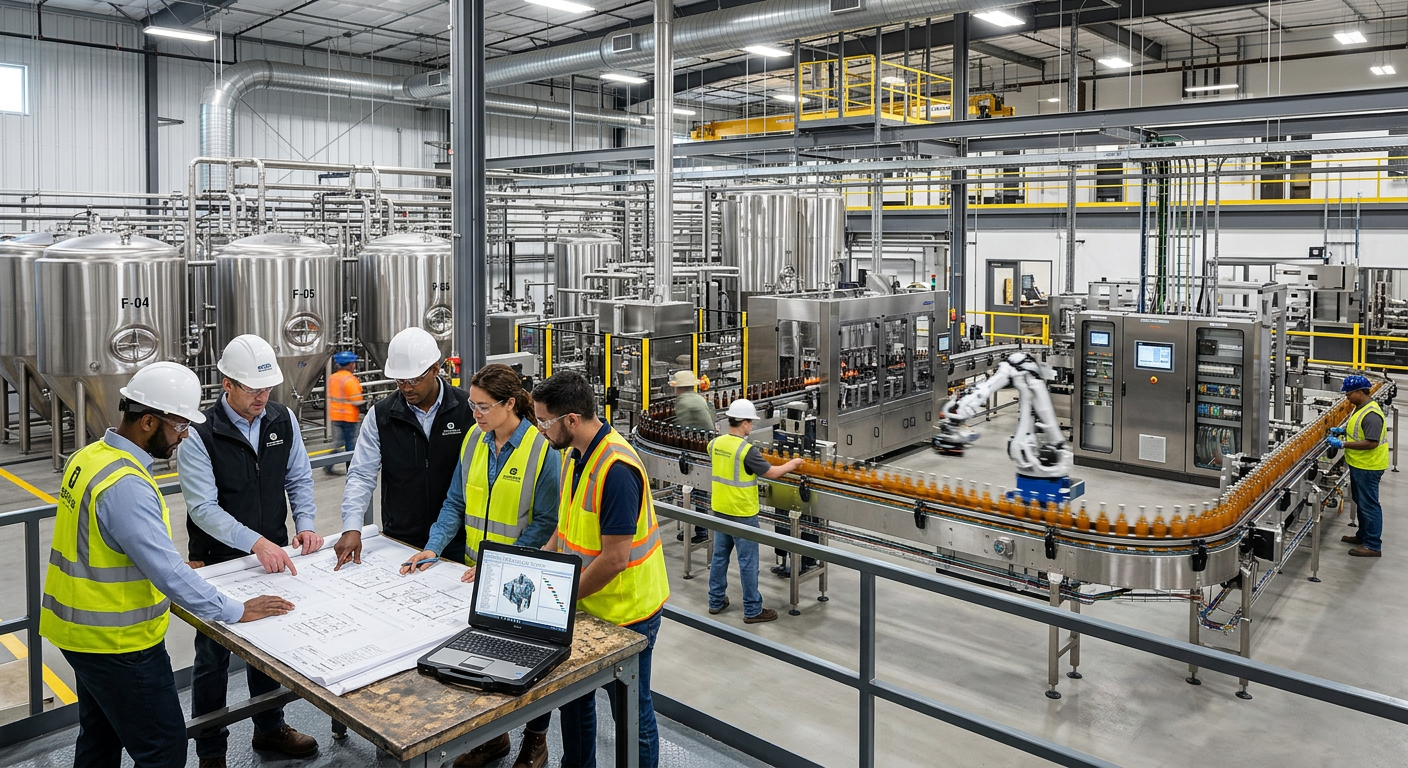
UHT Beverage Processing Systems
[trp_language language=”en_US”]
Ultra-high-temperature beverage processing is the preferred route for U.S. manufacturers that need commercially sterile, shelf-stable drinks with long distribution windows and reduced cold-chain dependence. A well-designed UHT system rapidly heats product, holds it for seconds at a validated lethal condition, cools it under hygienic control, and transfers it directly to aseptic packaging. In practice, the best system depends on product viscosity, particulate size, package format, plant utilities, target throughput, cleanability, and commercial goals. For manufacturers shipping through hubs such as Chicago, Dallas, Atlanta, Los Angeles, Houston, Newark, and the ports of Long Beach and Savannah, UHT can improve logistics flexibility, open national retail channels, and reduce warehouse risk when integrated correctly.
For companies evaluating a new line or retrofit, the most important decision is not simply “buy a UHT skid.” It is choosing the right process architecture: direct or indirect heating, plate or tubular heat exchange, aseptic buffer design, CIP strategy, and line integration with fillers, utilities, controls, and quality systems. That is where an engineering-led partner matters. Disruptive Process Solutions supports food and beverage manufacturers across the United States and Canada with practical engineering, integration, and capital planning aimed at profitable execution rather than overbuilt scope.
Quick Answer

A UHT beverage processing system sterilizes liquid products by heating them to a very high temperature, typically about 135°C to 150°C, for a very short time, often 2 to 10 seconds, followed by rapid cooling and aseptic filling. In the United States, these systems are widely used for dairy beverages, plant-based milks, creamers, juices, nutritional drinks, concentrates, and ready-to-drink coffee. The right UHT design depends on product sensitivity, viscosity, particulates, desired shelf life, package type, and sanitation needs.
For low-viscosity products with minimal fouling, plate systems can be efficient and compact. For products with higher solids, higher viscosity, or particulate risk, tubular systems usually offer better reliability. Direct steam injection or infusion provides fast heating and cooling with strong flavor protection for delicate products, while indirect heating through plates or tubes often offers better utility efficiency and simpler water balance. A complete line should also include homogenization where required, deaeration where beneficial, aseptic surge capacity, validated CIP, automation, and filler-package compatibility.
| Selection Factor | Why It Matters | Common U.S. Choice | When to Upgrade |
|---|---|---|---|
| Product viscosity | Drives heat transfer and pumpability | Plate for thin liquids | Move to tubular as viscosity rises |
| Particulates | Affects plugging and residence validation | Tubular with controlled particle size | Use scraped or specialty systems for difficult inclusions |
| Flavor sensitivity | Impacts cooked notes and aroma loss | Direct heating for premium sensory goals | Add vacuum flash cooling or process refinement |
| Utility cost | Steam, chilled water, compressed air, water use | Indirect with regeneration | Add heat recovery and utility optimization |
| Package format | Must match aseptic filler and sterilization method | Cartons, PET, HDPE, bag-in-box | Redesign filler block for portfolio expansion |
| Production schedule | Continuous operation changes CIP strategy | 24/5 or 24/6 runs for high volume | Expand CIP tanks and automation for longer campaigns |
The table above simplifies the buying decision: there is no universal “best” UHT system. The best investment is the system that matches the actual product portfolio, packaging roadmap, sanitation discipline, and utility economics of the plant.
How UHT Processing Works: Time-Temperature Profiles and Sterilization Kinetics

UHT processing achieves commercial sterility by combining high temperature with a very short holding period. The core concept is lethality: microorganisms and spoilage enzymes are inactivated based on exposure to a specific time-temperature history. Instead of holding beverages for minutes at lower temperatures, UHT pushes temperature upward so total exposure time can shrink to seconds. This helps preserve flavor, color, and nutritional quality compared with longer thermal treatments.
A standard process sequence includes balance tank, feed pump, preheating, optional deaeration, homogenization, final heating, hold tube, flash cooling or indirect cooling, aseptic storage, and aseptic filling. Each element must be engineered so the coldest particle or slowest stream path still receives the validated minimum treatment. Residence time distribution matters. So do pressure relationships, especially where sterile and non-sterile zones meet.
In practical plant terms, the thermal profile often looks like this: preheat product from ambient or chilled storage to an intermediate level, then raise it rapidly to sterilization temperature, hold for the validated few seconds, and cool it quickly before packaging. Sensitive products such as premium dairy alternatives or RTD coffee benefit from minimizing total thermal load. More robust products may tolerate broader operating windows.
| Beverage Type | Typical UHT Temperature | Typical Hold Time | Key Risk | Preferred Control Focus |
|---|---|---|---|---|
| White milk | 137°C to 142°C | 3 to 5 seconds | Cooked flavor | Rapid heating and cooling |
| Creamer | 140°C to 148°C | 4 to 8 seconds | Protein fouling | Stable formulation and CIP discipline |
| Plant-based milk | 138°C to 145°C | 4 to 8 seconds | Sedimentation and flavor drift | Homogenization and shear control |
| Juice blends | 135°C to 140°C | 2 to 6 seconds | Color fade | Oxygen control and low residence spread |
| RTD coffee | 140°C to 150°C | 2 to 5 seconds | Flavor oxidation and sediment | Deaeration and careful homogenization |
| Nutritional beverages | 140°C to 150°C | 5 to 10 seconds | Vitamin loss and fouling | Formulation-specific validation |
This table shows why thermal design cannot be generic. Even when temperatures appear similar, the limiting factors differ: protein denaturation, particulate safety, flavor retention, oxygen pickup, or fouling. That is why successful U.S. installations typically include thermal validation, flow verification, and controls interlocks that protect legal process conditions.
The growth trend above reflects a realistic market direction: expanding demand for shelf-stable beverages, resilient distribution models, and labor-efficient processing. This is especially relevant in the United States, where freight costs, retailer service expectations, and regional co-packing expansion are reshaping investment decisions.
Direct vs Indirect UHT Heating: Steam Injection vs Plate Heat Exchangers

Direct and indirect heating achieve the same regulatory outcome but with different thermal mechanics. In direct systems, culinary steam contacts the product directly through steam injection or steam infusion. The product heats almost instantly, then the added water is removed in a flash cooling stage under vacuum. In indirect systems, heat passes across a metal surface, such as a plate or tubular wall, without steam contacting the beverage.
Direct heating is often selected when flavor retention is critical. Because heating and cooling are extremely fast, total heat exposure is lower. This helps protect volatile aromatics in products like premium RTD coffee, creamers, and some dairy beverages. The tradeoff is greater system complexity around steam quality, condensate management, flash cooling, and water balance. Plants also need reliable culinary steam production and strong process control.
Indirect heating can be easier to integrate into existing utility systems and usually offers excellent energy recovery through regeneration. It is common in high-volume dairy and shelf-stable beverage plants where operating efficiency, compact footprints, and predictable maintenance matter. However, slower heat transfer relative to direct systems may increase thermal impact on the most sensitive formulations.
| Criterion | Direct Steam Injection/Infusion | Indirect Plate/Tubular Heating | Operational Meaning |
|---|---|---|---|
| Heating speed | Very fast | Fast but surface-limited | Direct systems minimize total thermal exposure |
| Flavor protection | Excellent | Good to very good | Direct is favored for delicate sensory profiles |
| Energy recovery | Moderate to good | Very strong | Indirect often lowers operating cost per gallon |
| Utility demands | High steam quality needs | Broader compatibility | Existing plant infrastructure influences choice |
| System complexity | Higher | Moderate | Direct may require more specialized expertise |
| Water balance | Requires flash removal of condensate | Simpler | Critical in formulation and mass balance control |
The comparison shows that the decision is commercial as much as technical. A high-margin, flavor-sensitive beverage sold nationally from a California or Texas co-packer may justify direct heating. A large-volume dairy or plant-based line shipping through Midwest and Southeast distribution networks may favor the efficiency of indirect heating.
Tubular vs Plate UHT Systems: Product Viscosity and Particulate Considerations
Plate heat exchangers are efficient because of high surface area and turbulent flow, but they are best suited to relatively low-viscosity products with limited particulate content. Tubular systems, including concentric and shell-and-tube variants, provide wider passages and stronger mechanical tolerance for challenging products. They are often chosen for beverages with proteins, fibers, seeds, cocoa, or higher total solids.
In the United States market, product complexity is increasing. Oat-based drinks, high-protein shakes, fiber-fortified beverages, coffee mixes, and hybrid dairy-plant products can be difficult to process consistently. These products may shear differently, foul surfaces faster, and have broader viscosity ranges across seasonal formulations. Tubular UHT systems typically offer better robustness when product developers want formulation freedom.
Particulates add another layer. Even if the liquid base is pumpable, particle size and distribution change the thermal validation approach. Every particle must receive the minimum process. This may require larger diameter hold tubes, lower shear pumps, and filler-path designs that maintain sterile integrity without damaging inclusions.
| Product Profile | Plate UHT Suitability | Tubular UHT Suitability | Main Reason |
|---|---|---|---|
| Skim and low-fat milk | High | High | Low viscosity and predictable behavior |
| Almond beverage | High | Moderate to high | Depends on solids loading and stabilization |
| Oat beverage | Moderate | High | Beta-glucans and solids can increase fouling |
| Protein shake | Moderate | High | Higher solids and heat sensitivity |
| RTD coffee with fine sediment | Moderate | High | Suspended solids challenge plate passages |
| Juice with pulp or inclusions | Low to moderate | High | Particle handling and residence control |
The practical lesson is straightforward: choose plate systems for thermal efficiency when the product truly fits; choose tubular systems when stability, fouling tolerance, or particulates make narrow channels a risk. A cheaper skid becomes expensive quickly if it limits future products or creates chronic uptime losses.
UHT System Integration with Aseptic Filling and Packaging
UHT processing only delivers shelf stability when the sterilized product remains protected all the way to final seal. That makes integration with aseptic filling and packaging a mission-critical topic. The UHT processor, aseptic surge tank, sterile valves, filler bowl or tank, package sterilization system, environmental controls, and closure management must operate as one validated sterile chain.
In U.S. manufacturing environments, packaging decisions are often driven by channel strategy. Club retail may prefer multi-pack shelf-stable cartons. Convenience and foodservice channels may require PET, HDPE, or bag-in-box. Export lanes moving through Newark, Houston, or Long Beach may prioritize durable formats and high pallet efficiency. Each choice affects line design, filler speed, sterilant handling, package depyrogenation or decontamination, and warehouse planning.
Integration is also an automation project. Recipe management, sterile boundary monitoring, pressure cascade logic, alarm handling, and diversion control should be built into a coordinated controls architecture. This is where technological capability matters. DPS supports process, mechanical, electrical, plumbing, structural, and controls engineering, including PLC programming, SCADA, and system integration, which is especially valuable when a filler, UHT skid, utilities, and CIP platform come from different vendors.
The chart highlights why integrated aseptic design has become more valuable: demand is broad, not concentrated in one category. A line designed only for today’s SKU may struggle when the commercial team adds high-protein, plant-based, or coffee products next year.
Product Quality: Nutrient Retention, Flavor Impact, and Color Stability
UHT is often misunderstood as automatically harsher than other thermal methods. In reality, the short exposure window can protect quality better than longer lower-temperature processes, provided the formulation and equipment are optimized. Nutrient retention depends on the ingredient. Proteins may denature structurally without necessarily losing nutritional value. Some vitamins are heat-sensitive, but oxygen control, formulation buffering, and post-process fortification strategies can reduce impact.
Flavor is often the deciding issue. Dairy can develop cooked notes through sulfur compound formation. Plant-based drinks may reveal bitterness, cereal notes, or oxidation if lipid systems are unstable. Coffee can lose aroma or develop stale character if dissolved oxygen is not managed. Color changes may result from Maillard reactions, pigment breakdown, or suspended solids instability. Products with cocoa, tea, fruit, or natural colors need careful process mapping from blend tank to package.
Manufacturing capability also influences quality. DPS designs and supplies processing tanks, custom CIP systems, and selected proprietary process equipment, which can support tighter control of blending, hold-up volume, and cleanability. Combined with line integration and commissioning, this reduces the disconnect between formulation intent and real plant performance.
| Quality Attribute | Main Thermal Risk | Best Engineering Lever | Best Formulation Lever |
|---|---|---|---|
| Protein stability | Aggregation or sediment | Rapid heating, proper homogenization | pH and stabilizer optimization |
| Vitamin retention | Heat degradation | Short residence time | Protective premix strategy |
| Coffee aroma | Volatile loss | Deaeration and direct heating | Roast and extract standardization |
| Juice color | Pigment breakdown | Fast cooling and oxygen control | Antioxidant and pH management |
| Whiteness/appearance | Browning | Minimize overprocessing | Sugar-protein balance |
| Mouthfeel | Over-shear or separation | Pump and valve selection | Emulsion and solids design |
The takeaway from this table is that product quality is never only a “formulation issue” or only an “equipment issue.” It sits at the intersection of both. The best UHT outcomes come from teams that coordinate R&D, operations, engineering, sanitation, and packaging from pilot work through startup.
Energy Recovery and Regenerative Heat Exchange in UHT Systems
UHT economics depend heavily on regeneration. In regenerative heat exchange, outgoing hot product transfers energy to incoming cold product, reducing the external heating and cooling load. This is one of the biggest reasons indirect UHT systems can operate efficiently at scale. In the United States, where steam generation, chilled water capacity, wastewater handling, and utility peak demand all affect project ROI, regeneration can significantly shape payback.
Plants in regions with high energy prices, constrained boiler capacity, or aggressive sustainability targets often prioritize regenerative design early. Manufacturers in California, the Northeast, and parts of the Pacific Northwest may place extra emphasis on utility optimization. Gulf Coast and Midwest plants may focus more on expansion capacity and reliability, but energy recovery still matters because it reduces operating cost and carbon intensity.
By 2026, more beverage plants are expected to link UHT skids with plant-wide energy dashboards, heat recovery loops, variable-frequency drives, condensate return improvements, and smarter scheduling tied to tariff structures. Policy pressure around emissions reporting and customer pressure around sustainability disclosures are both pushing thermal systems toward better efficiency documentation.
The area trend reflects a clear shift: energy recovery is no longer a bonus feature. It is becoming a default expectation in serious capital planning, particularly for multi-line aseptic or high-throughput co-packing environments.
CIP and Fouling Management for Continuous UHT Operation
Continuous UHT processing succeeds or fails on hygiene and uptime. Fouling occurs when proteins, minerals, carbohydrates, or other solids deposit on heat transfer surfaces. As deposits build, heat transfer falls, pressure drop increases, product quality drifts, and microbial risk rises. Different beverages foul differently. Dairy proteins may form dense thermal films. Plant-based drinks can create starch-like or gum-heavy deposits. Coffee and cocoa products can leave stubborn residues.
CIP design must match the product portfolio, not just the base machine. Flow velocity, detergent chemistry, rinse verification, temperature profile, tank sizing, return conductivity logic, and validation documentation all matter. High-throughput operations running long campaigns may need multi-circuit CIP systems, recovery tanks, and automation that sequences filler, processor, blend system, and package-contact components with minimal manual intervention.
This is also a core service capability question. DPS works across process engineering, capital planning, installation, commissioning, owner’s representation, project management, and system integration. For manufacturers, that means CIP and fouling management can be addressed not only as a sanitation topic but as a full project discipline that includes utility loads, floor layout, operator access, drain design, instrumentation, and startup training.
| Product Type | Typical Fouling Pattern | Likely Trouble Spot | CIP Priority | Operational Tip |
|---|---|---|---|---|
| Milk | Protein and mineral film | Final heater and hold exit | Caustic and acid balance | Track pressure drop by run hour |
| Creamer | Fat-protein deposits | Hot surfaces and valves | Strong surfactant support | Control emulsion stability upstream |
| Oat beverage | Starch-gum residue | Regeneration section | Temperature-timed caustic wash | Avoid unnecessary hold-up volume |
| Protein beverage | Dense protein burn-on | High-temperature zone | Shorter campaigns if needed | Validate every formula variant |
| RTD coffee | Fine solids and oil residue | Balance tank and valves | Rinse effectiveness and circulation | Deaeration can reduce downstream issues |
| Juice with pulp | Fiber and pectin accumulation | Bends and filler path | Mechanical action and line velocity | Confirm dead-leg control |
The explanation is simple: fouling is predictable when you understand the product and the thermal path. Good plants monitor it, design for it, and budget for it before the line is purchased.
Applications: Dairy, Plant-Based, Juice, and RTD Coffee UHT Processing
UHT processing spans a wide product range in the U.S. market. Dairy remains a major application, especially for white milk, flavored milk, creamers, and nutritional beverages. Plant-based products continue to grow, particularly oat, almond, soy, pea, and blended drinks. Juice and juice beverages use UHT when the target is ambient shelf life with broad retail reach. RTD coffee is one of the strongest growth categories, driven by convenience, premiumization, and distribution flexibility.
Regional demand patterns matter. The Midwest and Upper Plains remain important for dairy infrastructure. California and the Pacific Northwest are strong centers for plant-based innovation. Texas and the Southeast are expanding in co-packing, warehousing, and logistics. New Jersey and the Mid-Atlantic support import-export and dense retail distribution. That geography changes not only where lines are installed but what products they must run profitably.
When manufacturers compare suppliers, they should look beyond skid price. Ask whether the integrator understands both beverage process behavior and plant execution realities. Can the partner tie utilities, controls, filler integration, CIP, and compliance together? Can they support growth from pilot to multi-SKU commercial production? Practical experience across dairy, aseptic, RTD, and utility infrastructure matters.
The comparison chart represents what buyers should evaluate in supplier selection. The strongest projects are rarely won on equipment alone; they are won on integration quality, validation readiness, and lifecycle performance.
For example, a beverage company building near Atlanta or Dallas may need a line that starts at moderate volume but can scale fast as club and grocery distribution expand. Another company near Los Angeles or the Port of Long Beach may need export-ready aseptic packaging and strong utility resilience. A co-manufacturer in the Carolinas may need rapid turnaround with mixed product runs and flexible CIP architecture. These are not identical projects, even if all are labeled “UHT.”
Manufacturing capability matters here as well. DPS supports turnkey installation and integration, and can combine custom equipment supply with field execution. That is useful when a project needs tanks, CIP skids, utility tie-ins, automation upgrades, and aseptic packaging coordination under one accountable structure instead of a fragmented multi-vendor process.
For readers wanting a closer look at engineering and execution support, DPS outlines its broader process and project services, its selected equipment capabilities, and representative project examples that show how integrated delivery improves speed and risk control.
FAQ
What temperature qualifies as UHT?
In most beverage applications, UHT means heating the product to roughly 135°C to 150°C for a few seconds, followed by aseptic handling and packaging. The exact validated condition depends on the product and target microorganisms.
Is UHT the same as aseptic processing?
Not exactly. UHT is the thermal sterilization step. Aseptic processing includes the sterile transfer, storage, filler, package sterilization, and sealed packaging steps that preserve commercial sterility after heating.
Which is better: direct or indirect UHT?
Neither is universally better. Direct systems often provide stronger flavor protection for sensitive beverages. Indirect systems often provide better energy efficiency and simpler integration. The best choice depends on product and plant priorities.
When should I choose tubular over plate?
Choose tubular when the beverage has higher viscosity, more solids, greater fouling tendency, or particulates. Plate systems usually fit thinner, cleaner products where heat transfer efficiency is the main goal.
Can UHT work for plant-based beverages?
Yes. UHT is widely used for oat, almond, soy, pea, and blended products. Success depends on stabilization, homogenization, fouling control, and selecting a thermal profile that protects flavor and texture.
How long can UHT beverages last?
Shelf life varies by formulation, package type, oxygen control, and distribution conditions, but many UHT beverages are designed for several months of ambient storage. Validation should always be product-specific.
What are the biggest hidden costs in a UHT project?
Common hidden costs include utility upgrades, CIP capacity, aseptic filler constraints, package change parts, automation integration, steam quality issues, startup waste, and insufficient surge or storage design.
How important is CIP automation?
Very important for continuous or multi-SKU operations. Automated CIP improves repeatability, reduces operator error, supports documentation, and helps maximize uptime between production campaigns.
What should U.S. buyers ask suppliers before purchase?
Ask about validated product fit, fouling assumptions, residence time distribution, filler integration, utility loads, regeneration efficiency, CIP cycle design, controls philosophy, startup support, and expansion flexibility.
What is changing by 2026?
Expect more digital monitoring, higher energy recovery expectations, stronger sustainability reporting, broader aseptic packaging flexibility, tighter sanitation data tracking, and more demand for systems that can run both dairy and plant-based portfolios.
In summary, UHT beverage processing in the United States is no longer a niche capability reserved for only the largest dairies. It is now a strategic platform for shelf-stable growth across dairy, plant-based, juice, nutrition, and RTD coffee. The winning approach is to engineer the full sterile pathway, not just buy a heater. That means matching thermal method to product, integrating with packaging and utilities, designing for CIP and fouling, and building a line that supports future commercial shifts. For manufacturers who want an execution partner that combines engineering depth, equipment know-how, and project accountability, DPS brings a practical design-build-manage model focused on profitable outcomes.
[/trp_language]
Complete Company Portfolio

About the Author: Disruptive Process Solutions (DPS)
The DPS team combines process engineering expertise with real-world food and beverage manufacturing experience. Our content focuses on process optimization, production efficiency, facility improvements, and practical solutions that help manufacturers operate more effectively in a rapidly evolving industry.
Share