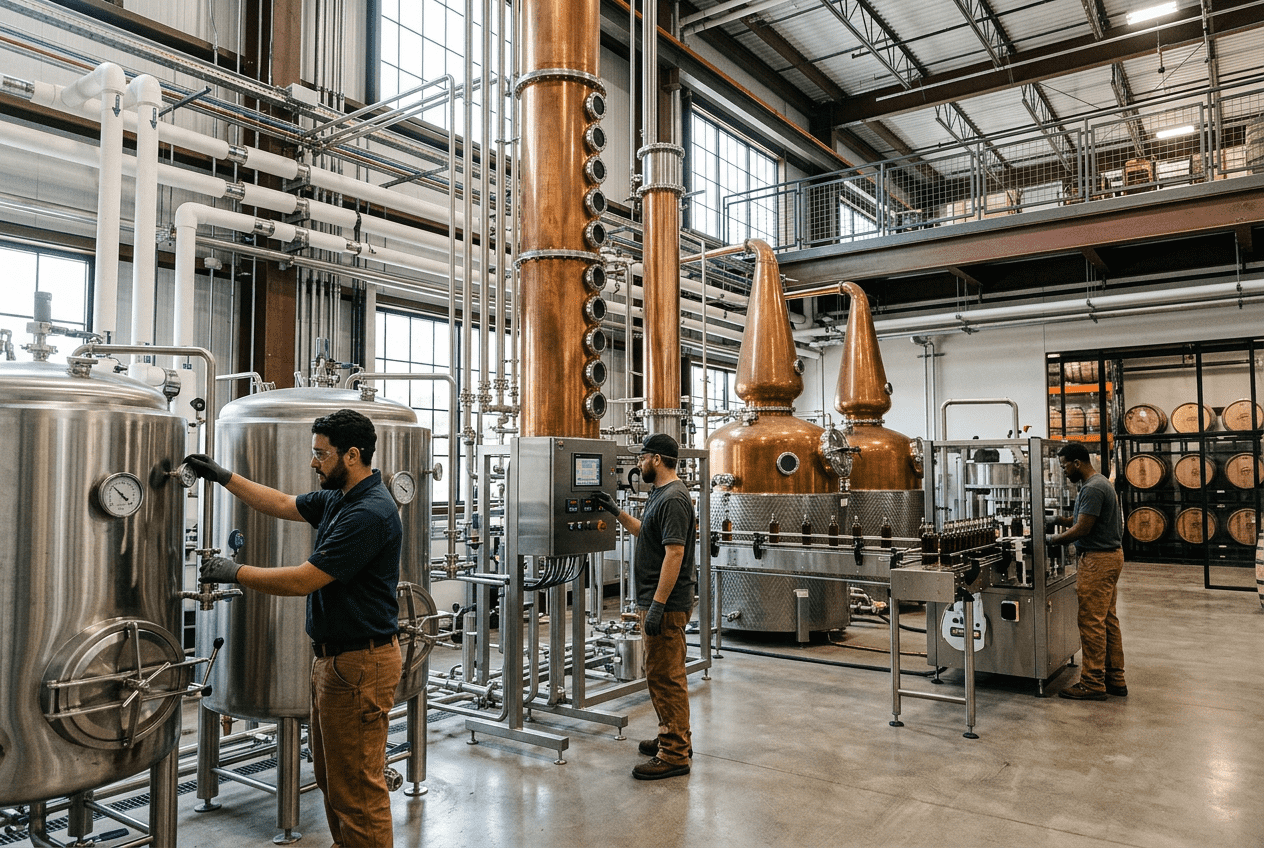
ESL Dairy Beverage Processing
[trp_language language=”en_US”]
ESL Dairy Beverage Processing for the United States Market
Extended shelf life, or ESL, dairy beverage processing is the middle ground between conventional pasteurized dairy and fully shelf-stable UHT products. In practical terms, ESL systems are designed to deliver refrigerated milk, flavored dairy drinks, cream-based beverages, and cultured drink products with longer shelf life, cleaner flavor, and wider distribution reach than standard HTST products. In the United States, most ESL dairy beverages target about 30 to 45 days of refrigerated stability, although exact performance depends on raw milk quality, thermal profile, bacterial reduction strategy, filling hygiene, package barrier, and cold chain discipline.
For processors serving dense retail corridors such as the Northeast, Chicago, Dallas-Fort Worth, Southern California, Atlanta, and the I-95 corridor, ESL can create a valuable operating advantage. It supports larger production runs, improved regional distribution, reduced returns, and better service to grocery, club, foodservice, and convenience channels. It is especially relevant for fluid milk, coffee creamers, protein drinks, lactose-free beverages, and premium flavored dairy products that need a refrigerated identity but cannot tolerate short code life.
From a capital project perspective, ESL is not a single machine purchase. It is a system design decision that touches separation, clarification, microfiltration, pasteurization, homogenization, CIP, hygienic zoning, filler selection, utilities, packaging, warehouse handling, and refrigerated logistics. Manufacturers evaluating new ESL capacity often need an engineering partner that can connect process technology, plant layout, compliance, and business returns. Companies such as Disruptive Process Solutions approach this through a full project model that links planning, engineering, installation, and execution oversight for food and beverage producers across North America.
Quick Answer

ESL dairy beverage processing uses enhanced bacterial reduction and highly hygienic handling to produce refrigerated dairy drinks with longer shelf life than standard pasteurized products, usually 30 to 45 days in the United States. The most common ESL approaches combine one or more of the following: high-efficiency raw milk separation, bactofugation, microfiltration, optimized pasteurization, ultra-clean tanks and piping, and hygienic or ultra-clean filling. Compared with HTST, ESL provides longer refrigerated life and broader distribution. Compared with UHT, ESL generally preserves a fresher dairy flavor but still requires refrigeration. The best system depends on product type, target geography, package format, retail route, and capital budget.
| Decision Area | Typical ESL Choice | Why It Matters | Common U.S. Application |
|---|---|---|---|
| Base process | Pasteurization plus microfiltration or bactofugation | Reduces microbial load before filling | Premium white milk |
| Shelf life target | 30 to 45 days refrigerated | Supports wider retail distribution | Regional grocery supply |
| Package style | HDPE bottle, PET bottle, gable-top carton, pouch | Impacts oxygen and light protection | School, retail, club, foodservice |
| Filling method | Ultra-clean or highly hygienic cold fill | Prevents post-process contamination | Flavored dairy drinks |
| Distribution model | Continuous refrigerated chain | Maintains code life and quality | Multi-state shipments |
| Quality control | Environmental monitoring and shelf-life validation | Confirms process robustness | National branded products |
The table above simplifies the buying decision: ESL success is driven by the entire process chain, not by heat treatment alone. That is why many U.S. processors run feasibility studies before purchasing major equipment, especially when they are converting from local HTST distribution to multi-state refrigerated supply.
ESL Processing Explained: Extended Shelf Life Technology for Dairy Beverages

ESL processing is best understood as a controlled combination of microbial reduction and contamination prevention. The aim is to lower the count of spoilage organisms and heat-resistant bacteria to a point where refrigerated storage remains stable for a substantially longer period than ordinary pasteurized dairy. While ESL is not shelf stable at ambient temperature, it can outperform standard milk significantly in quality consistency and market reach.
In the United States, ESL is often used for white milk, chocolate milk, coffee milk, cream-based beverages, shake bases, lactose-free dairy drinks, and selected cultured beverages. Product developers choose ESL when they want fresher sensory characteristics than UHT but need more distribution time than HTST alone can offer. This is especially valuable when moving product from dairy regions such as Wisconsin, Idaho, California, and upstate New York into major consumption centers like New York City, Boston, Miami, Phoenix, and Seattle.
Several core principles define ESL systems:
- Excellent incoming raw milk quality and disciplined receiving practices
- Efficient removal or destruction of vegetative microorganisms and spore-formers where possible
- Short, well-controlled product residence times
- Closed, sanitary, easily cleanable process equipment
- Validated CIP and strong hygienic design
- Ultra-clean transfer, buffer storage, and filling operations
- Strict refrigerated distribution from plant to point of sale
On the technology side, modern ESL projects often involve advanced process engineering across thermal systems, filtration, utility design, and automation. This is where DPS’s technological capabilities are relevant to U.S. dairy beverage manufacturers. The company works across pasteurization and sterilization technologies, filtration and clarification, homogenization support systems, process controls, PLC programming, SCADA, water treatment, and full utility integration. In an ESL facility, those capabilities matter because heat exchange performance, flow path design, valve matrix logic, and cleaning automation all directly influence shelf life and plant uptime. More about those integrated engineering approaches can be found within the company’s process and project services.
Another important point is product category fit. Not every dairy beverage should be ESL. For example, a local dairy serving stores within 100 miles may not recover the extra capital cost if a 14- to 21-day code already works. On the other hand, a protein beverage brand shipping from the Midwest into Texas, Florida, and the Mid-Atlantic may see meaningful savings from lower spoilage, fewer emergency runs, and better production planning.
The line chart illustrates a realistic trend: U.S. demand for refrigerated beverages with longer code life is rising as brands seek national reach without sacrificing fresh-positioned labeling. Through 2026, expected growth is tied to premium milk, high-protein dairy, coffee-based beverages, and value-added refrigerated drinks.
ESL vs UHT vs HTST: Processing Method Comparison for Dairy Applications

When buyers compare ESL, UHT, and HTST, they are really comparing three different business models as much as three thermal approaches. HTST is optimized for fresh local distribution. UHT is optimized for ambient storage and maximum supply flexibility. ESL sits in the middle, preserving a refrigerated product identity while extending reach.
| Factor | HTST | ESL | UHT |
|---|---|---|---|
| Typical storage condition | Refrigerated | Refrigerated | Ambient before opening |
| Typical shelf life | 10 to 21 days | 30 to 45 days | 6 to 12 months |
| Flavor profile | Fresh dairy | Near-fresh dairy | More cooked note possible |
| Processing complexity | Moderate | High | Very high |
| Filling requirement | Sanitary | Ultra-clean or highly hygienic | Aseptic |
| Distribution reach | Local to regional | Regional to national refrigerated | National and export |
| Best use case | Daily fresh milk routes | Premium refrigerated beverages | Shelf-stable drinks |
This comparison shows why many U.S. processors favor ESL for products that must stay in chilled sets at Kroger, Walmart, Target, Publix, H-E-B, or Costco but need enough code life to ship through regional DCs. It allows more time for production scheduling, transport from plants near Fresno or Milwaukee to hubs in Denver or Charlotte, and final store handling.
HTST still has a strong role where local freshness and rapid turns are the top priorities. UHT remains the correct choice for school nutrition backup inventory, export, military supply chains, and pantry-stable applications. The best economic answer depends on throughput, SKU mix, route density, and retailer expectations.
From a manufacturing capabilities standpoint, DPS supports dairy and beverage plants with integrated systems such as storage tanks, process tanks, CIP systems, utilities, pasteurization support, blending, and installation of complete production lines. That matters in this comparison because upgrading from HTST to ESL is rarely just a processor swap. It may involve surge capacity redesign, filler replacement, tank vent filtration, enhanced automation, and utility balancing. Equipment and integrated project solutions are part of the company’s broader offering at its equipment portfolio.
The bar chart indicates where ESL often delivers the strongest commercial value. Protein drinks, creamers, and lactose-free dairy beverages frequently benefit from longer refrigerated distribution windows because they move through broader retail and e-commerce-adjacent channels.
Microfiltration and Bactofugation for ESL Dairy Production
Two of the most important enabling technologies in ESL dairy are microfiltration and bactofugation. Both are designed to improve microbial quality before final heat treatment and filling, but they work differently and fit different operating strategies.
Microfiltration uses membranes, typically on skim milk streams, to physically remove bacteria and spores based on particle size. The filtered stream is then recombined and pasteurized under a carefully controlled regimen. This can significantly improve refrigerated shelf life while preserving a fresh flavor profile. The benefits are compelling, but membrane systems demand disciplined maintenance, strong CIP design, membrane integrity management, and trained operators.
Bactofugation uses centrifugal force to remove bacteria and spores from milk, especially heavier particles. It is not always as selective as membrane filtration, but it can be a powerful tool in reducing microbial load and supporting ESL objectives. In some U.S. plants, bactofugation is selected where throughput is high, product mix is broad, and processors want a robust mechanical solution with lower membrane management demands.
| Criterion | Microfiltration | Bactofugation | Buyer Note |
|---|---|---|---|
| Primary mechanism | Membrane separation | Centrifugal separation | Different cleaning and maintenance models |
| Best on product stream | Often skim phase | Whole or skim with process tailoring | Depends on process architecture |
| Microbial reduction impact | High | Moderate to high | Validation is product-specific |
| Flavor preservation | Very good | Good | Useful for premium milk |
| Operational complexity | Higher | Moderate | Labor and training differ |
| CAPEX profile | Often higher | Moderate to high | Must be modeled against route savings |
| Common fit | Premium ESL milk, sensitive beverages | Large-volume fluid systems | Site utility capacity matters |
The table shows why there is no universal answer. For a premium East Coast dairy brand selling fresh-positioned milk into Washington, Philadelphia, and Boston, microfiltration may justify its complexity. For a high-volume Central Valley processor distributing across the Southwest, bactofugation may be a strong fit when paired with optimized pasteurization and hygienic filling.
Good engineering is crucial here. Membrane skid layout, separator integration, CIP sequencing, product recovery, and utility loads all influence the final economics. That is one reason processors often use integrated project teams rather than trying to assemble separate design, installation, and controls vendors after equipment selection.
Hygienic Filling and Packaging Requirements for ESL Dairy Products
Many ESL projects succeed at the processing stage and fail at the filler. That is because post-process contamination can erase the benefit created upstream. Hygienic filling is therefore one of the most critical requirements in ESL dairy beverage manufacturing.
At minimum, ESL filling systems need controlled air quality, effective package decontamination where appropriate, sanitary product contact surfaces, validated cleaning cycles, and disciplined maintenance procedures. Depending on the product and code life target, processors may select ultra-clean filling rather than full aseptic technology. The exact design depends on whether the package is HDPE, PET, carton, or pouch, and whether the product includes particulates, cocoa, sugar, stabilizers, or added protein.
Common hygienic requirements include:
- Segregated high-hygiene filler room or protected filling zone
- Positive air pressure with filtered air control
- Validated sanitation of filler valves, bowls, caps, and package contact points
- Low-dead-leg piping and sanitary valve manifolds
- Careful management of rework and product returns
- Rapid response to filler downtime to avoid warm product hold
Service capabilities matter greatly in this stage of an ESL project. DPS works not only as an engineering designer but also as an execution partner providing capital planning, feasibility support, owner’s representation, project and program management, general contracting where licensed, installation coordination, commissioning oversight, and system integration. In practical terms, that means a processor can align filler procurement, room modifications, utility upgrades, and startup sequencing under a unified project structure rather than a fragmented handoff. Real-world project execution examples can be explored in the company’s case study section.
For U.S. buyers, the hygiene conversation must also account for labor realities. Plants in labor-tight areas such as Southern California, parts of Texas, and the upper Midwest may need filler systems with stronger automation, simpler cleanout, and better operator guidance. Reducing human intervention in the high-hygiene zone can materially improve ESL consistency.
Cold Chain Requirements and Distribution Logistics for ESL Beverages
ESL is refrigerated by definition, so the cold chain is part of the process. A plant can run an excellent ESL line and still lose code life if product sits on a dock in July heat outside Atlanta, Houston, or Phoenix. Cold chain discipline starts with immediate post-fill cooling where needed and continues through palletizing, staging, warehousing, transportation, DC handling, and store-level refrigeration.
For the U.S. market, distribution design should reflect geographic realities. A processor shipping from Wisconsin to New Jersey may move through intermodal-adjacent or consolidated regional distribution nodes. A West Coast plant supplying Seattle, Portland, the Bay Area, Los Angeles, and Las Vegas faces different transit patterns. A Southeast producer shipping into Florida must plan around summer temperatures, hurricane season disruption, and high retail cold room turnover.
| Logistics Stage | Primary Risk | Impact on Shelf Life | Control Measure |
|---|---|---|---|
| Post-fill staging | Warm hold before palletization | Accelerated microbial growth risk | Fast transfer to chilled area |
| Warehouse storage | Temperature fluctuation | Code life reduction | Continuous monitoring and alarms |
| Truck loading | Open dock exposure | Product warming during transfer | Sealed dock practice and rapid loading |
| Long-haul transport | Reefer deviation | Uneven quality across pallets | Telematics and route SOPs |
| Distribution center | Cross-dock delay | Lost remaining shelf life | Retailer cold chain agreements |
| Store handling | Back-room delay | Early spoilage at shelf | Merchandising training and audits |
| E-commerce fulfillment | Extended last-mile timing | Temperature abuse | Restricted use by region and SKU |
This table highlights a key business reality: ESL shelf life is not simply what the laboratory says; it is what remains after the supply chain uses part of it. That is why route mapping, reefer validation, and retailer compliance are buying considerations, not afterthoughts.
In the United States, major freight corridors such as I-5, I-10, I-35, I-40, I-70, and I-95 influence refrigerated lead times. So do port and inland hubs like Los Angeles/Long Beach, Savannah, New York/New Jersey, Dallas, Chicago, and Kansas City. Even if a dairy beverage is not imported, packaging components, caps, resin, flavors, and spare parts may still depend on those logistics nodes.
The area chart shows the broader trend behind ESL investment: more producers are moving from short-radius local delivery models to larger regional refrigerated networks. That shift supports bigger runs, more centralized production, and better capital utilization.
ESL Package Selection: Cartons, Bottles, and Pouch Options with Barrier Properties
Package selection shapes not only shelf life but also branding, sustainability positioning, freight efficiency, and line performance. For ESL dairy, barrier properties against light and oxygen are especially important because sensory defects can appear before microbial spoilage in some products.
HDPE bottles are widely used in the U.S. milk market because they are familiar, durable, and line-friendly. Pigmented HDPE offers strong light protection, though oxygen barrier performance depends on design. PET provides clarity and a premium look for some beverages, but light protection and oxygen ingress must be managed. Gable-top cartons support a fresh dairy image and can provide excellent light protection. Pouches can reduce material use and freight weight, but filling hygiene and handling conditions must be carefully managed.
| Package Type | Barrier Strength | Typical Use | Main Advantage | Main Limitation |
|---|---|---|---|---|
| Pigmented HDPE bottle | High light barrier, moderate oxygen barrier | White milk, flavored milk | Durable and familiar in U.S. retail | Less premium visual shelf presence |
| Multilayer HDPE bottle | Improved oxygen control | Premium ESL milk | Better protection for longer codes | Higher material complexity |
| PET bottle with sleeve or additive | Moderate to high depending on design | Protein and coffee dairy drinks | Strong shelf appeal | Light control may need added features |
| Gable-top carton | Excellent light barrier | Milk and cream beverages | Fresh dairy brand image | Format limitations on some lines |
| Brick-style carton | High barrier potential | Specialty refrigerated drinks | Efficient cube utilization | Format fit depends on channel |
| Flexible pouch | Variable by film structure | Value and institutional formats | Lower material weight | Handling and puncture concerns |
The explanation behind the table is simple: the right package is the one that protects flavor and microbiological stability while matching retail expectations and line economics. A Southeast school market may lean toward certain cartons or pouches, while a West Coast premium protein beverage may prefer PET for shelf impact.
By 2026, package decisions are increasingly shaped by sustainability and policy pressure. Recycled content mandates, resin availability, EPR discussions, lightweighting goals, and retailer packaging scorecards are influencing line design. Processors need systems flexible enough to handle changing cap designs, downgauged bottles, and evolving film structures without compromising hygienic filling performance.
Shelf Life Targets: Achieving 30-45 Days Refrigerated Stability
Reaching 30 to 45 days of refrigerated shelf life requires coordination across the entire plant. No single intervention guarantees success. The practical target is to create a process window that consistently suppresses spoilage throughout production variability, sanitation cycles, and distribution exposure.
The main drivers of refrigerated ESL stability include:
- Low initial raw milk count and good farm-to-plant handling
- Effective separation of spores and spoilage organisms
- Correct thermal treatment for the formulation
- Reliable homogenization where needed for emulsion stability
- Short time between treatment and fill
- Ultra-clean package handling and closure application
- Refrigerated storage maintained throughout the chain
Formulation also matters. Added sugars, cocoa, coffee extracts, proteins, stabilizers, vitamins, and minerals can affect heat sensitivity and phase stability. In flavored beverages, sensory shelf life may become the limiting factor before microbiology does. For example, chocolate flavor drift, cooked notes, or light oxidation can define the practical code date.
A useful way to think about shelf-life targets is to define a “usable retail life” rather than a lab maximum. If a product spends 5 days in production scheduling and freight, 7 days in a retailer DC, and 10 days at store level, the processor still wants attractive inventory life at the shelf. That planning logic often pushes manufacturers toward 35 to 45 day targets even if they only promise a slightly lower commercial code.
For buying advice, U.S. processors should ask six questions before setting their shelf-life goal:
- How far will the product travel from the plant?
- Which retail customers control the cold chain well, and which do not?
- Will the product be seasonal, promotional, or steady-state?
- What level of flavor change is acceptable by day 30 or day 45?
- Can the plant validate the package and filler under real production stress?
- Does the economics model support the extra CAPEX and validation work?
Those questions keep the shelf-life discussion grounded in commercial reality. Longer is not always better if it drives unnecessary complexity or sensory compromise. The right target is the one that protects margins, service levels, and brand reputation.
Quality Control: Microbial Testing and Spoilage Prevention in ESL Dairy
Quality control in ESL dairy must be proactive, not reactive. If spoilage is detected only after consumer complaints or retailer returns, the system design is already under stress. The most effective ESL plants use layered verification: raw milk testing, in-process monitoring, filler hygiene checks, environmental swabs, package integrity controls, and formal shelf-life studies.
Typical microbial concerns include psychrotrophic spoilage organisms, post-pasteurization contamination, spore-formers, yeast and mold in flavored systems, and environmental contamination from drains, filler enclosures, and wet zones. Spoilage prevention therefore depends on both equipment design and plant culture.
| QC Area | What to Monitor | Why It Matters | Typical Action |
|---|---|---|---|
| Raw milk receipt | Incoming microbial load and temperature | High starting counts reduce ESL margin | Supplier review or load segregation |
| Thermal process control | Time, temperature, flow diversion | Core microbial kill step | Automated interlocks and records |
| Filtration or separation performance | Integrity, efficiency, throughput stability | Supports longer code life | Scheduled validation and maintenance |
| Filler hygiene | Air quality, sanitation efficacy, swabs | Controls post-process contamination | Sanitation review and root-cause response |
| Package integrity | Seal performance, cap application, leaks | Protects product after filling | In-line inspection and hold procedures |
| Environmental monitoring | Drains, floors, enclosures, contact surfaces | Finds contamination harborage points | Zonal sampling and corrective action |
| Shelf-life validation | Micro, sensory, physical stability over time | Confirms code dating | Retain program and trend analysis |
The logic behind this table is that QC should mirror process risk. If the filler is the highest-risk node, more of the testing plan should support that zone. If incoming milk variation is the issue, supplier control and receiving protocols become more important than extra end-product tests.
By 2026, future trends in ESL quality management include more digital traceability, predictive maintenance on hygienic components, automated CIP verification, environmental data trending through SCADA dashboards, and stronger sustainability metrics tied to spoilage reduction. Regulatory pressure around preventive controls, documentation integrity, and sanitation validation will continue to reinforce these practices. Processors that invest early in data-enabled QA will likely reduce both waste and recall risk.
This comparison chart summarizes package fit for ESL performance. Scores vary by product and line design, but the broader lesson is clear: barrier performance, filling compatibility, and channel expectations should be evaluated together, not in isolation.
FAQ
What does ESL mean in dairy beverages?
ESL means extended shelf life. It refers to refrigerated dairy drinks processed and packaged to last longer than standard pasteurized products, commonly around 30 to 45 days under refrigeration in the United States.
Is ESL the same as aseptic or UHT?
No. ESL still requires refrigeration. UHT and aseptic products are generally shelf stable before opening. ESL usually offers a fresher dairy flavor but a shorter shelf life than UHT.
Which dairy beverages are best suited for ESL processing?
White milk, flavored milk, creamers, lactose-free beverages, high-protein refrigerated drinks, and some cultured beverages are strong candidates. Final suitability depends on formulation, route-to-market, and code life expectations.
How long can ESL milk last?
Many ESL dairy beverages target 30 to 45 days refrigerated. The exact number depends on raw material quality, process control, package barrier, filler hygiene, and cold chain discipline.
What is more important for ESL success: heat treatment or filling hygiene?
Both are critical. Strong heat treatment without hygienic filling can fail because of post-process contamination. Likewise, a clean filler cannot compensate for weak upstream microbial reduction. ESL works as a system.
Do all ESL lines need microfiltration?
No. Some systems use optimized pasteurization with bactofugation or other process combinations. Microfiltration is powerful, but it is not the only valid route. Equipment selection should be based on product goals and economics.
What package is best for ESL dairy beverages?
There is no single best package. HDPE bottles, multilayer bottles, PET, cartons, and pouches all have a place. The best option depends on oxygen and light barrier needs, retail positioning, line speed, and sustainability goals.
How should a U.S. processor choose between HTST, ESL, and UHT?
Choose HTST for short-radius fresh distribution, ESL for longer refrigerated regional or national routes, and UHT for ambient shelf-stable distribution. The right choice depends on flavor goals, supply chain design, and return on capital.
What should buyers ask an engineering partner before building an ESL line?
Ask about hygienic zoning, CIP validation, utility loads, filler integration, controls architecture, startup support, and realistic shelf-life validation. Also ask whether the partner can handle engineering, installation, and execution management as one coordinated project.
Who can help with ESL dairy beverage facility projects in North America?
Manufacturers often work with specialized engineering and integration firms that understand both process and plant execution. Disruptive Process Solutions is one example serving the United States and Canada with engineering, equipment integration, installation, and project delivery support for dairy and beverage operations.
For U.S. dairy beverage manufacturers, ESL is ultimately a strategic production model. It can unlock broader distribution, better capacity utilization, and stronger profitability when matched to the right product, package, and cold chain. But it requires disciplined engineering and disciplined execution. Processors evaluating new lines, expansions, or facility upgrades should treat ESL as a full systems project that spans processing, packaging, utilities, quality, and logistics from day one.
[/trp_language]
Complete Company Portfolio

About the Author: Disruptive Process Solutions (DPS)
The DPS team combines process engineering expertise with real-world food and beverage manufacturing experience. Our content focuses on process optimization, production efficiency, facility improvements, and practical solutions that help manufacturers operate more effectively in a rapidly evolving industry.
Share

