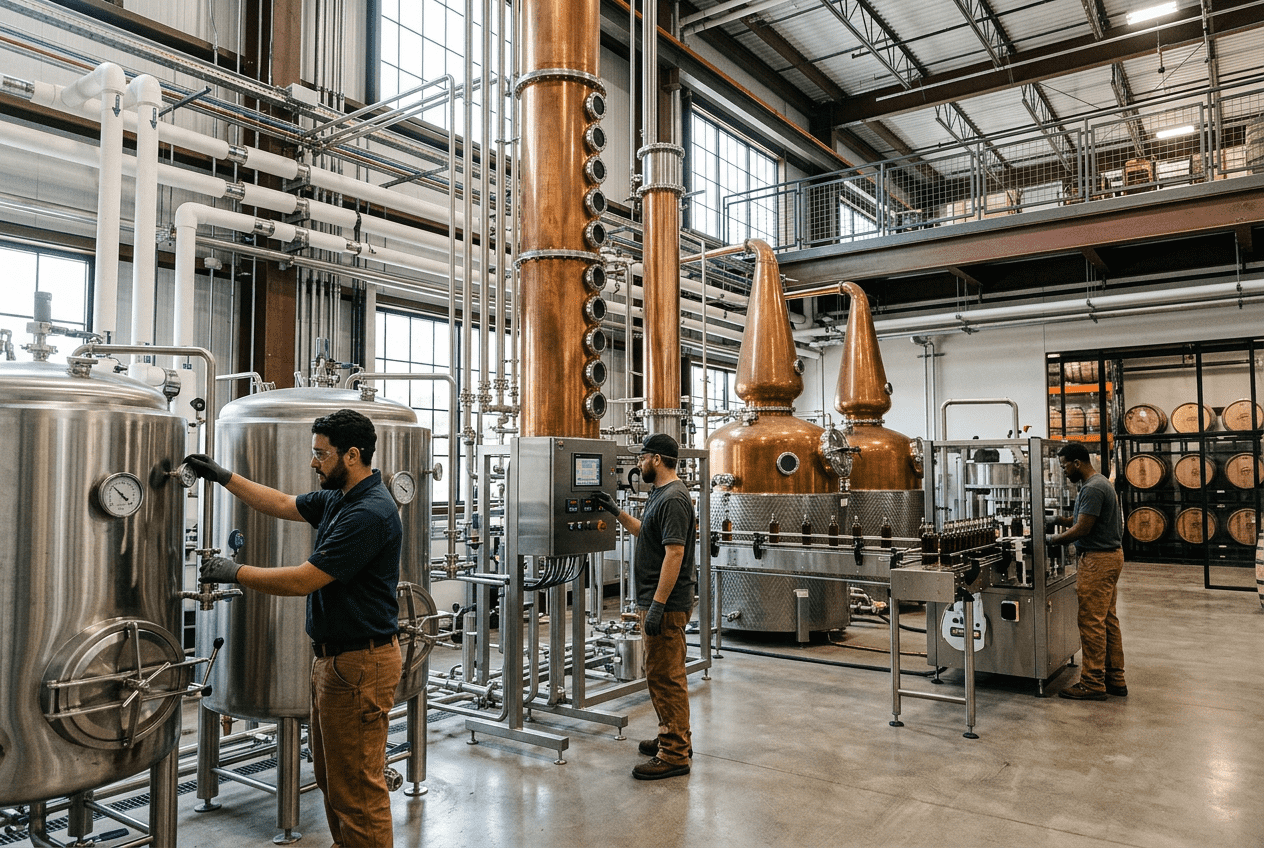
Retort Processing Systems for Food Plants
[trp_language language=”en_US”]
Retort Processing Systems for Safe, Shelf-Stable Food Production in the United States
Across the United States, food manufacturers are under constant pressure to increase shelf life, protect product quality, and meet strict FDA, USDA, SQF, and BRC expectations. A retort processing system is one of the most important technologies used to achieve those goals for low-acid and shelf-stable foods. Whether a plant packs soups in cans, ready meals in trays, seafood in pouches, or sauces in jars, the right retort system helps the processor reach commercial sterility while preserving package integrity and line efficiency.
Demand is especially strong in major production and logistics corridors such as Chicago, Houston, Los Angeles, Savannah, New Jersey, Dallas-Fort Worth, and the Carolinas, where manufacturers serve both domestic distribution and export channels through ports, refrigerated warehouses, and co-packing networks. In these markets, retort selection is no longer just about buying a vessel. It is about matching thermal process design, automation, utilities, packaging, throughput, validation, and long-term maintenance into a profitable operating model.
For that reason, many U.S. processors work with engineering-led partners that can plan, install, and integrate the full process. Disruptive Process Solutions supports food and beverage manufacturers across North America with integrated capital project execution, helping clients connect process safety, plant layout, utilities, and production economics rather than treating retort equipment as a stand-alone purchase.
Quick Answer

A retort processing system is a pressurized thermal sterilization system used to heat sealed food containers to a validated time and temperature profile that destroys pathogenic and spoilage microorganisms and achieves commercial sterility. In low-acid foods, this typically means delivering a validated lethal effect, often expressed as F₀, while controlling pressure, venting, come-up time, cooling, and package stress. Common retort types include static steam, water immersion, rotary, and continuous systems. The best choice depends on product viscosity, package format, target throughput, utility availability, and regulatory validation requirements.
In simple terms, a retort works by exposing sealed containers to controlled heat under pressure. The pressure keeps the package from distorting during the thermal cycle, while the heat penetrates to the product’s cold spot and destroys the organisms of concern. That combination is essential for low-acid foods such as meats, seafood, beans, soups, gravies, pasta meals, and many pet food products.
| Question | Short Answer | Why It Matters |
|---|---|---|
| What does a retort do? | It sterilizes sealed food packages with heat and pressure. | Prevents microbial growth in shelf-stable products. |
| What products use it? | Low-acid foods, ready meals, proteins, sauces, seafood, pet food. | These foods require stronger thermal control than simple pasteurization. |
| What is commercial sterility? | A condition where microorganisms capable of growing in the food under normal storage are destroyed. | It is the legal and safety basis of shelf-stable low-acid foods. |
| What are the main retort types? | Static steam, water immersion, rotary, and continuous. | Each type fits different products, packages, and production rates. |
| What is F₀? | A measure of accumulated sterilization lethality relative to 250°F. | Used to validate safe thermal processes. |
| Why is pressure control important? | It protects packaging during heating and cooling. | Reduces paneling, burst risk, seal damage, and cosmetic defects. |
The table above gives a practical overview, but each of these items influences equipment sizing, layout, controls architecture, and operating cost. U.S. plants shipping through retail, foodservice, military, and export channels usually need a solution that balances safety with throughput and package appearance.
What Is a Retort Processing System and How Does It Achieve Commercial Sterility

A retort processing system is a pressure-rated vessel or continuous thermal sterilization line designed to process sealed containers after filling and closing. The process is used primarily for low-acid foods with a pH above 4.6, where the risk of Clostridium botulinum must be controlled through a scheduled thermal process. Commercial sterility does not mean absolute sterility in a laboratory sense. It means the food is free of microorganisms capable of growing in the product under normal non-refrigerated storage and distribution conditions.
The typical retort cycle includes loading, venting or air removal when needed, come-up to process temperature, holding for a validated time, controlled pressure balancing, cooling, and unloading. During the hold period, heat must reach the coldest point in the package. The cold spot can vary depending on product type. For conduction-heated foods such as pâtés or dense stews, the cold spot behaves differently than for convection-heated broths or soups.
Commercial sterility depends on more than vessel temperature. It requires process authority review, container closure integrity, instrumentation accuracy, documented operating procedures, and lot traceability. That is why many successful projects in the United States integrate retort design with upstream filling, downstream drying and conveying, recipe management, utility generation, and plant controls.
From a technological capabilities perspective, DPS works with processors that need this full-system view. Its engineering and integration capabilities span process, mechanical, electrical, structural, plumbing, controls, PLC programming, SCADA, and utility design. For retort projects, that matters because thermal safety is inseparable from steam quality, condensate removal, cooling water control, instrumentation placement, alarm logic, and data capture.
| Retort Process Step | Main Function | Key Control Point | Typical Risk if Poorly Managed |
|---|---|---|---|
| Loading | Place containers in baskets, racks, or carriers. | Pattern, spacing, and package support | Uneven heating or package deformation |
| Venting/Air Removal | Remove residual air where required. | Air elimination and steam distribution | Cold spots and under-processing |
| Come-Up | Raise vessel to target process conditions. | Heating rate and uniformity | Inconsistent lethal delivery |
| Hold | Maintain scheduled process temperature for required time. | Recorded temperature and process timing | Failure to achieve commercial sterility |
| Pressure-Balanced Cooling | Cool product while protecting the package. | Overpressure and water temperature | Seal failure, paneling, buckling, broken glass |
| Unloading | Transfer processed goods to drying or packing. | Handling, post-process hygiene | Package damage or quality loss |
The chart below reflects the steady expansion of shelf-stable packaged food demand in the United States, driven by convenience foods, emergency pantry stocking, export growth, and e-commerce distribution.
This growth trend helps explain why processors in the Southeast, Texas, California, and the Midwest are evaluating retort expansions, packaging conversions, and co-packing capability upgrades. The opportunity is large, but so is the cost of a wrong specification. Under-sized retorts create bottlenecks. Overbuilt systems tie up capital and utility spending.
Retort System Types: Static Steam, Water Immersion, Rotary, and Continuous

Not all retorts heat the same way, and not all packages behave the same way under thermal load. The main system categories used in U.S. food plants are static steam, water immersion, rotary, and continuous retorts. Each has strengths tied to heat transfer, throughput, package support, utility use, and recipe flexibility.
Static steam retorts are common when processors run metal cans or robust containers that can handle direct steam environments. They are often valued for thermal efficiency and straightforward operation. Water immersion retorts use hot water circulation to improve temperature uniformity and can be well suited for flexible and semi-rigid packages. Rotary retorts add agitation, improving heat transfer for certain products and often reducing cook time while supporting better texture or particulate suspension. Continuous systems are typically chosen for large-volume operations where a steady product flow justifies higher capital cost and more complex automation.
In practice, the right choice depends on more than package type. Product rheology, fill weight, headspace, tray geometry, closure system, utility infrastructure, and labor model all affect the final decision.
| Retort Type | Best Fit | Advantages | Limitations |
|---|---|---|---|
| Static Steam | Cans and robust metal packaging | High thermal efficiency, proven technology, simple vessel concept | Less ideal for delicate flexible packages without support strategy |
| Water Immersion | Pouches, trays, bowls, jars | Good heat distribution, effective overpressure control, flexible package handling | Requires water management and circulation design |
| Rotary | Soups, sauces, viscous foods, products benefiting from agitation | Faster heat penetration, shorter cycles, potential quality improvement | Higher mechanical complexity and package compatibility constraints |
| Continuous | Very high-volume dedicated lines | High throughput, stable production rhythm, lower handling per unit | High capital cost, less flexible for frequent product changeovers |
| Steam-Air | Mixed packaging formats and products needing air-pressure balance | Good for pressure-sensitive packages, versatile control | Requires precise air/steam ratio control |
| Water Spray | Multi-format packaged foods | Uniform heating/cooling, good package protection | Nozzle maintenance and pump performance are critical |
The table shows why no single retort design is best for every facility. A pouch meal line near the Port of Savannah may prioritize overpressure and basket logistics. A canned chili producer in Kansas City may prefer static steam. A high-output pet food plant near Houston may justify continuous operation. A premium soup line in California may choose rotary processing to reduce thermal abuse and improve texture consistency.
Demand also differs by sector. The next chart compares relative demand by industry segment in the United States.
Ready meals, pet food, and protein entrees currently drive much of the investment in retort capacity. That pattern is especially visible in regional manufacturing hubs such as Arkansas, North Carolina, Ohio, Southern California, and Texas, where labor availability, freight access, and utility infrastructure support scaled food production.
Temperature and Pressure Control: Critical Parameters for Low-Acid Food Safety
Temperature and pressure are the heart of safe retort operation. For low-acid foods, even small deviations can lead to major compliance and safety consequences. The scheduled process defines target temperature, minimum hold time, vent schedule or air removal parameters where applicable, and required pressure profile during heating and cooling.
Temperature must be measured with calibrated, validated instruments placed and configured according to the retort design. Operators rely on recording devices, indicating instruments, alarm logic, and recipe controls to ensure the process stays within approved limits. Pressure management is equally critical, especially for pouches, trays, plastic bowls, and glass jars. Internal package pressure changes rapidly as the contents heat and cool. Without proper overpressure control, seals may peel, lids may dome, trays may buckle, and glass may break.
In modern plants, the control strategy often includes PLC-based recipe management, automatic cycle enforcement, batch records, SCADA visibility, and historian integration. This is where technological capabilities strongly affect risk reduction. DPS supports processors with control system architecture, PLC programming, automation, and plantwide integration that connect retort operation to upstream preparation, CIP skids, utilities, and downstream packaging systems.
| Critical Parameter | What It Controls | Typical Monitoring Method | Operational Impact |
|---|---|---|---|
| Process Temperature | Lethal rate delivered to product | RTD, mercury-free indicating sensor, recorder | Primary food safety variable |
| Hold Time | Total exposure at scheduled conditions | Automated timer tied to validated logic | Directly affects F₀ achievement |
| Pressure | Package support and structural protection | Pressure transmitter and vessel gauge | Prevents seal and container damage |
| Come-Up Rate | Heating profile to process setpoint | Trend record and operator review | Affects total lethality and throughput |
| Cooling Water Control | Post-process cooling and pressure balance | Temperature, flow, and pressure monitoring | Protects package integrity and quality |
| Vent/Air Removal | Heating uniformity in steam systems | Procedural verification and instrumentation | Prevents cold zones in the vessel |
The biggest mistake many processors make is viewing temperature control alone as enough. In reality, thermal process safety is a combined function of vessel performance, package mechanics, fill consistency, steam or water distribution, utility stability, and disciplined operations. That is why projects in high-volume U.S. plants often include boiler review, condensate design, pump selection, utility redundancy, and alarm philosophy as part of the retort scope.
F₀ Value Validation and Heat Penetration Studies
F₀ is the most recognized lethality metric in retort processing. It expresses the equivalent sterilization time at 250°F, referenced to a z-value of 18°F for low-acid foods, unless otherwise specified by process authority. In practice, F₀ helps processors understand whether the accumulated thermal effect is sufficient to meet safety objectives without unnecessarily overcooking the product.
However, F₀ is only useful when it is tied to real product behavior. That is why heat penetration studies are essential. A heat penetration study places thermocouples or data loggers in selected containers at the true cold spot and tracks how quickly the product heats and cools under actual retort conditions. These studies help determine safe scheduled processes and are especially important when changing formula, fill weight, container size, tray depth, agitation mode, or package material.
Validation normally includes container closure review, distribution studies, repeatability checks, instrument calibration, and documentation acceptable to regulatory and customer standards. For U.S. manufacturers serving national retailers, military contracts, or export markets, this documentation is often reviewed closely during audits and customer qualification.
| Validation Element | Purpose | When Needed | Typical Output |
|---|---|---|---|
| Heat Penetration Study | Locate cold spot and heating profile | New product or package introduction | Process recommendation and time-temperature data |
| Heat Distribution Study | Confirm vessel uniformity | New retort or major modification | Temperature mapping across retort zones |
| F₀ Calculation | Quantify lethal effect | During process validation and review | Lethality summary and safety margin |
| Container Closure Evaluation | Verify seal integrity after process | New container, lid, film, or torque setting | Seam, seal, or closure acceptance record |
| Instrumentation Calibration | Ensure measurement accuracy | Before production and on scheduled basis | Calibration certificates and correction records |
| Process Deviation Review | Assess lot safety after upset | Time/temperature/pressure deviation events | Disposition decision and corrective actions |
Processors should remember that a higher F₀ is not always better. Excess lethality can damage texture, darken color, flatten flavor, and reduce nutritional value. The goal is not maximum cooking. The goal is validated safety with controlled quality loss. This is particularly important in premium ready meals, seafood, dairy-based sauces, and high-value protein applications.
On the manufacturing side, DPS supports processors that need more than equipment sourcing. Its expertise spans retort and canning systems, cooking vessels, mixing, dairy processing, protein handling, utility systems, and custom equipment fabrication. That broader manufacturing capability matters because product preparation, particle size control, filling accuracy, and package handling directly affect retort validation success.
Overpressure Management During Heating and Cooling Cycles
Overpressure is the controlled application of external pressure in the retort to counter internal package pressure. It becomes especially important for pouches, trays, plastic bowls, composite containers, and glass jars. During heating, product moisture and headspace expand. During cooling, rapid temperature change can create a damaging pressure imbalance if the retort does not manage the transition carefully.
For example, a flexible pouch may need enough external pressure to avoid swelling and seal strain during the cook. A plastic bowl may require stable support pressure to protect lid adhesion and bowl shape. Glass jars need controlled cooling to avoid thermal shock and breakage. Even metal cans can experience paneling or distortion if pressure or cooling transitions are poorly managed.
Overpressure strategy includes vessel pressure control, air or gas management where applicable, pump and spray performance, cooling water ramp rate, and package support design. Basket loading patterns, divider plates, and rack strength also play major roles.
| Package Format | Main Overpressure Concern | Common Defect if Mismanaged | Preferred Control Focus |
|---|---|---|---|
| Flexible Pouch | Seal strain and pouch ballooning | Seal leaks, wrinkles, burst | Stable air/pressure balance and basket support |
| Semi-Rigid Tray | Lid distortion and tray warpage | Peel failure, sidewall collapse | Precise overpressure during heat and cool |
| Plastic Bowl | Body deformation | Buckling, lid dome, cosmetic defects | Controlled thermal ramp and cooling pressure |
| Glass Jar | Thermal shock and closure stress | Breakage, vacuum issues | Moderated cooling profile and gentle handling |
| Can | Paneling during cooling | Buckled panels or seam stress | Balanced cooling and fill consistency |
| Aluminum Container | Structural distortion | Warping, lid damage | Pressure tuning and package support |
The chart below illustrates how the U.S. market is shifting from rigid metal packaging toward a larger mix of flexible and semi-rigid retort-ready formats.
This shift is one reason overpressure-capable systems are gaining attention in the United States. Brands want lighter packaging, lower freight costs, stronger shelf appeal, and more convenient formats. But those gains only materialize when thermal processing and packaging mechanics are designed together.
Container Compatibility: Cans, Pouches, Trays, Glass Jars, and Plastic Bowls
Container compatibility is one of the first filters in retort system selection. Every package presents a different thermal response, mechanical limit, and closure challenge. The same recipe can require a very different retort process when moved from a steel can to a polypropylene bowl or from a glass jar to a stand-up pouch.
Cans remain a durable and widely accepted option for soups, beans, seafood, and pet food. Pouches reduce freight weight and can improve heating rates. Trays and bowls support premium meal formats and microwave convenience. Glass jars remain popular in sauces, baby-adjacent premium products, and specialty foods where shelf presentation matters. The right retort system must support the package throughout the full cycle, not just at target temperature.
Processors also need to evaluate line handling after retort. Wet packages may need drying. Flexible packs may need secondary support. Glass containers may need gentler conveying and case packing. Package compatibility therefore reaches well beyond the retort vessel itself.
| Container Type | Typical Product Uses | Retort Considerations | Operational Notes |
|---|---|---|---|
| Steel Can | Soups, beans, chili, seafood, pet food | Strong package, excellent established process history | Good for high-volume lines and distribution toughness |
| Retort Pouch | Ready meals, rice, sauces, tuna, military rations | Requires strong seal control and overpressure management | Lower freight weight and faster heat penetration |
| Semi-Rigid Tray | Prepared meals, proteins with sides, premium entrees | Pressure-sensitive, geometry affects heating | High shelf appeal, often paired with carton sleeves |
| Glass Jar | Sauces, spreads, specialty foods | Breakage and thermal shock must be controlled | Strong premium image but heavier logistics burden |
| Plastic Bowl | Convenience meals, soups, noodles | Requires accurate overpressure and support | Consumer friendly, but material selection is critical |
| Composite or Specialty Pack | Niche retail and foodservice products | Needs package-specific validation | Often used for brand differentiation |
The comparison chart below shows a simplified scorecard often used in early project discussions. Scores are relative and should be validated for each actual product and package system.
For plants considering a format change, early pilot work is essential. A pouch conversion may improve distribution economics but require a new basket design, different overpressure strategy, and revised heat penetration validation. A tray conversion may create stronger retail appeal but reduce net retort capacity per batch. These tradeoffs should be modeled before capital is committed.
Retort System Selection Guide: Matching Equipment to Production Volume and Product Type
Selecting a retort system is a capital planning exercise as much as an equipment decision. The right solution depends on throughput target, package mix, recipe portfolio, labor strategy, utility load, floor space, and future expansion plans. A growing co-packer in North Carolina may prioritize flexibility across multiple SKUs and package formats. A large soup plant in Ohio may prioritize low cost per unit. A seafood exporter near Seattle or New Bedford may prioritize batch traceability and rapid product turnover.
The most effective selection process usually starts with a production model. How many containers per hour are required? What are the longest recipes? How many shift hours are available? How much downtime is expected for loading, unloading, maintenance, and sanitation? What is the margin impact of one more basket per cycle or one less minute in cooling? These questions often determine the right retort count and automation level more accurately than nameplate capacity alone.
From a service capabilities standpoint, DPS approaches these decisions through capital planning, process engineering, owner-side representation, general contracting coordination, equipment supply, installation, and project management. That matters because retort projects commonly affect steam generation, compressed air, cooling towers, water systems, drains, floor loading, electrical service, controls networking, and building modifications. A profitable outcome depends on integrating all of those elements.
| Plant Situation | Best-Fit Retort Direction | Why | Buying Advice |
|---|---|---|---|
| Small batch specialty foods | Single or twin batch water immersion or steam-air retorts | Flexible recipes and manageable capital spend | Prioritize validation support and operator simplicity |
| Mid-size co-packer | Multiple batch retorts with automated recipe control | Supports changing clients, formats, and lot traceability | Design for future basket and shift expansion |
| High-volume canned foods | Static steam or continuous retort system | Optimized cost per unit and line flow | Model utility use and maintenance staffing carefully |
| Premium tray meals | Overpressure water spray or immersion retorts | Better package protection and thermal flexibility | Confirm tray geometry and seal limits early |
| Viscous or particulate products | Rotary retort where agitation adds value | Can reduce cycle time and quality loss | Validate package compatibility under rotation |
| Export-focused protein or seafood operation | Robust batch system with strong data recording and QA controls | Supports compliance, traceability, and recipe segregation | Plan for utility redundancy and spare parts inventory |
It is also wise to compare suppliers on more than vessel price. Plants should assess controls transparency, spare parts access, field service reach in the United States, validation support, basket ergonomics, cycle repeatability, and long-term maintenance cost. A lower initial price can become expensive if the system creates bottlenecks or requires frequent downtime.
In many U.S. projects, the best financial decision is not the largest or most automated system. It is the system that fits demand now while allowing smart expansion later. This is especially relevant for processors scaling from regional to national retail distribution through hubs such as Atlanta, Memphis, Phoenix, and New Jersey.
CIP Integration and Preventive Maintenance for Retort Uptime
Although not every retort vessel itself is cleaned through a full CIP cycle in the same way as product-contact tanks, CIP integration around retort operations is still highly important. Upstream kettles, balance tanks, fillers, transfer lines, sauce systems, and associated utilities must be cleaned reliably to protect product safety and keep the retort running with minimal interruption. In many plants, retort uptime is constrained less by the vessel than by poor sanitation coordination, scale buildup, pump wear, valve issues, or utility instability.
Preventive maintenance should cover instruments, door gaskets, spray nozzles, pumps, valves, chain systems, basket hardware, pressure regulators, recorders, temperature sensors, cooling circuits, condensate traps, and safety interlocks. A disciplined PM program reduces deviations, preserves package quality, and supports audit readiness.
DPS also brings strong capability in utility and CIP system integration, including custom CIP systems, tanks, process vessels, and complete installation of steam, chilled water, compressed air, process piping, and controls. For processors, that means retort reliability can be addressed as part of a broader hygienic design and uptime strategy rather than as a stand-alone maintenance issue.
| Maintenance Area | Recommended Focus | Typical Frequency | Reason |
|---|---|---|---|
| Temperature Instrumentation | Calibration and verification | Scheduled, often before campaigns and per QA program | Protects process validity |
| Pressure Controls | Transmitter checks, regulator inspection | Monthly to quarterly | Prevents package damage and process drift |
| Pumps and Spray Devices | Flow, nozzle condition, seal wear | Monthly | Maintains heating and cooling uniformity |
| Door Seals and Locks | Gasket integrity and safety interlocks | Weekly to monthly | Supports safe pressure operation |
| Steam and Condensate Components | Trap performance, strainers, valve response | Monthly to quarterly | Improves thermal consistency and efficiency |
| Basket and Carrier Hardware | Frame condition, supports, guides | Per campaign and preventive schedule | Reduces package damage and handling delays |
Well-run maintenance programs also improve sustainability. Efficient steam use lowers fuel cost. Controlled cooling water use reduces water consumption. Better cycle consistency reduces overprocessing and waste. As 2026 approaches, U.S. processors are placing greater emphasis on energy monitoring, digital maintenance alerts, historian-based performance analysis, and water reuse strategies where permitted and technically appropriate.
Future trends in the retort market include smarter recipe optimization, expanded use of digital twins for thermal modeling, tighter electronic batch records, stronger cybersecurity around PLC and SCADA systems, and increased pressure from retailers and regulators for traceable, documented food safety performance. Sustainability goals are also influencing package format decisions, utility system upgrades, and heat recovery considerations. Companies that treat retort systems as part of a larger smart-manufacturing strategy will likely be in the strongest position.
FAQ
What foods in the United States typically require retort processing?
Low-acid shelf-stable foods such as soups, gravies, chili, beans, meat products, seafood, prepared meals, pasta dishes, broths, and many pet food products commonly require retort processing.
How is retort different from pasteurization?
Retort processing is a higher-severity thermal process intended to achieve commercial sterility in sealed containers, especially for low-acid foods. Pasteurization generally reduces microbial load but does not usually create a shelf-stable low-acid product at room temperature.
Which retort type is best for pouches?
Many pouch applications favor water immersion, water spray, or steam-air systems with strong overpressure control. The best option depends on pouch size, product viscosity, seal design, and target throughput.
Can one retort run cans, trays, and bowls?
Sometimes, yes. But multi-format flexibility depends on basket design, pressure capability, control precision, and validation work. A system that can technically run multiple packages may still perform best when optimized around a narrower mix.
Why is F₀ important?
F₀ provides a standardized way to quantify thermal lethality for low-acid foods. It helps processors validate safety while avoiding unnecessary overcooking.
How often should a retort be validated?
Validation is typically required for new products, new package formats, major formula or fill changes, significant equipment modifications, and whenever a process authority determines review is necessary. Routine verification and calibration should also be part of normal plant controls.
What should buyers look for in a retort supplier or integrator?
Look beyond vessel price. Evaluate U.S. service reach, controls capability, documentation support, package expertise, spare parts availability, maintenance requirements, and the ability to integrate utilities, automation, and surrounding process equipment.
How can plants reduce retort project risk?
Start with process authority input, packaging trials, throughput modeling, and utility review. Work with an engineering-led partner that can coordinate design, installation, controls, and commissioning across the full system. Processors can learn more about integrated project execution, equipment, and project experience through engineering and integration services, available process equipment solutions, and selected project case studies.
For U.S. manufacturers, a retort processing system is not just a compliance tool. It is a strategic production asset that affects product safety, throughput, shelf life, packaging choice, labor efficiency, and profitability. Plants that align validation, controls, utilities, package mechanics, and maintenance from the start are far more likely to achieve dependable commercial sterility and long-term return on capital.
[/trp_language]
Complete Company Portfolio

About the Author: Disruptive Process Solutions (DPS)
The DPS team combines process engineering expertise with real-world food and beverage manufacturing experience. Our content focuses on process optimization, production efficiency, facility improvements, and practical solutions that help manufacturers operate more effectively in a rapidly evolving industry.
Share

