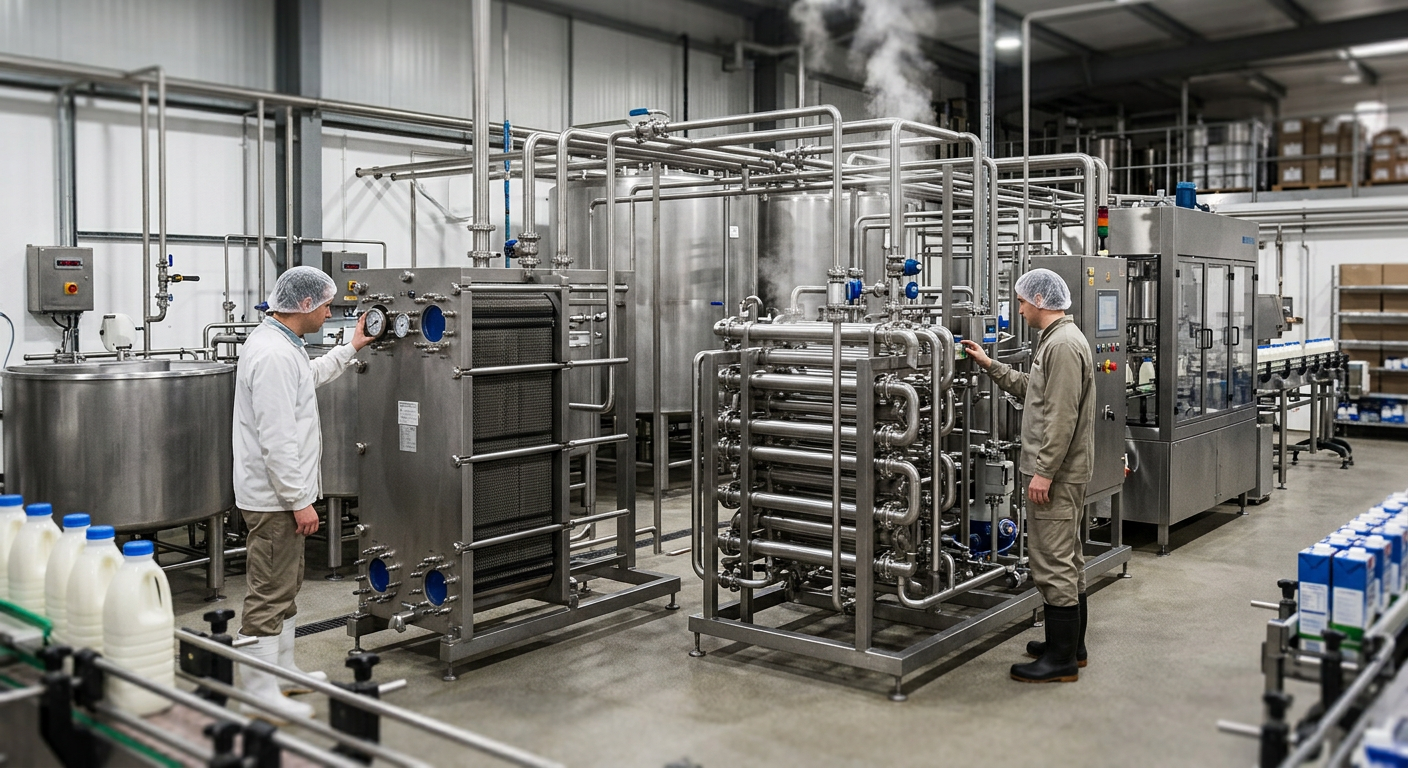
Shelf-Stable Food Processing Systems
[trp_language language=”en_US”]
Shelf-stable food processing systems allow manufacturers to produce foods and beverages that remain safe and commercially viable at ambient temperature for extended periods without refrigeration. In the United States, demand is rising across sauces, dairy alternatives, ready meals, protein products, broths, coffee drinks, nutraceutical beverages, and export-focused packaged foods. The right system depends on product chemistry, target shelf life, distribution route, packaging format, throughput, regulatory requirements, and capital efficiency. For most processors, the best answer is not a single machine but an integrated process built around product formulation, thermal lethality, hygienic design, automation, packaging barriers, and validation.
For manufacturers evaluating a new line or expansion, success usually comes from balancing food safety, sensory quality, and profitability. That means understanding the interaction between water activity, acidity, heat treatment, oxygen control, and package integrity before selecting retort, hot fill, UHT, or aseptic technology. In the U.S. market, this matters especially for plants shipping through Chicago, Dallas, Atlanta, Los Angeles, Savannah, Houston, New York/New Jersey, and export gateways such as Long Beach and Miami, where long transit times and variable climate conditions can stress shelf-stable products.
Disruptive Process Solutions supports this type of decision-making as a food and beverage engineering partner serving manufacturers across all 50 states and Canada. Rather than starting with equipment alone, the firm approaches shelf-stable projects through process engineering, capital planning, system integration, and execution management so the final line fits production economics as well as food safety goals. You can review the company background at About DPS, its broader capabilities at engineering and project services, its equipment offering at process equipment solutions, and selected project experience at industry case studies.
Quick Answer: How Shelf-Stable Food Systems Work

The fastest way to understand shelf-stable processing is this: a product becomes shelf-stable when harmful microorganisms cannot grow or survive under intended storage conditions and the package continues protecting product quality throughout distribution. This is achieved through one or more controls, most commonly low pH, reduced water activity, thermal processing, aseptic filling, oxygen management, preservatives, or a combination of these hurdles.
In practice, shelf-stable systems in the United States usually fall into four categories:
- Acid or acidified foods packed by hot fill
- Low-acid foods processed in retortable containers
- UHT or aseptic products filled into sterile packages
- Intermediate-moisture or hurdle-stabilized foods using formulation plus packaging
Buying advice starts with the product itself. A salsa line for Phoenix retail may suit hot fill. A low-acid soup for club stores in Ohio may require retort. A protein shake for national distribution through Memphis or Denver often points to UHT plus aseptic filling. A nutrition bar or dry snack may rely more on water activity, moisture migration control, and oxygen barrier films than on severe heat treatment.
| Product Type | Typical pH | Typical Water Activity | Common Process | Usual Package | Primary Risk |
|---|---|---|---|---|---|
| Tomato sauce | Below 4.6 | High | Hot fill | Glass or PET | Yeast, mold, seal failure |
| Ready soup | Above 4.6 | High | Retort | Can, cup, pouch | Underprocessing |
| Protein shake | Neutral to low-acid | High | UHT/Aseptic | Carton or bottle | Post-process contamination |
| Fruit puree | Acidic | High | Hot fill or aseptic | Pouch or bag-in-box | Flavor degradation |
| Jerky | Variable | Reduced | Drying plus hurdles | High-barrier pouch | Moisture pickup |
| Powdered beverage mix | Not controlling factor | Very low | Dry blending | Sachet or canister | Caking, oxidation |
The table above shows why there is no universal shelf-stable line. Product chemistry and intended market determine the process window, package, and validation burden. A successful U.S. launch also needs to account for e-commerce abuse, summer heat in Texas and Arizona, and pallet dwell time at distribution centers near Columbus, Reno, and Inland Empire logistics hubs.
What Makes Food Shelf-Stable: Water Activity, pH, and Thermal Control

Three fundamentals govern most shelf-stability decisions: water activity, pH, and heat treatment. Water activity measures the amount of available water microorganisms can use. It is different from moisture content. A soft product may still be microbiologically stable if enough water is bound by salt, sugar, or solids. pH measures acidity. Foods below pH 4.6 generally present lower risk for Clostridium botulinum, although they still require proper process control. Thermal processing destroys spoilage organisms and pathogens to a validated target.
For low-acid foods, thermal lethality is the main barrier. For acidic foods, acidity plus thermal treatment can be sufficient. For intermediate-moisture foods, water activity becomes central. In all cases, packaging must maintain the state created during processing.
Manufacturers often underestimate how small formulation changes affect thermal behavior and shelf life. Protein concentration, particle size, viscosity, fat level, starch system, sweetener type, and fill temperature can shift heat penetration, fouling, flavor stability, and microbial risk. That is why process design should connect R&D, food safety, and plant engineering from the start.
| Control Factor | Why It Matters | Common U.S. Product Examples | Typical Monitoring Method | Design Impact | Failure if Mismanaged |
|---|---|---|---|---|---|
| Water activity | Limits microbial growth | Jerky, bars, fillings | Aw meter | Drying, humectants, packaging | Mold growth, texture drift |
| pH | Reduces pathogen risk in acid foods | Salsas, dressings, fruit products | Calibrated pH meter | Acidification, hold time | Unsafe acidified food |
| Thermal lethality | Destroys target organisms | Soups, meals, dairy drinks | Time-temperature recording | Retort/UHT sizing | Underprocessing |
| Oxygen level | Affects oxidation and aerobic spoilage | Coffee, fats, snack inclusions | Headspace analysis | Barrier selection, inert gas | Rancidity, color loss |
| Viscosity | Changes heat transfer | Sauces, purees, puddings | Rheology testing | Heat exchanger choice | Cold spots, fouling |
| Seal integrity | Preserves sterility | Pouches, trays, bottles | Burst, dye, vacuum tests | Sealer specification | Leaks, contamination |
From a technology standpoint, DPS helps clients translate these variables into practical system architecture. Its technological capabilities span process engineering, mechanical and controls design, PLC programming, SCADA integration, utility sizing, CIP design, and the selection of thermal technologies such as HTST, UHT, retort, hot fill, flash pasteurization, and HPP where appropriate. That matters because shelf-stability is not just a lab concept; it depends on how pumps, hold tubes, valves, fillers, heat exchangers, steam systems, and recipes perform together in an actual plant.
The line chart reflects a realistic upward trend in U.S. investment as brands pursue lower cold-chain costs, broader retail reach, and better resilience against energy volatility. Through 2026, growth is expected in premium ready meals, functional beverages, dairy alternatives, broth, Hispanic sauces, shelf-stable protein formats, and export-friendly products aimed at Latin America and Asia.
Aseptic Processing vs Retort vs Hot Fill: Choosing the Right Shelf-Stable Technology

The most common strategic decision in shelf-stable manufacturing is choosing between aseptic processing, retort, and hot fill. Each technology can deliver safe products, but they differ sharply in capital cost, product quality, package flexibility, throughput, and operating complexity.
Hot fill is usually best for acidic products such as juices, teas, sauces, and dressings. Product is heated, filled hot, and held long enough for package interior sterilization. It offers moderate capital cost and good simplicity but is not appropriate for many low-acid foods.
Retort processing is often the standard for low-acid shelf-stable foods. Product is packed first, then the sealed container is heat treated in a pressure vessel. It is robust and versatile for meals, beans, pet food, soups, and sauces with particulates, but heat exposure can affect texture, color, and fresh flavor perception.
Aseptic processing sterilizes product and package separately, then combines them in a sterile environment. This method usually offers the best sensory preservation for many beverages, creamers, broths, and dairy or plant-based products. It supports lightweight packaging and high-speed distribution, but requires advanced hygienic design, sterility assurance, trained operators, and disciplined maintenance.
| Technology | Best For | Quality Outcome | Capital Intensity | Operating Complexity | Common U.S. Applications |
|---|---|---|---|---|---|
| Hot fill | High-acid liquids | Good, some cooked note | Moderate | Low to moderate | Tea, juice, salsa, dressings |
| Retort | Low-acid packaged foods | Moderate to good | Moderate to high | Moderate | Soup, chili, beans, meals |
| Aseptic | Low-acid or sensitive liquids | Very good | High | High | Protein drinks, broths, creamers |
| UHT bottle line | Premium beverages | Very good | High | High | RTD coffee, shakes |
| Retort pouch | Portable meal formats | Better than cans in some uses | Moderate | Moderate | Rice, curry, tuna, pet food |
| Bag-in-box aseptic | Foodservice and ingredient supply | Very good | High | High | Purees, dairy bases, sauces |
How should a buyer decide? Start with six filters: product pH, particulate load, desired flavor retention, package preference, annual volume, and target channel. Club retail in the United States may favor retort bowls or trays. Foodservice ingredient distribution through Atlanta or Kansas City may favor aseptic totes or bag-in-box. Premium functional beverage brands launching on the West Coast often justify aseptic for better taste and lighter freight.
DPS is especially relevant where this choice affects plant-wide economics. Its manufacturing capabilities include integration of blending and batching systems, in-line Brix control, scraped surface and tubular heat exchange, jacketed vessels, retort and canning systems, aseptic environments, dairy process systems, CIP skids, storage tanks, and automation layers that tie processing to packaging. Because the company also manufactures selected process equipment, it can align custom vessels, CIP systems, and supporting hardware with the overall thermal process strategy instead of forcing a generic equipment package into a specialized product application.
The bar chart shows where manufacturers are most actively adding shelf-stable capacity in the U.S. right now. Dairy alternatives, pet food, and RTD beverages are especially active because they combine national distribution potential with strong retail and e-commerce demand.
Hurdle Technology for Extended Shelf Life Without Refrigeration
Hurdle technology means combining multiple mild controls rather than relying on a single aggressive step. This approach is increasingly important for brands seeking better flavor, texture, nutrition, and cleaner labels. Instead of maximizing one variable, processors combine moderate heat, lower pH, lower water activity, oxygen reduction, preservatives or natural antimicrobials, hygienic design, and barrier packaging to create a stable system.
Examples include ambient sauces using acidification plus hot fill plus oxygen barrier bottles; snack fillings using reduced water activity plus preservatives plus foil laminate pouches; and protein beverages using UHT plus aseptic packaging plus low oxygen headspace. The benefit is product quality. The challenge is validation. Every hurdle must be understood, monitored, and kept within a safe operating window.
For buying teams, hurdle technology is attractive when refrigeration is expensive or distribution is wide. It can open sales into convenience stores, military supply channels, club retailers, foodservice, school nutrition programs, and export routes leaving ports such as Savannah, Houston, Oakland, and Newark. However, it is not a shortcut around proper process authority review or regulatory filing where required.
| Hurdle | Main Function | Typical Strength | Product Examples | Operational Requirement | Quality Tradeoff |
|---|---|---|---|---|---|
| Lower pH | Suppresses pathogens | High | Sauces, beverages | Acid dosing control | Tartness shift |
| Reduced water activity | Limits growth | High | Jerky, fillings, snacks | Drying and moisture balance | Texture firmness |
| Mild heat | Reduces microbial load | Moderate | Dressings, acid foods | Validated heating profile | Cooked flavor risk |
| Barrier packaging | Blocks oxygen/moisture | Moderate | Coffee, snacks, sauces | Seal and film control | Higher packaging cost |
| Natural antimicrobials | Suppresses spoilage | Moderate | Dips, beverages | Formulation compatibility | Flavor interaction |
| Cold aseptic fill zone | Prevents recontamination | High | UHT beverages | Sterility management | Higher complexity |
As 2026 approaches, U.S. brands are expected to invest more in data-backed hurdle design using predictive microbiology, digital batch records, tighter inline sensing, and advanced recipe control. That trend favors engineering partners who understand both microbiological risk and plant execution. In large-scale launches, even a strong formulation can fail if filler changeover, CIP verification, or package sealing repeatability are weak.
Packaging Innovation for Shelf-Stable Foods: Barrier Films, Multilayer Structures, and Sustainability
Packaging is not a secondary decision in shelf-stable foods. It is part of the preservation system. The best thermal process can still fail commercially if the package allows oxygen ingress, moisture migration, UV damage, paneling, delamination, or seal defects. The U.S. market is also under pressure to reduce material use, improve recyclability, and comply with retailer sustainability expectations.
Common shelf-stable packaging formats include metal cans, glass jars, PET hot-fill bottles, multilayer plastic bottles, cartons, retort pouches, cups, trays, and bag-in-box systems. The right format depends on process conditions, product sensitivity, channel requirements, freight economics, and brand position.
Barrier films and multilayer structures are especially important for products with fat, color-sensitive ingredients, spices, coffee, or oxygen-sensitive nutrients. EVOH, aluminum foil layers, nylon, and tailored polyolefin structures each offer different combinations of oxygen, moisture, puncture, and heat resistance. Sustainability adds another dimension: mono-material structures are attractive, but some still underperform compared with complex laminates in high-demand shelf-stable applications.
| Package Format | Barrier Performance | Process Compatibility | Freight Efficiency | Sustainability Direction | Best Use Case |
|---|---|---|---|---|---|
| Metal can | Excellent | Retort | Moderate | Strong recyclability | Soups, vegetables, meals |
| Glass jar | Excellent | Hot fill/retort | Low | Reusable/recyclable | Premium sauces, baby food |
| PET bottle | Moderate | Hot fill | Good | Lightweighting gains | Tea, juice, sauces |
| Aseptic carton | Good to very good | Aseptic | Excellent | Improving fiber content | Broths, dairy alternatives |
| Retort pouch | Very good | Retort | Excellent | Recycling challenges remain | Rice, meals, pet food |
| Bag-in-box | Very good | Aseptic/hot fill | Excellent | Material reduction | Foodservice liquids |
For U.S. manufacturers shipping nationally, packaging choice also affects pallet density, warehouse cost, damage rate, and export readiness. A retort pouch may reduce freight into Southern California and Seattle distribution networks. Aseptic cartons may lower inbound and outbound logistics costs for high-volume beverage programs in the Midwest. Glass may strengthen a premium brand in specialty retail but increase breakage risk during East Coast e-commerce fulfillment.
The area chart highlights a strong trend: processors are moving toward lighter, better-barrier, logistics-friendly packages while still working through recyclability and end-of-life constraints. By 2026, equipment layouts that allow future package changeovers will be especially valuable.
Shelf Life Testing and Accelerated Stability Studies
Shelf life cannot be assumed from a process flow diagram. It must be demonstrated. In U.S. commercialization, shelf life programs usually combine microbiological challenge logic, incubation, package integrity checks, chemistry testing, sensory evaluation, and storage studies under realistic and accelerated conditions. Accelerated studies are useful for screening formulations and packaging, but they should not replace real-time validation for final claims.
A strong test plan answers six questions: Is the product safe? Does the package remain intact? Does flavor remain acceptable? Does texture or viscosity drift? Do nutrients degrade below label claim? Can the product withstand actual distribution abuse?
This is where cross-functional project execution matters. DPS supports service capabilities that include front-end feasibility, owner’s representation, capital planning, installation oversight, system integration, commissioning, and project management. In shelf-stable launches, those services help align process authority work, equipment FAT/SAT timing, utilities, startup sequencing, and production ramp so that validation data reflect true operating conditions rather than isolated pilot assumptions.
| Test Type | Purpose | Typical Timing | Common Measurements | Who Uses It | Decision Enabled |
|---|---|---|---|---|---|
| Real-time stability | Confirms actual shelf life | Full target duration | Micro, sensory, chemistry | QA, R&D, regulatory | Final date code |
| Accelerated stability | Speeds comparison work | Weeks to months | Color, flavor, viscosity | R&D, packaging | Formula/package screening |
| Incubation testing | Detects growth after process | Short term | Swelling, pH, counts | QA, operations | Process verification |
| Seal integrity | Checks package closure | Routine and validation | Burst, dye, vacuum | Packaging, QA | Sealer settings |
| Transport simulation | Assesses distribution abuse | Development stage | Leakage, scuffing, paneling | Supply chain, packaging | Ship-ready design |
| Nutrient retention | Protects label claims | Periodic | Vitamin/protein analysis | Regulatory, brand | Claim substantiation |
In many shelf-stable failures, the issue is not the main process but a mismatch between development assumptions and plant reality. Examples include longer-than-planned hold times, filler bowl exposure, plant air quality, operator variation, or warehouse heat exposure in Florida and Nevada. A disciplined shelf life program catches these before full market rollout.
Eliminating the Cold Chain: Cost Savings and Export Opportunities
One of the biggest financial reasons to invest in shelf-stable systems is the chance to reduce or remove dependence on chilled distribution. Cold chain infrastructure is expensive across energy, refrigerated storage, reefer transport, handling, and spoilage risk. Shelf-stable products can often move through standard warehousing, mixed loads, and broader retail channels, improving margin and resilience.
For U.S. manufacturers, cold chain elimination can also unlock export opportunities. Ambient products are easier to ship through the ports of Los Angeles, Long Beach, Houston, Savannah, Charleston, Seattle, and Newark. They also simplify inventory staging near border crossings into Canada and Mexico. This matters for co-packers and brand owners looking to expand without building refrigerated regional networks first.
Cost savings vary by product, but the main gains usually come from lower freight premiums, reduced warehouse complexity, fewer temperature excursions, and longer selling windows. Ambient products can also support emergency inventory, military, disaster relief, and institutional channels that require extended storage stability.
A practical case example is a processor considering a refrigerated sauce line versus a hot-fill shelf-stable system. The hot-fill route may require stronger package validation and acidification control, but it can dramatically expand retail reach into convenience, dollar, club, and online channels. Another example is a dairy-alternative beverage moving from chilled regional distribution to UHT/aseptic national distribution, reducing returns and opening new states without refrigerated infrastructure.
The comparison chart is not a universal ranking. It simply illustrates how equipment choice can align more or less strongly with national ambient distribution goals depending on product mix and growth strategy. Aseptic often scores highest for broad beverage distribution, while retort may be best for complex low-acid foods.
Clean Label Shelf-Stable Products: Lower Preservatives Without Lower Safety
Clean label demand is reshaping shelf-stable innovation in the United States. Consumers increasingly prefer shorter ingredient lists, recognizable ingredients, and fewer synthetic preservatives. Yet safety standards remain unchanged. This creates an engineering and formulation challenge: how do you reduce preservatives without sacrificing microbiological protection, quality, or shelf life?
The answer usually lies in smarter process design rather than simple ingredient removal. Brands are using better hygienic zoning, faster thermal profiles, tighter pH control, lower dissolved oxygen, improved package barriers, and natural antimicrobial systems where technically appropriate. Some are redesigning products to fit a different shelf-stable process altogether, such as moving from a conventional hot-fill bottle to an aseptic carton or from a jar to a retort pouch with shorter heat penetration paths.
Clean label success depends on disciplined validation. A product that worked with sorbate or benzoate may no longer tolerate sealing variation, slow cooling, or warehouse abuse once those preservatives are reduced. This is where rigorous execution and honest project guidance matter. DPS is known for taking a profitability-first view of client projects, which can include challenging assumptions when a desired clean-label target conflicts with process reality, throughput, or risk tolerance.
Looking toward 2026, expect stronger adoption of digitally monitored acidification, advanced inline sensing, lower-oxygen filling environments, enzyme-aware formulations, and packaging that supports stability with less additive dependence. Retailers are also likely to tighten sustainability and disclosure expectations, making integrated product-process-packaging design even more important.
Common Shelf-Stability Failures and Root Cause Analysis
When shelf-stable products fail, the root cause is often systemic rather than isolated. Swollen containers, leaking pouches, sedimentation, browning, rancidity, flavor fade, delamination, and microbial spoilage can all stem from interactions between formulation, thermal processing, equipment condition, package design, and distribution stress.
Common failure categories include:
- Underprocessing due to incorrect thermal assumptions or cold spots
- Post-process contamination from filler hygiene or poor aseptic discipline
- pH drift caused by ingredient variability or inadequate mixing
- Water activity imbalance leading to mold or texture migration
- Seal failures from contamination, worn tooling, or poor film selection
- Oxidation from inadequate oxygen barrier or headspace control
- Sensory collapse from excessive heat exposure or long hold time
Root cause analysis should be data driven. Start with retained samples, batch records, thermal logs, seal testing, warehouse temperature history, formulation deviations, and distribution mapping. Then trace whether the issue began in development, startup, routine operation, maintenance, or logistics. In many U.S. facilities, recurring failures come from changeover inconsistency, CIP verification gaps, steam quality issues, instrument calibration drift, or insufficient operator training.
Manufacturers planning a new line should insist on a startup framework that includes process authority alignment, commissioning protocols, training, preventive maintenance, package qualification, and early production review. This is especially important for plants scaling quickly in regions such as North Carolina, Texas, California, Wisconsin, and the Midwest corridor, where labor availability and fast commercialization can put pressure on startup discipline.
For companies seeking local or regional execution partners, the strongest suppliers are those that can connect engineering, equipment, utilities, controls, installation, and startup rather than treating each discipline separately. That integrated model is where DPS positions itself in the U.S. market: combining design, build, and management under one operating approach so shelf-stable projects can move from concept to validated operation with fewer handoff risks.
FAQ
What is the difference between shelf-stable and extended shelf life?
Shelf-stable usually means safe and commercially stable at room temperature. Extended shelf life often refers to a product that lasts longer than standard refrigerated product but may still require refrigeration.
Is aseptic always better than retort?
No. Aseptic often offers better sensory quality for many liquids, but retort can be more practical for low-acid foods with particulates, simpler packages, or lower capital budgets.
What products are good candidates for hot fill in the United States?
High-acid beverages, sauces, dressings, and some fruit-based products are common candidates, provided formulation and package design support the process.
Can clean label products still be shelf-stable?
Yes, but they usually require tighter control of pH, water activity, heat treatment, hygiene, and packaging performance. Clean label is possible, but not by relaxing process discipline.
How long does shelf life testing take?
Real-time testing takes as long as the intended shelf life, while accelerated testing can provide earlier screening insights. Most companies use both during development and commercialization.
What industries use shelf-stable systems most?
Beverages, prepared foods, sauces, dairy alternatives, protein products, pet food, nutraceuticals, ingredient processors, and co-manufacturers all rely heavily on shelf-stable technologies.
How important is packaging in shelf-stability?
It is essential. Packaging protects against oxygen, moisture, light, physical abuse, and post-process contamination. Poor package selection can defeat a well-designed thermal process.
What should buyers ask a processing system supplier?
Ask about product fit, thermal validation assumptions, package compatibility, changeover time, utility loads, automation strategy, CIP design, startup support, operator training, and total cost of ownership.
Why do U.S. manufacturers move to shelf-stable systems?
The main reasons are lower cold-chain cost, wider geographic reach, easier export, better inventory flexibility, reduced spoilage risk, and stronger retail channel access.
How can a company start evaluating a new shelf-stable line?
Begin with product characterization, target market, package concept, annual volume, and distribution map. Then work backward through process technology, utilities, validation, and capital planning with an experienced engineering partner.
For food and beverage manufacturers in the United States, shelf-stable success comes from integrating formulation, process, packaging, utilities, automation, and commercialization strategy into one coherent system. Whether the application is a retort meal, aseptic beverage, hot-fill sauce, or hurdle-stabilized snack, the best result is achieved when safety, quality, and profit are designed together from the beginning.
[/trp_language]
Complete Company Portfolio

About the Author: Disruptive Process Solutions (DPS)
The DPS team combines process engineering expertise with real-world food and beverage manufacturing experience. Our content focuses on process optimization, production efficiency, facility improvements, and practical solutions that help manufacturers operate more effectively in a rapidly evolving industry.
Share

