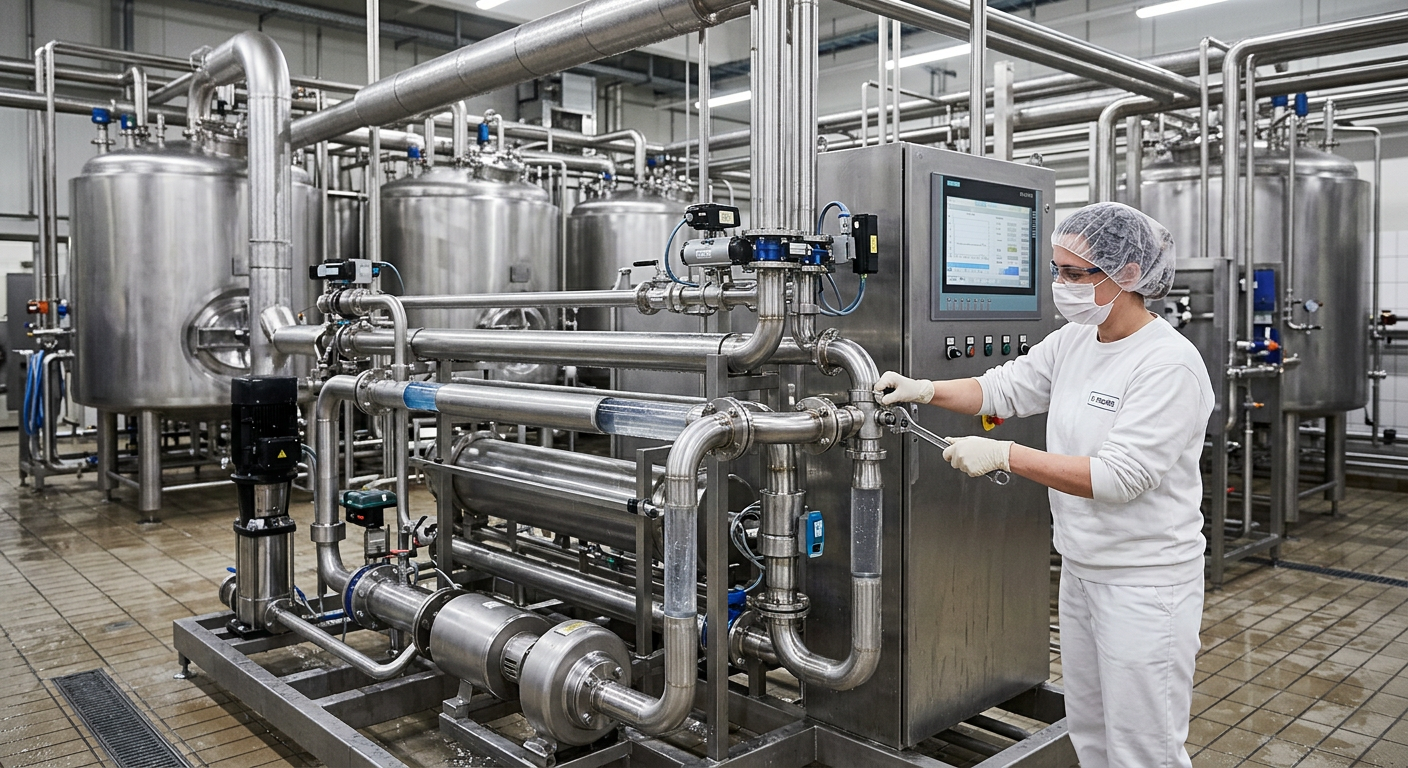
Beverage Plant Retrofit Services
[trp_language language=”en_US”]
Beverage Line Retrofits and ROI in the United States
For beverage manufacturers in the United States, retrofitting an existing line is often the fastest way to unlock capacity, improve quality, reduce utility costs, and add modern automation without the long downtime of a full replacement. The strongest retrofit opportunities usually include servo drives, vision inspection, clean-in-place automation, filling valve modernization, tunnel pasteurizer or sterilization tunnel upgrades, changeover improvements, and OEE monitoring tied into Industry 4.0 reporting. In many cases, a well-planned retrofit delivers payback in 12 to 36 months, especially where labor shortages, rising water and steam costs, packaging variation, and traceability requirements are putting pressure on aging assets.
Across U.S. beverage hubs such as Chicago, Milwaukee, Dallas-Fort Worth, Atlanta, Los Angeles, the Inland Empire, Charlotte, Tampa, Houston, and the New Jersey corridor near the Port of Newark, processors are revisiting lines installed 10 to 25 years ago. Rather than scrapping reliable mechanical platforms, they are upgrading controls, utilities, inspection, sanitation, and change parts to meet current production goals. This approach is especially attractive for breweries, spirits producers, juice and functional beverage plants, dairy beverage facilities, carbonated soft drink bottlers, ready-to-drink cocktail manufacturers, and co-packers that must keep production moving while capital budgets remain disciplined.
Companies that approach retrofit work strategically tend to outperform those that only react to failures. That is why many operators now seek engineering partners that can evaluate process constraints, validate return on investment, and manage design through startup. Disruptive Process Solutions serves this need across the United States and Canada, combining process engineering, installation, integration, and project leadership for beverage and food manufacturers that want profitable, practical capital execution.
Quick Answer

The best beverage plant retrofit services focus on the highest-impact bottlenecks first: filler performance, sanitation, inspection, controls, and changeovers. If the frame, conveyor backbone, utilities, and core process equipment are still structurally sound, retrofitting is often more economical than replacing the full line. A modern retrofit can add recipe control, servo-driven motion, machine vision, automated CIP sequencing, water and steam recovery, digital downtime tracking, and remote diagnostics while preserving usable mechanical assets.
In the United States market, buyers should start with a line audit covering throughput losses, chronic quality defects, sanitation time, utility consumption, maintenance history, spare parts risk, and packaging flexibility. A retrofit is typically favored when the plant needs a 10% to 35% performance gain, more reliable compliance, or lower operating cost without taking a long shutdown. Full replacement makes more sense when equipment is fundamentally obsolete, unsafe, unsupported, or incapable of meeting target package formats.
| Plant Condition | Common Symptom | Recommended Action | Typical Benefit | Downtime Range | Capital Intensity |
|---|---|---|---|---|---|
| Good mechanics, weak controls | Frequent stops, poor speed consistency | PLC/HMI and servo retrofit | Higher uptime and repeatability | Short to moderate | Low to medium |
| Quality defects at pack-out | Mislabels, fill variation, cap defects | Vision and inspection upgrade | Less waste and better compliance | Short | Low to medium |
| Long sanitation windows | Labor-heavy CIP and inconsistent cleaning | CIP automation and validation | Less labor, faster restart | Moderate | Medium |
| Old pasteurization assets | Temperature swings and excess utilities | Tunnel or thermal system upgrade | Quality protection and savings | Moderate | Medium to high |
| Too many package SKUs | Long changeovers | Guide rail and recipe-based change parts | More available production time | Short | Low to medium |
| Major structural wear and no OEM support | Unsafe operation and missing parts | Targeted replacement or new line | Long-term reliability | Long | High |
This table shows why retrofits are so common in beverage production. Many U.S. lines still have durable mechanical foundations, but their controls, inspection layers, and sanitation systems no longer match current operating demands. That gap creates an opportunity for measurable improvement without rebuilding everything from scratch.
Beverage Plant Retrofit Opportunities: Servo Drives, Vision Systems, and CIP Automation

The most attractive retrofit projects are the ones that solve persistent production pain while fitting inside a phased shutdown plan. On packaging lines, servo drives are often the first win. Replacing older pneumatic or mechanically timed motion with servo control improves speed accuracy, acceleration profiles, repeatability, and recipe-based changeovers. This is especially valuable on rinser-filler-capper blocks, labelers, cartoners, case packers, and lane handling systems where package variations now change more often than they did a decade ago.
Machine vision is another high-value upgrade. U.S. beverage brands face greater retailer scrutiny, tighter traceability expectations, and less tolerance for quality drift. Vision systems can verify fill level, cap presence, cap color, tamper band integrity, date code readability, label placement, pack count, and carton print quality. For contract packers serving national distribution through networks like Savannah, Long Beach, Newark, and Houston, reducing outbound quality escapes can protect both margins and customer relationships.
CIP automation is equally important on process and filling systems. Many aging plants still rely on manual valve positions, paper records, and operator judgment for key sanitation steps. By retrofitting automated skids, conductivity feedback, temperature validation, flow proofing, and recipe-driven wash cycles, manufacturers reduce sanitation variability and improve food safety documentation. For processors handling dairy beverages, kombucha, juices, aseptic products, or sweetened RTDs, this can be one of the strongest risk-reduction investments available.
DPS brings these opportunities together by combining process, controls, mechanical, and utility expertise under one project structure. Its engineering and integration capabilities include PLC programming, SCADA, process design, electrical coordination, and installation planning, allowing a retrofit to be treated as a plant-wide productivity initiative rather than just a controls patch. Manufacturers exploring beverage engineering and retrofit services often benefit most when line changes are coordinated with utilities, sanitation, and operational procedures.
| Technology | Primary Use | Best Fit Product Types | Main KPI Improved | Typical Complexity | Payback Tendency |
|---|---|---|---|---|---|
| Servo drives | Motion control and repeatability | CSD, RTD, juice, spirits, water | Speed and changeover time | Medium | Fast |
| Vision inspection | Package quality verification | All packaged beverages | Defect rate and compliance | Low to medium | Fast |
| Automated CIP | Sanitation control | Dairy, juice, kombucha, aseptic | Cleaning time and validation | Medium | Moderate to fast |
| Recipe management | SKU consistency | Flavor-heavy operations | First-pass yield | Medium | Moderate |
| Remote diagnostics | Troubleshooting support | Multi-site manufacturers | Mean time to repair | Low | Fast |
| Inline Brix and blending controls | Recipe precision | Juice, soft drinks, functional beverages | Ingredient loss | Medium | Moderate |
The key takeaway from this table is that not every retrofit requires a massive capital event. Some of the most profitable projects are modular and focused, especially where one quality issue or sanitation bottleneck is limiting the performance of the entire line.
Retrofit vs. Replacement: Cost-Benefit Analysis for Aging Beverage Lines

Retrofit versus replacement should never be decided only by age. A 20-year-old machine with solid steel, available spare parts, and sound mechanical geometry may be a strong retrofit candidate. A 7-year-old line that was poorly specified, unsupported, or incapable of meeting current package demands may deserve replacement. The real question is whether the installed asset can economically achieve future production requirements after modernization.
For U.S. beverage plants, the cost-benefit analysis typically includes six variables: throughput recovery, quality loss reduction, utility savings, maintenance reduction, labor efficiency, and downtime avoidance. Replacement usually offers a larger theoretical performance leap, but it also carries greater startup risk, training burden, layout disruption, and schedule exposure. Retrofits are often preferred by plants that cannot stop shipping to major retailers or foodservice channels for extended periods.
In cities with high labor and utility costs such as Los Angeles, San Francisco Bay-adjacent facilities, New York metro plants, and Seattle-area processors, the operational savings from retrofits can be especially compelling. In lower-cost regions like parts of the Midwest or Southeast, the decision may lean more heavily on capacity growth and packaging flexibility. Either way, the best analysis uses real baseline data from the line, not vendor assumptions.
The line chart illustrates a realistic growth pattern in retrofit demand. U.S. manufacturers are investing more in modernization because inflation, labor pressure, sustainability reporting, and SKU complexity are pushing them to extract more value from existing infrastructure instead of waiting for full greenfield builds.
| Factor | Retrofit Advantage | Replacement Advantage | When Retrofit Wins | When Replacement Wins | Decision Weight |
|---|---|---|---|---|---|
| Capital cost | Lower initial spend | Higher but more comprehensive | Budget discipline is essential | Funding is available for transformation | High |
| Downtime | Shorter and phaseable | Longer installation/startup | Production must continue | New building or major outage exists | High |
| Performance ceiling | Moderate to strong gain | Highest possible gain | Target is incremental growth | Target is step-change expansion | High |
| Spare parts support | Works if supportable platform remains | Resets support lifecycle | Critical components can be modernized | Obsolescence is severe | Medium |
| Layout disruption | Usually limited | Often extensive | Footprint is constrained | Plant expansion is already planned | Medium |
| Training needs | Less dramatic change | New system knowledge required | Lean teams need continuity | Organization can absorb change | Medium |
This matrix helps procurement and operations teams frame the discussion. The best answer is not ideological. It depends on production commitments, condition of the asset, risk tolerance, and the economics of the specific bottleneck.
Sterilization Tunnel Upgrades and Filling Valve Modernization
Thermal processing and filling are among the most consequential parts of any beverage line. When sterilization tunnels, tunnel pasteurizers, or flash and hot-fill support systems drift out of calibration, manufacturers can face under-processing risk, over-processing quality damage, excessive utility use, and unstable throughput. Similarly, worn or outdated filling valves can create chronic foaming, fill inconsistency, oxygen pickup, leakage, and sanitation issues.
Retrofit opportunities in this area often include new spray nozzles, improved heat exchangers, better zone control, instrumentation replacement, upgraded pumps, recirculation optimization, recipe-based thermal profiles, and utility recovery loops. Filling valve modernization may involve better seat materials, more accurate timing, electronic monitoring, improved hygienic design, or conversion packages that enable a wider range of products and containers.
These projects matter across multiple beverage categories. Breweries in Colorado and Wisconsin may focus on dissolved oxygen and foam control. Dairy beverage facilities in the Upper Midwest may prioritize hygienic validation and changeover between formulations. RTD coffee and protein drink processors in the Southeast may need stronger thermal consistency to protect shelf life. Co-packers moving product through major distribution channels near Memphis, Kansas City, and Philadelphia need both speed and documented process control.
DPS supports these upgrades with a combination of technological and manufacturing capabilities. In addition to process engineering and controls integration, the company manufactures select process equipment such as custom tanks and CIP systems that can be incorporated into broader retrofits. Manufacturers reviewing available process equipment solutions often find that combining custom utility or sanitation skids with line modernization improves both cost control and installation efficiency.
| Asset Area | Typical Problem | Retrofit Option | Expected Outcome | Priority Level | Best Application |
|---|---|---|---|---|---|
| Tunnel pasteurizer | Uneven heating | Zone controls and spray redesign | More stable PU delivery | High | Beer, cider, RTD |
| Sterilization tunnel | Excess water and steam use | Heat recovery and sensor upgrade | Lower utility consumption | High | Aseptic and hot-fill support |
| Filling valves | Variable fill weights | Valve modernization kit | Better fill accuracy | High | Still and carbonated drinks |
| Capper interface | Closure defects | Servo timing and inspection | Less rework | Medium | Bottled beverages |
| Instrumentation | Drift and weak records | Digital sensors and historian link | Traceable validation | Medium | Regulated products |
| Recirculation loop | Poor hygienic performance | Piping and pump optimization | Faster sanitation and startup | Medium | Dairy, juice, kombucha |
This table shows that thermal and filling retrofits usually touch quality, compliance, and cost at the same time. That is why they frequently rank near the top of capital priority lists for aging beverage lines.
OEE Monitoring Integration: Retrofitting Legacy Lines with Industry 4.0 Capabilities
Legacy beverage lines often suffer from a visibility problem. Managers know the line “feels slow” or “stops too often,” but cannot isolate the largest losses by machine, SKU, shift, or operator event. OEE monitoring changes that. By retrofitting sensors, counters, machine states, and centralized reporting, plants gain measurable insight into availability, performance, and quality losses.
Industry 4.0 for beverage plants does not have to mean a full digital transformation on day one. A practical retrofit starts with line state capture, downtime reason codes, production counts, reject counts, and operator-facing dashboards. The next phase may add historian functionality, utility metering, predictive maintenance alerts, and ERP or MES integration. Plants with multiple U.S. sites can then benchmark lines across regions, from California and Texas to Ohio and the Carolinas.
For co-packers and branded manufacturers alike, OEE visibility helps answer the commercial questions that matter most: which SKU creates the most hidden downtime, which filler bowl setup causes more quality loss, which shift struggles with sanitation restart, and which utility spikes coincide with low production output. This level of insight supports smarter maintenance planning and more credible capital requests.
The bar chart reflects how retrofit demand varies by segment. Functional beverages, RTDs, and carbonated lines often show higher urgency because they face SKU proliferation, retailer quality expectations, and intense growth pressure. Beer, juice, and dairy still generate strong activity, especially where thermal systems and sanitation reliability are critical.
On the service side, DPS acts as an engineering and execution partner rather than only a component supplier. Its project and program management structure, owner-side perspective, and field integration model help manufacturers connect controls upgrades with mechanical, utility, and operational realities. Companies can also review project examples and case insights when evaluating how modernization can solve root-cause bottlenecks rather than treating symptoms.
Changeover Time Reduction: SpeedSet and Adjustable Guide Rail Retrofits
As beverage portfolios expand, changeovers become one of the most expensive hidden constraints on line capacity. Plants running cans, PET, glass, cartons, or multiple secondary packaging formats often lose hours each week to manual rail adjustments, trial-and-error settings, change part swaps, and operator inconsistency. Reducing changeover time is one of the clearest retrofit opportunities because the recovered production time is immediately monetizable.
SpeedSet-style tooling, digital position indicators, servo-assisted size changes, adjustable guide rails, and recipe-driven settings can dramatically shorten transitions. The result is not only faster changeovers but also a more stable first 30 minutes after startup, when many lines historically experience jams, misfeeds, and quality loss. This matters in high-SKU U.S. facilities serving regional and national customers from hubs like St. Louis, Indianapolis, Jacksonville, and Salt Lake City.
Plants should not evaluate changeover retrofits only by the number of minutes saved on paper. The broader benefit includes reduced training dependence, less ergonomic strain, lower scrap at startup, and greater confidence when scheduling short runs. For co-packers juggling customer windows and truck appointments, these gains can have outsized operational value.
| Retrofit Lever | Where Applied | Main Benefit | Typical Time Savings | Operator Impact | Best For |
|---|---|---|---|---|---|
| Adjustable guide rails | Conveyors and infeed sections | Faster size changes | 10 to 25 minutes | Less manual tuning | Multi-bottle or can sizes |
| Digital position indicators | Labelers and packers | Repeatable setup | 5 to 15 minutes | Lower skill dependence | Frequent SKU changes |
| Recipe-based machine settings | Filler, capper, labeler | Consistent restart | 10 to 20 minutes | Easier training | Automation-ready lines |
| Quick-release change parts | Secondary packaging | Less tool time | 10 to 30 minutes | Improved ergonomics | Case packers and cartoners |
| Servo timing adjustment | Packaging transfer points | Reduced jams after changeover | Indirect but significant | Less troubleshooting | High-speed lines |
| Color-coded setup standards | Across the line | Human error reduction | 5 to 10 minutes | Better SOP adherence | Plants with turnover |
This table highlights an important point: changeover projects are often cumulative. Several moderate improvements, when combined, can recover many hours of annual productive capacity and reduce daily frustration for operators and supervisors.
Energy Recovery Systems: Reducing Steam and Water Consumption by 15-25%
Utility savings are now a core reason to retrofit beverage plants. Water intensity, wastewater costs, steam generation, and refrigeration loads are all under scrutiny across the United States. In states facing tighter water concerns such as California, Arizona, Colorado, and parts of Texas, water-saving retrofits can move from “nice to have” to strategically necessary. Even in water-abundant regions, sewer charges and energy rates continue to pressure margins.
Energy recovery systems can capture heat from pasteurizers, hot process loops, compressor systems, and certain cleaning circuits. Water reuse strategies may involve rinse recovery, smarter CIP sequencing, improved conductivity cutoffs, and utility metering that reveals where excess consumption actually occurs. Plants frequently discover that they have been overusing hot water, steam, or chemical concentration because no one had reliable instrumentation tied to real operating data.
Many beverage operations can realistically target 15% to 25% reductions in steam and water use from well-designed retrofit programs, especially when thermal systems, CIP, and controls are upgraded together. The strongest projects are not simply about installing efficient equipment; they are about redesigning how utility systems interact with production schedules, sanitation windows, and product changeovers.
The area chart shows a realistic trend shift toward sustainability-led capital projects. By 2026, more beverage manufacturers are expected to prioritize retrofits that support water stewardship, emissions reporting, utility resilience, and lower operating cost rather than focusing only on speed increases.
| System | Loss Pattern | Retrofit Measure | Expected Savings Range | Operational Benefit | Best Candidate Plants |
|---|---|---|---|---|---|
| Tunnel systems | Heat rejection and excess spray water | Heat recovery and nozzle optimization | 10% to 20% | Lower steam demand | Beer, RTD, hot-fill |
| CIP skid | Over-rinsing and weak concentration control | Automated recipe and conductivity control | 15% to 25% | Shorter cleaning cycles | Dairy, juice, aseptic |
| Boiler support | Condensate losses | Condensate return improvements | 8% to 18% | Reduced fuel cost | Steam-intensive plants |
| Compressed air | Leaks and poor controls | Leak audit and VFD control | 10% to 15% | More stable pressure | Packaging-heavy lines |
| Process water | Unmetered overuse | Submetering and alarms | 5% to 12% | Better accountability | Multi-shift plants |
| Cooling and glycol | Inefficient staging | Control optimization | 7% to 15% | Load matching | Fermentation and cold-fill sites |
The explanation behind this table is simple: utilities are process assets, not background expenses. Plants that retrofit them with the same rigor used for fillers or labelers tend to capture durable savings year after year.
Phased Retrofit Scheduling: Keeping Lines Running During Upgrades
One of the biggest reasons U.S. beverage manufacturers choose retrofit services is that projects can be phased. Instead of taking a single long outage, plants can schedule work around weekends, holiday shutdowns, seasonal demand dips, or parallel line capacity. This is especially important for producers serving peak summer demand, Q4 holiday programs, or contract obligations with large retailers.
A successful phased schedule starts with a site-wide dependency map. Controls, utilities, sanitation, process piping, conveyors, and quality systems all interact. If the team only plans around the target machine, startup delays are likely. The strongest retrofit plans separate prework from outage work. Panels can be built offsite, skids fabricated in parallel, software tested before shutdown, and tie-in points prepared during routine maintenance windows.
Typical phasing might include: audit and engineering, prefabrication, utilities prep, controls migration, mechanical installation, dry testing, wet commissioning, and ramp support. Plants near major logistics corridors such as the Port of Los Angeles, Port of Savannah, Dallas intermodal hubs, or Midwest rail centers often value this approach because missing customer shipping windows can quickly erase the benefit of a rushed capital plan.
DPS is well aligned with this model because its design-build-manage approach emphasizes planning, construction coordination, and execution oversight. That matters when local trades, controls contractors, process installers, and plant teams all need to operate from one timeline. A lean, senior-led project structure can be particularly effective when beverage clients need rapid decisions without layers of bureaucracy.
ROI Calculation: Typical Payback Periods for Beverage Plant Retrofits
Return on investment should be quantified before any equipment is ordered. The most useful ROI model includes both direct and indirect benefits. Direct benefits include additional sellable throughput, lower scrap, reduced labor hours, lower chemical use, reduced steam and water consumption, fewer maintenance parts, and lower contractor callouts. Indirect benefits include reduced quality claims, better audit readiness, improved scheduling confidence, and avoided downtime from obsolete controls or unsupported components.
In the United States, many retrofit projects land in these payback ranges: vision systems often 6 to 18 months; changeover reduction 9 to 18 months; controls and servo upgrades 12 to 24 months; CIP automation 12 to 30 months; thermal efficiency projects 18 to 36 months; and larger phased line modernization 18 to 36 months depending on the share of throughput benefit assigned. The exact answer depends heavily on line utilization and product margin.
Buyers should insist on a baseline period long enough to normalize seasonal swings. If the line serves energy drinks in summer, eggnog RTDs in winter, or co-packed promotional runs that distort speed, the ROI model must account for SKU mix. It is also wise to run sensitivity scenarios: expected case, conservative case, and upside case. That protects the project from being oversold and helps leadership compare retrofit choices objectively.
The comparison chart gives a realistic view of payback timelines. Fast-payback projects are usually the best starting point, but the highest strategic value may come from combining a quick-win package with a second phase that addresses sanitation, thermal integrity, or utility cost.
| Retrofit Type | Primary Value Driver | Typical Payback | Best Use Case | Risk Level | Buyer Note |
|---|---|---|---|---|---|
| Vision inspection | Reduced quality escapes | 6 to 18 months | Retail-facing brands | Low | Strong early-win project |
| Changeover retrofit | Recovered production time | 9 to 18 months | High-SKU operations | Low | Measure startup stability too |
| Servo and controls modernization | Uptime and speed | 12 to 24 months | Aging packaging lines | Medium | Validate spare parts strategy |
| CIP automation | Labor and sanitation consistency | 12 to 30 months | Hygiene-critical products | Medium | Include documentation value |
| Energy recovery | Steam and water savings | 18 to 36 months | Utility-intensive plants | Medium | Use local rate assumptions |
| Thermal/filling modernization | Quality and process stability | 18 to 36 months | Pasteurized or shelf-stable drinks | Medium to high | Great strategic value when validated |
This final table gives buyers a realistic sense of financial sequencing. In practice, many of the best projects pair one short-payback item with one strategic infrastructure upgrade so the plant gains both immediate savings and long-term resilience.
FAQ
What beverage plants benefit most from retrofit services?
Plants with aging but structurally sound assets, frequent package changes, sanitation bottlenecks, rising utility costs, or poor downtime visibility benefit the most. This includes breweries, soft drink bottlers, juice plants, dairy beverage facilities, spirits and RTD producers, and co-packers.
When should a plant replace instead of retrofit?
Replacement is usually the better path when the equipment is unsafe, unsupported by parts availability, fundamentally unable to meet target speed or package formats, or when the plant is already planning a major layout change or building expansion.
How long does a typical retrofit project take?
Engineering and procurement may take several weeks to a few months depending on scope. Installation windows can range from a weekend shutdown for targeted controls or vision upgrades to multiple phased outages for thermal, utility, or filler modernization.
Can retrofits help with compliance and food safety?
Yes. Automated CIP, better instrumentation, digital records, improved hygienic design, and more consistent process control can significantly strengthen compliance readiness for FDA-driven expectations and customer audit standards.
What are the most common first-phase retrofit projects?
Vision inspection, controls modernization, changeover reduction, and OEE monitoring are common first phases because they are easier to justify financially and often expose the next set of opportunities through better data.
Are retrofits suitable for aseptic or dairy beverage lines?
Yes, but these projects require strong sanitary engineering, validation planning, and careful coordination of process, utilities, and controls. CIP automation, instrumentation accuracy, and thermal consistency are especially important.
How should buyers select a retrofit partner in the United States?
Look for a partner that can integrate process, controls, utilities, installation, and project management, not just sell equipment. Ask for experience with beverage-specific sanitation, phased execution, and ROI modeling. A practical partner should be willing to challenge assumptions and identify whether a lower-cost fix can outperform a larger capital request.
What should be included in a retrofit audit?
The audit should cover throughput, downtime causes, maintenance history, sanitation duration, utility consumption, quality rejects, operator ergonomics, controls obsolescence, spare parts risk, and packaging flexibility across current and future SKUs.
What trends will shape beverage retrofits through 2026?
By 2026, the strongest retrofit trends in the United States will include more AI-assisted vision inspection, broader OEE and utility data integration, cybersecurity requirements for connected controls, greater water reuse expectations, decarbonization pressure around boilers and steam systems, and stronger retailer emphasis on traceability and packaging quality. Policy and investor pressure around sustainability reporting will also drive more energy and water recovery projects.
Our Company
Disruptive Process Solutions supports beverage manufacturers across North America with a business-minded approach to capital execution. Rather than pushing unnecessary replacement, the company is known for identifying the most profitable path, whether that means a focused controls fix, a phased line retrofit, or a broader process and utility modernization program. Its experience spans beverage categories including brewing, spirits, wine, kombucha, RTD products, carbonated and non-carbonated soft drinks, juices, dairy beverages, and aseptic processing. For U.S. manufacturers that need retrofit planning grounded in operations, engineering, and execution discipline, DPS offers a practical path from concept through startup.
[/trp_language]
Complete Company Portfolio
About the Author: Disruptive Process Solutions (DPS)
The DPS team combines process engineering expertise with real-world food and beverage manufacturing experience. Our content focuses on process optimization, production efficiency, facility improvements, and practical solutions that help manufacturers operate more effectively in a rapidly evolving industry.
Share