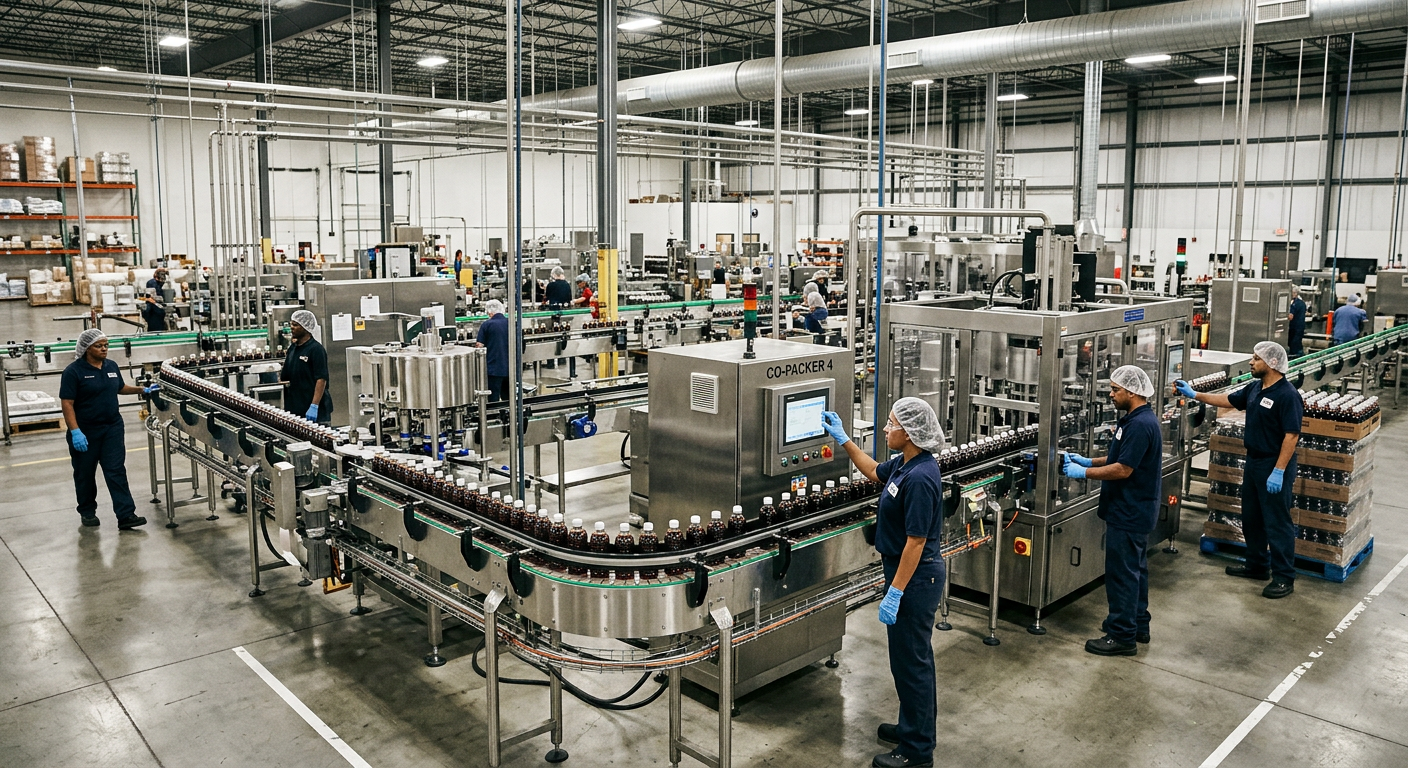
Food Plant Expansion Cost Estimation in 2026: 8 Critical Factors
[trp_language language=”en_US”]
2026 U.S. Food Plant Expansion Cost Planning Guide
Expanding a food plant in the United States in 2026 will require more than a rough construction budget. Capital costs are being shaped by domestic manufacturing lead times, utility infrastructure upgrades, labor availability, code compliance, automation, and sustainability requirements. For processors adding new lines, extending warehouse space, upgrading utilities, or converting a plant for higher-value products, accurate cost estimation is now a strategic tool rather than a simple finance exercise.
Whether a project is located near Chicago, Dallas-Fort Worth, Fresno, Charlotte, Atlanta, Omaha, the Inland Empire, or port-driven markets such as Houston, Savannah, Newark, and Los Angeles/Long Beach, the same rule applies: the early estimate must reflect how the facility will actually run. That means process design, material flow, sanitation, utility loading, commissioning, and operational constraints all need to be priced together. In food and beverage manufacturing, underestimating one system often forces expensive changes in five others.
Quick Answer

For a U.S. food plant expansion in 2026, the most accurate cost estimate should account for seven core cost drivers: process equipment, civil and structural scope, utility and MEP infrastructure, regulatory compliance, contingency and risk reserve, labor and installation, and commissioning and validation. In most projects, equipment and process systems are the largest share of spending, but hidden overruns often come from utility upgrades, sanitation requirements, installation complexity, and production downtime during tie-ins.
As a practical benchmark, many mid-sized plant expansions in the United States begin in the high six figures and quickly move into multi-million-dollar territory once refrigeration, boilers, CIP, controls integration, structural modifications, and code-driven improvements are included. The best buying advice is to budget from the process outward, not from the building inward. In other words, start with production goals, product mix, packaging format, sanitation standards, and throughput requirements before locking in construction numbers.
That approach matters across product types including dairy beverages, protein processing, sauces and dressings, ready-to-drink beverages, aseptic products, fermented beverages, plant-based foods, and shelf-stable packaged foods. It is especially important for processors serving retail, foodservice, club store, private label, and co-packing applications where line efficiency and compliance can make or break return on investment.
| Cost Category | Typical Share of Total Budget | What It Covers | Why It Changes |
|---|---|---|---|
| Process equipment | 25%–40% | Tanks, fillers, cookers, mixers, conveyors, retorts, pasteurizers | Depends on product type, sanitation level, automation, and capacity |
| Civil and structural | 10%–20% | Foundations, slab reinforcement, mezzanines, pits, roof support | Changes with equipment weight and building condition |
| Utilities and MEP | 15%–30% | Boilers, compressed air, glycol, HVAC, electrical, plumbing | Often rises when existing systems have limited spare capacity |
| Compliance and permitting | 3%–8% | FDA, USDA, SQF, BRC, local permitting, fire protection | Higher in regulated or export-facing facilities |
| Labor and installation | 12%–25% | Mechanical install, electrical, piping, rigging, controls | Driven by region, schedule compression, and shutdown windows |
| Commissioning and validation | 2%–7% | Testing, startup, operator training, documentation | Higher for aseptic, dairy, beverage, and automated systems |
| Contingency and risk reserve | 5%–15% | Unknowns, escalation, change conditions, coordination gaps | Varies by estimate maturity and site complexity |
The table above shows why a plant expansion estimate must be treated as a system-based model instead of a single lump sum. Even if equipment pricing appears stable, real project totals can shift when a plant needs a larger service entrance, wastewater pretreatment, sanitary drainage changes, or production phasing to keep current lines operating.
Why Accurate Cost Forecasting Matters

Cost estimation accuracy matters because plant expansions are rarely isolated construction projects. They affect throughput, scheduling, food safety, staffing, warehousing, maintenance, energy use, and customer service levels. A weak estimate does not just increase capital spending; it can delay commercialization, reduce capacity gains, disrupt distribution commitments, and erode margins for years.
In the United States market, processors are expanding for several reasons in 2026: reshoring, regional network optimization, SKU growth, automation, labor shortages, cold-chain capacity needs, and demand from private label and co-manufacturing. The market is especially active in the Midwest protein corridor, the Southeast manufacturing belt, Texas beverage and prepared foods hubs, California processing regions, and the Northeast warehouse-to-production conversion market. In each of these areas, local labor rates, utility rates, permitting timelines, and contractor availability can materially change project outcomes.
For example, a dairy or beverage line near the Port of Los Angeles may face different imported component lead times than a protein facility in Kansas City or a sauce plant in New Jersey. A facility in North Carolina may have strong access to regional trade partners, but an older building may still need extensive sanitary drainage and electrical modernization. Accurate estimation turns those realities into a decision-making advantage.
It also supports better buying decisions. Owners can compare domestic versus imported equipment, assess whether to retrofit or build greenfield, and decide whether to add automation now or leave expansion hooks for later. Strong estimates help companies prioritize profitable scope rather than simply approving the cheapest-looking quote.
Factor 1 – Process Equipment and Integrated Systems

Equipment and process systems usually dominate the capital budget because they define the operating capability of the expansion. In food and beverage projects, this category includes tanks, pumps, skids, mixers, cookers, fillers, pasteurizers, retorts, heat exchangers, conveyors, homogenizers, separators, batching systems, filtration systems, dosing systems, and clean-in-place equipment. Controls architecture, PLC programming, recipes, SCADA, and line integration are part of this category as well, even though buyers sometimes separate them out.
Costs vary sharply by product family. A simple dry ingredient handling addition has a very different budget profile than a USDA protein room, a high-acid hot-fill beverage line, or an aseptic expansion. Product applications influence metallurgy, hygienic design, cleaning requirements, pressure ratings, automation depth, and validation burden. Product diversity also affects changeover complexity and therefore capital intensity.
Another major issue in 2026 is lead-time strategy. Domestic fabrication can reduce logistics risk and improve field-fit coordination, but may carry a premium depending on vessel size, controls, and specialty fabrication. Imported systems may appear cheaper on paper, yet freight volatility, customs timing, field modifications, and document gaps can erase savings quickly. Plants near ports like Houston, Savannah, and Long Beach may gain some logistics advantages, but inland freight, rigging, and schedule risk still need to be priced.
For many manufacturers, the smartest path is not necessarily to buy the most equipment. It is to size the right system for current revenue and future scale. Oversized systems can create unnecessary utility loads and higher cleaning costs. Undersized systems can throttle growth and force rework within two years.
| Product Type | Common Equipment Scope | Primary Cost Driver | Typical Risk |
|---|---|---|---|
| Protein processing | Grinders, mixers, tumblers, cookers, slicers, conveyors | Washdown design and refrigeration integration | Drainage and sanitation retrofits |
| Dairy processing | Pasteurizers, homogenizers, separators, tanks, CIP | Product safety and thermal process control | Validation and utility balance |
| RTD beverages | Blending, carbonation, bright tanks, fillers, packaging | Throughput and packaging flexibility | Compressed air and controls complexity |
| Sauces and dressings | Batching, mixing, jacketed kettles, heat exchangers | Viscosity handling and allergen changeover | Long cleaning cycles |
| Aseptic products | UHT, sterile surge, aseptic filling, sterile piping | High hygienic standards and documentation | Startup failure if validation is weak |
| Fermented beverages | Fermenters, brite tanks, filtration, CIP, controls | Tank farm scaling and utility coordination | Capacity mismatch across cellar and packaging |
| Plant-based foods | Hydration, high-shear mixing, texturization, cooking | Process development and ingredient handling | Frequent formula changes |
The table above shows why a line-item estimate based only on equipment purchase orders is incomplete. Product category drives not just machine cost, but also utility loads, piping design, sanitary access, floor loading, and startup time.
From a technology standpoint, many U.S. plants are prioritizing smarter controls in 2026. Recipe automation, SCADA visualization, batch tracking, energy monitoring, and PLC modernization can often improve capacity without adding major steel. That is one reason manufacturers look for partners with deep process and controls capability, not just installation crews. A firm like DPS equipment solutions can support integrated thinking by aligning process hardware with automation, cleanability, and maintainability rather than treating each purchase as a standalone item.
Factor 2 – Building, Site, and Structural Work
Civil and structural work is one of the most underestimated parts of a food plant expansion. Owners often focus on the visible production equipment and discover late in design that the building slab is too thin, the steel cannot support new mezzanines, the roof needs reinforcement for HVAC, or the truck court must be reconfigured for material flow. In older U.S. facilities, hidden conditions are common, especially in converted warehouses and legacy plants built in phases over decades.
This category can include slab demolition, trench drains, housekeeping pads, equipment pits, curb work, pipe bridges, support steel, roof openings, mezzanines, loading docks, wall penetrations, insulated panel repairs, and site drainage. For cold and wet environments, floor slope, thermal breaks, and hygienic surface finishes can significantly affect cost.
Geography matters. Midwest freeze-thaw conditions, Gulf Coast humidity, West Coast seismic requirements, and hurricane exposure in southeastern states can all affect foundations, bracing, and enclosure design. In places such as California, Washington, and some parts of the Northeast, code and seismic upgrades can materially reshape expansion budgets. Likewise, in rapidly growing manufacturing corridors around Nashville, Phoenix, and Charlotte, site access and municipal utility tie-in constraints can add unexpected civil work.
| Structural Trigger | Typical Cause | Cost Impact | Budget Watchpoint |
|---|---|---|---|
| Slab reinforcement | Heavy tanks, cookers, retorts, mezzanine loads | Moderate to high | Often discovered after equipment selection |
| Drainage reconstruction | Sanitary zoning or wet processing conversion | High | Major impact on schedule and production continuity |
| Roof support upgrades | New HVAC units, process exhaust, platforms | Moderate | Can require shutdown coordination |
| Equipment pits | Fillers, conveyors, elevators, retorts | Moderate | Conflict with existing underground services |
| Mezzanines and catwalks | Ingredient handling, tank access, packaging support | Moderate | Need code review and egress planning |
| Dock and yard changes | Material flow, warehousing, finished goods growth | Moderate to high | Can affect truck circulation and permitting |
| Seismic or wind bracing | Regional code requirements | Variable | Often missed in early concept estimates |
This table highlights a common pattern: structural scope often grows after process design advances. That is why leading estimates should include site walks, utility mapping, and as-built verification early rather than waiting until equipment is ordered.
Factor 3 – Utility Infrastructure and MEP
Utility infrastructure and MEP are frequently the difference between a workable expansion and an expensive problem. Mechanical, electrical, plumbing, refrigeration, steam, compressed air, process water, wastewater, HVAC, and fire protection must all support the increased load. Existing plants may have enough square footage for new production but not enough chilled water, amperage, boiler output, air capacity, or sanitary sewer handling.
In food plants, utility design cannot be generic. A chilled sauce line, a retort room, a distillery, a cultured dairy operation, and a beverage syrup room have very different load profiles. Utility needs must be modeled with real process assumptions: peak draw, simultaneous cleaning, production scheduling, packaging speed, and washdown demand.
MEP cost also rises when owners want resilience. Dual utility headers, backup compressors, future capacity stubs, larger electrical rooms, and energy monitoring all improve long-term operating flexibility but need to be intentionally budgeted. With more U.S. processors focusing on uptime and portfolio planning in 2026, these investments are becoming more common.
| Utility System | Common Expansion Need | Typical Cost Sensitivity | Frequent Oversight |
|---|---|---|---|
| Electrical distribution | New MCCs, panels, service upgrades, controls power | High | Insufficient spare breaker capacity |
| Steam and boiler | Cooking, CIP, pasteurization, sterilization | High | Ignoring peak simultaneous loads |
| Compressed air | Valves, packaging, instrumentation | Moderate | Pressure drop across long runs |
| Glycol or refrigeration | Tank cooling, process chilling, cold rooms | High | Undersized distribution and redundancy gaps |
| HVAC | Pressurization, humidity control, comfort, filtration | Moderate to high | Not zoning by hygiene requirement |
| Process water and plumbing | Ingredient water, washdown, CIP, sanitary fixtures | Moderate | Low flow at critical points |
| Wastewater systems | Solids handling, pH control, pretreatment | High | Municipal discharge limits overlooked |
The explanation is simple: utility costs are not just support costs; they are production enablers. A lower-priced equipment package can become the most expensive option if it forces a boiler replacement or wastewater upgrade later.
2026 trends also point toward sustainability-driven utility investments. Plants are evaluating heat recovery, water reuse, variable-frequency drives, smart energy management, high-efficiency motors, and more targeted air handling. Policy pressure, ESG reporting, and utility rate volatility are pushing these decisions. In states with aggressive energy and water requirements, such as California, and in regions where wastewater charges are rising, efficient utility design can materially improve long-term project economics.
Factor 4 – Regulatory, Food Safety, and Compliance Costs
Compliance costs are often treated as a permitting line item, but in reality they touch almost every part of a plant expansion. U.S. food and beverage projects may need to address FDA expectations, USDA requirements, state and local health rules, fire codes, electrical codes, building codes, stormwater rules, wastewater permits, and customer-driven standards such as SQF or BRC. For some facilities, OSHA-related changes also influence layout, guarding, access platforms, and egress.
Compliance becomes more expensive when product risk is high or when an expansion introduces a new category. For example, a company moving from ambient dry production into refrigerated RTE foods or aseptic beverages may face entirely new sanitary zoning expectations. The same is true when a co-packer must satisfy multiple brand-owner audits.
Documentation is another cost driver. Validation protocols, FAT/SAT requirements, instrument calibration records, P&IDs, utility drawings, sanitation plans, and operator training packages all take time and expertise. They are especially important in dairy, aseptic, retort, and beverage systems where process consistency must be proven, not assumed.
| Compliance Area | Typical Scope | Cost Pressure | Operational Impact |
|---|---|---|---|
| FDA design expectations | Hygienic equipment layout, cleanability, material selection | Moderate | Reduces contamination risk and rework |
| USDA requirements | Protein room flow, washdown, inspection accommodation | High in meat and poultry | Can dictate room design and utilities |
| SQF or BRC alignment | Zoning, documentation, access control, traceability | Moderate | Important for customer approval |
| Building and fire code | Occupancy, egress, fire suppression, hazardous areas | Moderate to high | Can trigger room or roof changes |
| Environmental permits | Wastewater, emissions, stormwater, discharge limits | Variable | May delay startup if addressed late |
| Validation and records | IQ/OQ support, calibration, startup documents | Moderate | Critical for regulated operations |
| Customer audit readiness | Sanitation verification, line segregation, allergen controls | Moderate | Direct link to commercial acceptance |
The point of this table is that compliance spending should be viewed as risk prevention and market access, not overhead. A line that cannot pass customer audits or regulator scrutiny is not a finished capital asset.
Manufacturers seeking a smoother path often prefer partners that understand both engineering and compliance translation. This matters when integrating thermal systems, sanitary piping, automation records, and owner documentation into one project package. You can see that project philosophy in the way food and beverage engineering services are structured around process design, execution oversight, and startup support rather than isolated design handoffs.
Factor 5 – Contingency and Risk Reserve
Contingency is not padding. It is a disciplined response to uncertainty. A 2026 plant expansion estimate in the United States should include contingency that reflects the maturity of engineering, quality of site data, procurement strategy, and installation constraints. Early conceptual estimates typically need a higher reserve than late-stage engineered budgets. Retrofit work in active plants generally requires more protection than open-site construction because unknowns are higher.
Risk reserve should address escalation, undocumented field conditions, owner changes, schedule compression, hidden utility conflicts, tie-in complexity, production losses during shutdowns, and freight volatility. It should also reflect local market conditions. Labor volatility in fast-growth Sun Belt markets, winter weather in the Upper Midwest, and permitting delays in dense metropolitan areas can all affect real cost.
One useful way to structure reserve is to separate general contingency from targeted risk allowances. General contingency covers normal estimating uncertainty. Targeted allowances address known but undefined items such as slab remediation, utility reroutes, or extended startup support. That separation gives management better visibility and reduces confusion when changes occur.
In buying terms, owners should be cautious of estimates that appear extremely precise too early. A number with no stated assumptions, exclusions, or risk treatment is not a better estimate; it is only a more dangerous one.
Factor 6 – Labor, Installation, and Project Execution
Labor and installation costs vary enormously by region, schedule, facility condition, and trade intensity. Mechanical installation, sanitary piping, electrical work, controls integration, insulation, rigging, and demolition can make up a major share of the final budget. The most expensive installation is usually not the one with the highest hourly rate; it is the one with poor sequencing, repeated field changes, limited access, or insufficient shutdown planning.
In active U.S. food plants, production continuity drives labor cost. Night work, weekend shutdowns, phased tie-ins, sanitation windows, confined work areas, and temporary bypass systems all increase execution complexity. Facilities operating in high-throughput markets such as Chicago, Central California, Texas, and the Southeast often cannot afford long outages, so labor plans must align with production schedules.
Another key issue is trade availability. Some regions have strong food-grade contractors and fabricators; others rely on traveling specialists. Plants near major manufacturing corridors may have better access to labor, but also face higher demand competition. This is why local supplier strategy matters. The right estimate should identify which trades are expected to be local, which are traveling, and how supervision will be handled.
Owners should also ask whether the project delivery approach supports field coordination. A fragmented bid model can create low initial numbers but high final costs. Design, procurement, trade management, and startup all interact. Many processors prefer integrated execution because it reduces handoff friction and makes cost responsibility clearer.
That is where service capability matters. Disruptive Process Solutions operates as a full-scope engineering and project execution partner for food and beverage manufacturers across the United States and Canada, with a design-build-manage approach that connects process design, field construction management, and project oversight. For owners, that integrated method can improve budget reliability because constructability, sequencing, and procurement are addressed together rather than in separate silos. More on this can be found through the company background and its operating philosophy.
Factor 7 – Startup, Commissioning, and Validation
Commissioning and validation are often underfunded because they occur late in the project and are less visible than steel or equipment. Yet this phase is where value is realized. Without structured startup, a plant can miss throughput targets, struggle with changeovers, overuse utilities, or fail food safety checks. In severe cases, a poorly commissioned line forces expensive rework after the contractor has left the site.
Commissioning includes dry checks, loop checks, utility verification, bump tests, controls testing, CIP verification, water runs, product trials, operator training, performance tuning, punch list resolution, and documentation turnover. Validation may include thermal confirmation, sanitation protocols, recipe verification, instrument calibration, and quality record completion depending on the application.
This factor becomes particularly important in aseptic, dairy, beverage, retort, and highly automated facilities. It is also critical for co-packers and multi-SKU plants where speed to commercial run rate directly affects customer retention and margin. A project that comes in under construction budget but misses three months of planned output is not actually a successful project.
| Startup Activity | Why It Matters | When It Happens | Common Budget Mistake |
|---|---|---|---|
| Pre-commissioning checks | Confirms installation quality | Before utilities are live | Skipping formal checklists |
| Controls and automation testing | Verifies interlocks, alarms, recipes | Before wet runs | Underestimating programming time |
| CIP and sanitation verification | Ensures cleanability and repeatability | Before product trials | Treating cleaning as an afterthought |
| Utility balancing | Stabilizes process performance | During commissioning | Ignoring peak demand conflicts |
| Operator training | Improves uptime and safety | Before handoff and early production | Too little field training time |
| Performance runs | Tests actual throughput and quality | Late startup stage | No clear acceptance criteria |
| Documentation turnover | Supports audits and maintenance | At project closeout | Leaving records incomplete |
This table shows that startup is both a technical and commercial phase. Companies expanding in 2026 should treat commissioning as a protected workstream with dedicated budget, staffing, and schedule ownership.
From a manufacturing capability perspective, DPS supports processors with both engineered systems and selected proprietary equipment such as storage and process tanks, CIP systems, marination tumblers, and cooking vessels. That matters because manufacturing capability can shorten coordination loops between design assumptions and physical equipment realities. It also helps align installation tolerances, utility interfaces, and startup planning.
Our Company
Disruptive Process Solutions supports food and beverage capital projects across North America with an emphasis on profitability, transparency, and practical execution. The company serves manufacturers in all 50 U.S. states and Canada, with experience across beverage, dairy, protein, prepared foods, sauces, aseptic processing, and related regulated applications.
Its technology capabilities include process engineering, structural and mechanical coordination, plumbing and electrical integration, controls engineering, PLC programming, SCADA, and complete utility planning for systems such as CIP, steam, compressed air, refrigeration, water treatment, and wastewater. This is especially relevant for owners who want expansion budgets rooted in operating reality rather than generic square-foot assumptions.
Its manufacturing capabilities include support for custom process equipment and integrated system packages that fit broader plant objectives. That creates an advantage when matching tanks, skids, utility tie-ins, and automation requirements to a defined production strategy. Companies evaluating expansion options can review process equipment capabilities to understand how physical systems fit into wider plant performance goals.
Its service capabilities extend from feasibility and capital planning to owner’s representation, project engineering, construction management, installation, and startup coordination. For food and beverage operators, this full-lifecycle support is useful when schedule pressure is high or when multiple vendors, local trades, and compliance obligations must be managed under one program. Broader service information is available through engineering and project delivery services.
DPS also works from a business-minded perspective. Instead of pushing unnecessary spend, the company focuses on profitable scope and long-term operating outcomes. That mindset is visible in real project examples where optimization and controls improvements can solve a bottleneck more effectively than adding expensive new hardware. Additional examples can be explored in these project case studies.
For U.S. manufacturers planning 2026 expansions, that combination of technological capability, manufacturing support, and service integration can reduce risk during budgeting, procurement, construction, and startup.
FAQ
What is the first step in estimating a food plant expansion cost in the United States?
Start with the process basis: target throughput, product mix, packaging formats, sanitation requirements, staffing model, and utility loads. Once those are clear, building and installation costs become much more accurate.
Which factor causes the most cost overruns?
Utilities and field conditions are common sources of overruns. Existing electrical service, wastewater limits, refrigeration capacity, and sanitary drainage are often underestimated in retrofit projects.
Should I expand an existing plant or build a new one?
It depends on product type, available utilities, logistics, and speed to market. Retrofit projects often save time and land cost, but hidden conditions can erode savings. Greenfield projects usually provide better layout control and future scalability.
How much contingency should be included?
That depends on estimate maturity and site certainty. Early concept budgets usually need a larger reserve than engineered estimates. Retrofit work in older facilities should generally carry higher risk allowance than open-site construction.
How do product categories affect expansion cost?
High-care, wet-process, refrigerated, aseptic, and protein applications usually cost more than simpler dry or ambient lines because they require stricter hygienic design, more utilities, heavier compliance, and more involved commissioning.
Why are local references important in U.S. budgeting?
Labor rates, permit timing, utility tariffs, seismic requirements, weather exposure, and freight costs vary by location. A project in California, Texas, Illinois, Georgia, or New Jersey will not budget the same way even if throughput targets are similar.
What 2026 trends should owners plan for?
Expect greater investment in automation, recipe control, digital visibility, utility efficiency, water stewardship, and compliance documentation. Policy pressure around sustainability and resilience will continue to influence equipment selection and utility design.
How can I compare supplier options effectively?
Compare total installed cost, lead time reliability, service support, controls compatibility, sanitation design, spare parts access, and startup support. The lowest purchase price rarely equals the lowest ownership cost.
What industries benefit most from accurate expansion estimates?
Protein processing, dairy, ready-to-drink beverages, sauces and dressings, prepared foods, aseptic manufacturing, co-packing, and plant-based foods all benefit because throughput, food safety, and schedule are tightly linked to profitability.
What is the smartest buying advice for 2026?
Buy around the business case, not just the equipment list. Prioritize process fit, utility realism, compliance readiness, and startup support. A profitable expansion is one that reaches stable production quickly and can scale without major rework.
[/trp_language]
Complete Company Portfolio

About the Author: Disruptive Process Solutions (DPS)
The DPS team combines process engineering expertise with real-world food and beverage manufacturing experience. Our content focuses on process optimization, production efficiency, facility improvements, and practical solutions that help manufacturers operate more effectively in a rapidly evolving industry.
Share

