2026 Food Facility Post-Construction Support Services Guide
[trp_language language=”en_US”]
United States Food Plant Support Services for 2026
Bringing a new food or beverage facility online is only the beginning. Once construction, installation, and commissioning are complete, the real commercial test starts: keeping equipment stable, operators confident, documentation current, and output profitable. In the United States, post-construction support is now a decisive factor for plants in Chicago, Dallas-Fort Worth, Fresno, Charlotte, Atlanta, Philadelphia, and major logistics corridors tied to ports such as Los Angeles, Long Beach, Savannah, Houston, and New York/New Jersey. For processors launching new lines or expanding existing capacity, the difference between a strong first year and a painful ramp-up usually comes down to how well support is planned after handoff.
This guide explains what manufacturers should put in place after project completion, including preventive maintenance planning, spare parts management, performance optimization, operator continued training, equipment calibration scheduling, regulatory audit support, and technology upgrade pathways. It also outlines how to evaluate partners, where regional support matters, which product categories need the most attention, and how a company such as Disruptive Process Solutions can help manufacturers protect capital investments over the long term.
Immediate Answer

The quickest answer is this: a food facility in the United States should not treat project completion as the end of the job. A practical post-construction support program should begin before startup and continue through the first 12 to 24 months of operation. At minimum, it should include a site-specific preventive maintenance plan, a critical spare parts list, line performance reviews, repeated operator training, a calibration schedule, compliance document control, and a roadmap for future automation or capacity upgrades.
For most U.S. processors, especially those running proteins, dairy, sauces, aseptic beverages, ready-to-drink products, brewing, distillation, or co-packing operations, the first year after construction determines whether the project delivers its intended return. Plants that lack structured support often see more unplanned downtime, higher ingredient losses, longer changeovers, missed sanitation windows, and audit pressure from FDA, USDA, SQF, or BRC expectations. By contrast, facilities that actively manage support can stabilize OEE, reduce emergency maintenance costs, and improve throughput without immediate new capital spending.
Market conditions also make this more important in 2026. U.S. labor remains tight, utility costs are volatile, traceability expectations are increasing, and many manufacturers are under pressure to produce more SKUs with less downtime. In cities with major cold-chain, ingredient, and packaging networks such as Kansas City, Minneapolis, Memphis, and Jacksonville, speed to stable production is a major competitive advantage. A post-construction support strategy is no longer an optional service add-on; it is part of the capital project itself.
| Post-Construction Need | Why It Matters | Typical Risk If Ignored | Best Time to Start | Primary Owner | Business Impact |
|---|---|---|---|---|---|
| Preventive maintenance plan | Protects uptime and asset life | Frequent breakdowns | Before handoff | Maintenance manager | Lower downtime cost |
| Critical spare parts list | Prevents long outages | Weeks waiting on components | During commissioning | Storeroom or reliability lead | Faster recovery |
| Operator training refreshers | Improves repeatable performance | Errors, waste, safety issues | Startup and quarterly | Operations manager | Better yield and safety |
| Calibration schedule | Protects accuracy and compliance | Out-of-spec product | Immediately after startup | QA or metrology lead | Fewer deviations |
| Audit-ready documentation | Supports FDA, USDA, SQF, BRC | Findings and delayed approvals | Pre-start and ongoing | QA and engineering | Reduced compliance risk |
| Performance optimization reviews | Finds hidden capacity gains | Underused assets | 30, 90, and 180 days | Plant leadership | Higher ROI |
The table above shows why the first support decisions should be tied directly to operating risk and financial return. Plants often focus heavily on startup acceptance testing but leave too much undefined after that point. A stronger model sets ownership, timing, and measurable objectives before the project closes.
Maintenance Planning After Startup

Preventive maintenance planning is the backbone of post-construction support. New equipment often enters production with OEM manuals, basic startup settings, and warranty guidance, but not with a plant-specific maintenance system. A meat processor in Omaha, a dairy plant in Wisconsin, or a beverage co-packer near the Inland Empire all face different operating realities. Run hours, washdown intensity, allergen changeovers, utility variability, and local technician availability all affect maintenance needs.
An effective U.S. maintenance plan should combine OEM recommendations with real process conditions. It should include asset criticality ranking, lubrication routes, sanitation-related wear points, sensor verification checks, utilities inspections, and documented parts replacement intervals. The best plants also connect this plan to CMMS workflows so work orders, downtime codes, and parts consumption can be tracked from day one.
For food and beverage plants, maintenance planning must go beyond the primary process line. Utility systems often create the most expensive failures. Boilers, compressors, glycol systems, refrigeration skids, process water systems, CIP sets, HVAC, steam traps, and controls panels can all interrupt production even when core processing equipment is technically available. In humid regions such as the Gulf Coast, corrosion control and enclosure sealing deserve extra attention. In colder markets such as Minnesota or upstate New York, freeze protection and seasonal utility reliability can shape maintenance priorities.
| Asset Category | Typical PM Frequency | Key Checks | Common U.S. Failure Point | Recommended Record | Operational Benefit |
|---|---|---|---|---|---|
| CIP systems | Weekly and monthly | Pumps, valves, conductivity, seals | Chemical dosing drift | Cycle verification log | Reliable sanitation |
| Boilers and steam systems | Daily to quarterly | Water quality, traps, burners | Scaling and trap failure | Boiler water treatment report | Stable thermal performance |
| Compressed air systems | Weekly and quarterly | Pressure, dryers, leaks, filters | Moisture contamination | Leak and dew point log | Reduced energy loss |
| Refrigeration/glycol | Daily and monthly | Temperatures, pumps, insulation | Heat exchanger fouling | Cooling performance trend | Better product control |
| Fillers and packaging lines | Per shift and weekly | Wear parts, alignment, sensors | Changeover damage | Line center PM checklist | Higher OEE |
| Control panels and PLC I/O | Monthly and semiannual | Connections, heat, alarms, backups | Loose terminals and outdated backups | Backup and alarm review file | Faster troubleshooting |
The table above illustrates how maintenance planning should reflect the interaction between process equipment and site utilities. Plants that formalize this early generally see smoother ramp-up, more accurate labor planning, and better warranty conversations with suppliers. If the original project partner also understands engineering, installation, and operating context, the transition from startup support into long-term maintenance is typically more efficient.
Buying advice for U.S. manufacturers: when evaluating a support provider, ask whether they can translate design intent into maintainable plant practice. The best partners do not simply hand over manuals. They help define PM tasks based on actual process risk, sanitation realities, and production goals.
Critical Spare Parts Control

Spare parts management is where many otherwise well-built facilities lose money. A plant can invest millions in process equipment yet delay stocking the few sensors, seals, drives, valves, and control components most likely to stop the line. In the United States, freight access is strong but not universal. A processor in Southern California may source some items quickly through regional distribution, while a rural Midwest site may face longer lead times, especially for imported controls, specialty pumps, heat transfer components, or custom fabricated parts.
The right approach is to classify spares into critical, operational, and strategic inventory. Critical items can halt food safety, utilities, or production immediately. Operational items support wear replacement and routine PM. Strategic items cover long-lead equipment or obsolescence risk. This is especially important in sectors such as aseptic processing, retort, dairy homogenization, carbonation, distillation, and protein portioning where a single failure can take down an entire value stream.
Facilities should also think regionally. Plants in New Jersey or Pennsylvania may have better access to East Coast industrial support; sites in Texas benefit from central freight routes and broad contractor coverage; facilities near Sacramento, Fresno, or Modesto often depend on strong local agricultural processing supply networks; and plants around Charlotte, Raleigh, and Greenville can leverage growing manufacturing support ecosystems. Local supplier depth matters, but it should not replace central planning.
| Spare Part Type | Example | Stocking Priority | Typical Lead Time | Storage Rule | Reason to Stock |
|---|---|---|---|---|---|
| Instrumentation | Flow meter, RTD, pressure transmitter | High | 2 to 10 weeks | Climate-controlled | Avoid process control loss |
| Drive and motor components | VFD, motor starter, servo module | High | 1 to 12 weeks | Dry and labeled | Reduce long downtime |
| Sanitary wear parts | Gaskets, seals, valve kits | High | Days to 4 weeks | By line and size | Support PM and sanitation |
| Pumps and rebuild kits | Impellers, seals, bearings | Medium to high | 1 to 8 weeks | Protected from dust | Preserve flow reliability |
| Packaging change parts | Guides, stars, timing screws | Medium | 2 to 6 weeks | By SKU family | Speed changeovers |
| Long-lead custom items | Heat exchanger plates, vessels, custom controls | Strategic | 6 to 24 weeks | Tracked by risk plan | Protect against supply shocks |
This table is useful because it separates common spare types by urgency and practical handling. One of the best ways to reduce unnecessary inventory is to align the spare strategy with asset criticality and actual lead times instead of guesswork.
Manufacturers that need integrated support after buildout often benefit from working with a firm that understands both process design and equipment sourcing. A partner with experience in tanks, CIP systems, utility equipment, and line integration can often define a smarter spare list than a distributor focused on only one category. To compare project examples and support approaches, facilities can review project case studies that show how engineered systems behave in real operating environments.
Production System Optimization
System performance optimization is where post-construction support starts paying back capital. Many facilities assume that once a line meets startup acceptance criteria, it is already optimized. In practice, acceptance testing only confirms that the system can run under defined conditions. It does not mean the plant has reached the best combination of throughput, labor efficiency, utility use, quality performance, and changeover speed.
Optimization should begin with baseline KPIs: OEE, first-pass quality, pounds or gallons per labor hour, utility intensity, giveaway, CIP cycle time, and scheduled versus unscheduled downtime. Then, the team should examine constraints. In some plants, the bottleneck is obvious, such as a filler, cooker, retort, tunnel pasteurizer, or packaging machine. In others, it may be less visible, such as recipe logic, line balancing, compressed air instability, ingredient staging, or operator sequence errors.
This matters across product types. Beverage facilities often focus on syrup rooms, carbonation stability, filler efficiency, and CIP turnarounds. Dairy processors may prioritize temperature control, homogenization consistency, and aseptic reliability. Protein plants often target yield, marination consistency, slicing or portioning efficiency, and sanitation recovery time. Prepared foods and sauce manufacturers may focus on batching accuracy, thermal profiles, scrape-surface exchanger behavior, and packaging synchronization.
The strongest optimization programs include controls review. Small PLC or SCADA changes can unlock measurable gains, especially when alarms, recipes, or interlocks were built conservatively during startup. In the United States, where many processors are trying to grow within existing footprints rather than build entirely new facilities, this type of performance review is often the fastest route to added capacity.
| KPI | Typical New-Plant Baseline | Strong First-Year Target | Optimization Lever | Data Source | Expected Gain |
|---|---|---|---|---|---|
| OEE | 55% to 65% | 70% to 80% | Downtime reduction and changeover control | SCADA and shift logs | Higher throughput |
| First-pass quality | 92% to 96% | 97% to 99% | Calibration and SOP discipline | QA records | Less rework |
| CIP cycle time | 100% baseline | 10% to 20% faster | Sequence tuning and conductivity review | CIP reports | More available production time |
| Energy per unit | High during ramp-up | 5% to 12% lower | Utility balancing and scheduling | Metering and utility bills | Lower cost of goods |
| Giveaway or overfill | 1.5% to 3.0% | 0.5% to 1.5% | Filler tuning and weight control | Production and QA data | Better margin |
| Unplanned downtime | 8% to 15% | 3% to 7% | PM, spares, operator response | CMMS and line data | More stable schedules |
The table shows why optimization needs to be measured in both technical and financial terms. Plants should tie each improvement effort to margin, capacity, labor efficiency, or compliance resilience. It is also wise to schedule formal reviews at 30, 90, and 180 days, then again after one full seasonal production cycle.
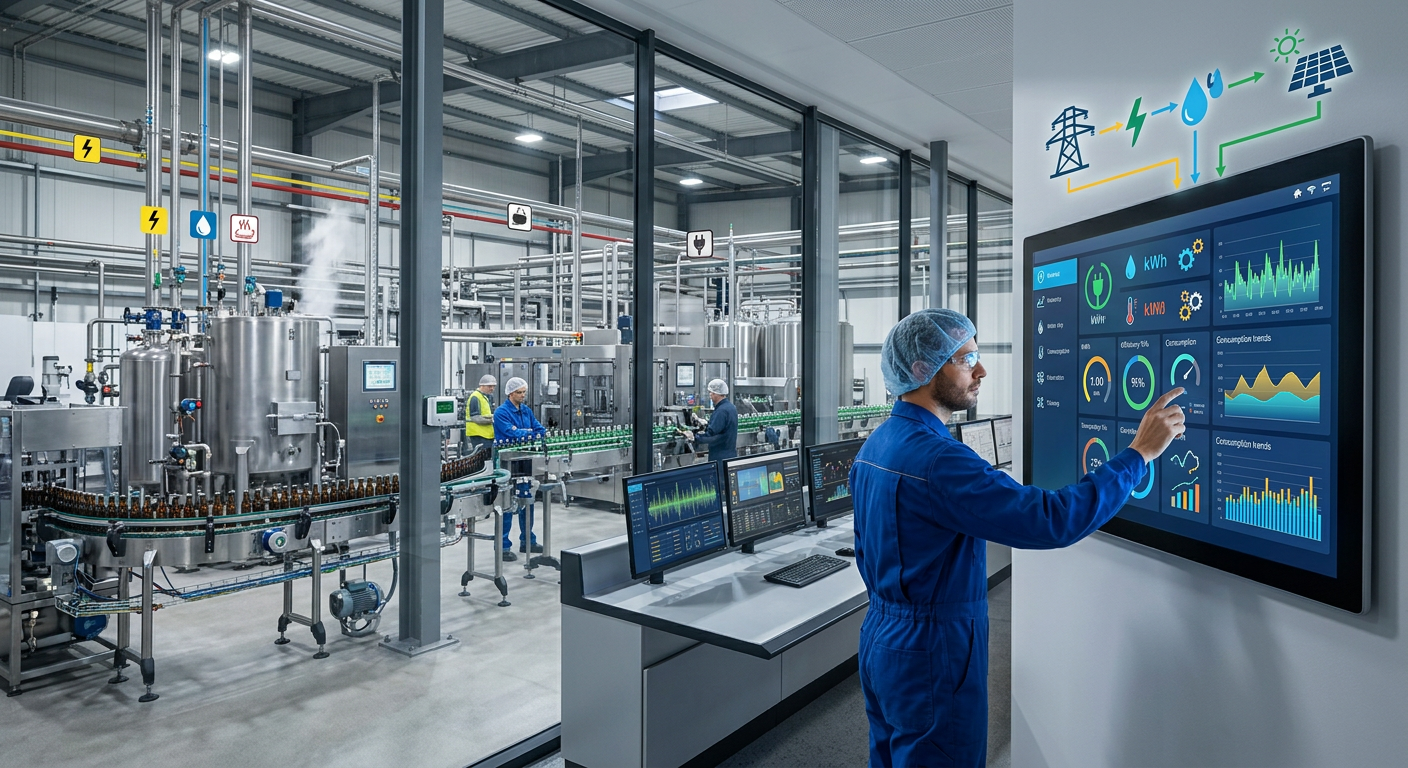
For U.S. manufacturers thinking about future growth, 2026 trends point toward more predictive maintenance, expanded edge data collection, recipe analytics, energy dashboards, and digital traceability. Sustainability targets are also shifting optimization priorities. Water reuse in CIP, heat recovery, better compressed air management, and more efficient refrigeration control are becoming mainstream topics rather than special projects.
Ongoing Operator Training
Operator continued training is one of the most overlooked parts of support planning. New facilities usually receive initial startup training, but turnover, shift changes, line modifications, and production pressure quickly erode consistency. In food and beverage manufacturing, the operator is often the first control point for uptime, quality, sanitation readiness, and safety response.
Training should be structured in layers. First is startup qualification for the original team. Second is post-startup reinforcement focused on actual plant conditions, not classroom assumptions. Third is recurring cross-training for new hires, relief operators, maintenance staff, sanitation teams, and supervisors. Finally, there should be retraining after process changes, software revisions, new SKUs, or audit findings.
In the U.S. market, training should also reflect workforce realities. Multilingual workforces are common in California, Texas, Florida, and parts of the Midwest. Fast-growth co-packers near major distribution nodes often add staff quickly. Plants in highly regulated sectors such as dairy, aseptic processing, and USDA-inspected protein operations need training records that hold up during external review. Video job aids, line-specific SOPs, visual control boards, and short competency checks are often more effective than one-time manuals.
Continued training is especially important when automation is expanding. As more processors adopt advanced PLC logic, SCADA dashboards, recipe control, inline sensors, and remote diagnostics, the skill gap between “can operate” and “can operate profitably” becomes larger. Training should therefore include process understanding, not just button-pushing.
| Training Topic | Audience | Recommended Frequency | Format | Proof of Completion | Operational Result |
|---|---|---|---|---|---|
| Startup and shutdown procedures | Operators and leads | Monthly refresh | On-line practical session | Supervisor sign-off | Fewer equipment faults |
| Sanitary operation basics | Operations and sanitation | Quarterly | Classroom plus floor walk | Attendance and quiz | Reduced contamination risk |
| Alarm response and escalation | Operators and maintenance | Bi-monthly | Scenario drills | Incident log review | Faster recovery time |
| Recipe and batch control | Process operators | Quarterly | SCADA guided session | System access record | More consistent product |
| Changeover and SKU handling | Packaging and line leads | Monthly | Video and live demonstration | Changeover checklist | Shorter downtime |
| Safety and lockout/tagout | All relevant staff | Quarterly and after changes | Formal training | Signed certification | Lower injury and compliance risk |
This training table helps facilities connect learning topics to measurable operating outcomes. The best programs keep training tied to the plant’s actual bottlenecks and recent incidents instead of running generic modules.
From a buying perspective, ask whether your support partner can provide line-specific operator retraining after commissioning. Partners with field engineering, controls knowledge, and process experience are usually more effective than trainers who only understand documentation.
Calibration Scheduling for Equipment
Equipment calibration scheduling supports both product quality and regulatory defensibility. Every plant depends on trusted measurements: temperature, pressure, flow, conductivity, pH, weight, fill volume, Brix, metal detection, and more. If those measurements drift, decision-making drifts with them. In a pasteurized dairy system, a bad temperature signal can create safety risk. In a beverage batching system, poor Brix calibration can damage consistency and margin. In a protein operation, weight inaccuracies can affect giveaway and label compliance.
A strong schedule should define critical instruments, calibration intervals, acceptable tolerance, reference standards, and response actions when a device is found out of tolerance. Plants also need a system for labeling status, managing due dates, retaining certificates, and evaluating product impact when deviations are discovered. For facilities serving national retailers or high-audit customers, calibration discipline is often reviewed in detail.
In 2026, digital calibration logs and connected asset registers are becoming more common across U.S. plants, especially in larger operations around major manufacturing clusters such as the Carolinas, Southern California, the Great Lakes region, and Texas. This shift supports traceability, trending, and remote review, but the basics still matter most: correct interval, trained personnel, documented standards, and quick corrective action.
| Instrument | Typical Application | Usual Calibration Interval | Risk if Out of Tolerance | Responsible Function | Documentation Needed |
|---|---|---|---|---|---|
| Temperature transmitter | Pasteurization, cooking, cooling | Monthly to quarterly | Food safety deviation | QA and maintenance | Certificate and deviation record |
| Pressure gauge/transmitter | HTST, filtration, utilities | Quarterly to semiannual | Process instability | Maintenance | Calibration log |
| Flow meter | Batching, CIP, water systems | Quarterly to annual | Incorrect dosing or cycle failure | Engineering | As-found/as-left report |
| Scale or checkweigher | Packaging and batching | Daily verification, scheduled calibration | Giveaway or underfill | QA and operations | Verification and calibration records |
| pH or conductivity probe | CIP and formulation | Weekly to monthly | Cleaning failure or formula drift | QA or process lead | Standard solution record |
| Metal detector/X-ray verification | Final product inspection | Per shift verification plus scheduled calibration | Missed foreign material event | QA | Challenge test record |
The value of this schedule is that it aligns calibration frequency with product and process risk rather than treating every device the same. That allows plants to prioritize their most critical measurements and control audit exposure.
Audit and Compliance Support
Regulatory audit support is essential for food facilities in the United States because startup documentation alone rarely satisfies ongoing compliance needs. Once the line is running, plants must maintain evidence that systems are controlled, validated where needed, calibrated, sanitized, and operated according to approved procedures. Requirements differ by product category and oversight structure, but nearly every processor faces expectations linked to FDA preventive controls, USDA inspection environments, and customer or GFSI-based schemes such as SQF or BRC.
Post-construction support should therefore include document organization, SOP review, PM and calibration record integrity, utility verification, change control, and readiness reviews before audits. This is particularly important after plant modifications. A seemingly simple change to a filler, batching routine, or thermal process can create documentation gaps if it is not handled through a formal review path.
Plants should also prepare for growing attention to cybersecurity, traceability, environmental management, and sustainability claims. In 2026, more customers are asking not just whether a plant can produce safely, but whether it can document energy usage, water stewardship, and process accountability. Facilities shipping through national retail networks or export channels via ports like Houston, Savannah, or Los Angeles often face even stronger customer documentation demands.
When choosing support, manufacturers should look for teams that can bridge engineering and compliance. That means understanding utilities, controls, sanitation, process flow, and line change impacts while also supporting documentation expected by quality teams and auditors.
Technology Upgrade Roadmap
Technology upgrade pathways should be defined early, even if the initial project budget is tight. Many U.S. plants open with a practical first-phase system and plan to automate further as volume grows. That is a sound strategy, but only if the original architecture leaves room for future expansion. The most expensive upgrade is the one that requires ripping out recently installed assets because there was no scalable plan.
A good roadmap identifies what can be upgraded in phases: PLC standardization, SCADA visibility, recipe and batch control, additional tankage, advanced CIP automation, inline quality monitoring, energy metering, warehouse integration, packaging robotics, and predictive analytics. For a co-packer in the Southeast, the priority may be fast SKU flexibility. For a dairy processor in the Midwest, it may be aseptic reliability and thermal data integrity. For a beverage site near Phoenix or Southern California, water efficiency and utility optimization may lead the list.
Policy and sustainability trends are shaping 2026 planning. Water use scrutiny is increasing in drought-sensitive regions. Energy management is drawing more executive attention as utility costs fluctuate. More retailers and investors are also asking for measurable progress on emissions, waste reduction, and responsible capital use. Upgrade planning should therefore consider not just growth, but resilience and resource efficiency.
When evaluating upgrade options, manufacturers should ask four questions. First, will the upgrade improve throughput, quality, utility cost, labor efficiency, or compliance? Second, can it be integrated without major disruption? Third, is the existing controls and utility infrastructure ready? Fourth, does the supplier understand both process operations and future business goals? That last question is often the difference between buying isolated equipment and building a scalable manufacturing platform.
Companies looking for full-scope support often benefit from reviewing the range of engineering and project services available from partners that can design, build, and manage upgrades over time rather than treating each change as an isolated job.
Why Work With DPS
Disruptive Process Solutions, often called DPS, is relevant in this space because it approaches projects and post-construction support as a long-term manufacturing and profitability challenge, not just a construction exercise. For U.S. processors that need continuity between design, installation, startup, and operational improvement, that matters.
From a technological capabilities standpoint, DPS works across process, mechanical, plumbing, structural, electrical, and controls disciplines. That means support can extend from utilities and process flow to PLC programming, automation logic, SCADA visibility, and integrated system troubleshooting. For facilities trying to optimize HTST, UHT, retort, aseptic processing, blending, batching, carbonation, fermentation, distillation, or clean utility performance, this kind of cross-functional understanding is especially valuable because many problems sit at the boundary between process and controls rather than within a single machine.
From a manufacturing capabilities standpoint, DPS supports both food and beverage environments and also manufactures selected process equipment. That includes tanks, custom CIP systems, marination tumblers, and cooking vessels, which helps when standard equipment does not fully match site conditions. Food applications can include proteins, prepared foods, dairy, sauces, plant-based products, and shelf-stable systems. Beverage applications can include brewing, spirits, wine, kombucha, juices, functional beverages, soft drinks, dairy-based beverages, and aseptic lines. A processor that needs support for utilities, vessel integration, sanitary process flow, or future capacity additions can benefit from working with a team that understands how these systems fit together physically and operationally. Facilities evaluating custom process assets can explore available equipment solutions as part of a broader support strategy.
From a service capabilities standpoint, DPS offers engineering, capital planning, owner’s representation, project and program management, general contracting where licensed, equipment supply, installation, and full integration support across the United States and Canada. This is important after project completion because support needs are rarely limited to one discipline. A plant may require PM structuring, controls revisions, utility tuning, documentation updates, vendor coordination, or phased expansion planning all at once. DPS is built for project-based execution with a practical, lean model that can move quickly while still aligning decisions to long-term business performance.
What also sets DPS apart is operating philosophy. The company emphasizes transparent guidance and is willing to recommend operational fixes in place of unnecessary capital spending when that is the better answer. That mindset is useful in post-construction support, where a plant may not need a new line at all, but rather smarter programming, better balancing, improved training, or a more disciplined maintenance and calibration system.
For manufacturers seeking a partner that can bridge support, optimization, and future capital planning, the DPS approach reflects the reality of modern food and beverage operations in the United States: profitability depends on integrated thinking. More details on the company’s background and working model are available on the company overview page.
Common Questions
What is the most important post-construction support activity in the first 90 days?
The most important activity is establishing disciplined operating control through preventive maintenance, operator retraining, and line performance review. These three actions usually reveal the majority of startup-related issues before they become chronic losses.
How much spare inventory should a new plant carry?
There is no single number. Inventory should be based on asset criticality, lead time, sanitation wear, and production risk. Plants with imported controls, custom thermal systems, or remote locations usually need deeper strategic coverage.
How often should calibration be scheduled?
It depends on risk. Critical food safety measurements may require monthly or even more frequent verification, while lower-risk devices may be scheduled quarterly, semiannually, or annually. The key is documented rationale and fast response to out-of-tolerance findings.
When should system optimization begin?
Immediately after startup stabilization. A good pattern is a structured review at 30 days, 90 days, 180 days, and after a full seasonal demand cycle. Waiting too long allows wasteful routines to become standard practice.
Do all facilities need ongoing operator training after commissioning?
Yes. Turnover, staffing changes, SKU complexity, and controls updates make one-time training insufficient. Ongoing refreshers are especially important for aseptic, dairy, USDA-inspected, and high-mix packaging environments.
How does support differ by industry?
Beverage sites often emphasize syrup rooms, fillers, carbonation, and CIP speed. Protein plants focus more on yield, sanitation recovery, and handling robustness. Dairy, retort, and aseptic operations place heavier emphasis on validation, calibration, and process integrity.
What should buyers ask before selecting a support partner?
Ask whether the partner understands your product, utilities, controls, compliance environment, and future capacity plan. Also ask how they manage documentation, training, and measurable optimization after startup.
Can a plant improve output without new equipment?
Often yes. Many U.S. facilities recover meaningful capacity through PLC changes, line balancing, PM discipline, better changeovers, and utility optimization before adding new capital.
What future trend will shape post-construction support most in 2026?
The biggest trend is the convergence of predictive maintenance, digital documentation, resource efficiency, and automation-ready upgrade planning. Plants will need support systems that are both audit-ready and data-driven.
[/trp_language]
Complete Company Portfolio
About the Author: Disruptive Process Solutions (DPS)
The DPS team combines process engineering expertise with real-world food and beverage manufacturing experience. Our content focuses on process optimization, production efficiency, facility improvements, and practical solutions that help manufacturers operate more effectively in a rapidly evolving industry.
Share