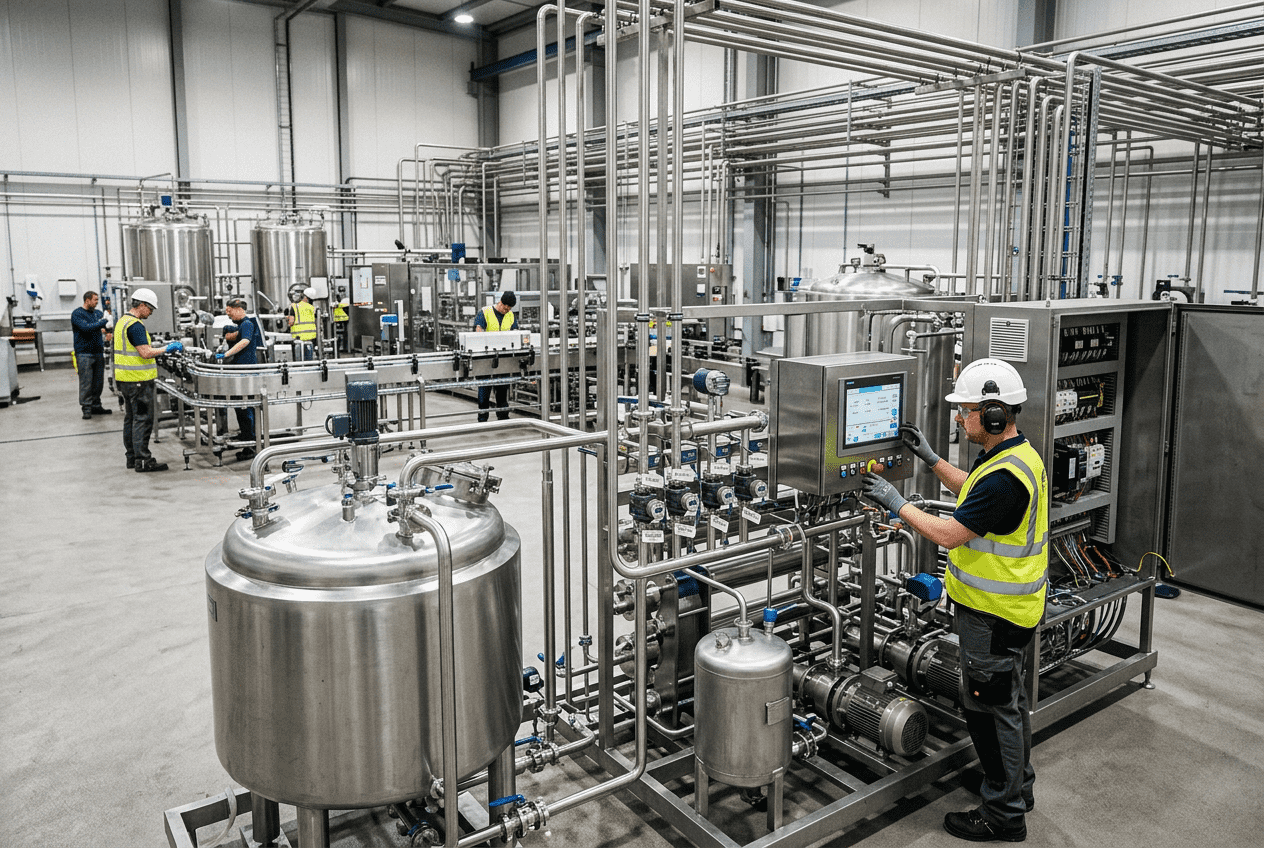
2026 Food Plant Energy Efficiency Audit: A Complete Guide
[trp_language language=”en_US”]
U.S. Food Plant Energy Audit Guide for 2026
Food manufacturers in the United States are under pressure from every direction at once: higher utility rates, tighter margins, labor constraints, aging infrastructure, retailer sustainability demands, and increased scrutiny on water, refrigeration, steam, compressed air, and overall plant efficiency. In that environment, an energy efficiency audit is no longer just a maintenance exercise. It is a capital planning tool, an operations tool, and a profitability tool.
For plants in major manufacturing corridors such as the Midwest, the Southeast, Texas, California’s Central Valley, the Carolinas, and logistics hubs connected to Chicago, Dallas, Atlanta, Los Angeles, Savannah, and Houston, energy consumption patterns directly shape production cost per pound, per case, or per gallon. The best audits do not stop at finding waste. They prioritize the fixes, connect them to production realities, and create an implementation path the plant can actually execute.
This guide explains what a food plant energy efficiency audit covers, which systems matter most, where losses commonly hide, what deliverables a useful audit should include, and how manufacturers can move from assessment to measurable action.
Quick Answer

An energy efficiency audit for a food plant is a structured review of how a facility uses electricity, steam, gas, refrigeration, water, compressed air, and process utilities. The goal is to identify waste, rank improvement projects by payback and operational impact, and produce a practical roadmap for implementation. In U.S. food and beverage manufacturing, the most valuable audits go beyond utility benchmarking. They tie energy use to throughput, sanitation demands, uptime, product quality, regulatory compliance, and expansion plans.
For most facilities, the highest-return opportunities are found in refrigeration optimization, boiler and steam improvements, compressed air leak reduction, heat recovery, HVAC balancing, CIP cycle tuning, motor and VFD upgrades, controls programming, and production scheduling alignment. A strong audit can uncover savings in the 10% to 30% range, with some projects paying back in less than 12 months and broader plant modernization delivering value over 12 to 36 months.
| Audit Question | Why It Matters | Typical Finding | Expected Benefit |
|---|---|---|---|
| Where is the plant using the most energy? | Identifies major cost centers | Refrigeration, steam, compressed air | Better project prioritization |
| Is utility use aligned with production output? | Shows hidden inefficiency | High base load during idle periods | Lower off-shift waste |
| Are systems oversized or poorly controlled? | Reveals control-related losses | Fans, pumps, compressors at full speed | Lower electrical demand |
| Are there maintenance-driven losses? | Links reliability to energy | Leaks, fouling, failed insulation | Reduced utility spend |
| What projects pay back fastest? | Supports budget decisions | Leaks, VFDs, control tuning | Faster ROI |
| What upgrades support future growth? | Aligns efficiency with expansion | Utility bottleneck corrections | Scalable production capacity |
The table above shows why a plant-wide review should be grounded in both utility data and process reality. A refrigeration issue may be an energy problem, but it may also be a throughput or product quality problem. Likewise, compressed air waste may stem from equipment selection, not only leaks.
What Is an Energy Efficiency Audit

An energy efficiency audit is a data-backed evaluation of how a food manufacturing facility consumes and loses energy across production, sanitation, storage, packaging, and support systems. In practical terms, it combines utility bill analysis, field observations, equipment review, metering, control logic assessment, operator interviews, and financial modeling.
In food plants, the audit must be more detailed than in many other industrial settings because process loads vary sharply by product type. A poultry facility has very different thermal and refrigeration demands than a dairy processor, a sauce plant, an aseptic beverage operation, or a ready-to-eat meal producer. Cleaning cycles, washdown frequency, cold chain requirements, retort scheduling, batching patterns, and sanitation windows all affect the energy profile.
A useful audit generally answers five business questions:
- How much energy is the plant consuming, and where?
- Which systems are underperforming relative to design or operating intent?
- Which upgrades reduce cost without hurting food safety or production uptime?
- What is the payback profile of each recommended action?
- How should the work be phased to fit operations, shutdown windows, and capital plans?
For U.S. manufacturers, energy audits are also increasingly tied to environmental reporting, Scope 1 and Scope 2 reduction goals, utility incentive programs, and site resilience planning. Plants near major utility service territories in California, Texas, the Mid-Atlantic, and the Northeast often find that audit-quality documentation supports rebate applications and internal capital approvals.
| Audit Type | Scope | Best Use Case | Data Depth |
|---|---|---|---|
| Walkthrough audit | High-level site review | Quick screening of opportunities | Low to moderate |
| Targeted system audit | One utility or process area | Boiler, refrigeration, or air system issues | Moderate |
| Comprehensive plant audit | Whole facility review | Strategic planning and capital budgeting | High |
| Pre-expansion audit | Capacity plus utility readiness | Line additions or relocation projects | High |
| Post-integration audit | New system verification | Recent capital project validation | Moderate to high |
| Decarbonization audit | Energy plus emissions | 2026 sustainability programs | High |
This comparison matters because many plants do not need the same level of study every time. A site with strong metering and clear pain points may benefit from a targeted refrigeration or steam audit. A multi-line facility planning expansion often needs a broader review that ties utilities to capacity, maintenance, and automation.
Key Systems Assessed During the Audit

The most important systems in a U.S. food plant audit are usually refrigeration, boilers and steam distribution, hot water generation, compressed air, HVAC, process heating and cooling, motors and drives, water systems, wastewater-related loads, lighting, and plant controls. Depending on the facility, the audit may also review CIP skids, pasteurization systems, retorts, glycol loops, cooling towers, conveyors, ovens, smokehouses, freezers, blast cells, and packaging lines.
In cold-chain operations such as protein, seafood, dairy, frozen foods, and ready meals, refrigeration often dominates total electrical consumption. In thermal plants such as sauces, beverages, aseptic systems, retort operations, bakeries, and cooked proteins, steam and hot water may represent the biggest opportunity. In older facilities, controls and utility distribution losses can be as important as the equipment itself.
| System | What Auditors Review | Common Waste Mode | Potential Action |
|---|---|---|---|
| Refrigeration | Compressors, condensers, evaporators, defrost, setpoints | Overcooling, poor sequencing, dirty coils | Controls optimization, maintenance, VFDs |
| Boilers and steam | Combustion, blowdown, traps, insulation, condensate return | Heat loss, failed traps, excess pressure | Trap program, economizer, insulation repair |
| Compressed air | Compressor loading, leaks, pressure settings, dryer use | Leaks and pressure too high | Leak survey, setpoint reset, storage changes |
| HVAC | Air changes, makeup air, humidity control, zoning | Simultaneous heating and cooling | Balancing, scheduling, sensor corrections |
| CIP and water heating | Cycle design, tank temperature, reuse strategy | Overheating, over-rinsing, poor sequencing | Recipe tuning, heat recovery, automation |
| Motors and pumping | Load profiles, throttling, run hours | Constant-speed operation | VFD installation, resizing, controls integration |
| Process controls | PLC logic, SCADA visibility, alarms, trending | Short cycling, poor scheduling | Programming changes, dashboards |
The systems above are often interdependent. For example, a refrigeration compressor issue may be driven by loading dock infiltration, a freezer door sequence, or a sanitation-related air pressure imbalance. That is why system-by-system reviews are necessary, but cross-functional analysis is even more important.
At the technical level, manufacturers often need engineering support across mechanical, process, electrical, plumbing, structural, and controls disciplines to convert audit findings into executable projects. Firms with process integration experience in utilities, automation, and production systems can close the gap between diagnosis and implementation more effectively than consultants who only deliver reports.
Common Energy Loss Areas in Food Plants
Food plants lose energy in predictable places, but the cost impact varies by product, shift pattern, sanitation protocol, and climate zone. Facilities in humid regions like the Southeast often battle HVAC and latent load issues. Facilities in the Upper Midwest may have heavy winter heating losses and aging steam systems. Plants in California and Texas may see high electrical demand charges driven by refrigeration, compressed air, or cooling systems.
Below are the most common loss areas seen across U.S. food and beverage facilities:
| Loss Area | How It Appears in Plants | Operational Effect | Typical Savings Range |
|---|---|---|---|
| Compressed air leaks | Continuous hiss, excessive compressor cycling | Higher power draw, less stable pressure | 5% to 20% of air energy use |
| Steam trap failures | Live steam loss or blocked condensate | Poor heat transfer, unsafe conditions | 5% to 15% of steam cost |
| Insulation damage | Hot valves, bare piping, tank shell loss | Heat waste and room temperature rise | Fast payback in thermal areas |
| Poor refrigeration sequencing | Compressors running inefficiently at part load | High demand peaks | 8% to 18% reduction possible |
| Excessive air infiltration | Open dock doors, bad seals, traffic patterns | Higher cooling and humidity loads | 3% to 12% building-related savings |
| Oversized motors and pumps | Throttled flow, full-speed operation | Unnecessary electrical use | 10% to 30% on affected assets |
| Inefficient CIP cycles | Long rinses, excessive heating, no reuse logic | Energy, water, and chemical waste | 5% to 15% utility reduction |
Plants often underestimate “hidden” waste because it does not appear as a production failure. A line still runs, a room still cools, and a boiler still makes steam. Yet utility spend rises every month. A good audit quantifies these losses in dollars, not just in engineering terms.
In many food plants, production schedules themselves create avoidable waste. Utilities are often kept fully online during sanitation changeovers, weekends, or partial staffing periods. Demand spikes may be caused by multiple process starts hitting at the same time. Sequencing production to reduce peak utility overlap can create savings without major capital spending.
The line chart illustrates the steady rise in spending on energy optimization and utility modernization in the U.S. food manufacturing sector. This growth is being driven by utility inflation, decarbonization goals, digital monitoring, and the need to keep older facilities competitive against greenfield sites.
Audit Methodology and Deliverables
A high-quality audit follows a structured process. It starts before the site visit, continues through fieldwork and data validation, and ends with decision-ready recommendations. The best deliverables are practical, not academic. Plant leaders should be able to use them for capital requests, maintenance planning, and execution scheduling.
A typical methodology includes utility bill review for 12 to 24 months, load profiling where data exists, process mapping, equipment inventory, field inspections, operator and maintenance interviews, temporary metering if needed, control sequence review, and financial modeling. In complex facilities, auditors also examine how process changes affect utility peaks and base loads.
| Audit Step | Primary Activity | Main Output | Why It Matters |
|---|---|---|---|
| Data collection | Gather bills, drawings, run schedules, equipment lists | Baseline dataset | Builds factual starting point |
| Site walkthrough | Inspect utilities and production areas | Observed loss points | Validates field reality |
| Stakeholder interviews | Meet operations, QA, maintenance, engineering | Operational constraints | Avoids unrealistic recommendations |
| Measurement and analysis | Metering, trending, benchmark review | Quantified savings model | Separates high and low value projects |
| Project ranking | Payback, risk, downtime, complexity scoring | Priority matrix | Supports budgeting and phasing |
| Final report and roadmap | Deliver findings and implementation plan | Action-ready package | Enables execution |
Deliverables should include at least the following:
- Current-state utility baseline by system and, where possible, by process area
- List of identified opportunities with estimated savings, cost, and payback
- Operational notes affecting implementation
- Risk flags for food safety, downtime, or compliance
- Phased implementation roadmap
- Executive summary for finance and leadership teams
For manufacturers evaluating broader engineering or integration work, it is helpful when the audit provider can also support process engineering and project execution services after the report is issued. That continuity reduces the risk of good recommendations sitting on a shelf because no one owns the next step.
Implementation Roadmap and ROI Timeline
Most food plants should not treat all audit findings equally. The smartest approach is to organize recommendations into three buckets: quick wins, mid-range upgrades, and strategic capital projects. That creates momentum while preserving focus on the larger utility and process changes that may require engineering, procurement, controls work, shutdown planning, or phased construction.
Quick wins typically include leak repairs, insulation fixes, steam trap replacement, lighting controls, sensor calibration, basic programming changes, and scheduling improvements. Mid-range projects often include VFD installations, compressor sequencing, condenser fan optimization, CIP modifications, heat recovery, or hot water improvements. Strategic projects may involve refrigeration architecture changes, boiler plant modernization, plantwide automation upgrades, utility redistribution, or expansion-driven redesign.
| Project Tier | Examples | Typical Cost | Common ROI Window |
|---|---|---|---|
| Quick wins | Leaks, trap repair, controls tuning | Low | 3 to 12 months |
| Operational upgrades | VFDs, sequencing, balancing | Low to medium | 6 to 18 months |
| System optimization | Heat recovery, CIP redesign, compressor changes | Medium | 12 to 24 months |
| Capital modernization | Boiler plant or refrigeration overhaul | Medium to high | 18 to 36 months |
| Expansion-aligned utility work | New utility headers, automation integration | High | Depends on throughput growth |
| Decarbonization investments | Electrification, heat recovery networks | High | 24 to 60 months |
This framework helps plant leaders sequence investments in a way that supports both near-term savings and long-term competitiveness. It also improves communication with finance teams that want to understand why one project should move before another.
The bar chart shows where demand for plant energy audits is especially strong in 2026. Protein, dairy, frozen foods, and prepared foods tend to show the greatest need because they combine intensive utility use with strict quality and sanitation requirements.
Case Study: 30% Energy Reduction Project
Consider a hypothetical but realistic U.S. prepared foods plant near a major Southeastern distribution corridor serving Atlanta, Charlotte, and Jacksonville. The facility operates two cooking lines, one packaging hall, multiple chilled rooms, and a central utility area with steam, compressed air, refrigeration, and CIP. Leadership originally believed a major utility expansion was necessary to support volume growth.
During the audit, several findings emerged:
- Compressed air pressure was set higher than line requirements, causing excess compressor loading.
- Steam traps in two production zones had widespread failures.
- CIP recipes used longer hot rinse periods than process risk required.
- Refrigeration compressors were not sequenced efficiently during partial-load operation.
- PLC logic created overlapping utility peaks during startup and sanitation transitions.
Instead of moving directly into a high-cost equipment addition, the plant implemented staged corrections. Controls were adjusted, leaking air points were repaired, trap replacements were bundled with insulation work, CIP logic was retuned, and refrigeration sequencing was updated. The result was an overall energy reduction of roughly 30%, with a substantial share delivered before any major capital project began.
The bigger lesson is that energy reduction often comes from engineering clarity, not only from buying new hardware. Some of the highest-value improvements happen when controls, utilities, and process operations are treated as one system.
The area chart reflects a major 2026 trend: more energy savings are coming from controls, sequencing, data visibility, and automation rather than only from equipment replacement. Plants that can trend utility performance through PLC and SCADA systems are better positioned to sustain savings over time.
How DPS Delivers Audit-to-Action Results
Many audit providers are strong at finding problems but not set up to deliver the fix. That is where an integrated engineering and execution model becomes valuable. Disruptive Process Solutions supports food and beverage manufacturers across the United States and Canada with an approach designed to move from concept to field execution without losing business focus.
On the technology side, DPS brings multi-discipline engineering that includes process, mechanical, plumbing, electrical, structural, and controls capabilities. That matters when an energy audit touches refrigeration, steam, utilities, automation, SCADA visibility, PLC programming, heat transfer, and system integration at the same time. In many food plants, the energy issue is not isolated to one asset. It sits at the intersection of process design, controls logic, and utility infrastructure.
On the manufacturing side, DPS works across a broad set of food and beverage applications, including protein processing, prepared foods, dairy, aseptic systems, sauces, beverages, fermentation, distillation, and co-packing environments. That cross-sector experience is important because each product family has a distinct load profile. A retort-heavy operation, a cold-fill beverage line, and a marinated protein plant each require different recommendations to preserve product quality and compliance while reducing utility use.
On the service side, DPS operates with an end-to-end model that combines planning, design, installation oversight, integration, and project management. For manufacturers that need more than a report, this can reduce handoff friction between engineering recommendations and field execution. Companies exploring broader plant optimization can learn more about DPS capabilities through its company overview, its service offerings, and selected project case studies.
DPS also supports the practical side of plant improvement by aligning recommendations with shutdown windows, contractor management, local trade coordination, equipment integration, and production priorities. Where utility upgrades require custom skids, tanks, or process components, manufacturers may also benefit from reviewing available process equipment capabilities that can be integrated into broader plant improvements.
The real differentiator in audit-to-action work is not simply identifying waste. It is building a realistic path to remove it while protecting output, quality, food safety, and return on capital.
The comparison chart highlights an important buying consideration for U.S. manufacturers: finding opportunities is only one part of the value chain. Plants usually benefit more from partners that can connect energy analysis with process engineering, controls work, construction management, and implementation planning.
Our Company
Disruptive Process Solutions is a North American food and beverage engineering company focused on profitable capital execution for manufacturers that want practical, business-driven outcomes. Headquartered in Cary, North Carolina, with a West Coast presence in Lake Forest, California, DPS works with clients across all 50 states and Canada.
The company supports projects ranging from targeted utility and process improvements to full system integration, relocation, expansion, and greenfield development. Its work spans both food and beverage, including brewing, spirits, dairy, ready-to-drink products, protein processing, sauces, prepared foods, and aseptic applications. That breadth helps the team recognize where utility waste is tied to process design, scheduling, sanitation logic, or plant layout rather than just equipment age.
DPS is especially relevant to manufacturers that want an engineering partner able to move from assessment into design-build-manage execution. For plants facing energy inflation, capacity constraints, utility bottlenecks, or aging infrastructure, that continuity can be the difference between a report that sits idle and a project that delivers measurable savings.
FAQ
| Question | Answer |
|---|---|
| How often should a U.S. food plant complete an energy efficiency audit? | Most facilities benefit from a comprehensive review every two to three years, with targeted system audits annually for refrigeration, steam, or compressed air if those utilities are major cost drivers. |
| What plant size justifies an audit? | Audits are valuable for both mid-sized and large facilities, but they are especially useful when annual utility spend is significant, when the site runs multiple shifts, or when expansion is planned. |
| Will an audit disrupt production? | Most audit work can be performed with minimal disruption through walkthroughs, interviews, trend review, and temporary metering. Some detailed testing may need coordination during low-impact windows. |
| What is the fastest payback category? | Compressed air leaks, steam trap failures, insulation repair, scheduling changes, and controls tuning often produce the shortest payback periods. |
| Can an audit support sustainability goals? | Yes. It helps quantify reductions in electricity, fuel use, and often emissions, while also supporting broader 2026 sustainability, reporting, and utility incentive strategies. |
| Does a food plant need a general energy consultant or a process-focused engineering partner? | If savings depend on process, utility, automation, sanitation, and capacity interactions, a process-focused engineering partner is usually better equipped to translate findings into execution. |
An energy efficiency audit should not be viewed as a one-time compliance document or a narrow utility exercise. In the U.S. food industry, it is increasingly a foundation for cost control, production resilience, capital discipline, and sustainable growth. As 2026 approaches, the winning plants will be those that treat energy performance as part of core manufacturing strategy, not just overhead management.
Whether the plant is located near Midwest protein corridors, California beverage clusters, Gulf Coast export channels, or fast-growing Southeastern manufacturing hubs, the same principle applies: the best savings come from understanding how utilities, process systems, controls, maintenance, and business goals work together. When that understanding is backed by a clear roadmap, energy efficiency becomes a profit driver rather than a side initiative.
[/trp_language]
Complete Company Portfolio
About the Author: Disruptive Process Solutions (DPS)
The DPS team combines process engineering expertise with real-world food and beverage manufacturing experience. Our content focuses on process optimization, production efficiency, facility improvements, and practical solutions that help manufacturers operate more effectively in a rapidly evolving industry.
Share