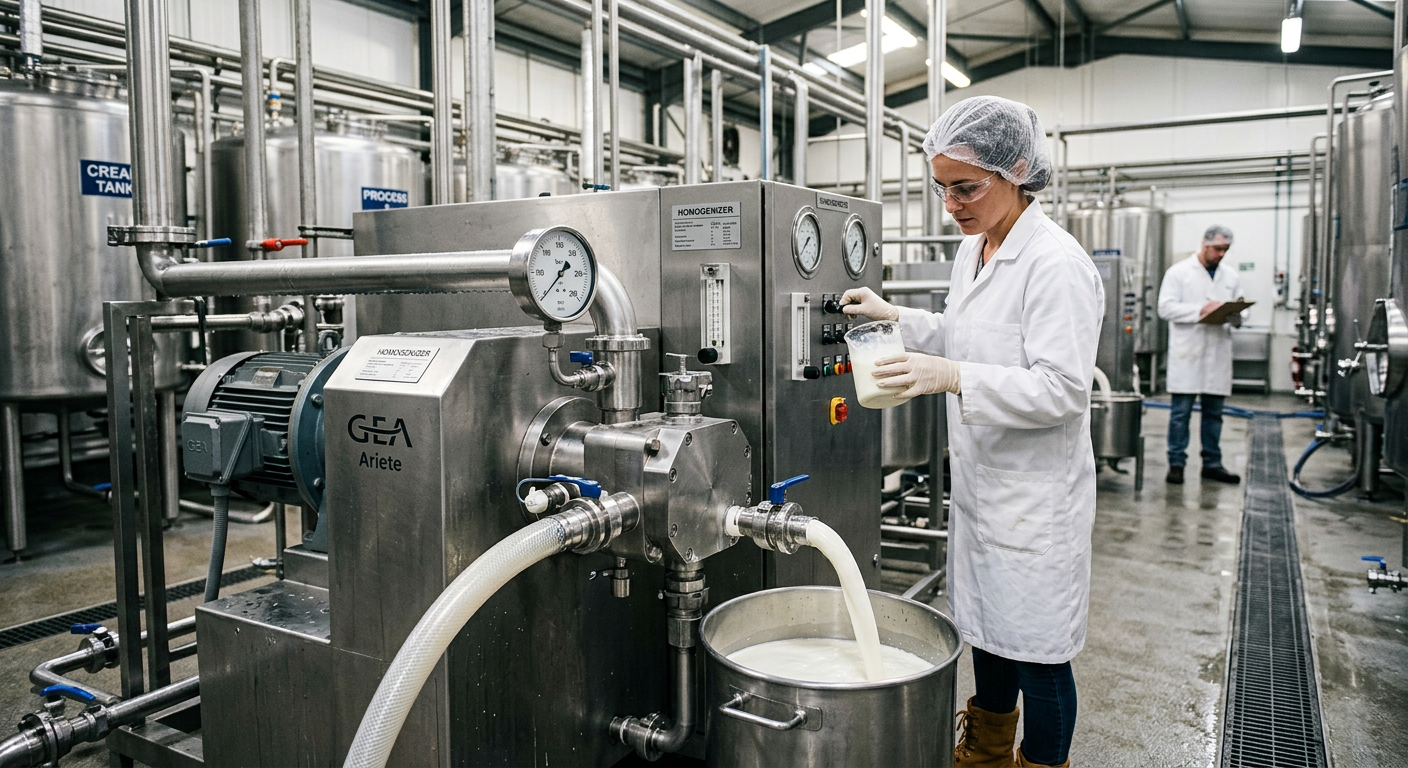
3 Types of Heat Recovery Systems for Food Plants
[trp_language language=”en_US”]
Heat Recovery Options for U.S. Food Processing Plants
Food and beverage manufacturers in the United States are under constant pressure to lower utility costs, reduce carbon intensity, protect margins, and improve production resilience. In many plants, heat leaves the site every hour through boiler stacks, refrigeration condensers, hot effluent, and warm process streams. Recovering that energy can reduce fuel use, lower water-heating costs, and improve overall utility efficiency without changing the core product. For facilities in major production corridors such as the Midwest, the Southeast, Texas, California’s Central Valley, and the Carolinas, heat recovery is increasingly becoming a practical capital project rather than a sustainability talking point.
Immediate Takeaway

The three most common heat recovery approaches for food plants are boiler economizers, process heat exchangers, and refrigeration condenser heat recovery. Boiler economizers capture stack heat to preheat boiler feedwater. Process heat exchangers move energy from one product or utility stream to another, such as warming incoming water with hot CIP return or cooking-loop discharge. Refrigeration condenser recovery systems turn rejected heat into useful hot water for washdown, sanitation, makeup water, or low-temperature process loads. The best choice depends on utility profile, temperature levels, sanitation constraints, operating hours, and whether the site needs hot water, preheated feedwater, or direct process energy.
In the U.S. market, plants with high steam usage, large refrigeration loads, and year-round sanitation demand often see the fastest payback. Poultry plants in Georgia and Arkansas, dairy facilities in Wisconsin and Idaho, beverage producers around Dallas-Fort Worth, and prepared food manufacturers near Chicago or Charlotte often have strong conditions for recovery projects. If a site runs multiple shifts and already tracks gas, steam, ammonia, or glycol loads, the project can usually be evaluated with solid economic confidence.
| System Type | Main Heat Source | Primary Reuse | Typical Temperature Range | Best Fit | Common Payback |
|---|---|---|---|---|---|
| Boiler economizer | Boiler flue gas | Boiler feedwater preheat | 250°F to 500°F stack-side source | Steam-heavy plants | 12 to 30 months |
| Process heat exchanger | Hot process stream | Water or product preheat | 120°F to 250°F source | CIP, cooking, batching, retort | 10 to 24 months |
| Condenser heat recovery | Refrigeration reject heat | Hot water generation | 90°F to 140°F useful recovery | Cold storage, dairy, beverage, protein | 8 to 24 months |
| Flash steam recovery | Condensate pressure drop | Low-pressure steam reuse | Low to medium pressure systems | Large condensate return networks | 12 to 36 months |
| Wastewater heat recovery | Warm effluent | Incoming water tempering | 70°F to 120°F source | High water-use plants | 18 to 42 months |
| Air-to-water heat recovery | Exhaust air or compressor room heat | Space or water heating | 80°F to 160°F source | Ancillary utility loads | 18 to 36 months |
This table shows why the first three options receive the most attention in food processing: they connect a reliable heat source to a steady plant demand. That source-and-demand match is what usually drives the strongest business case.
Three Heat Recovery System Types for Food Plants

Most food plants do not need a complicated energy strategy at the start. They need a ranked list of where heat is being rejected, what temperatures are available, how often the load exists, and whether the recovered energy can be used every day. In practice, three system categories dominate because they are compatible with food safety requirements and can be integrated into existing utility rooms and process areas.
1. Boiler-side heat recovery
Steam remains essential in protein processing, dairy, aseptic lines, cook rooms, retort operations, and sanitation systems. Every boiler sends energy up the stack. If excess oxygen, flue gas temperature, and feedwater conditions are suitable, an economizer can recover part of that loss. Plants in colder states such as Minnesota, Michigan, and Pennsylvania can also evaluate extended options that support makeup water heating during winter operation. For high-hours facilities, even a moderate reduction in stack temperature can produce meaningful annual gas savings.
2. Process-to-process heat recovery
This category includes plate, tubular, shell-and-tube, and scraped-surface designs depending on viscosity, solids, fouling risk, and cleaning method. A common U.S. example is recovering energy from hot CIP return to preheat fresh make-up water. Another is using a cooked sauce discharge stream to temper an ingredient or water stream before final heating. Because these systems touch the process environment, design discipline around cleanability, pressure balance, product segregation, and thermal control is critical.
3. Refrigeration heat recovery
Ammonia and mechanical refrigeration systems reject large amounts of heat. Traditionally, that heat is thrown away through condensers or gas coolers. In facilities with constant washdown or sanitation demand, that same energy can generate low-cost warm or hot water. This is especially relevant for dairy, beverage, frozen food, seafood, meat, and ready-to-eat operations. Plants near logistics hubs such as Los Angeles/Long Beach, Houston, Kansas City, and Atlanta often run large refrigerated footprints where condenser recovery becomes highly attractive.
The growth pattern above reflects a realistic market direction: projects accelerate when energy prices stay volatile, ESG reporting expands, and producers seek margin protection instead of only capacity expansion. By 2026, plants that once viewed heat recovery as optional are more likely to treat it as standard utility optimization.
Installing Boiler Economizers

A boiler economizer is one of the most straightforward heat recovery projects when a site has a stable steam demand profile. The device transfers heat from flue gas to incoming boiler feedwater, reducing burner fuel consumption because the boiler no longer has to raise water temperature from as low a starting point. In older facilities, this can be one of the least disruptive ways to improve thermal efficiency because the project is concentrated around the boiler room rather than the production floor.
Successful economizer installation starts with stack data, not guesswork. Engineers should confirm current flue gas temperature, combustion conditions, boiler turndown, feedwater temperature, deaerator operation, water chemistry, and hours of operation. If the stack temperature is already low, the available savings may be limited. If sulfur, condensate, or corrosion risk is present, materials and controls must be selected carefully to avoid dew point issues. Food manufacturers should also review maintenance access and whether the unit can be isolated without interrupting sanitation or production schedules.
At large campuses in places like Fresno, Modesto, Milwaukee, or Springdale, boiler plants often support multiple departments. That broad steam dependency can make economizers especially valuable. They also pair well with broader modernization efforts such as condensate return improvements, burner tuning, deaerator optimization, and steam trap repair.
| Evaluation Factor | Why It Matters | Good Indicator | Warning Sign | Typical Data Source | Project Impact |
|---|---|---|---|---|---|
| Flue gas temperature | Defines recovery potential | Consistently elevated stack heat | Already near minimum safe limit | Boiler logs | High |
| Boiler operating hours | Drives annual savings | Two or three shifts, year-round | Seasonal or intermittent use | Production schedule | High |
| Feedwater temperature | Determines preheat benefit | Cool incoming feedwater | Already heavily preheated | Utility instrumentation | Medium |
| Water treatment quality | Protects equipment life | Stable chemistry controls | Frequent scaling issues | Boiler water reports | Medium |
| Space and access | Affects installability | Room for bypass and service | Tight stack corridor | Site survey | Medium |
| Control integration | Supports safe operation | Existing automation support | Obsolete controls | PLC/BMS review | Medium |
The key lesson from this checklist is that an economizer project succeeds when engineering, controls, and maintenance are considered together. Plants that only focus on equipment price often underestimate installation details and post-startup tuning.
Process Heat Exchangers in Production Lines
Process heat exchangers create some of the most elegant heat recovery wins because they use one plant stream to benefit another. In food manufacturing, the technology must be selected around product characteristics and cleaning requirements. Plate heat exchangers are excellent for low-viscosity fluids and compact footprints. Tubular designs handle particulates and more demanding hygiene needs. Shell-and-tube units may fit utility services or rugged process applications. Scraped-surface heat exchangers can address viscous or fouling products where traditional heat transfer surfaces lose performance quickly.
Typical applications include preheating ingredient water before blending, recovering energy from pasteurizer discharge, tempering incoming product prior to thermal processing, and reclaiming heat from hot cleaning loops. In dairy and beverage plants, thermal regeneration within pasteurization skids is already well known. The next step is often to expand recovery beyond one skid to plantwide utility users, provided food safety separation remains absolute.
Because these systems can affect validated process conditions, the design should include hydraulic review, control narratives, CIP logic, and instrumentation strategy. Facilities operating under FDA, USDA, SQF, or BRC expectations cannot afford cross-contamination or unstable thermal performance. That is one reason many manufacturers prefer partners with both process engineering and field integration experience instead of treating the exchanger as a simple catalog purchase.
| Exchanger Type | Best For | Advantages | Limitations | Food Plant Example | Sanitary Suitability |
|---|---|---|---|---|---|
| Plate and frame | Low-viscosity fluids | High efficiency, compact | Gasket maintenance, solids sensitivity | Juice, water, CIP | High |
| Tubular | Products with particles | Robust, hygienic | Larger footprint | Sauces, dairy mixes | High |
| Shell and tube | Utility services | Durable, versatile | Less compact | Hot water loops, glycol interfaces | Medium to high |
| Scraped surface | Viscous or fouling products | Handles difficult products | Higher capital cost | Dressings, confections | High |
| Spiral | Dirty streams | Good fouling tolerance | Less common in sanitary layouts | Effluent recovery | Medium |
| Double-tube | Small or specialty lines | Simple, pressure capable | Lower compactness | Pilot or niche applications | High |
The comparison shows that “best” is not universal. The right exchanger is the one that fits the product, cleaning regime, and utility objective. A cheaper configuration can become expensive if it fouls quickly or creates sanitation delays.
Industry demand is strongest where both thermal and refrigeration loads are large, where sanitation is frequent, and where plants run long schedules. That is why dairy, protein, and beverage operations often lead the market.
Capturing Heat from Refrigeration Condensers
Refrigeration systems are often the hidden engine of heat recovery in food plants. Compressors move heat out of cold rooms, blast freezers, process chillers, fermentation suites, and glycol loops, then reject it outdoors or to cooling water. If the plant also spends money heating washdown water, CIP water, or makeup water, an opportunity exists to recover part of that rejected energy before it leaves the site.
Common designs include desuperheaters, heat reclaim heat exchangers, and integrated hot water packages tied to ammonia or packaged refrigeration systems. The useful output is often ideal for low- to medium-temperature water needs rather than high-pressure steam replacement. In a poultry or meat plant, recovered heat may support sanitation and washdown. In a brewery, it may warm brewing liquor or support CIP. In a dairy facility, it may preheat water feeding a larger hot water system.
Projects in hot and humid climates such as Florida, Louisiana, and coastal Texas can be especially attractive because refrigeration plants often operate hard for long hours. That said, colder regions like the Upper Midwest also benefit when year-round refrigerated production is paired with continuous sanitation demand. The main rule is simple: do not evaluate the condenser side alone. Always match the recoverable heat profile to a real on-site water demand profile.
| Plant Type | Refrigeration Load Profile | Likely Recovered Heat Use | Recovery Strength | Typical Water Demand Match | Implementation Note |
|---|---|---|---|---|---|
| Dairy processing | High, steady | CIP and hot water preheat | Excellent | Strong | Validate sanitation integration |
| Meat and poultry | High, variable by shift | Washdown and sanitation | Excellent | Strong | Account for peak cleanup periods |
| Brewery and beverage | Moderate to high | Brewing liquor and CIP | Very good | Good | Coordinate with glycol system controls |
| Frozen foods | Very high | Facility hot water support | Very good | Moderate | Check seasonal demand swing |
| Seafood processing | High in chilled zones | Washwater and cleanup | Good | Strong | Corrosion-resistant design may matter |
| Cold storage distribution | High but less process thermal use | Office or service water heating | Moderate | Weaker | Need enough sink for recovered heat |
The table highlights a central truth: refrigeration heat recovery is excellent where sanitation and hot water demand are constant. Without a dependable use for that heat, the economics weaken even if the refrigeration load is large.
Turning Waste Heat into Plant Hot Water
Hot water is often the easiest destination for recovered heat because nearly every food plant needs it. Sanitation, handwash systems, ingredient water, CIP makeup, crate washing, bottle cleaning, and utility support all consume heated water. Converting waste heat into hot water can therefore reduce boiler firing, cut direct-fired heater consumption, and flatten utility peaks.
The most successful systems are designed around a realistic hot water ladder. Low-temperature recovered heat can first lift incoming water from, for example, 55°F to 95°F. A second stage may raise it further, and a final trim heater or boiler then brings it to the exact required setpoint. This staged strategy avoids demanding too much from one recovery source and makes low-grade heat economically valuable.
Storage also matters. If refrigeration reject heat is available at one time but sanitation load peaks later, a well-sized insulated hot water tank can stabilize the system. Controls should prioritize recovered heat first, then call for supplemental energy only when needed. U.S. plants facing demand charges or seeking utility rebates may gain additional value from reducing concurrent gas and electric peaks through smart sequencing.
Manufacturers evaluating these systems should also confirm local water quality, makeup volume, and scaling risk. In regions such as Phoenix, inland California, or parts of Texas where hardness can be a concern, heat exchanger design and treatment strategy should be aligned from the start.
The area trend reflects a broad operational change: waste heat is increasingly viewed as a recoverable utility asset. By 2026, digital energy management, utility incentives, and internal decarbonization targets are expected to accelerate that shift.
Using Recovered Energy to Preheat Boiler Feedwater
Preheating boiler feedwater deserves special attention because it bridges process engineering and utility economics. Any degree of temperature increase ahead of the boiler reduces the fuel required to produce steam. Heat sources can include economizers, condensate return, flash steam, and in some facilities even secondary heat recovered from process or refrigeration loops through an intermediate hot water system.
This approach is particularly attractive in plants with high deaerator throughput and good condensate management. Where condensate return rates are low, preheat strategies may recover part of the missed opportunity. However, temperature alone is not the only decision factor. Engineers should review oxygen removal, pump NPSH considerations, control valve behavior, tank venting, and water treatment interactions. A badly integrated preheat system can create instability that offsets a portion of the savings.
For facilities in strategic freight and production belts such as Indianapolis, Memphis, Omaha, and the Research Triangle, steam reliability often matters as much as efficiency. Feedwater preheat can help support a more stable boiler operation while reducing burner load, which is valuable for plants trying to maximize uptime during tight production windows.
Estimating Return on Heat Recovery Investments
Capital approval in U.S. food manufacturing usually depends on measurable payback, not theory. A solid ROI calculation should include annual recovered energy, utility rates, operating hours, maintenance costs, installation complexity, controls integration, and any downtime risk during tie-in. It should also capture secondary gains where relevant, such as reduced cooling tower load, lower boiler cycling, improved hot water availability, or better utility capacity utilization.
Too many ROI models fail because they assume nameplate conditions all year. In reality, production shifts, sanitation schedules, seasonal ambient changes, and partial load operation all affect savings. The best practice is to model several scenarios: conservative, expected, and high-utilization. For enterprise clients, tying the project to portfolio-level carbon or energy intensity goals can also strengthen the investment case.
| Project Scenario | Installed Cost | Annual Energy Savings | Annual Maintenance Cost | Net Annual Benefit | Simple Payback |
|---|---|---|---|---|---|
| Small boiler economizer | $95,000 | $52,000 | $4,000 | $48,000 | 2.0 years |
| Plate exchanger on CIP return | $68,000 | $39,000 | $3,000 | $36,000 | 1.9 years |
| Refrigeration heat reclaim package | $145,000 | $84,000 | $7,000 | $77,000 | 1.9 years |
| Hot water storage integration | $120,000 | $49,000 | $5,000 | $44,000 | 2.7 years |
| Feedwater preheat upgrade | $180,000 | $76,000 | $6,000 | $70,000 | 2.6 years |
| Hybrid multi-source recovery system | $340,000 | $153,000 | $12,000 | $141,000 | 2.4 years |
These example economics are illustrative, but they show why heat recovery projects often compete well for capital. When a plant operates year-round and can use the recovered energy every day, simple payback under three years is common.
For buying advice, focus on five questions. First, is the heat source stable enough to model? Second, is there a dependable sink for the recovered energy? Third, can the system be cleaned, maintained, and isolated without production disruption? Fourth, will controls integration make the system easy to operate? Fifth, does the project partner understand food plant realities rather than only generic HVAC or industrial utility design? Those questions matter more than chasing the lowest quoted equipment cost.
The comparison chart emphasizes a common procurement lesson in the U.S. market: integrated execution usually outperforms piecemeal sourcing for sanitary heat recovery projects. Equipment alone is only part of the value; engineering, controls, field coordination, and startup support often determine whether projected savings are actually achieved.
Local supplier and project partner considerations
When selecting local or regional suppliers, U.S. manufacturers should look beyond geography and assess food-sector relevance. A contractor in New Jersey may be close to a plant, but if the project involves aseptic systems, USDA environments, or ammonia refrigeration interfaces, sector experience matters more than distance. Strong local presence still helps, especially around dense manufacturing and logistics clusters such as Chicago, Charlotte, the Inland Empire, Nashville, and the I-35 corridor in Texas. Local fabrication, electrical support, insulation crews, and pipefitters can shorten schedule and reduce travel cost, but central engineering leadership is still essential for consistency.
| Supplier Selection Criterion | What to Ask | Why It Matters | Strong Response | Weak Response | Decision Weight |
|---|---|---|---|---|---|
| Food industry experience | Have you delivered similar sanitary projects? | Reduces compliance and hygiene risk | Multiple relevant references | Only generic industrial work | Very high |
| Thermal modeling capability | Can you validate savings with operating data? | Improves ROI confidence | Data-backed calculations | Rule-of-thumb estimate only | High |
| Installation management | Who coordinates trades and shutdowns? | Prevents schedule disruption | Single accountable PM team | Client must coordinate everyone | High |
| Controls integration | Can you tie into PLC/SCADA? | Needed for reliable operation | In-house or proven partner support | Third-party unknown | High |
| Aftermarket support | What happens after startup? | Protects long-term savings | Defined service plan | No clear support path | Medium |
| Safety and compliance | How do you handle FDA/USDA/SQF needs? | Critical in food plants | Documented procedures | General statements only | Very high |
This procurement framework helps buyers compare suppliers on business value instead of unit price alone. The strongest partner is usually the one that can engineer, install, and commission the solution with accountability.
About Disruptive Process Solutions
For manufacturers that need more than an equipment quote, Disruptive Process Solutions operates as a food and beverage engineering partner focused on profitable project execution across the United States and Canada. The company is headquartered in Cary, North Carolina, with a West Coast presence in Lake Forest, California, and supports clients from early planning through field execution using a design-build-manage model. That structure is useful for heat recovery projects because these jobs often sit at the intersection of utilities, process, controls, structural considerations, and live production constraints.
Technological capabilities
DPS brings cross-disciplinary engineering that matters in heat recovery work: process, mechanical, plumbing, electrical, structural, and controls expertise under one project framework. That means a boiler economizer can be evaluated not only for thermal gain, but also for feedwater behavior, automation changes, SCADA visibility, and physical integration in a constrained utility room. The same applies to process heat exchangers and refrigeration recovery systems, where sanitary design, PLC programming, and utility balancing are often just as important as the exchanger itself. Manufacturers exploring broader plant optimization can review engineering and integration services to understand how utility upgrades fit into larger capital planning.
Manufacturing capabilities
Beyond engineering, DPS also supports projects with proprietary equipment capabilities, including process tanks, CIP systems, marination tumblers, and cooking vessels. That manufacturing perspective is valuable when a recovery project must interface with existing process systems instead of standing alone. In practice, many U.S. plants need more than a heat exchanger; they may also need buffer tanks, sanitary skids, custom piping modules, or utility-ready assemblies designed for faster field installation. Companies considering complementary hardware can explore process equipment solutions as part of a broader recovery or modernization scope.
Service capabilities
DPS supports capital planning, feasibility, owner’s representation, project management, general contracting where licensed, turnkey installation, and system integration. For heat recovery, that matters because ROI depends on execution quality. An under-engineered tie-in or poorly sequenced startup can wipe out savings and disrupt production. DPS is known for taking a practical, financially driven view of projects: evaluating whether capital should be spent at all, identifying bottlenecks honestly, and aligning scope with long-term profitability rather than short-term vendor revenue. Manufacturers that want real-world examples of integrated execution can browse project case studies for context.
In the U.S. market, that end-to-end approach is especially valuable for multi-site operators and fast-moving projects in beverage, dairy, protein, sauces, prepared foods, and aseptic environments. Whether the site is near the Port of Savannah, in California’s processing belt, or in a growing manufacturing hub like Raleigh-Durham or Dallas, the goal remains the same: engineer a heat recovery solution that saves money, works in daily operations, and supports long-term plant performance.
2026 trends shaping heat recovery decisions
Looking ahead to 2026, several trends are likely to shape project demand. First, more plants will use digital energy dashboards and historian data to find waste heat opportunities with better precision. Second, decarbonization goals from enterprise leadership and retail customers will push plants to measure thermal intensity, not just electrical use. Third, state and utility incentive programs may increasingly reward fuel reduction, water efficiency, and heat reuse. Fourth, low-charge refrigeration packages, smarter hot water storage, and advanced controls will make previously marginal recovery projects more viable. Finally, stricter attention to resilience will encourage facilities to use recovered heat as a way to reduce dependence on volatile fuel pricing.
Policy and sustainability pressures will not replace financial discipline; they will reinforce it. The winning projects in 2026 will still be the ones with a clear source, a reliable heat sink, sanitary and operational integrity, and an execution plan that fits production reality.
Frequently Asked Questions
What is the best heat recovery system for a food plant?
There is no single best option for every facility. Steam-heavy plants often favor boiler economizers. Plants with strong hot and cold utility loads may gain more from process exchangers or refrigeration condenser recovery. The right answer depends on hours, temperatures, and daily water demand.
How quickly do these projects usually pay back?
Many U.S. food plants target simple payback between one and three years. Continuous operations with stable heat loads often perform best. Projects with storage, controls upgrades, or difficult field conditions may take longer but can still be attractive.
Can recovered refrigeration heat replace a boiler?
Usually not completely. It is more commonly used to preheat water or cover low- to medium-temperature loads. A boiler or trim heater often remains necessary for final temperature lift and peak demand coverage.
Are heat recovery systems safe for sanitary food applications?
Yes, when properly designed. Sanitary materials, hygienic connections, correct pressure zoning, validated cleaning procedures, and suitable controls are essential. The system should be engineered specifically for food or beverage service, not adapted casually from general industry.
Which industries benefit most?
Dairy, meat and poultry, breweries, prepared foods, frozen foods, sauces, aseptic operations, and large beverage plants tend to benefit the most because they combine thermal processes, cleaning demand, and refrigeration loads.
What plant data should be collected first?
Start with utility bills, steam production, stack temperatures, hot water usage, refrigeration load trends, operating hours, sanitation schedules, water temperatures, and current controls architecture. Good baseline data improves project accuracy and speeds approval.
Can an existing plant retrofit heat recovery without major downtime?
Often yes. Many projects can be installed with prefabricated skids, weekend tie-ins, or planned shutdown work. The required downtime depends on the system type, piping access, and whether controls changes must be validated before restart.
How should buyers compare proposals?
Compare validated savings assumptions, installed scope, controls integration, sanitation design, startup support, and accountability for field execution. Lowest first cost is not always lowest lifecycle cost.
For U.S. food and beverage manufacturers, heat recovery is no longer just an efficiency add-on. It is a practical tool for lowering operating cost, strengthening sustainability performance, and improving utility resilience. Plants that start with a disciplined assessment of source heat, sink demand, sanitation requirements, and ROI can identify projects that are both technically sound and financially strong.
[/trp_language]
Complete Company Portfolio
About the Author: Disruptive Process Solutions (DPS)
The DPS team combines process engineering expertise with real-world food and beverage manufacturing experience. Our content focuses on process optimization, production efficiency, facility improvements, and practical solutions that help manufacturers operate more effectively in a rapidly evolving industry.
Share