Food Plant Water Reuse System Design and Benefits
[trp_language language=”en_US”]
Food Plant Water Reuse Strategies in the United States
Water reuse is becoming a strategic priority for U.S. food and beverage manufacturers facing higher utility costs, drought pressure, discharge limits, and sustainability commitments. From protein plants in the Midwest to beverage facilities in California and the Southeast, well-designed reuse systems can lower freshwater demand, reduce sewer fees, improve resilience during shortages, and support long-term production growth. The best projects start with a clear water balance, separation of reusable streams, fit-for-purpose treatment, and operational controls that protect food safety first.
Quick Answer

A food plant water reuse system is an engineered network that captures relatively clean wastewater or utility water streams, treats them to a defined standard, and routes them back into approved non-product or controlled process uses. In the United States, common reuse targets include final rinse recovery from CIP systems, cooling tower blowdown reuse, boiler-related utility water applications, crate and tote washing, first-stage washdowns, irrigation, and certain ingredient-adjacent support functions where regulations, hazard analysis, and site controls allow.
For most food facilities, the best starting points are streams with stable quality and lower organic load. That often means final rinse water, RO reject management, evaporator condensate, cooling tower blowdown, and lightly contaminated utility condensates. High-strength streams with fats, proteins, sugars, or solids can still be reused, but they usually require more robust equalization, dissolved air flotation, biological treatment, membrane filtration, and disinfection.
In practical buying terms, a successful reuse project depends on six things: source stream mapping, target use definition, treatment validation, hygienic piping segregation, automation and monitoring, and regulatory documentation. Plants in water-stressed regions such as California’s Central Valley, Phoenix, Las Vegas supply corridors, and parts of Texas often see faster payback because water and sewer rates are higher. However, facilities around Chicago, Omaha, Atlanta, Raleigh, or New Jersey logistics hubs can still achieve strong returns when sewer surcharges and expansion constraints are included.
| Decision Area | What to Review | Typical Risk | Best Practice | Expected Benefit | Priority |
|---|---|---|---|---|---|
| Water balance | Meter each major process and utility user | Undersized or oversized system | Collect 30 to 90 days of flow data | Accurate design basis | High |
| Source stream selection | Identify low-strength, stable streams | Mixed contaminants increase treatment cost | Segregate reusable water early | Lower capex and opex | High |
| Reuse destination | Match quality to end use | Over-treating all water | Use fit-for-purpose standards | Faster payback | High |
| Food safety review | Hazard analysis and plant zoning | Cross-contamination concerns | Validate barriers and backflow prevention | Safer implementation | High |
| Automation | Sensors, valves, SCADA alarms | Operator variability | Automate diversion and shutdown logic | Stable water quality | Medium |
| Regulatory alignment | State, local, and customer requirements | Permit delays | Engage regulators before design freeze | Smoother approval path | High |
The table above shows why reuse projects should not begin with equipment selection alone. Facilities that first define source water quality, reuse targets, and compliance boundaries usually obtain a simpler and more reliable system.
Water Reuse Applications in U.S. Food Plants

Water reuse applications vary by product category, sanitary risk, utility architecture, and local permit conditions. Meat and poultry plants in Arkansas, Georgia, and the Carolinas often focus on utility reuse, yard washdown, and non-contact support systems because process water quality can change quickly with production load. Dairy and beverage plants in Wisconsin, Idaho, California, and Texas frequently have more opportunities around CIP recovery, RO optimization, bottle or package line support, and condensate recovery. Prepared foods facilities near Chicago, Kansas City, or the Port of Savannah may combine multiple smaller streams into a central reclaimed water loop.
The most common application groups include non-product contact utility uses, cleaning support, cooling systems, pretreatment optimization, and landscape or ancillary uses. Reuse is strongest when a plant can classify water by quality tier rather than treating every gallon to the highest possible standard. This fit-for-purpose approach helps plants reserve advanced treatment for the highest-risk uses while using simpler filtration and disinfection where suitable.
| Application | Typical Source Water | Treatment Level | Common Industries | Operational Notes | Payback Potential |
|---|---|---|---|---|---|
| CIP pre-rinse or first rinse | Captured final rinse water | Filtration and disinfection | Dairy, beverage, sauces | Needs segregation by circuit | High |
| Cooling tower makeup blending | Blowdown or treated utility water | Softening, UF, antiscalant control | Beverage, dairy, aseptic | Monitor conductivity and silica | High |
| Crate or tote washing | Lightly treated reclaimed water | Filtration and disinfectant residual | Prepared foods, dairy | Final rinse may still need potable water | Medium |
| Boiler support or deaerator prep | RO permeate or condensate | RO, polishing, chemical conditioning | Beverage, retort foods | Depends on pressure and steam use | Medium |
| Yard and equipment pad washdown | Treated non-contact water | Screening and disinfection | Protein, packaging plants | Separate from food zones | Medium |
| Irrigation and landscaping | Treated reclaimed water | Permit-driven disinfection | All sectors | State and local rules vary | Low to medium |
This application matrix shows that the best opportunities are usually internal utility loops rather than direct process replacement. In many U.S. plants, internal reuse delivers the lowest compliance burden and the fastest return.
Regional market conditions matter. Plants around Fresno, Bakersfield, and Salinas may prioritize reuse to maintain capacity during drought-related restrictions. Gulf Coast processors near Houston and New Orleans often focus on discharge reduction because sewer and pretreatment costs can rise sharply with production expansion. Manufacturers serving East Coast retail distribution through ports such as Norfolk, Savannah, and Newark may use reuse projects to support customer sustainability scorecards and to reduce risk during municipal supply disruptions.
Treatment Technologies for Reclaimed Process Water

Treatment technology selection should be based on source water chemistry, microbiological load, solids content, target reuse quality, cleaning chemicals present, and system turndown needs. In food plants, reclaimed water systems commonly combine several barriers: screening, equalization, pH adjustment, dissolved air flotation, multimedia filtration, activated carbon, ultrafiltration, reverse osmosis, UV disinfection, ozone, or chemical sanitization. Not every project needs all of these steps. The most cost-effective designs use only the barriers required to protect the intended use.
At the front end, equalization is often undervalued. Reuse systems fail more often from unstable source water than from insufficient membrane quality. Equalization tanks, controlled blending, and timed capture logic can turn a variable stream into a manageable one. After that, solids removal and organic load reduction protect downstream membranes and lower chemical use.
For higher-value water applications, membranes provide consistency. Ultrafiltration is especially useful for removing suspended solids, colloids, and many microorganisms. Reverse osmosis is used when dissolved solids, hardness, chlorides, or conductivity must be reduced. Final disinfection then provides an added safety barrier before reuse distribution.
| Technology | Primary Function | Best For | Main Limitation | Typical Opex Impact | Use in Food Plants |
|---|---|---|---|---|---|
| Screening | Remove large solids | Initial protection | Limited fine removal | Low | Common first step |
| Equalization | Stabilize flow and chemistry | Variable wastewater streams | Tank footprint required | Low | Highly recommended |
| Dissolved air flotation | Remove fats, oils, solids | Protein, sauces, dairy | Chemical optimization needed | Medium | Frequent for high-strength streams |
| Ultrafiltration | Remove solids and microbes | CIP recovery, utility reuse | Fouling management | Medium | Very common |
| Reverse osmosis | Reduce dissolved solids | High-purity reuse targets | Concentrate handling | Medium to high | Common in beverage and dairy |
| UV or ozone disinfection | Final microbial control | Distribution loop protection | Needs water clarity | Low to medium | Common final barrier |
The comparison above helps buyers avoid overdesign. For example, a plant reusing final rinse water for first-pass cleaning may need filtration and validated disinfection, while boiler makeup or ingredient-adjacent utility uses may need RO polishing as well.
From a technology capability standpoint, Disruptive Process Solutions brings value because it works across process engineering, mechanical, plumbing, electrical, controls, and automation rather than treating water reuse as an isolated skid purchase. That matters when the project involves PLC logic, SCADA visibility, interlocks with CIP sets, cooling towers, utilities, and hygienic tie-ins. Plants looking for integrated engineering and project delivery services often benefit from one team that understands both water treatment performance and food plant operating realities.
CIP Rinse Water Recovery Systems
CIP rinse water recovery is often the highest-confidence entry point for food plant reuse. Final rinse water typically has lower contaminant levels than initial washes, and its timing is predictable because it follows defined cleaning recipes. In dairy, beverage, brewery, wine, RTD, sauce, and aseptic facilities, a final rinse recovery tank can capture usable water for the next cycle’s pre-rinse, external cleaning, or selected non-product support uses.
A good CIP recovery system includes conductivity-based diversion, tank level management, recipe-based controls, return line verification, hygienic valves, and clear separation of acid, caustic, sanitizer, and rinse phases. The point is not simply to save water. It is to save only the right water, automatically reject off-spec volumes, and document each transfer so operators and quality teams can trust the system.
Facilities in major beverage corridors such as North Carolina, Texas, Colorado, and Southern California often gain additional value by pairing CIP water recovery with central utility optimization. If a plant already runs sophisticated batching, carbonation, pasteurization, or aseptic systems, the reuse project can usually be integrated into existing automation instead of creating a standalone operating burden.
| CIP Recovery Element | Purpose | Why It Matters | Typical Control Method | Failure Mode to Avoid | Value Created |
|---|---|---|---|---|---|
| Conductivity diversion | Separate rinse from chemical phases | Prevents contamination of recovery tank | Inline conductivity sensor | False capture of caustic or acid | Higher confidence reuse |
| Recovery storage tank | Hold reusable rinse water | Buffers batch timing | Level transmitters and alarms | Overfill or stagnation | Stable supply |
| Recirculation loop | Maintain uniform quality | Reduces settling and dead legs | Pump and timed recirculation | Microbial growth zones | Safer operation |
| Disinfection step | Control microbial risk | Protects downstream reuse | UV, ozone, or chemical dose | Insufficient residual or UV dose | Improved quality assurance |
| Recipe integration | Automate when water is reused | Reduces operator error | PLC and SCADA logic | Manual bypasses | Labor savings |
| Traceability records | Document every batch transfer | Supports audits and troubleshooting | Data historian or SCADA logs | Missing proof of control | Regulatory readiness |
The table shows why CIP rinse recovery is as much a controls project as a treatment project. Smart segregation and automation make the difference between a theoretical saving and a repeatable operating practice.
For plants evaluating equipment options, skid simplicity matters. Smaller facilities may use a dedicated recovery tank, filtration, and UV package. Larger facilities may need multiple rinse classes, central tanks, automated valve matrices, and data-driven cycle validation. The right design depends on batch frequency, product changeovers, and cleaning chemistry complexity.
Cooling Tower Blowdown Reuse
Cooling tower blowdown reuse is another practical strategy, especially in beverage, dairy, aseptic, and prepared foods plants with heavy thermal loads. Blowdown contains concentrated minerals, treatment chemicals, and suspended solids, so direct reuse is limited. But after proper treatment, it can become a valuable source for secondary utility applications or blended makeup water.
The design challenge is chemistry control. Cycles of concentration, hardness, silica, chlorides, pH, and biological growth all affect reuse feasibility. Facilities near arid and warm regions such as Arizona, inland California, and West Texas often see strong returns from blowdown projects because cooling demand is high and water cost pressure is persistent. In humid Gulf and Southeast markets, the economics can still work when sewer discharge fees and production expansion limits are included.
Typical treatment trains include equalization, softening or chemical conditioning, side-stream filtration, ultrafiltration, and sometimes reverse osmosis. The recovered water may then be reused for washdown, blended cooling tower makeup, or other non-potable utility needs depending on water quality targets and site rules. The key is to treat blowdown as a managed utility stream, not as free water. Poor scaling control can erase expected savings quickly.
In plants with broad utility infrastructure, reuse must be coordinated with compressors, boilers, refrigeration, glycol systems, and HVAC loads. This is where a full-plant engineering view becomes important. DPS frequently supports clients with utility integration, ensuring that water reuse does not create hidden risks elsewhere in the thermal system or maintenance program.
Reverse Osmosis and Ultrafiltration Systems
Reverse osmosis and ultrafiltration are the backbone technologies for many higher-performance reclaimed water systems in U.S. food plants. UF typically serves as the protective barrier against suspended solids, colloids, and much of the microbial load. RO then removes dissolved salts, hardness, and smaller dissolved constituents that affect conductivity, flavor-sensitive processes, scaling potential, or utility performance.
UF and RO are especially common in beverage production, dairy processing, ingredient blending, aseptic operations, and facilities with demanding boiler or high-purity rinse applications. In brewing and soft drink plants, these systems also align well with broader process water management, where consistent water chemistry is already a production requirement.
Still, membranes should never be selected without a concentrate plan, pretreatment strategy, and cleaning protocol. RO concentrate may be routed to wastewater treatment, blended into a lower-tier reuse application, or managed through further recovery depending on local economics. Membrane cleaning frequency, antiscalant use, and fouling control have a major effect on lifecycle cost.
DPS also brings manufacturing capability into this area. In addition to engineering integrated systems, the company designs and supplies proprietary process equipment, including tanks and custom CIP-related equipment that can be incorporated into reuse projects. Manufacturers exploring integrated skids, storage, or utility-connected process vessels can review available process equipment capabilities as part of a broader plant modernization program.
| System Type | What It Removes | Best Use Case | Pretreatment Need | Monitoring Focus | Typical Outcome |
|---|---|---|---|---|---|
| UF only | Suspended solids and many microbes | CIP recovery, washdown reuse | Screening and equalization | Turbidity and pressure drop | Stable non-potable reuse water |
| RO only | Dissolved solids and salts | Already clarified water | Low SDI feed required | Conductivity and recovery rate | High-purity permeate |
| UF plus RO | Particles, microbes, dissolved solids | Boiler, cooling, sensitive utility use | Strong pretreatment design | Flux, conductivity, CIP cycles | Most versatile quality control |
| RO with UV final barrier | Salts plus final disinfection | Distribution loop reuse | Membrane protection required | UV intensity and residual quality | Higher microbiological confidence |
| UF with activated carbon | Particles and some organics | Odor or residual chemical reduction | Backwash planning | TOC and filter loading | Improved aesthetic and stability |
| Two-pass RO | Very low conductivity target | Special utility applications | High pretreatment discipline | Scaling and concentrate control | Premium water quality |
This table explains where membranes fit. UF is usually the practical first membrane step, while RO is justified when the end use demands dissolved solids control or very consistent utility water quality.
Regulatory Requirements for Water Reuse
Regulatory requirements for water reuse in the United States are not governed by one single national food plant rule. Instead, compliance usually involves a combination of FDA expectations, USDA considerations where applicable, state environmental requirements, local sewer or water authority rules, building and plumbing codes, and private customer or certification standards such as SQF or BRC. That means reuse design must be site-specific.
The first principle is that reclaimed water use must not compromise food safety, employee safety, or sanitary design. Water quality specifications should be tied to the end use, validated through hazard analysis, and supported by monitoring, records, and corrective actions. Backflow prevention, cross-connection control, line identification, tank vent protection, drain separation, and automated diversion of off-spec water are essential.
Plants under USDA oversight, or facilities producing high-risk refrigerated foods, should be particularly careful about utility water classification and zoning. Even when reclaimed water is used only in non-product contact areas, aerosolization, hose management, and operator practices must be considered. Local authorities may also require permits for internal reuse loops, discharge changes, reclaimed water storage, or irrigation uses.
| Compliance Topic | What Regulators Expect | Common Site Document | Operational Control | Audit Risk if Missing | Recommendation |
|---|---|---|---|---|---|
| Hazard analysis | Documented food safety review | HACCP or preventive controls file | Approved use matrix | High | Complete before procurement |
| Cross-connection control | No mixing with potable systems | Piping and valve drawings | Backflow devices and isolation | High | Independent review recommended |
| Water quality verification | Defined limits and testing plan | Sampling SOPs and logs | Online sensors and lab tests | High | Trend data weekly or daily |
| Operator procedures | Consistent handling of reclaimed water | Training records | Shift checks and response plans | Medium | Train both operations and QA |
| Maintenance and sanitation | Controlled membrane and tank upkeep | PM schedules | Sanitization verification | Medium | Link to CMMS if available |
| Permit alignment | Local discharge and reuse approval | Permit file and agency correspondence | Reporting calendar | Medium to high | Engage agencies early |
The takeaway from this compliance table is simple: documentation and controls are as important as hardware. A reclaimed water system that is technically sound but poorly documented can still create audit problems.
From a service capability perspective, DPS supports clients through feasibility, capital planning, owner’s representation, project management, general contracting where licensed, equipment integration, and commissioning. For manufacturers planning a major modernization, these services are often more valuable than equipment alone because water reuse touches utilities, controls, food safety, scheduling, and stakeholder communication at the same time. Companies evaluating project partners can learn more about the DPS team and how its design-build-manage model supports complex food and beverage upgrades.
Case Study: 35 Million Gallons Saved Annually
A representative U.S. case involved a multi-line beverage and prepared ingredients facility operating near a major southeastern freight corridor with distribution into Atlanta, Charlotte, and the Port of Savannah. The site had rising municipal water costs, capacity constraints on sewer discharge, and frequent CIP cycles across blending, storage, and packaging assets. Management initially considered a large utility expansion, but a detailed water balance identified reclaim opportunities that could defer part of that capital.
The project team mapped rinse water generation by line, measured conductivity transitions during CIP, reviewed cooling tower blowdown chemistry, and identified areas where reclaimed water could safely offset freshwater use. The final design included segregated CIP final rinse capture, equalization, UF treatment, disinfection, and a controlled reclaimed water header for first-rinse cleaning and selected non-product support uses. A smaller side project addressed cooling blowdown management and optimized cycles to reduce waste.
Within one full operating year, the plant reduced freshwater demand by approximately 35 million gallons. Sewer loading dropped as well, and the facility improved production resilience during peak summer demand periods. The strongest economic gains came not just from water purchase reduction, but from lower discharge cost, deferred utility expansion, and improved operational visibility through automation.
| Metric | Before Project | After Project | Annual Change | Operational Effect | Business Impact |
|---|---|---|---|---|---|
| Freshwater use | 210 million gallons | 175 million gallons | -35 million gallons | Lower municipal dependence | Major utility savings |
| CIP rinse recovery | 0% | 62% | +62 points | Reduced potable use in cleaning | Fast payback |
| Cooling blowdown loss | 100% discharged | Partial reuse and optimized cycles | -18% blowdown volume | Better chemistry control | Lower treatment and sewer cost |
| Sewer surcharge exposure | High during peak production | Reduced | Meaningful decrease | Less variability in bills | Improved budgeting |
| Operator intervention | Manual diversion checks | Automated by recipe and conductivity | Lower labor intensity | More consistency | Reduced risk |
| Expansion timing | Utility upgrade under consideration | Deferred | Capital delayed | More time for planning | Stronger ROI profile |
This case illustrates why water reuse projects should be evaluated as operational strategy, not just environmental initiative. When a plant is growing, every gallon saved can also protect throughput, permit flexibility, and long-range capital efficiency.
Manufacturers considering their own business case should compare four categories of value: avoided water cost, avoided sewer cost, deferred capital, and risk reduction. Sites near major logistics and manufacturing hubs such as Dallas-Fort Worth, Los Angeles, Milwaukee, Indianapolis, and Philadelphia often find that expansion pressure makes these indirect savings especially important.
About Our Company
Disruptive Process Solutions supports food and beverage manufacturers across the United States and Canada with integrated engineering and project execution. The company is known for working as a practical business-minded partner, not merely as an equipment vendor. Its focus is on profitable capital outcomes, strong technical planning, and transparent decision-making that serves the client’s long-term operation.
For manufacturers exploring water reuse, DPS is especially relevant because the project often crosses multiple disciplines at once. A reclaimed water system may involve process engineering, sanitary design, utility tie-ins, tanks, piping, controls, PLC programming, SCADA, operator interfaces, and commissioning. DPS brings those pieces together under one project approach, which helps reduce handoff errors and speeds field execution.
On the technology side, DPS works across process, mechanical, plumbing, electrical, and controls engineering, including automation architectures that are essential for rinse capture, diversion logic, alarm management, and utility system integration. On the manufacturing side, the company also designs and supplies selected proprietary process equipment such as storage and processing tanks and custom CIP-related systems, which can support a more unified project delivery model. On the service side, clients can engage DPS for capital planning, feasibility studies, owner’s representation, project and program management, general contracting support where applicable, installation integration, and startup oversight.
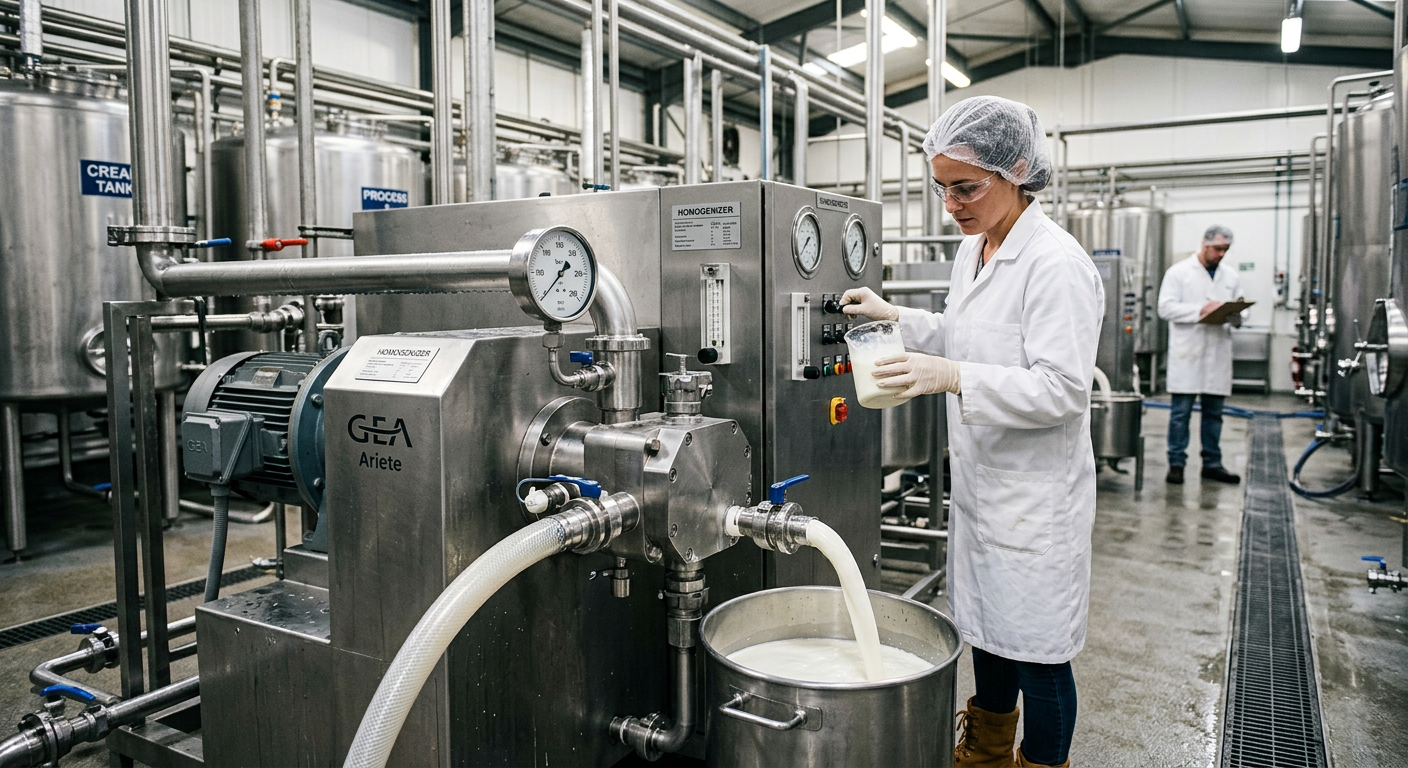
This combination is useful for facilities that need more than a packaged skid. For example, a dairy processor may need reuse integrated with homogenization, pasteurization, utility routing, and existing sanitary zones. A beverage co-packer may need it tied into syrup rooms, compressors, boilers, cooling towers, and fast growth plans. A protein or prepared foods site may require phased installation around active production schedules. In those cases, the benefit is having one project partner that understands the whole plant.
Companies seeking project examples and broader execution experience can review selected case studies and project highlights to see how integrated engineering and delivery can improve capital results.
Frequently Asked Questions
What water streams are usually the best starting point for reuse in a food plant?
The best starting points are usually stable, lower-strength streams such as final CIP rinse water, evaporator condensate where applicable, cooling tower blowdown after treatment, and utility-related waters that can be segregated cleanly.
Can reclaimed water be used in direct food contact applications?
That depends on the product, process, local rules, customer requirements, and validated treatment barriers. In most U.S. plants, reuse begins with non-product contact or tightly controlled utility uses because those applications are easier to justify and manage.
How long does a typical project take?
A small CIP rinse recovery project may move from study to startup in a few months. A plant-wide reclaim program involving utilities, civil work, membranes, and permitting may take significantly longer, especially if production phasing is required.
What are the most common reasons reuse projects underperform?
Poor source stream segregation, weak data on flow and quality, missing automation, inadequate operator training, and failure to define the end use clearly are the most common causes of underperformance.
Is reverse osmosis always necessary?
No. RO is valuable when dissolved solids must be reduced for the target use. Many successful projects rely on screening, equalization, filtration, UF, and disinfection without RO.
How should buyers compare suppliers?
Compare them on food plant experience, ability to integrate controls and utilities, commissioning support, documentation quality, membrane service strategy, and understanding of sanitary risk. Lowest equipment price rarely equals lowest lifecycle cost.
What are the biggest trends heading into 2026?
Expect stronger adoption of smart metering, digital twins for water balance modeling, AI-assisted membrane cleaning optimization, tighter municipal discharge oversight, more customer sustainability scorecard pressure, and broader use of modular reclaim systems. Policy trends are also likely to favor water resilience planning, especially in drought-prone U.S. regions. By 2026, more plants will move from isolated savings projects to full site water strategies that combine reuse, wastewater reduction, energy recovery, and utility automation.
What should a plant do first?
Start with a site water balance, identify top reusable streams, define approved end uses, and complete a food safety and compliance review before requesting final equipment proposals.
[/trp_language]
Complete Company Portfolio
About the Author: Disruptive Process Solutions (DPS)
The DPS team combines process engineering expertise with real-world food and beverage manufacturing experience. Our content focuses on process optimization, production efficiency, facility improvements, and practical solutions that help manufacturers operate more effectively in a rapidly evolving industry.
Share