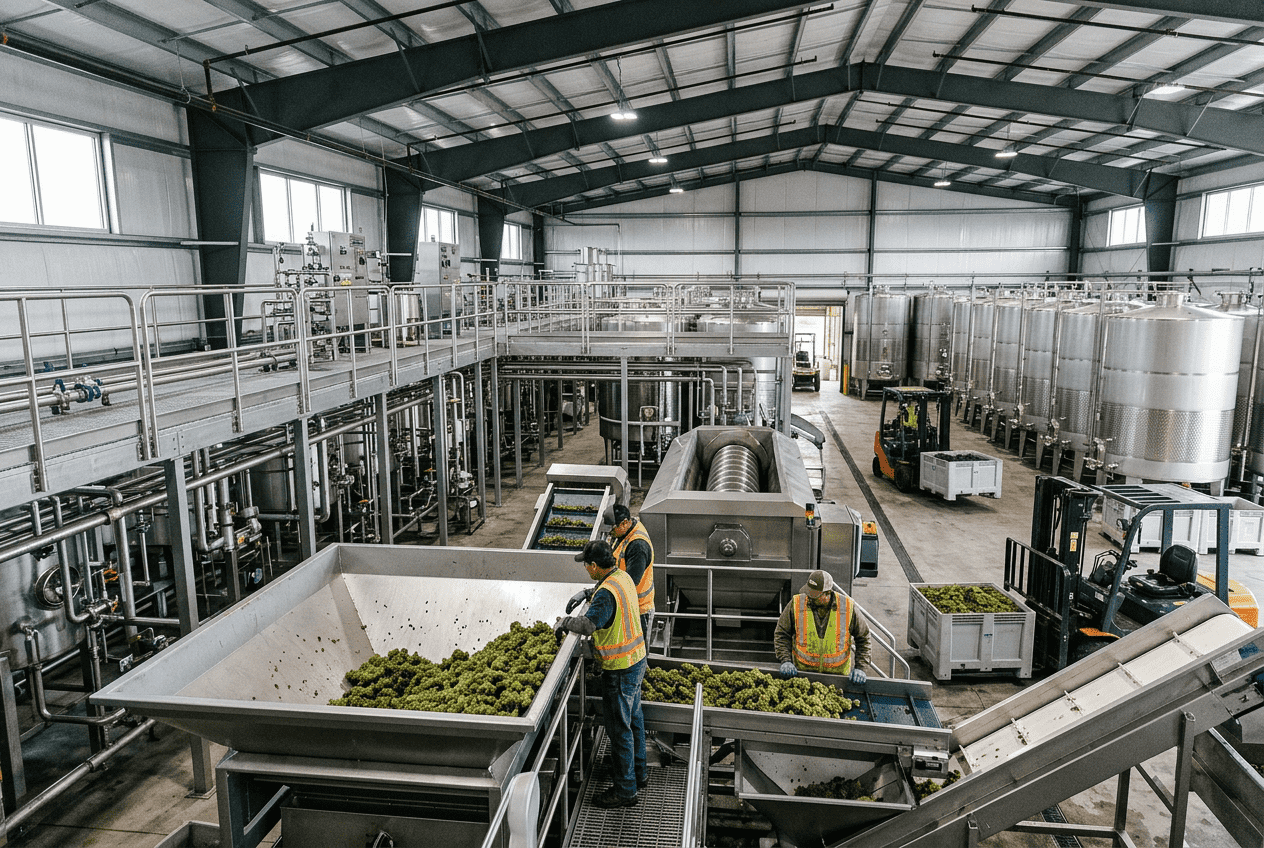
4 Core Systems for Modern Egg Processing Facility Design
[trp_language language=”en_US”]
Modern Egg Processing Facility Design for the United States Market
Designing a profitable egg processing plant in the United States requires more than selecting washers, breakers, dryers, and fillers. A successful facility must connect shell egg receiving, hygienic liquid egg processing, packaging automation, cold chain control, wastewater handling, and food safety engineering into one coordinated operating system. Whether the plant is producing whole egg, yolk, albumen, frozen blends, or dried ingredients, layout and utility choices directly affect yield, labor, shelf life, and regulatory performance.
Across markets such as Chicago, Atlanta, Dallas, Los Angeles, and the Northeast distribution corridor near Newark and Philadelphia, processors are under pressure to improve throughput while controlling Salmonella risk, labor availability, and energy cost. This is why a modern egg plant is typically designed around four core systems: front-end receiving and grading, breaking and pasteurization, finished product handling and packaging, and support infrastructure such as refrigeration, cleanability, and waste management.
Quick Answer

The fastest way to understand egg processing facility design is this: a strong project integrates egg receiving, washing, and candling; breaking, separating, and pasteurization; liquid and dried egg product finishing; and final packaging, refrigeration, sanitation, and waste systems into one validated production flow. In the United States, the best results usually come from designing around USDA and FDA expectations, target product mix, local utility availability, labor strategy, and future capacity expansion.
For most processors, the four most important system groups are:
- Receiving, washing, candling, and shell egg handling
- Breaking, separation, blending, and pasteurization
- Packaging automation for liquid, frozen, and powder products
- Plantwide support systems including CIP, refrigeration, wastewater, and biosafety barriers
Buying decisions should also reflect whether the facility serves retail shell eggs, foodservice, bakery, prepared foods, mayonnaise, dressings, protein ingredients, or export-oriented dry egg production. Plants near major freight and cold storage hubs such as Memphis, Kansas City, Savannah, Houston, and Southern California often benefit from different line balancing strategies than inland regional operations focused on short-haul distribution.
| Core System | Main Equipment | Primary Goal | Common U.S. Challenge | Design Priority | Typical KPI |
|---|---|---|---|---|---|
| Receiving and washing | Depalletizers, conveyors, washers, dryers, candlers | Remove defects before processing | Variable incoming egg quality | Gentle handling and inspection accuracy | Low crack and reject rate |
| Breaking and separating | Breakers, yolk-white separators, filters | Maximize usable yield | Cross-contamination control | Sanitary design and automation | High separation efficiency |
| Pasteurization and blending | Balance tanks, HTST, homogenizers, hold tubes | Food safety and shelf life | Heat sensitivity of proteins | Validated thermal process | Micro reduction and product quality |
| Packaging and freezing | Bag-in-box, totes, pails, cartons, drum fillers | Protect finished product | Labor and format variability | Flexible packaging automation | OEE and fill accuracy |
| Cold chain and utilities | Refrigeration, glycol, compressed air, CIP | Stable operations | Energy cost and maintenance | Integrated utility backbone | Temperature compliance |
| Waste and sanitation | Screening, DAF, shell handling, washdown systems | Compliance and hygiene | High organic load | Waste minimization | BOD reduction and audit readiness |
The table above shows why egg plant engineering cannot be treated as isolated equipment procurement. Each line depends on the next. If candling capacity exceeds breaking capacity, eggs wait too long. If pasteurization is sized without packaging flexibility, finished product backs up into chilled tanks. If wastewater is underdesigned, production growth is limited by discharge permits instead of market demand.
Egg Receiving, Washing, and Candling Line Design

The front end of the plant defines product quality. Egg receiving, washing, and candling line design should begin with expected farm supply patterns, delivery trailer configuration, pallet type, case handling method, and desired segregation of dirty and clean zones. U.S. processors often receive eggs from multiple farms or contract growers, making incoming variability a major design factor.
A well-designed receiving area usually includes dock management, lot traceability, temperature monitoring, pallet flow control, reject routing, and biosecurity separation from post-wash operations. In high-volume operations, the difference between a clean logistics layout and a congested one can determine whether the line sustains target throughput during peak seasonal demand from bakeries, quick-service restaurants, and holiday retail channels.
Key design points include:
- Separate traffic patterns for raw shell intake and finished goods shipment
- Automated depalletizing and loader systems to reduce ergonomic risk
- Controlled wash chemistry, water temperature, and brush contact time
- High-visibility candling with defect rejection and data logging
- Redundant dryers to protect downstream breaker performance
- Floor drainage and washdown zoning that prevent splash-driven contamination
Processors serving shell egg retail distribution may emphasize grading and carton packing, while liquid egg plants prioritize low-damage transfer from receiving to breaker feeding. In both cases, layout should allow future additions such as AI-assisted vision inspection, advanced crack detection, and robotic pallet handling, which are expected to expand significantly by 2026.
| Receiving Stage | Design Objective | Recommended Feature | Risk if Ignored | Best Fit Application | Expansion Option |
|---|---|---|---|---|---|
| Dock unloading | Fast turnaround | Dedicated inbound bays | Congestion and temperature abuse | High-volume farm supply | Yard scheduling software |
| Traceability | Lot control | Barcode or RFID scanning | Recall complexity | Retail and foodservice | MES integration |
| Washing | Soil removal | Automated chemistry control | Inconsistent cleanliness | Shell and liquid plants | Water reuse modules |
| Candling | Defect detection | Vision-assisted inspection | Dirty or leaker eggs downstream | Liquid egg production | AI defect analytics |
| Drying | Surface moisture reduction | Dual-zone drying tunnel | Equipment fouling and contamination | Breaker feed lines | Heat recovery |
| Reject handling | Safe diversion | Isolated reject bins and drains | Cross-contact | All plant sizes | Automated reporting |
The practical lesson is simple: do not overspend on downstream pasteurization while underengineering the dirty-side handling system. If eggs enter the plant with poor control and weak inspection, expensive sanitation systems later will only compensate partially.
The market growth trend above reflects why many U.S. companies are reevaluating older plants. Demand for processed egg ingredients is rising across bakery, sauces, prepared meals, protein snacks, and institutional food channels. Growth is especially visible in logistics-rich regions tied to interstate freight corridors and major cold storage clusters.
Breaking, Separating, and Pasteurization System Engineering

Once eggs have been accepted and cleaned, the center of the facility becomes the breaker and pasteurization block. This is where yield, food safety, and product specification converge. Breaking, separating, and pasteurization system engineering should focus on gentle product handling, accurate separation, low air incorporation, minimal residence time, validated microbial reduction, and CIP accessibility.
Plant owners often choose between whole egg only, whole egg plus yolk and white separation, or a more flexible model that includes custom blends for bakery and sauce manufacturers. The correct design depends on product mix and customer contract structure. A national ingredient supplier shipping to large customers in Ohio, Texas, or California may need multiple skids and surge capacity, while a regional processor may be better served by a simpler modular line.
Critical engineering elements include:
- Breaker sizing based on real usable egg inflow, not theoretical shell count
- Inline filtration to remove shell fragments and chalaza
- Balance tanks with level control to stabilize HTST feed
- Pasteurizer selection based on product type: whole egg, yolk, salted yolk, sugared yolk, or albumen
- Automated divert logic for off-spec temperature or hold time
- Recipe management and historian data for auditability
For albumen, heat sensitivity demands tighter process control to prevent foaming or denaturation. For yolk systems, viscosity and emulsion stability influence pump and heat exchanger selection. Where the business includes frozen or dry ingredients, the pasteurization skid must also support consistent feed characteristics for downstream freezing or spray drying.
| Process Step | Main Design Focus | Preferred Equipment Feature | Quality Impact | Food Safety Impact | Business Benefit |
|---|---|---|---|---|---|
| Breaking | Yield and shell control | Precision breaker cups | Less shell contamination | Cleaner feed stream | Higher saleable product |
| Separating | Yolk-white purity | Automated separator tuning | Better spec compliance | Reduced rework | More premium SKU options |
| Filtration | Particle removal | Multi-stage sanitary filters | Smoother texture | Reduced physical hazard | Fewer customer complaints |
| Blending | Formula consistency | Load-cell batching | Stable solids and salt levels | Process repeatability | Lower giveaway |
| Pasteurization | Validated kill step | HTST with divert valve | Shelf-life control | Salmonella reduction | Regulatory confidence |
| Cooling and surge | Flow continuity | Insulated chilled tanks | Temperature stability | Growth prevention | Packaging efficiency |
In buying terms, the most expensive breaker is not always the most profitable. What matters is total line performance: usable yield, changeover speed, CIP time, labor burden, spare parts availability, and integration with controls. Plants that serve multiple industries such as bakery mixes, mayonnaise, frozen breakfast foods, and institutional kitchens benefit from flexible automation more than from oversized single-purpose equipment.
Liquid Egg and Dried Egg Product Processing Line Integration
Integrated processing is where product strategy becomes operational reality. Liquid egg and dried egg product processing line integration means building a system that can route pasteurized product efficiently into chilled holding, blending, concentration, drying, freezing, or direct packaging without creating microbiological or logistical bottlenecks.
In the United States, demand spans several product families:
- Refrigerated liquid whole egg for foodservice and commissaries
- Liquid yolk and albumen for industrial bakeries
- Salted or sugared yolk for specialty manufacturing
- Frozen egg products for longer storage and transport flexibility
- Dried whole egg, yolk powder, and egg white powder for ingredient markets
- Custom functional blends for sauces, nutrition, and protein formulations
A plant designed only around today’s best-selling SKU may struggle when customer mix shifts. By 2026, more processors are expected to adopt modular routing, advanced solids measurement, automated blend control, and energy-optimized drying systems to support sustainability targets and customer diversification.
| Product Type | Typical Downstream Step | Storage Condition | Packaging Formats | Main Customer Group | Design Note |
|---|---|---|---|---|---|
| Liquid whole egg | Chill and fill | Refrigerated | Bag-in-box, totes, tankers | Foodservice, prepared foods | Minimize residence time |
| Liquid yolk | Blend or chill | Refrigerated or frozen | Pails, totes, drums | Sauces, bakery | Viscosity matters |
| Liquid albumen | Chill, concentrate, or dry | Refrigerated | Totes, tankers | Bakery, nutrition | Foam control is critical |
| Frozen egg blend | Plate freeze or blast freeze | Frozen | Cartons, pails, drums | Institutional and export | Cold chain redundancy |
| Dried whole egg | Spray dry and pack | Ambient dry storage | Bags, boxes, supersacks | Ingredients, military, bakery | Powder handling design |
| Egg white powder | Dry and condition | Ambient dry storage | Fiber drums, bags | Nutrition, confectionery | Moisture control essential |
The table highlights why integrated routing is essential. For example, a facility producing both refrigerated liquid egg and powder requires different hygienic zoning, air handling, packaging environments, and warehouse practices. Dry side design must prevent powder dust and moisture issues, while wet side design must prioritize drainability and CIP effectiveness.
The trend shift chart shows how the market is moving toward higher-value processed products rather than simple shell handling alone. This shift is driven by convenience foods, ingredient standardization, labor savings for downstream manufacturers, and broader use of egg proteins in nutrition applications.
Packaging Automation for Liquid, Frozen, and Powdered Egg Products
Packaging automation is often the difference between an engineering success and an operational struggle. Even if upstream processing is strong, poor end-of-line design creates labor spikes, fill variation, temperature drift, and shipment delays. Packaging automation for liquid, frozen, and powdered egg products should align with customer order profiles, sanitation windows, warehouse flow, and palletizing strategy.
Common U.S. packaging formats include gable-top cartons for retail, bag-in-box systems for foodservice, pails and drums for ingredient users, insulated totes for regional distribution, and multiwall bags or drums for dry powders. The best line design accommodates both current high-run formats and future SKU changes.
Important packaging engineering decisions include:
- Semi-automatic versus fully automatic fill lines
- Net weight versus volumetric filling
- Aseptic-like hygienic enclosure levels for high-care products
- Inline coding, label verification, and traceability
- Robotic case packing and palletizing
- Cold room packaging versus rapid transfer to cold storage
Frozen products require special attention to pre-freeze dwell time, package geometry, and freezer loading pattern. Powder lines need dust control, sieving, metal detection, and packaging room humidity management. Liquid lines need rapid cleaning, temperature protection, and accurate air elimination to maintain fill consistency.
Packaging selection should also consider local distribution realities. For example, a processor serving fast-turn restaurant chains in the Southeast may prioritize liquid bag-in-box and totes from an Atlanta-area distribution network, while an ingredient supplier shipping nationally from the Midwest may benefit from frozen or dried formats with lower freight sensitivity.
Cleanability and Salmonella Prevention in Egg Processing Plants
Cleanability is not a support topic; it is a core process requirement. In egg processing plants, sanitation design and Salmonella prevention begin with zoning, traffic control, hygienic equipment geometry, and validated CIP strategy. A plant that looks efficient on paper can become difficult to clean if dead legs, inaccessible conveyors, poor drains, or wet aerosol transfer paths are overlooked.
Best-practice prevention measures include:
- Physical separation between dirty shell handling and post-pasteurization zones
- Sloped piping and self-draining process circuits
- CIP skids sized for actual line lengths and simultaneous cleaning needs
- Tool-free access where manual intervention is expected
- Dry, clean compressed air with filtration verification
- Environmental monitoring programs tied to facility layout
Plants seeking long-term compliance with FDA, USDA, SQF, or BRC expectations must engineer food safety into the facility rather than relying on SOPs alone. This includes material selection, weld quality, gasket compatibility, floor-wall transitions, hose management, and positive workflow from raw to pasteurized to packed product.
| Sanitation Risk Area | Typical Root Cause | Preventive Design Measure | Verification Method | Operational Benefit | 2026 Trend |
|---|---|---|---|---|---|
| Dirty-to-clean crossover | Shared personnel or carts | Dedicated hygiene barriers | Traffic observation and swabs | Lower contamination risk | Smart access control |
| Piping dead legs | Poor manifold design | Sanitary valve clusters | CIP conductivity and riboflavin tests | Better cleaning repeatability | Digital CIP analytics |
| Standing water | Flat floors or drains | Sloped floors and trench design | Post-clean inspection | Faster dry-down | Hygienic flooring upgrades |
| Air contamination | Unfiltered compressed air | Filtered, monitored utilities | Air quality testing | Reduced product exposure | Continuous utility monitoring |
| Equipment access limits | Dense layout | Maintenance and washdown clearance | Sanitation timing review | Shorter downtime | 3D digital twin layout checks |
| Inadequate environmental program | Sampling not matched to layout | Zone-based monitoring plan | Trend analysis | Earlier risk detection | Predictive contamination mapping |
For buyers, this means sanitation should be part of capital justification. A cleaner, easier-to-maintain plant often delivers hidden returns through reduced downtime, longer runs, lower water use, and stronger audit performance.
Refrigeration and Cold Chain Systems for Shell Egg and Liquid Egg
Egg processing depends heavily on temperature control. Refrigeration and cold chain systems for shell egg and liquid egg must cover raw storage, process cooling, pasteurized surge capacity, packaging rooms, finished product holding, freezer loads where applicable, and transport interfaces. Poor thermal design reduces shelf life and increases microbiological exposure.
Most U.S. plants use combinations of direct expansion systems, glycol loops, chilled water, or ammonia-based central refrigeration depending on scale and site conditions. In warm-weather regions such as Texas, Arizona, Florida, and inland California, refrigeration load calculations should account for higher ambient stress and dock activity. In colder northern markets, energy recovery and seasonal operating efficiency can significantly improve utility economics.
Good cold chain design includes:
- Separate temperature regimes for shell eggs, liquid egg, frozen product, and powder storage support areas
- Insulated surge tanks and short transfer paths after pasteurization
- Fast-response controls to protect product during fill interruptions
- Dock seals, traffic management, and staging design that limit exposure
- Alarmed monitoring for HACCP and customer compliance
- Contingency planning for compressor or power failures
The demand chart demonstrates why cold chain strategy should be tied to the customer base. Bakery, sauces, and prepared foods often require highly reliable liquid egg supply, while nutrition and ingredient channels may justify investment in drying and frozen systems to expand geographic reach.
Where interstate freight is central, locations near Memphis, Indianapolis, Kansas City, or the I-95 corridor can support efficient cold distribution. Ports such as Savannah, Houston, Long Beach, and New York/New Jersey also influence packaging and storage decisions for export-oriented frozen or dry egg products.
Wastewater Treatment and Eggshell Waste Management Systems
Wastewater and by-product handling are frequently underestimated during project planning. Yet wastewater treatment and eggshell waste management systems often determine whether a plant can scale smoothly. Egg plants generate organic-rich effluent from washing, sanitation, product loss, and processing cleanup. Shell waste also accumulates quickly and needs hygienic collection, dewatering, storage, and disposal or reuse pathways.
Engineering should begin with realistic flow and loading assumptions, not average production only. Peak CIP dumps, wash cycles, and accidental product losses can overwhelm undersized systems. Pre-treatment solutions often include screening, equalization, pH control, dissolved air flotation, and coordination with municipal discharge limits.
Eggshell handling options may include containerized disposal, agricultural reuse, ingredient recovery opportunities, or mineral-based secondary applications where commercially practical. The right choice depends on local regulations, hauling economics, and by-product partnerships.
| Waste Stream | Typical Source | Main Concern | Engineering Response | Value Opportunity | Common U.S. Consideration |
|---|---|---|---|---|---|
| Wash water | Front-end washing | Suspended solids | Screening and equalization | Water reuse potential | Municipal discharge limits |
| CIP discharge | Pasteurizers and tanks | pH swings and organic load | Neutralization and flow balancing | Chemical optimization | Permit compliance |
| Product loss | Startup or upset events | High BOD/COD | Segregated recovery or DAF | Yield improvement analysis | Sewer surcharge cost |
| Eggshell waste | Breaking lines | Odor and handling volume | Dewatering and enclosed storage | By-product sales or reuse | Haul distance economics |
| Floor washdown | Sanitation | Variable loading | Trench solids capture | Reduced treatment load | Labor and maintenance |
| Powder room waste | Dry packaging | Dust and fine solids | Dry capture before wet cleaning | Loss reduction | Housekeeping compliance |
The best sustainability projects increasingly combine wastewater reduction, heat recovery, shell by-product management, and energy-efficient refrigeration. By 2026, policy pressure and customer ESG expectations are likely to make utility and waste intensity more important in capital approval decisions.
Our Company
For companies planning a new facility or a major expansion, project success depends on more than equipment quotations. It requires a partner that can align process design, utilities, controls, building interfaces, construction sequencing, and startup execution. Disruptive Process Solutions supports manufacturers across the United States and Canada with this broader view of profitable project delivery.
From a technological capability standpoint, DPS works across process, structural, mechanical, plumbing, electrical, and controls disciplines. That matters in egg processing because breakers, HTST skids, CIP systems, refrigeration loops, powder handling, automation, and building services all need to function as one plantwide system. The company’s engineering approach is centered on integrating processing requirements with utilities, PLC programming, SCADA visibility, and line-level performance rather than treating each package as a separate silo.
On the manufacturing side, DPS also brings equipment capability through its own branded process solutions, including tanks and custom CIP systems, while integrating third-party technologies where appropriate. This is useful for egg processors seeking coordinated system architecture for storage, blending, sanitary transfer, clean-in-place, and support vessels. More detail on broader capabilities is available through the company’s process equipment solutions.
On the service side, DPS operates with a design-build-manage model that helps manufacturers move from concept and feasibility to installation and commissioning with tighter accountability. Services include capital planning, process engineering, owner’s representation, project and program management, general contracting support, integration, and startup execution. Companies evaluating a modernization or greenfield investment can review the full engineering and project service offerings to understand how front-end planning influences profitability.
This type of model is especially valuable in egg processing because facility performance depends on how each decision affects the rest of the operation: receiving logistics, hygienic zoning, utility sizing, automation, packaging labor, environmental compliance, and future expansion. For organizations comparing approaches, real project examples and delivery experience can be explored in selected project case studies.
In practical buying advice terms, the strongest project partner is not the one who simply agrees with every equipment list. It is the one who challenges assumptions, validates throughput, identifies hidden utility constraints, and aligns the capital plan with long-term manufacturing returns.
FAQ
What are the four core systems in a modern egg processing facility?
They are usually receiving and washing, breaking and pasteurization, packaging and finished product handling, and support infrastructure such as refrigeration, sanitation, and wastewater management.
How do I choose between a liquid-only plant and a liquid-plus-dry egg facility?
Choose based on customer mix, freight radius, shelf-life needs, export potential, utility cost, and labor model. A dry egg line adds flexibility and reach but increases process complexity, air handling requirements, and capital intensity.
What industries drive demand for processed egg products in the United States?
Bakery, sauces and dressings, prepared foods, foodservice, nutrition products, frozen breakfast items, and institutional meal production are major users. Retail shell egg remains important, but value-added processing continues to grow.
What is the biggest food safety priority in egg processing plant design?
The biggest priority is preventing contamination across raw and pasteurized zones while validating the thermal process. Cleanability, zoning, drain design, hygienic piping, and disciplined traffic flow are fundamental.
How important is refrigeration in a liquid egg facility?
It is essential. Product temperature control affects shelf life, microbial risk, and packaging stability. Refrigeration should be designed as part of the process system, not only as warehouse support.
What packaging formats are most common for processed egg products?
Common formats include bag-in-box, totes, pails, drums, retail cartons, frozen blocks, and powder bags or drums. The right format depends on customer handling preferences, distribution distance, and throughput goals.
How should wastewater be planned in a new egg plant?
Start with peak load analysis, not average flow. Include screening, balancing, pH management, and likely pretreatment for high organic loads. Early coordination with the local municipality is important.
What are the top 2026 trends in egg processing facility design?
Key trends include AI-assisted inspection, more automation in packaging and palletizing, digital CIP verification, stronger environmental monitoring, energy recovery, water reuse, and project designs shaped by sustainability reporting and policy pressure.
Where are strong logistics locations for U.S. egg processing distribution?
Strategic regions include the Midwest freight belt, Texas triangle markets, the Southeast near Atlanta and Savannah, the Northeast corridor, and West Coast hubs near Los Angeles and inland California distribution centers.
What should buyers ask before approving an egg processing capital project?
Ask whether the design matches your product mix, future capacity, utility availability, sanitation strategy, labor plan, wastewater limits, refrigeration load, and customer packaging requirements. Also ask whether the line can expand without major rework.
[/trp_language]
Complete Company Portfolio
About the Author: Disruptive Process Solutions (DPS)
The DPS team combines process engineering expertise with real-world food and beverage manufacturing experience. Our content focuses on process optimization, production efficiency, facility improvements, and practical solutions that help manufacturers operate more effectively in a rapidly evolving industry.
Share