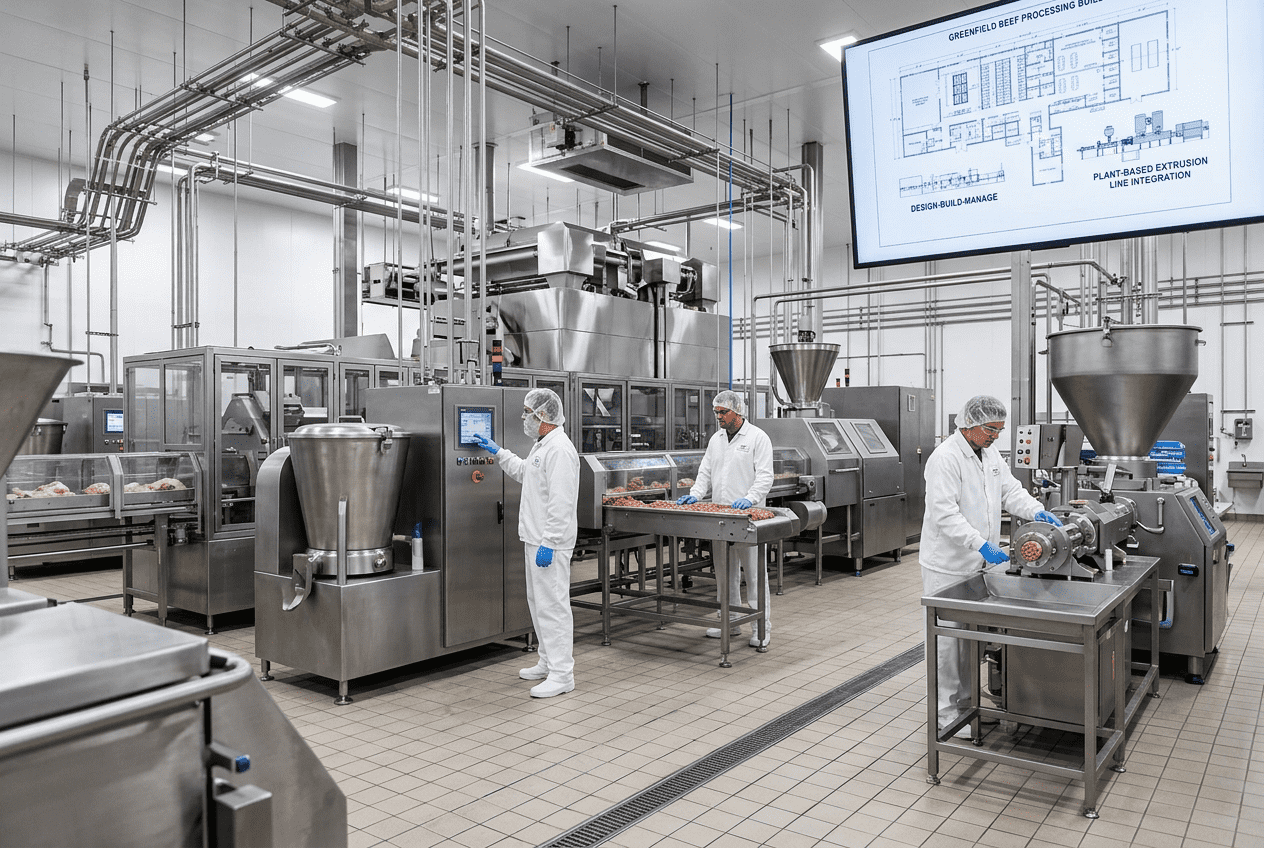
Tortilla Production Line Design in 2026: From Masa to Packaging
[trp_language language=”en_US”]
Tortilla manufacturing in the United States is moving toward higher throughput, tighter labor control, better food safety, and more flexible product changeovers. A successful 2026 tortilla line design starts with matching dough preparation, forming, baking, cooling, and packaging equipment to the exact product mix, utility profile, plant footprint, and commercial goals of the facility.
Fast Overview

For most U.S. manufacturers, the best tortilla production line is not simply the fastest line. It is the line that delivers repeatable diameter, target moisture, clean release, strong stack integrity, and packaging uptime while keeping labor, energy, and sanitation costs under control. Whether the facility is producing corn tortillas for foodservice in Texas, wheat tortillas for retail in California, or mixed SKU private-label products in the Midwest, the design should begin with five decisions: product type, hourly throughput, flexibility requirements, utility capacity, and distribution format.
In practical terms, corn tortilla lines and wheat tortilla lines share many downstream elements, but the front-end process differs significantly. Corn systems are centered on masa preparation or prepared masa handling, while wheat systems require more precise hydration, gluten development, resting, dividing, rounding, pressing or sheeting, and final proof-like relaxation depending on formulation. After forming, both product families depend on tightly controlled tunnel oven zones, stable cooling profiles, gentle transfer, accurate counting or stacking, and packaging systems that protect freshness and shelf life.
Across the United States, high-volume tortilla plants near Los Angeles, Dallas-Fort Worth, Chicago, Phoenix, Atlanta, and New Jersey are investing in automation because labor volatility, retailer expectations, and freight economics increasingly reward consistency. Plants located near major logistics corridors such as the Port of Los Angeles, the Port of Houston, Savannah, and intermodal hubs in Kansas City or Memphis also benefit from line designs that reduce rework and improve case-ready packaging performance.
When evaluating capital projects, buyers should look beyond the press or oven alone. The real business case comes from whole-line integration: mixer sizing, dough residence time, conveyor synchronization, recipe control, sanitation access, and final packaging efficiency. In many projects, the limiting factor is not a single machine but the coordination between machines. That is why system-level engineering matters.
| Design Question | Why It Matters | Typical U.S. Decision Point | Risk if Ignored |
|---|---|---|---|
| Product family | Determines dough system, forming method, and bake profile | Corn, flour, blended, low-carb, whole wheat | Wrong equipment architecture |
| Target throughput | Sets mixer size, press count, oven length, and packaging rate | 1,500 to 12,000 dozen/hr | Chronic bottlenecks |
| SKU flexibility | Impacts changeover, sanitation, and automation strategy | Single-SKU vs multi-SKU retail lines | Lost production time |
| Utility capacity | Affects oven fuel, compressed air, exhaust, cooling, and controls | Natural gas availability and electrical service | Costly retrofit after install |
| Packaging format | Shapes downstream counting, stacking, and bagging design | Retail bags, bulk foodservice, club packs | Manual handling and waste |
| Sanitation standard | Influences frame design, access, CIP/COP decisions, and allergen controls | SQF/BRC/FDA expectations | Audit findings and contamination risk |
The table above shows why early front-end planning is essential. A tortilla line should be engineered around the business model, not purchased as a collection of disconnected machines.
Mixing and Dough Preparation for Corn and Wheat Tortillas

The dough room defines the performance of the entire tortilla line. For corn tortillas, processors may handle dry corn flour with water and minor ingredients, or integrate upstream nixtamalization and masa preparation when producing from whole corn. For wheat tortillas, the system must control flour type, water absorption, shortening or oil incorporation, minor ingredient dispersion, dough temperature, and rest time. A well-designed mixer and dough preparation system reduces variability before the dough ever reaches the divider or press.
In the United States, corn tortilla lines serving quick-service restaurants often prioritize high rate, uniform diameter, and robust hot-hold performance. Retail wheat tortilla lines, by contrast, often require softer bite, foldability, longer shelf life, and a broader product range including fajita, burrito, taco, and better-for-you formulas. That means the dough system needs recipe flexibility, lot traceability, and automation strong enough to maintain consistency from shift to shift.
Common equipment options include horizontal mixers, high-capacity batch mixers, continuous dosing systems, ingredient pre-blending skids, water tempering modules, and intermediate dough hoppers. For wheat tortillas, a dough rest conveyor or trough arrangement is frequently critical because relaxation affects final press quality, snapback, and edge symmetry. For corn products, moisture management and feed consistency into the sheeter or press are equally critical to avoid edge cracking and weight drift.
Well-integrated plants also connect the dough room to controls architecture. Recipe management, batch records, temperature trending, and ingredient verification can be handled through PLC and SCADA systems so operators can identify deviations before they create scrap. This is especially useful for high-volume operations near Dallas, Fresno, and Chicago where production schedules are tight and downtime carries immediate freight and customer penalties.
From a technology standpoint, a partner with process engineering and controls expertise can significantly improve this area. Disruptive Process Solutions supports food manufacturers with process design, automation, PLC programming, SCADA integration, utility design, and complete system coordination, which is especially valuable when mixer performance, ingredient delivery, and line rate need to function as one system rather than as isolated assets.
| System Element | Corn Tortillas | Wheat Tortillas | Key Design Variable |
|---|---|---|---|
| Primary mixer type | Short-cycle masa mixer | High-development dough mixer | Hydration uniformity |
| Ingredient handling | Flour, water, salt, conditioners | Flour, water, fat, leavening, gums | Accurate dosing |
| Dough rest requirement | Limited to moderate | Usually critical | Relaxation time |
| Temperature sensitivity | Affects masa texture | Affects gluten behavior and machinability | Inlet water control |
| Feed consistency | Important for weight control | Important for rounding and pressing | Surge hopper design |
| Automation priority | Moisture and feed stability | Recipe and batch consistency | PLC/SCADA visibility |
This comparison highlights why dough system selection should always follow product definition. A plant that tries to run diverse formulas on an underspecified dough room often fights the same defects every day downstream.
Choosing Dividers, Rounders, and Hot Press Systems

Once the dough is prepared correctly, the next step is to create uniform pieces and shape them consistently. Divider, rounder, and hot press selection affects product weight, diameter, thickness, edge appearance, stackability, and oven loading efficiency. For wheat tortillas, a divider-rounder combination must handle the intended dough softness without smearing or excessive flour use. For corn tortillas, the forming system must keep product geometry stable while minimizing sticking and deformation.
Hot press selection should consider platen size, thermal control, dwell time, press force, release materials, and sanitation access. If a line is intended to run multiple diameters, the design should also evaluate tooling changes, setup time, and servo-driven adjustment capability. High-throughput U.S. plants commonly prioritize repeatable piece weight and low giveaway because even small variance becomes expensive at national scale.
Some manufacturers prefer very high speed dedicated lines for a narrow SKU range. Others, especially private-label and regional producers serving the Southeast and Northeast, benefit more from flexible equipment that can change between 6-inch taco tortillas, 8-inch wraps, and 12-inch burrito formats. The correct choice depends on sales mix, order volatility, and labor availability.
Buyers should also examine upstream-downstream matching. A divider that can outrun the press or a press that floods the oven infeed will not create real capacity. The target is balanced throughput with enough surge handling to absorb short interruptions. If the packaging line stops briefly, the rest of the system should not immediately dump product.
Manufacturing capability matters here as well. DPS designs and integrates custom process equipment and supports complete system buildouts, including fabricated tanks, CIP modules, and food-grade process components. That broader manufacturing perspective is useful when the tortilla line needs custom hoppers, transfer frames, guarding, platforms, or utility skids tailored to the building rather than off-the-shelf compromises.
| Equipment Choice | Best Fit | Main Advantage | Main Caution |
|---|---|---|---|
| Volumetric divider | Stable wheat doughs | High speed and good portioning | Can struggle with very soft formulas |
| Weight-based divider | Premium or variable formulas | Better accuracy | Higher complexity |
| Rounder with dusting control | Multi-SKU wheat lines | Improves symmetry and handling | Flour management required |
| Single-lane hot press | Smaller runs or specialty products | Lower capital cost | Less total throughput |
| Multi-lane hot press | Large retail or foodservice plants | High output per footprint | Needs tighter upstream synchronization |
| Quick-change tooling | Frequent size change plants | Reduces downtime | Requires disciplined setup procedures |
The explanation is straightforward: the best forming package is the one that protects product quality while matching the facility’s true sales profile. Overbuying speed without enough flexibility can be just as costly as underbuying capacity.
Designing Multi-Deck Tunnel Ovens with Zone Temperature Control
The oven is the thermal heart of a tortilla line. Multi-tier or multi-deck tunnel oven design allows processors to optimize floor space while delivering the rapid, controlled heating needed for puffing, color development, moisture removal, and final texture. A successful oven design is not based only on total length. It depends on thermal profile, air management, burner arrangement, belt selection, zone independence, exhaust balance, and access for cleaning and maintenance.
For tortilla plants in the United States, natural gas remains the most common fuel source, but electric and hybrid heating discussions are growing as utilities, state incentives, and carbon reporting requirements evolve. California and some Northeast markets are especially active in evaluating future energy strategy, while Texas and the Midwest continue to favor gas-fired designs where infrastructure is strong.
Temperature zone control is critical because tortillas do not need the same thermal conditions across the entire bake. Early zones often focus on set and steam release, middle zones on structure and color, and later zones on moisture balance and finish. Independent controls by zone improve product uniformity and make it easier to switch between corn and wheat formulations or between thicker wraps and thinner taco styles.
Engineers should also review how the oven interacts with upstream and downstream conditions. Press temperature, belt loading pattern, ambient room conditions, and final cooling capacity all influence the effective bake. Excessive oven variability often shows up later as stack sticking, poor package appearance, or shelf-life inconsistency.
This is one area where strong mechanical, process, electrical, and controls coordination delivers outsized value. A full-scope engineering partner can address combustion integration, ventilation, utility routing, controls architecture, and code compliance together. Manufacturers looking for broader project support can review integrated engineering and project services when planning complex thermal systems.
| Oven Design Factor | Recommended Focus | Operational Benefit | If Underdesigned |
|---|---|---|---|
| Independent heat zones | At least 3 to 5 control regions | More stable bake profile | Color and moisture drift |
| Belt selection | Match surface release to product type | Better handling and appearance | Sticking and tears |
| Airflow management | Balanced top and bottom heat | Uniform texture | Uneven puffing |
| Exhaust control | Remove moisture without overpulling heat | Energy and quality balance | Heat loss and instability |
| Access doors | Safe sanitation and maintenance access | Shorter downtime | Difficult cleaning |
| Instrumentation | Temperature trending and alarms | Repeatability by recipe | Reactive troubleshooting only |
The table shows why zone-level control is a strategic investment rather than a luxury. It gives operators a practical way to manage product quality and energy performance at the same time.
Cooling Conveyors and Counter-Stacker Integration
Cooling is often underestimated in tortilla manufacturing, yet it directly affects stack quality, condensation risk, packaging speed, and shelf life. After the oven, tortillas must lose heat in a controlled way while preserving shape and moisture balance. Cooling conveyor design should consider residence time, airflow, belt material, sanitation access, and plant room conditions. In humid climates such as Houston, Miami, or New Orleans, ambient conditions can make cooling design especially important.
Counter-stackers and indexing systems must then gather tortillas accurately without crushing edges or miscounting. A line designed for retail packs may require extremely precise stack counts with smooth handoff to baggers, while foodservice bulk packs may prioritize robust throughput and larger stack heights. Synchronization between the cooling section and the counter-stacker is essential because loose timing creates jams, tilted stacks, and operator intervention.
Some facilities also benefit from vision or sensor-based counting verification, especially where customer complaints about count accuracy carry chargeback risk. Others may need side guides, vacuum assists, or transfer flights depending on tortilla size and pliability. The correct integration depends on product geometry and the variability tolerated by the market channel.
For plants expanding into new distribution regions, cooling and stacking can become the hidden bottleneck. A product that looks good at the oven discharge may still fail in retail if it packs too warm, sweats in the bag, or arrives in stores as a compressed or irregular stack. That is why complete line design should include post-bake handling from the start, not as an afterthought.
| Cooling/Stacking Element | Primary Function | Best Use Case | Key KPI |
|---|---|---|---|
| Open cooling conveyor | Ambient heat reduction | Moderate throughput lines | Exit temperature |
| Forced-air cooling section | Faster temperature pull-down | High-speed lines | Residence time |
| Humidity-aware cooling design | Reduce condensation risk | Warm, humid U.S. regions | Package dryness |
| Counter-stacker | Accurate stack building | Retail and club packs | Count accuracy |
| Servo indexing | Smoother transfer timing | Multi-format lines | Jam frequency |
| Inspection sensor package | Detect gaps and misfeeds | Higher automation plants | Operator interventions/hr |
In short, the cooling section protects the value created by the oven. If the product is not conditioned correctly before stacking and bagging, the plant gives back quality and efficiency downstream.
Vacuum Transfer and Packaging Line Automation
Packaging is where a tortilla line either converts efficiently or loses margin. Vacuum transfer systems can gently move tortillas or stacks into the final packaging sequence with reduced manual handling, helping preserve product shape and improve line speed. Modern packaging automation may include stack orientation, bag feeding, date coding, seal inspection, checkweighing, metal detection, case packing, palletizing, and production data capture.
For U.S. retail distribution, packaging automation must also support label compliance, traceability, and retailer-specific pack counts. Foodservice operations may require bulk sleeves, higher weight packs, or club-store configurations with stronger case structures. Plants serving national accounts often need the ability to switch between channels without lengthy mechanical changeovers.
One of the most important purchasing questions is whether the packaging line can run at the realistic sustained speed of the upstream process, not just the advertised mechanical maximum. In many facilities, packaging micro-stops create the most frustrating form of lost capacity. The solution is usually better integration: synchronized controls, buffer logic, reject handling, and clear operator interfaces.
Service capability becomes especially valuable at this point. DPS supports end-to-end project management, owner’s representation, installation oversight, general contracting where licensed, and complete integration of process, utilities, and controls. For manufacturers that want a single partner to engineer, build, and manage execution, that model reduces coordination gaps between process equipment and packaging infrastructure. More information on available equipment solutions can help frame project scope.
Applications are broad. Tortilla lines may serve retail chains in New York and Boston, foodservice distributors in Atlanta and Charlotte, or regional restaurant networks across Arizona and Nevada. Packaging automation should be tailored to the actual route-to-market, because pack style and handling requirements influence every downstream decision.
| Packaging Automation Layer | Purpose | Business Benefit | Typical Buyer Question |
|---|---|---|---|
| Vacuum transfer | Gentle product movement | Less edge damage | Can it handle warm, soft tortillas? |
| Bagging system | Primary package creation | Higher speed and consistency | How fast is sustained speed? |
| Seal inspection | Detect poor package closure | Fewer returns and stales | How are rejects removed? |
| Checkweigher | Verify pack weight | Lower giveaway and compliance risk | What is the tolerance window? |
| Case packing | Secondary packaging automation | Labor savings | Can case sizes change easily? |
| Data integration | Track OEE, rejects, and downtime | Better continuous improvement | Will it connect to plant systems? |
The explanation here is simple: packaging is not the end of the line from an engineering perspective. It is the point where capital efficiency becomes visible in labor, yield, customer complaints, and delivered cost.
Cleanability and Allergen Control for Tortilla Plants
Cleanability is now a capital design issue, not just a sanitation issue. In tortilla production, flour dust, seasoning residues, oils, and allergens can accumulate across mixers, dividers, conveyors, ovens, coolers, and packaging frames. If sanitation is difficult, plants lose production time, increase labor, and raise food safety risk. Equipment should therefore be evaluated for open-frame design, weld quality, drainage, access panels, removable components, hygienic fasteners, and minimized harborage points.
Allergen control is especially important when plants run both standard and specialty products. Wheat is itself a major allergen concern for some operations, and lines that alternate between wheat, gluten-free, dairy-containing flavored wraps, or protein-enhanced formulas need disciplined segregation and validated cleaning methods. Plants serving contract manufacturing or private-label customers may face even tighter verification expectations.
U.S. buyers should also design around real compliance conditions. SQF and BRC audits, FDA expectations, customer environmental monitoring programs, and documentation requirements all favor equipment that can be cleaned and inspected efficiently. In older buildings common in the Northeast and upper Midwest, sanitation upgrades often require better utility access, improved airflow, and redesign of difficult transfer points.
Engineering support should extend beyond equipment purchase into plant layout, COP/CIP strategy, utility routing, and hygienic zoning. This is another reason to work with a team that understands food processing, compliance, and plant execution together instead of treating sanitation as a later retrofit.
| Sanitation Design Topic | Good Practice | Operational Result | Common Failure Mode |
|---|---|---|---|
| Frame design | Open, inspectable structure | Faster washdown and inspection | Hidden debris points |
| Product contact materials | Food-grade, easy-release surfaces | Lower residue buildup | Sticking and difficult cleanup |
| Tool-less access | Quick component removal | Shorter sanitation window | Skipped cleaning points |
| Allergen segregation | Dedicated pathways or validated cleaning | Reduced cross-contact risk | Label and recall exposure |
| Dust management | Capture at source | Cleaner environment | Airborne flour spread |
| Documentation | SSOP and validation alignment | Audit readiness | Unverified sanitation claims |
The key takeaway is that hygienic design protects uptime as much as it protects food safety. Cleaner equipment is easier to run, easier to inspect, and less likely to create avoidable quality losses.
Energy Efficiency in Oven Design and Heat Recovery
Energy efficiency is becoming one of the most important buying criteria for tortilla manufacturers in 2026. Gas cost volatility, labor cost pressure, sustainability commitments, and state-level environmental expectations are all pushing plants to reduce energy intensity per thousand tortillas. The biggest opportunity usually sits in thermal design: burner efficiency, insulation, exhaust control, recirculation strategy, and heat recovery.
Heat recovery can take several forms. Some plants capture waste heat from oven exhaust to preheat combustion air or process water. Others combine oven improvements with broader utility projects such as boiler optimization, compressed air reduction, and HVAC coordination. In markets such as California, Washington, and parts of the Northeast, utility incentives may improve the project payback for well-documented energy upgrades.
Future trends also matter. By 2026, more food manufacturers are expected to evaluate digital energy monitoring, carbon reporting support, and electrification readiness. Even if a plant does not switch fuels immediately, designing controls and space allocation with future utility flexibility can reduce long-term retrofit cost. Policy pressure around emissions disclosure and corporate sustainability reporting is making that foresight more valuable.
In many cases, the best result comes from combining process engineering with utility engineering. DPS works across structural, mechanical, plumbing, electrical, process, and automation disciplines, and also supports utility systems such as boilers, steam, compressed air, cooling, refrigeration, process water, and energy management. That cross-functional capability is particularly relevant when tortilla oven performance is tied to the rest of the plant’s infrastructure rather than standing alone.
From a buying perspective, the lowest purchase price rarely delivers the lowest lifetime cost. U.S. manufacturers should ask for modeled energy performance, not just nameplate features.
Who We Are
Disruptive Process Solutions serves manufacturers across the United States and Canada as a food and beverage engineering partner focused on profitable capital execution. Rather than approaching a tortilla project as a simple equipment sale, the company works through an end-to-end design, build, and manage approach that aligns process performance, utilities, installation, controls, and commercial objectives.
For tortilla manufacturers, that means support can begin with feasibility, throughput analysis, and concept layout, then move into process engineering, utility planning, equipment integration, construction coordination, and startup oversight. The team’s work spans both food and beverage sectors, but on the food side it includes mixing, forming, thermal processing, sanitary systems, automation, and full plant infrastructure that are directly relevant to tortilla operations.
Technologically, the company brings process and controls depth, including PLC programming, SCADA, recipe and batch logic, utility integration, and broader plant engineering. From a manufacturing perspective, DPS also provides proprietary process equipment such as tanks and CIP systems while coordinating custom fabrication needed for complete projects. From a service perspective, the company supports capital planning, owner’s representation, project and program management, installation, system integration, and general contracting functions where applicable. Manufacturers seeking background can visit our company overview, explore broader engineering services, or review selected project case examples.
This integrated model is especially useful for tortilla plants because the line often touches nearly every plant function at once: process, thermal, packaging, utilities, building modifications, sanitation, and controls. A coordinated partner can help reduce change orders, speed decisions, and keep the project focused on long-term operating margin.
Frequently Asked Questions
What is the first step in designing a tortilla production line?
Start with the commercial plan: product mix, hourly output, package format, shelf-life target, and labor strategy. Equipment should follow those requirements, not the other way around.
How different are corn and wheat tortilla lines?
They share downstream handling, cooling, and packaging concepts, but the front-end dough system and forming methods are often very different. Wheat lines usually require more dough development and rest control.
What throughput range is common in the United States?
There is no single standard, but many commercial lines range from mid-volume regional systems to very high-speed national-account lines. The right capacity depends on SKU complexity and distribution footprint.
Should I choose a dedicated line or a flexible line?
If demand is concentrated in one or two SKUs, a dedicated line can deliver efficiency. If the business serves private label, multiple diameters, or mixed channels, flexibility often creates better total return.
Why is oven zoning so important?
Independent temperature zones improve bake consistency, moisture control, color development, and changeover response. They also support energy optimization.
What causes packaging problems in tortilla plants?
Common causes include insufficient cooling, unstable stacking, poor transfer timing, packaging equipment micro-stops, and lack of buffer logic between upstream and downstream systems.
How should buyers compare suppliers?
Compare complete system capability, not only individual machine price. Review process knowledge, sanitation design, controls integration, utility understanding, installation support, and service responsiveness in the United States.
What future trends should shape a 2026 project?
Expect more automation, energy monitoring, heat recovery, digital recipe control, stronger traceability, sustainability reporting, and designs that support faster sanitation and broader SKU flexibility.
Are local supplier relationships still important?
Yes. Even with national engineering support, local trades, service technicians, utility coordination, and regional code knowledge matter, especially in major manufacturing hubs like Southern California, Texas, Illinois, and the Southeast.
Can an existing tortilla line be upgraded instead of replaced?
Often yes. Bottlenecks may sit in controls, post-bake handling, utilities, or packaging rather than the entire line. A disciplined assessment can reveal where modernization delivers the best return.
[/trp_language]
Complete Company Portfolio
About the Author: Disruptive Process Solutions (DPS)
The DPS team combines process engineering expertise with real-world food and beverage manufacturing experience. Our content focuses on process optimization, production efficiency, facility improvements, and practical solutions that help manufacturers operate more effectively in a rapidly evolving industry.
Share