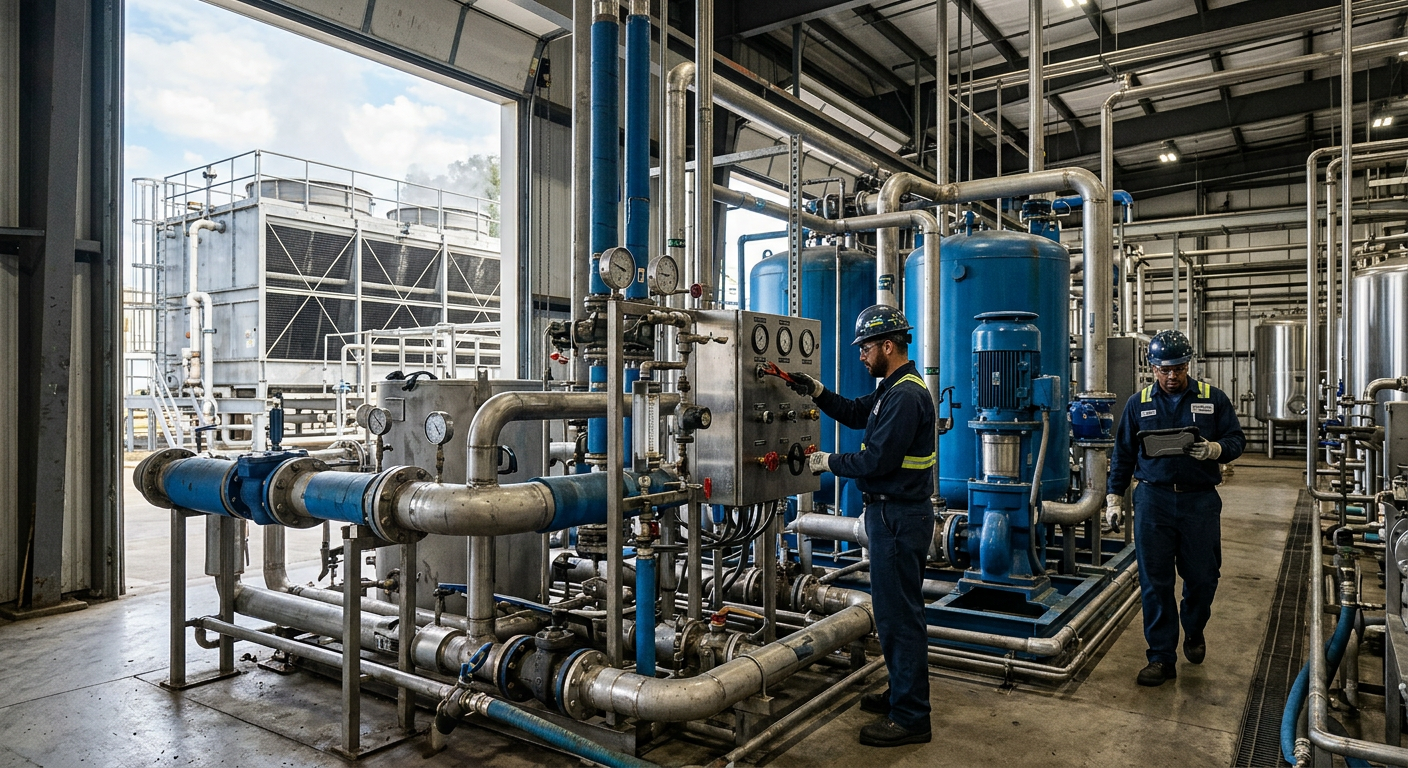
Pizza Manufacturing Plant Design: Dough Production and Topping Automation
[trp_language language=”en_US”]
Designing a profitable pizza manufacturing plant in the United States requires more than choosing mixers and ovens. It demands a coordinated process design that links dough development, crust forming, sauce and cheese dosing, topping placement, baking, cooling, freezing, packaging, sanitation, utilities, and controls into one stable production system. For fresh, refrigerated, and frozen pizza producers, the best results come from engineering the line backward from target throughput, SKU mix, labor strategy, food safety goals, and retail or foodservice requirements. In major production regions such as the Midwest, the Northeast corridor, Texas, California, and the Southeast, successful facilities are typically designed around repeatable dough performance, automated assembly, oven consistency, low giveaway, and effective allergen segregation.
In the U.S. market, plant design also needs to account for distribution realities. Frozen pizza lines shipping through Chicago, Dallas, Atlanta, Los Angeles, New Jersey, and other freight hubs face different cold-chain constraints than fresh pizza operations serving regional grocery chains. Facilities near ports such as Savannah, Long Beach, Houston, and Newark may also integrate imported ingredients, spices, cheeses, and packaging materials into their supply planning. As a result, pizza production engineering is not only a mechanical challenge; it is a commercial and operational one.
Quick Answer

A modern pizza manufacturing plant should be engineered as an integrated process from ingredient receiving through final packaging. The most effective layout for the United States market combines controlled dough mixing and proofing, precise sheeting or pressing for crust consistency, automated sauce and cheese application, flexible topping deposition, matched oven and conveyor design, and downstream cooling, freezing, and packaging capacity sized to actual demand. Facilities making both fresh and frozen pizzas should also build in allergen management, gluten control, hygienic zoning, and recipe-based automation from the beginning rather than adding them later.
For most manufacturers, the right design depends on five questions:
| Decision Area | Why It Matters | Typical U.S. Design Impact |
|---|---|---|
| Throughput target | Defines equipment sizing and staffing | Drives mixer batch size, lane count, oven width, freezer load, and packaging speed |
| Product mix | Different crusts and toppings need different handling | May require press and sheet combinations, multi-head depositors, or changeover-friendly lines |
| Distribution model | Fresh, refrigerated, and frozen products have different shelf-life needs | Changes cooling, freezing, MAP packaging, palletizing, and warehouse design |
| Labor strategy | Automation level should reflect local labor costs and availability | High-labor markets often justify more robotics and conveyor integration |
| Food safety and allergens | Critical for compliance and brand protection | Influences zoning, air handling, sanitation systems, and line segregation |
| Expansion plan | Determines whether the plant can scale profitably | Supports utility oversizing, spare floor space, and modular automation |
This table shows why pizza line design should start with business requirements instead of isolated equipment purchases. A low-cost machine that does not fit throughput, sanitation, or future SKU plans often becomes the most expensive decision in the project.
From a market perspective, U.S. demand remains strong across private label frozen pizza, club-store multi-packs, premium artisan crusts, and foodservice formats for convenience stores, schools, stadiums, and QSR support kitchens. By 2026, the strongest plants will use data-driven controls, recipe automation, energy-efficient thermal systems, and better ingredient traceability to protect margin and support growth.
The line chart above illustrates a realistic automation growth trend in U.S. pizza production. It reflects ongoing investment in controls, labor reduction, and throughput stability, especially in states with large food manufacturing bases such as Illinois, Wisconsin, Pennsylvania, North Carolina, California, and Texas.
Dough Mixing, Dividing, and Proofing System Engineering

Dough is the foundation of pizza product quality, so the engineering of the dough room should be treated as a critical process center. Whether the product is thin crust, hand-tossed style, pan pizza, par-baked crust, or rising crust frozen pizza, the dough system must control hydration, development time, dough temperature, rest cycles, divider accuracy, and fermentation behavior. In the United States, where flour specifications can vary by region and supplier, a robust dough design helps protect crust consistency across seasonal changes.
Most industrial pizza plants use one of three dough handling strategies: batch mixing with floor-time and scaling, automated continuous ingredient delivery into batch mixers with downstream dividing, or higher-throughput integrated systems combining automated ingredient handling, mixing, extrusion or dividing, and controlled proofing. The best option depends on output, recipe sensitivity, and the desired crust character.
| Dough System Component | Primary Function | Engineering Priority | Typical Risk if Undersized |
|---|---|---|---|
| Dry ingredient handling | Feeds flour, salt, sugar, conditioners | Dust control and accurate batching | Recipe drift and sanitation issues |
| Liquid metering | Adds water, oil, yeast slurry | Temperature and flow accuracy | Dough inconsistency and poor machinability |
| Mixer | Develops dough structure | Torque, batch size, cleanability | Underdeveloped or overheated dough |
| Divider or extruder | Creates portion-controlled dough pieces | Weight precision and gentle handling | Crust weight variation and edge defects |
| Intermediate proofing | Relaxes dough before forming | Time, humidity, and space planning | Snap-back, uneven pressing, shrinkage |
| Pan or puck handling | Transfers product into forming stage | Line synchronization | Accumulation jams and line starvation |
This table explains why dough engineering is not only about selecting a mixer. Each unit operation affects the next, and weak synchronization between dividing and proofing often causes hidden waste in the forming zone.
Buying advice for U.S. manufacturers: specify the dough room around the toughest SKU, not the easiest one. If your premium high-hydration crust needs longer rest time or stricter temperature control, the overall system should be designed to handle it. A line that only performs well with a basic thin-crust SKU will limit future product development.
Plants serving retailers in major metro areas like New York, Philadelphia, Miami, Denver, and Seattle often need flexible dough management because local consumer preferences differ by region. Northeast markets may favor foldable crust textures and larger diameters, while club-store formats in the Midwest and South may prioritize efficient production of frozen family-size pizzas.
On the technology side, advanced controls can tie ingredient batching, water temperature correction, mixer timing, proofing dwell time, and line speed into a unified SCADA environment. This is where process-focused engineering becomes valuable. A firm with deep controls and utility integration capability can align PLC programming, temperature management, compressed air, and sanitation systems with the dough process rather than treating them as unrelated packages.
Dough Sheeting and Pressing Equipment for Crust Consistency

After proofing or resting, dough must be formed into a repeatable crust geometry. Sheeting and pressing systems are used to achieve target diameter, thickness, rim structure, docking pattern, and pan fit. The correct choice depends on the crust style, visual expectations, and line speed. Sheeting tends to suit thin or mid-thickness crusts with consistent gauge control, while pressing is often used where a more hand-formed appearance or edge definition is desired. Some facilities use both in parallel for different product families.
Crust consistency matters because variation at this stage multiplies downstream. An off-center or misshapen crust affects sauce coverage, cheese containment, topping distribution, bake profile, package fit, and customer perception. For private label programs, where retailers demand precise weight and appearance control, forming performance can determine whether a plant wins or loses the account.
| Forming Option | Best Fit | Key Advantage | Main Limitation |
|---|---|---|---|
| Single-stage sheeter | Thin crust | Uniform thickness | Less artisanal appearance |
| Multi-stage reduction sheeter | High-volume frozen lines | Excellent gauge control at speed | More footprint and setup complexity |
| Cold press | Pan and specialty crusts | Defined edge and shape control | May need tighter dough condition control |
| Heated press | Certain par-formed styles | Faster release and shape retention | Can alter dough characteristics if overused |
| Rotary molding/forming | Niche formats | Repeatable specialty geometry | Less flexible for many SKUs |
| Hybrid press-sheet system | Multi-SKU plants | Operational flexibility | Higher capital cost |
The comparison above shows that the “best” machine is product dependent. In multi-product U.S. plants, the most profitable choice is often a flexible forming strategy that minimizes changeover downtime and reduces rework.
Good engineering also means designing flour dust control, scrap management, pan return, lubrication strategy, and docking integration. Facilities in California and the Pacific Northwest often place extra emphasis on sanitation and allergen-friendly design, while high-throughput Midwestern plants may prioritize ruggedness, spare parts availability, and simple maintenance access.
By 2026, more pizza plants are expected to use machine vision to verify crust diameter, centering, and edge uniformity in real time. These systems can automatically reject poorly formed bases or adjust upstream dough handling parameters. Trendwise, the industry is moving from reactive QA inspection to closed-loop process control.
This area chart highlights the trend shift toward data-enabled forming systems, showing how crust consistency is becoming an automation-driven KPI rather than a manual inspection task.
Sauce Application and Cheese Dosing Automation
Once the crust is formed, sauce and cheese application become the next major control points for yield, taste, and visual quality. In many pizza plants, these two steps account for a large portion of ingredient cost giveaway, which means even small dosing errors can materially damage margin. For that reason, sauce and cheese systems should be specified with the same level of rigor as primary processing equipment.
Sauce application methods include spiral depositors, piston fillers, slot spreaders, and rotary spread systems. The correct method depends on sauce viscosity, particulate content, crust size variation, and desired edge exposure. Cheese dosing can involve waterfall applicators, cup depositors, weigh-belt systems, or recipe-controlled gravimetric feeders. For premium products with blends of mozzarella, provolone, parmesan, or plant-based alternatives, precise multi-stream dosing is especially important.
| Application Zone | Main Control Variable | Profit Impact | Best Automation Practice |
|---|---|---|---|
| Sauce depositing | Target weight | Prevents overfill and soggy crust | Servo-controlled dose by recipe |
| Sauce spreading | Coverage pattern | Improves visual consistency | Adjustable spread geometry and vision checks |
| Cheese dosing | Weight accuracy | Reduces giveaway on high-cost ingredients | Loss-in-weight or gravimetric control |
| Blend management | Ingredient ratio | Protects flavor and cost targets | Recipe-managed feeder sequencing |
| Edge control | Clean crust border | Improves shelf appearance and package cleanliness | Centering sensors and lane guides |
| Changeover | SKU transition speed | Supports short-run flexibility | Quick-clean contact parts and stored recipes |
The explanation here is straightforward: sauce and cheese automation directly influences both product quality and ingredient economics. Since cheese can be one of the most expensive pizza inputs, accurate dosing often pays back faster than expected.
Applications vary by market segment. Fresh deli pizza programs often tolerate a more handcrafted look, but frozen retail lines generally require tighter repeatability for package fit and consumer expectation. Foodservice products going to school lunch, healthcare, or convenience store channels may need stricter nutritional and portion compliance, making dosing automation even more valuable.
For plants evaluating suppliers, it is wise to assess cleanability, CIP compatibility where appropriate, belt access, nozzle changeover speed, and the ability to manage different sauce viscosities across seasons. Tomato solids, oil phase separation, and cold-room cheese behavior can all affect performance.
Integrated controls are important here as well. A well-designed line can store recipes by SKU, automatically adjust dose rate to conveyor speed, and track ingredient usage against expected consumption. This type of digital visibility aligns with broader 2026 trends around traceability, waste reduction, and sustainability reporting.
Topping Deposition and Assembly Line Design
The topping zone is where line flexibility and automation sophistication become highly visible. Pepperoni, sausage, vegetables, olives, mushrooms, onions, chicken, plant-based proteins, and specialty finishes each flow differently, present different sanitation concerns, and contribute differently to the final appearance. In high-volume plants, the key objective is not simply to add toppings, but to add them accurately, attractively, and at the right cost.
Assembly line design should consider product family grouping, topping sequence, cross-contamination risk, labor ergonomics, and accumulation strategy. A plant with many premium SKUs may use a hybrid design that combines automated primary topping placement with manual finishing stations. A line focused on a narrower frozen retail range may justify more full automation through indexing depositors, slicer-fed systems, or robotic pick-and-place solutions.
| Topping Type | Common Deposition Method | Design Challenge | Recommended Consideration |
|---|---|---|---|
| Pepperoni slices | High-speed slice placement | Visual pattern consistency | Use synchronized placement heads |
| Cooked sausage | Crumble depositor | Piece size variation | Control upstream particle sizing |
| Vegetable blends | Volumetric or vibratory feeder | Moisture and bridging | Design for agitation and belt cleanliness |
| Chicken strips | Manual or robotic placement | Orientation and count | Use vision-guided handling for premium SKUs |
| Cheese blend top-off | Secondary doser | Distribution uniformity | Match spread width to pizza diameter |
| Seasonings or herbs | Dry sprinkle applicator | Dusting and overspray | Contain airborne particles and recover waste |
This table explains that topping automation should match ingredient behavior. A system optimized for pepperoni may perform poorly with diced peppers or delicate plant-based proteins unless the feeding and placement mechanics are engineered for those materials.
Industry demand in the United States continues to favor lines that can run both mainstream and premium products. Retailers want differentiation without paying for excessive line downtime. That is why assembly line layout must support changeovers, allergen segregation, and quick sanitation. Plants in regions with strong private label growth, such as the Midwest and Southeast, often benefit from modular topping zones that can be expanded as customer programs grow.
The bar chart shows relative demand intensity across major pizza channels. Frozen retail and premium private label remain strong drivers of investment, which is why topping systems are increasingly expected to support appearance quality and cost control at the same time.
From an engineering capability perspective, successful assembly lines rely on more than food machinery alone. Structural support, utilities, electrical distribution, controls integration, compressed air routing, washdown compatibility, and plant-floor traffic all matter. This is where a multidisciplinary engineering team can reduce conflicts between equipment suppliers and building systems.
Baking Oven Selection and Conveyor Integration for Pizza Production
The oven is one of the most consequential choices in the entire pizza plant. It determines bake profile, crust texture, color development, moisture loss, topping set, throughput, and energy use. The ideal oven depends on whether the product is fully baked, par-baked, or designed for consumer finish baking. Thermal performance also needs to match line speed and upstream deposit consistency.
Common options include impingement ovens, band ovens, stone-hearth style systems, direct gas-fired configurations, and hybrid thermal designs. In frozen pizza manufacturing, conveyorized ovens with highly repeatable zone control are common because they support consistent output at industrial volumes. For premium crust programs, manufacturers may seek more specific heat transfer characteristics to create artisan-like browning or blistering.
| Oven Type | Best Use Case | Operational Strength | Watchout |
|---|---|---|---|
| Impingement oven | High-volume standardized products | Fast, controllable heat transfer | Can be aggressive on delicate toppings |
| Band oven | Continuous industrial production | Stable throughput and zoning | Requires careful belt maintenance planning |
| Stone-hearth style | Premium artisan profile | Desirable crust character | Higher complexity at scale |
| Direct gas-fired | Specific browning objectives | Strong thermal response | Needs careful airflow and emission design |
| Hybrid oven | Multi-SKU plants | Flexible bake profile | Higher capital and controls complexity |
| Par-bake configuration | Foodservice or finish-bake formats | Supports downstream flexibility | Cooling and moisture management become critical |
The table above clarifies that oven selection should be linked to product architecture, not just line speed. A high-capacity oven that delivers the wrong crust texture can undercut the entire business case.
Conveyor integration is equally important. Belts, transfers, accumulation points, oven loading, and downstream discharge all need to preserve product geometry and avoid topping loss. In U.S. plants operating at scale, conveyor line balancing can make the difference between smooth production and recurring stoppages. This is especially true when baking feeds a spiral cooler or freezer with limited surge tolerance.
Local energy conditions also influence the decision. Plants in states with volatile utility rates may prioritize thermal efficiency, heat recovery, and smart controls. By 2026, sustainability expectations and energy reporting are likely to push more facilities to examine burner efficiency, insulation, exhaust optimization, and total utility integration.
Manufacturing capability matters here because oven performance depends on the surrounding systems: HVAC, process air, gas trains, controls, sanitation access, and building coordination. A project partner that can connect process engineering with mechanical, electrical, and utility infrastructure typically reduces startup delays and performance gaps.
Freezing and Packaging Line for Fresh and Frozen Pizza Products
After baking, the product pathway diverges depending on whether the pizza will be sold fresh, refrigerated, or frozen. This stage often determines shelf life, product integrity, freight readiness, and retail presentation. For frozen products, cooling and freezing rates affect crust texture, cheese appearance, and moisture migration. For fresh products, packaging atmosphere, oxygen transmission, and distribution timing are central concerns.
Frozen pizza lines commonly include post-bake cooling, transfer to spiral or tunnel freezing, metal detection or X-ray, cartoning, case packing, palletizing, and cold storage interface. Fresh and refrigerated lines may emphasize cooling, tray loading, flow wrapping, MAP sealing, and rapid dispatch. Packaging should be selected for channel requirements, from club-store corrugated packs to retail cartons and foodservice bulk formats.
| Downstream Stage | Fresh/Refrigerated Need | Frozen Need | Design Note |
|---|---|---|---|
| Cooling | Prevent condensation and package damage | Stabilize before freezing | Manage dwell time and room conditions carefully |
| Freezing | Usually not required | Core product requirement | Size freezer for peak throughput, not average |
| Primary packaging | MAP, overwrap, or flow wrap | Carton or overwrap for frozen handling | Match package to shelf-life target |
| Inspection | Weight, seal, date code | Weight, code, foreign material | Integrate QA checks without slowing line |
| Secondary packaging | Retail-ready trays or cases | Shipping-ready corrugated cases | Consider e-commerce and club-store formats |
| Cold-chain interface | Fast outbound logistics | Frozen warehouse and dock planning | Coordinate with regional distribution network |
This table explains why packaging system engineering changes significantly by product type. Many plants underestimate the impact of cold-chain layout, especially when scaling from regional fresh distribution to national frozen distribution.
For the United States, logistics geography matters. A frozen pizza operation shipping to the Northeast may stage inventory differently than one serving the Mountain West. Facilities near intermodal hubs in Chicago, Kansas City, Memphis, or Dallas can optimize outbound freight, while coastal facilities may focus on inbound ingredient supply and regional retail service. Warehouse temperature transitions, dock seals, and forklift traffic should be considered early in design.
2026 trends include more recyclable packaging discussion, right-sized cartons to reduce freight cube, automated pallet inspection, and improved data capture on code verification and traceability. Retailers increasingly expect better shelf-ready packaging and cleaner graphics execution, so packaging equipment must support appearance as well as throughput.
The comparison chart presents a realistic framework for evaluating integrated line solutions. U.S. buyers often compare suppliers not only on price, but on sanitation design, service support, and scalability for future SKU growth.
Allergen Management and Gluten Control in Pizza Facilities
Allergen management is a major design consideration in pizza manufacturing because many facilities handle wheat, milk, soy, and sometimes egg, tree nuts, or specialty ingredients in the same building. Gluten control is especially important for plants producing both conventional pizzas and gluten-free items. The safest approach is to address segregation, airflow, traffic, sanitation, and scheduling during the initial facility design stage.
For conventional wheat-based pizza plants, gluten is usually a known baseline ingredient. The challenge increases when gluten-free crusts are introduced for retail or foodservice channels. In these cases, physical separation, dedicated tools, validated cleaning, distinct ingredient storage, and carefully managed personnel movement are often necessary to reduce cross-contact risk. Many operations decide to run gluten-free in a separate suite or even a separate building annex if the business volume justifies it.
| Allergen Control Measure | Purpose | Best Application | Operational Benefit |
|---|---|---|---|
| Dedicated storage zones | Separate allergenic ingredients | Cheese powders, specialty toppings, gluten-free materials | Reduces mix-up risk |
| Segregated processing areas | Control cross-contact | Gluten-free or specialty SKU production | Improves compliance confidence |
| Color-coded utensils and mobile equipment | Visual differentiation | Manual topping and rework handling | Supports operator discipline |
| Validated sanitation procedures | Confirm residue removal | Changeovers and end-of-run cleaning | Protects label claims |
| Air handling and dust control | Limit airborne flour spread | Dough rooms and dry ingredient zones | Improves safety and allergen control |
| Production scheduling | Sequence low-risk to high-risk products | Mixed-SKU environments | Reduces cleaning burden |
The explanation is clear: allergen management is partly an engineering problem and partly an operational discipline problem. The best plants design the building and line layout to make correct behavior easier for the workforce.
In the U.S., SQF, BRC, FDA expectations, customer audits, and private label requirements all push plants toward stronger preventive controls. By 2026, digital sanitation verification, electronic allergen changeover records, and more environmental monitoring integration are expected to become standard in larger operations.
Local supplier selection also matters. Ingredient and packaging vendors should be evaluated on allergen declarations, lot traceability, lead time reliability, and documentation quality. Manufacturers sourcing specialty flours, plant-based proteins, or imported toppings through hubs like Los Angeles, New York/New Jersey, or Savannah should build traceability and backup planning into procurement strategy.
Our Company
For manufacturers planning a new pizza production line or a plant expansion in the United States, the most valuable partner is one that understands both the process and the business case. Disruptive Process Solutions works as a food and beverage engineering partner across North America, helping manufacturers turn capital spending into practical, profit-focused production capability. Rather than approaching projects as isolated equipment sales, the team aligns layout, utilities, controls, installation, and execution with the client’s long-term operating goals.
From a technological capabilities standpoint, DPS supports process, mechanical, structural, plumbing, electrical, and controls engineering with strong integration of PLC programming, automation, and SCADA. That matters in pizza manufacturing because the line only performs as expected when dough systems, depositors, conveyors, ovens, refrigeration loads, and packaging equipment communicate effectively. In a complex pizza facility, recipe logic, utility demand, safety interlocks, and production reporting should all be coordinated rather than patched together after startup. Manufacturers looking for this type of support can review the company’s broader engineering and project services.
From a manufacturing capabilities perspective, DPS has experience across food processing systems including mixing, forming, cooking, utility integration, hygienic process design, and downstream handling. The company also manufactures selected proprietary process equipment, giving clients another option when standard equipment does not fit the application. That is relevant for pizza projects where custom dough handling, ingredient delivery, CIP strategy, or utility packaging may need to be adapted to site constraints. Additional information on available process equipment can be found through the company’s equipment solutions resources.
From a service capabilities standpoint, DPS operates through a design-build-manage approach that combines planning, general contractor coordination, installation oversight, and execution management. For pizza manufacturers, this can reduce the common gap between what is drawn, what is purchased, and what is actually installed. It also helps clients manage aggressive timelines, whether they are launching a new frozen pizza line in the Midwest, retrofitting an existing prepared foods facility in the Southeast, or relocating equipment to support growth in Texas or California. For examples of practical project delivery and implementation outcomes, manufacturers can explore selected project case examples.
A strong capital project partner also brings discipline to buying advice. In pizza production, the right answer is not always the largest oven, the fastest depositor, or the lowest quoted installed cost. It is the solution that best aligns capacity, SKU complexity, quality, labor, and future expansion. That is the kind of commercial lens many manufacturers need when deciding between a straightforward line upgrade and a full greenfield build.
In short, if your operation needs help evaluating dough systems, topping automation, utility infrastructure, packaging integration, or site-wide execution strategy in the United States, a process-led engineering approach can reduce risk and improve return on capital.
FAQ
What is the first step in designing a pizza manufacturing plant?
The first step is defining business requirements: throughput, SKU mix, product type, distribution model, labor plan, and food safety expectations. Once those are clear, the process flow and equipment sizing can be engineered logically.
Which product types should the plant layout account for?
Typical U.S. product types include frozen retail pizza, fresh or refrigerated pizza, par-baked crusts, rising crust formats, pan pizzas, thin crust, premium artisan styles, private label products, and foodservice packs for schools, convenience stores, and restaurants.
Is batch mixing better than continuous dough preparation?
Not always. Batch mixing offers flexibility and strong control for many recipes, while more automated systems can improve throughput and labor efficiency. The right solution depends on crust style, production volume, and the number of changeovers.
How much automation is practical for a mid-sized U.S. pizza plant?
Many mid-sized plants benefit from automating sauce, cheese, primary toppings, conveyors, and packaging while keeping selective manual finishing for premium SKUs. The goal is to automate the highest-labor, highest-variation steps first.
What industries use pizza manufacturing lines beyond retail brands?
Applications extend to contract manufacturing, private label production, foodservice suppliers, convenience store commissaries, institutional feeding programs, stadium and entertainment food providers, and multi-brand prepared foods operations.
How should buyers compare equipment suppliers?
Evaluate sanitation design, changeover time, installed support, controls compatibility, spare parts access, scalability, energy use, and actual performance on similar products. Price alone is not enough.
What are common mistakes in pizza line projects?
Common issues include underestimating proofing needs, selecting a forming method that does not fit the dough, overlooking ingredient giveaway in sauce and cheese zones, mismatching oven capacity to freezer capacity, and treating allergen control as an afterthought.
How can a plant support both fresh and frozen pizza?
It needs a flexible downstream design with distinct cooling, packaging, and cold-chain strategies. Some manufacturers share upstream processing and split the line after baking or after assembly, depending on the products.
What future trends should U.S. manufacturers prepare for by 2026?
Expect stronger use of machine vision, recipe-driven automation, energy efficiency upgrades, digital sanitation verification, improved traceability, more sustainability reporting, and greater packaging scrutiny around material use and freight efficiency.
Where are strong local markets and supplier ecosystems for pizza production in the United States?
Key regions include Illinois, Wisconsin, Pennsylvania, Texas, California, Georgia, and North Carolina due to manufacturing infrastructure, logistics access, labor pools, and proximity to major freight corridors and consumer markets.
In summary, pizza manufacturing plant design in the United States is a full-system engineering challenge that links dough science, automation, thermal processing, packaging, food safety, and capital planning. Manufacturers that design with future growth, operational data, and product flexibility in mind are better positioned to compete across fresh, frozen, private label, and foodservice channels.
[/trp_language]
Complete Company Portfolio

About the Author: Disruptive Process Solutions (DPS)
The DPS team combines process engineering expertise with real-world food and beverage manufacturing experience. Our content focuses on process optimization, production efficiency, facility improvements, and practical solutions that help manufacturers operate more effectively in a rapidly evolving industry.
Share

