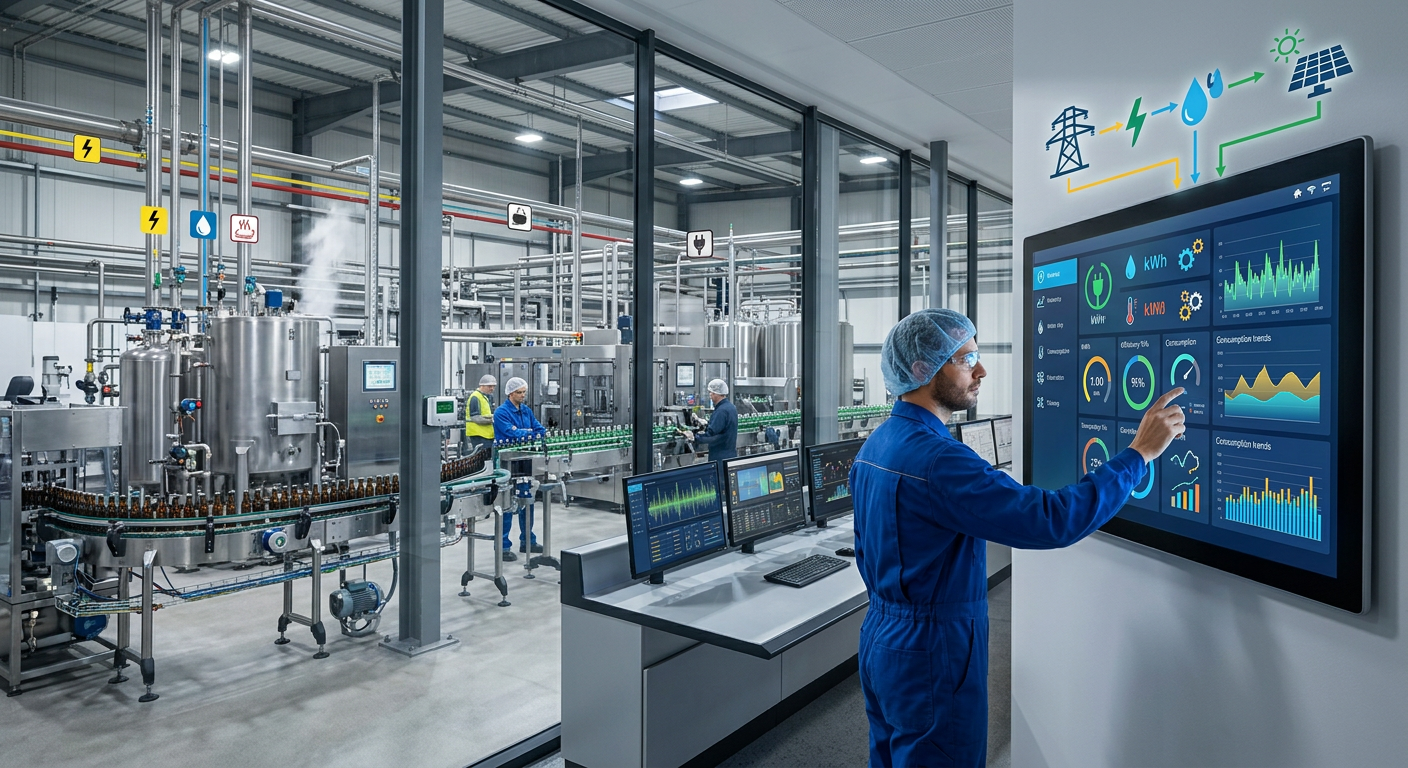
Food Facility Refrigeration Design in 2026: Temperature Zones and System Selection
[trp_language language=”en_US”]
U.S. Food Refrigeration Design Guide for 2026 Facilities
Refrigeration design for food and beverage plants in the United States is becoming more demanding in 2026. Owners are balancing USDA and FDA expectations, tighter energy targets, refrigerant transition pressures, labor shortages, insurance scrutiny, and the need for resilient cold-chain performance. Whether a project is a new protein plant near Kansas City, a dairy expansion in Wisconsin, a frozen prepared foods line in Texas, or a beverage co-packing facility near Los Angeles or Atlanta, the refrigeration system now affects food safety, operating margin, utility cost, uptime, and expansion flexibility.
The most successful projects do not begin with equipment selection alone. They begin with product temperature requirements, room-by-room zoning, process load mapping, sanitation conditions, maintenance access, machine room safety, control philosophy, and future capacity planning. In U.S. markets with strong cold-chain activity such as Chicago, Dallas-Fort Worth, the Port of Savannah, the Inland Empire, Philadelphia, and the I-95 corridor, this planning directly impacts both construction cost and long-term profitability.
Quick Answer

For most U.S. food facilities in 2026, good refrigeration design means creating separate temperature zones by product risk and process stage, calculating real peak loads instead of rule-of-thumb tonnage, selecting ammonia or CO2 based on capacity, safety profile, staffing, and local code conditions, and building in efficient controls, service access, and preventive maintenance from day one. Fresh meat, dairy, beverage ingredients, frozen foods, blast chilling, and loading docks should rarely share the same operating assumptions. Machine rooms must support safe maintenance and future expansion, while walkable ceilings and overhead utility coordination help plants reduce downtime and sanitation conflicts. Facilities that align refrigeration with process engineering usually gain lower energy cost, better yield protection, and fewer emergency shutdowns.
Buying advice for U.S. owners is straightforward: define the product mix first, verify temperature pull-down rates, analyze utility costs by region, compare refrigerant strategies over the full life cycle, and only then lock in compressor packages, evaporators, valves, and controls. This approach matters across industries including protein, dairy, seafood, prepared meals, brewery, RTD beverage, juice, aseptic filling, and co-packing.
2026 Refrigeration Design Standards Overview

By 2026, refrigeration design standards in the United States are shaped by a combination of food safety practice, energy performance goals, refrigerant management policy, insurer expectations, and local building enforcement. Designers are watching the continuing effects of refrigerant transition under federal and state rules, stronger corporate sustainability reporting, and more rigorous mechanical room safety documentation. In practical terms, owners should expect more attention to leak detection, ventilation, pressure relief routing, defrost strategy, heat recovery opportunity, electrical coordination, and digital monitoring.
For food facilities, standards are not only about compliance. They are also about maintaining stable process temperatures during production swings, sanitation washdowns, and dock traffic. A freezer near the Port of Newark handling imported seafood has a very different operating profile from a beverage plant in Phoenix serving the Southwest or a cheese processor in Minnesota dealing with seasonal production spikes. Climate, ambient humidity, utility tariffs, and building envelope quality all influence system design.
The market is also moving toward more transparent total-cost analysis. Capital spending is still important, but many operators now evaluate refrigeration around five factors: first cost, energy intensity, maintenance burden, refrigerant risk, and future capacity flexibility. In regions with expensive electricity such as California and the Northeast, controls and load management can materially change project economics. In areas with abundant industrial labor but tighter insurance controls, ammonia may remain attractive for larger loads if safety and operator capability are strong.
| 2026 Design Driver | Why It Matters | Typical U.S. Impact | Primary Design Response | Who Should Care Most | Example Facility Type |
|---|---|---|---|---|---|
| Refrigerant transition | Long-term compliance and serviceability | Higher scrutiny on refrigerant selection | Evaluate ammonia, CO2, and hybrid systems early | Owners with 15+ year asset horizon | Cold storage distribution center |
| Energy cost inflation | Operating cost pressure | Peak demand charges and tariff exposure | Use floating suction, VFDs, and demand logic | High-throughput processors | Frozen foods plant |
| Food safety enforcement | Product integrity and audit readiness | Tighter room-temperature control evidence | Zoned rooms with monitored alarms | USDA and FDA-regulated plants | Poultry and dairy operations |
| Labor shortages | Less hands-on operator bandwidth | More reliance on automation | Remote monitoring and simplified controls | Multi-site operators | Regional beverage co-packers |
| Insurance requirements | Risk management and premiums | Extra emphasis on machine room safety | Gas detection, ventilation, emergency plans | Large industrial sites | Ammonia engine room facilities |
| Expansion planning | Avoid future demolition and downtime | Need for scalable capacity | Spare headers, roof supports, control points | Growth-stage manufacturers | New build protein plants |
The table above shows why refrigeration is no longer a narrow mechanical package decision. It is a strategic plant infrastructure decision tied to energy, operations, compliance, and capital planning.
Temperature Zone Requirements by Product

Temperature zoning should start with the product, not the equipment catalog. Different foods require different storage, staging, processing, and shipping temperatures. A single facility may need ambient conditioned zones, cool processing rooms, raw ingredient chill rooms, finished goods coolers, tempering rooms, hard freezers, blast cells, and dock vestibules. The correct zoning strategy reduces condensation, microbial risk, product weight loss, frost buildup, and unnecessary compressor run time.
Protein processors often need separate zones for raw receiving, fabrication, packaging, and finished goods. Dairy facilities may need chilled ingredient rooms, cultured product rooms, and low-temperature storage for finished goods. Beverage plants usually focus more on glycol and process cooling, but can still require refrigerated ingredient rooms, flavor storage, or cold-fill support spaces. Seafood processors near Seattle, Boston, or Gulf Coast ports frequently prioritize aggressive pull-down and humidity control to protect quality. Frozen prepared meal operations in the Midwest often need blast freezing tied closely to production scheduling.
| Product Category | Typical Room Temperature | Common Process Need | Key Risk if Misdesigned | Useful Design Note | Typical U.S. Application |
|---|---|---|---|---|---|
| Fresh red meat and poultry | 28°F to 36°F | Processing, holding, packaging | Yield loss and food safety risk | Control infiltration at employee traffic points | Midwest and Southeast protein plants |
| Seafood | 30°F to 34°F | Rapid chilling and holding | Texture loss and shortened shelf life | Pair tight temperature control with sanitation-ready finishes | Coastal processing near Boston or Seattle |
| Dairy products | 34°F to 40°F | Ingredient and finished goods storage | Flavor degradation and spoilage | Consider separate zones for cultured and packaged products | Wisconsin and California dairies |
| Produce and cut vegetables | 34°F to 41°F | Holding and pre-ship staging | Moisture loss and shortened freshness | Humidity strategy matters as much as room temperature | Arizona and California packing operations |
| Frozen prepared foods | -10°F to 0°F | Storage and finished goods handling | Surface thawing and texture issues | Vestibules help protect against dock air infiltration | National frozen meal plants |
| Ice cream and novelty products | -20°F to -10°F | Hardening and storage | Product deformation and recrystallization | Plan for very low temp door and floor details | Dessert manufacturers |
| Beverage ingredients | 35°F to 45°F | Flavor, concentrate, or dairy base storage | Ingredient instability | Coordinate with process cooling loops and CIP timing | RTD and dairy beverage plants |
The temperatures above are not one-size-fits-all specifications; they are planning ranges. Final setpoints depend on product, dwell time, packaging, airflow, sanitation cycle, and regulatory context. For example, a cooked protein packaging room may need a tighter temperature and dew point control strategy than a short-duration raw cooler because condensation on equipment can become the bigger operational issue.
In practical U.S. design work, the best zoning plans also separate spaces by traffic intensity. A room with constant forklift movement at a distribution hub outside Memphis or Columbus may need a different evaporator layout and door strategy than a static long-term freezer. Likewise, a blast chiller serving a cook line in North Carolina should not be sized like a simple storage room because the pull-down profile is fundamentally different.
| Zone Type | Traffic Level | Door Strategy | Airflow Focus | Defrost Consideration | Best Use Case |
|---|---|---|---|---|---|
| Static cooler | Low | Manual or insulated swing doors | Uniform holding | Scheduled off-peak | Ingredient storage |
| High-traffic cooler | High | High-speed insulated doors | Infiltration control | More frequent monitoring | Packaging staging |
| Blast chiller | Moderate | Tight-seal rapid close | High velocity pull-down | Demand-based defrost | Cooked product cooling |
| Hard freezer | Low to moderate | Heated frame freezer doors | Low-temp consistency | Hot gas or electric review | Frozen goods storage |
| Dock vestibule | Very high | Interlocked dock and room doors | Buffer air exchange | Condensation management | Shipping and receiving |
| Process room | High people interaction | Sanitary rapid doors | Worker comfort plus food safety | Coordinate with washdown | Protein and dairy processing |
This second table explains why “cold room” is too broad a term for modern design. Each zone behaves differently, and that difference should be reflected in coils, valves, controls, insulation details, and traffic planning.
Load Calculation and Sizing Methods
Load calculation is one of the most common places where refrigeration projects go wrong. Oversized systems waste capital, cycle inefficiently, and can create poor humidity control. Undersized systems struggle during peak production, dock activity, sanitation recovery, and summer ambient conditions. In 2026, the expectation is not guesswork but disciplined calculation.
A robust load model typically includes transmission through walls and ceilings, solar gain where relevant, product pull-down, people, lighting, motors, infiltration, equipment heat, defrost impact, and safety factors that are justified rather than excessive. Process loads should be separated from storage loads. A room that stores already-chilled dairy cups is very different from a room receiving warm kettles or tote ingredients. The designer should also model ambient conditions for the specific region. A plant in Houston or Miami must treat humidity and infiltration differently from a plant in Denver.
For many U.S. projects, the most important sizing question is not “What tonnage do I need?” but “What is my worst credible operating hour?” That hour may occur during a summer afternoon with multiple dock doors cycling, product entering at elevated temperatures, sanitation moisture still present, and one compressor unavailable due to maintenance. Good design anticipates that reality.
| Load Component | What It Includes | Common Design Mistake | Best Practice | Impact on Capacity | Example |
|---|---|---|---|---|---|
| Envelope load | Heat gain through insulated walls, roof, floor | Ignoring thermal bridging | Use detailed assembly values | Moderate and continuous | Large freezer box |
| Infiltration load | Warm air entering through doors and leaks | Underestimating traffic | Model real forklift and personnel movement | Can be very high | Shipping cooler |
| Product load | Heat removed from incoming product | Using average instead of peak intake temp | Base on actual process schedule | Often dominant in blast cooling | Cook-chill operation |
| Internal equipment | Motors, conveyors, lights, fans | Leaving out non-refrigeration devices | Coordinate with process and electrical teams | Steady or variable | Packaging room |
| Occupancy load | People working in the zone | Ignoring shift changes | Use realistic labor plans | Low to moderate | Portioning room |
| Defrost and recovery | Heat added and time to recover | Not accounting for moisture-heavy washdown | Match defrost strategy to room use | Important for uptime | Protein process room |
| Contingency | Reserve for uncertainty or growth | Adding arbitrary excess tonnage | Use structured spare capacity logic | Strategic rather than constant | Expansion-ready co-packer |
The value of this breakdown is that it turns sizing into a coordinated plant decision. Process engineering, architecture, sanitation, operations, and maintenance all influence the final load. This is especially true for integrated projects where refrigeration must work with boilers, chilled water, glycol, compressed air, and automation.
As the bar chart suggests, not every industry has the same refrigeration intensity. Protein, frozen meals, and seafood often present the greatest load-management challenges because of product safety sensitivity, pull-down needs, and traffic patterns. Beverage plants may rely more heavily on process cooling and glycol than large low-temperature storage, although hybrid needs are common.
Ammonia vs. CO2 System Selection
One of the most important buying decisions in 2026 is choosing the refrigerant platform. For U.S. industrial food applications, ammonia remains a strong choice for larger systems because of efficiency and proven industrial performance. CO2 continues to gain traction due to lower global warming concerns, compact applications, and growing industry familiarity. In many cases, hybrid architectures are also worth considering, especially where owners want to minimize ammonia charge while preserving industrial efficiency.
The right answer depends on more than thermodynamics. It depends on staffing, operator training, insurer comfort, local code interpretation, expansion plans, contractor availability, maintenance culture, and project scale. A large central refrigeration plant serving a protein complex in Nebraska may justify ammonia with well-developed safety systems and trained personnel. A smaller or mid-sized food facility in a dense urban or suburban setting may prefer CO2 or a lower-charge strategy to simplify risk management and future service.
| Decision Factor | Ammonia | CO2 | Hybrid Option | Best Fit Scenario | Main Caution |
|---|---|---|---|---|---|
| Energy efficiency | Strong for large industrial loads | Good, application dependent | Can balance strengths | Large central plants | Do not generalize without local conditions |
| Charge size strategy | Can be higher unless low-charge design used | Typically lower toxicity concern | Reduced ammonia exposure possible | Safety-sensitive projects | Evaluate full system complexity |
| Operator familiarity | High in industrial sector | Growing rapidly | Requires mixed expertise | Sites with experienced maintenance teams | Training needs may rise |
| Capital cost | Competitive at scale | Can vary by application and pressure design | Often moderate to high | Long-life facilities | Do lifecycle analysis, not just first cost |
| Urban acceptance | May face more scrutiny | Often attractive in space-constrained settings | Useful for distributed needs | Metro projects near labor pools | Check local review requirements early |
| Maintenance profile | Needs disciplined industrial program | Needs pressure-aware technical support | Can be more complex operationally | Owners with strong PM culture | Service network matters by region |
| Future flexibility | Excellent in many large expansions | Strong in modular concepts | High if planned correctly | Multi-phase expansions | Avoid piecemeal add-ons without master plan |
For many U.S. owners, the decision should be made through scenario modeling. Compare annual energy cost, emergency response requirements, spare parts availability, contractor density in your region, and the expected growth of the plant. In Southern California, where utility costs are high and footprints can be constrained, an owner may rank efficiency and compactness differently than a processor in Iowa with abundant land and established industrial refrigeration support.
The comparison chart is not a universal scorecard; it is a planning illustration. Final selection should be based on plant-specific engineering, safety planning, and long-term operating philosophy.
Walkable Ceilings and Machine Room Design
Walkable ceilings and well-planned machine rooms are often overlooked in early budgeting, yet they strongly affect uptime, sanitation, safety, and future modifications. In food plants, overhead congestion is common. Refrigeration lines, condensate drains, sprinkler mains, process piping, electrical trays, compressed air, steam, and controls all compete for space. When ceilings are not designed for access, even routine service can disrupt production.
A walkable ceiling strategy creates safer maintenance routes above production areas and allows technicians to inspect valves, supports, evaporator connections, and utility runs without bringing lifts into sanitary rooms whenever possible. This can reduce downtime, simplify lockout planning, and support better housekeeping. It is particularly valuable in high-care protein rooms, dairy packaging areas, and beverage utilities corridors.
Machine room design deserves equal attention. Whether the plant uses ammonia, CO2, or a hybrid system, the machine room should support ventilation, safe egress, control panel access, gas detection, relief piping, isolation zones, drainage, lighting, maintenance clearances, and future equipment replacement paths. Owners should also think about how mechanics actually work in the space during an upset, not just how equipment fits on a layout.
| Design Element | Operational Benefit | Common Failure | Recommended 2026 Practice | Who Benefits | Example |
|---|---|---|---|---|---|
| Walkable ceiling paths | Safer access and faster service | No access around valves and coils | Coordinate structure and utilities early | Maintenance and sanitation teams | Prepared foods plant |
| Machine room clearance | Improved repairability | Equipment packed too tightly | Leave realistic maintenance envelopes | Operators and contractors | Compressor service area |
| Gas detection | Early warning and safer response | Poor sensor placement | Map detection to actual release points | Safety teams | Engine room monitoring |
| Ventilation design | Emergency and routine risk control | Inadequate exhaust routing | Integrate with alarm sequences | Facility management | Ammonia room |
| Drainage and housekeeping | Cleaner, safer environment | Standing water and corrosion | Design floor slopes and service drainage | Maintenance crews | Compressor room floor plan |
| Expansion allowance | Lower future retrofit cost | No room for added vessels or controls | Reserve pads, headers, and conduits | Growing manufacturers | Multi-phase facility buildout |
When owners ask how to reduce life-cycle cost without sacrificing reliability, access design is one of the strongest answers. A plant in Charlotte, Dallas, or Sacramento that avoids repeated production interruptions for routine service often saves more than the original premium for better access planning.
Energy-Efficient Refrigeration Controls
Controls are where refrigeration design becomes operating performance. In 2026, energy-efficient refrigeration controls are no longer optional for competitive U.S. food plants. Even a strong mechanical design can underperform if the control logic is too simplistic. Good controls reduce compressor energy, stabilize suction pressure, improve defrost management, detect drift, support maintenance, and provide production teams with useful visibility.
High-value strategies often include floating head pressure, floating suction pressure, variable frequency drives, smart defrost scheduling, condenser fan staging, case or room temperature trending, door-status integration, leak monitoring, alarm escalation, and energy dashboards. In production environments, refrigeration controls should also coordinate with sanitation schedules, occupancy changes, and production campaigns. For example, a facility that runs long frozen production campaigns followed by washdown and allergen changeovers needs different control behavior than a static warehouse.
Area-wide trend data is especially useful for management. If the plant can see that a dock cooler near the Port of Savannah consistently spikes during trailer turns, the facility can address door logic or staging behavior before simply buying more tonnage. If a dairy room in upstate New York is running excessive defrost cycles after sanitation, coil placement or drip management may be the real issue.
Future trends point toward tighter integration between refrigeration and plant-wide automation. More owners want data flowing into SCADA, utility dashboards, and management reporting. This is where an engineering-led integrator can add value: the refrigeration system should not operate as an isolated island if the plant depends on coordinated production, CIP, utilities, and packaging.
Policy and sustainability trends also matter. More companies are setting internal carbon and energy goals, and more utilities are offering incentives tied to efficient motors, demand reduction, and control upgrades. Smart controls can therefore influence both operating expense and payback timing.
Refrigeration System Maintenance Planning
Maintenance planning should be part of design, not a binder created after startup. Too many plants spend heavily on refrigeration assets and then struggle because valves are inaccessible, spare parts are not standardized, alarms are noisy but unhelpful, or no one has a clear preventive maintenance sequence. In 2026, resilient facilities are designing around maintainability from the start.
A strong maintenance plan includes asset tagging, access routes, lubrication and inspection schedules, refrigerant management procedures, sensor calibration, leak response plans, vibration monitoring where appropriate, defrost verification, condenser cleaning, and trend-based alarm review. It should also define which tasks are internal, which require specialist contractors, and how shutdown windows align with production.
| Maintenance Item | Typical Frequency | Why It Matters | Failure Risk if Missed | Recommended Owner Action | Best Fit Facility Type |
|---|---|---|---|---|---|
| Compressor inspection | Monthly to quarterly | Protects efficiency and reliability | Unexpected outage | Track vibration, oil, and operating trend data | All industrial plants |
| Leak detection verification | Monthly | Safety and refrigerant stewardship | Undetected release | Test alarms and document response | Ammonia and CO2 systems |
| Evaporator cleaning | Scheduled by environment | Maintains heat transfer | Higher energy and poor pull-down | Align with sanitation windows | Protein and dairy rooms |
| Defrost performance review | Monthly | Prevents icing and waste | Airflow restriction | Use trend logs, not visual checks alone | Freezers and humid coolers |
| Control sensor calibration | Quarterly to semiannual | Supports accurate temperature management | Drift and product risk | Maintain calibration records | Audit-sensitive facilities |
| Condenser maintenance | Seasonal or monthly | Improves efficiency and head pressure control | Energy penalty and trips | Review fans, water treatment, and fouling | Outdoor condensing plants |
| Spare parts review | Quarterly | Reduces outage duration | Long downtime waiting for parts | Standardize critical components | Remote or high-throughput plants |
The table illustrates a simple truth: preventive maintenance is not just maintenance cost. It is uptime insurance. This matters greatly in facilities running narrow margins, short shelf life, or major retailer service commitments.
Owners evaluating new systems should ask vendors and designers specific questions: Can my team safely access the valves? Are replacement sensors common in the U.S. market? Can alarm trends be exported? Are spare compressors or motors interchangeable? How quickly can a qualified technician reach my site in Tennessee, Alberta, or Central California? These are practical buying questions that often matter more than brochure efficiency numbers.
Our Company
Disruptive Process Solutions works with food and beverage manufacturers across the United States and Canada on capital projects where refrigeration is only one part of a larger production and utility strategy. Rather than treating cold systems as stand-alone equipment, the company approaches them as part of profitable plant performance. That matters when a refrigeration project must align with process throughput, sanitation, automation, packaging, and future expansion.
On the technology side, DPS supports integrated engineering across structural, mechanical, plumbing, electrical, process, and controls disciplines. That capability is useful when refrigeration interacts with SCADA, PLC logic, glycol loops, boilers, water systems, process vessels, utility corridors, and sanitation-driven room conditions. Manufacturers looking for coordinated plant design can learn more about these broader capabilities through food and beverage engineering services.
On the manufacturing side, DPS also brings practical equipment knowledge from designing and supplying process systems used across food and beverage operations. Its experience spans tanks, CIP systems, utility integration, and complete processing environments, which helps when refrigeration must fit around real operating equipment rather than abstract layouts. Additional information about this side of the business is available in the company’s process equipment portfolio.
On the service side, DPS operates with a design-build-manage approach that supports planning, engineering, construction coordination, installation, integration, and project oversight. For owners evaluating refrigeration upgrades, plant relocations, or utility expansions, that model can reduce disconnects between concept, construction, and startup. Manufacturers can review the firm’s background on the company overview page and explore real project outcomes through selected industry case studies.
For U.S. facilities, this integrated approach is especially relevant when refrigeration must fit within a bigger capital plan: a new co-packing line in the Carolinas, a dairy expansion in the Central Valley, a brewery utility retrofit in Colorado, or a protein processing modernization in the Great Plains. The benefit is not just engineering depth; it is alignment between infrastructure and business goals.
FAQ
What is the best refrigeration system for a U.S. food plant in 2026?
There is no single best system. The right choice depends on product type, room temperatures, facility scale, utility costs, staffing, code conditions, and long-term refrigerant strategy. Large industrial sites may favor ammonia or low-charge ammonia solutions, while some facilities prefer CO2 or hybrid concepts.
How many temperature zones should a food facility have?
Enough to separate products, process stages, and traffic profiles. Most plants need more than one chilled zone, and many also need blast, freezer, vestibule, and conditioned processing spaces. Grouping unlike products together often increases both risk and cost.
Should I oversize refrigeration to be safe?
Not blindly. Strategic spare capacity is smart, but arbitrary oversizing can raise capital cost, reduce efficiency, and create poor control. It is better to model peak conditions and planned growth accurately.
Is CO2 replacing ammonia in U.S. industrial food plants?
CO2 is growing, but ammonia remains very important, especially in larger industrial applications. The market is moving toward more project-specific selection and, in some cases, hybrid strategies.
Why do walkable ceilings matter?
They improve maintenance access, reduce disruption to production, and support safer service in dense utility environments. Over the life of a plant, this can save meaningful downtime and labor cost.
What controls offer the fastest payback?
Common high-value upgrades include floating suction, floating head pressure, VFDs, smart defrost, and better alarm and trend visibility. The exact payback depends on climate, operating schedule, and utility pricing.
How often should refrigeration systems be reviewed?
Critical systems should be monitored continuously, with formal maintenance and performance reviews performed monthly, quarterly, and annually depending on the asset. New plants should also complete an early post-startup optimization review.
What should I ask before hiring a refrigeration design partner?
Ask whether the team understands your product, load profile, sanitation regime, automation needs, and expansion plan. Also ask how they coordinate refrigeration with process, structure, utilities, safety, and construction execution.
In the United States, 2026 refrigeration design is no longer just about keeping a room cold. It is about designing a complete operating environment that protects product, controls energy use, supports maintainability, and aligns with the manufacturer’s growth model. Plants that treat refrigeration as a strategic system rather than a commodity purchase are better positioned to compete in demanding food and beverage markets.
[/trp_language]
Complete Company Portfolio
About the Author: Disruptive Process Solutions (DPS)
The DPS team combines process engineering expertise with real-world food and beverage manufacturing experience. Our content focuses on process optimization, production efficiency, facility improvements, and practical solutions that help manufacturers operate more effectively in a rapidly evolving industry.
Share