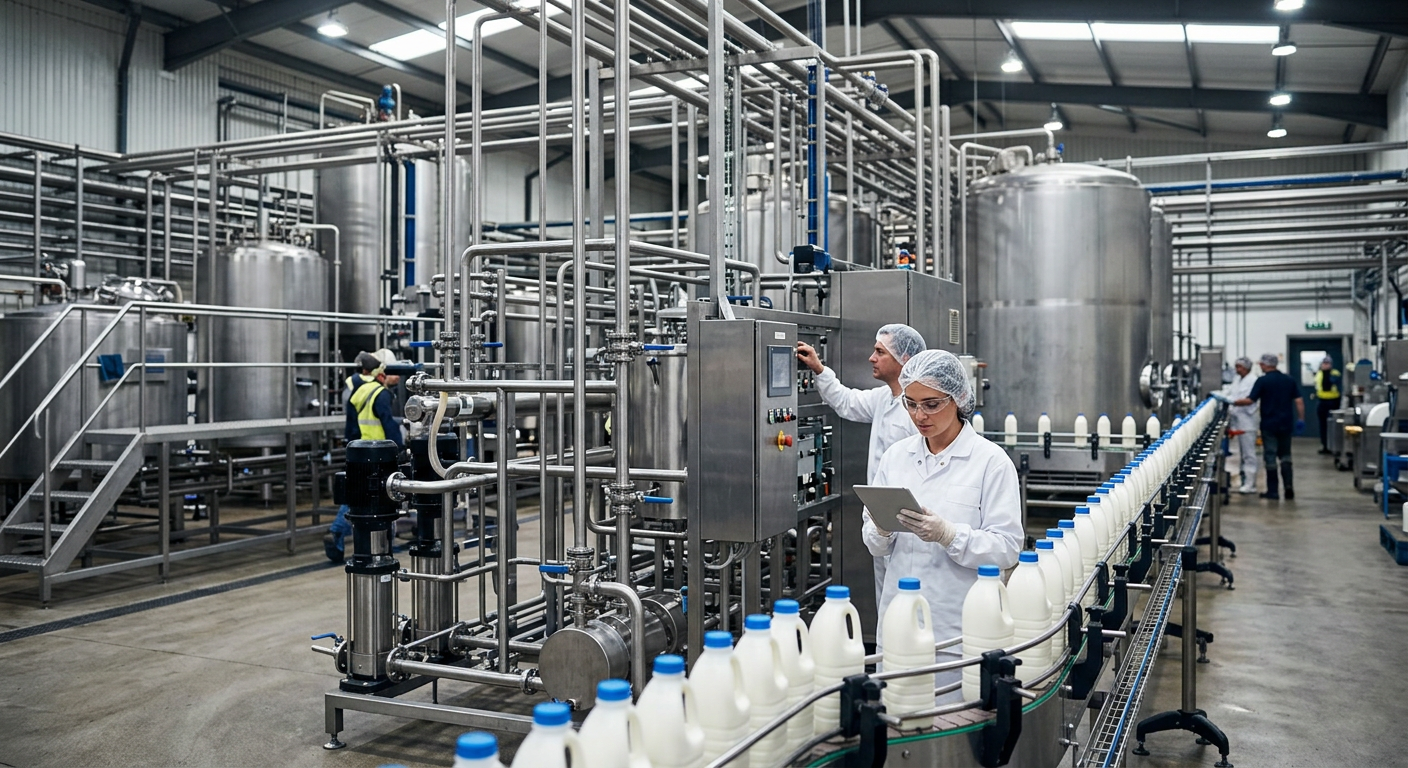
2026 Guide to Food Facility Zone Segregation and Color Coding
[trp_language language=”en_US”]
Food Facility Zone Segregation and Color Coding in the United States
Food manufacturers in the United States are under constant pressure to prevent cross-contamination, protect product integrity, and satisfy FDA, USDA, SQF, and BRC expectations. A strong zone segregation and color-coded equipment program helps facilities separate risk, assign sanitation responsibility, control personnel movement, and reduce environmental pathogens before they reach finished product. In 2026, the most effective programs combine clear hygienic zoning, practical tool separation, disciplined traffic design, environmental monitoring, and engineering choices that make cleaning easier every day.
Immediate Takeaway

The fastest way to improve hygienic control in a U.S. food plant is to divide the facility into four risk zones, assign cleaning tools by color to each zone, restrict employee and forklift movement between zones, and verify the system with environmental monitoring. Zone 1 covers direct food contact surfaces and requires the strictest controls. Zone 2 includes nearby non-contact surfaces that can still transfer contamination. Zone 3 covers remote production support areas, and Zone 4 addresses exterior and perimeter risks. When these zones are mapped correctly, supported by written SOPs, and tied to sanitation validation, manufacturers in places like Chicago, Dallas, Fresno, Charlotte, and the New Jersey logistics corridor can reduce both microbial risk and downtime.
For buyers, the best program is not just a set of brushes and floor signs. It is an operational system that includes layout planning, drain strategy, utility routing, washdown design, personnel flow, traffic barriers, storage racks, ATP or microbiological verification, and training. This is why many processors now align hygienic zoning decisions with capital planning and plant engineering rather than treating sanitation segregation as a stand-alone purchase.
| Program Element | Primary Goal | Main Risk Controlled | Typical Owner | Verification Method | Priority Level |
|---|---|---|---|---|---|
| Zone mapping | Separate hygienic risk by area | Cross-zone contamination | QA and operations | Map review and audits | Critical |
| Color-coded tools | Keep tools in assigned areas | Sanitation transfer | Sanitation manager | Tool checks and signage | Critical |
| Traffic control | Limit people and vehicle crossover | Footwear and wheel contamination | Operations | Flow observations | High |
| Environmental monitoring | Detect pathogens and indicators | Hidden harborage points | QA microbiology | Swab trends | Critical |
| Perimeter defense | Stop outside contamination | Pests, dust, moisture | Facilities | Pest reports and inspections | High |
| Training and SOPs | Standardize execution | Human error | HR and supervisors | Competency checks | Critical |
This table shows why zone control is multidisciplinary. A sanitation team may own tools, but engineering, QA, operations, and facilities all influence whether the program works in practice.
Zone 1 Controls for Direct Food Contact Surfaces

Zone 1 includes any surface that directly touches food, beverage, ingredients, or product-contact packaging. Examples include conveyors, slicers, fillers, depositors, kettles, blend tanks, tote contact points, nozzles, chutes, augers, and utensils. In ready-to-eat protein, dairy, aseptic beverage, and prepared foods plants, Zone 1 is the highest-risk environment and deserves the most conservative control strategy.
In the United States, buyers often focus on sanitizer chemistry first, but that is only one part of Zone 1 control. The bigger picture is hygienic design. Product contact surfaces should be smooth, accessible, drainable, corrosion-resistant, and free from niches. Welds, seals, dead legs, hollow framework, poorly pitched piping, and hard-to-open machine guards create cleaning obstacles that can undermine even the best chemical program.
For that reason, many processors now evaluate capital upgrades through a hygienic design lens before new lines are installed. During equipment planning, it helps to work with firms that understand both process performance and cleanability. DPS applies this approach through integrated process engineering and system design for food and beverage plants across North America, with experience spanning high-care food lines, beverage processing, aseptic systems, utilities, controls, and compliance-driven projects. Companies considering broader process upgrades can review engineering and project services that align sanitation performance with production needs.
Zone 1 also requires the most disciplined verification. Facilities should define acceptable ATP thresholds, microbiological pass criteria, pre-operational inspection standards, and escalation rules when results fail. In a USDA-inspected protein plant in the Midwest, for example, a failed Zone 1 swab on a slicer leg may trigger expanded sampling, recleaning, root cause review, and intensified checks on adjacent conveyor transfer points.
| Zone 1 Surface | Typical Product Type | Common Hazard | Best Design Practice | Cleaning Frequency | Verification |
|---|---|---|---|---|---|
| Filler nozzles | RTD beverages | Residue build-up | Quick disassembly | Every sanitation cycle | ATP and visual |
| Slicer blades | Deli meats | Listeria transfer | Accessible guards | Shift and changeover | Micro swabs |
| Mix tank interiors | Sauces and dairy | Biofilm formation | Full drainability | CIP or batch cycle | Rinse conductivity and ATP |
| Conveyor belts | Bakery and snacks | Crumbs and allergens | Lift-up access | Daily or allergen change | Allergen test and ATP |
| Deposit heads | Prepared foods | Particle retention | Minimal dead spots | Per run | Visual and ATP |
| Packaging contact rails | Cheese and protein | Indirect product contamination | Stainless smooth finish | Daily | Pre-op inspection |
The practical buying advice for Zone 1 is simple: do not purchase equipment solely on throughput or price. Ask how long it takes to open, inspect, clean, validate, and restart. The true cost of ownership in Los Angeles, Atlanta, Minneapolis, or Houston depends as much on sanitation labor and contamination exposure as on nameplate speed.
Zone 2 Management for Adjacent Non-Contact Surfaces

Zone 2 includes non-food-contact surfaces that sit close enough to product or Zone 1 equipment to create a realistic transfer risk. Common examples include machine frames, control panels, guards, conveyor undersides, drip shields, filler housings, catwalk rails, and support structures near open product. Zone 2 is where many contamination problems begin because the surfaces appear less critical, yet they are close enough to spread splash, condensation, dust, or harborage contamination into Zone 1.
Environmental monitoring programs in U.S. ready-to-eat facilities often emphasize Zone 2 as an early warning layer. If an organism appears repeatedly on a framework cross-member beneath a conveyor or on a panel handle beside a filler, the plant has a chance to intervene before product contact surfaces become involved. That is why sanitation schedules should not treat Zone 2 as an afterthought. It needs documented access methods, cleaning chemistry compatibility, dry-vs-wet cleaning rules, and post-clean inspection standards.
Zone 2 control is especially important in product categories such as sliced proteins, cultured dairy, aseptic support rooms, salad toppings, sauces, and low-acid beverages after a kill step. These products often move through open handling environments where nearby contamination can migrate through overspray, employee touchpoints, or difficult-to-clean components.
Facilities expanding or retrofitting legacy plants in older industrial corridors such as Philadelphia, St. Louis, Milwaukee, or the Inland Empire should assess whether machine spacing, utility drops, and structural members make proper Zone 2 cleaning difficult. Smart engineering can reduce hidden ledges and congestion points.
| Zone 2 Asset | Why It Matters | Typical Failure Mode | Control Method | Monitoring Frequency | Escalation Trigger |
|---|---|---|---|---|---|
| Machine framework | Close to food path | Harborage in weld gaps | Detailed cleaning and redesign | Weekly | Repeat positives |
| Control panel handles | High touchpoint | Operator transfer | Sanitize and glove discipline | Daily | Failed ATP trend |
| Conveyor undersides | Drip and splash risk | Hidden residue | Lift access and foaming | Per sanitation cycle | Visible residue |
| Drip shields | Can shed onto product path | Condensation and dust | Dry inspection and cleaning | Daily | Moisture observation |
| Guarding and covers | Near open product | Poor cleaning access | Removable sanitary design | Weekly | Access noncompliance |
| Support posts | Adjacent splash zone | Residue at base plates | Seal review and sanitation | Weekly | Recurring micro findings |
This table highlights the operational difference between Zone 1 and Zone 2. Zone 1 failure can be immediate product risk, while Zone 2 often acts as the leading indicator. Strong plants use Zone 2 data to prevent future events rather than waiting for a crisis.
Zone 3 Monitoring for Remote Production Areas
Zone 3 covers areas within the processing environment but farther from direct product exposure. Examples include floors, drains, forklifts, pallet staging zones, walls, maintenance carts, room perimeters, wheels, hose stations, wash sinks, refrigeration units, and utility corridors. These are not product-contact surfaces, but they can seed contamination into higher-risk spaces if left unmanaged.
For environmental monitoring, Zone 3 often provides the richest trend data. Floors and drains, especially in wet protein or dairy operations, can serve as reservoirs for organisms that later travel through aerosols, footwear, wheels, hoses, and poor cleaning practices. In beverage processing, syrup rooms, blending spaces, and utility interfaces may show yeast, mold, or spoilage pressure long before packaged product quality is affected.
A robust monitoring protocol should define sample sites by risk, season, moisture profile, and traffic pattern. Gulf Coast plants may face different moisture and pest pressures than facilities in Arizona or Colorado. Plants near major agricultural and logistics hubs like Fresno, Salinas, Omaha, Savannah, and Kansas City may also experience unique raw material and inbound vehicle contamination patterns.
Trend review matters as much as single-point testing. One isolated floor drain finding may be manageable. Repeated positives across related drains, hose reels, and forklift wheels suggest a route of spread that calls for CAPA, not just recleaning. Many sophisticated processors now pair Zone 3 data with maintenance work orders, drain maps, and traffic logs to identify root causes faster.
| Zone 3 Site | Risk Pathway | Common Indicator | Typical Sampling Method | Review Cadence | Corrective Action |
|---|---|---|---|---|---|
| Floor drains | Aerosol and splash | Listeria species | Sponge swab | Weekly trend | Deep clean and vector review |
| Forklift wheels | Area-to-area transfer | APC rise | Surface swab | Biweekly | Wheel wash and route control |
| Pallet staging floors | Inbound contamination | Yeast or mold | Sponge swab | Weekly | Segregate raw traffic |
| Wall-floor junctions | Moisture retention | Biofilm indicators | Target swab | Monthly | Repair and sanitize |
| Hose stations | Splash contamination | ATP failures | ATP swab | Daily spot check | Nozzle sanitation and storage |
| Maintenance carts | Tool migration | Mixed flora | Handle and shelf swab | Monthly | Dedicated cart program |
As a buying strategy, plants should choose monitoring programs that connect sanitation, maintenance, and operations data. If software is too complex for supervisors to use, results will sit in spreadsheets instead of driving action.
Zone 4 Controls at the Exterior and Perimeter
Zone 4 covers the outer boundary of the food plant and surrounding property. This includes loading docks, roof interfaces, waste handling areas, exterior walls, employee entrances, trailer yards, utility pads, compressed air intakes, parking lots, and landscape edges. Zone 4 is where outside contamination enters the site through vehicles, weather, pests, dust, and standing water.
In the United States, perimeter control varies by geography. Plants near ports such as Long Beach, Savannah, Newark, or Houston may face heavier trailer turnover and imported material exposure. Facilities in humid Southeast climates may need stronger standing-water and insect control. Dry inland plants may struggle more with wind-blown dust around dock doors and air intakes.
Zone 4 is also where many facilities underinvest because contamination is not immediately visible on product. Yet exterior pressure often drives interior problems. Poor dock seals, cracked pavement, open waste handling, clogged roof drains, and unmanaged vegetation can all increase pest activity or moisture intrusion.
| Zone 4 Area | Main Threat | Preventive Measure | Inspection Owner | Seasonal Concern | Action Standard |
|---|---|---|---|---|---|
| Loading docks | Pests and dust | Dock seals and door discipline | Warehouse supervisor | Summer insect pressure | No gaps or debris |
| Waste compactors | Rodent activity | Cleaning schedule and enclosure | Facilities | Year-round | No residue spillover |
| Roof drains | Water intrusion | Routine clearing | Maintenance | Storm season | Free-flowing drainage |
| Air intakes | Dust and odors | Placement and filter checks | HVAC lead | Harvest and windy periods | Filter within spec |
| Trailer yard | Wheel contamination | Defined routes and washdown | Logistics | Wet months | Minimal mud tracking |
| Landscape perimeter | Harborage | Vegetation clearance | Pest control vendor | Spring and fall | Visible open buffer |
This table explains why exterior programs belong in hygienic zoning discussions. A perimeter weakness eventually becomes an interior issue, especially when high trailer turnover, wet weather, or warm temperatures increase vector activity.
Color-Coded Tools and Equipment Systems
A color-coded tool program is the visible backbone of zone segregation. Brushes, squeegees, shovels, buckets, hoses, scrapers, floor pads, aprons, gloves, and mobile carts should be assigned to risk zones so that tools never move casually from raw to ready-to-eat or from drains to food-contact areas. The most effective color systems are simple, durable, and tied to physical storage locations.
Many U.S. plants use a four-color model that aligns to zones, but the best system is the one that your workforce can understand instantly across shifts and languages. If a site in North Carolina uses red for raw and blue for ready-to-eat, that rule should appear on tool boards, SOPs, training cards, and sanitation records. Plants with allergen segregation may add another color layer for ingredient classes or line dedication.
When sourcing tools, buyers should evaluate chemical resistance, bristle retention, hygienic design, ease of inspection, heat tolerance, and replacement cost. Low-cost tools that crack, shed, or trap residue create hidden risk. Storage matters too. Tools should hang dry, off the floor, in the correct room, and near the point of use. Centralized storage can work in smaller facilities, but large plants generally perform better with distributed, zone-specific racks.
For processors also planning equipment upgrades, there is value in aligning sanitation tools with process equipment selection. DPS supports this kind of systems-level planning through process integration and its own equipment capabilities, including custom tanks, CIP systems, marination tumblers, and cooking vessels designed to fit broader plant execution goals. Manufacturers evaluating line changes can also explore available process equipment solutions as part of larger hygienic improvement projects.
By 2026, the trend is moving beyond simple color matching. The leading plants pair color-coded tools with QR-tagged inventories, wash verification, replacement logs, and sanitation ownership by room. Sustainability is also shaping purchases, with stronger demand for longer-life materials and reduced disposable waste.
Traffic Flow and Personnel Movement Controls
Even the best color-coded system fails when people, pallets, and maintenance activity move freely across hygienic boundaries. Traffic patterns and personnel flow controls are therefore essential. The goal is to design the plant so clean-to-dirty and post-lethality-to-raw crossover is minimized by default, not merely discouraged by policy.
Practical controls include separate entry points, gowning transitions, footwear changes, foam or sanitizer barriers, handwashing stations, wheel wash points, one-way corridors, dedicated forklifts, visual floor markings, and scheduling rules for maintenance and waste removal. In high-care environments, facilities may use controlled air pressure cascades, interlocked doors, and badge-limited access.
Traffic control decisions should be made during plant design and renovation, not after equipment is already squeezed into place. This is where service capability matters. DPS works as an engineering and execution partner that bridges planning, buildout, and implementation, helping processors think through process flow, utility coordination, capital feasibility, installation, controls, and project management as one system. Companies exploring project support can learn more about the team and operating approach behind that model.
Industries with the strongest need for strict flow control include ready-to-eat meat, dairy, fermented beverages, aseptic filling, fresh prepared foods, and co-packing facilities with multiple SKUs and rapid changeovers. Applications range from raw receiving and thaw rooms to post-cook slicing, blending, canning, filling, and secondary packaging.
Buying advice: before approving a traffic-control investment, observe the facility during sanitation, startup, changeover, and shift turnover. These are the moments when policy is most likely to break down. A beautiful flow map that ignores real forklift congestion near docks or maintenance response patterns will not hold up in production.
Vector Monitoring and Cross-Contamination Prevention
Vectors are the routes by which contamination travels. In food plants, the most common vectors are employees, gloves, tools, hoses, wheels, drains, condensate, overspray, pallets, maintenance equipment, incoming packaging, and pests. Cross-contamination prevention depends on identifying which vectors are realistic for each zone and interrupting them with physical and procedural controls.
Vector mapping is especially useful after repeated environmental positives or unexplained spoilage trends. For example, a dairy plant may discover that mobile ladders move between wet utility rooms and open filling areas. A beverage site may find that hose nozzles touch floors during sanitation and then contact external machine surfaces near open containers. A protein processor may see recurring spread from pallet jack wheels crossing raw and cooked support corridors.
Strong vector control programs combine engineering, sanitation, and discipline. Condensation management, drain placement, pallet policy, tool assignment, traffic barriers, and preventive maintenance all reduce transfer pathways. Pest control also belongs here; birds near receiving can lead to dock contamination, and rodent pressure around waste handling can increase transfer risk through wheels and personnel shoes.
For local supplier evaluation, U.S. buyers should compare providers on more than product catalog size. Ask whether they support site assessments, hygienic design input, validation guidance, replacement planning, and staff training. Regional support matters in high-volume manufacturing areas such as the Carolinas, California Central Valley, Texas, Wisconsin, Arkansas, and the Midwest protein belt.
In 2026, future trends include smarter sensors for environmental conditions, digital route tracking for sanitation tools, more pressure from audit schemes on documented zoning logic, and stronger sustainability requirements tied to water, chemical, and material use. Policy expectations are also increasing around preventive controls, validation, and documented risk assessment, especially for high-risk products.
About Our Company
Disruptive Process Solutions supports food and beverage manufacturers across the United States and Canada with a practical, profit-focused engineering mindset. Rather than approaching sanitation zoning as an isolated compliance project, the company helps clients connect hygienic design, production goals, utility systems, automation, and capital efficiency.
From a technological standpoint, DPS brings multidisciplinary engineering across process, mechanical, structural, plumbing, electrical, and controls. That includes PLC programming, SCADA, batch logic, utility integration, and line coordination for beverage, dairy, protein, prepared foods, aseptic processing, and other regulated applications. This matters when a zoning improvement also affects CIP strategy, equipment access, drain routing, air handling, or automation sequencing.
From a manufacturing standpoint, DPS designs and supplies selected process equipment such as tanks, CIP skids, marination tumblers, and cooking vessels that can be integrated into broader facility upgrades. That helps processors align equipment procurement with sanitation, cleanability, and installation realities rather than sourcing each item in isolation.
From a service standpoint, DPS provides planning, feasibility support, owner representation, project management, general contracting coordination, installation, and system integration. For processors evaluating expansion, relocation, or modernization, that full-scope model can reduce the gaps that often appear between engineering intent and plant-floor execution. Additional examples of project outcomes are available in these food and beverage case studies.
The company is headquartered in Cary, North Carolina, with a West Coast office in Lake Forest, California, and supports clients across all 50 states. That national footprint is useful for manufacturers operating multiple plants or planning standardized hygienic zoning programs across geographically different facilities.
Frequently Asked Questions
1. What is the difference between Zone 1 and Zone 2?
Zone 1 touches food directly. Zone 2 does not touch food but sits close enough to spread contamination into Zone 1 through splash, touch, condensation, or debris.
2. How many colors should a food plant use?
Use only as many colors as employees can apply consistently. Four is common, but some plants add colors for allergen control or dedicated production lines.
3. Do all U.S. food plants need formal zoning maps?
Not every site needs the same complexity, but most modern facilities benefit from a documented zone map tied to cleaning, monitoring, and traffic rules.
4. What products need the strictest segregation?
Ready-to-eat meats, dairy, aseptic beverages, fresh prepared foods, sauces after lethality, and any open product exposed after a kill step usually require the strongest controls.
5. How often should environmental monitoring be reviewed?
High-risk sites often review results weekly, with monthly trend analysis and immediate escalation for repeat findings in the same route or vector path.
6. Can old plants still build strong zone control?
Yes. Legacy facilities can improve with better traffic separation, color-coded tools, drain strategy, equipment access upgrades, and focused monitoring, even before full renovation.
7. What should buyers ask sanitation tool suppliers?
Ask about material durability, cleanability, chemical compatibility, replacement cycles, storage systems, training support, and whether they understand hygienic zoning by product risk.
8. How does zoning affect ROI?
Good zoning reduces contamination events, downtime, product loss, audit findings, and emergency cleaning. It also supports longer-term equipment reliability and faster troubleshooting.
9. What is the biggest 2026 trend?
The biggest shift is from basic visual segregation to integrated programs that combine hygienic design, digital verification, monitoring data, personnel control, and sustainability planning.
10. When should a company bring in an engineering partner?
Bring one in during early planning for expansions, equipment changes, high-risk product introductions, repeated environmental issues, or when plant layout is limiting sanitation performance.
Across the United States, food facility zone segregation and color coding are no longer optional best practices for sophisticated manufacturers. They are operating disciplines that protect product, customers, brand reputation, and capital performance. The strongest programs treat zoning as part of plant design, not just sanitation training. When Zone 1 through Zone 4 are clearly defined, tools are controlled, traffic is managed, vectors are interrupted, and monitoring confirms results, facilities are better positioned for safer growth in 2026 and beyond.
[/trp_language]
Complete Company Portfolio
About the Author: Disruptive Process Solutions (DPS)
The DPS team combines process engineering expertise with real-world food and beverage manufacturing experience. Our content focuses on process optimization, production efficiency, facility improvements, and practical solutions that help manufacturers operate more effectively in a rapidly evolving industry.
Share