Food Plant Personnel Hygiene Programs: Complete 2026 Checklist
[trp_language language=”en_US”]
U.S. Food Plant Hygiene Compliance Guide for 2026
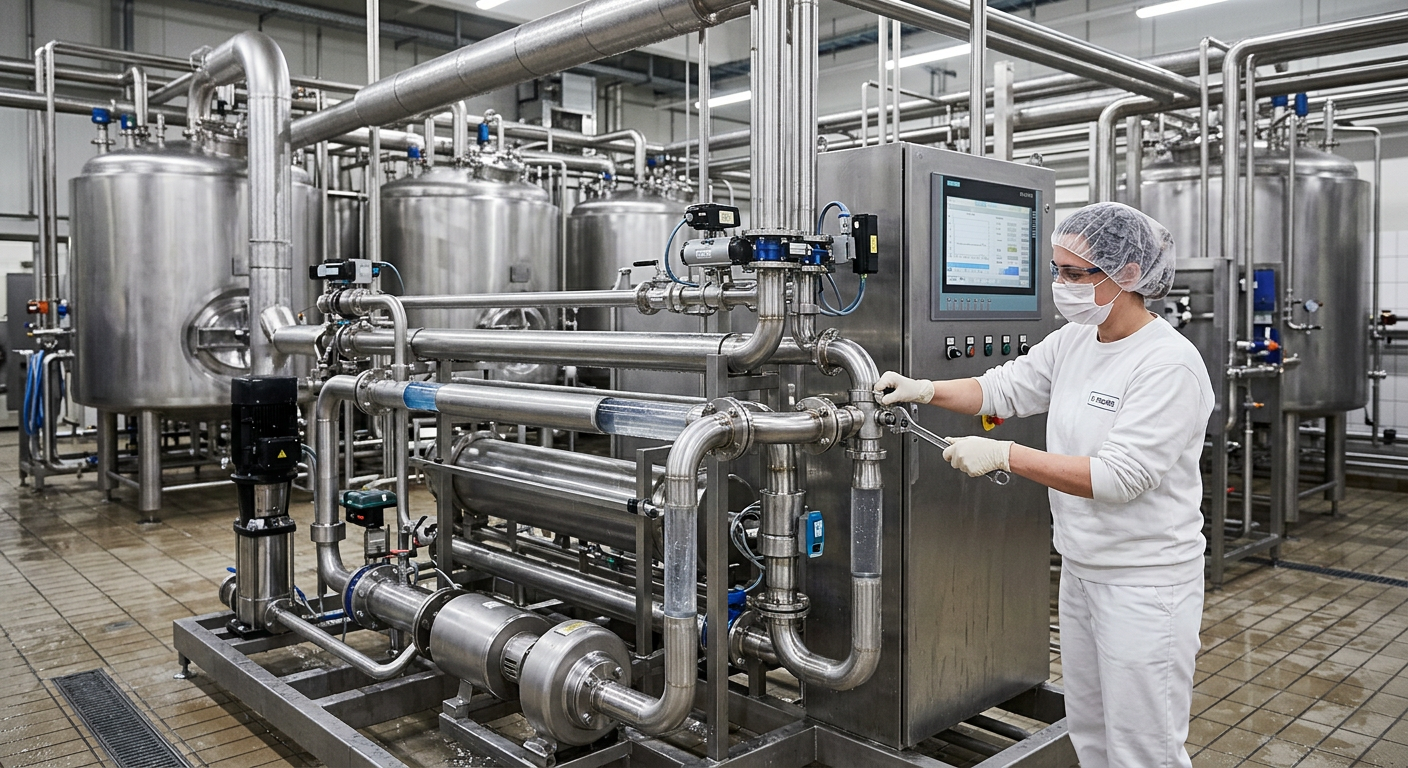
Personnel hygiene is one of the most important control points in any food or beverage facility in the United States. Whether a plant handles ready-to-eat meals in Chicago, poultry in Arkansas, dairy in Wisconsin, sauces in New Jersey, or aseptic beverages near Los Angeles and Houston, employee hygiene programs directly affect food safety, audit performance, labor efficiency, and brand protection. In 2026, food manufacturers are expected to tighten hygiene controls not only to meet FDA, USDA, SQF, and BRC expectations, but also to reduce operational variability, support workforce turnover, and document compliance more effectively.
This guide explains how to build and maintain a practical personnel hygiene program for U.S. food plants. It covers exclusion policies, hand washing station design, protective clothing, glove protocols, training, visitor management, and documentation. It also looks at industry demand, product categories, buying advice, applications, local supplier considerations, and upcoming technology and policy trends shaping the American market.
Fast Overview

A strong food plant personnel hygiene program in the United States should do five things well: prevent sick or contaminated personnel from entering production areas, make correct hand washing easy, standardize protective clothing by risk zone, define glove changeover rules, and verify compliance through training and records. Plants that do this consistently are better positioned for FDA inspections, USDA oversight, customer audits, and GFSI-benchmarked certification reviews.
For most facilities, the most effective hygiene program is not the one with the longest policy manual. It is the one that operators can actually follow on first shift, second shift, weekends, and during peak season staffing. That means clear visual controls, good entry design, practical gowning layouts, line-of-sight supervision, digital documentation when possible, and reinforcement during onboarding.
In the U.S. market, hygiene programs are increasingly tied to automation and facility design. Modern plants in manufacturing corridors such as North Carolina’s Research Triangle, Texas food logistics hubs, California beverage clusters, and Midwest protein processing regions are investing in better hand wash infrastructure, access control, sanitation zoning, and audit-ready data capture. The 2026 trend is clear: hygiene is moving from a policy topic to an engineered system.
For buyers planning a plant expansion or retrofit, personnel hygiene should be addressed at the same time as process flow, utilities, CIP routing, HVAC pressure relationships, and material movement. Retrofitting hand washing points after construction is often more expensive than integrating them during layout development.
The chart above reflects a realistic growth pattern in U.S. spending on hygiene-related plant systems, including hand wash access equipment, gowning controls, digital monitoring, training tools, and software. Growth is being driven by labor turnover, retailer expectations, audit readiness, and the need to reduce contamination events in higher-risk categories.
Employee Health Screening and Exclusion Rules

Health screening and exclusion policies are the first line of defense in a personnel hygiene program. U.S. food plants should maintain written rules that explain when employees, contractors, and temporary workers must report symptoms, when they are restricted from handling food or food-contact surfaces, and when they are excluded from production areas entirely.
At a minimum, screening should address vomiting, diarrhea, fever with sore throat, jaundice, infected wounds on exposed body parts, and diagnosed communicable illnesses relevant to food handling. Policies should also account for respiratory illness procedures where facilities choose to adopt enhanced controls, especially in ready-to-eat environments.
These policies matter across product categories, but especially in high-risk applications such as deli salads, dairy processing, post-lethality protein slicing, aseptic packaging, cultured beverages, and prepared foods. A bakery with a fully wrapped product may manage some exposures differently than a ready-to-eat meat operation under USDA scrutiny, but both still need clear decision trees.
| Condition or Event | Typical Plant Response | Allowed in Production? | Supervisor Action | Documentation Needed | Return-to-Work Basis |
|---|---|---|---|---|---|
| Vomiting within 24 hours | Exclude from food areas | No | Remove from schedule or reassign off-site | Incident report | Symptom-free period per policy |
| Diarrhea | Exclude from production | No | Immediate reporting to HR or QA | Health declaration record | Manager approval |
| Fever with sore throat | Restrict or exclude based on product risk | Usually no | Escalate to plant management | Supervisor log | Fever resolved and cleared |
| Open cut on hand | Bandage, cover, glove, assess duty | Limited | Check protective cover integrity | First aid and PPE record | Wound protected and monitored |
| Confirmed communicable illness | Exclude | No | Follow regulatory and company policy | Confidential case file | Medical or policy clearance |
| Unreported symptoms discovered on line | Immediate removal and evaluation | No | Investigate reporting failure | Corrective action report | Retraining and clearance |
The table shows the practical difference between restriction and exclusion. Restriction usually means the person may perform non-food-contact duties. Exclusion means they should not enter production, packaging, or ingredient handling areas at all. Plants should define this clearly because confusion at the supervisory level is a common audit finding.
For multi-site operators with plants near Savannah, Kansas City, Fresno, or Philadelphia, consistency matters. A centralized policy should be adapted for site risk but not rewritten so heavily that one facility tolerates what another excludes. Temporary labor providers should be contractually required to support the same reporting expectations.
Hand Washing Station Design and Compliance

Hand washing only works when stations are correctly located, properly supplied, and engineered for flow. In many U.S. plants, compliance problems are caused less by employee resistance and more by poor layout. If staff must detour around forklift traffic, wait in a bottleneck near a gowning room, or reach a sink that is not visible from entry control, hand washing quality drops.
Best practice is to place stations at every production entry point, near high-risk transitions, restrooms, rework areas, allergen handling zones, and maintenance access points where employees can re-enter processing spaces. In a large beverage or food campus, hygiene access should be matched to traffic patterns from locker rooms, breakrooms, warehouse interfaces, and maintenance corridors.
In retrofit projects, station design should be coordinated with plumbing, floor drainage, splash control, chemical dispensing, sensor activation, and sometimes turnstile release systems. This is one reason many processors involve engineering partners early in a capital plan rather than treating hand wash points as minor fixtures.
| Design Element | Recommended Practice | Why It Matters | Common Failure | Operational Impact | 2026 Improvement Trend |
|---|---|---|---|---|---|
| Location | At all controlled entries | Supports compliance before line access | Sinks too far from door | Missed hand washing | Integrated hygiene vestibules |
| Hands-free activation | Sensor, knee, or foot operation | Reduces recontamination | Manual faucet handles | Dirty touch points | Touchless retrofits |
| Soap and sanitizer supply | Automatic monitored dispensers | Ensures availability | Empty cartridges | Noncompliant wash steps | Low-level digital alerts |
| Drying method | Single-use towels where appropriate | Supports complete wash cycle | No towel stock | Wet-hand contamination risk | Inventory-linked replenishment |
| Drainage and flooring | Proper slope and slip resistance | Safety and sanitation | Standing water | Slip hazards and microbial risk | Prefabricated hygienic curbing |
| Visual instruction | Clear multilingual signage | Supports training retention | Faded or text-heavy signs | Incorrect wash sequence | Icon-based digital displays |
This table highlights a key point: compliance is strongly influenced by design. When managers ask why hand washing scores are inconsistent, the answer is often found in utility access, ergonomics, and traffic flow rather than in discipline alone.
Facilities handling seafood near Gulf Coast ports, meat processing in Omaha, or beverage filling near the Port of Long Beach may each have different layouts, but all benefit from the same principle: the hand wash station must be the natural path of entry, not an optional stop.
Protective Clothing and Uniform Standards
Protective clothing requirements should be matched to product risk, area classification, and employee task. A low-care dry storage room does not need the same controls as an exposed ready-to-eat slicing room. The goal is not to overburden every employee, but to assign the right garments to the right zone and make changeover easy enough to sustain.
Typical garments include smocks, frocks, aprons, beard covers, hairnets, sleeve covers, frosted safety glasses where needed, cut-resistant gloves under outer gloves, dedicated footwear, and color-coded uniforms for departments such as raw, cooked, allergen, sanitation, maintenance, and quality assurance. In high-risk environments, plants may also require segregated boot wash and gowning transitions.
Color coding becomes especially useful in larger plants where contractors, sanitation crews, forklift operators, and line personnel move through overlapping spaces. It reduces visual confusion and helps supervisors identify out-of-zone movement quickly.
| Plant Zone | Typical Clothing | Hair and Beard Control | Footwear Rule | Laundry Responsibility | Primary Risk Managed |
|---|---|---|---|---|---|
| Warehouse dry goods | Basic uniform | Hair restraint where exposure exists | Dedicated safety shoes preferred | Company or approved service | Physical contamination |
| Raw protein room | Smock and apron | Full restraint required | Area-dedicated boots | Controlled laundering | Cross-contamination |
| Ready-to-eat room | High-care frock | Strict full coverage | Dedicated sanitized footwear | Validated hygienic laundry | Post-lethality contamination |
| Allergen handling area | Color-coded garment | Required | Controlled movement footwear | Segregated if necessary | Allergen transfer |
| Maintenance in production | Task-specific overgarment | Required on entry | Cleanable shoes or covers | Site managed | Tool and dirt introduction |
| Sanitation crew | Chemical-resistant PPE | Required | Slip-resistant waterproof boots | Site managed | Chemical and pathogen spread |
The table shows why a one-uniform-fits-all policy usually fails. Zone-specific clothing improves contamination control and can also simplify training. Employees understand expectations faster when garments visually reinforce area boundaries.
For buyers selecting uniforms or gowning systems, look for durability, ease of laundering, replacement lead time, compatibility with metal detection or X-ray requirements where relevant, and support for local service routes. Plants in remote regions may need backup garment inventory if their laundry provider is not nearby.
Glove Use and Changeover Protocols
Gloves are useful, but they are not a substitute for hand washing. In many audits, overreliance on gloves actually hides poor hygiene practice. U.S. food plants should treat gloves as a controlled barrier that must be donned correctly, changed at defined events, and matched to product risk and task.
Single-use gloves are common in ready-to-eat and packaging tasks, while heavier reusable gloves may be used for sanitation, deboning, thermal operations, or chemical handling. Some operations also use cut-resistant inner gloves beneath disposable outer gloves. Each combination needs a written cleaning and replacement rule.
| Trigger Event | Change Gloves? | Hand Wash Needed? | Example Area | Why the Rule Exists | Verification Method |
|---|---|---|---|---|---|
| After touching face or hair | Yes | Yes | Any exposed product zone | Prevents contamination transfer | Supervisor observation |
| After handling waste or floor-contact item | Yes | Yes | Packaging and prep rooms | Removes high-risk contamination | Line check record |
| Between allergen and non-allergen tasks | Yes | Yes | Sauce or snack plants | Controls allergen cross-contact | Allergen changeover checklist |
| After break or restroom use | Yes | Yes | All production areas | Restarts hygiene sequence | Entry point monitoring |
| When torn, soiled, or punctured | Yes | Usually yes | Protein, produce, bakery | Barrier failure | Operator self-report and audit |
| At scheduled time interval for high-risk lines | Yes | Per policy | RTE slicing or assembly | Reduces unnoticed contamination buildup | Timer or production record |
The explanation here is straightforward: gloves need event-based and time-based controls. Event-based changes cover obvious contamination points. Time-based changes are valuable on repetitive tasks where wear, perspiration, and unnoticed contamination can accumulate.
Glove buying advice should include material compatibility, dexterity, puncture resistance, food-contact suitability, allergen concerns such as latex avoidance, and procurement resilience. Plants around major freight routes such as Memphis, Dallas-Fort Worth, and the New York-New Jersey distribution corridor increasingly prefer approved secondary suppliers to avoid disruptions.
This bar chart reflects how hygiene program intensity varies by sector. Ready-to-eat foods and protein processing tend to show the highest demand because employee contact, product exposure, and contamination consequences are more severe. Beverage plants range from moderate to high depending on whether they run aseptic, dairy-based, fermented, or hot-fill applications.
Training Requirements and Competency Verification
Training is where many hygiene programs either become real or remain theoretical. Every employee should receive hygiene training at onboarding, but effective plants go further by validating understanding, repeating key points by department, and using observations to confirm behavior on the floor.
Core training topics should include illness reporting, hand washing sequence, glove use, uniform rules, jewelry and personal item restrictions, traffic flow between zones, allergen movement, breakroom re-entry, reporting damaged PPE, and response to contamination events. Supervisors should receive extra instruction on when to restrict, reassign, or escalate a hygiene issue.
Competency checks are especially important for temporary workers, multilingual teams, seasonal hires, and roles with high turnover. In practical terms, that means short quizzes, observed demonstrations, sign-off records, and coaching tied to real tasks. Plants that rely only on slide decks without floor verification often struggle during customer audits.
In 2026, training is shifting toward blended models: classroom basics, multilingual video prompts at access points, QR-linked refresher content, and digital observation forms. This is particularly useful in large facilities in Atlanta, Phoenix, Indianapolis, and Charlotte where labor pools are diverse and staffing ramps can happen quickly.
The area chart shows a realistic shift in the U.S. market from paper-based hygiene monitoring to digital verification. The change is not only about convenience. Digital systems improve trend review, training follow-up, corrective action closure, and audit retrieval speed.
Competency assessment should be retained as part of the training record. A signed attendance sheet alone is weak evidence. A stronger record shows the topic covered, the employee’s department, the trainer, the date, the evaluation method, and any remedial coaching performed after observation.
Visitor Controls and Temporary Worker Procedures
Visitors, vendors, auditors, executives, maintenance contractors, and temporary workers all create unique hygiene risks because they may not be familiar with plant-specific movement rules. A good policy separates low-risk office visits from production access and applies the same hygiene expectations to everyone entering controlled areas.
Visitors should complete a sign-in process, basic health declaration, PPE issue, and escorted route. In high-care spaces, facilities may limit access only to essential visits. Photography, loose personal items, and jewelry should also be controlled where they pose contamination or confidentiality concerns.
Temporary workers need more than a badge and a quick orientation. They should receive the same hygiene instruction as regular employees, adapted to literacy level and language. Staffing agencies should be aligned on illness reporting, attendance expectations, and disciplinary escalation.
This is especially relevant in large seasonal markets such as California produce, Midwest frozen foods, Gulf Coast seafood, and holiday-related bakery or confectionery plants. During labor surges, the weakest point in hygiene control is often compressed onboarding.
Useful controls include colored visitor helmets or frocks, restricted zone maps, escort logs, pre-entry checklists, contractor tool sanitation protocols, and a defined process for collecting PPE at exit. Temporary workers should be traceable by line assignment and shift in case an incident review is needed later.
Compliance Monitoring and Recordkeeping
Monitoring converts policy into evidence. U.S. plants need enough documentation to show that hygiene expectations are defined, communicated, observed, corrected, and reviewed. At the same time, records should not be so burdensome that supervisors spend more time checking boxes than managing behavior.
The best monitoring systems focus on a few high-value checks: pre-op readiness of hygiene stations, PPE availability, entry compliance, hand wash and glove observations, illness reporting documentation, visitor entry records, and corrective actions for repeated misses. Plants can then trend recurring issues by department, shift, or access point.
| Record Type | Purpose | Owner | Frequency | Typical Audit Value | Best Practice |
|---|---|---|---|---|---|
| Daily hygiene station checklist | Verify soap, towels, sanitizer, drains | Sanitation or QA | Each shift | Shows preventive control readiness | Use exception-based entries |
| Employee health declarations | Support reporting and exclusion compliance | HR or supervisor | Onboarding and as needed | Demonstrates formal policy use | Keep confidential and current |
| Training and competency records | Verify understanding | Training lead or QA | Initial and refresher | Supports behavior expectations | Include practical verification |
| Visitor and contractor log | Track plant access | Reception or security | Per visit | Useful for traceability and audits | Include PPE and escort status |
| Observation and corrective action report | Capture deviations | Supervisor or QA | As needed | Shows active management | Trend repeat findings monthly |
| Uniform and PPE issuance records | Control stock and assignment | Operations or stores | Ongoing | Supports accountability | Link by employee or role |
This table illustrates how each record answers a different audit question. Together, they show the plant did not merely write a policy; it implemented and maintained it. If a facility is still heavily paper-based, start by digitizing the records that are hardest to retrieve under pressure, such as visitor logs, training sign-offs, and corrective actions.
Plants in highly regulated or customer-audited sectors often combine QA review, operations ownership, and HR support. That cross-functional structure works well because hygiene is not solely a quality issue. It also affects labor management, maintenance access, and production continuity.
The comparison chart shows why many larger manufacturers are moving toward integrated hygiene systems rather than isolated products. A basic program may satisfy minimum needs, but an engineered approach usually delivers better audit readiness and smoother labor flow over time.
Monitoring, Market Demand, and Product Selection in the United States
The U.S. market for personnel hygiene products and systems is broad. Buyers may source sinks, turnstiles, boot washers, locker room equipment, disposable PPE, reusable garments, glove dispensers, digital training software, access control hardware, and sanitation-zone signage from separate vendors or through integrated partners. The right approach depends on plant size, category risk, and project complexity.
Different industries prioritize different products:
- Ready-to-eat foods focus on controlled entry, garment discipline, and glove management.
- Protein plants emphasize boot sanitation, smock segregation, and supervisor enforcement.
- Dairy and aseptic beverage sites focus on high-care transitions and documented access.
- Bakery plants often prioritize allergen movement control and seasonal labor onboarding.
- Produce packers need practical, high-throughput hand wash access and multilingual instruction.
Local supply conditions also matter. Plants near major ports such as Long Beach, Savannah, Houston, and Newark may have broader import access for disposable PPE, while inland facilities may prioritize domestic stock reliability. During procurement, ask suppliers about lead times, alternate SKUs, emergency replacements, and regional service support.
When comparing local suppliers, buyers should evaluate more than unit cost. Useful criteria include installation support, sanitation-friendly design, spare parts availability, documentation, compatibility with USDA or FDA expectations, and whether the vendor understands food traffic flow rather than only selling generic industrial fixtures.
| Category | Typical Buyer | Selection Priority | Common Mistake | Better Buying Advice | Application Example |
|---|---|---|---|---|---|
| Hand wash stations | New builds and retrofits | Placement and durability | Buying on price only | Model traffic before purchase | High-care room entry |
| Uniform programs | Multi-shift plants | Laundry control and zoning | No backup inventory | Match par levels to labor swings | Protein and RTE operations |
| Disposable gloves | Packaging and prep lines | Fit and supply resilience | Ignoring puncture rate | Test by task, not catalog claim | Assembly and slicing |
| Visitor PPE kits | Audited sites | Ease of use | Unclear issue process | Create pre-packed entry sets | Customer tours |
| Digital monitoring tools | Large or multi-site groups | Data retrieval | Overcomplicated software | Start with high-value records | Corrective action tracking |
| Boot and sole sanitation | Wet processing sites | Integration with flow | Creating bottlenecks | Design for throughput by shift | Raw-to-cooked transition |
The lesson from this table is that product selection should follow process risk and labor flow. A cheap solution that slows entry or creates confusion often costs more over time through labor loss, workarounds, or nonconformance findings.
Technology, Policy, and Sustainability Trends for 2026
Several trends are shaping hygiene program decisions in the U.S. food and beverage sector for 2026 and beyond.
First, facilities are adopting more digital verification. This includes sensor-linked dispensers, access systems that prompt hand wash sequences, mobile observation tools, and dashboards that show repeat deviations by area. These tools are not replacing supervisors, but they are giving managers better visibility.
Second, policy expectations are becoming more risk-based and more documented. Manufacturers increasingly align personnel hygiene with broader preventive controls, environmental monitoring, allergen management, and food defense plans. In practical terms, hygiene no longer sits as a separate SOP binder; it is tied into site-wide compliance systems.
Third, sustainability is becoming part of hygiene decisions. Plants are asking whether towel use, garment laundering, water consumption, and disposable PPE can be optimized without compromising food safety. Sensor faucets, efficient wash cycles, durable reusable garments where appropriate, and smarter replenishment systems are becoming more common.
Fourth, workforce realities are pushing for simpler, more visual systems. Labor shortages, high turnover, and multilingual staffing are all encouraging better icon-based signage, clearer gowning sequences, and more intuitive plant entry design.
Finally, capital project teams are treating personnel hygiene as a built environment issue. That means integrating hygiene controls into early-stage planning with process equipment, drains, utility routing, HVAC, and automation, rather than trying to add them after a layout is fixed.
About Our Company
For manufacturers planning new construction, expansion, relocation, or complex retrofit work, hygiene performance often depends on whether facility design and execution are aligned from the start. Disruptive Process Solutions supports food and beverage manufacturers across the United States and Canada with a practical, project-driven approach focused on long-term profitability rather than short-term patchwork.
From a technological capability standpoint, DPS works across structural, mechanical, plumbing, electrical, process, and controls engineering. That matters for personnel hygiene because hand washing systems, boot sanitation, gowning transitions, utilities, drains, access points, and automation cannot be solved in isolation. In plants producing carbonated beverages, dairy-based drinks, sauces, proteins, aseptic products, or prepared foods, coordinated engineering helps ensure hygiene controls fit the production reality rather than disrupt it.
From a manufacturing capability standpoint, DPS also supports equipment-related execution for complete processing environments and offers its own process equipment line, including tanks, CIP systems, tumblers, and cooking vessels. In practice, that gives clients a partner who understands how personnel movement, sanitation access, processing equipment placement, and utility integration affect food safety and labor efficiency at the same time. Companies exploring new system layouts can review relevant processing equipment capabilities when considering how hygienic design and production throughput intersect.
From a service capability standpoint, DPS provides process engineering, capital planning, owner’s representation, project and program management, general contracting functions where applicable, installation, and integration through its design-build-manage model. For food plants trying to improve hygiene access during an expansion or major retrofit, this kind of end-to-end support can reduce the disconnect between concept design and field execution. Manufacturers considering broader plant improvements can explore available engineering and project services or review selected project case examples to understand how integrated execution supports compliance and operations together.
In short, the company’s value in this context is not limited to supplying a single hygiene product. It lies in helping manufacturers build production systems where personnel hygiene, utilities, process flow, and business goals work together.
FAQ
What is the most common weakness in food plant hygiene programs?
The most common weakness is inconsistency between written policy and floor execution. Plants may have strong SOPs, but poor sink placement, weak onboarding, unclear glove change rules, or inconsistent supervision undermines compliance.
Are gloves required everywhere in a U.S. food plant?
No. Gloves should be used where risk assessment and product exposure justify them. They are not a replacement for hand washing, and unnecessary glove use can create waste and false confidence.
How often should hygiene training be repeated?
At minimum, during onboarding and at defined refresher intervals. Additional retraining should happen after deviations, role changes, policy updates, or repeated observation failures. High-turnover operations often benefit from short monthly refreshers.
Should temporary workers follow the same rules as full-time employees?
Yes. Temporary labor should follow the same health reporting, PPE, hand washing, and traffic control rules as direct employees. Their onboarding may be simplified, but expectations should not be lower.
What records matter most during an audit?
Training and competency records, visitor logs, health reporting documentation, hygiene station checks, and corrective action records are usually the most valuable because they show active implementation rather than passive policy ownership.
How should a plant prioritize hygiene investments?
Start with the highest-risk gaps: production entry control, hand washing access, clothing zoning, glove rules, and training verification. After that, digitize the records or observations that consume the most time and are hardest to retrieve.
Do beverage plants need the same level of hygiene control as food plants?
It depends on the product and process. A shelf-stable hot-fill line differs from an aseptic dairy beverage or kombucha facility. Product exposure, post-process handling, and regulatory expectations determine the needed rigor.
What is changing in 2026?
Expect wider use of digital verification, more risk-based documentation, stronger integration between hygiene and plant design, and more attention to sustainability in water use, garment programs, and disposable consumables.
A well-run personnel hygiene program protects product, supports audits, improves labor discipline, and reduces avoidable risk. In the U.S. food and beverage market, the most effective programs in 2026 will be the ones that combine policy, training, facility design, and practical execution into one system.
[/trp_language]
Complete Company Portfolio
About the Author: Disruptive Process Solutions (DPS)
The DPS team combines process engineering expertise with real-world food and beverage manufacturing experience. Our content focuses on process optimization, production efficiency, facility improvements, and practical solutions that help manufacturers operate more effectively in a rapidly evolving industry.
Share