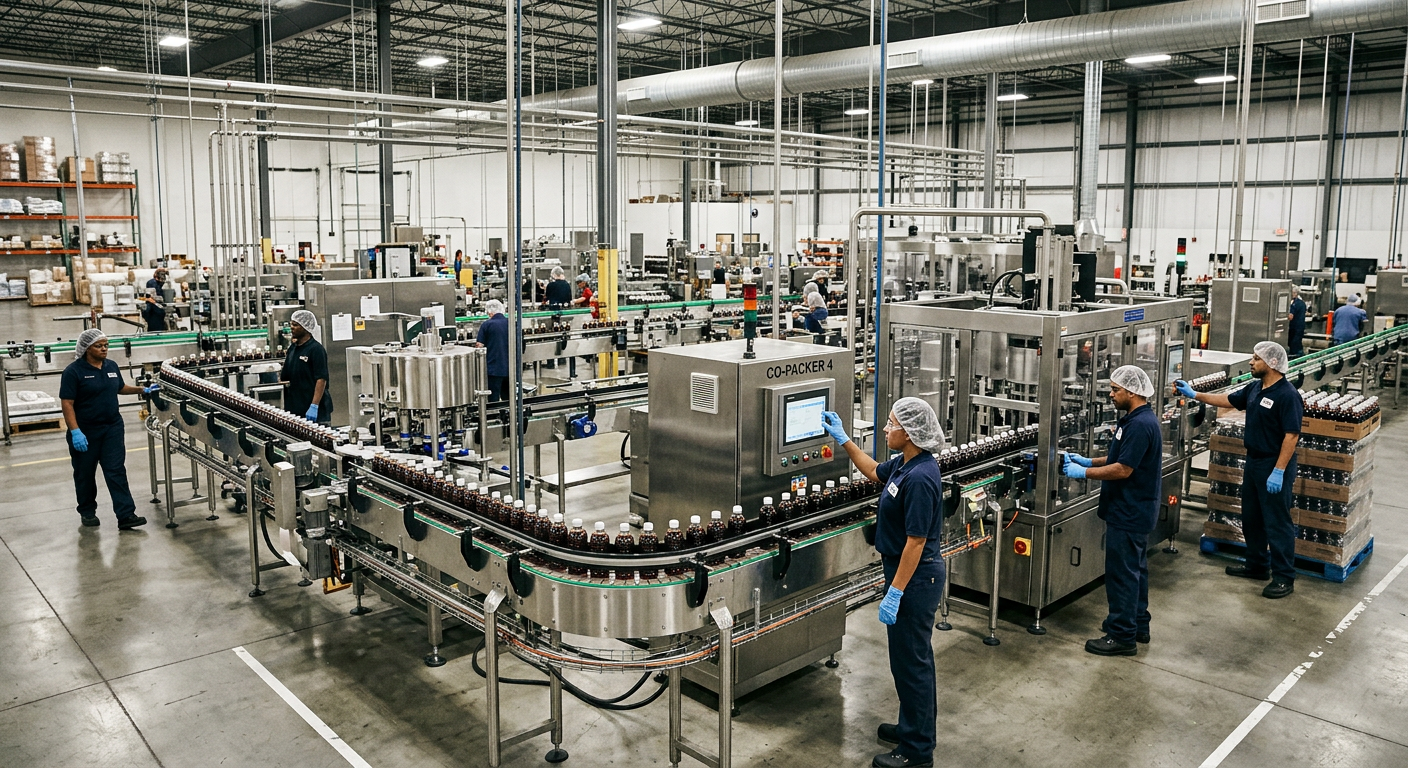
Industrial CIP Systems for U.S. Food Plants: Design, Cost, and Selection Guide
[trp_language language=”en_US”]
Industrial CIP Systems for U.S. Food Plants: Selection, Design, and Cost Guide
Fast Answer

An industrial clean-in-place (CIP) system is an automated skid or integrated utility system that cleans the interior surfaces of food-processing equipment, piping, tanks, fillers, heat exchangers, valves, and transfer lines without routine disassembly. For U.S. food plants, the best CIP system is not simply the largest or lowest-priced unit. It is one engineered around the plant’s product soil, line geometry, sanitation schedule, available utilities, production throughput, regulatory requirements, and future expansion plan.
A properly configured food plant CIP system typically includes one or more water, caustic, acid, sanitizer, and recovery tanks; sanitary pumps; heat exchangers or steam injection; chemical dosing; valve manifolds; conductivity, flow, temperature, and level instrumentation; a PLC-based control panel; and connections to the equipment being cleaned. It should consistently achieve the required cleaning velocity, temperature, chemical concentration, contact time, and coverage at every point in the circuit.
For a beverage bottling line in Chicago, a dairy facility in Wisconsin, a protein plant in Arkansas, or a sauce manufacturer in California’s Central Valley, the correct solution may range from a compact two-tank CIP skid to a fully automated multi-circuit central CIP room supporting dozens of process paths. Buyers should begin with a sanitary process survey, not a catalog model number.
Disruptive Process Solutions (DPS) helps food and beverage manufacturers evaluate CIP needs as part of a larger capital plan. The goal is to reduce sanitation risk, chemical and water waste, production downtime, and unplanned utility limitations while supporting profitable capacity growth.
What Is an Industrial CIP System in a Food Plant?

Industrial CIP systems circulate controlled cleaning solutions through closed process circuits. A programmed sequence may include a product push or water flush, pre-rinse, caustic wash, intermediate rinse, acid wash when mineral scale is present, final rinse, and sanitization. The exact sequence depends on the product and equipment. High-fat dairy, sticky syrup, protein residues, starch, allergens, beverage biofilms, and mineral deposits each require different combinations of chemistry, temperature, time, and mechanical action.
The core operating principle is often summarized as TACT: time, action, chemical concentration, and temperature. If one variable is reduced, another may need to increase to maintain cleaning performance. For example, a lower-temperature wash may require more time or a stronger approved detergent concentration. However, sanitation validation should guide those decisions; simply increasing chemicals can damage seals, elevate wastewater loads, and raise operating cost.
A CIP system differs from a basic washdown setup because it provides repeatable, documented, enclosed cleaning of internal product-contact surfaces. Automated recipe management also reduces variation between shifts. This can be especially valuable for high-care food lines, aseptic beverage processes, dairy operations, co-packers running frequent changeovers, and multi-product facilities with allergen-control requirements.
| CIP Component | Primary Function | Typical Food Plant Use | Buyer Review Point |
|---|---|---|---|
| Supply or balance tank | Stores rinse water or recovered solution | Pre-rinse, final rinse, water recovery | Confirm usable volume and overflow protection |
| Caustic tank | Holds alkaline cleaning solution | Fat, protein, sugar, and organic soil removal | Specify heating, insulation, and concentration control |
| Acid tank | Holds acid cleaning solution | Mineral scale removal in dairy and beverage systems | Verify chemical compatibility and venting |
| Sanitary supply pump | Creates flow and pressure through the circuit | Pipe cleaning, spray devices, heat exchangers | Size for worst-case pressure drop and required velocity |
| Heat exchanger or steam system | Raises cleaning-solution temperature | Heated caustic and hot-water sanitation | Confirm steam, hot-water, or electric utility capacity |
| Valve matrix or manifold | Routes solutions to selected circuits | Multiple tanks, fillers, process lines, and vessels | Evaluate cross-contamination and drainability design |
| PLC and instrumentation | Automates recipes and records critical values | Validated cleaning cycles and troubleshooting | Define historian, alarms, user access, and reporting needs |
The table shows why CIP buying decisions require more than a tank count. Each component affects sanitary performance, staffing, utility consumption, maintenance access, and expansion flexibility.
Best-Fit Products and Production Environments

Industrial CIP is a strong fit where internal surfaces cannot be practically disassembled between runs, where sanitation needs to be repeatable, or where cleaning downtime constrains capacity. It is common in dairy, beverages, sauces, dressings, cultured products, aseptic processing, prepared foods, alternative proteins, breweries, distilleries, juices, and liquid ingredient operations.
Products with high sugar, fat, protein, salt, starch, particulate load, or strong allergens deserve special attention. A system designed to clean clear beverages may not adequately clean peanut-containing sauces. Likewise, a CIP loop supporting fluid milk may not be appropriate for a viscous cheese sauce line with long dead legs and scraped-surface heat exchangers.
Production environment matters as much as the product. A greenfield co-packing plant near Dallas may benefit from a centralized CIP room with spare circuits and utility headers for phased expansion. A constrained retrofit in Newark, New Jersey, may require a mobile or compact skid designed to pass through existing doors and connect to legacy process equipment. Plants near major logistics hubs such as Los Angeles, Houston, Savannah, Memphis, and Columbus often prioritize fast commissioning because production schedules are tied closely to regional distribution commitments.
| Product or Environment | Common Soil Challenge | Recommended CIP Approach | Typical Priority |
|---|---|---|---|
| Fluid milk and cultured dairy | Protein, fat, mineral scale, biofilm | Heated caustic, periodic acid, validated sanitary cycle | High temperature control and documentation |
| Juice and functional beverages | Sugar, pulp, color, microbial buildup | Multi-step rinse, caustic, sanitizer, recovery options | Fast changeover and water efficiency |
| Sauces, dressings, and marinades | Viscous oils, starches, spices, allergens | High-flow circuits, return monitoring, targeted recipes | Coverage, drainability, allergen separation |
| Brewing and fermentation | Yeast, beer stone, organic deposits | Caustic circulation, acid descaling, tank spray cleaning | Tank turnover and chemical recovery |
| Protein and prepared foods | Fat, protein, seasoning, pathogen risk | Dedicated circuits, robust sanitation verification | Hygienic zoning and cross-contact control |
| Plant-based foods | Starch, oils, gums, flavor carryover | Recipe-specific chemistry and aggressive mechanical action | Allergen management and residue removal |
| Aseptic and shelf-stable lines | Microbial risk and difficult validation | Integrated CIP/SIP logic with traceable records | Validated temperature, time, and diversion controls |
For plants making multiple products, the strongest design approach is to map every product family, allergen, circuit, cleaning frequency, and production window before deciding whether to use shared tanks, dedicated loops, chemical recovery, or separate CIP skids.
This market-growth illustration reflects the practical factors driving investment: aging process infrastructure, labor shortages, stricter sanitation documentation, water-management pressure, high production utilization, and expansion of co-packing and value-added food manufacturing across the United States.
Capacity, Materials, and Sanitary Design Specifications
CIP capacity must be based on the largest and most hydraulically demanding cleaning circuit, not merely on tank volume. Engineers calculate required flow, pressure, return rate, pump curve, pipe friction losses, elevation changes, spray-device requirements, and simultaneous-use assumptions. A central CIP system may clean one circuit at a time or serve multiple circuits concurrently; that choice dramatically affects tank volume, pump sizing, automation complexity, and cost.
A common design mistake is to select a skid based on “gallons per minute” without reviewing the full circuit. A long return line, undersized process pipe, restrictive valve cluster, plate heat exchanger, or high-mounted tank spray device can prevent the intended turbulence or spray impact from reaching the equipment. Conversely, oversizing pumps can create excessive velocity, cavitation, seal wear, and energy use.
For product-contact wetted surfaces, 304 or 316 stainless steel is typically used. Type 316 stainless is frequently selected where chlorides, aggressive chemicals, or enhanced corrosion resistance justify the additional investment. Material selection also extends to gaskets, valve seats, seals, hoses, instruments, spray devices, and chemical piping. Elastomers must be compatible with the temperature and cleaning chemistry used at the site.
Sanitary design should emphasize cleanability, accessibility, drainability, weld quality, correct slope, minimal dead legs, appropriate surface finish, and hygienic instrumentation installation. The CIP skid itself must be easy to inspect and maintain. Locate pumps, strainers, valve clusters, and instruments so maintenance teams can safely service them without disrupting sanitation operations or creating difficult-to-clean areas.
| Specification Category | Typical Selection Range | What Drives the Choice | Risk if Under-Specified |
|---|---|---|---|
| Tank configuration | 2 to 6+ tanks | Cleaning recipes, recovery strategy, sanitation frequency | Longer cycles, higher water use, limited flexibility |
| Supply flow | 40 to 400+ GPM | Pipe diameter, circuit length, spray devices, simultaneous users | Inadequate cleaning action or poor tank coverage |
| Working volume | 200 to 12,000+ gallons | Largest circuit volume, return hold-up, concurrent circuits | Solution depletion or unstable cycle operation |
| Wetted steel | 304 or 316 stainless steel | Chemistry, chloride exposure, product and sanitation conditions | Corrosion, premature repairs, contamination concerns |
| Surface finish | Application-specific sanitary finish | Product residue, inspection standard, cleanability objective | Residue retention and difficult sanitation validation |
| Heating method | Steam, hot water, electric, indirect exchanger | Available utilities, energy cost, temperature requirement | Slow heat-up, inadequate cleaning temperature |
| Recovery capability | Water-only, caustic, acid, or multi-solution recovery | Water cost, wastewater limits, product portfolio, payback target | Excess utility spending and unnecessary discharge volume |
The ranges above are planning values, not final design commitments. A 300-GPM pump may be appropriate for a large beverage filler circuit but excessive for a compact ingredient blending skid. DPS performs process engineering and hydraulic review before finalizing equipment configuration. Learn more about food process engineering and design services for CIP projects, utility planning, and integrated line upgrades.
Controls, Utilities, and Line Integration Requirements
Controls determine whether a CIP system is a dependable production asset or a source of repeated troubleshooting. At minimum, automation should manage recipe steps, tank levels, pump operation, heat control, valve routing, chemical dosing, rinse transitions, alarms, and permissives. Better systems capture flow, conductivity, temperature, time, return conditions, and operator actions for review and continuous improvement.
Conductivity measurement is commonly used to distinguish water from cleaning solutions and to manage chemical concentration or recovery transitions. Flow verification confirms that cleaning action is available. Temperature records show whether the cycle reached the required wash or sanitation condition. Depending on the process, additional instrumentation may include pH, turbidity, pressure, tank load cells, return conductivity, and automated chemical feed verification.
Integration must include process equipment as well as utilities. The CIP system connects to tanks, pipelines, fillers, pasteurizers, mix systems, heat exchangers, membrane systems, aseptic circuits, and recovery headers. Equipment needs correctly designed CIP supply and return connections, compatible spray devices, sanitary valves, reliable drain paths, and control interlocks that prevent product and CIP solution from mixing.
Utilities frequently drive project scope. Verify available steam or hot water, chilled water where required, compressed air, electrical service, process water quality, chemical storage, ventilation, floor drainage, wastewater capacity, and structural support. In a retrofit, the cost of routing utility lines through an active facility can exceed assumptions made during early budgeting.
| Integration Area | Key Requirement | Recommended Design Practice | Operational Benefit |
|---|---|---|---|
| PLC controls | Repeatable recipes and permissives | Use role-based access and recipe revision control | Reduced operator variation and better traceability |
| SCADA or historian | Cycle visibility and records | Log critical parameters, alarms, and deviations | Faster troubleshooting and audit readiness |
| Steam or hot water | Consistent heat input | Calculate peak demand during concurrent cycles | Reliable wash temperatures and shorter heat-up |
| Compressed air | Valve actuation and instrument support | Provide dry, regulated air and accessible isolation | Stable valve performance and easier maintenance |
| Water and wastewater | Rinse supply and discharge management | Evaluate recovery, pH adjustment, and drain capacity | Lower water cost and fewer discharge constraints |
| Line controls | Safe routing between product and CIP modes | Program interlocks, seat-lift sequences, and valve feedback | Lower cross-contamination and chemical carryover risk |
| Network security | Protected remote access and plant connectivity | Coordinate OT standards with plant IT policies | Secure support and scalable digital operations |
DPS provides controls design, PLC programming, automation, SCADA integration, and commissioning support. Manufacturers can explore automation and controls capabilities when planning recipe control, production data collection, or modernization of legacy CIP equipment.
The industry comparison highlights why CIP solutions should be matched to process risk. Aseptic, dairy, and high-throughput beverage plants typically need extensive instrumentation and validation support, while sauces and prepared foods often require stronger attention to viscosity, allergen changeovers, and difficult-to-clean equipment geometry.
Cost, Lead Time, and Installation Drivers
Industrial CIP system cost in the United States varies widely. Compact semi-automatic skids may begin in the lower six figures, while large central systems with multiple tanks, recovery loops, sanitary valve matrices, advanced controls, utility systems, and installation can reach seven figures. The installed project cost must include more than the skid: engineering, freight, rigging, electrical work, pipe fabrication, drains, structural modifications, utility generation, insulation, controls integration, commissioning, validation support, and operator training.
Lead time depends on tank size, sanitary component availability, automation requirements, custom fabrication, shop capacity, and the project’s documentation requirements. Standardized skids may move faster than fully custom systems, but rushing design decisions can create much more expensive changes during installation. Long-lead items can include stainless tanks, specialty valves, VFDs, PLC hardware, heat exchangers, electrical enclosures, and certain hygienic instruments.
Installation complexity rises when work occurs inside an operating plant. Shutdown windows, food-safety zoning, ceiling congestion, floor penetrations, existing drainage, limited staging space, and coordination with production are major cost variables. Facilities in dense markets such as Southern California, New York/New Jersey, Seattle, and Boston may face higher labor and access costs, while remote plants may require additional travel, freight, and specialized trade coordination.
| Cost or Schedule Driver | Effect on Project | Typical Mitigation | Buyer Question |
|---|---|---|---|
| Number of tanks and circuits | Raises fabrication, piping, and controls scope | Define current and phased capacity needs early | Which circuits truly need dedicated cleaning capability? |
| Custom valve matrix | Increases automation and sanitary piping complexity | Review routing matrix and future tie-ins | Can this manifold support the next production line? |
| Utility upgrades | Can materially increase installed cost | Complete a utility load study before procurement | Do we have enough steam, power, water, and drainage? |
| Retrofit access | Extends installation labor and shutdown needs | Use laser scans, site walks, and installation sequencing | Can the skid be delivered and set without building changes? |
| Controls modernization | Adds programming and commissioning time | Establish I/O list, network scope, and control philosophy | Who owns integration with existing plant controls? |
| Documentation and testing | Extends engineering and acceptance activities | Define FAT, SAT, turnover, and record needs upfront | What test documents are included in the quote? |
| Phased expansion | May increase initial design work but reduce future disruption | Install spare ports, space, and utility capacity where justified | What growth assumptions are built into this design? |
For budgeting, evaluate lifecycle cost rather than purchase price alone. Chemical recovery, reduced water use, shorter cleaning cycles, better first-pass sanitation performance, lower labor demand, and avoided production losses can materially affect return on investment. A system that costs less initially but cannot support the plant’s next packaging line may be the more expensive decision over time.
FDA, USDA, NSF, UL, and 3-A Considerations
Compliance expectations for a CIP system depend on the products processed, facility jurisdiction, customer requirements, and applicable sanitation programs. Food manufacturers should distinguish between regulatory compliance, third-party certification, equipment design standards, and customer specifications. A CIP system should be engineered to support the plant’s food-safety plan, preventive controls, sanitation standard operating procedures, and recordkeeping practices.
FDA-regulated facilities commonly focus on hygienic construction, chemical control, sanitation records, allergen management, and preventive controls. USDA-inspected meat and poultry plants may have additional operational requirements related to sanitation, inspection access, and facility practices. NSF-listed or certified components may be specified for certain applications, while UL-listed control panels are often required by local authorities or corporate electrical standards.
3-A Sanitary Standards are particularly relevant in dairy and certain hygienic food applications. They provide design criteria for equipment intended to be cleanable and sanitary. A 3-A requirement should be addressed precisely in the equipment specification: determine whether the customer requires 3-A Symbol authorization for a component, conformance with a design standard, or sanitary construction consistent with a specified plant standard. Do not assume that “sanitary stainless steel” alone satisfies a 3-A requirement.
Other common frameworks include SQF, BRCGS, customer quality programs, state and local building codes, electrical codes, and environmental discharge requirements. In all cases, documentation should identify equipment materials, weld procedures where needed, component certifications, test results, control narratives, and turnover requirements.
By 2026 and beyond, sustainability will increasingly shape CIP specifications. Food plants are adopting rinse-water recovery, chemical concentration monitoring, heat recovery, lower-volume cleaning sequences, smart scheduling, and wastewater reduction programs. These upgrades must still preserve sanitation effectiveness; sustainability measures should be verified through validated cleaning performance rather than assumed savings.
How to Compare Equipment Suppliers and Quotes
Compare CIP suppliers by technical completeness, not by the line-item total alone. Two quotes with a similar tank count may have very different levels of instrumentation, automation, heat capacity, sanitary valve quality, skid fabrication, documentation, and installation support. A useful comparison starts with one clear owner-issued basis of design so each supplier prices the same scope.
Ask each supplier to identify design flow and pressure at the farthest cleaning point, cleaning circuits included, tank working volumes, heating rate, chemical dosing method, recovery logic, instrument list, control platform, listed electrical components, sanitary standards, factory testing, field commissioning, training, warranties, exclusions, and recommended spare parts. Also ask who is responsible for line tie-ins, utility piping, drains, electrical feeds, controls integration, and performance verification.
| Evaluation Criterion | Basic Skid Supplier | Custom Equipment Fabricator | Full-Scope Integrator | Why It Matters |
|---|---|---|---|---|
| Equipment fabrication | Usually included | Included | Included or sourced | Establishes base quality and delivery capability |
| Hydraulic circuit review | Often limited | Varies by supplier | Integrated with process design | Confirms cleaning performance at point of use |
| Utility assessment | Often excluded | May be limited | Included in project planning | Prevents steam, water, power, and drainage surprises |
| Plant piping and tie-ins | Usually excluded | Sometimes available | Managed as installation scope | Determines actual installed cost and schedule |
| PLC and SCADA integration | Basic local controls | Custom options | Plant-wide integration capability | Enables documentation, alarms, and coordinated operation |
| Commissioning support | Limited remote support | Supplier-dependent | Field startup and turnover support | Reduces ramp-up risk after installation |
| Expansion planning | Usually minimal | Possible with owner direction | Evaluated within capital roadmap | Protects future capacity and avoids rework |
The comparison table does not mean every project requires a turnkey integrator. A straightforward replacement skid may be best served by a qualified equipment supplier. However, a complex plant expansion, utility-limited retrofit, multi-line sanitation project, or co-packing startup usually benefits from a partner that can manage engineering, equipment, construction coordination, controls, and startup as one coordinated program.
How DPS Configures Industrial CIP Systems for Food Plants
DPS configures industrial CIP systems from the production objective backward. The team begins by understanding the products, production schedule, sanitation requirements, existing equipment, utilities, facility constraints, workforce practices, and growth plan. This approach helps avoid a common capital-project failure: purchasing equipment before confirming whether it can be effectively installed, operated, cleaned, and expanded inside the actual plant.
Technological capabilities: DPS combines process engineering with automation and controls expertise. CIP projects can include PLC programming, recipe and batch control, SCADA integration, instrumentation strategy, remote visibility, energy-management considerations, and interface design for process equipment. The company’s broader experience includes pasteurization, aseptic processing, blending, fermentation, water treatment, dairy processing, retort, carbonation, and utility infrastructure, enabling CIP requirements to be evaluated in the context of the complete manufacturing system.
Manufacturing capabilities: DPS designs and supplies branded process equipment, including custom CIP systems and stainless processing and storage tanks up to 12,000 gallons. The company can configure tank count, capacity, sanitary pumps, valve manifolds, heating systems, controls, and recovery features around a facility’s process needs. For custom projects, fabrication decisions are coordinated with line routing, equipment tie-in points, access limitations, sanitary construction requirements, and planned future additions.
Service capabilities: DPS works as an engineering, installation, and integration partner for food and beverage manufacturers across the United States and Canada. Its Design Build Manage model supports feasibility, capital planning, process design, equipment supply, general contracting where licensed, trade coordination, utility installation, controls integration, commissioning, and project management. This is especially valuable when a CIP project touches boilers, refrigeration, compressed air, water treatment, wastewater, piping, structural steel, electrical distribution, and active production schedules.
For example, a growing beverage co-packer may need a CIP room designed for initial production while reserving connections and utility capacity for additional syrup rooms, fillers, and process lines. A protein processor may require dedicated cleaning circuits to manage allergen or product-family separation. A sauce manufacturer may need higher flow, carefully designed return paths, and cleaning recipes that address oil, starch, and seasoning residues. DPS evaluates these operational realities before recommending a skid or central system.
Clients can review DPS CIP system equipment solutions for more information about custom configurations and project integration support.
Frequently Asked Questions
How do I size an industrial CIP system for a food plant?
Size the system from the largest and most demanding circuit. Review required flow, pressure, pipe diameter, circuit volume, elevation, spray devices, return restrictions, cleaning temperature, chemical concentration, and whether multiple circuits will run at once. Tank size should account for usable solution volume, circuit hold-up, recovery strategy, and operating margin.
How many tanks does a food CIP system need?
Many systems use two to four tanks, but the correct number depends on the sanitation program. Common configurations include fresh-water and caustic tanks; water, caustic, and acid tanks; or larger systems with recovered water, caustic, acid, sanitizer, and dedicated specialty solutions. More tanks can improve flexibility and recovery, but they increase capital cost and control complexity.
Can a single CIP skid clean multiple production lines?
Yes, if the skid has adequate capacity, properly designed routing, compatible cleaning requirements, and enough production-window time. A valve matrix or manifold can distribute solutions to several circuits. The design must prevent cross-connections, chemical carryover, and conflicts between simultaneous users.
What causes poor CIP cleaning results?
Common causes include inadequate flow, insufficient temperature, wrong chemical concentration, poor spray coverage, long dead legs, poorly drained piping, blocked strainers, worn pump components, incorrect valve routing, excessive soil load, and changes in product formulation. Cleaning verification and trend data are important for identifying the root cause.
What records should an automated CIP system provide?
Useful records include recipe name, start and end time, operator or user identification, flow, temperature, conductivity, chemical dosing confirmation, alarms, deviations, selected circuit, and completed step status. The exact record set should align with the plant’s food-safety program, quality requirements, and customer expectations.
How long does installation take?
Installation duration depends on skid complexity, site access, utility work, piping distance, controls integration, shutdown availability, and commissioning requirements. A standalone skid replacement may be relatively quick, while a central CIP room integrated with new process lines and plant utilities requires a coordinated project schedule.
Is chemical recovery always worth the investment?
Not always. Recovery should be evaluated against chemical usage, water cost, wastewater charges, sanitation frequency, product mix, contamination risk, and operational discipline. High-volume plants with repeatable cleaning cycles may see strong value, while lower-volume or highly variable plants may benefit more from simple, reliable fresh-solution systems.
What are the most important questions to ask a CIP supplier?
Ask what cleaning circuits are included, what flow and pressure are guaranteed at the point of use, what utilities are required, how the system handles chemical concentration and recovery, what control records are available, what sanitary standards apply, what installation work is excluded, and who is responsible for startup, training, and performance testing.
[/trp_language]
Complete Company Portfolio

About the Author: Disruptive Process Solutions (DPS)
The DPS team combines process engineering expertise with real-world food and beverage manufacturing experience. Our content focuses on process optimization, production efficiency, facility improvements, and practical solutions that help manufacturers operate more effectively in a rapidly evolving industry.
Share

