
Dairy Beverage Processing Lines Engineered for Profit and Scale
DPS designs, builds, and manages complete dairy beverage processing facilities — from HTST and UHT pasteurization through homogenization, blending, and aseptic or hot-fill packaging — under a single Design-Build-Manage contract. Whether you are scaling flavored milk production, launching a shelf-stable protein shake, or expanding a probiotic drinkable yogurt line, we deliver turnkey systems built for FDA and USDA compliance across all 50 U.S. states and Canada.
Schedule a Consultation →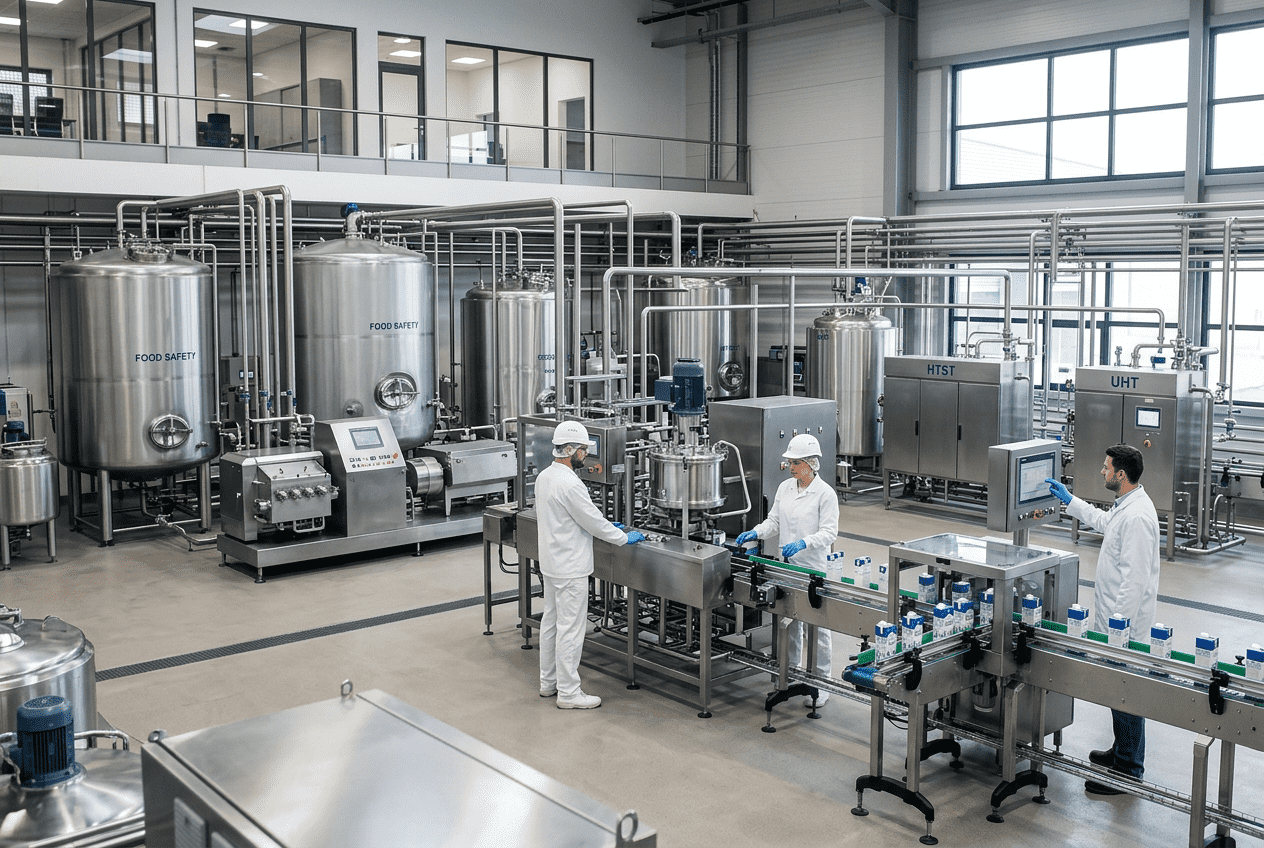
Helping Manufacturers Navigate Operational Complexity
The U.S. dairy beverages market reached approximately $58.9 billion in 2024 and is expanding at a volume CAGR of 5.3% through 2030 — but the growth is not distributed evenly. Traditional fluid milk volumes continue to erode while value-added segments like flavored milk, protein-fortified shakes, probiotic drinkable yogurt, and lactose-free UHT dairy products are absorbing nearly all of the category’s new consumer spending. For processors, this means the facility you build today must handle far more complexity than one designed five years ago: multi-SKU blending, allergen separation between dairy and plant-based runs, fortification with heat-sensitive ingredients like live cultures, and packaging format diversity ranging from single-serve HDPE bottles to aseptic cartons. The brands winning shelf space are the ones whose production infrastructure can execute this complexity at speed without sacrificing food safety or margin.
What separates a profitable dairy beverage operation from one that hemorrhages cost is how pasteurization, homogenization, batching, CIP, and filling systems are orchestrated as a unified process rather than a collection of independently specified machines. A flavored milk production line where the HTST pasteurizer was sized without accounting for the viscosity changes introduced by chocolate or fruit puree additions will lose heat-exchange efficiency on every batch. A UHT dairy line designed for one SKU cannot accommodate the flow-rate variability required when the same equipment must process a 3.25% whole-milk base on Monday and a 12% protein shake on Thursday. DPS approaches every dairy beverage project as a business-planning exercise first — modeling your product mix, volume targets, retail margin structure, and distribution geography before we size a single piece of equipment.
What We Deliver to Manufacturers
Practical engineering solutions designed to improve efficiency, scalability, and operational performance.
-
1
Complete Dairy Beverage Line Design & Engineering
DPS engineers end-to-end dairy beverage processing lines — from raw milk receiving and separation through pasteurization (HTST or UHT), homogenization, blending, and filling — sized for your specific product portfolio and three-year volume trajectory. Every system is designed with full PMO (Pasteurized Milk Ordinance) compliance and FDA/USDA regulatory alignment built into the process flow, eliminating the post-construction compliance scramble that plagues fragmented projects. -
2
UHT & Aseptic Processing System Integration
For shelf-stable milk-based drink products — protein shakes, flavored UHT milk, coffee-dairy blends, and nutritional beverages — DPS designs UHT processing and aseptic filling systems as a coordinated unit rather than separate equipment purchases. We engineer the indirect or direct UHT heating configurations, sterile buffer tanks, and aseptic filling interfaces that maintain commercial sterility across variable product viscosities and fat contents. -
3
Multi-SKU Flavored Milk Production Lines
Flavored milk production demands rapid product changeover between chocolate, strawberry, vanilla, and seasonal or limited-edition SKUs without flavor carryover or cross-contamination. DPS designs recipe-managed batching systems with PLC-controlled ingredient dosing for sweeteners, flavors, colors, stabilizers, and fortification ingredients — integrated with CIP sequences engineered for fast turnaround between allergen-containing and allergen-free formulations. -
4
Automation, Controls & Real-Time Quality Assurance
DPS programs PLC/SCADA systems that unify pasteurization, homogenization, batching, filling, and CIP under a single controls architecture with automated recipe management, in-line Brix/fat/protein monitoring, and full batch traceability for SQF, BRC, and FSMA audit requirements. We have resolved multi-million-dollar capacity bottlenecks through PLC optimization alone — sometimes saving clients the cost of an entire capital project. -
5
In-House Equipment Manufacturing & CIP Systems
DPS manufactures process vessels up to 12,000 gallons, CIP skids, and batching tanks at our own fabrication facilities, eliminating the procurement coordination risk that arises when tanks, piping, and controls come from three different vendors who have never spoken to each other. Every vessel is built to 3-A Sanitary Standards and integrates directly with the process piping and controls architecture DPS designs.
Integrated Delivery vs Traditional Execution
When dairy beverage processing projects are split across a process engineering consultant, a separate pasteurizer OEM, a third-party controls integrator, and a general contractor who has never worked inside a Grade A dairy environment, the result is a facility where thermal processing parameters drift during product changeover, CIP validation gaps emerge during SQF audits, and utility infrastructure bottlenecks the moment you try to run pasteurization and CIP simultaneously.
| Dimension | DPS Integrated Approach | Fragmented / Traditional Model |
|---|---|---|
| Pasteurization & Thermal Design | HTST/UHT systems sized for the full product portfolio — accounting for viscosity, fat content, and protein load variability across all SKUs — with holding tubes and regeneration sections optimized for energy efficiency | Pasteurizer purchased to a generic milk spec; chocolate and high-protein formulations overwhelm heat-exchanger capacity, causing thermal under-processing or excessive energy consumption |
| Homogenization Integration | Two-stage homogenizers specified and sequenced in coordination with thermal processing to achieve target particle size and mouthfeel consistency across products from 1% flavored milk to 12% protein shakes | Homogenizer selected independently from the pasteurizer; pressure and staging mismatches create fat separation in high-protein SKUs and over-processing in low-fat formulations |
| CIP & Allergen Management | DPS-manufactured CIP skids with automated allergen sequencing protocols, validated rinse verification, and changeover cycles engineered for 15-20 minute turnarounds between flavored milk SKUs | Generic CIP designed for single-product dairy; manual changeover across 4-5 zones consuming 60-90 minutes with incomplete allergen rinse documentation for audit |
| Regulatory Compliance | FDA PMO, USDA, SQF, and BRC requirements engineered into the process flow from P&ID development — critical control points, monitoring instrumentation, and documentation systems delivered as standard project scope | Compliance treated as a post-construction checklist; audit gaps discovered during first SQF or BRC certification attempt, requiring costly retrofits to monitoring and documentation systems |
| Utility Sizing & Redundancy | Steam, glycol, compressed air, process water, and wastewater systems sized for peak simultaneous demand across pasteurization, CIP, and homogenization — with Phase 2 expansion capacity pre-engineered into Day One infrastructure | Utilities sized to initial production demand only; adding a second pasteurizer or UHT line requires mechanical shutdown, boiler upgrades, and re-permitting |
| Schedule & Accountability | Single Design-Build-Manage contract from process engineering through commissioning; DPS owns the schedule and coordinates all trades through a vetted national contractor network | 5-8 separate contracts across process engineer, OEM vendors, controls integrator, GC, and commissioning agent — schedule delays compound with no single party owning the outcome |

