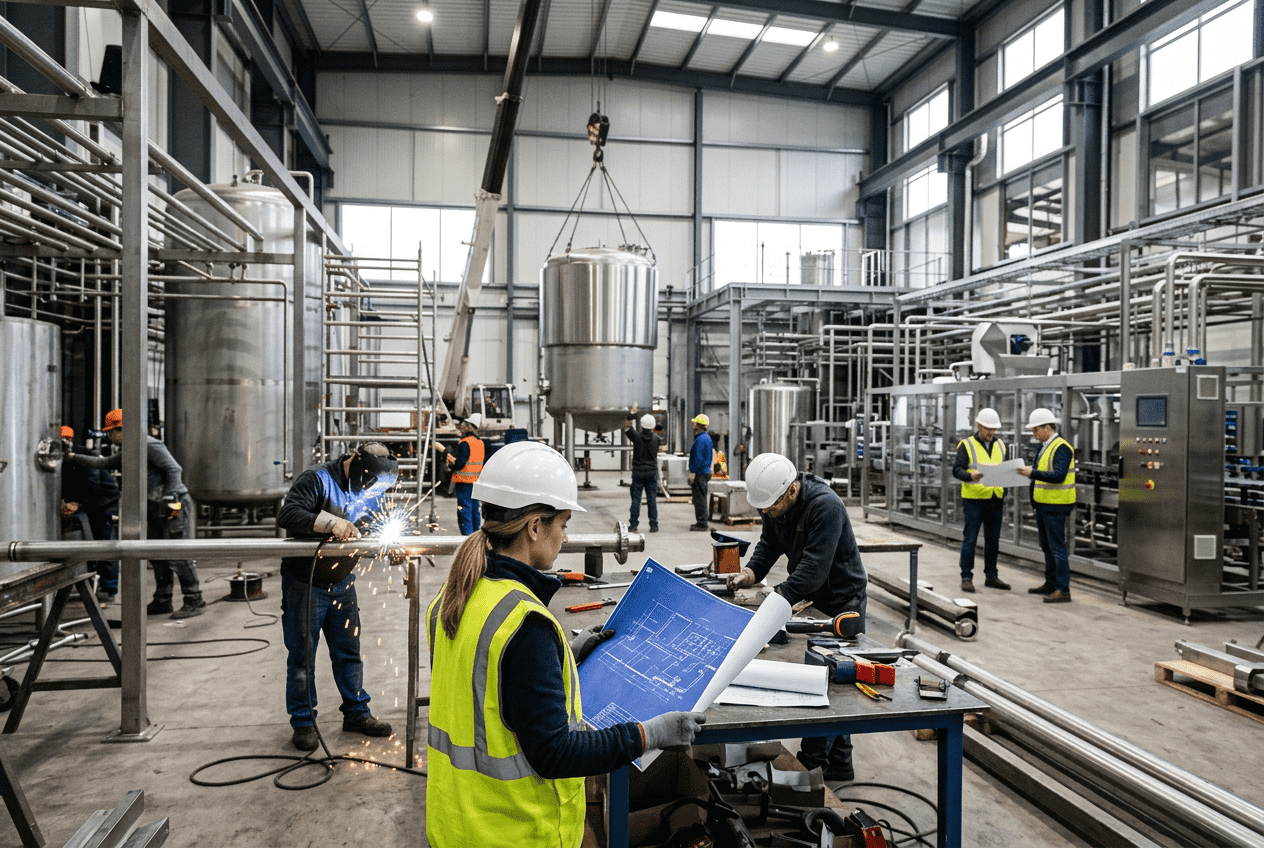
2026 Food Facility Floor Coating Selection: 3 Epoxy vs Urethane Cement Systems
[trp_language language=”en_US”]
Food Facility Floor Coating Selection in the United States
Choosing the right floor system in a food plant is not a cosmetic decision. It affects sanitation, worker safety, regulatory readiness, maintenance cost, uptime, and the usable life of the slab beneath the finish. In the United States, the most common comparison is between epoxy floor coating systems and urethane cement flooring systems. In practical terms, epoxy is often the better fit for dry processing, packaging, and warehouse zones, while urethane cement is usually the stronger choice for wet production, hot washdown, and thermal shock exposure. The best answer, however, depends on traffic, cleaning chemicals, floor slope, substrate moisture, temperature swings, and the production profile of the facility.
Food manufacturers from California’s Central Valley to meat and poultry operations in Arkansas, dairy plants in Wisconsin, beverage lines near Chicago, and export-driven facilities serving the ports of Savannah, Houston, and Long Beach all face the same core question: which floor system will protect operations without becoming a recurring failure point? This guide explains the selection process with direct buying advice, performance comparisons, installation timelines, maintenance protocols, and 2026 market trends for U.S. food and beverage plants.
Fast Decision Guide

If you need a quick answer, start here:
- Choose epoxy floor coating for dry processing rooms, packaging areas, ingredient storage, mezzanines, finished goods staging, and light-to-moderate forklift traffic where thermal shock is low.
- Choose urethane cement for wet processing, protein rooms, cook-chill zones, brewery cellars, dairy production, CIP splash areas, washdown corridors, and any location exposed to steam, hot water, cold shock, or aggressive sanitation cycles.
- Specify higher texture where oils, fats, sugars, or water create slip risk, but balance safety with cleanability.
- Verify chemical resistance against caustic cleaners, acid foams, quats, peracetic acid, lactic acid, citric acid, blood, brine, sugar, and fats.
- Do not underbuild thickness. Thin film systems can look good on day one and fail quickly in heavy production conditions.
- Plan installation around production downtime, slab moisture testing, curing windows, and sanitation restart requirements.
For most U.S. processors, the real mistake is not picking epoxy or urethane cement. The mistake is applying the same system everywhere. Facilities often need a zoned floor strategy, with different materials in raw receiving, wet production, packaging, cooler thresholds, maintenance shops, and warehouse aisles.
| Plant Area | Typical Exposure | Recommended System | Typical Thickness | Main Benefit | Main Caution |
|---|---|---|---|---|---|
| Dry packaging room | Light washdown, carts, foot traffic | Epoxy | 20–60 mil | Clean appearance and lower cost | Limited thermal shock tolerance |
| Ingredient warehouse | Forklifts, dry traffic, occasional spills | Epoxy with broadcast | 40–125 mil | Good abrasion resistance | Needs substrate prep discipline |
| Protein processing room | Wet cleaning, blood, fats, hot water | Urethane cement | 3/16″–1/4″ | Handles thermal and chemical stress | Higher initial cost |
| Brewery cellar | Acids, standing water, temperature swings | Urethane cement | 1/4″–3/8″ | High durability in wet service | Texture must match cleaning method |
| Dairy filling support area | Sanitizers, moisture, wheeled traffic | Hybrid choice by zone | 1/8″–1/4″ | Optimized lifecycle cost | Requires area-by-area design |
| Finished goods shipping | Forklifts, pallets, dry conditions | Epoxy or high-build resin | 60–125 mil | Economical large-area coverage | May need extra wear layer at dock edges |
The table above is useful because it turns the selection question into an operational question. Instead of asking which coating is “best,” ask what the floor must survive every day.
Epoxy Flooring for Dry Processing Environments

Epoxy remains a strong option in U.S. food facilities when the area is primarily dry, temperature stable, and not exposed to repeated hot washdowns. It is widely used in secondary packaging, dry blending support spaces, palletizing zones, hallways, maintenance corridors, and warehousing. For plants in Phoenix, Dallas, Charlotte, Indianapolis, and other inland distribution centers where large dry production footprints matter, epoxy can provide attractive lifecycle economics when properly specified.
Epoxy systems are available as thin film coatings, high-build systems, mortar systems, and self-leveling resinous floors. Their biggest strengths are aesthetics, chemical resistance in moderate conditions, ease of line-striping, and cost efficiency over broad square footage. They also provide seamless surfaces that are easier to clean than bare concrete or failing tile systems.
That said, epoxy has known limitations. Repeated thermal cycling, steam exposure, and hot grease washdown can cause debonding or cracking, particularly if moisture vapor transmission from the slab is high or if the system is too thin. In food facilities, epoxy should not automatically be placed in every “clean” room just because it looks sanitary. Performance must come first.
In packaging and dry processing areas, epoxy is commonly chosen for these reasons:
- Smooth, uniform finish for visually controlled environments
- Good reflectivity for brighter rooms
- Strong resistance to abrasion from pallet jacks and carts
- Lower installed cost than heavy-duty urethane cement in many cases
- Color coding for allergen segregation, traffic lanes, and GMP zoning
- Compatibility with self-leveling systems where slab flatness matters
Manufacturers should still validate coating choice against sanitation SOPs. Even a mostly dry room can become a wet room if cleaning practices change, if hose-down frequency increases, or if a line modification adds steam or warm-water use. This happens often in growing plants near major U.S. food corridors such as Omaha, Kansas City, Atlanta, and the Carolinas.
| Epoxy Attribute | Dry Packaging | Warehouse | Ingredient Handling | Support Hallway | Comments |
|---|---|---|---|---|---|
| Appearance | Excellent | Good | Good | Excellent | Clean, bright finish supports GMP presentation |
| Abrasion resistance | Good | Good to very good | Good | Good | Depends on topcoat and traffic load |
| Thermal shock resistance | Low | Low | Low to moderate | Low | Not ideal for repeated hot washdowns |
| Moisture tolerance during install | Moderate to low | Moderate to low | Moderate | Moderate | Requires slab testing and prep |
| Cleanability | Excellent if smooth | Good | Good | Excellent | Texture choice changes cleaning burden |
| Budget fit | Strong | Strong | Strong | Strong | Often efficient for large dry footprints |
The explanation behind this table is simple: epoxy excels when the environment is controlled. As soon as the floor is asked to absorb constant impact from moisture, heat, and aggressive cleaning chemistry, the selection should be reconsidered.
The market growth trend shown above reflects steady expansion in resinous flooring demand in the United States, driven by food safety investment, cold-chain expansion, e-commerce distribution, and new beverage capacity. More facilities are also replacing aging quarry tile and patchwork concrete with zoned resin systems.
Urethane Cement for Wet Areas and Thermal Shock

Urethane cement is the workhorse system for the harshest food production environments. It is widely selected in poultry, beef, pork, seafood, dairy, brewing, distilling, prepared foods, sauces, frozen foods, and aseptic support areas where floors are exposed to hot water, steam, cold water shock, constant moisture, and aggressive sanitation. In major U.S. processing hubs such as Fresno, Modesto, Green Bay, Sioux Falls, Springdale, and along the Gulf Coast, urethane cement often delivers the best long-term value even when first cost is higher.
This system is built for service conditions that break many epoxy floors. It tolerates thermal movement better, can be installed in thicker sections, performs well over concrete, and is commonly used with integral cove bases, ramps, trench edges, and slope corrections. In many plants, urethane cement is not just a coating; it is a protective operational surface.
Urethane cement is usually preferred when the floor sees:
- Daily hot-water washdown
- Steam cleaning or thermal cycling
- Wet processing and standing water
- Organic acids, sugars, fats, and proteins
- Cold room to warm room traffic transitions
- Heavy point loads and steel-wheeled traffic
Its superior performance in wet and thermal shock zones is why processors often specify it in raw rooms, kill floors, marinade areas, kettle and cooker zones, brewery wet process rooms, and dairy production. It is also common around trench drains and equipment legs, where moisture and movement combine to create high failure risk.
One of the main buying lessons for 2026 is that floor selection should follow process mapping. If a room contains kettle discharge, CIP return splash, ice melt, or frequent sanitation downtime-to-restart pressure, the floor needs to be treated as critical process infrastructure.
| Condition | Epoxy Performance | Urethane Cement Performance | Risk if Underspecified | Typical U.S. Application | Recommendation |
|---|---|---|---|---|---|
| Hot washdown | Fair to poor | Excellent | Debonding, blistering | Protein rooms | Use urethane cement |
| Cold-to-hot thermal cycling | Poor | Excellent | Cracking at transitions | Freezer thresholds | Use urethane cement |
| Standing water | Moderate | Excellent | Slip, microbial harboring | Beverage processing | Use textured urethane cement |
| Acid exposure | Moderate to good | Very good | Surface softening | Dairy and fermentation | Confirm chemistry profile |
| Impact and point load | Good | Very good | Chipping at joints | Cook rooms | Use heavier build |
| Long shutdown tolerance | Good | Good | Delayed return to service | Plant expansions | Schedule around cure window |
This comparison matters because many floor failures in food plants are not material defects. They are specification errors. A dry-room coating is placed into a washdown room, or a thin decorative system is expected to carry industrial thermal abuse.
Slip Resistance and Surface Texture Choices
Slip resistance is a balancing act between worker safety and sanitation practicality. Floors that are too smooth can become hazardous with fats, sugars, oils, and water. Floors that are too aggressive can trap residue and make cleanup harder. The right texture profile depends on footwear, contaminants, slope, drainage, cleaning method, and regulatory expectations.
In U.S. food plants, texture decisions are especially important in seafood operations in coastal regions, poultry plants in the Southeast, beverage facilities handling syrup or fruit solids, and dairy rooms where milk fats can create invisible slip hazards. Safety teams, sanitation leaders, and operations managers should all participate in the choice.
Common texture options include:
- Smooth self-leveling finish for dry, controlled rooms
- Orange-peel texture for mixed-use support spaces
- Broadcast quartz texture for moderate slip resistance
- Heavy aggregate texture for constant wet exposure
- Custom ramp and drain textures for high-risk transitions
The key is to match the coefficient of friction target with cleanability. A packaging room in a dry bakery does not need the same profile as a raw poultry washdown corridor.
| Texture Profile | Slip Resistance | Cleanability | Best Use | Not Ideal For | Notes |
|---|---|---|---|---|---|
| Smooth | Low | Excellent | Dry packaging | Wet processing | Best visual cleanliness |
| Light orange-peel | Moderate | Very good | Hallways, dry utility areas | Heavy grease zones | Good general-purpose option |
| Fine quartz broadcast | Moderate to high | Good | Ingredient rooms | Ultra-clean dry filling | Useful where spills are intermittent |
| Medium broadcast | High | Moderate | Wet processing corridors | Low-pressure cleaning only | Common in beverage and dairy |
| Heavy aggregate | Very high | Fair | Raw washdown areas | Fine powder rooms | Use only where needed |
| Custom directional texture | High | Moderate | Ramps, drain approaches | Flat clean rooms | Targets localized risk |
The table shows why there is no universal “non-slip” answer. More grip is not always better. In many cases, the best specification is a mixed texture strategy across a single facility.
The industry demand chart highlights where high-traction systems matter most. Protein, dairy, and beverage plants typically carry the highest slip-risk burden due to frequent wet cleaning and product residue.
Chemical Resistance to Caustic and Acid Cleaners
Food plant floors in the United States are exposed to much more than water. Sanitation programs may include sodium hydroxide, acid foams, quaternary sanitizers, chlorine compounds, peracetic acid, citric acid, phosphoric blends, and specialty detergents. Product spills add sugar, salt, fats, animal proteins, lactic acid, and fermentation byproducts. A floor must survive the actual chemistry profile, not just a generic “food safe” claim.
Facilities near ports and export markets often face especially rigorous cleaning regimens because downtime and contamination risk carry higher commercial penalties. Plants in New Jersey, Baltimore, Savannah, and Southern California shipping product nationally or globally should review coating chemistry against documented SOPs and concentrations.
Epoxy can resist many chemicals well, but resistance varies significantly by formulation and exposure pattern. Urethane cement often performs better under combined chemical and thermal stress, which is why it is common in wet sanitation zones. Still, no system is universal. Chemical concentration, contact time, and cleaning temperature all matter.
| Chemical or Residue | Typical Source | Epoxy Response | Urethane Cement Response | Design Note | Priority Level |
|---|---|---|---|---|---|
| Sodium hydroxide | Caustic cleaning | Good | Very good | Confirm concentration and dwell time | High |
| Peracetic acid | Sanitizing cycles | Moderate to good | Good to very good | Watch repeated high-temp exposure | High |
| Lactic and organic acids | Protein and fermentation | Moderate | Very good | Common in food residue zones | High |
| Sugars and syrups | Beverage processing | Good | Good | Slip risk often exceeds chemistry risk | Medium |
| Fats and oils | Meat, dairy, frying | Moderate to good | Good to very good | Combine chemical and traction review | High |
| Salt and brine | Seafood, pickling, meat | Good | Very good | Pay attention to joints and drains | Medium |
The value of this table is in forcing real chemical review. Flooring should be selected only after the sanitation and quality teams provide the exact cleaners, concentrations, and temperatures used in each room.
Thickness Requirements and Self-Leveling Systems
Thickness is one of the most misunderstood parts of food facility flooring. A resin system that is too thin may look acceptable after installation but fail early under impact, temperature, and cleaning stress. A system that is too thick or too smooth may be expensive without solving the actual operational problem. The correct build depends on slab condition, service conditions, drainage, and expected wear.
In the U.S. market, common food plant ranges include thin film epoxy under 20 mils for low-duty support areas, high-build epoxy from 40 to 125 mils for dry industrial spaces, self-leveling epoxy around 1/8 inch for flatter decorative or clean support rooms, and urethane cement from 3/16 inch to 3/8 inch or more in punishing wet-service environments.
Self-leveling systems are useful where flatness, cleanability, and aesthetics matter, but they should not be confused with heavy-duty thermal shock solutions. In some projects, self-leveling epoxy is excellent in dry packaging, while a trowel-applied urethane cement with integral cove and texture is installed ten feet away in the washdown side of the line.
| System Type | Typical Thickness | Primary Use | Strength Profile | Weakness Profile | Buying Advice |
|---|---|---|---|---|---|
| Thin film epoxy | 8–20 mil | Light-duty support areas | Low-cost refresh | Not for heavy production | Use only in very low stress zones |
| High-build epoxy | 40–125 mil | Warehousing, dry production | Good abrasion resistance | Limited thermal shock tolerance | Strong dry-room option |
| Self-leveling epoxy | 1/8″ approx. | Flat, clean dry areas | Smooth seamless finish | Can be slippery when wet | Add texture only where needed |
| Epoxy mortar | 1/8″–1/4″ | Heavier impact zones | Tougher build | Still limited in thermal shock | Good bridge option |
| Urethane cement standard | 3/16″–1/4″ | Wet processing | Thermal and chemical durability | Higher first cost | Best for washdown areas |
| Urethane cement heavy-duty | 1/4″–3/8″+ | Extreme service zones | Maximum durability | More shutdown planning needed | Use at cookers, drains, raw rooms |
This thickness table shows that system selection is closely tied to duty class. A dry room does not benefit from a premium heavy-duty system unless conditions truly justify it. Likewise, a wet thermal area should not be downgraded to save short-term capital.
The area chart illustrates an important 2026 trend: more U.S. processors are shifting budget toward heavier-duty wet-zone systems because sanitation intensity, labor shortages, and uptime pressure make early floor failure more expensive than the original material upgrade.
Installation, Cure Time, and Return-to-Service Planning
Installation strategy can be just as important as material selection. Floor systems fail when substrate prep is weak, moisture conditions are ignored, drains are poorly integrated, or cure times are compressed to satisfy unrealistic startup schedules. In operating food plants, phasing, contamination control, and restart timing must be engineered carefully.
Typical planning items include concrete moisture testing, pull-off adhesion testing, shot blasting or scarification, crack and joint treatment, slope correction, cove base integration, drain detailing, humidity control, and final cure verification. Facilities in humid regions such as Florida, Louisiana, and the Mid-Atlantic often need especially careful substrate review.
Epoxy cure windows vary by product and ambient conditions, but many systems need longer return-to-service periods than decision-makers expect, especially for full chemical resistance. Urethane cement can sometimes offer faster functional turnaround in industrial conditions, but that depends on system design and site temperature. Fast-cure products can help during shutdowns, yet they should not be used as a substitute for good prep.
For plants scheduling flooring work during holidays, weekend outages, or line relocations, the smartest approach is to align flooring with broader capital execution. This is where integrated project teams add value. Companies that understand process utilities, equipment settings, and production commissioning can better sequence flooring around real plant constraints.
At DPS service capabilities, project planning is approached as part of the larger production system rather than as an isolated trade package. That matters when a floor replacement overlaps with line moves, utility reroutes, sanitation verification, and startup windows.
| Project Phase | Key Task | Typical Risk | Mitigation | Impact on Schedule | Owner Tip |
|---|---|---|---|---|---|
| Preconstruction | Condition survey | Hidden slab damage | Core checks and mapping | Prevents change orders | Budget for substrate repairs |
| Surface prep | Shot blasting/scarifying | Poor adhesion | Specify prep standard | Critical path task | Do not shortcut this step |
| Moisture testing | RH or vapor testing | Blistering or debonding | Use moisture-tolerant primer if needed | May delay install | Test before shutdown starts |
| Application | Body coat and texture | Inconsistent finish | Mock-up and QC checks | Moderate | Review texture in person |
| Curing | Initial set and hard cure | Premature traffic damage | Protect area from access | High | Respect manufacturer windows |
| Restart | Sanitation and production return | Chemical attack before cure | Staged reopening | High | Coordinate with QA and operations |
The reason this schedule table matters is that flooring projects are often sold as simple shutdown work. In reality, they are mini-capital projects that affect safety, sanitation, and startup reliability.
Maintenance Planning and Repair Standards
Long-term maintenance is where good flooring investments either prove their value or get wasted. Even the best resinous floor will deteriorate faster if drains are poorly maintained, joints are left open, impacts go unrepaired, or cleaning tools are too aggressive. Food processors should have a written floor maintenance protocol with inspection intervals, repair criteria, and responsibility assignments.
Recommended practices include:
- Monthly inspection of high-risk zones such as drains, cooler thresholds, cooker areas, and forklift turning points
- Immediate repair of chips, gouges, and open edges before water migrates under the system
- Joint sealant review in movement areas
- Sanitation review to confirm chemicals and temperatures still match design assumptions
- Traffic pattern analysis after equipment changes or capacity expansion
- Planned refresh of topcoats where needed in dry service zones
In high-output plants, repairs should be treated as planned asset management, not emergency patching. A small edge failure around a trench drain in a seafood or protein plant can become a major sanitation and slab issue if ignored. On the other hand, many epoxy floors in dry distribution spaces can be economically refreshed with targeted recoats instead of full replacement.
2026 maintenance best practice in the United States is increasingly digital. More operators are adding floor condition tracking to their CMMS platforms, linking observations from sanitation, maintenance, and EHS. This is especially useful in multi-site networks across Texas, the Midwest, and the Southeast.
This comparison chart helps clarify the decision. Epoxy usually wins on appearance and installed economy in dry zones, while urethane cement leads in wet durability, thermal shock, and harsher sanitation service.
About Our Company
Disruptive Process Solutions supports food and beverage manufacturers across the United States and Canada with a practical, operations-focused approach to capital execution. Rather than treating facility upgrades as disconnected scopes, the company works through a design-build-manage model that aligns engineering, construction oversight, equipment integration, and startup execution with the client’s production and profitability goals.
From a technological capability perspective, DPS brings multidisciplinary engineering and integration experience across process, mechanical, plumbing, electrical, controls, and automation. That matters when flooring decisions interface with trench drains, CIP systems, process water, steam, refrigeration, tank farms, utility routing, and line controls. In a modern food plant, floor selection is often tied to process design, thermal loads, hygienic zoning, and future capacity plans. More information is available on the company’s about page.
From a manufacturing capability standpoint, DPS also supports proprietary equipment and process system solutions for food and beverage operations, including tanks, CIP skids, and custom processing equipment. That broader plant knowledge is valuable because floor systems around vessels, skids, utility drops, and washdown interfaces should be coordinated with equipment placement and maintainability. You can review examples of equipment capabilities in active production environments.
From a service capability standpoint, DPS supports capital planning, owner’s representation, project management, process design, construction coordination, installation, and commissioning. For flooring-related projects, that means the conversation can include utility shutdowns, line relocation, slab modifications, drainage upgrades, and startup sequencing instead of only the coating itself. Project examples and execution context can be seen in selected case studies.
This integrated perspective is especially useful for processors building or expanding facilities in fast-growth markets such as North Carolina, Tennessee, Texas, Georgia, and Southern California, where speed to market matters but flooring mistakes still carry long operational penalties.
Frequently Asked Questions
1. Which is better for a U.S. food plant: epoxy or urethane cement?
Neither is universally better. Epoxy is typically better for dry processing and warehouse areas. Urethane cement is typically better for wet, hot, and heavily sanitized zones.
2. Can epoxy be used in washdown rooms?
It can in some moderate conditions, but repeated thermal shock and aggressive sanitation often make urethane cement the safer long-term choice.
3. What thickness should I specify?
Light-duty coatings may be under 20 mils, while industrial epoxy systems often run 40 to 125 mils. Urethane cement in wet food production is commonly 3/16 inch to 1/4 inch or thicker in extreme service.
4. Are self-leveling floors a good option?
Yes, especially in dry areas where smoothness and cleanability matter. They are not automatically the right answer for hot washdown or severe wet zones.
5. How long before the area can return to service?
It depends on the product, temperature, and whether you mean foot traffic, forklift traffic, washdown, or full chemical exposure. Always verify the manufacturer’s cure schedule and plan startup conservatively.
6. What cleaners should be reviewed before selecting a floor?
Review all caustics, acids, sanitizers, degreasers, foaming agents, and specialty chemistry, along with concentrations, temperatures, and dwell times.
7. What are the most common failure points?
Drain edges, movement joints, cooler thresholds, cracks in the slab, poor surface preparation, trapped moisture, and using the wrong system for thermal or wet exposure.
8. Is slip resistance always improved by adding more texture?
Not always. More texture can reduce cleanability. The best result is a texture profile matched to the contamination risk and cleaning method of each zone.
9. How are 2026 trends affecting floor selection in the United States?
Three trends stand out: more heavy-duty flooring in wet zones, more sustainability pressure for longer-life systems with lower replacement frequency, and more scrutiny around worker safety and sanitation-ready design. Facilities are also planning coatings alongside automation and utility upgrades rather than treating flooring as an afterthought.
10. Should flooring be part of a larger capital planning discussion?
Yes. Floor systems interact with drainage, utilities, line changes, sanitation, and expansion planning. The best decisions are usually made within a full facility strategy.
In summary, the smartest U.S. food facility flooring strategy is usually a zoned one: epoxy where the environment is dry and controlled, urethane cement where the environment is wet, chemically aggressive, or exposed to thermal shock. By tying product choice to actual process conditions, traffic, cleaning chemistry, and return-to-service needs, manufacturers can improve safety, compliance, and asset life while avoiding the hidden cost of premature floor failure.
[/trp_language]
Complete Company Portfolio

About the Author: Disruptive Process Solutions (DPS)
The DPS team combines process engineering expertise with real-world food and beverage manufacturing experience. Our content focuses on process optimization, production efficiency, facility improvements, and practical solutions that help manufacturers operate more effectively in a rapidly evolving industry.
Share

