2026 FSMA 204 Food Plant Traceability System Requirements
[trp_language language=”en_US”]
U.S. Food Plant Traceability Systems for 2026
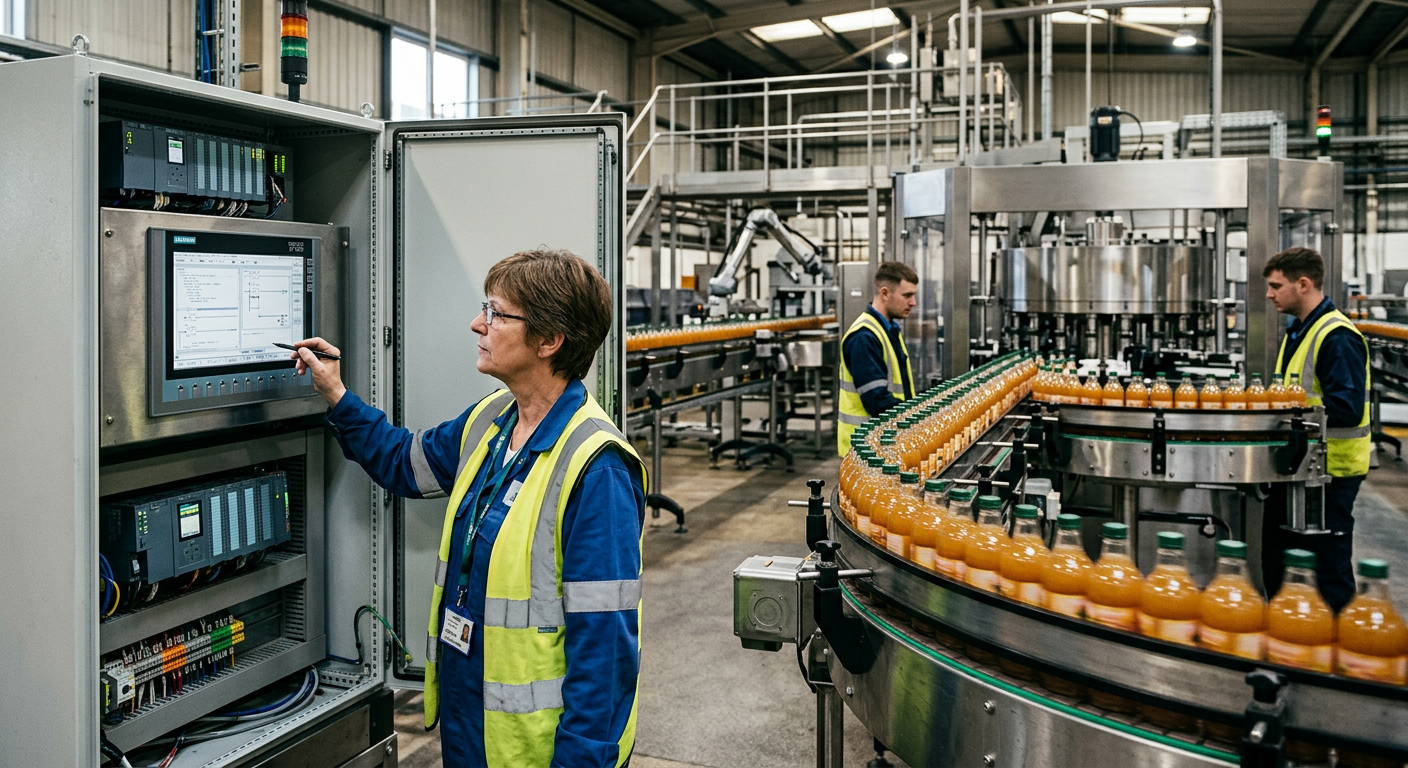
Food manufacturers in the United States are under growing pressure to build faster, cleaner, and more audit-ready traceability programs. For plants handling foods on the Food Traceability List, the practical challenge is not just understanding FSMA 204 rules; it is creating a working system that captures key data, connects suppliers and customers, supports lot genealogy, and allows the business to answer an FDA request within 24 hours. In real operations, that means traceability must work across receiving, batching, processing, packaging, warehousing, rework, shipping, and record retention.
This guide explains what a modern food plant traceability system should look like in 2026 for the United States market. It covers direct compliance answers, critical tracking events, key data elements, software selection, one-up-one-down data exchange, audit readiness, and future trends. It also highlights how engineering-led partners such as Disruptive Process Solutions help manufacturers align process design, automation, and documentation so traceability works on the plant floor rather than only on paper.
Quick Answer

A 2026-ready traceability system for a U.S. food plant should do six things well. First, it must identify which products and ingredients fall under FSMA 204 scope. Second, it must capture Key Data Elements at every relevant Critical Tracking Event. Third, it must assign and preserve lot identity through transformation, rework, repacking, and shipment. Fourth, it must link internal records with supplier and customer records in a one-up-one-down format. Fifth, it must retrieve traceability records quickly enough to support a 24-hour FDA request. Sixth, it must fit the reality of plant operations, including ERP, MES, PLC, SCADA, batch control, warehouse management, and paper-to-digital transition.
For most U.S. processors, compliance is not solved by software alone. It usually requires a combination of process mapping, receiving controls, barcode or label standards, batch genealogy logic, digital records, operator workflows, and validation through mock recalls. Plants in major manufacturing corridors such as Chicago, Dallas-Fort Worth, Fresno, Atlanta, Charlotte, and the New Jersey logistics belt often face additional complexity because of multi-site distribution, co-manufacturing, port imports, and mixed product portfolios.
Buying advice is straightforward: select a traceability approach based on your actual process risk. A simple low-SKU facility may only need stronger lot coding, digital receiving logs, and ERP integration. A high-mix plant with allergens, rework, co-packing, and multiple packaging formats may need full genealogy, line-level scanning, batch record automation, and warehouse integration. Companies moving ingredients through ports such as Los Angeles/Long Beach, Savannah, Houston, Newark, and Seattle-Tacoma should also prioritize supplier data quality and import documentation controls.
| Requirement Area | What It Means in Practice | Why It Matters |
|---|---|---|
| Scope Review | Identify covered foods, ingredients, and packaging scenarios | Prevents overbuilding or missing regulated items |
| KDE Capture | Record required data at receiving, transformation, shipping, and other events | Creates defendable compliance records |
| Lot Control | Maintain unique lot identification through processing and repacking | Supports rapid containment during recalls |
| Genealogy | Link raw materials, work-in-process, finished goods, and rework | Reduces investigation time and recall scope |
| 24-Hour Response | Retrieve and organize records fast for FDA review | Shows operational readiness and lowers disruption |
| Supplier/Customer Exchange | Support one-up-one-down traceability records | Improves end-to-end visibility |
| Retention & Audit Readiness | Store records securely, consistently, and accessibly | Protects the business during inspections and claims |
The table above shows why compliance and operations must be designed together. A plant can know the rule and still fail in practice if line staff cannot scan, label, reconcile, or retrieve data consistently.
The line chart reflects a realistic market direction: adoption of digital traceability tools is rising as more U.S. manufacturers shift away from spreadsheet-only or paper-heavy systems.
Key Data Elements Documentation at CTEs

Key Data Elements, often shortened to KDEs, are the actual pieces of information that prove what happened to a product at a specific point in the supply chain. In a plant environment, the challenge is not merely defining the data field names. The real issue is creating disciplined documentation at each Critical Tracking Event, or CTE, without slowing production or introducing error-prone manual work.
Common KDE categories include product description, lot code, quantity, unit of measure, event date, location, reference documents, supplier identity, customer identity, and internal transformation links. At receiving, the goal is to preserve supplier lot information and connect it to your internal inventory record. At transformation, the goal is to show which input lots became which output lots. At shipping, the goal is to show what was shipped, when, where, and under what lot identity.
For processors working in protein, dairy, prepared foods, sauces, beverages, aseptic products, or co-packed consumer goods, KDE capture becomes more complex because one line may combine multiple ingredients, allergen controls, rework streams, and multiple pack sizes in the same shift. Facilities in hubs like Kansas City, Memphis, Milwaukee, and Central California often handle high throughput and must balance speed with documentation discipline.
| Plant Event | Core KDEs | Operational Notes |
|---|---|---|
| Receiving | Supplier name, supplier lot, product code, quantity, receipt date, receiving location | Capture from ASN, bill of lading, COA, and receiving check |
| Storage | Internal lot, warehouse location, status, hold/release condition | Useful for quarantines and quality disposition |
| Batching | Ingredient lots used, batch number, operator, line, time stamp | Must connect each raw lot to WIP or batch record |
| Transformation | Input lots, output lot, yield, process date, formulation version | Core of genealogy and recall analysis |
| Packaging | Finished good code, packaging lot, date code, line, shift | Important when packaging material issues affect finished goods |
| Shipping | Customer, ship date, pallet IDs, quantities, lot numbers, carrier reference | Supports rapid downstream notification |
| Rework | Source lot, rework lot, target batch, quantity, approval | Often the biggest genealogy gap in real plants |
The table above shows that KDEs are event-driven. A food plant should document them where the event happens, using scanners, tablets, batch systems, or integrated operator screens whenever possible.
Good documentation design also means standardizing naming conventions. If one plant uses “lot,” another uses “batch,” and a third uses “run code” for the same purpose, record retrieval becomes messy. A cross-functional team from QA, operations, maintenance, IT, warehousing, and finance should approve a common data dictionary and revise SOPs accordingly.
Critical Tracking Event Identification

Critical Tracking Event identification is where many traceability projects either succeed or fail. A CTE is any point where product is grown, received, transformed, created, packed, repacked, shipped, or otherwise changed in a way that matters for traceability. In a manufacturing plant, this usually includes receiving, internal movement into production, mixing or cooking, filling or packaging, palletizing, warehousing, and outbound shipping. Rework, relabeling, and repacking are especially important because they can break lot lineage if not controlled carefully.
Different industries experience different CTE patterns. Beverage producers may focus on syrup rooms, blending, pasteurization, filler changeovers, and package code control. Protein processors may need tighter controls around trim inputs, marination, cooking, slicing, and case packing. Dairy plants often need robust links between raw milk receipt, standardization, heat treatment, culture use, and finished packaging. Co-manufacturers must also account for customer-specific labels, SKU changes, and separate retention rules.
When plants map CTEs, they should walk the process physically rather than relying only on a flowchart. Observe every handoff. Ask where paper forms are used, where labels are printed, where product can be reintroduced, and where operators make judgment calls. Many plants discover hidden CTEs around temporary staging coolers, manual weigh-up rooms, bulk tanker unloading, or off-line rework tables.
| CTE | Typical Risk | Control Method |
|---|---|---|
| Ingredient Receiving | Supplier lot lost during relabeling | Barcode intake and receiving verification |
| Bulk Transfer | Material identity mixed across tanks or totes | Tank assignment, transfer logs, automated valve verification |
| Batch Mixing | Wrong ingredient or wrong lot added | Batch control, scan-to-add validation, operator signoff |
| Cook/Process Step | WIP merged without proper genealogy | Recipe tracking and timestamped process record |
| Packaging | Date code mismatch or packaging lot omission | Vision checks, label verification, line clearance SOPs |
| Rework Addition | Undocumented source lot relationship | Approved rework transaction and quantity control |
| Shipping | Wrong pallet or mixed lot outbound | Warehouse scan confirmation and shipment reconciliation |
For companies expanding capacity or redesigning plants, traceability should be engineered into the process flow, not retrofitted later. That is especially true for facilities near major food distribution routes in the Midwest, Southeast, Texas, and California, where volume and SKU complexity can overwhelm manual systems.
The bar chart illustrates where demand for stronger traceability projects is currently highest. Co-manufacturing, protein, and prepared foods typically require more detailed event tracking due to high SKU variation and transformation complexity.
Lot Tracking and Genealogy Systems
Lot tracking is the backbone of recall containment. Genealogy is the logic that shows how each ingredient lot, packaging lot, and process step connects to finished goods. A mature system answers four questions quickly: what came in, where it went, what it became, and who received it.
In simple terms, backward traceability lets you identify all sources connected to a finished lot. Forward traceability lets you identify every finished lot and shipment affected by a source ingredient. Genealogy becomes harder when operations include blending, split lots, repacking, partial use, line changeovers, work-in-process storage, and rework. That is why many spreadsheet-based systems fail during mock recalls even if they seem acceptable during day-to-day operations.
Product types that benefit most from stronger lot genealogy include sauces, dressings, marinated proteins, cultured dairy, retort meals, aseptic beverages, plant-based proteins, and products with many minor ingredients or allergens. Applications include recall management, shelf-life control, claim investigation, customer reporting, sustainability data collection, and yield analysis.
| Product Type | Main Genealogy Challenge | Recommended Control |
|---|---|---|
| Ready-to-Drink Beverages | Blend-to-fill continuity across tanks and package sizes | Tank batch IDs linked to filler run and finished code |
| Protein Products | High variability of raw inputs and rework | Lot capture at trim, marinade, cook, slice, and pack |
| Dairy | Bulk receipt to multiple SKU outputs | Integrated batch and pasteurization records |
| Sauces and Dressings | Many ingredients, allergen crossover risk | Formula-controlled weighing and batch verification |
| Aseptic Foods/Beverages | Critical process and sterile packaging linkage | Event time stamps tied to sterilization and fill records |
| Co-Packed Consumer Goods | Customer-specific labels and short runs | SKU-level packaging and shipment reconciliation |
| Plant-Based Proteins | Ingredient blending and texture-stage identity loss | WIP genealogy through hydration and forming steps |
The table shows that genealogy architecture should match process design. A one-size-fits-all approach rarely performs well across multiple product families.
In practice, the strongest systems combine physical controls and digital controls. Physical controls include pallet labels, tote IDs, tank naming, line clearance, and hold tags. Digital controls include ERP lot master data, MES batch records, SCADA time stamps, label print controls, and warehouse scan validation. If the physical and digital worlds do not match, audits and recalls become painful.
Technology Solutions and Software Selection
Technology selection should begin with process complexity, not a software demo. U.S. manufacturers often evaluate ERP modules, MES platforms, warehouse systems, standalone traceability software, barcode systems, label print engines, historian tools, batch control, and supplier portals. The right answer depends on the plant’s scale, automation level, SKU count, transformation complexity, customer requirements, and budget.
Small and mid-sized plants may get the best return from improving ERP lot discipline, digital receiving, batch records, and shipment scanning before buying a broad enterprise platform. Larger multi-site operators may need a layered architecture that integrates ERP, MES, WMS, LIMS, quality records, and plant-floor automation.
From a technological capability standpoint, engineering partners matter because traceability often depends on how equipment, controls, and data systems are integrated. Disruptive Process Solutions supports projects that combine process engineering with controls, PLC programming, SCADA, system integration, utilities, and commissioning. That matters because traceability data frequently originates from real production assets such as blending systems, fillers, CIP skids, retorts, pasteurizers, and tank farms rather than from office software alone. You can explore the company’s broader engineering and project services for this type of plant-wide integration work.
| Selection Factor | Questions to Ask | Why It Matters |
|---|---|---|
| Lot Genealogy Depth | Can it manage split, merge, rework, and repack events? | Prevents broken lineage in complex plants |
| Integration Ability | Does it connect to ERP, PLC, SCADA, WMS, and label systems? | Reduces duplicate entry and error risk |
| Operator Usability | Can line staff use it quickly under production pressure? | Improves adoption and data quality |
| Recall Reporting | Can it produce forward and backward trace reports fast? | Supports 24-hour response expectations |
| Multi-Site Support | Can it standardize data across plants? | Important for growing U.S. manufacturers |
| Validation & Security | How are records protected, signed, and retained? | Supports audits and legal defensibility |
| Total Cost of Ownership | What are licensing, implementation, training, and support costs? | Improves long-term ROI planning |
This comparison framework helps buyers avoid a common mistake: choosing a system with strong dashboards but weak plant-floor transaction discipline.
The area chart shows a realistic trend shift for 2026 and beyond: paper-heavy systems are declining, while integrated digital traceability keeps gaining share due to labor pressure, customer expectations, and faster regulatory response needs.
Future trends will center on three areas. First, policy pressure will keep increasing around traceability readiness and digital access to records. Second, technology will move toward event automation, mobile capture, machine-readable supplier data, and AI-assisted exception handling. Third, sustainability demands will push traceability systems to track more than safety, including origin, waste, yield loss, water intensity, and carbon-related data streams.
24-Hour FDA Response Capability
A traceability system is only as strong as its response time. If FDA requests records, the plant must be able to identify relevant lots, compile event data, and present organized documentation quickly. The 24-hour capability is not just an IT challenge. It is an operational drill involving QA, operations, supply chain, customer service, warehousing, and leadership.
Plants should run mock recalls at least annually, and many high-risk or high-complexity sites should do them more often. A strong exercise tests both backward and forward traceability. Start with either a supplier lot or a finished lot, then measure how long it takes to identify all affected materials, batches, customers, and quantities. The output should be accurate, explainable, and exportable.
Facilities serving retailers, foodservice distributors, or large CPG brands in markets like New York, Los Angeles, Atlanta, Houston, and Minneapolis often face stricter customer expectations than the minimum regulatory baseline. For them, response capability is also a commercial requirement.
| Readiness Item | Target Standard | Common Gap |
|---|---|---|
| Product Scope List | Current list of covered foods and related SKUs | Outdated product master data |
| Record Retrieval Procedure | Clear ownership and escalation path | No defined team or backup roles |
| Genealogy Report | Can run backward and forward trace by lot | Manual spreadsheet stitching required |
| Supplier Documentation | Accessible receiving and source records | Files stored across email and paper folders |
| Shipment Visibility | Customer, date, quantity, and lot are searchable | Pallet-lot mismatch in warehouse records |
| Mock Recall Testing | Timed exercises with corrective actions | No follow-up on failure points |
| Management Review | Leadership sees readiness metrics regularly | Traceability treated only as QA paperwork |
The explanation behind this checklist is simple: speed without accuracy creates risk, and accuracy without speed creates regulatory pain. Plants need both.
Supplier Integration and One-Up-One-Down
Supplier integration is one of the most underestimated parts of traceability. One-up-one-down means the plant must know who supplied each covered input and who received each covered output. That sounds simple, but in practice it depends on consistent documents, clean master data, and repeatable identifiers.
Local supplier networks vary by region. Gulf Coast importers may work heavily through Houston. West Coast ingredient flows often rely on Los Angeles/Long Beach, Oakland, and Seattle-Tacoma. Southeast food and beverage operations may source through Savannah, Jacksonville, and Atlanta distribution hubs. Midwest manufacturers often rely on Chicago, St. Louis, Indianapolis, and Kansas City logistics corridors. Each geography affects lead times, documentation formats, and risk points.
Best practice is to set minimum supplier data standards in writing. Require lot identifiers, item descriptions, shipment references, and digital document exchange where possible. If suppliers send inconsistent paperwork, the problem eventually becomes your recall problem. Plants should also align customer shipment data standards, especially when selling into retail DCs, broadline foodservice, or contract manufacturing channels.
This comparison chart highlights the business value of stronger supplier integration. Better data quality usually improves recall speed, inventory confidence, and labor efficiency at the same time.
For buyers selecting vendors or integrators, ask whether they can support supplier onboarding, document standards, label templates, barcode logic, and customer-facing shipment traceability. Software without network discipline will not fully solve one-up-one-down challenges.
Audit Readiness and Record Retention
Audit readiness means traceability records are complete, legible, retrievable, and consistent with actual practice. Record retention means the plant can preserve them for the required period in a secure and organized way. A good program does not rely on a few experienced employees knowing where files are buried. It uses defined retention schedules, file naming rules, controlled access, backups, revision control, and documented training.
Plants should retain not only transaction data but also supporting records that explain the transaction: bills of lading, receiving forms, certificates, batch sheets, quality holds, release approvals, shipping documents, label control logs, and corrective action records. Hybrid systems are common, but they should still follow a single retrieval logic.
From a manufacturing capability standpoint, well-designed plants make traceability easier by reducing uncontrolled handoffs and building order into material movement. Disruptive Process Solutions works across food and beverage manufacturing environments ranging from brewing, spirits, RTD and aseptic beverage systems to protein, dairy, prepared foods, retort, and plant-based lines. Their experience with tanks, CIP systems, cooking vessels, utility integration, filling support infrastructure, and process layout is relevant because physical plant design strongly affects record accuracy, lot segregation, and sanitation-driven line clearance. More on their equipment and process platforms is available through their process equipment capabilities.
By 2026, record retention trends in the United States will continue moving toward searchable digital repositories, role-based access, and stronger cybersecurity controls. Sustainability reporting may also begin sharing infrastructure with traceability systems, especially where customers request source transparency, waste tracking, or origin-linked claims.
Our Company
Disruptive Process Solutions is not simply a software reseller or a narrow engineering house. The company supports food and beverage manufacturers across North America with a design-build-manage approach that aligns capital planning, engineering, installation, and execution oversight. For traceability projects, that matters because many compliance failures start upstream in poor process design, fragmented equipment integration, weak line controls, or rushed expansion decisions.
From a service capability perspective, DPS supports feasibility planning, owner’s representation, project management, general contracting functions, system integration, and commissioning. That makes the company useful for manufacturers who need traceability readiness tied to broader plant modernization, expansions, relocations, utility upgrades, or new production lines. Rather than treating compliance as isolated paperwork, the focus is on building profitable, workable manufacturing systems. Real project examples and operating outcomes can be reviewed in the company’s project case studies.
This model is especially relevant for U.S. operators facing capacity growth, co-packing complexity, new process technologies, or fast-track deadlines. A facility adding syrup rooms, retort systems, blending skids, refrigerated protein processing, aseptic infrastructure, or warehouse automation should evaluate traceability impacts during front-end engineering, not after startup.
For companies in Cary, Charlotte, Raleigh-Durham, Dallas, Chicago, Fresno, or Southern California, the practical advantage of an agile engineering partner is speed. A lean team with senior technical experience can often identify process bottlenecks, lot control risks, and documentation gaps faster than a fragmented set of disconnected vendors.
FAQ
What products are most likely to need stronger traceability in 2026?
Products involving complex transformation, high-risk ingredients, rework, allergen control, or broad distribution usually need stronger systems first. Examples include protein products, dairy, prepared foods, sauces, RTD beverages, aseptic items, and co-packed goods.
Can a paper-based system still work?
In limited cases, yes, but only if records are complete, consistent, and rapidly retrievable. In practice, many paper-heavy systems struggle with speed, rework genealogy, and multi-site reporting. Most growing manufacturers benefit from at least partial digitization.
What is the best starting point for a plant that is behind?
Start with scope assessment, process mapping, lot code standardization, and a mock recall. Then close the biggest gaps in receiving, transformation records, rework control, and outbound shipment data before selecting more advanced tools.
How often should mock recalls be performed?
At least annually is common, but higher-complexity facilities often run them more frequently, especially after new product launches, software changes, line additions, or supplier network changes.
Do packaging materials matter in traceability?
Yes. While ingredient traceability often gets the most attention, packaging lots can matter for labeling errors, contamination concerns, seal integrity, and customer complaints. Strong systems connect packaging identity to finished lots where relevant.
What should buyers ask a software provider?
Ask how the system handles split and merge lots, rework, repacking, warehouse scans, supplier data exchange, recall reporting, operator workflows, and integration with ERP, PLC, SCADA, and labeling infrastructure.
How do co-manufacturers differ from single-brand plants?
Co-manufacturers usually deal with more SKU variation, customer-specific labels, shorter runs, more changeovers, and more frequent data exchange requirements. Their traceability design must support that complexity without creating line delays.
What are the biggest 2026 trends?
Expect tighter digital record expectations, more automation in event capture, broader supplier portal use, stronger integration with sustainability data, and greater emphasis on cybersecure, searchable retention systems.
For U.S. food and beverage manufacturers, 2026 traceability readiness is no longer just a regulatory box. It is an operating system for recall speed, customer trust, inventory control, and future scalability. The best programs combine clear CTE mapping, disciplined KDE capture, reliable lot genealogy, supplier integration, and engineering-led implementation that works under real plant conditions.
[/trp_language]
Complete Company Portfolio
About the Author: Disruptive Process Solutions (DPS)
The DPS team combines process engineering expertise with real-world food and beverage manufacturing experience. Our content focuses on process optimization, production efficiency, facility improvements, and practical solutions that help manufacturers operate more effectively in a rapidly evolving industry.
Share