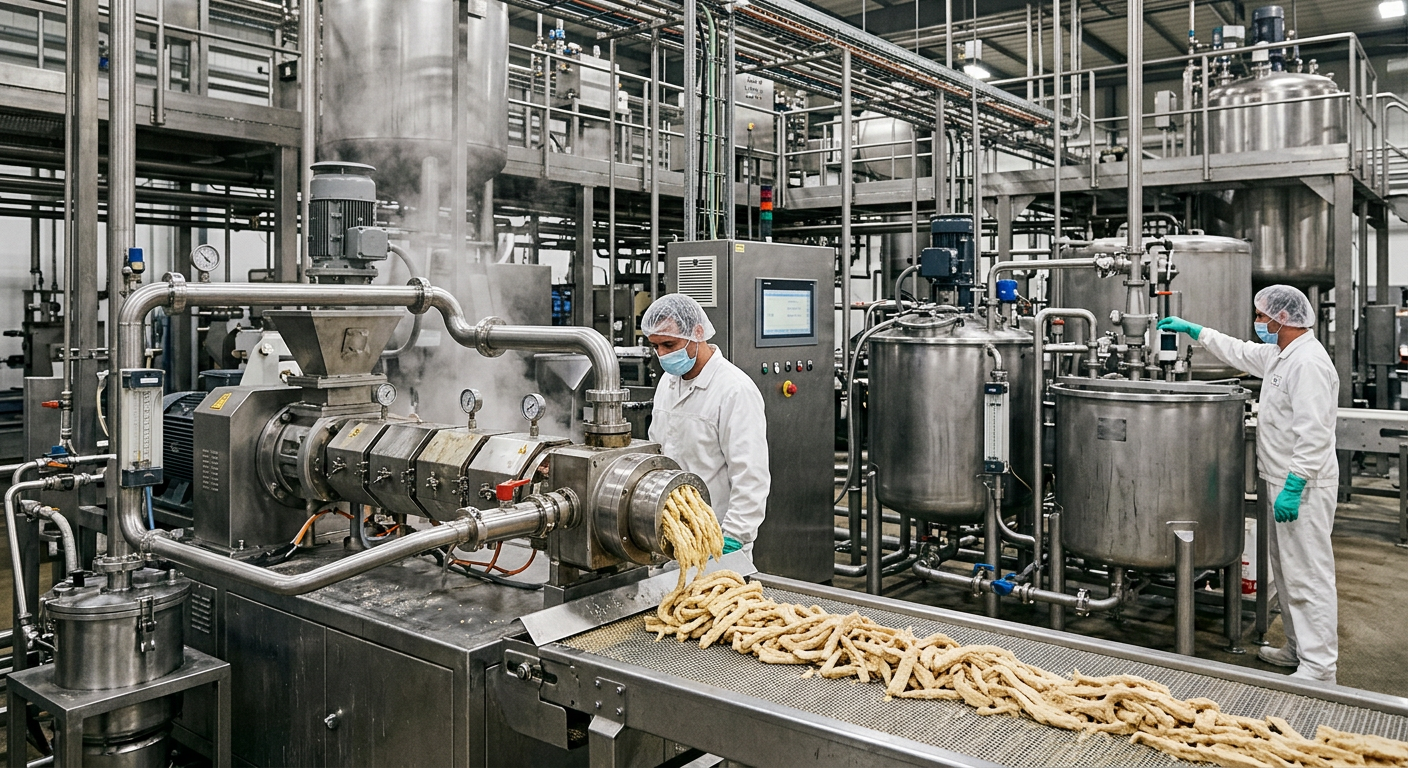
7 Critical Stages in Snack Food Production Line Engineering
[trp_language language=”en_US”]
Snack manufacturers in the United States are under pressure to increase throughput, reduce giveaway, improve flavor consistency, manage allergen risk, and prepare for 2026 sustainability and automation requirements. Engineering a modern snack line is no longer just about choosing individual machines. It requires coordinated decisions across extrusion, frying, coating, conveying, packaging, sanitation, utilities, controls, labor strategy, and plant layout. For puffed corn snacks, pellet snacks, tortilla chips, kettle-style products, fried curls, multigrain crisps, and hybrid baked-fried items, the best-performing lines are designed as integrated systems from ingredient receiving to finished case palletizing.
Across major U.S. snack corridors such as Chicago, Dallas-Fort Worth, Charlotte, Fresno, and the greater Atlanta region, producers are expanding facilities that can run multiple stock-keeping units without creating sanitation bottlenecks or excessive changeover time. Plants sourcing imported oils, films, spices, or equipment through the Ports of Los Angeles/Long Beach, Houston, New York/New Jersey, and Savannah are also redesigning for supply chain resilience. In that environment, line engineering should align capital deployment with product margin, labor availability, utility costs, food safety exposure, and future product mix.
This guide explains what decision-makers should prioritize when planning a snack food production line in the U.S. market, including direct buying advice, product-specific engineering considerations, industry applications, practical examples, and the capabilities needed from an engineering and integration partner.
Quick Answer

The fastest way to improve a snack production line is to engineer the whole process around three questions: what product family drives profit, where the true bottleneck sits, and how often the line must change over. In many U.S. snack facilities, poor performance is not caused by a single machine but by mismatch between process sections. An oversized extruder feeding an underdesigned dryer, a fryer with unstable oil residence time, an undercontrolled tumbler, or a packaging room that cannot keep pace with upstream output can erase expected returns.
For puffed and fried snack products, the critical stages usually include raw material handling, mixing and preconditioning, forming or extrusion, thermal processing, seasoning or coating, conveying and distribution, packaging, and utilities plus controls support. The engineering objective is not maximum nameplate speed alone. It is stable sellable output, repeatable quality, safe allergen management, and low total cost per pound.
In the United States, buyers should typically evaluate:
| Decision Area | What to Review | Main Risk if Overlooked | Primary KPI | Best Fit For | Typical Upgrade Trigger |
|---|---|---|---|---|---|
| Product platform | Puffed, pellet, fried, baked, multigrain, filled, or coated snacks | Wrong process selection | Sellable yield | New builds and expansions | SKU growth |
| Extrusion or forming | Moisture control, shear profile, die design, density target | Texture inconsistency | Bulk density | Puffed snacks | Frequent off-spec product |
| Frying system | Oil turnover, filtration, temperature stability, crumb control | Dark color, high oil pickup | Oil absorption | Fried snacks | Rising oil cost |
| Seasoning application | Tumbler retention time, powder adhesion, liquid dosing accuracy | Flavor variation | Seasoning variance | High-flavor SKUs | Consumer complaints |
| Packaging | Bag size flexibility, weigh accuracy, film handling, QA checks | Giveaway and downtime | OEE | Multi-SKU plants | Retail format expansion |
| Sanitation and allergens | Segregated routes, air control, CIP/COP strategy, line clearance | Cross-contact | Changeover time | Mixed product plants | New allergen introduction |
The table above shows why a line should be bought as an operating system, not a collection of equipment quotes. Many successful projects begin with a feasibility study and throughput model before machine selection starts. That approach is especially valuable for co-manufacturers and private-label snack producers that need flexibility across customers.
From a market perspective, demand in the United States remains strong for portable, bold-flavored, protein-enriched, and value-engineered snacks. At the same time, retailers increasingly expect package variety, cleaner labels, documented allergen control, and sustainability progress. As a result, engineering decisions made now should support 2026 priorities such as digital traceability, reduced fryer energy intensity, lower oil loss, higher packaging automation, and easier integration with plant-wide SCADA and production reporting.
Extruder Technology Selection for Puffed and Fried Snack Products

Extruder selection should begin with the final eating experience, not with horsepower. Puffed snacks, direct-expanded curls, corn puffs, rice-based shapes, and filled extruded products depend on control of starch transformation, moisture, temperature, and mechanical energy. Fried pellet snacks have a different requirement: consistent preform dimensions and moisture to ensure even expansion in the fryer. In both cases, line designers need to understand the full recipe map, including corn meal, rice flour, potato solids, pulses, proteins, fibers, binders, and functional inclusions.
In the U.S. market, a common mistake is buying an extruder sized for a best-case product while ignoring the broadest future SKU range. A single-screw platform may be sufficient for simpler corn-based products at high throughput, but twin-screw systems often provide better flexibility for multigrain, high-protein, or more sensitive formulations. For facilities serving regional brands in Texas, the Midwest, or the Southeast, that flexibility can support faster entry into hot-and-spicy, protein-forward, or school-compliant snack segments.
| Snack Type | Preferred Forming Technology | Key Engineering Variable | Quality Target | Layout Note | Buying Advice |
|---|---|---|---|---|---|
| Corn puffs | Direct expansion extrusion | SME and die pressure | Light texture | Short transfer to dryer or seasoning | Prioritize recipe control |
| Cheese curls | Single- or twin-screw extrusion | Moisture balance | Uniform shape | Minimize breakage points | Check cutter accessibility |
| Protein snacks | Twin-screw extrusion | Shear profile | Consistent expansion | Plan for additional dust capture | Validate on pilot trials |
| Pellet snacks | Pellet forming and later frying | Pre-dry moisture | Even fryer bloom | Add buffering before fryer | Model dwell time carefully |
| Multigrain crisps | Flexible extrusion or sheet-forming | Ingredient variability | Low breakage | Allow more QA access points | Protect for future SKUs |
| Filled extrudates | Co-extrusion | Core-to-shell ratio | Seal integrity | Higher utility coordination | Review sanitation complexity |
The table demonstrates how product family drives machinery choice. Engineering teams should compare not only throughput but also turn-down capability, recipe repeatability, screw changeover time, operator skill requirements, and spare parts strategy. A high-speed line that cannot reliably run smaller regional product campaigns may underperform financially.
For U.S. plants near grain supply regions such as Iowa, Nebraska, or Kansas, ingredient economics may favor corn and cereal-based systems. Plants closer to natural foods clusters in California or the Northeast may need additional flexibility for legumes, ancient grains, and specialty ingredients. When freight, labor, and retail requirements vary by region, the most profitable line is usually the one that can absorb formulation shifts without major rebuilds.
Engineering should also account for upstream and downstream compatibility. Extrusion output must match drying, frying, seasoning, and packaging capacity under real plant conditions, not ideal vendor assumptions. Utilities matter too. Steam, compressed air, process water, dust collection, and electrical load profiles should be modeled before approval. Companies that want stronger project visibility often benefit from working with an integrated engineering and installation team that can connect process, utilities, controls, and layout in one scope. A good example of that integrated approach can be seen in comprehensive food and beverage engineering services built around execution rather than isolated design packages.
Seasoning and Coating System Integration for Flavor Consistency

Flavor consistency is one of the clearest drivers of repeat purchase in snack categories. Consumers may forgive slight shape variation, but they quickly notice under-seasoned product, oil-heavy clumps, or patchy coverage. In engineering terms, this means the seasoning system should be treated as a precision process area, not an add-on after the fryer.
Dry seasoning application depends on product surface condition, residual oil or moisture, particle size distribution, tumbler geometry, residence time, and accurate dosing. Liquid application adds another layer of complexity involving pump control, nozzle placement, droplet size, viscosity, heating, and cleanability. High-variance flavor systems often come from poor integration between seasoning feeders, tumbler speed, transfer conveyors, and environmental conditions in the room.
| Control Point | What to Measure | Common Failure Mode | Recommended Design Response | Best Sensor or Method | Impact on Finished Product |
|---|---|---|---|---|---|
| Base product temperature | Surface temperature at tumbler entry | Poor adhesion | Stabilize upstream process | Infrared temperature monitoring | Weak flavor carry |
| Oil or slurry dose | Flow rate and pressure | Over-application | Closed-loop dosing | Mass flow or positive displacement control | Greasy texture |
| Powder feed rate | Loss-in-weight consistency | Flavor striping | Recipe-based feeder control | Gravimetric feeder | Non-uniform taste |
| Tumbler retention time | Residence time distribution | Under-mixing | Correct tumbler size and angle | Time study and load testing | Coverage variation |
| Dust management | Airflow balance | Flavor loss and sanitation issues | Targeted collection points | Differential pressure checks | Lower yield |
| Changeover sanitation | Residue validation | Allergen or flavor carryover | Quick-access hygienic design | ATP and allergen swabs | Brand and safety risk |
This table highlights the direct relationship between mechanical design and sensory consistency. Plants running cheese, barbecue, sour cream and onion, and spicy chile-lime variants on the same shift need ingredient handling, feeder calibration, and sanitation protocols that support both speed and control.
Applications vary by industry. Contract packers may need broad flavor flexibility for seasonal launches. Private-label manufacturers may need rapid transitions between retailer specifications. Better-for-you brands often require lower sodium or oil systems that make adhesion more difficult. In all cases, seasoning integration should be trialed with real product and full recipe conditions, not just water runs.
Regional sourcing also matters. Spice blends coming through New Jersey or Savannah can differ in flowability by supplier and humidity exposure. Cheese powders in Wisconsin-heavy supply chains may behave differently than imported seasoning systems staged on the West Coast. Engineering teams should plan for ingredient variability through feeder selection, hopper agitation, environmental control, and recipe compensation logic.
Conveyor and Material Handling Design for Multi-SKU Facilities
Material handling is often underestimated because conveyors appear simple compared with extruders or fryers. In reality, conveying design strongly influences breakage, buffering, sanitation, labor use, line balancing, and expansion potential. Multi-SKU snack facilities especially need conveyor systems that support different product fragilities, widths, accumulation needs, and allergen separation rules.
A strong design starts with product behavior. Freshly extruded snacks, fried chips, pellets, and coated items each respond differently to drop height, vibration, belt transfer geometry, and incline angle. Small decisions such as dead plate length, sidewall material, access door placement, and support leg spacing can affect sanitation efficiency and product loss every day.
| Conveyor Zone | Typical Product Condition | Main Design Priority | Frequent Mistake | Recommended Feature | Business Result |
|---|---|---|---|---|---|
| Post-extrusion transfer | Soft, warm, fragile | Gentle handling | Too many drops | Short, aligned transfers | Lower breakage |
| Pre-fryer feed | Metered product flow | Even bed depth | Surging load | Buffer hopper with controls | Stable fry quality |
| Post-fryer discharge | Hot, oil-bearing product | Drainage and safety | Inadequate access | Open hygienic frame | Better sanitation |
| Seasoning transfer | Ready for coating | Residence timing | Poor synchronization | VFD-linked coordination | Consistent flavor |
| Packaging distribution | Finished snack to scales | Balanced accumulation | Starving some baggers | Smart distribution logic | Higher packaging OEE |
| Rework route | Off-spec but recoverable product | Segregation control | Untracked return flow | Defined rework path and limits | Traceability and yield |
The explanation is straightforward: conveyor design is not only about moving product from point A to point B. It determines whether the rest of the line receives the product condition it was designed for. That is especially true in facilities producing multiple bag sizes, several textures, or both allergen and non-allergen products.
For plants serving major distribution networks from hubs like Columbus, Memphis, or Kansas City, conveyor strategy should also align with packaging room throughput and case handling. Space constraints in brownfield facilities may require vertical lifts, mezzanines, or split-route distribution. Dust control, access platforms, maintenance clearances, and egress routes should be designed early, not patched in later.
Manufacturers planning future acquisitions or additional products should leave room for bypasses and tie-in points. Flexible material handling often creates more long-term value than squeezing the last few feet from a crowded layout.
Oil Filtration and Fryer Temperature Control for Product Quality
For fried snack lines, oil management is a profit center disguised as a utility function. Oil cost, product color, shelf life, flavor stability, and finished texture all depend on how well the frying system manages heat transfer, turnover, crumb load, and degradation. Whether a plant is making tortilla chips, potato-based formed snacks, pellet snacks, or hybrid fried puffs, fryer engineering deserves close scrutiny.
Temperature variation even within a narrow band can create visible color shift and inconsistent moisture. Excess fines in the oil accelerate breakdown and can generate bitter notes or dark specks. Poor filtration design also increases downtime and cleaning burden. The right fryer system balances throughput with residence time control, oil circulation, filtration method, make-up oil management, hood exhaust, and worker safety.
| Fryer Parameter | Target Focus | If Too Low | If Too High | Engineering Solution | KPI to Track |
|---|---|---|---|---|---|
| Oil temperature stability | Uniform cook profile | Pale, soft product | Dark, overcooked product | Zoned controls and responsive burners | Color variance |
| Oil turnover rate | Freshness and shelf life | Faster degradation | Unnecessary cost | Model make-up oil strategy | Oil usage per pound |
| Crumb removal | Clean oil condition | Burnt fines | Usually not a high-side issue | Continuous filtration | Fines load |
| Residence time | Moisture endpoint | Undercooked product | Excessive oil absorption | Accurate belt speed control | Final moisture |
| Oil level control | Consistent contact | Uneven frying | Splash and instability | Automated level controls | Process deviation count |
| Exhaust and vapor handling | Safe environment | Condensation and odor | Energy waste | Balanced hood and recovery design | Room conditions and energy use |
The table shows that fryer performance is measured not just by speed but by how tightly key process variables are held. Plants that document oil life, color drift, and moisture variability can often justify control and filtration upgrades quickly through reduced waste and lower complaint risk.
Buying advice for U.S. operators: ask vendors and integrators for proof of cleanability, access, automation logic, and service support. Evaluate whether the system is suited for your oil type, product load, and sanitation frequency. If you plan to add kettle-style or specialty products later, verify how flexible the filtration and heating system will be under different crumb conditions. Facilities in regions with higher utility costs, such as California or parts of the Northeast, should pay close attention to burner efficiency, exhaust balance, and heat recovery opportunities.
By 2026, more food manufacturers are expected to prioritize digital oil management, predictive maintenance on pumps and motors, and stronger environmental reporting around energy intensity. Those trends make fryer instrumentation, historian connectivity, and operator dashboard design more valuable than ever.
Packaging Line Automation for Variable Bag Sizes and Formats
Packaging is where much of the line’s financial performance becomes visible. Upstream process improvements lose value if the packaging room cannot absorb output, maintain target weight, and switch formats efficiently. Snack manufacturers in the United States increasingly need flexibility across single-serve, pantry, club, and variety-pack formats, plus private-label artwork changes and short campaign runs.
The most robust packaging systems integrate multihead weighing, smart product distribution, bagger change parts management, metal detection or X-ray, checkweighing, code verification, case packing, and palletizing. Automation should be selected based on actual SKU mix rather than idealized assumptions about long production campaigns. Plants supplying major retail chains often need fast response to promotions, which makes changeover engineering especially important.
| Packaging Need | Best Automation Focus | Risk Without It | Suitable Plant Type | Implementation Priority | Expected Benefit |
|---|---|---|---|---|---|
| Many bag sizes | Recipe-driven machine settings | Long setup time | Multi-SKU plants | High | Faster changeovers |
| Weight accuracy | Integrated scale optimization | Product giveaway | High-volume lines | High | Margin improvement |
| Retail compliance | Vision and code verification | Label errors | Private label and branded | Medium | Lower recalls and chargebacks |
| Case handling labor reduction | Auto case packing and sealing | Labor bottlenecks | Growth-stage plants | Medium | Labor stability |
| Pallet consistency | Robotic palletizing | Safety issues | Regional distribution centers | Medium | Better warehouse flow |
| Format expansion | Flexible film and forming control | Cannot launch new packs | Innovation-led brands | High | Revenue optionality |
This table illustrates why packaging line automation should be connected to commercial strategy. A company entering convenience channels needs different flexibility than one focused on club stores. A co-manufacturer serving many brands may value recipe management and quick verification more than maximum top speed on one format.
Applications extend across salty snacks, puffed products, baked crisps, protein snacks, and mixed snack assortments. Plants located near freight hubs such as Indianapolis, Phoenix, or Harrisburg often choose more packaging automation to support rapid retail replenishment and reduce dependence on local labor availability. In areas with higher labor turnover, automation may be justified even at moderate volumes.
A disciplined engineering process links packaging rates back to process capability. If the line produces fragile snacks, weigh system vibration, distribution conveyor design, and drop heights must be controlled to avoid creating fines before the bagger. It is often wise to review complete line integration along with available processing and utility equipment solutions rather than treating packaging as a separate procurement event.
Allergen Segregation Strategies in Mixed Snack Production Plants
As snack portfolios diversify, allergen control becomes one of the biggest layout and operational design challenges. Mixed plants may run dairy-seasoned items, peanut-inclusive snacks, sesame-containing products, wheat-based extrudates, or soy-rich protein formats under one roof. The engineering question is not only how to clean, but how to prevent cross-contact through product flow, personnel movement, airborne particles, rework handling, and maintenance practices.
The most successful plants build allergen management into zoning, storage, conveying, seasoning rooms, utensils, drains, and scheduling logic. A line that looks productive on paper can become unusable in practice if allergen changeovers take too long or require excessive teardown. This is especially important for co-packers and brands selling into schools, club channels, and retailers with strict supplier requirements.
Key strategies include dedicated ingredient receiving lanes where possible, color-coded mobile equipment, isolated seasoning areas for high-risk powders, documented line clearance, positive or negative air relationships where appropriate, and validated sanitation methods. Rework policy must also be engineered. Undefined rework routes are one of the fastest ways to undermine traceability and allergen control.
For brownfield facilities, full segregation may not be feasible, but practical improvements often include isolated day bins, improved dust capture, upgraded traffic flow markings, separated tools, controlled staging, and revised production sequencing. Plants near major metropolitan labor markets such as Los Angeles, Chicago, or Philadelphia should also consider the training design needed for multilingual teams. Procedures must be easy to execute consistently, not merely compliant on paper.
By 2026, stronger customer audits, enhanced digital traceability expectations, and rising sensitivity around undeclared allergens will likely make integrated controls even more important. Engineering, operations, and food safety leadership should evaluate allergen design decisions at the same stage as throughput and ROI decisions, not afterward.
Energy Recovery and Waste Reduction in Continuous Snack Processing
Energy and waste reduction have moved from secondary goals to core financial drivers in snack manufacturing. Continuous lines consume significant thermal and electrical energy through extrusion, drying, frying, air handling, compressed air, packaging, and sanitation support. At the same time, product loss, seasoning overshoot, oil waste, and packaging giveaway directly affect contribution margin.
Waste reduction starts with process stability. A tightly controlled line creates fewer startups, fewer off-spec runs, less rework, and lower ingredient loss. Energy recovery, meanwhile, often comes from improved exhaust design, heat reclamation, burner tuning, insulated piping, variable-frequency drives, compressed air leak reduction, and smarter utility scheduling. Facilities in utility-sensitive regions such as California, the Pacific Northwest, and the Northeast often see faster returns on these upgrades, but savings matter everywhere.
| Improvement Area | Typical Waste Source | Engineering Action | Operational Benefit | Sustainability Benefit | 2026 Relevance |
|---|---|---|---|---|---|
| Fryer exhaust recovery | Lost thermal energy | Heat reclaim integration | Lower fuel use | Reduced emissions intensity | High |
| Oil management | Premature disposal | Better filtration and turnover control | Lower oil cost | Less waste generation | High |
| Compressed air | Leaks and poor pressure control | Audit and right-size system | Lower utility spend | Reduced electricity demand | Medium |
| Seasoning accuracy | Over-application | Closed-loop dosing | Lower ingredient spend | Less food waste | High |
| Packaging giveaway | Overweight bags | Scale optimization | Margin gain | Lower material-to-sale ratio | High |
| Startup and changeover loss | Off-spec product | Recipe automation and operator guidance | Higher yield | Reduced total waste | High |
The explanation behind this table is simple: the cheapest pound to make is the pound that never becomes waste, and the cheapest utility unit is the one never consumed. Continuous improvement should be built into the initial line design with data capture points, not added later through manual spreadsheets.
For plants pursuing ESG goals or retailer scorecard improvements, energy and waste performance can also affect customer relationships. Manufacturers shipping through sustainability-conscious retail programs may find that measured reductions in oil use, natural gas intensity, and packaging loss support stronger negotiations and brand positioning.
Case examples across North America show that the largest savings do not always come from the most expensive hardware. Sometimes the best result comes from control system revisions, utility balancing, or better sequencing of existing assets. That aligns with a broader philosophy of focusing on profitable outcomes rather than chasing equipment spend for its own sake.
Our Company
Disruptive Process Solutions DPS supports food and beverage manufacturers across the United States and Canada with an engineering model built around planning, execution, and accountability. Rather than approaching projects as a conventional bidder, the company is structured to help clients make capital decisions that improve long-term operating results. That makes DPS especially relevant for snack producers evaluating new lines, capacity expansions, relocations, utility upgrades, and multi-phase modernization programs.
From a technological capability standpoint, DPS works across process, mechanical, plumbing, electrical, structural, and controls disciplines. For snack and broader food applications, that means integrating process equipment with PLC programming, automation, SCADA visibility, recipe logic, utility systems, and commissioning support. This systems view is important when a snack line’s real bottleneck may lie in controls sequencing, not simply in mechanical speed. Companies exploring integrated planning can learn more through the firm’s company background and project philosophy.
From a manufacturing capability standpoint, DPS does more than coordinate third-party hardware. The company also designs and manufactures selected branded process equipment, including tanks, CIP systems, tumblers, and cooking vessels, while integrating complete process systems for complex food and beverage plants. That practical fabrication understanding helps during layout development, utility coordination, access planning, and installation sequencing. For snack operations, that mindset supports more realistic decisions around cleanability, footprint, and tie-ins to existing infrastructure.
From a service capability standpoint, DPS follows a Design Build Manage model that combines engineering, general-contractor-style execution, project management, owners representation, installation oversight, and system integration. This approach is useful for manufacturers that need a single accountable partner across capital planning, design, procurement support, trade coordination, startup, and performance follow-through. It also suits clients managing multiple stakeholders across operations, maintenance, finance, and food safety. Examples of project execution in related processing environments can be reviewed in selected case studies and client outcomes.
The company serves all 50 U.S. states, with active reach into major food and beverage corridors from the Carolinas to California and from the Gulf Coast to the Midwest. For snack producers, that geographic scope matters when coordinating local trades, utility infrastructure, code requirements, schedule pressure, or equipment moves between facilities. It also supports clients that are building national manufacturing footprints rather than single-plant operations.
In practical terms, DPS is often a fit for manufacturers that want candid engineering input, disciplined capital planning, and execution aligned with profitability rather than equipment spend alone. That can include branded snack companies, co-manufacturers, ingredient processors, and diversified food groups investing in flexible U.S. production capacity ahead of 2026 demand, compliance, and sustainability shifts.
FAQ
What is the first step in engineering a snack food production line?
The first step is defining the business case: product family, annual volume, SKU count, margin targets, allergen profile, utility constraints, and future expansion plan. Equipment selection should follow that analysis, not precede it.
Which is better for puffed snacks, single-screw or twin-screw extrusion?
Neither is universally better. Single-screw systems can be effective for simpler high-volume products, while twin-screw platforms usually offer better formulation flexibility and control for multigrain, protein-enriched, or more complex applications.
How do I improve seasoning consistency on fried snacks?
Focus on product temperature, oil or slurry dosing accuracy, gravimetric seasoning feed, tumbler residence time, and dust management. Inconsistent flavor is usually caused by system integration issues, not seasoning formula alone.
What is the biggest hidden cost in fried snack production?
In many plants, it is a combination of oil mismanagement, overweight packaging, startup waste, and line imbalance. These losses often exceed the impact of small throughput differences between machines.
How should a U.S. plant handle allergens in mixed snack production?
Use a combination of zoning, segregated ingredient storage, dust control, validated cleaning, production sequencing, color-coded tools, rework rules, and documented line clearance. Layout and airflow decisions are as important as sanitation chemistry.
What packaging automation matters most for multi-SKU facilities?
Recipe-driven settings, accurate weighing, code verification, rapid changeover features, and balanced product distribution usually create the strongest returns. The right mix depends on your bag formats and customer requirements.
Can older facilities be upgraded without a full rebuild?
Yes. Many brownfield snack plants can improve yield and capacity through targeted controls upgrades, conveying redesign, packaging optimization, oil management improvements, and sanitation-focused modifications without replacing every machine.
What 2026 trends should snack manufacturers prepare for now?
Expect greater adoption of line-wide automation, digital traceability, predictive maintenance, energy recovery, stronger allergen verification, packaging flexibility, and sustainability reporting tied to retailer and customer expectations.
How do I choose an engineering partner for a snack line project?
Choose a partner that understands process, utilities, controls, installation, food safety, and commercial outcomes. Ask for examples of integrated project execution, not just equipment sourcing or isolated design work.
Where are the strongest U.S. opportunities for new snack capacity?
High-opportunity zones often include the Midwest, Texas, the Southeast, and logistics-rich regions near Atlanta, Chicago, Dallas-Fort Worth, Memphis, and major port corridors. The best site depends on labor, ingredients, freight, and customer mix.
[/trp_language]
Complete Company Portfolio

About the Author: Disruptive Process Solutions (DPS)
The DPS team combines process engineering expertise with real-world food and beverage manufacturing experience. Our content focuses on process optimization, production efficiency, facility improvements, and practical solutions that help manufacturers operate more effectively in a rapidly evolving industry.
Share

