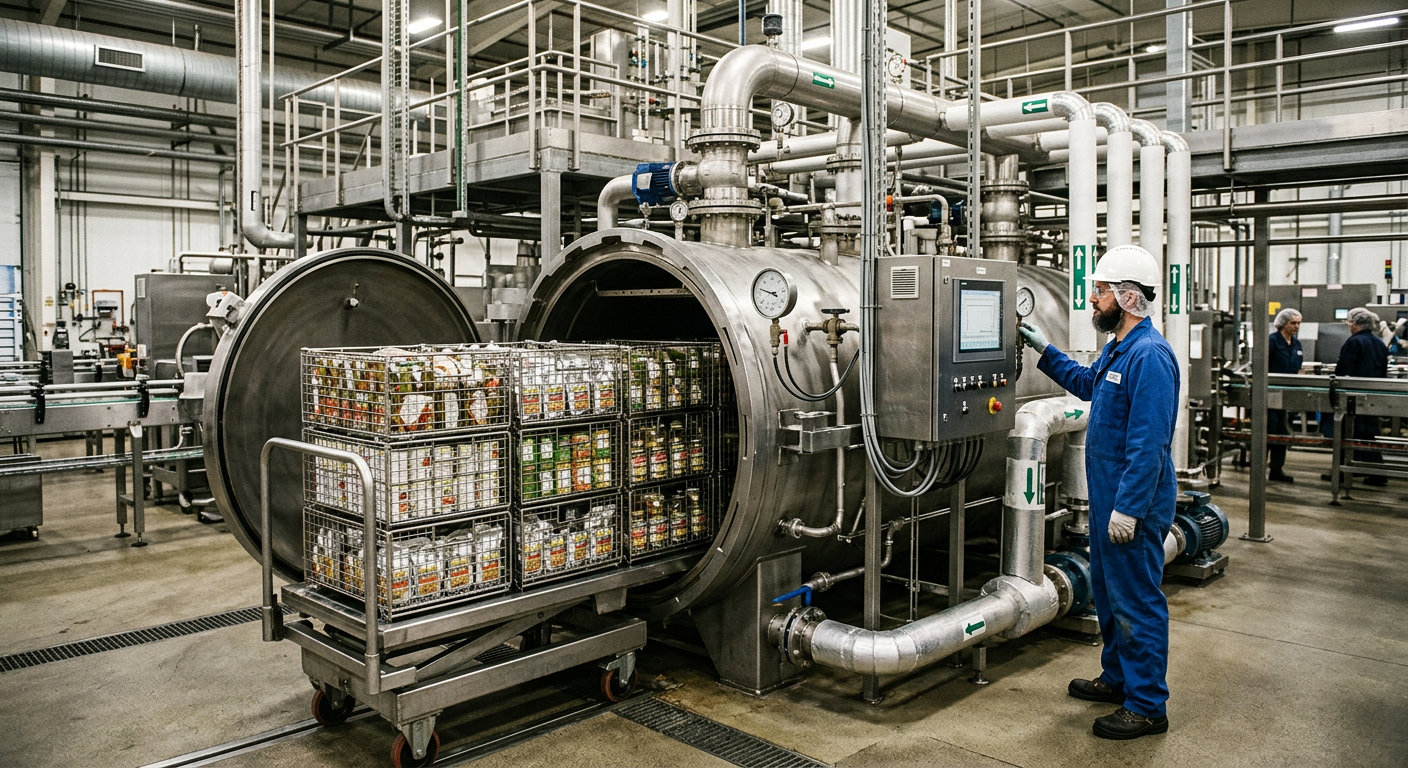
7 Key Food Plant Design-Build Advantages for 2026 Projects
[trp_language language=”en_US”]
Why Food and Beverage Manufacturers in the United States Are Choosing Design-Build for 2026 Capital Projects
Food plant expansion in the United States is entering a new phase. In 2026, manufacturers are under pressure to increase throughput, reduce risk, comply with tighter food safety expectations, and bring new lines online faster than traditional project methods allow. For protein processors in the Midwest, dairy operators in Wisconsin and Idaho, beverage producers in California and Texas, and co-packers near logistics corridors such as Chicago, Atlanta, and the Port of Savannah, project speed and execution quality directly affect profitability.
That is why design-build is gaining ground. Instead of separating engineering, procurement, construction, utilities, automation, and commissioning into disconnected contracts, the design-build model aligns them under one coordinated structure. This improves schedule control, reduces finger-pointing, strengthens food safety design, and creates better visibility into budget decisions from concept through startup.
For U.S. food and beverage companies planning greenfield facilities, brownfield expansions, process upgrades, utility retrofits, aseptic conversions, or high-care sanitary improvements, the core advantages of design-build are not abstract. They are measurable in fewer change orders, faster permit resolution, tighter hygienic detailing, shorter downtime windows, and smoother commissioning.
Quick Answer

The short answer is simple: the biggest design-build advantages for 2026 food plant projects in the United States are single-source accountability, integrated food safety compliance, faster permitting, stronger cost control, better sanitary construction, more coordinated commissioning, and improved schedule performance. These advantages matter most in facilities where process systems, utilities, controls, code requirements, and hygiene standards must work together from day one.
In practice, a well-run design-build project can help a manufacturer:
- Reduce handoff errors between engineering and construction teams.
- Identify FDA, USDA, SQF, and BRC compliance issues earlier.
- Sequence equipment procurement with building and utility readiness.
- Limit costly rework in drains, wall assemblies, piping, and automation.
- Shorten startup time for new processing, packaging, and CIP systems.
- Make better capital decisions based on operational payback, not just initial bid price.
For companies evaluating delivery options, design-build is especially attractive when the project includes clean utilities, process piping, controls integration, sanitation-critical zones, refrigeration, compressed air, steam, wastewater, or multi-line coordination. It is also useful when a facility must keep running during expansion or relocation.
| Project Need | Traditional Risk | Design-Build Advantage | Operational Impact |
|---|---|---|---|
| Plant expansion | Design and field conflicts | Unified engineering and construction planning | Fewer shutdown surprises |
| New beverage line | Utility mismatch at startup | Integrated process and utility design | Faster ramp-up |
| USDA protein room retrofit | Sanitary detailing gaps | Hygienic constructability review | Improved cleanability |
| Aseptic or retort project | Late compliance changes | Early code and validation alignment | Lower rework cost |
| Co-packing facility | Schedule fragmentation | One execution team | Better milestone control |
| Relocation or consolidation | Vendor coordination delays | Centralized management | Reduced production downtime |
The table above shows why design-build is not just a contracting preference. It is an operating model that aligns project delivery with production goals.
Single-Source Accountability Model

The most visible benefit of design-build is accountability. In the food and beverage sector, projects fail when nobody owns the connection points between disciplines. A process engineer assumes the builder will handle clearances. The electrical team assumes controls tags are final. The mechanical contractor assumes sanitation slope requirements were already coordinated. The owner ends up paying for the gaps.
A single-source accountability model removes that fragmentation. One lead entity manages scope alignment across process, building systems, utilities, controls, installation, and startup. For a manufacturer, that means faster decisions and fewer disputes over who caused a delay or a conflict.
This approach is especially valuable in complex facilities near major U.S. production and distribution zones. Consider poultry processing in Georgia and Arkansas, dairy investments in the Upper Midwest, beverage projects in Southern California, and import-sensitive operations near the Ports of Los Angeles, Houston, and New York/New Jersey. These projects often combine building work, process equipment, sanitation zoning, and automation upgrades under tight deadlines. A fragmented team can burn weeks just assigning responsibility. A design-build team can resolve issues in a single meeting.
For buyers, the key question is not whether a firm says it offers design-build. The question is whether it can truly act as the accountable integrator. That requires process fluency, field execution capability, and management discipline.
Manufacturers should verify whether the partner can connect plant layout decisions with utility loads, automation architecture, procurement sequencing, and site readiness. They should also ask whether the team can manage local trades, handle licensed general contracting where applicable, and maintain visibility across all open issues.
| Accountability Factor | What to Ask | Why It Matters | Warning Sign |
|---|---|---|---|
| Scope ownership | Who owns process-to-building interfaces? | Prevents coordination gaps | Multiple vague answers |
| Decision speed | How are field issues escalated? | Keeps schedule moving | No clear escalation path |
| Change control | Who validates changes against budget and sanitation? | Controls cost and risk | Reactive change pricing |
| Trade management | Can the lead manage local subcontractors? | Improves field alignment | Owner must coordinate trades |
| Documentation | How are open items tracked? | Supports startup readiness | Spreadsheet chaos |
| Commissioning ownership | Who closes punch-list items? | Accelerates turnover | Split responsibility |
In the United States, this model is becoming more important as labor availability, permitting variability, and equipment lead times remain inconsistent across regions. A single point of accountability helps manufacturers make decisions earlier, which is often the best defense against inflation and delay.
Integrated Food Safety Compliance

Food safety compliance should not be layered onto a project after major design choices are already made. In 2026, integrated compliance is one of the strongest reasons to select design-build. Hygienic zoning, traffic flow, allergen management, drain strategy, clean utility segregation, washdown electrical details, and material selection all need to be built into the project from the beginning.
For U.S. plants, that often means coordinating FDA expectations, USDA inspection requirements, customer audit standards, and private schemes such as SQF and BRC. The compliance profile changes by product type. A ready-to-drink beverage line in California faces different design priorities than a cooked protein line in Missouri or an aseptic dairy expansion in upstate New York.
An integrated design-build team can evaluate how process selection affects compliance. For example, the placement of a high-acid filling line affects cleaning paths, personnel flow, and maintenance access. A new marination room affects floor slope, condensate control, and clean-to-dirty separation. A retort project affects steam, condensate return, and verification routines. When these issues are discussed early, the facility is more likely to pass audits and operate consistently.
This is also where technological capabilities matter. DPS supports food and beverage manufacturers with structural, mechanical, plumbing, electrical, process, and controls engineering, including PLC programming, automation, and SCADA integration. That cross-functional depth is useful when compliance is tied not only to walls and drains, but also to recipe controls, batch records, alarm management, CIP verification, and sanitation lockouts. Manufacturers looking for more detail on service depth can review food and beverage engineering services.
| Compliance Area | Typical Design Issue | Integrated Design-Build Response | Benefit |
|---|---|---|---|
| Hygienic zoning | Cross-traffic between raw and RTE areas | Layout and barrier planning early | Lower contamination risk |
| Drainage | Insufficient slope or poor drain placement | Sanitary floor and drainage coordination | Better washdown performance |
| Allergen control | Shared pathways and unclear segregation | Material and personnel flow mapping | Stronger audit readiness |
| CIP systems | Undersized or poorly sequenced cleaning | Integrated process and controls design | Reliable cleaning validation |
| Inspection access | Equipment too tight for sanitation or USDA review | Maintenance and sanitation clearance review | Reduced downtime |
| Documentation | Fragmented turnover records | Centralized compliance and commissioning files | Cleaner startup package |
The table shows that compliance is a systems issue, not just a code checklist. When compliance, engineering, and construction are integrated, food plants gain durability, cleanability, and better operational control.
Accelerated Permitting Process
Permitting is often underestimated in food plant capital planning. Yet in the United States, local permitting can shape the entire project timeline. Building departments, fire marshals, utility providers, wastewater authorities, health agencies, and environmental reviewers may all influence the schedule. In some jurisdictions, the addition of boilers, ammonia systems, distillation equipment, wastewater pretreatment, or traffic changes can trigger extended review.
Design-build helps because it creates an earlier and clearer package for authorities having jurisdiction. Instead of incomplete handoffs between designer, owner, and builder, a coordinated team can present site impacts, utility loads, occupancy questions, process equipment implications, and code narratives in a more organized way.
This matters in high-growth regions such as North Carolina, Texas, Arizona, Tennessee, and Florida, where industrial development remains active and review departments may be stretched. It also matters in older industrial hubs such as New Jersey, Pennsylvania, Ohio, and Illinois, where existing infrastructure, stormwater constraints, or reuse conditions can complicate facility modifications.
Accelerated permitting does not mean cutting corners. It means identifying permit pathways earlier, preparing complete submittals, coordinating revisions quickly, and linking procurement to realistic approval dates.
The line chart illustrates a realistic growth pattern in design-build adoption for food and beverage capital projects in the United States. The rise reflects increasing pressure for earlier coordination, especially on utilities, compliance, and schedule certainty.
| Permit Topic | Common Delay Cause | Design-Build Advantage | Typical Result |
|---|---|---|---|
| Building permit | Incomplete coordinated drawings | Unified submission package | Fewer review comments |
| Fire review | Late equipment hazard clarification | Early code narrative development | Faster approvals |
| Wastewater approval | Unclear process discharge data | Integrated process utility analysis | Better authority coordination |
| Mechanical permit | Utility revisions after equipment changes | Procurement linked to engineering updates | Less redesign |
| Electrical permit | Load changes not reflected in documents | Centralized design control | More reliable submittals |
| Environmental review | Stormwater or air questions raised late | Early site and utility planning | Lower schedule risk |
For buyers, one practical test is to ask the project partner for examples of how it handled local permitting constraints. That could include working with wastewater authorities in the Midwest, fire review for distillation systems in Kentucky, or utility coordination for beverage plants in Southern California. Experience with local conditions can save months.
Cost Control Strategies
Cost control in food plant projects is not achieved by choosing the lowest initial bid. It comes from making the right decisions at the right time. In 2026, the most effective cost control strategies include early equipment utility matching, scope packaging by risk, realistic shutdown planning, disciplined change management, and value engineering that protects sanitation and throughput rather than stripping them away.
Design-build supports cost control because constructability and operational impact are considered alongside design intent. A traditional design may look efficient on paper but create difficult installation conditions, poor access for sanitation crews, or long startup delays. Those hidden costs rarely appear in the first estimate.
By contrast, a design-build team can weigh options in business terms. Is it better to add a utility skid now or expand later? Should a plant relocate an existing line or invest in a new one? Can a controls bottleneck be solved through programming before spending millions on capacity expansion? Those questions matter because profitable capital spending is not about volume alone. It is about return.
This business-minded approach is part of what many manufacturers look for in a partner. DPS positions projects around profitability and practical operations, not just drawings and installation. In some cases, solving a control logic bottleneck or sequencing issue can unlock output without major new equipment investment. That mindset matters for manufacturers seeking stronger capital efficiency in a volatile market.
The bar chart highlights where demand is likely to remain strongest in the United States. Ready-to-drink beverages, protein processing, and co-packing continue to drive investment because they combine high throughput expectations with tight delivery windows.
| Cost Control Method | How It Works | Best Use Case | Expected Benefit |
|---|---|---|---|
| Early utility modeling | Matches equipment loads to plant capacity | New lines and expansions | Avoids oversized or undersized systems |
| Constructability review | Tests installation practicality before field work | Brownfield retrofits | Less rework |
| Shutdown sequencing | Aligns work windows with production needs | Live plant upgrades | Reduced lost production |
| Phased procurement | Orders long-lead items earlier | Boilers, tanks, controls, refrigeration | Lower schedule inflation risk |
| Value engineering | Optimizes cost without sacrificing hygiene | Budget-sensitive projects | Better lifecycle return |
| Integrated change control | Tracks budget, scope, and schedule together | All project types | Fewer surprise overruns |
The table reinforces an important point: cost control is most effective when it includes operational logic. A cheaper short-term choice can create a more expensive plant.
Sanitary Construction Methods
Sanitary construction is one of the most technical and most misunderstood parts of food plant delivery. In 2026, buyers should expect more scrutiny around hygienic surfaces, envelope durability, moisture control, drainage, access for cleaning, pipe routing, floor transitions, and maintenance ergonomics.
The construction method matters because sanitation failures are often created by detail failures: the wrong curb geometry, a hidden moisture trap, unsealed penetrations, dead-leg piping, poor overhead coordination, or process lines placed too close to walls for effective cleaning. These issues can shorten equipment life, trigger findings during customer audits, and increase labor costs every day after startup.
This is where manufacturing capabilities become relevant. DPS not only integrates systems but also designs and manufactures select process equipment such as storage and processing tanks up to 12,000 gallons, custom CIP systems, marination tumblers, and cooking vessels. That manufacturing perspective can improve sanitary fit because equipment geometry, support design, cleanability, and utility tie-ins are considered with real-world fabrication and installation in mind. Manufacturers reviewing custom system options can explore process equipment capabilities for a clearer view of how equipment and project execution intersect.
Product type also shapes sanitary construction methods. Beverage plants may focus more on clean process piping, syrup rooms, bright tanks, carbonation systems, and hygienic fill environments. Protein and prepared foods facilities may focus more on washdown durability, raw-to-cooked separation, condensation control, and aggressive floor cleaning. Dairy and aseptic operations often require tighter utility cleanliness and validated process control.
| Sanitary Element | Preferred Method | Common Failure | Why It Matters |
|---|---|---|---|
| Floor drainage | Proper slope to accessible drains | Standing water | Reduces microbial risk |
| Wall penetrations | Sealed, cleanable transitions | Unsealed gaps | Prevents harborage points |
| Piping layout | Accessible and drainable routing | Dead legs and trapped product | Improves CIP effectiveness |
| Equipment spacing | Allow sanitation and maintenance access | Tight, uncleanable placement | Lowers labor burden |
| Overhead coordination | Separate utilities and avoid drip zones | Condensation over product areas | Protects product integrity |
| Material selection | Use durable sanitary finishes | Corrosion or delamination | Improves lifecycle performance |
For plants near humid Gulf Coast climates, cold storage operations in the Midwest, and high-throughput washdown environments in the Southeast, sanitary construction details can change dramatically. Buyers should choose partners that understand regional operating conditions, not just generic sanitary design language.
Commissioning Coordination Benefits
Many projects look nearly complete before they enter the most expensive phase: commissioning. This is where coordination quality becomes visible. If utilities are not balanced, controls are not mapped, operators are not trained, spare parts are not identified, and punch-list items block validation, startup can drag on for weeks or months.
Design-build improves commissioning because the same team that shaped the design and managed installation is still responsible for turnover. Instead of waiting for separate contractors to answer separate questions, the project team can coordinate dry checks, loop checks, water runs, CIP tests, load testing, and operator training as one program.
This is especially valuable in projects involving multiple process technologies. Beverage facilities may require blending, Brix monitoring, pasteurization, filtration, carbonation, and filling integration. Food plants may require grinding, mixing, cooking, cooling, slicing, packaging, and wastewater coordination. Aseptic or retort systems demand even tighter sequencing and documentation.
Service capabilities are critical here. DPS operates with an end-to-end design-build-manage model that covers process engineering, capital planning, owner-side support, project and program management, equipment supply, installation, system integration, and commissioning coordination. For manufacturers seeking a partner that can remain engaged from planning through startup, that delivery structure reduces handoff risk. Additional company background is available at about the team.
The area chart reflects how more manufacturers are moving toward integrated commissioning programs as project complexity rises. This trend is likely to continue in 2026 and beyond, especially as automation and traceability requirements expand.
| Commissioning Activity | Coordination Need | Design-Build Benefit | Outcome |
|---|---|---|---|
| Pre-startup inspection | Verify installation completeness | Single punch-list ownership | Faster readiness review |
| Controls checkout | PLC, sensors, and alarms aligned | Integrated automation team | Reduced debugging time |
| Utility balancing | Steam, air, water, glycol, power | Cross-discipline coordination | Stable startup conditions |
| CIP validation | Flow, temperature, sequence accuracy | Process and controls linked | Reliable cleaning cycles |
| Operator training | Practical handoff to plant team | Structured turnover planning | Quicker production ramp |
| Documentation closeout | As-builts, manuals, spare parts | Centralized records management | Smoother long-term maintenance |
Manufacturers should ask how the project partner handles startup responsibility after installation is complete. Strong commissioning coordination often separates projects that merely finish construction from projects that actually begin producing revenue.
Schedule Optimization Results
Schedule optimization is more than compressing dates. In food and beverage manufacturing, the best schedules are those that protect production, anticipate long-lead procurement, sequence shutdowns intelligently, and maintain alignment between building readiness and equipment delivery.
Design-build improves schedule performance because dependencies are identified earlier. If a tank platform affects pipe routing, if a boiler affects utility startup, or if a refrigeration upgrade affects line commissioning, those issues are discussed before they disrupt field work. This becomes even more important when serving national distribution commitments from hubs such as Dallas-Fort Worth, Chicago, Central Pennsylvania, or Inland Empire logistics corridors.
For 2026, schedule optimization is being shaped by three major trends:
- Technology: greater use of automation, digital controls, remote monitoring, and energy management systems.
- Policy: stricter documentation expectations, stronger traceability, evolving environmental reviews, and more attention to worker safety and utility resilience.
- Sustainability: increased focus on water reuse, heat recovery, wastewater loading, compressed air efficiency, and right-sized utility infrastructure.
These trends are changing schedule logic because more stakeholders are involved earlier. The projects that move fastest are often those with the best coordination, not the simplest scope.
The comparison chart shows why integrated partners often outperform fragmented project models. The gap is widest in process integration, commissioning, and multi-state execution support.
Case studies are useful when evaluating schedule claims. Buyers should ask for examples involving live plant expansions, rapid-response utility upgrades, equipment relocations, or phased line installations. For broader examples of project execution, manufacturers can review project case studies and compare delivery patterns relevant to their own products and facilities.
In buying decisions, manufacturers should also consider local supplier ecosystems. A strong lead partner must be able to work with regional steel fabricators, mechanical contractors, electrical trades, insulation teams, refrigeration specialists, and civil providers. This is especially important in multi-state portfolios, where local trade quality can vary significantly.
| Schedule Lever | Action | Best Fit | Likely Result |
|---|---|---|---|
| Early long-lead tracking | Release critical equipment sooner | Greenfield and large expansions | Less procurement delay |
| Phased construction | Separate active and inactive work zones | Operating plants | Higher production continuity |
| Parallel design and field prep | Overlap approved packages | Fast-track schedules | Shorter total duration |
| Integrated startup planning | Commission by system and area | Complex process facilities | Earlier revenue generation |
| Local trade alignment | Use vetted regional subcontractors | Multi-state execution | Better field reliability |
| Digital issue tracking | Close open items quickly | All project types | Improved milestone control |
For food and beverage companies in the United States, the schedule advantage of design-build is real, but only when the provider can coordinate technology, compliance, supply chain, and field execution at the same time.
Our Company
Disruptive Process Solutions serves food and beverage manufacturers across the United States and Canada with a practical, profit-focused project approach. The company works as an engineering-led execution partner for processing facilities that need more than a conventional contractor and more than a disconnected consultant. Its operating model is built around designing the solution, building it through coordinated trade execution, and managing the project so that commercial goals stay visible from start to finish.
For manufacturers evaluating 2026 projects, DPS is particularly well suited to assignments that combine process engineering, utility infrastructure, equipment integration, automation, compliance, and startup planning. The team supports beverage segments such as brewing, spirits, wine, RTD, kombucha, dairy beverages, soft drinks, and aseptic processing, as well as food sectors including protein, prepared foods, sauces, dairy, retort, and plant-based manufacturing.
Its strength is the ability to connect business objectives with technical execution. That includes capital planning, owner representation, process and utility design, project management, physical installation, controls integration, and commissioning support. The company also brings in-house equipment capability that can streamline selected projects when custom tanks, CIP systems, tumblers, or vessels are part of the solution.
Because DPS serves all 50 states and works through a curated partner network, it can support projects in major industrial corridors from the Carolinas to California, from Texas to the Great Lakes, and from the Southeast protein belt to Pacific beverage markets. Manufacturers looking for a partner that values transparency, rapid decision-making, and long-term profitability can learn more through the company’s company profile and service overview.
FAQ
What kinds of U.S. food plant projects benefit most from design-build?
Greenfield plants, brownfield expansions, utility retrofits, line additions, relocations, sanitary upgrades, and projects that must maintain live production all benefit significantly.
Is design-build better for food or beverage projects?
It works well for both. Beverage facilities benefit from integrated process and controls coordination, while food facilities benefit heavily from sanitary construction planning, zoning, and washdown-ready design.
Does design-build help with FDA, USDA, SQF, and BRC compliance?
Yes. It helps most when compliance requirements are built into layout, utilities, materials, controls, and commissioning from the start rather than added later.
Can design-build reduce project cost?
It can reduce total project cost and lifecycle cost by cutting rework, shortening delays, improving startup, and making smarter capital decisions. It does not always mean the lowest initial line-item bid.
How does it improve permitting in the United States?
By creating better coordinated submittals, clarifying process impacts earlier, and reducing revisions between engineering and field teams.
What should buyers ask a design-build partner before signing?
Ask about food safety experience, commissioning ownership, utility integration, local trade management, permit experience, controls capability, and examples of similar product applications.
What product types are especially active for 2026?
Ready-to-drink beverages, protein processing, co-packing, prepared foods, dairy modernization, and selected aseptic applications are expected to stay active in the United States.
How important are local suppliers and regional trade partners?
Very important. Even national projects depend on reliable local electrical, mechanical, civil, steel, and sanitary installation partners. A strong lead firm should know how to manage that regional variation.
What future trends will shape design-build decisions after 2026?
Greater automation, stricter traceability, energy and water efficiency, more resilient utility design, and stronger sustainability reporting will continue to favor integrated delivery models.
How can a manufacturer compare providers effectively?
Compare them on accountability, process depth, sanitary design knowledge, startup capability, project controls, and demonstrated results in similar industries and facility types.
[/trp_language]
Complete Company Portfolio

About the Author: Disruptive Process Solutions (DPS)
The DPS team combines process engineering expertise with real-world food and beverage manufacturing experience. Our content focuses on process optimization, production efficiency, facility improvements, and practical solutions that help manufacturers operate more effectively in a rapidly evolving industry.
Share

