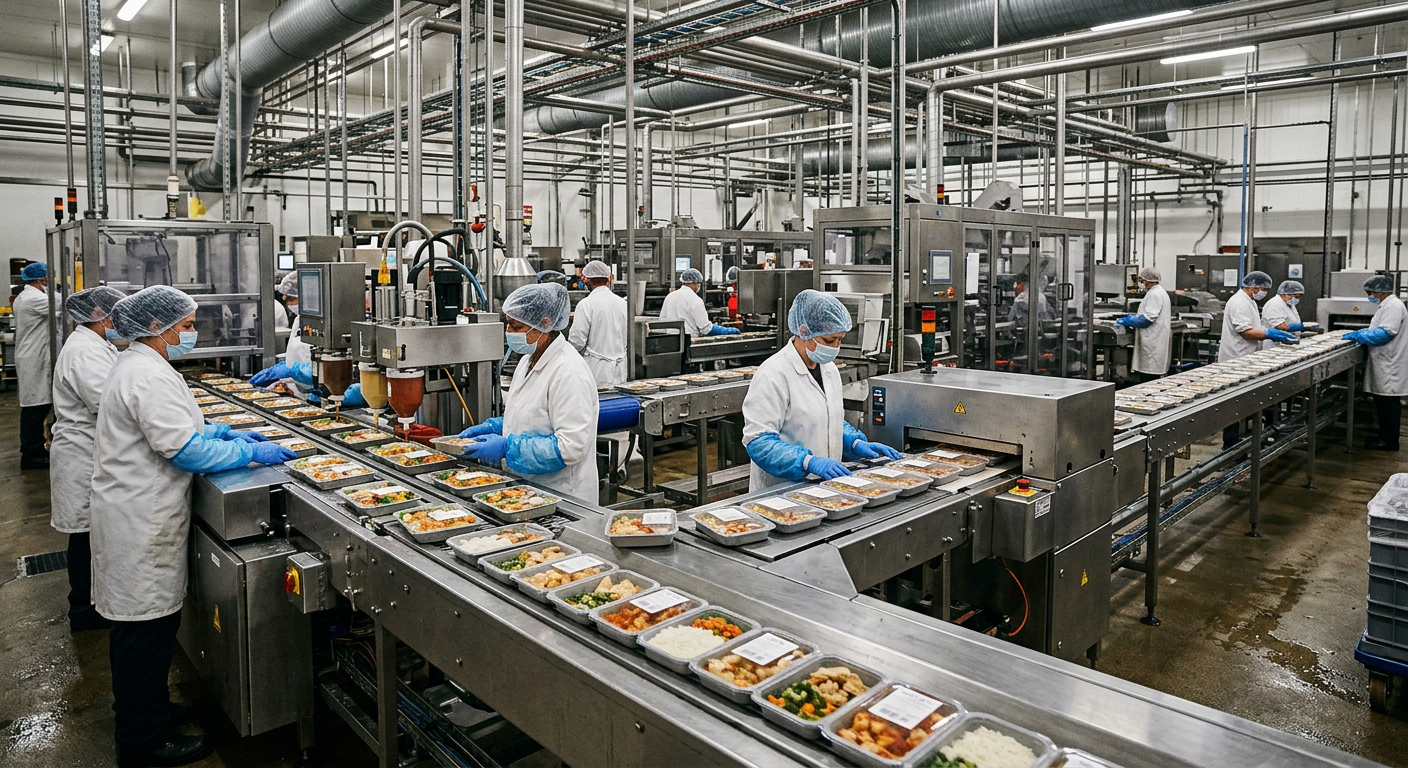
Aseptic Beverage Processing Systems
[trp_language language=”en_US”]
Aseptic Beverage Processing Systems in the United States
Aseptic beverage processing is a manufacturing method that sterilizes the product and the package separately, then combines them inside a sterile environment to produce shelf-stable drinks without refrigeration. In the United States, this method is widely used for dairy beverages, protein drinks, plant-based beverages, functional drinks, juices, coffee, teas, and sensitive low-acid formulations that demand long shelf life, flavor protection, and national distribution efficiency. For processors evaluating capital investment, the right aseptic system is not just a filler. It is a tightly integrated production platform that includes UHT treatment, sterile surge handling, packaging sterilization, aseptic filling, clean utilities, automation, and validated microbiological controls.
For manufacturers in major production corridors such as Chicago, Dallas, Los Angeles, Atlanta, Charlotte, and the New Jersey distribution belt, aseptic processing often becomes a strategic tool for freight flexibility, SKU expansion, and warehousing efficiency. It also matters in port-connected supply chains through Long Beach, Savannah, Houston, and New York/New Jersey, where long dwell times and wide geographic distribution make ambient stability especially valuable.
Quick Answer

Aseptic beverage processing works by rapidly sterilizing liquid product, usually with UHT heat treatment, cooling it under sterile conditions, sterilizing the packaging material, and filling the beverage in a closed aseptic chamber. Compared with hot fill and retort, aseptic systems typically provide better sensory retention, support more package formats, reduce thermal load on the beverage, and enable high-speed output from about 12,000 to 72,000 bottles per hour depending on format, viscosity, and automation level.
In practical U.S. terms, aseptic is usually the right choice when a brand needs one or more of the following: nationwide ambient distribution, low-acid beverage safety, dairy or plant-based protein stability, premium flavor retention, lightweight package formats, or high-volume production economics. Hot fill remains effective for many high-acid beverages. Retort is still essential for certain shelf-stable foods and highly robust packaged products. The best choice depends on product pH, particulate content, shelf-life target, package type, throughput goals, utility availability, and regulatory expectations.
For companies that need engineering guidance from concept to commissioning, Disruptive Process Solutions supports U.S. manufacturers as a food and beverage engineering partner focused on profitable project execution rather than one-dimensional equipment sales.
How Aseptic Beverage Processing Works: UHT Sterilization to Aseptic Filling

The aseptic journey begins with product formulation and microbiological risk classification. The product is blended, standardized, and often deaerated before entering thermal treatment. In most beverage applications, UHT sterilization heats the liquid to approximately 135 to 150 degrees Celsius for a very short holding time, often only a few seconds. That thermal exposure is enough to destroy vegetative cells and spores when paired with validated residence time, flow control, and temperature monitoring.
After heating, the beverage is flash cooled or indirectly cooled in sterile heat exchange sections. It then moves into a sterile surge tank or balance vessel that maintains overpressure with sterile air or nitrogen. From there, the liquid is transferred through sterile piping to the filler. The packaging, whether PET bottle, HDPE bottle, carton, cup, or flexible structure, is sterilized separately using hydrogen peroxide, steam, UV, or a hybrid method. Finally, the product is filled and sealed inside an aseptic chamber maintained with filtered air, controlled pressure differentials, and validated environmental conditions.
Three engineering issues determine whether a system performs in the field: thermal design, hygienic design, and automation logic. A poorly designed heat profile may overcook proteins or destabilize emulsions. A poorly designed hygienic circuit may create dead legs, gasket risks, or difficult-to-clean valves. Weak automation may undermine sterility through unverified setpoint drift, improper SIP sequencing, or incomplete changeover interlocks.
That is why many U.S. processors prefer an integrated project model that combines process engineering, utilities, controls, and installation. DPS applies a design-build-manage approach that helps clients align UHT, blending, utilities, CIP, controls, and filling into one capital plan rather than fragmented vendor packages.
| Step | Primary Function | Typical Equipment | Key Control Point | Main Risk | Operational Note |
|---|---|---|---|---|---|
| Ingredient receiving | Quality verification | Storage tanks, unload stations | COA and sampling | Raw contamination | Often linked to ERP traceability |
| Batching and blending | Formula preparation | Mix tanks, inline blenders | Brix, pH, viscosity | Off-spec composition | Inline instruments improve consistency |
| Homogenization | Particle and emulsion stabilization | High-pressure homogenizer | Pressure and temperature | Phase separation | Critical for dairy and plant proteins |
| UHT sterilization | Commercial sterility | Tubular or plate UHT | Time/temperature profile | Insufficient lethality | Validated by product family |
| Sterile surge holding | Buffer before filling | Aseptic tank | Pressure integrity | Post-process contamination | Requires sterile gas management |
| Package sterilization and filling | Final sterile pack-out | Aseptic filler | Environmental monitoring | Seal or chamber breach | Changeovers must be validated |
The table above shows why aseptic success depends on the entire chain, not only the sterilizer. A weak receiving program or poorly validated filler can undermine even an excellent UHT process.
Aseptic vs Hot Fill vs Retort: Choosing the Right Processing Method

Choosing the right processing method starts with product chemistry and commercial objectives. A high-acid juice for regional retail may fit hot fill perfectly. A low-acid protein shake with national e-commerce distribution will generally need aseptic processing. A shelf-stable product with particulates or a package intended to withstand post-fill sterilization may call for retort.
Hot fill typically heats product and fills it while hot enough to sanitize the container interior. It is common for juices, teas, and acidified beverages. It is proven and often less capital intensive than aseptic. However, it places more heat stress on flavor, color, and nutrients, and it may limit package selection.
Retort processes the sealed package after filling, usually inside a pressure vessel. It is robust and suitable for many shelf-stable foods and some specialty beverages, but thermal load is even higher and throughput is often slower, depending on package size and cycle time.
Aseptic processing separates product sterilization from packaging sterilization. This preserves sensory quality better and supports very high line rates once the system is tuned. It also demands higher engineering rigor, sterility validation, and disciplined operating procedures.
| Factor | Aseptic | Hot Fill | Retort | Best Fit | Buyer Takeaway |
|---|---|---|---|---|---|
| Product acidity | High or low acid | Mainly high acid | Broad range | Depends on formula | Low-acid drinks usually favor aseptic |
| Sensory retention | Strong | Moderate | Lower | Premium beverages | Aseptic supports cleaner flavor |
| Package flexibility | High | Moderate | Limited by retort resistance | Branding-driven SKUs | Aseptic often wins in packaging options |
| Capital intensity | High | Moderate | Moderate to high | Budget-sensitive launch | Hot fill may reduce entry cost |
| Throughput potential | High | High | Moderate | Large-scale plants | Aseptic scales well for nationwide brands |
| Typical applications | Protein, dairy, alt-dairy, coffee | Juice, tea, sports drinks | Broths, sauces, specialty packs | Application-specific | Match process to product risk profile |
The table shows that no single technology is universally better. The right answer depends on your product family, growth plan, labor model, and distribution radius. A co-packer serving both East Coast and West Coast retailers may value aseptic shelf stability more than a local juice brand distributing only in the Southeast.
Key Components of an Aseptic Beverage Processing Line
An aseptic beverage line is a system of interdependent hygienic assets. The core typically includes raw ingredient handling, batching, high-shear mixing where needed, deaeration, homogenization, UHT treatment, aseptic holding, sterile transfer, package sterilization, aseptic filling, secondary packaging, and comprehensive CIP/SIP support. Utilities matter just as much as the main process path: clean steam, culinary water, compressed air, chilled water, glycol, boiler capacity, condensate management, and HVAC all influence sterility and uptime.
From a technological capability standpoint, DPS supports complete process, mechanical, electrical, structural, plumbing, and controls engineering for aseptic facilities. That matters because filler performance alone does not solve plant bottlenecks. The surrounding infrastructure must be sized correctly for thermal load, utility redundancy, recipe complexity, and future line expansion.
Manufacturing capability also matters. DPS designs and supplies selected process equipment such as tanks and custom CIP systems, which helps align fabrication details with the broader project intent. Service capability is equally critical: capital planning, feasibility analysis, owner’s representation, general contracting, installation management, and startup coordination all affect how quickly an aseptic line reaches commercial production.
| Component | Purpose | Typical Design Choice | Validation Need | Capacity Impact | Common Upgrade Trigger |
|---|---|---|---|---|---|
| Ingredient storage | Stable raw material supply | Insulated stainless tanks | Sanitary finish review | Medium | More SKU complexity |
| Blending system | Formula consistency | Automated batching | Instrument calibration | High | Brix or pH drift |
| Homogenizer | Texture and stability | Two-stage high pressure | Pressure verification | High | Separation complaints |
| UHT sterilizer | Commercial sterility | Tubular or infusion | Thermal challenge studies | Very high | New product viscosity |
| Aseptic filler | Sterile package filling | Rotary high-speed platform | Media fills and seal checks | Very high | Need for speed or new formats |
| CIP/SIP system | Cleaning and sterilization | Multi-tank skid | Coverage and cycle proof | Indirect but major | Frequent downtime or product carryover |
Many beverage investors underestimate the utility envelope around these components. For example, a line may be mechanically rated for 48,000 bottles per hour but effectively capped by steam generation, sterile air preparation, or CIP turnaround. That is why comprehensive process engineering and project services are often more valuable than buying hardware without full integration planning.
Sterility Assurance Levels (SAL) and Microbiological Validation Requirements
Sterility Assurance Level, or SAL, is a way of expressing the probability that a viable microorganism survives the sterilization process. In beverage manufacturing, the exact interpretation depends on product type, packaging, process authority expectations, and applicable regulations, but the core concept is constant: sterility claims must be supported by validated science, not assumptions.
Validation typically includes thermal mapping, residence time studies, challenge testing, packaging sterilization verification, aseptic boundary integrity checks, filter integrity testing, environmental monitoring, media runs where appropriate, and documented operating limits. Processors also need a robust hazard analysis that identifies biological risks across formulation, transfer, filling, storage, and maintenance activities.
In the United States, manufacturers dealing with low-acid aseptic products must align with FDA expectations for commercial sterility, scheduled process establishment, and detailed process records. Validation must be specific enough to cover worst-case formulations, maximum viscosity, minimum flow conditions, startup transitions, and abnormal events such as power interruptions or pressure loss.
| Validation Element | What It Proves | Typical Frequency | Who Usually Owns It | Failure Consequence | Implementation Tip |
|---|---|---|---|---|---|
| Thermal process validation | Required lethality is achieved | At launch and major change | Process authority and QA | Unsafe product risk | Include worst-case formula |
| Hold tube verification | Residence time is accurate | Commissioning and review | Engineering | Under-processing | Verify actual line hydraulics |
| Packaging sterilization study | Container decontamination works | Per package format | Packaging and QA | Post-fill contamination | Validate contact and exposure time |
| Filter integrity testing | Sterile air and gas quality | Routine | Maintenance/QA | Airborne contamination | Trend pressure drop data |
| Environmental monitoring | Controlled aseptic zone | Routine by shift or campaign | QA and operations | Undetected drift | Pair with intervention logs |
| Commercial sterility incubation | Pack integrity over time | Per release protocol | QA lab | Market failure | Retain representative samples |
The explanation above highlights a common U.S. mistake: companies validate the sterilizer but not the whole aseptic ecosystem. True validation extends from raw material assumptions through final package seal integrity.
Packaging Material Sterilization: H2O2, Steam, and UV Methods Compared
Packaging sterilization is one of the most important decisions in any aseptic project because it shapes package compatibility, operating costs, environmental controls, and validation complexity. The most common methods are hydrogen peroxide, steam, UV, or combinations of these technologies.
Hydrogen peroxide, often written as H2O2, is widely used because it is effective and compatible with many high-speed systems. It may be applied as vapor, mist, or liquid depending on package format and line design. The process requires tightly controlled concentration, temperature, exposure time, and residual management.
Steam sterilization provides strong microbial reduction and may suit some packaging components or closures, especially in lines already supported by clean steam infrastructure. However, moisture and heat effects must be managed carefully to avoid package deformation or condensation-related issues.
UV methods can be useful in certain package and cap applications, particularly where dry processing advantages are attractive. Yet UV is line-of-sight dependent and often works best as part of a broader decontamination strategy rather than as a universal standalone answer.
| Method | Main Strength | Main Limitation | Best Package Fit | Utility Need | Buyer Guidance |
|---|---|---|---|---|---|
| Hydrogen peroxide | High efficacy and speed | Residual control required | Bottles, cartons, caps | Chemical supply and air handling | Most versatile high-speed option |
| Steam | Strong thermal kill | Moisture and heat load | Heat-tolerant components | Clean steam | Works well with robust utility systems |
| UV | Dry and relatively simple | Shadowing risk | Closures, shallow surfaces | Electrical only | Best for specific geometries |
| H2O2 + UV | Enhanced assurance | More complexity | Premium or sensitive formats | Chemical and electrical | Good for demanding validation plans |
| Steam + H2O2 | Broad effectiveness | Higher utility load | High-speed bottle systems | Steam, chemical, air | Strong but costlier operating model |
| Dry decon hybrids | Reduced water use | Vendor-specific performance | Emerging formats | Varies | Evaluate pilot and validation support |
For U.S. processors facing sustainability targets in 2026 and beyond, dry or lower-water sterilization approaches are getting more attention, especially in regions where wastewater, heat recovery, and energy intensity affect total operating cost. Plants in California, Arizona, and Texas are especially sensitive to utility efficiency planning.
FDA and EHEDG Compliance for Aseptic Beverage Production
U.S. aseptic beverage operations must be designed around compliance from day one, not retrofitted after installation. FDA requirements can apply to low-acid foods, acidified products, preventive controls, cGMPs, process records, and scheduled processes depending on the product category. Hygienic design standards from organizations such as EHEDG and 3-A concepts are also useful in minimizing cleanability risk and strengthening validation readiness.
For processors supplying major retailers or co-manufacturing national brands, practical compliance goes beyond passing inspection. It means documented hygienic zoning, sanitary weld quality, drainability, accessible valve clusters, segregated utilities, CIP proof, alarm management, controlled interventions, and accurate lot traceability.
DPS frequently supports clients that need not only design expertise but also regulatory fluency across FDA, USDA, SQF, and BRC-aligned projects. That service capability is important for mixed portfolios where a manufacturer may run beverages, dairy, prepared foods, or retort products at the same campus.
In cities with aggressive expansion of co-packing infrastructure such as Dallas-Fort Worth, Nashville, Phoenix, and the Carolinas manufacturing corridor, compliance-centered engineering has become a competitive differentiator. Investors want systems that can scale without triggering redesign because a filler was installed before the sanitary utility map was fully planned.
CIP/SIP Protocols for Aseptic Processing Equipment Maintenance
Cleaning-in-place and sterilization-in-place are the heartbeat of aseptic reliability. CIP removes product residues, films, proteins, sugars, and minerals. SIP then sterilizes the clean equipment path using steam or equivalent validated methods. If either protocol is weak, sterility assurance collapses.
Effective CIP programs define chemical concentration, flow velocity, temperature, time, circuit segmentation, return conductivity targets, and final rinse acceptance. Effective SIP programs define steam quality, temperature hold, cold spot verification, condensate control, and sterile boundary confirmation.
From a maintenance perspective, the best plants do not treat CIP/SIP as a sanitation checkbox. They use trend data to identify fouling rates, valve wear, gasket fatigue, heat exchanger performance decline, and campaign length optimization. This reduces both microbiological risk and unnecessary downtime.
| Protocol Element | Purpose | Typical Parameter | Monitoring Tool | Common Failure Mode | Improvement Opportunity |
|---|---|---|---|---|---|
| Pre-rinse | Remove gross soil | Water flow and time | Flowmeter | Insufficient carryout | Automate endpoint logic |
| Caustic wash | Break down organics | Concentration and temp | Conductivity sensor | Weak chemistry | Recover and standardize solution |
| Intermediate rinse | Remove caustic residue | Conductivity endpoint | Inline conductivity | Chemical carryover | Shorten with smart control logic |
| Acid wash | Remove mineral scale | Frequency by fouling rate | Recipe control | Stone buildup | Adjust by product family |
| Final rinse | Return to clean state | Water quality | TOC or conductivity | Residual chemistry | Use reclaimed water where feasible |
| SIP cycle | Sterilize equipment path | Validated temp and hold | Data historian | Cold spot survival | Map hard-to-heat sections |
The table shows why CIP/SIP should be engineered with the same seriousness as production. Many underperforming lines in the United States are not limited by filler speed but by cleaning turnaround and unstable campaign scheduling.
Production Capacity Planning: From 12,000 to 72,000 Bottles Per Hour
Capacity planning for aseptic beverage lines should begin with market strategy rather than nameplate speed. A startup protein beverage brand shipping through Atlanta and Chicago may only need 12,000 to 18,000 bottles per hour. A national co-packer serving club stores from Southern California, Texas, and Pennsylvania may require 48,000 to 72,000 bottles per hour or more. The correct line size depends on SKU count, changeover frequency, OEE target, warehousing logic, labor model, and utility redundancy.
One of the biggest planning errors is selecting speed before understanding annualized demand and true run time. A line designed for 72,000 bottles per hour may still miss budget if there are too many short runs, excessive cap changes, unstable sterilization cycles, or insufficient downstream packaging capacity.
Another key factor is footprint. Existing plants in urban industrial zones such as New Jersey, Los Angeles County, or inner-ring Chicago suburbs often have layout constraints that change filler choice, sterile tank sizing, mezzanine strategy, and CIP routing. Greenfield sites in North Carolina, Texas, or Tennessee may offer more flexibility and stronger long-term utility planning.
| Line Speed Range | Typical User | SKU Complexity | Utility Demand | Capital Intensity | Planning Comment |
|---|---|---|---|---|---|
| 12,000-18,000 BPH | Emerging brand or pilot commercial site | High | Moderate | Lower | Good for growth-stage portfolios |
| 18,000-24,000 BPH | Regional processor | Moderate to high | Moderate | Moderate | Flexible mid-scale sweet spot |
| 24,000-36,000 BPH | Multi-state distributor | Moderate | High | Moderate to high | Needs strong CIP and packaging flow |
| 36,000-48,000 BPH | National brand production | Moderate | High | High | Best with integrated automation |
| 48,000-60,000 BPH | Large co-packer | Lower to moderate | Very high | Very high | Redundancy becomes essential |
| 60,000-72,000 BPH | Flagship multi-customer hub | Lower | Very high | Very high | Layout and logistics drive economics |
When buyers compare suppliers, they should look beyond machine speed. Evaluate integration experience, controls architecture, hygienic design philosophy, utility consumption, FAT/SAT methodology, local service access, spare parts strategy, and startup support. A faster filler with weak commissioning support can cost more than a slower but stable line.
For companies planning a new line or expansion, it is often wise to benchmark available process equipment options against projected SKU mix, required sterility validation effort, and downstream packaging demand before finalizing procurement.
Looking toward 2026, four trends are shaping the U.S. market. First, more beverage brands are moving into functional, protein, and hybrid dairy-plant products that favor aseptic processing. Second, automation and SCADA-driven batch traceability are becoming standard rather than premium features. Third, water and energy efficiency are gaining board-level attention, encouraging heat recovery, smarter CIP reuse, and lower-chemical decontamination strategies. Fourth, policy and retailer pressure are increasing around documentation, food safety culture, and sustainability metrics.
DPS is especially well positioned for these trends because its work spans process engineering, utilities, automation, installation, and project management. The company has supported beverage and food clients across North America, from breweries and distilleries to dairy, prepared foods, aseptic, and retort operations. In practical terms, that means a client can engage one team to evaluate feasibility, engineer the process, coordinate trades, manage execution, and support startup instead of trying to align disconnected vendors.
For readers who want examples of project execution style and industry fit, the firm’s project case studies offer a useful view into how integrated capital work is planned and delivered.
FAQ
What beverages are best suited for aseptic processing?
Low-acid dairy drinks, protein shakes, plant-based milks, coffee beverages, nutritional beverages, creamers, some juices, and many functional products are strong candidates. Products with national ambient distribution needs benefit the most.
Is aseptic processing always better than hot fill?
No. Hot fill can be the better business decision for high-acid products, lower capital budgets, and simpler packaging needs. Aseptic is usually stronger for sensitive low-acid beverages and broader shelf-stable distribution.
How long can aseptically processed beverages last?
Shelf life varies by product, package, oxygen control, and storage conditions. Many products target six to twelve months, while some achieve longer validated shelf life with proper formulation and packaging.
What is the biggest hidden cost in an aseptic project?
Utility and integration gaps. Steam, sterile air, CIP, controls, building modifications, HVAC, and validation often create more cost exposure than the main filler if not planned early.
Can an existing hot-fill plant be converted to aseptic?
Sometimes, but not always efficiently. Conversions require careful review of utilities, hygienic zoning, package strategy, floor layout, sterile boundary design, and compliance obligations.
What line speed should a new U.S. co-packer target?
It depends on annual volume, SKU count, and customer mix. Many new entrants begin around 12,000 to 24,000 bottles per hour, while larger co-packing hubs may plan 36,000 to 72,000 bottles per hour.
How important is local support in the United States?
Very important. Downtime costs can be severe, especially in high-volume ambient beverage plants. Buyers should assess spare parts availability, remote support capability, and technician coverage across regions such as the Midwest, Southeast, Texas, and the West Coast.
What should buyers ask an engineering partner before investing?
Ask about process authority coordination, validation scope, utility load assumptions, hygienic design standards, CIP/SIP philosophy, startup staffing, changeover modeling, and future expansion planning. The right partner should challenge assumptions, not simply confirm them.
Aseptic beverage processing in the United States is ultimately a business system as much as a sterilization system. When properly designed, it gives brands longer reach, stronger quality retention, and a path to profitable scale. When poorly scoped, it becomes an expensive bottleneck. The best outcomes come from aligning product risk, package strategy, utilities, validation, and commercial growth into one engineering roadmap.
[/trp_language]
Complete Company Portfolio
About the Author: Disruptive Process Solutions (DPS)
The DPS team combines process engineering expertise with real-world food and beverage manufacturing experience. Our content focuses on process optimization, production efficiency, facility improvements, and practical solutions that help manufacturers operate more effectively in a rapidly evolving industry.
Share