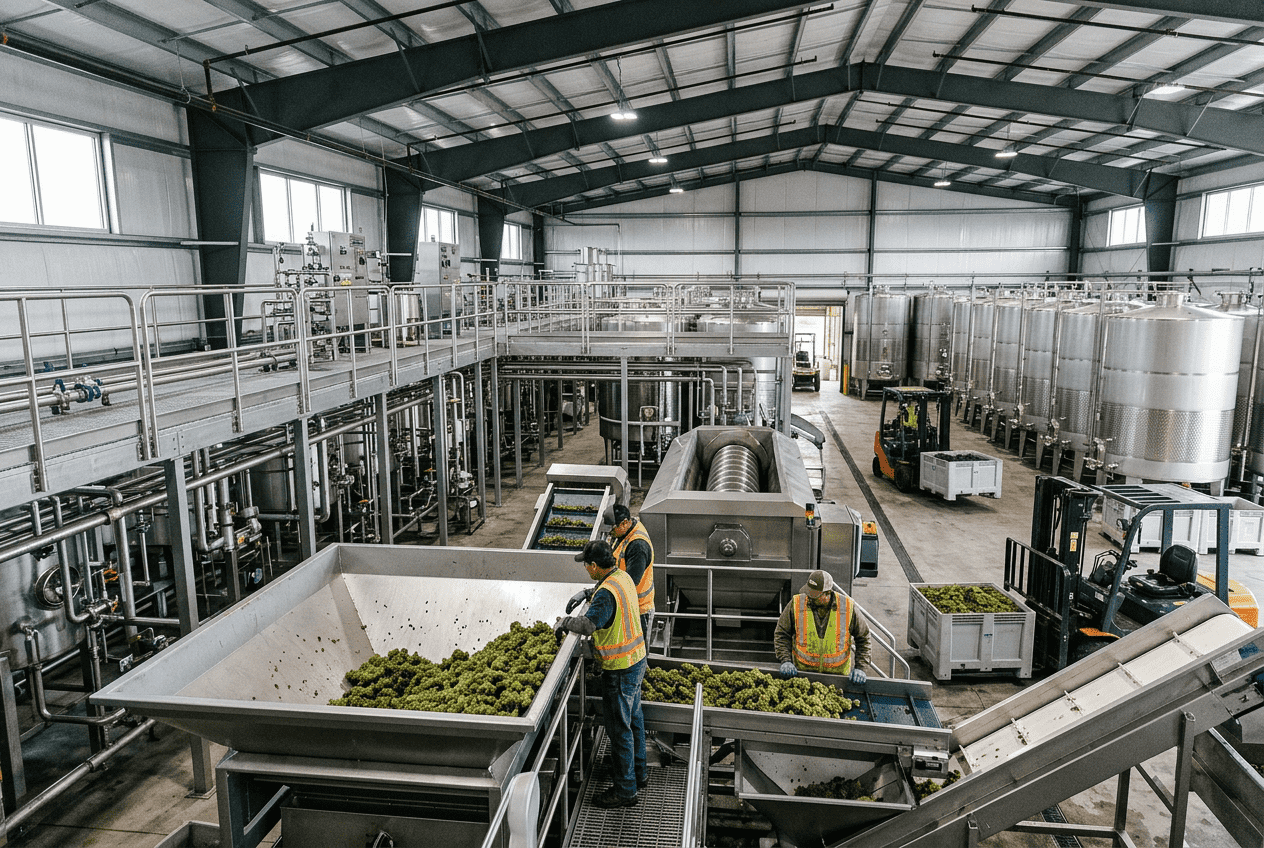
Aseptic Food Processing Systems
[trp_language language=”en_US”]
Aseptic Processing Systems Guide for the United States
Aseptic food processing systems are designed to sterilize product and package separately, then combine them in a sterile environment to produce shelf-stable foods and beverages without refrigeration. In the United States, this technology is widely used for dairy drinks, plant-based beverages, creamers, soups, broths, sauces, nutrition products, and ready-to-drink formulations that need long shelf life, strong quality retention, and efficient national distribution. For manufacturers evaluating capacity expansion, co-packing readiness, or conversion from hot fill or retort, the best aseptic line is not simply the fastest one. It is the one that matches product viscosity, particulates, package format, FDA filing obligations, utility profile, labor strategy, and commercial growth plan.
In practical terms, aseptic processing makes the most sense when a brand needs ambient distribution, reduced cold-chain dependence, high throughput, repeatable sterility assurance, and packaging flexibility across cartons, bottles, or pouches. It is especially relevant in U.S. markets shipping through major logistics corridors such as Chicago, Dallas-Fort Worth, Atlanta, Los Angeles/Long Beach, and New Jersey, where transportation efficiency and shelf stability can materially improve margin. This guide explains how the technology works, when it outperforms retort, what equipment matters most, how compliance works under FDA 21 CFR Part 113, and how manufacturers can lower operational cost while protecting product quality.
Quick Answer

Aseptic processing is a continuous manufacturing method in which a liquid or pumpable food is rapidly heated to commercial sterility, held for a validated time, cooled, and filled into a pre-sterilized container inside a sterile zone. Compared with retort, it usually offers shorter thermal exposure, better flavor retention, higher line efficiency for liquids, and broader packaging options. It is often the right choice for milk, creamers, protein shakes, broths, drinkable soups, sauces, and other low-acid or acidified products that benefit from ambient shelf life and premium quality positioning in the United States.
For buyers building or upgrading a line, the key decisions are product type, packaging format, target shelf life, throughput, viscosity range, particulate handling, utility costs, and regulatory pathway. A successful installation typically includes validated UHT processing, sterile surge capacity, reliable CIP/SIP strategy, aseptic filling, and strong automation with data capture. It also requires early input from engineering, operations, quality, packaging suppliers, and a recognized process authority.
The U.S. market continues to favor aseptic growth in dairy alternatives, functional beverages, meal solutions, and contract manufacturing. Companies serving national retailers or e-commerce channels often prefer aseptic because it reduces refrigerated storage burdens and widens geographic reach. In regions like California, Texas, the Midwest dairy belt, and the Carolinas, producers are increasingly evaluating aseptic lines as part of broader capacity, utility, and labor optimization programs.
The chart above reflects a realistic upward trajectory for aseptic project activity in the United States, driven by shelf-stable beverage demand, co-packing investment, and pressure on refrigerated distribution costs. The expected growth into 2026 and beyond is tied to automation adoption, sustainable packaging development, and tighter operating cost control rather than simple volume expansion alone.
How Aseptic Processing Works: UHT Sterilization and Aseptic Filling Explained

An aseptic system has two equally important halves: product sterilization and package sterilization. On the product side, the process usually begins with formulation, blending, standardization, and deaeration where required. The product is then pumped through a thermal system, often ultra-high temperature processing, to achieve commercial sterility. Depending on the formulation, the heat may be delivered through indirect systems such as plate, tubular, or scraped-surface heat exchangers, or through direct systems such as steam injection or infusion.
UHT treatment typically exposes product to very high temperature for a very short time. The exact schedule depends on product chemistry, viscosity, particle size, and microbial target, but the principle is consistent: destroy relevant microorganisms while minimizing damage to taste, texture, color, and nutrients. After the hold phase, the product is cooled under controlled conditions and transferred to an aseptic balance tank or surge vessel before entering the filler.
On the package side, cartons, bottles, cups, or pouches are sterilized using hydrogen peroxide, heat, UV, or other validated methods depending on the equipment design and packaging material. The filler itself operates within a sterile enclosure using filtered air, controlled overpressure, sterile pathways, and monitored intervention procedures. If the sterile boundary is maintained, the product can be filled and sealed at ambient conditions while remaining shelf stable for extended periods.
In U.S. operations, line design must account for product changeovers, allergen segregation, CIP timing, operator access, and startup losses. A beverage co-packer in Southern California will think differently about changeover frequency than a Midwest dairy plant running long campaigns of one SKU. Likewise, a sauce producer near Houston shipping nationwide through Gulf and inland logistics routes may prioritize high-viscosity handling and container flexibility over ultra-high speed.
| Processing Step | Primary Objective | Typical Equipment | Main Control Point | Quality Risk if Mismanaged | Operational Note |
|---|---|---|---|---|---|
| Ingredient preparation | Correct formulation and solids balance | Mix tanks, dosing systems, inline blenders | Recipe accuracy | Inconsistent viscosity and flavor | Batch traceability is essential |
| Preheating | Condition product for sterilization | Plate or tubular heat exchanger | Temperature ramp rate | Protein fouling or burn-on | Important for dairy and high-protein beverages |
| UHT sterilization | Achieve commercial sterility | Direct or indirect UHT module | Time and temperature | Survival of spoilage organisms | Validation must match actual formula |
| Holding | Maintain lethality for required time | Hold tube | Flow rate control | Under-processing | Tube geometry affects residence time distribution |
| Cooling and sterile transfer | Protect quality before filling | Regenerative cooler, sterile tank | Sterile boundary integrity | Post-process contamination | Valves and seals require disciplined maintenance |
| Aseptic filling and sealing | Preserve sterility in final package | Aseptic filler, enclosure, capping or sealing system | Package sterilization and environment | Leakers, contamination, short shelf life | Often the true bottleneck in uptime |
This process table matters because many failures blamed on “the UHT” are actually caused by downstream sterile transfer or filling. In other words, sterilization effectiveness and filler hygiene must be engineered as one system, not separate purchases.
Aseptic vs Retort Processing: Which Technology Fits Your Product Portfolio

Aseptic and retort are both proven methods for producing shelf-stable foods, but they serve different product and business cases. Retort sterilizes product after packaging, usually in cans, jars, trays, or pouches. It is highly effective for products with particulates, chunk integrity requirements, or packaging formats suited to batch or semi-continuous thermal treatment. Aseptic sterilizes product before packaging and is usually better suited to pumpable products, fluid foods, and higher throughputs where quality retention is a priority.
For a U.S. manufacturer, the choice often comes down to more than microbiology. It includes capital allocation, packaging strategy, warehouse layout, SKU mix, labor model, and retailer expectations. A premium dairy beverage brand in Wisconsin may benefit from aseptic cartons or HDPE bottles. A soup processor in New Jersey with heavy particulates and multiple foodservice pouch sizes may still prefer retort. A fast-growing co-packer in Texas may choose both technologies to serve a broader customer base.
| Factor | Aseptic Processing | Retort Processing | Best Fit | Commercial Impact | U.S. Buyer Takeaway |
|---|---|---|---|---|---|
| Thermal exposure | Shorter, high temperature | Longer, in-package heating | Aseptic for quality-sensitive liquids | Better flavor and color retention | Useful for premium beverage positioning |
| Package flexibility | Cartons, bottles, pouches | Cans, jars, trays, pouches | Depends on channel strategy | Influences shelf presentation | Align package with retailer and freight goals |
| Product type | Liquids, emulsions, smooth sauces | Chunky foods, meals, dense particulates | Retort for large particulates | Affects texture and appearance | Run pilot tests early |
| Line throughput | Usually continuous and high | Often batch or semi-continuous | Aseptic for long production runs | Lower cost per unit at scale | Ideal for national-volume beverages |
| Changeover complexity | Can be high with sterile setup | Can be simpler depending on package | Retort for smaller mixed runs | Downtime affects margin | Match technology to SKU count |
| Capital intensity | High upfront investment | Moderate to high depending on scope | Case-specific | ROI depends on utilization | Model demand honestly before buying |
| Distribution advantage | Strong for ambient logistics | Also shelf stable | Both work, packaging differs | Freight and warehouse efficiencies vary | Consider pallet density and damage rate |
The comparison shows why there is no universal winner. The right technology is the one that fits the product portfolio you want to sell over the next five to ten years, not only the line item you need today. That is why many owners begin with a portfolio-level feasibility study before committing capital.
Manufacturers seeking a deeper planning perspective often benefit from a partner that understands both aseptic and retort from the process, utility, and construction sides. DPS approaches projects that way through integrated engineering and execution, and the company’s processing and project delivery services are structured around long-term profitability rather than simply pushing equipment into a plant.
Industry demand is strongest where shelf-stable distribution and premium quality intersect. Plant-based beverages, dairy-based nutrition, and co-packing continue to lead because brands want flexibility, speed to market, and fewer refrigerated distribution constraints.
Key Components of an Aseptic Food Processing Line (Heat Exchangers, Hold Tubes, Fillers)
The core equipment package in an aseptic line must be selected as a system. Heat exchangers determine heat transfer efficiency, fouling behavior, cleanability, and product suitability. Hold tubes establish the validated residence time needed for lethality. The aseptic filler protects the sterile boundary while meeting desired speed and package format. Around these components are supporting systems including homogenizers, deaerators, sterile valves, product recovery, SIP circuits, CIP skids, filtration, air handling, controls, and utilities.
Plate heat exchangers are efficient and compact but best for lower-viscosity, low-particulate products. Tubular exchangers are more robust for viscous products and those with limited particulates. Scraped-surface heat exchangers are valuable for products that foul easily or require gentle movement, such as certain dairy, dessert, and sauce applications. Direct UHT systems can offer superior flavor retention for some beverages but require careful steam quality management and condensate handling.
The filler deserves special scrutiny because it often determines practical uptime. Sterile chamber design, package sterilization effectiveness, cap handling, seal integrity, intervention procedures, and automation diagnostics all influence performance. A line that looks excellent on paper can become expensive if filler stops drive high product loss or repeated sterility resets.
| Component | Function | Typical Product Fit | Main Selection Criteria | Common Failure Mode | Prevention Focus |
|---|---|---|---|---|---|
| Plate heat exchanger | Rapid heating and cooling | Low-viscosity beverages | Cleanability and pressure drop | Leakage across plates | Gasket inspection and pressure control |
| Tubular heat exchanger | Handles tougher products | Creamers, sauces, soups | Viscosity and particulate size | Fouling and reduced heat transfer | CIP validation and monitoring |
| Scraped-surface exchanger | Manages sticky or fouling products | Desserts, emulsions, high-solids foods | Shear sensitivity | Mechanical wear | Rotor maintenance plan |
| Hold tube | Delivers validated lethality time | All aseptic products | Residence time distribution | Incorrect flow assumptions | Instrumentation verification |
| Aseptic surge tank | Balances process and filling flow | Continuous lines | Sterile design and level control | Contamination through seals or vents | SIP discipline and filter integrity tests |
| Aseptic filler | Fills and seals sterile packages | Cartons, bottles, pouches | Format, speed, sterility assurance | Environmental contamination | Operator training and enclosure control |
| CIP/SIP system | Cleans and sterilizes product pathways | All lines | Chemical coverage and repeatability | Dead legs or poor rinse validation | Hygienic design review |
U.S. buyers should also evaluate utility integration early. Steam quality, hot water systems, glycol, compressed air, water treatment, condensate recovery, and automation network architecture can strongly affect both line performance and total installed cost. This is one reason manufacturers often engage firms with full process and utility integration experience instead of buying isolated skids.
DPS brings that systems view through combined process, mechanical, electrical, structural, plumbing, and controls engineering. Its equipment capabilities and broader technical integration background are particularly relevant when an aseptic line must connect with upstream batching, downstream packaging, utilities, and SCADA in one coordinated project.
Product Applications: Dairy, Beverages, Soups, and Sauces
Aseptic processing is highly versatile, but product fit matters. In dairy, common applications include milk, cream, creamers, flavored milk, drinkable yogurt bases, and protein beverages. In beverages, it supports juice blends, plant-based drinks, coffee beverages, tea, nutritional RTD products, and functional formulations. In food, it is widely used for broths, pureed soups, tomato bases, culinary sauces, gravies, and emulsified dressings where the rheology and particulate size are compatible with the selected system.
Each category presents distinct engineering challenges. Dairy and high-protein drinks can foul quickly and may require careful homogenization, thermal profiling, and CIP discipline. Acid beverages may be easier microbiologically but still demand package compatibility and flavor protection. Soups and sauces may push the limits of viscosity, shear sensitivity, and particle integrity. Products intended for club stores in the Midwest may prioritize carton cube efficiency, while premium natural retail channels on the West Coast may prefer recyclable bottle formats or differentiated shelf appearance.
| Product Category | Typical Examples | Why Aseptic Works | Key Process Challenge | Preferred Packaging Options | Commercial Note |
|---|---|---|---|---|---|
| Dairy beverages | Milk, creamers, flavored milk | Long shelf life with good flavor retention | Protein fouling | Cartons, bottles | Strong fit for national distribution |
| Plant-based beverages | Oat, almond, soy, blended nutrition | Ambient stability and scale | Suspension stability | Cartons, bottles | Fast-growing U.S. category |
| RTD nutrition | Protein shakes, meal replacements | High quality retention at volume | Viscosity and flavor changes | Bottles, cartons | High margin but demanding validation |
| Juices and functional drinks | Fruit blends, teas, enhanced beverages | Distribution flexibility | Flavor and vitamin stability | Cartons, bottles | Good for e-commerce and convenience |
| Soups and broths | Drinkable soups, culinary bases | Shelf-stable meal solutions | Particle size and viscosity | Cartons, pouches | Excellent for foodservice and retail |
| Sauces and dressings | Tomato sauces, gravies, emulsified sauces | Continuous high-volume processing | Shear sensitivity and fouling | Pouches, cartons, bottles | Needs precise product-package matching |
This table shows that “aseptic capable” is not a yes-or-no label. The details of formulation, particle load, and packaging ambition determine whether the process is straightforward or highly specialized.
For manufacturers expanding product portfolios, a staged approach often works best: validate a small family of products first, design flexibility for future SKUs, and avoid overbuilding for hypothetical demand. That approach is common among companies scaling from regional to national distribution through hubs like Chicago, Memphis, and Atlanta.
FDA 21 CFR Part 113 Compliance and Process Authority Requirements
In the United States, low-acid aseptically processed foods are regulated under FDA requirements that include 21 CFR Part 113 for thermally processed low-acid foods packaged in hermetically sealed containers. Compliance is not only about installing the right equipment; it is about validating the process, documenting controls, filing required scheduled processes, and operating within approved parameters.
A recognized process authority plays a central role. This specialist reviews the product, formulation, package, thermal process, and intended production method to establish a scheduled process. The manufacturer must then ensure that actual operation matches the filed and validated process. Instrument calibration, deviation handling, recordkeeping, operator training, initial commercial startup discipline, and container closure integrity all matter. For acidified products, related FDA frameworks may also apply depending on the formulation.
Many project delays occur because compliance is addressed too late. Equipment is specified before the process authority has finished reviewing particulate limits, formulation changes, or package dimensions. The result can be rework, slower startup, or expensive modifications. That is why early coordination among process authority, OEMs, quality, operations, and engineering is essential.
| Compliance Area | What FDA Expects | Who Owns It Internally | Typical Project Risk | Best Practice | Why It Matters |
|---|---|---|---|---|---|
| Scheduled process | Validated thermal process and conditions | Quality and regulatory with process authority | Using generic assumptions | Develop per product and package | Foundation of legal compliance |
| Equipment design | Capability to maintain process parameters | Engineering and operations | Underspecified controls | Design around validated envelope | Avoids nonconforming operation |
| Instrumentation | Accurate, calibrated measurements | Maintenance and QA | Sensor drift | Documented calibration program | Supports defensible records |
| Sterile packaging control | Validated package sterilization and sealing | Packaging and production | Closure defects | Routine integrity checks | Prevents shelf-life failures |
| Records and deviations | Complete operational documentation | QA and production leadership | Poor data capture | Automated historian plus review | Critical during audits and investigations |
| Operator qualification | Competent operation of scheduled process | Plant management | Inconsistent sterile interventions | Structured startup and refresher training | Human factors affect sterility assurance |
Manufacturers entering aseptic for the first time should treat compliance as a design input, not a final checklist. This is particularly important for multi-state operations or co-packers serving large retail brands that expect strong audit readiness from day one.
Packaging Material Selection for Aseptic Applications (Cartons, Bottles, Pouches)
Packaging choice affects far more than appearance. It influences sterilization method, line speed, seal integrity, freight cost, warehouse density, sustainability claims, consumer convenience, and capital outlay. Cartons remain a leading aseptic option because they offer good cube efficiency and strong shelf presence in dairy and beverage categories. Bottles offer ergonomic advantages and can suit premium RTD products. Pouches can reduce material use and freight weight, making them attractive for certain sauces, soups, and foodservice formats.
U.S. brands often choose packaging based on channel. Club and grocery may favor carton efficiency. Convenience and fitness channels may favor bottle portability. Foodservice and back-of-house applications may lean toward pouches. The right answer depends on case pack, pallet pattern, shelf impact, consumer use case, and filling platform compatibility.
| Packaging Format | Strengths | Limitations | Typical Applications | Supply Chain Consideration | Selection Advice |
|---|---|---|---|---|---|
| Paper-based carton | Excellent cube efficiency, familiar format | Requires specialized filling platforms | Milk, plant-based beverages, broths | Efficient for national retail freight | Strong default option for high-volume ambient liquids |
| HDPE bottle | Good handling and consumer convenience | Can increase material and freight cost | Creamers, protein beverages | Useful for convenience channels | Best when brand identity and reclosure matter |
| PET bottle | Premium look and clarity options | Heat and barrier demands vary | Functional drinks, nutrition | Needs careful shelf-life validation | Balance aesthetics with barrier requirements |
| Flexible pouch | Lower weight and material use | May be less familiar in some retail sets | Soups, sauces, foodservice bases | Excellent freight efficiency | Good choice for culinary and institutional channels |
| Bag-in-box aseptic | Large-format efficiency | Less suited to direct consumer shelf | Ingredients, foodservice, industrial use | Strong for bulk distribution | Ideal for B2B manufacturing supply |
| Portion packs or cups | Convenient single-serve format | Higher complexity and tooling needs | Creamers, sauces, nutrition samples | Can increase SKU handling complexity | Use when portion control drives value |
Packaging selection should be validated with actual distribution conditions. Products moving through humid Southeast summers, dry Southwest warehouses, or long port-to-inland routes from Long Beach or Savannah will not all experience the same abuse profile. Material choice, overwrap strategy, and secondary packaging must reflect the real U.S. supply chain.
The comparison chart highlights why cartons and pouches often perform strongly in total value analysis. They score well when freight efficiency, shelf stability, and line economics are considered together, though brand strategy can still justify bottle formats.
Energy Recovery Systems and Operational Cost Optimization
Aseptic lines can be capital intensive, but they can also be highly efficient when designed correctly. Energy recovery is one of the biggest cost levers. Regenerative heat exchange can recover a significant portion of thermal energy by using hot processed product to preheat incoming product. Steam system optimization, condensate return, hot water loop design, VFD-driven pumps, utility sequencing, and CIP chemical recovery further improve operating economics.
In the United States, utility costs vary substantially by region. A plant in California may focus heavily on water and electricity management, while a Midwestern dairy processor may target steam efficiency and winter heat recovery. Facilities near Gulf Coast industrial zones may have different utility pricing than plants in the Northeast. Therefore, operational cost optimization should be location-specific, not generic.
Good automation also lowers cost. Recipe control reduces startup waste. Better instrumentation limits overprocessing. Predictive maintenance prevents unnecessary sterile resets. Historian data helps engineering teams identify fouling rates, valve failures, and filler microstops that quietly erode margin. These gains become even more important in 2026 and beyond as labor availability, sustainability reporting, and energy volatility remain major operational pressures.
DPS is well positioned in this area because its capabilities span process engineering, controls, SCADA, utility integration, installation, and project management. Rather than treating the sterilizer, filler, and boiler room as separate scopes, the company’s design-build-manage model aligns process performance with commercial profitability. Manufacturers exploring plant-wide optimization can review the DPS approach and leadership perspective to understand how that philosophy differs from a conventional equipment-only purchase.
The trend shift toward aseptic is supported by rising interest in ambient distribution, product quality, and sustainable operations. By 2026, more buyers are expected to compare technologies through total delivered cost, carbon implications, and labor resilience rather than just installed equipment price.
Common Aseptic Processing Failures and How to Prevent Them
The most expensive aseptic failures usually come from weak interfaces, not obvious machine defects. Common issues include incomplete sterilization due to incorrect flow assumptions, package contamination, poor seal integrity, CIP dead legs, instrument drift, excessive fouling, and unplanned filler interventions that compromise sterile conditions. Many of these failures are preventable through better hygienic design, validation, operator training, and data review.
A useful rule for U.S. manufacturers is to investigate failure in layers: product design, equipment design, utility stability, automation logic, operator behavior, and packaging consistency. For example, a short shelf-life event may actually begin with formulation solids variation that changes viscosity, which alters heat transfer, which increases fouling, which drives filler stops, which increases interventions. Without disciplined root-cause analysis, teams often fix the wrong problem.
| Failure Type | Likely Root Cause | Warning Sign | Operational Consequence | Prevention Method | Response Priority |
|---|---|---|---|---|---|
| Under-processing | Incorrect hold time or sensor error | Parameter deviation alarms | Product safety and compliance risk | Validated controls and calibration | Immediate containment |
| Post-process contamination | Loss of sterile boundary | Environmental or sterility test issues | Premature spoilage | Strict SIP and sterile intervention protocols | Immediate investigation |
| Seal failure | Packaging or cap application issue | Leakers and vacuum inconsistency | Returns and shelf-life failures | Closure integrity monitoring | High priority |
| Excessive fouling | Thermal profile or formulation mismatch | Pressure drop and shorter run time | Lost uptime and higher cleaning cost | Optimize heat exchanger selection and recipe | High priority |
| CIP ineffectiveness | Dead legs or weak chemical coverage | Recurring microbiological positives | Repeat downtime and risk | Hygienic design audit and riboflavin testing | High priority |
| Utility instability | Steam, air, or water quality variation | Frequent process interruptions | Yield loss and inconsistency | Integrated utility monitoring | Medium to high |
| Automation logic errors | Bad sequencing or poor interlocks | Unexpected trips or manual overrides | Reduced OEE and higher operator error | Factory acceptance and site testing | Medium to high |
The table shows that prevention is multidisciplinary. Quality alone cannot solve a filler sterility problem, and maintenance alone cannot solve recurring fouling if the process design is wrong. Effective prevention requires coordinated engineering, operations, QA, and supply chain decisions.
For buyers seeking practical examples, reviewing real project work is often more useful than reading brochures. DPS has supported food and beverage manufacturers across North America with integrated capital projects, and its project case studies provide a useful window into how execution strategy affects speed, cost, and long-term performance.
FAQ
What products are best suited for aseptic processing?
Products with pumpable flow behavior and strong need for ambient shelf life are the best candidates. These include dairy beverages, plant-based drinks, protein shakes, creamers, broths, smooth soups, gravies, and many sauces. The final answer depends on viscosity, particle size, package format, and thermal sensitivity.
Is aseptic better than retort?
Not universally. Aseptic is often better for fluid foods and beverages where quality retention and high continuous throughput matter. Retort remains very strong for products with larger particulates, meal components, or packaging formats that benefit from in-package sterilization.
How long does an aseptic project take in the United States?
A full project can range from several months to well over a year depending on equipment lead times, building modifications, utility scope, process authority coordination, and startup complexity. Early planning reduces delays more than aggressive purchasing alone.
What are the main capital cost drivers?
The largest drivers are sterilization technology, filler type, package format, automation level, clean utility systems, building modifications, and overall integration scope. A line may look affordable until sterile air, water treatment, CIP, boilers, controls, and downstream packaging are included.
Do I need a process authority?
Yes, for regulated aseptic low-acid applications in the United States, a recognized process authority is a critical part of validation and filing. Their involvement should begin early, before finalizing the process envelope and package assumptions.
What packaging format is most common?
Cartons are very common for milk, creamers, broths, and plant-based beverages. Bottles are common for protein drinks and convenience-oriented products. Pouches are increasingly attractive for soups, sauces, and foodservice because of freight and material efficiency.
How can I lower aseptic operating cost?
Focus on regenerative heat recovery, steam and condensate optimization, smart CIP design, stable utilities, reduced filler downtime, better changeover planning, and stronger automation analytics. The lowest-cost plant is usually the one with the fewest repeated disruptions.
What trends will matter most in 2026?
Expect continued growth in sustainable packaging, stronger digital validation and data capture, more predictive maintenance, tighter water and energy management, broader use of automation in sterile operations, and increased scrutiny on project ROI. Policy and retailer pressure will also keep pushing manufacturers toward measurable sustainability outcomes rather than generic claims.
How should a manufacturer choose an integration partner?
Look for a company that understands process, packaging, utilities, controls, construction, compliance, and startup together. In practice, that means evaluating technical depth, field execution history, honesty during feasibility, and willingness to challenge weak assumptions. DPS is a strong fit for manufacturers that want engineering depth, installation capability, and disciplined project management in one accountable model, especially across complex food and beverage portfolios in the United States and Canada.
What makes a project more likely to succeed?
Clear commercial objectives, realistic demand forecasting, early process authority input, thorough package testing, integrated utility design, operator training, and a startup plan that treats sterile reliability as a business outcome, not just an engineering milestone.
In summary, aseptic processing systems can be powerful profit drivers when they are specified around product reality, compliance requirements, and distribution economics. For U.S. manufacturers balancing growth, quality, and operating cost, the winning strategy is rarely to buy the biggest machine. It is to design the right system, connect it to the right utilities and packaging, and launch it with the right operational discipline.
[/trp_language]
Complete Company Portfolio

About the Author: Disruptive Process Solutions (DPS)
The DPS team combines process engineering expertise with real-world food and beverage manufacturing experience. Our content focuses on process optimization, production efficiency, facility improvements, and practical solutions that help manufacturers operate more effectively in a rapidly evolving industry.
Share