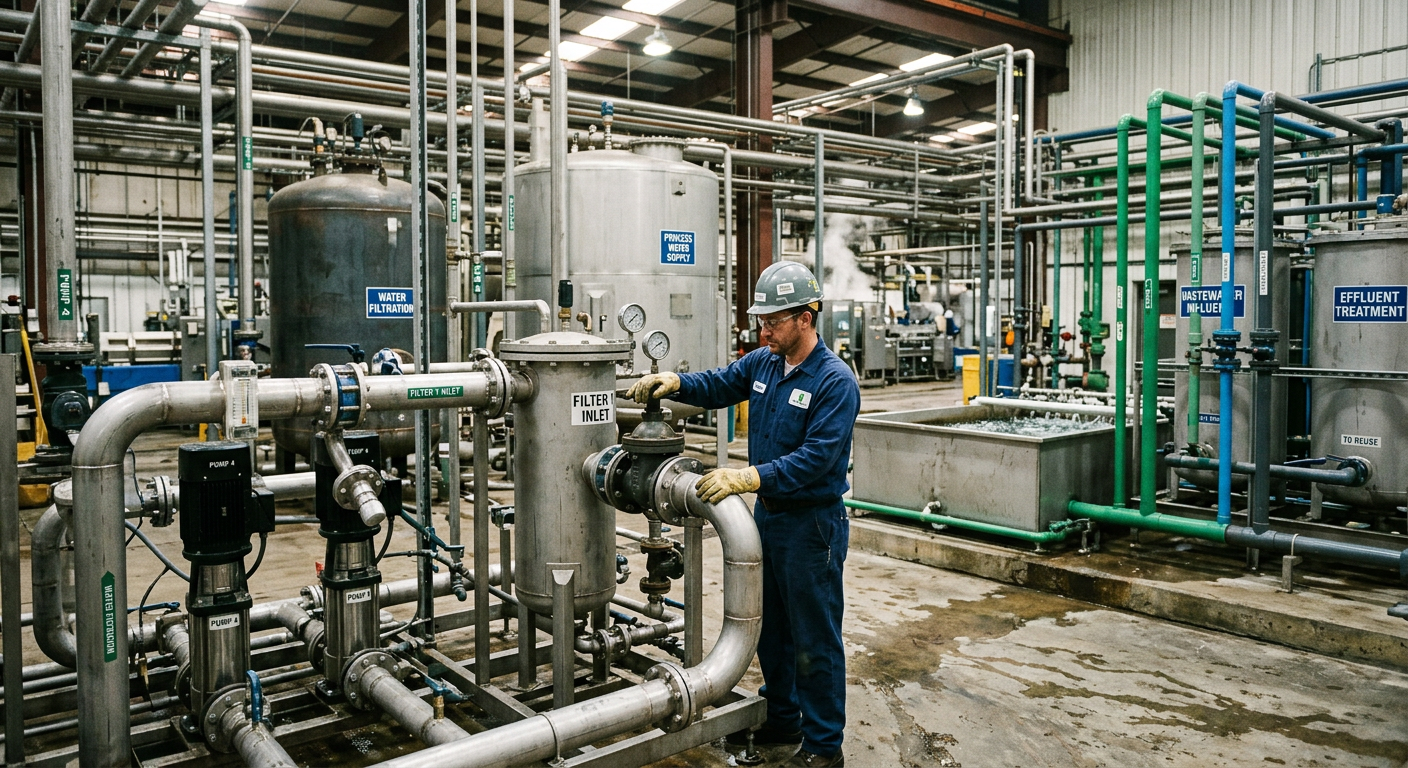
Beef Processing Line Design
[trp_language language=”en_US”]
Beef processing line design in the United States is not just about arranging equipment in sequence. It is a business decision that affects yield, labor efficiency, food safety, USDA compliance, energy use, export readiness, and long-term profitability. A modern line must connect livestock handling, slaughter, carcass chilling, breaking, grinding, packaging, and traceability into one controlled system that performs reliably under real production conditions. In high-volume cattle regions such as Nebraska, Kansas, Texas, Colorado, and Iowa, processors also need layouts that support cold-chain logistics to distribution centers, ports, and retail networks.
For most U.S. projects, the best design approach starts with throughput targets, product mix, labor strategy, sanitation requirements, utility loads, and future expansion. Whether the facility serves boxed beef, foodservice portions, fresh retail trays, vacuum-packed primals, or ground beef patties, the line should be engineered around measurable performance indicators: head per hour, carcass weight variability, trim recovery, chilling rate, OEE, sanitation time, and giveaway control.
Companies building or upgrading these systems often need an engineering partner that can connect process, utilities, controls, construction, and start-up. That is where integrated firms such as Disruptive Process Solutions stand out in the North American market. Rather than treating equipment, building systems, and execution as separate silos, DPS applies a design-build-manage model that aligns capital planning with plant performance. This is especially valuable in beef plants where refrigeration, wastewater, automation, and hygienic zoning all influence the line as much as the machinery itself.
Quick Answer

A beef processing line in the United States typically includes five major phases: slaughter operations, carcass chilling, fabrication, value-added processing, and packaging with traceability. The line begins with humane animal handling and slaughter steps, then moves into controlled chilling to reduce carcass temperature and microbial risk. From there, carcasses are broken into primals and subprimals, with some product routed to grinding, mixing, and forming systems for ground beef or patties. Final output may be vacuum packaged or packed in modified atmosphere packaging for retail and foodservice distribution.
For buyers, the most important decisions are line capacity, compliance with USDA and customer standards, degree of automation, flexibility for multiple SKUs, and cold-chain performance. A facility serving national retailers from hubs such as Chicago, Dallas-Fort Worth, or Atlanta will prioritize high-speed packaging, weight control, and traceability. A regional processor supplying restaurants in Charlotte, Phoenix, or Seattle may prioritize flexible portioning and mixed-case output. In both cases, the best line design reduces labor dependency while protecting yield and ensuring consistent product quality.
In the current U.S. market, beef processors are investing in robotic cutting support, machine vision, digital weigh-and-label systems, automated box handling, and integrated data collection. By 2026, plants that combine labor resilience, energy efficiency, and end-to-end traceability will be in the strongest competitive position.
| Priority | Why It Matters | Typical KPI |
|---|---|---|
| Throughput | Determines line balance, cooler size, labor planning, and utility demand | Head per hour or pounds per shift |
| Food safety | Drives hygienic zoning, sanitation design, and validated chilling performance | Micro results, CCP compliance |
| Yield control | Directly impacts margin on carcass utilization and trim recovery | Recovery percentage, giveaway rate |
| Labor efficiency | Important in tight labor markets across the Midwest and Southwest | Labor hours per pound |
| Packaging flexibility | Supports retail, club, export, and foodservice channels | SKU changeover time |
| Traceability | Essential for recalls, customer audits, and brand protection | Lot tracking accuracy |
The table above shows why beef processing design should be evaluated as a system, not as isolated equipment purchases. A low-cost machine that creates a bottleneck in chilling, labeling, or sanitation often becomes more expensive over the life of the plant.
Beef Processing Line Stages: Stunning, Bleeding, Skinning, Evisceration, and Splitting

The slaughter portion of a beef processing line must be designed for humane handling, worker safety, sanitary control, and smooth product flow. In U.S. facilities, layouts are usually designed around USDA inspection points, head-per-hour targets, and species-specific handling standards. The sequence normally starts in lairage and holding, moves through stunning and bleed-out, then continues to hide removal, evisceration, carcass splitting, trimming, and inspection.
Stunning equipment may include captive bolt systems, restraint boxes, conveyors, and access platforms that support consistent animal positioning. The design objective is reliability and humane control, not just speed. Bleeding rails and collection systems must be configured for sanitary separation, drainage, and easy cleaning. The hide puller, brisket saw, bung drop station, viscera tables, carcass split saws, and final wash systems must be arranged to minimize cross-contamination and avoid backtracking of personnel or product.
For plants serving halal or kosher markets, the front end of the line may need equipment adaptations, different restraint methods, revised inspection points, or separate product flow zones. These special requirements should be integrated during concept design instead of added late in the project.
| Stage | Primary Equipment | Design Focus |
|---|---|---|
| Animal receiving | Unloading ramps, pens, water systems, crowd alleys | Low-stress movement and holding capacity |
| Stunning | Restraint box, captive bolt system, operator platform | Humane treatment and repeatability |
| Bleeding | Bleed rail, collection troughs, drainage | Sanitary flow and efficient bleed-out |
| Skinning | Hide puller, hoists, knives, sterilizers | Yield preservation and contamination control |
| Evisceration | Viscera tables, platforms, pans, inspection stations | Separation of edible and inedible streams |
| Splitting and final trim | Carcass saw, trim stations, final wash cabinets | Uniform carcass prep before chilling |
This stage of the process is where hygienic zoning begins to shape the rest of the facility. Floors, drains, hose drops, sterilizer placement, rail spacing, and personnel traffic must all be coordinated. An experienced engineering team will also model downstream refrigeration demand because slaughter throughput determines cooler loading patterns later in the shift.
From a market perspective, U.S. processors near Amarillo, Dodge City, Garden City, Grand Island, and Omaha often prioritize high-throughput cattle lines linked to boxed beef operations, while smaller regional processors may emphasize flexibility, custom harvest, and niche programs. In either case, poor line balance in the slaughter department can limit the entire plant.
Carcass Chilling and Temperature Reduction Protocols

After dressing, carcasses enter chilling systems designed to pull internal temperature down while protecting color, shelf life, and yield. Chilling is one of the most critical control steps in beef processing because it affects microbial growth, shrink, cutting performance, and downstream scheduling. U.S. facilities commonly use rail chillers, spray chill systems, and staged cooler zones with tightly controlled airflow and humidity.
Chill protocols vary by carcass size, fat cover, line speed, and final market destination. Export programs and premium branded beef often require highly consistent chill curves because temperature history influences tenderness programs and vacuum-pack aging schedules. Processors shipping from central beef states to East Coast distribution centers or West Coast ports such as Los Angeles/Long Beach and Oakland need especially dependable cold-chain design.
The engineering challenge is not only refrigeration tonnage. A high-performing chill system also depends on air circulation, rail spacing, cooler loading logic, evaporator placement, defrost management, and integration with plant utilities. This is where the technological capabilities of DPS become relevant. The company supports structural, mechanical, plumbing, electrical, process, and controls engineering, allowing refrigeration and process considerations to be planned together rather than in separate scopes. That integrated approach reduces common failures such as underperforming coolers, condensate issues, or poor airflow around loaded rails.
| Parameter | Typical Target | Why It Matters |
|---|---|---|
| Initial entry temperature | Warm post-dressing carcass | Starting point for validated cooling curve |
| Air temperature | Near-freezing controlled environment | Supports rapid heat removal |
| Air velocity | Balanced across rails | Prevents hot spots and uneven chilling |
| Relative humidity | Managed to reduce excessive shrink | Protects yield and appearance |
| Rail spacing | Set to airflow and throughput needs | Improves cooling consistency |
| Core temperature verification | Recorded to SOP and customer spec | Confirms food safety compliance |
The table highlights the fact that chilling is a process discipline, not just a cold room. Plants that skip detailed heat-load calculations often struggle with bottlenecks, excessive shrink, or delayed fabrication starts.
Looking ahead to 2026, more plants are adopting digital temperature logging, SCADA-connected refrigeration alarms, and predictive maintenance for evaporators and compressors. This aligns with broader sustainability goals as processors seek lower energy use per pound produced.
Beef Breaking and Fabrication: Primal and Subprimal Cutting Lines
Once chilled, carcasses move into fabrication where they are broken into primals and then into subprimals or customer-specific cuts. This area is where much of the plant’s product mix flexibility is created. A fabrication line may support boxed beef for wholesale, steak cuts for retail, trim streams for grinding, and specialty items for export or foodservice. In the United States, fabrication design is often shaped by the needs of supermarket chains, club stores, institutional buyers, and restaurant distributors.
Typical equipment includes quartering saws, band saws, conveyors, packing tables, portioning systems, trim collection conveyors, combo bin handling, and integrated scales. Layout matters because each extra touch increases labor cost and yield loss. Good designs separate bone-in flow, boneless flow, trim collection, edible offal handling, and rework. They also support ergonomic knife workstations, sanitation access, and in-line inspection points.
This is also the section where manufacturing capabilities become important. DPS supports the design and integration of grinding, mixing, forming, automated cutting, marinating, cooking, and related food processing systems, while also supplying selected proprietary equipment such as tanks and CIP skids through its equipment capabilities. For a beef plant, that means upstream fabrication can be coordinated with downstream value-added lines instead of treated as separate projects.
| Output Type | Typical Destination | Line Requirement |
|---|---|---|
| Primal cuts | Wholesale boxed beef buyers | Efficient carcass breakdown and boxing |
| Subprimals | Retail and further processors | Accurate trim and labeling control |
| Portion steaks | Foodservice and supermarkets | Weight control and appearance standards |
| Lean trim | Ground beef operations | Clean trim segregation by lean point |
| Fat trim | Blend formulation and rendering | Controlled collection and identification |
| Bones and by-products | Rendering or specialty use | Separate sanitary handling flow |
Buyers evaluating fabrication systems should ask four direct questions. First, can the line handle SKU growth without major reconstruction? Second, how will trim streams be identified for lean percentage control? Third, how easily can the area be cleaned between shifts? Fourth, does the cutting layout match the commercial strategy, whether that is boxed beef, branded retail portions, or trim-heavy production?
For industries, beef fabrication lines serve supermarkets, foodservice distributors, burger chains, meal kit companies, institutional kitchens, and export programs. Applications range from commodity beef production to premium Angus, grass-fed, natural, and branded regional lines.
Ground Beef Processing: Grinding, Mixing, and Patty Forming Equipment
Ground beef is one of the highest-volume beef categories in the United States, so grinding and forming lines must be designed for throughput, fat-lean consistency, low temperature control, and strict traceability. Product may be sold as chubs, vacuum bricks, retail trays, bulk combo fills, foodservice tubes, or formed patties. Because ground beef combines multiple trim inputs, ingredient and lot control is especially important.
Standard equipment includes frozen block breakers if needed, fresh meat grinders, pre-breakers, mixers, blend systems, fat and lean dosing, metal detection or X-ray, patty formers, conveyors, checkweighers, and packaging machines. Temperature management is critical throughout this section to protect texture and food safety. Plants producing high-volume patties for QSR or institutional buyers often use automatic stackers, interleavers, and case packing systems.
| Equipment | Function | Key Selection Factor |
|---|---|---|
| Pre-breaker | Reduces incoming trim size | Consistent feed to grinder |
| Primary grinder | Initial particle reduction | Throughput and temperature rise control |
| Mixer/blender | Distributes lean and fat uniformly | Blend consistency and gentle handling |
| Final grinder | Achieves target particle size | Plate size flexibility and sanitation |
| Patty former | Creates uniform patties | Weight accuracy and speed |
| Inspection and checkweighing | Verifies safety and net weight | Data capture and reject reliability |
In this segment, automation and controls often deliver the fastest ROI. Integrated recipe management, in-line lean analysis, and automated weighing reduce overfat or underweight risk. These systems also make customer audits easier.
As a case example, DPS has built its reputation by challenging unnecessary capital plans when process data suggests a smarter solution. In one real client scenario, a manufacturer expected to spend millions on capacity expansion, but process analysis showed the true bottleneck was controls logic rather than equipment limitation. Reprogramming improved output significantly and changed the entire investment plan. That same mindset applies well to grinding and forming lines, where a poorly tuned feed system or PLC sequence can constrain performance more than the grinder itself. Companies exploring projects can review the broader service capabilities that support feasibility, project execution, and systems integration.
Vacuum Packaging and MAP for Fresh Beef Distribution
Packaging is the commercial bridge between the processing floor and the market. Fresh beef in the United States is commonly packed in vacuum bags for primals and subprimals, while retail-ready portions may use high-oxygen or low-oxygen modified atmosphere packaging depending on shelf-life targets, color strategy, and customer preference. Ground beef may be packed in rollstock vacuum formats, trays with film lidding, or chubs.
Vacuum packaging supports extended distribution, export shipments, and wet-aging programs. It is widely used for boxed beef moving through cold warehouses in Kansas City, Chicago, and the Inland Empire, as well as through export channels connected to Gulf and Pacific ports. MAP systems can offer stronger case-ready retail presentation, but they require tighter gas control, film selection, and display-life validation.
| Packaging Format | Best Use | Main Advantage |
|---|---|---|
| Vacuum bag | Primals and subprimals | Longer distribution window |
| Vacuum skin pack | Retail steaks and premium cuts | Strong appearance and shelf stability |
| MAP tray | Case-ready retail beef | Color presentation at retail |
| Chub pack | Ground beef foodservice and processing | Efficient bulk handling |
| Formed patty stack pack | Restaurants and institutions | Portion consistency |
| Bulk combo liner system | Further processing plants | Large-volume transfer efficiency |
This table shows that packaging selection should match route-to-market, not just machine availability. A processor supplying East Coast retailers may value case-ready speed, while a Midwest boxed beef shipper may gain more from vacuum efficiency and export durability.
Buying advice for packaging lines: evaluate seal integrity, changeover time, film cost, spare parts availability, sanitation access, and integration with labeling and checkweighing. Also verify that the packaging footprint fits the chilled room or secondary pack room without disrupting employee movement or pallet flow.
Beef Processing Line Automation: Robotics, Vision Systems, and Weighing
Automation in beef processing no longer means only conveyors and PLCs. The current U.S. market is moving toward robotics for box handling, vision-assisted cutting support, automated yield monitoring, digital weight capture, and plant-wide performance dashboards. While fully robotic slaughter and deboning remain technically complex, selective automation in repetitive tasks can still produce meaningful gains.
Vision systems can help classify product, confirm label presence, monitor package seal quality, and support operator decisions on cutting lines. Robotic palletizing reduces ergonomic strain in cold environments. In-line scales, checkweighers, and combo management systems tighten net weight control and improve traceability. SCADA platforms link temperatures, machine states, alarms, and production data into one interface that managers can use for shift decisions.
These needs align closely with the technological capabilities of DPS, which include controls engineering, PLC programming, SCADA, utility integration, and process system design. For a beef plant, that combination matters because automation performance depends on refrigeration, compressed air, washdown electrical design, and line mechanics all working together. When plants retrofit automation into an old building without this integration, they often create new bottlenecks in sanitation, data flow, or operator access.
| Department | Automation Tool | Expected Benefit |
|---|---|---|
| Receiving and live handling | Digital scheduling and pen monitoring | Improved animal flow and documentation |
| Chilling | SCADA temperature logging | Better compliance and energy visibility |
| Fabrication | Vision-assisted trim and weigh systems | Yield and giveaway control |
| Grinding | Recipe automation and batch traceability | Consistent lean targets |
| Packaging | Checkweighers, label verification, robotics | Higher speed and fewer shipping errors |
| Palletizing and warehousing | Robotic palletizers and scan tracking | Labor savings and better dispatch control |
By 2026, future trends include AI-assisted equipment diagnostics, machine vision for defect recognition, and energy analytics tied to refrigeration and compressed air loads. Automation will increasingly be justified not only by labor savings but by consistency, worker safety, and auditability.
Halal and Kosher Slaughter Requirements and Equipment Adaptations
Facilities that produce halal or kosher beef need process design that respects religious requirements while also meeting U.S. regulatory and customer standards. This can affect animal restraint systems, knife handling stations, inspector access, carcass identification, segregation procedures, and downstream packaging flow. The exact requirements depend on the certifying body, customer program, and intended market.
For halal production, processors often focus on approved slaughter method, trained personnel, segregation, and documentation. For kosher production, requirements may include specialized slaughter practice, inspection steps, and specific salting or handling processes depending on the product program. In either case, the line should be designed to support separate lot identity and prevent unintended mixing.
Equipment adaptation does not always mean a separate facility. In some plants, it means dedicated time blocks, clear material handling protocols, color-coded tools, separate chill space allocation, and packaging system programming that preserves product identity. Processors serving metro markets such as New York City, Detroit, Houston, and Los Angeles often see strong demand for these specialized programs.
When planning these systems, buyers should involve certifiers, operations leaders, and engineers early. Retrofitting compliance after layout freeze can create avoidable cost and operational friction.
Traceability Systems: From Livestock to Retail Package
Traceability is now central to beef processing line design. A robust system links livestock records, lot creation, carcass ID, trim streams, grind batches, package labels, pallet IDs, and shipping data. In a recall scenario, the speed and accuracy of this system can determine whether a company isolates one lot or loses a week of production.
Best-practice systems combine barcode or RFID data capture, scale integration, ERP connectivity, and operator-friendly interfaces. Carcass tags, rail location data, combo identification, formulation records, and packaging label generation should all roll into one auditable record. This is especially important for large U.S. processors shipping nationally or exporting through ports such as Savannah, Houston, or Newark.
Service capability matters here as much as hardware. DPS supports capital planning, owner’s representation, project and program management, general contracting in licensed jurisdictions, installation, and complete system integration. That broad scope helps clients connect traceability design with real plant execution, which is often where software projects fail. Companies looking for examples of integrated project delivery can review selected project case studies to understand how engineering and execution are tied together.
| Tracking Point | Data Captured | System Purpose |
|---|---|---|
| Livestock intake | Supplier, arrival time, lot, health paperwork | Source verification |
| Carcass identification | Unique carcass or rail ID | Links slaughter to fabrication |
| Chilling location | Cooler position and time stamp | Temperature and dwell tracking |
| Fabrication output | Primal, trim class, weight, operator data | Yield and lot control |
| Grinding batch | Input combo IDs, formula, batch time | Blend traceability |
| Retail package or case | Label, date code, destination, pallet ID | Recall readiness and customer compliance |
Local suppliers for these systems vary by region and may include scale integrators in the Midwest, labeling specialists near Chicago and Minneapolis, and cold-chain warehouse technology partners in Dallas, Atlanta, and Southern California. However, the best outcome usually comes from integrating those specialties under one process-led project team rather than buying each system independently.
The comparison above reflects a common U.S. buying reality: individual equipment may be strong, but integrated plant performance depends on engineering coordination, utility planning, and execution discipline.
FAQ
What is the most important factor in beef processing line design?
The most important factor is line integration. Throughput, sanitation, refrigeration, labor flow, packaging, and traceability must work together. A fast machine alone does not create a high-performing plant.
How much automation is practical in a U.S. beef plant?
That depends on product mix and labor availability. Packaging, palletizing, weighing, traceability, and utility monitoring usually offer the quickest return. Cutting and deboning automation can also help, but it should be selected carefully based on carcass variability and operator workflow.
Which product types should a new beef plant prioritize?
In the United States, many new or expanding operations prioritize vacuum-packed primals, subprimals, and ground beef because these categories balance demand with manageable process complexity. Case-ready retail and formed patties can add value but usually require more packaging sophistication.
What industries buy output from beef processing lines?
Key industries include grocery retail, foodservice distribution, quick-service restaurants, institutional feeding, meal kits, further processing, export trading, and specialty ethnic or religious food channels.
How should a buyer compare suppliers?
Look beyond machine price. Compare sanitary design, throughput under real operating conditions, spare parts access, controls architecture, data integration, startup support, and experience with USDA-regulated environments. Also compare whether the supplier understands the full plant or only one machine center.
Are vacuum packaging and MAP competitors?
Not exactly. They serve different commercial goals. Vacuum is strong for distribution life and boxed beef programs, while MAP is often selected for retail display appearance. Many U.S. plants use both.
How do companies plan for 2026 trends now?
They reserve space, utilities, and data infrastructure for future robotics, digital temperature logging, machine vision, energy tracking, and stronger traceability requirements. Planning these items early is cheaper than retrofitting later.
Why work with an integrated partner such as DPS?
Because beef projects succeed when engineering, construction, utilities, controls, and startup are aligned. DPS brings process engineering, project management, installation, and system integration into one model that is focused on profitable execution, not just equipment placement.
In summary, beef processing line design for the United States market should be driven by product strategy, compliance, labor realities, logistics, and future expansion. Plants near cattle regions may optimize harvest and boxed beef flow, while urban-adjacent processors may emphasize case-ready or ground beef flexibility. The strongest projects connect slaughter, chilling, fabrication, grinding, packaging, automation, and traceability into one disciplined operating system. That is the difference between a line that merely runs and a facility that consistently produces margin.
[/trp_language]
Complete Company Portfolio
About the Author: Disruptive Process Solutions (DPS)
The DPS team combines process engineering expertise with real-world food and beverage manufacturing experience. Our content focuses on process optimization, production efficiency, facility improvements, and practical solutions that help manufacturers operate more effectively in a rapidly evolving industry.
Share