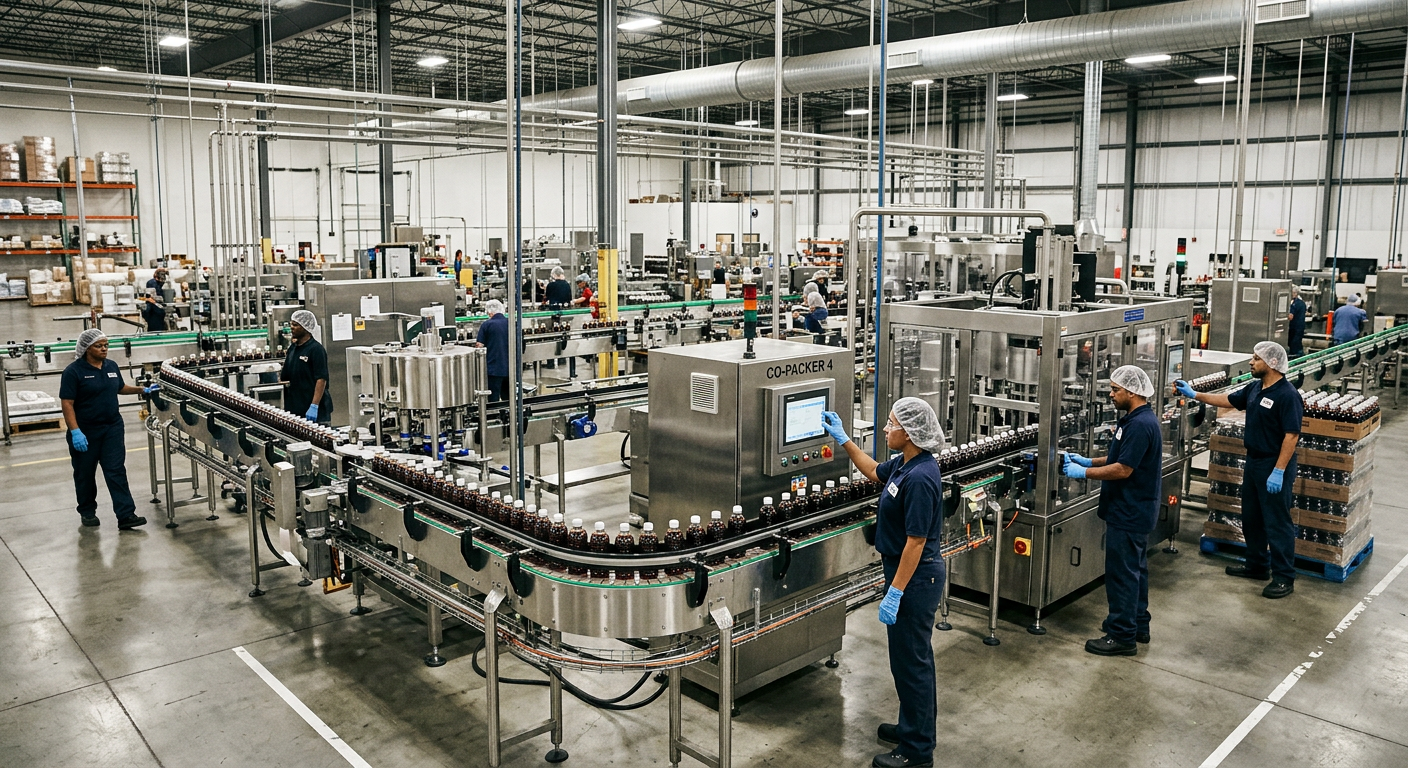
Beverage Engineering Services for Production Plants
[trp_language language=”en_US”]
Beverage Plant Engineering Services Across the United States
The U.S. beverage market moves fast, but production plants cannot afford rushed engineering. Whether a company produces sparkling water in Texas, juice in California, dairy-based drinks in Wisconsin, kombucha in Oregon, or ready-to-drink products near the Port of Savannah, plant performance depends on well-planned process systems, utilities, controls, sanitation, packaging integration, and long-term expansion logic. Beverage engineering services connect all of those elements into one operating model that protects quality, uptime, compliance, and profitability.
For manufacturers evaluating capital projects, the right engineering partner does more than draw layouts. It should help define capacity, utility loading, cleanability, food safety risks, packaging flexibility, labor efficiency, and return on investment. That is especially true in the United States, where regional labor availability, wastewater limits, FDA expectations, retailer requirements, and freight costs vary significantly from markets such as Chicago, Los Angeles, Dallas-Fort Worth, Charlotte, Newark, and Houston.
Quick Answer

Beverage engineering services for production plants include the design, installation, and integration of processing systems used to make, package, and distribute drinks safely and efficiently. In practical terms, that means process design for blending, batching, carbonation, pasteurization, filtration, fermentation, aseptic systems, utilities, CIP, automation, and line integration for bottles, cans, and other formats. In the United States, the best beverage engineering firms also support capital planning, regulatory alignment, project execution, startup, and future capacity expansion.
For plant owners, beverage engineering is not one discipline. It is the coordination of mechanical, process, plumbing, electrical, structural, and controls work around one question: how can the facility produce more sellable product at the right quality and cost? That applies equally to greenfield builds, brownfield expansions, co-packing facilities, emergency upgrades, and equipment relocations.
Companies such as Disruptive Process Solutions approach this challenge by tying engineering decisions directly to financial outcomes. That is important because a line that technically runs is not the same as a line that runs profitably, cleanly, and consistently under U.S. operating conditions.
| Engineering Area | Typical Plant Components | Main Objective | Primary Risk if Undersized or Poorly Designed |
|---|---|---|---|
| Process Engineering | Blending, batching, dosing, heat treatment, filtration | Product quality and throughput | Flavor inconsistency, low yield, bottlenecks |
| Utility Engineering | Steam, chilled water, glycol, compressed air, water treatment | Reliable plant support systems | Unplanned downtime and unstable operations |
| Sanitary Design | CIP, hygienic piping, zoning, drainage | Food safety and cleanability | Microbial risk and cross-contamination |
| Controls and Automation | PLC, SCADA, recipe control, instrumentation | Repeatability and data visibility | Manual errors and poor line coordination |
| Packaging Integration | Fillers, seamers, cappers, depalletizers, conveyors | End-to-end line efficiency | Frequent stops and changeover losses |
| Project Delivery | Capital planning, procurement, installation, startup | On-time and on-budget execution | Cost overruns and delayed commercialization |
The table above shows why beverage engineering must be viewed as a plant-wide system rather than a collection of equipment purchases. A strong design links product requirements, utilities, sanitation, controls, and packaging from the beginning.
What Beverage Engineering Services Encompass: Carbonated, Still, and Functional Drinks

Beverage production is highly product-specific. Carbonated soft drinks, still beverages, protein shakes, dairy-based beverages, sports drinks, juices, teas, kombucha, spirits-based RTDs, and nutraceutical formulations all present different engineering requirements. Even if two beverages run in the same building, they may need different temperature profiles, oxygen control strategies, dosing methods, cleanability standards, or packaging conditions.
For carbonated beverages, engineering focuses heavily on dissolved CO2 management, temperature control, de-aeration, pressure-rated piping, bright tanks, filler bowl stability, and package integrity. In markets with high throughput such as Atlanta and Dallas, line speed also becomes a major issue because carbonation losses during transfer or filling can quickly affect quality complaints and retailer acceptance.
For still beverages, challenges often shift toward ingredient suspension, Brix control, blending accuracy, pulp handling, hot-fill capability, or flavor carryover between SKUs. Functional drinks add another layer of difficulty because they may include vitamins, botanicals, adaptogens, proteins, probiotics, or sensitive emulsions that react poorly to heat, shear, oxygen exposure, or long hold times.
On the technology side, a full-scope partner should be able to engineer:
- Carbonation and bright tank systems
- HTST, flash, tunnel, UHT, and aseptic processing
- Hot-fill and cold-fill production lines
- Inline Brix monitoring and automated dosing
- Filtration, clarification, and water treatment systems
- Fermentation systems for kombucha, brewing, and related applications
- Distillation systems for spirits and alcohol-based products
- CIP systems designed for fast and verifiable sanitation
This is where DPS’s technological capabilities matter. The company supports beverage operations ranging from brewing and distillation to soft drinks, juices, dairy beverages, functional drinks, and aseptic applications. Its engineering coverage extends across process, controls, electrical, mechanical, structural, and plumbing systems, enabling integrated decisions instead of fragmented vendor-led fixes. More detail on that broader approach can be found through its engineering and project services.
| Beverage Type | Primary Process Focus | Critical Utility Need | Key Quality Risk |
|---|---|---|---|
| Carbonated Soft Drinks | Carbonation, blending, pressure control | Chilled water or glycol | CO2 loss and foaming |
| Still Water and Enhanced Water | Water treatment and hygienic filling | High-purity process water | Microbial contamination |
| Juices and Nectars | Pulp handling, pasteurization, Brix control | Steam and hot water | Flavor drift and sediment issues |
| Functional Drinks | Dosing, mixing, nutrient protection | Precise temperature control | Active ingredient degradation |
| Dairy-Based Beverages | Homogenization and hygienic heat treatment | Steam, refrigeration, CIP | Protein instability and spoilage |
| Kombucha and Fermented Drinks | Fermentation, pH control, pressure management | Temperature-controlled rooms | Over-carbonation and variability |
| RTD Alcoholic Beverages | Blending, flavor integration, package compatibility | Compressed air and utilities | Separation and alcohol consistency |
This table illustrates why a one-size-fits-all process design usually fails. Each category brings distinct thermal, chemical, sanitation, and packaging demands.
The line chart reflects a realistic pattern seen across the U.S. market: sustained investment in beverage plant upgrades, especially where co-packing, format flexibility, automation, and energy efficiency are becoming commercial necessities.
Specialized Engineering Challenges Unique to Beverage Production

Beverage plants face process conditions that differ from many other food facilities. Liquids move quickly, but tiny mistakes create expensive quality defects. Oxygen pickup, line pressure instability, ingredient settlement, microbial risk, package foaming, and syrup concentration errors can all appear before operators realize something has changed. Engineering must therefore reduce variation at every transfer point.
Several challenges are especially unique to beverage production in the United States:
- High SKU counts for retailers, club stores, and regional chains
- Frequent flavor changes that increase CIP demand
- Seasonal production swings driven by summer demand
- Wide variation in package formats across bottles, cans, and cartons
- Tight retailer quality expectations and chargeback exposure
- Regional utility cost differences, especially electricity, water, and sewer
- Wastewater limitations in municipalities near growing industrial corridors
Plants near major trade hubs often feel these issues more sharply. A facility supplying the Northeast through New Jersey and Pennsylvania may prioritize high-speed canning and outbound logistics. A West Coast producer near Long Beach or Oakland may prioritize flexible import ingredient storage and compressed project schedules. A Southeastern co-packer near Charlotte or Savannah may focus on rapid scale-up to serve broad retail distribution.
Specialized engineering also includes plant layout logic. Bulk ingredient receiving, syrup room design, allergen segregation where applicable, tank farm access, process routing, operator movement, sanitation zoning, mezzanine loading, and maintenance access all affect total operating performance. If layout is wrong, even premium equipment underperforms.
DPS’s manufacturing capabilities strengthen this area because the company not only engineers and integrates complete systems, but also designs and produces selected process equipment such as storage and processing tanks and custom CIP systems. That combination can reduce fit-up issues and improve alignment between process intent and actual installed hardware. Its equipment capabilities are outlined at its process equipment page.
The bar chart highlights where engineering demand is currently strongest: functional beverages and carbonated products tend to require the most integrated process and packaging design because of speed, sensitivity, and formulation complexity.
How to Select a Beverage Engineering Firm With Proven Track Record
Choosing a beverage engineering firm should never begin with who gives the fastest estimate. It should begin with who best understands production economics, sanitary design, utility interdependence, and execution risk. In the United States, where plant construction and retrofit costs can escalate quickly, the wrong design partner can lock a manufacturer into years of inefficiency.
Look for five core attributes.
First, verify beverage-specific experience. A firm should demonstrate work across relevant categories such as carbonated drinks, juices, dairy beverages, functional products, brewing, spirits, or aseptic lines. General industrial experience is not enough.
Second, assess project delivery range. Can the firm handle feasibility, engineering, procurement coordination, installation oversight, startup, and post-start optimization? A partial-scope consultant may leave the owner to solve integration gaps.
Third, ask how it manages commercial decision-making. Good firms do not simply approve every client request. They challenge assumptions, identify hidden bottlenecks, and protect capital efficiency. That owner-side mindset is often more valuable than design hours alone.
Fourth, evaluate controls and automation depth. Many beverage bottlenecks are not mechanical; they are related to programming, sequencing, recipe management, data visibility, or line synchronization.
Fifth, review field execution capability. It is one thing to create a P&ID. It is another to install equipment in an active plant in Tennessee, relocate a line in Texas, or coordinate local trades in California while maintaining startup deadlines.
| Selection Criterion | What to Ask | Why It Matters | Warning Sign |
|---|---|---|---|
| Beverage Category Experience | Which beverage types have you engineered? | Reduces product-specific design errors | Only generic food plant examples |
| Utility Design Depth | Do you size steam, water, air, and cooling systems in-house? | Utilities often control true capacity | Reliance on vendor assumptions |
| Automation Capability | Can you support PLC, SCADA, and batch control? | Improves consistency and throughput | No controls expertise |
| Execution Model | How do you manage installation and startup? | Prevents scope gaps during construction | Design-only handoff approach |
| Commercial Mindset | How do you validate project ROI? | Protects capital and profitability | Focus only on equipment count |
| Regulatory Fluency | How do you support FDA, SQF, or BRC alignment? | Supports audit readiness and food safety | Minimal compliance discussion |
| Case History | Can you share comparable project outcomes? | Confirms repeatable execution | Only conceptual proposals |
The best selection process uses technical interviews, site walkdowns, utility reviews, and a clear scope matrix before final award. A useful benchmark is whether the firm can identify a hidden operational issue before it becomes a capital project mistake.
DPS is a strong example of service capability in this area because it combines process engineering, capital planning, owner representation, project management, general contracting support, installation, and startup integration under its Design-Build-Manage model. That model is intended to align engineering with execution rather than leaving owners to bridge the gaps themselves. Manufacturers can review representative work through the company’s project case studies.
Flash Pasteurization vs. Tunnel Pasteurization: Engineering Considerations
Choosing between flash pasteurization and tunnel pasteurization is one of the most important beverage engineering decisions in product development and line design. The right answer depends on beverage chemistry, package format, target shelf life, line speed, and downstream logistics.
Flash pasteurization heats the product before filling. It is often favored where product quality, flavor retention, and process efficiency matter, especially for beverages that can be filled into sanitary containers with controlled downstream conditions. Engineering considerations include hold tube design, residence time, regeneration efficiency, hygienic valves, temperature instrumentation, and filler compatibility.
Tunnel pasteurization treats the filled package after sealing. It is common for beer, cider, some carbonated beverages, and selected RTD products where package-level treatment is desirable. Engineering must address package thermal stress, conveyor speed, spray zoning, water recirculation, utility usage, and label or can decoration durability.
The tradeoff is straightforward: flash systems often offer better thermal efficiency and product quality control, while tunnel systems may support packaged-product stability where post-fill contamination concerns or product-process combinations justify it. Neither choice should be made in isolation from filler design, package type, microbiological targets, and commercial throughput.
| Factor | Flash Pasteurization | Tunnel Pasteurization | Engineering Implication |
|---|---|---|---|
| Treatment Point | Before filling | After filling and sealing | Affects filler and sanitary design strategy |
| Energy Efficiency | Usually higher with regeneration | Usually lower | Changes utility sizing and operating cost |
| Package Exposure to Heat | Low | High | Important for labels, cans, PET, closures |
| Flavor Impact | Often better controlled | Can be greater depending on process | Critical for premium and sensitive products |
| Post-Fill Contamination Protection | Depends on filling environment | Strong package-level treatment | Important for lower-acid beverages |
| Floor Space Need | More compact | Larger footprint | Key issue in brownfield plants |
| Typical Use Cases | Juices, teas, many still beverages | Beer, cider, selected packaged drinks | Must align with product and package strategy |
This comparison shows why thermal process choice is not just a quality decision; it is a plant architecture decision that affects utilities, floor space, labor, package specifications, and sanitation methods.
Beverage Plant Utility Design: Steam, Water, and Compressed Air Systems
Many beverage projects underperform not because of process equipment, but because utilities were based on nameplate assumptions instead of real operating conditions. Utility design should account for peak simultaneous loads, startup surges, CIP overlap, future line additions, redundancy expectations, and seasonal demand swings.
Steam is central to HTST systems, hot water generation, tank heating, and CIP support in many beverage plants. A boiler that looks adequate on paper may fall short if multiple circuits call for heat simultaneously during production and sanitation windows. Water systems require equal attention: process water quality, filtration, reverse osmosis, mineral management, disinfection, and storage all affect taste, chemistry, and microbiological safety. Compressed air systems must provide the right pressure, dryness, and oil-free quality for direct or indirect contact applications.
In U.S. beverage hubs, water and wastewater are often major cost drivers. Plants in California may face water scarcity and discharge scrutiny. Sites near Chicago or the Mid-Atlantic may face aging infrastructure constraints. Gulf Coast facilities may prioritize storm resilience and backup utility planning. Engineering should therefore include not only sizing but resilience, maintainability, and sustainability.
The area chart reflects the ongoing shift toward utility-efficient engineering, driven by rising energy costs, ESG reporting, municipal water pressure, and corporate sustainability goals that are expected to intensify through 2026.
| Utility System | Key Design Variables | Common Failure Mode | Best Practice |
|---|---|---|---|
| Steam | Peak demand, redundancy, pressure stability | Insufficient heat during overlapping operations | Model simultaneous production and CIP loads |
| Process Water | Source quality, RO need, storage capacity | Flavor inconsistency or microbial concerns | Match treatment to source and formulation |
| Compressed Air | Pressure, dew point, oil-free requirement | Moisture contamination and line instability | Use proper drying and quality monitoring |
| Glycol/Chilled Water | Load diversity, process temperature, insulation | Warm product and carbonation instability | Design for worst-case ambient conditions |
| CIP Supply | Tank volume, chemical routing, recovery logic | Delayed sanitation and weak cleaning coverage | Separate circuits by contamination risk |
| Wastewater | BOD/COD, equalization, solids handling | Sewer surcharges and compliance issues | Include pretreatment and flow balancing |
| Electrical Distribution | Motor loads, expansion reserve, controls power | Nuisance trips and upgrade limitations | Plan for future packaging and process growth |
Utility design is often where profitable projects are won or lost. Correctly sized systems improve uptime, product consistency, sanitation speed, and future expansion flexibility.
Engineering for Shelf Life Extension and Product Stability
Shelf life is not achieved by a single machine. It is the outcome of formulation, heat treatment, sanitation, oxygen management, filling conditions, package barrier performance, storage temperatures, and distribution realities. In the United States, where products may travel from production plants to distant markets such as Miami, Denver, Phoenix, Seattle, or Boston, engineering for shelf life must account for logistics variability and retail dwell time.
Product stability engineering starts with understanding the failure mode. Is the risk microbial growth, phase separation, sedimentation, flavor fade, color change, vitamin loss, carbonation decline, or package swelling? Once the failure mode is known, process design can address it through thermal treatment, deaeration, homogenization, ingredient hydration control, filtration, nitrogen dosing, or package redesign.
For functional beverages, stability can be especially complex. Proteins may precipitate, botanicals may haze, emulsions may break, and active ingredients may lose potency under heat or oxygen exposure. Shelf life work therefore requires pilot testing, process validation, and close coordination between R&D, operations, and engineering.
An effective engineering program for stability usually includes:
- Validated thermal process parameters
- Low-oxygen transfer and filling design where required
- Appropriate homogenization or mixing energy
- Controlled hold times between batching and filling
- Sanitary piping with minimal dead legs
- Packaging selected for barrier and distribution needs
- Automated data capture for repeatability and traceability
This is another area where integrated service capability matters. A firm that understands process, utilities, controls, and packaging can solve stability problems more effectively than one focused only on equipment replacement.
Avoiding Cross-Contamination in Multi-Product Beverage Facilities
Multi-product plants are now common across the United States because manufacturers and co-packers need to serve more brands, more channels, and more package formats with fewer facilities. The downside is increased cross-contamination risk. Flavor carryover, allergen transfer, microbiological crossover, and incorrect ingredient routing can all damage brand trust and create costly rework or recalls.
Engineering controls should begin with zoning and flow. Raw ingredients, allergen-containing materials, fermentation areas, high-care filling zones, and maintenance access routes need clear separation. Piping design should minimize unnecessary tie-ins and create physical barriers between incompatible systems. Tanks, valves, and transfer panels must be designed so operators cannot accidentally route product into the wrong destination.
CIP strategy is equally important. In a high-SKU beverage plant, cleaning validation must consider sugar load, protein residue, flavor oils, colorants, and microbiological risk. Recovery loops can improve economics, but only when designed with strict segregation logic. Drainage, slope, air gaps, and hygienic support design all matter more than many owners expect.
For co-packers, scheduling and line sequencing are part of the engineering discussion. Running a heavily colored functional beverage immediately before a clear still water product on the same circuit may be technically possible but commercially inefficient if wash time becomes excessive. Good engineering makes the schedule easier, not harder.
| Risk Area | Typical Source | Potential Consequence | Engineering Control |
|---|---|---|---|
| Flavor Carryover | Shared tanks and transfer lines | Off-taste in next SKU | Dedicated circuits or validated CIP sequence |
| Allergen Transfer | Dairy or specialty ingredients | Food safety event and recall | Zoning, segregation, and line dedication |
| Microbial Cross-Over | Poor hygienic design or drain aerosolization | Spoilage and shelf life loss | Sanitary layout, drainage, and air control |
| Incorrect Product Routing | Manual valve error | Mixed batches and disposal | Automated valve matrices and interlocks |
| Chemical Residue | Incomplete rinse after CIP | Quality defect and safety concern | Conductivity monitoring and validation |
| Packaging Mix-Up | Wrong closure or label supply | Retail rejection and rework | Line vision systems and controls verification |
| Compressed Air Contamination | Wet or noncompliant air | Package and process contamination | Filtration, dryers, and quality monitoring |
The table shows that contamination control is as much about system architecture as it is about SOPs. Well-engineered facilities make operator success more likely.
Packaging Line Integration: Engineering for Bottles, Cans, and Aseptic Formats
Packaging line integration is where many beverage projects either accelerate into profitable output or collapse into chronic downtime. A processing system can be perfectly designed, but if the filler, seamer, capper, rinser, labeler, packer, and conveyors do not behave as one coordinated line, plant efficiency suffers.
Bottle lines require close attention to neck finish consistency, cap application, fill level control, and container handling. Can lines need seam integrity, dissolved gas control, depalletizer pacing, and low-impact accumulation. Aseptic formats raise the bar further with sterile boundaries, validated environments, package decontamination, and precise equipment interfaces.
Line integration must include controls sequencing, accumulation strategy, utility drops, maintenance access, changeover ergonomics, and package quality inspection. It should also account for future SKU growth. In the United States, producers increasingly want lines that can support multiple pack sizes, retailer-specific multipacks, or promotional formats without major reconstruction.
The comparison chart shows how integration complexity rises as package sterility, speed, and changeover demands increase. Aseptic and hybrid lines often require the highest engineering discipline.
For owners planning new capacity, the best practice is to model the entire line, not just individual machine rates. True throughput depends on synchronized controls, quality hold points, utility stability, and the plant’s ability to sustain long runs without sanitation or maintenance disruptions.
DPS has practical relevance here because it works across complete processing systems and utility infrastructure while also managing installation and integration. For beverage manufacturers scaling production, especially co-packers and multi-format producers, that combined capability reduces the common disconnect between process design and packaging execution.
FAQ
What do beverage engineering services include?
They typically include process design, utility engineering, sanitary design, automation, equipment integration, installation support, startup, and sometimes capital planning and owner representation.
Are beverage engineering services only for large corporations?
No. They are useful for craft producers, regional bottlers, co-packers, and enterprise manufacturers. The scope simply scales with the project size, product risk, and production goals.
How early should a beverage engineering firm be involved?
Ideally before equipment is purchased. Early involvement helps right-size utilities, avoid layout mistakes, define sanitation strategy, and prevent costly redesign during installation.
Which beverage types need the most specialized engineering?
Functional beverages, dairy-based drinks, carbonated products, aseptic products, fermented beverages, and multi-SKU co-packing operations usually require the most specialized coordination.
How do I choose between a design firm and a full-scope partner?
If your project involves multiple vendors, field installation, controls integration, or aggressive commercialization timelines, a full-scope partner often reduces execution risk and owner workload.
Why are utilities so important in beverage plants?
Because production depends on stable steam, water, compressed air, cooling, CIP, and power. Many apparent process bottlenecks are actually utility limitations.
Can existing beverage plants be upgraded instead of rebuilt?
Yes. Many U.S. plants can gain meaningful capacity through controls optimization, line balancing, utility debottlenecking, layout improvements, or targeted equipment replacement instead of full reconstruction.
What future trends should beverage manufacturers plan for through 2026?
Expect increased demand for automation, digital production visibility, energy and water efficiency, flexible packaging formats, stronger traceability, and more scrutiny around sustainability, wastewater management, and hygienic validation. Policy and customer expectations are pushing plants toward lower resource intensity and more documented process control.
How is the U.S. market changing for beverage plant projects?
Manufacturers are investing in regional production, co-packing scale, functional drink capacity, packaging flexibility, and utility resilience. Strong growth corridors include the Southeast, Texas, the Midwest, and logistics-friendly coastal markets.
What makes DPS relevant for beverage projects in the United States?
The company combines engineering, installation, integration, project management, and selective equipment manufacturing for beverage and food plants across North America. Its operating model emphasizes profitable capital deployment, honest project guidance, and end-to-end accountability for execution.
In summary, beverage engineering services are most valuable when they connect product requirements to plant reality. That means process technology, manufacturing hardware, and service execution must work together. In the United States, where beverage plants face intense competitive pressure, labor constraints, utility variability, and expanding product complexity, the firms that create the most value are those that engineer with both technical rigor and commercial discipline.
For manufacturers planning upgrades, expansions, or new production capacity, the right partner should help answer not only “What equipment do we need?” but also “How will this plant run profitably in year one, scale by year three, and stay resilient through 2026 and beyond?” That is the real purpose of beverage plant engineering.
[/trp_language]
Complete Company Portfolio

About the Author: Disruptive Process Solutions (DPS)
The DPS team combines process engineering expertise with real-world food and beverage manufacturing experience. Our content focuses on process optimization, production efficiency, facility improvements, and practical solutions that help manufacturers operate more effectively in a rapidly evolving industry.
Share

