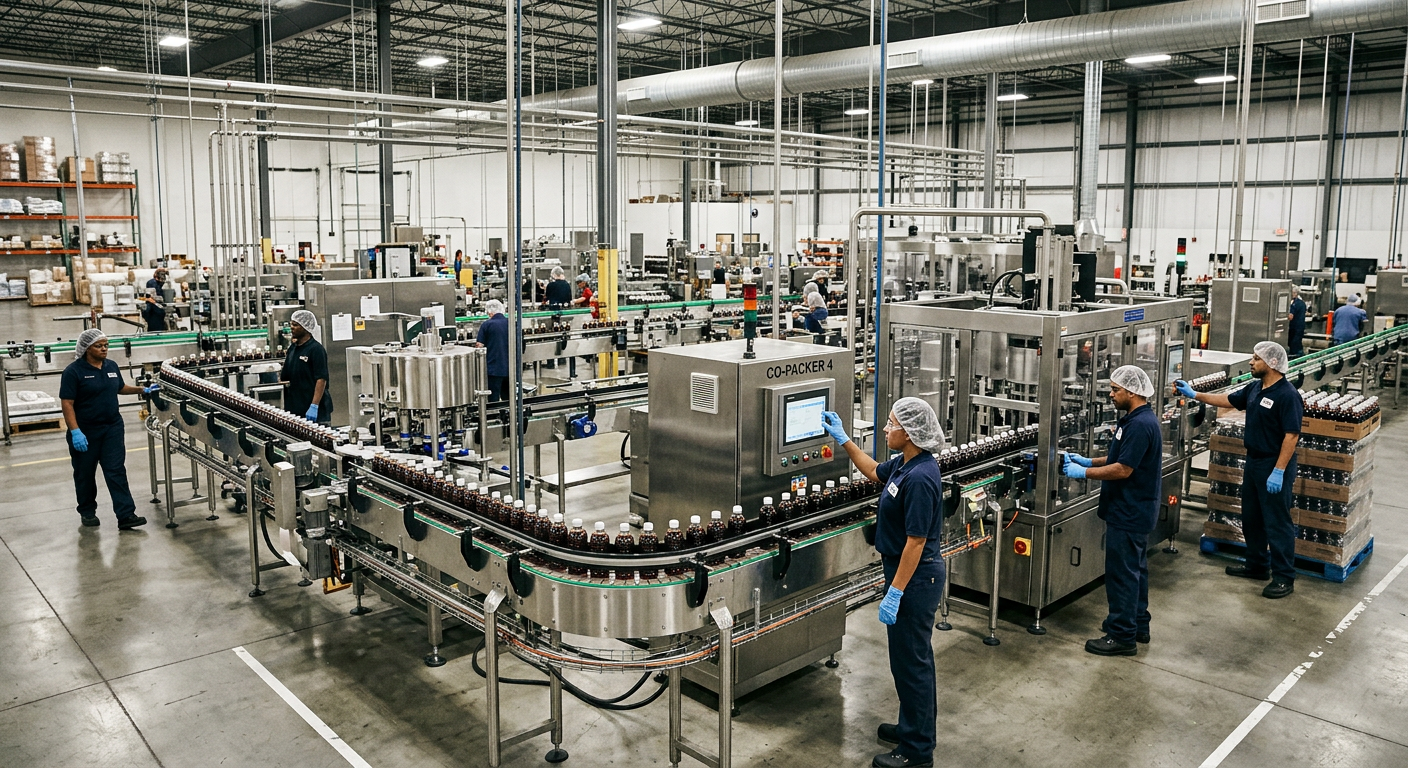
Beverage Facility Construction Management
[trp_language language=”en_US”]
Beverage Facility Construction Management in the United States
Beverage facility construction management is the disciplined coordination of design, procurement, utilities, sanitary construction, equipment installation, commissioning, and startup for plants that make, package, store, and distribute liquid products. In the United States, this work is highly specialized because beverage projects often combine food-safe environments, fast schedules, refrigeration demands, automation, utility intensity, and strict compliance expectations. A successful construction manager does more than keep trades moving. The role is to align capital spending with production targets, product quality, safety, operating cost, and future expansion.
Quick Answer

Beverage facility construction management requires a sector-specific approach that blends general contracting discipline with process engineering awareness. Whether the project is a bottling plant in Texas, a brewery expansion in North Carolina, a cold-chain distribution center near Chicago, or an RTD line buildout in Southern California, the construction manager must control schedule, budget, sanitation, utility integration, and startup risk at the same time. The best outcomes come from early trade involvement, coordinated process and MEP design, detailed installation sequencing, and a commissioning plan tied directly to production readiness.
In the U.S. market, owners are often balancing multiple business goals at once: launch a new SKU, support co-packing growth, improve throughput, reduce labor, lower energy intensity, meet retailer timelines, and preserve cash. That is why beverage plant construction management should be treated as an operations-critical investment, not just a building project. The strongest teams connect facility decisions to profitability, uptime, and capacity ramp-up.
From a buying perspective, owners should evaluate a partner on five criteria: process knowledge, field execution capability, schedule control, compliance fluency, and the ability to coordinate utilities with production equipment. That combination matters for breweries, distilleries, wineries, soft drink plants, juice processors, kombucha producers, dairy beverage lines, aseptic operations, and large beverage distribution hubs.
| Project Type | Typical Scope | Primary CM Focus | Common Risk | Key Success Metric | Typical U.S. Market Driver |
|---|---|---|---|---|---|
| Bottling plant | Packaging hall, utilities, syrup room, warehouse | Line integration and sanitation | Late equipment tie-in | OEE at startup | Retail volume growth |
| Brewery expansion | Cellar, brewhouse, glycol, canning | Utility capacity and phasing | Production disruption | Barrels per month | Regional brand scaling |
| RTD beverage facility | Blending, pasteurization, filling, packing | Fast-track schedule | Long-lead equipment delays | Launch date | New product introduction |
| Cold-chain DC | Freezer, cooler, docks, racking | Envelope and refrigeration | Condensation and energy loss | Temperature stability | E-commerce and omnichannel |
| Distillery | Process piping, tanks, stills, storage | Safety and code coordination | Hazardous area conflicts | Permitted operation | Craft spirits demand |
| Aseptic line buildout | High-sanitary processing and filling | Validation and hygienic detailing | Contamination risk | Regulatory readiness | Shelf-stable beverage growth |
The table above shows why beverage construction management is not one-size-fits-all. Different product categories require different control priorities, even when the building shell looks similar from the outside.
Beverage Facility Construction Management: Industry-Specific Approaches and Best Practices

The U.S. beverage market spans craft and high-volume operations, each with different capital logic. A carbonated soft drink producer near Atlanta may prioritize high-speed filling and pallet flow. A kombucha brand in Oregon may focus on fermentation control and sanitary flexibility. A dairy-based beverage producer in Wisconsin may need more robust CIP, insulated piping, and microbial controls. Construction management must reflect those realities from preconstruction onward.
Best practice starts with product understanding. Carbonated products need attention to CO2 systems, bright tanks, pressure-rated piping, filler interfaces, and washdown drainage. Juice and functional beverages often require blending, in-line Brix monitoring, pasteurization, and ingredient handling areas with allergen and sanitation controls. Distilled spirits projects may include explosion-proof considerations, bonding and grounding, and storage rules that affect layout. Cold-filled products, hot-fill systems, tunnel pasteurization, aseptic fill, and HPP-support spaces all create different installation and sequencing requirements.
Market conditions also influence project strategy. Facilities near major logistics corridors such as Dallas-Fort Worth, the Inland Empire, Savannah, New Jersey port districts, or Memphis often face accelerated occupancy goals tied to transportation contracts. Urban infill sites may have tighter crane access, stormwater constraints, and utility tie-in limitations. Greenfield sites across the Southeast may offer more flexibility but can bring challenges with labor availability, power upgrades, and wastewater permitting.
Industry-specific best practices include:
- Developing a process-led basis of design before locking the building layout.
- Mapping utility loads early, including steam, chilled water, glycol, compressed air, domestic water, process water, RO, and wastewater.
- Separating sanitary and non-sanitary work zones during construction.
- Using 3D coordination for process piping, overhead utilities, structural steel, and maintenance access.
- Planning commissioning by production system rather than by trade alone.
- Creating startup sequences that match operator training and raw material readiness.
Owners that want better capital efficiency should also compare equipment reuse versus replacement. In beverage projects, relocating tanks, pumps, skids, and packaging assets can save significant capital, but only when the construction manager carefully evaluates condition, compatibility, code impacts, and installation sequencing.
The line chart reflects a realistic upward trend in U.S. beverage facility capital activity as brands invest in modernization, regional capacity, automation, and cold-chain resilience heading into 2026.
The CM Role in Beverage Facilities: From Bottling Plants to Distribution Centers

The construction manager in a beverage project operates at the intersection of owner priorities, design intent, trade coordination, and startup execution. In a simple warehouse build, the CM might focus mostly on schedule, cost, and quality. In a beverage plant, that role expands to include process adjacency, sanitation sequencing, clean utility integration, and operational continuity. This is especially true when the facility is live and production cannot stop for long.
For bottling plants, the CM must understand filler delivery, depalletizer layout, conveyor clearances, line-of-sight safety, chemical storage, water treatment, air compressor redundancy, and packaging material flow. For distribution centers, especially temperature-controlled ones, the CM must manage refrigeration installation, insulated panels, slab conditions, loading dock seals, battery charging zones, and controls integration for energy performance.
A strong CM role typically covers:
- Preconstruction budgeting and phasing
- Trade bid packaging and scope definition
- Long-lead procurement planning
- Submittal and shop drawing management
- MEP and process coordination meetings
- Field QA for sanitary and temperature-controlled work
- Startup and turnover documentation
- Risk reporting to ownership and operations
Owners should also expect the CM to interpret the business case. For example, a co-packing facility scaling from early production to major regional volume needs different reserve capacity than a mature single-SKU operation. Utility systems, floor space allocation, access for future tanks, and electrical room sizing should be managed with expansion in mind.
| Facility Type | Primary Operational Goal | CM Coordination Priority | Critical Stakeholders | Typical Turnover Need | Expansion Consideration |
|---|---|---|---|---|---|
| High-speed bottling | Throughput and uptime | Packaging line interfaces | OEMs, controls, utilities | Performance testing | Second line space |
| Craft brewery | Batch flexibility | Glycol and cellar work | Brewers, tank vendors | Recipe-capable startup | Additional fermenters |
| Distillery | Safe production | Code and hazardous area alignment | Fire marshal, process vendors | Permitting closeout | Barrel storage growth |
| RTD canning plant | Speed to market | Procurement and commissioning | Filler OEMs, QA team | Packaged product release | Extra blend capacity |
| Cold storage warehouse | Temperature integrity | Envelope and refrigeration controls | Refrigeration trades, rack vendors | Stable thermal performance | Dock and racking expansion |
| Aseptic beverage site | Sterility and compliance | Hygienic detailing and validation | QA, automation, filler supplier | Validated operational handoff | Additional sterile zones |
This comparison shows how the CM role shifts by application. The common thread is that the manager must bridge construction execution with production reality.
Managing Temperature-Controlled Construction: Cold Storage, Coolers, and Process Areas
Temperature-controlled construction is one of the most technically sensitive parts of beverage projects. Cold storage rooms, glycol-cooled process areas, cooler corridors, and freezer-adjacent docks introduce envelope, moisture, and controls challenges that can undermine performance if handled poorly. In beverage settings, these areas often support ingredients, finished goods, or processing environments where temperature stability affects quality and shelf life.
In U.S. climates from humid Florida to cold Minnesota, vapor drive and condensation risks differ substantially. A well-run CM addresses those differences in wall assemblies, roof transitions, floor insulation, panel joints, penetrations, and refrigeration piping supports. Details that seem minor in standard commercial work can become expensive failure points in beverage facilities, especially where washdown, sanitation chemicals, and forklift traffic are present.
Key management considerations include:
- Sequencing insulated metal panels to protect air and vapor continuity
- Coordinating door frames, strip curtains, and dock equipment with thermal zones
- Designing floor slabs and insulation to reduce frost heave risk where applicable
- Managing penetrations for piping, conduit, fire protection, and controls with proper sealing
- Balancing refrigeration load assumptions with actual operational cycles
- Verifying defrost, drainage, and condensate routing before startup
Process areas that are only partially temperature-controlled also require discipline. Beverage plants often have blend rooms, syrup rooms, CIP skids, pasteurizer areas, and storage rooms with different ambient requirements. If these are not coordinated with HVAC and process utilities, operators may face heat gain, condensation on piping, or unstable product handling conditions.
The area chart highlights the increasing share of beverage projects that include meaningful temperature-controlled space, driven by premium beverages, expanded cold-chain retail requirements, and broader use of sensitive ingredients.
| Temperature-Controlled Zone | Typical Beverage Use | Main Construction Concern | Coordination Trade | Common Failure Mode | Recommended QA Check |
|---|---|---|---|---|---|
| Finished goods cooler | Packaged beverage storage | Envelope continuity | Panel installer | Condensation at joints | Thermal imaging after startup |
| Ingredient cold room | Flavor and additive storage | Door frequency and airflow | HVAC and refrigeration | Temperature swings | Data logging review |
| Freezer vestibule | Specialty frozen inputs | Floor and vapor barrier | Concrete and insulation trades | Ice build-up | Moisture inspection |
| Glycol process zone | Fermentation or cellar support | Piping insulation quality | Mechanical contractor | Pipe sweating | Insulation closeout audit |
| Cold-fill room | Sensitive packaging environment | HVAC balance and cleanliness | HVAC and controls | Unstable room conditions | TAB verification |
| Dock cooler transition | Loading and distribution | Air infiltration control | Door and dock equipment | Energy loss | Operational cycle testing |
The table shows that cold-zone success depends on details across multiple trades. Managing those interfaces is a core construction management duty.
Subcontractor Coordination: Mechanical, Refrigeration, and Process Equipment Installation
Beverage projects succeed or fail at the trade interface level. Mechanical contractors, refrigeration specialists, process pipe installers, millwrights, electricians, controls integrators, insulation crews, and sanitation-focused finish trades often work in the same overhead and floor areas. Without disciplined coordination, conflicts appear late, field rework rises, and startup slips.
One of the best practices in subcontractor coordination is to separate “can install” from “can commission.” A process skid may be physically set in place, but it is not truly complete until utilities, drains, controls, safety devices, and cleaning access are all verified. Construction managers should therefore use system-based completion lists, not trade-isolated punch lists.
Mechanical and refrigeration scopes require especially close alignment. In beverage facilities, glycol systems, chilled water loops, ammonia or packaged refrigeration systems, HVAC, compressed air, steam, condensate, hot water, and CIP support services often interlock. If one system is late, several downstream systems are delayed. Process equipment installation then becomes the last visible symptom of earlier coordination failures.
Effective coordination methods include:
- Weekly overhead congestion reviews with 3D models or composite coordination drawings
- Sequence maps for tank setting, skid placement, and piping rack installation
- Clear utility responsibility matrices for every equipment connection
- Interface checklists covering drains, slope, insulation, access, and cleanability
- Early controls workshops between electricians, OEMs, and automation teams
- Shared milestone plans for dry-in, energization, flush, test, and start
For owners seeking a partner with broad process and utility integration experience, it is useful to review teams that combine project and program delivery services with direct knowledge of beverage manufacturing systems. That is particularly valuable when local trades are strong in building work but less experienced with sanitary installations.
Technology capability matters here. The most effective beverage-focused teams understand structural, mechanical, plumbing, electrical, process, and controls engineering together. They can coordinate PLC programming, automation architecture, SCADA visibility, and utility distribution with actual line needs rather than forcing operations to adapt later. This reduces installation conflicts and helps startup move from mechanical completion to stable production more quickly.
Schedule Optimization Strategies for Beverage Facility Construction Projects
Schedule optimization in beverage construction is not just about accelerating the critical path. It is about protecting the production start date without creating quality or safety failures. A fast project that opens with unreliable utilities, missed sanitation details, or unstable filler performance is not a true success.
U.S. beverage schedules are frequently pressured by retailer commitments, seasonal launches, investor milestones, and expiring lease terms. Common acceleration tactics include early release packages for sitework and utilities, long-lead procurement before full IFC drawings, modular skid fabrication, off-site controls panel assembly, and phased turnover of utility rooms before packaging halls are fully complete.
The most reliable optimization strategies are:
- Identify owner-furnished equipment lead times in preconstruction.
- Separate permit packages into site, shell, refrigeration, and interior scopes where feasible.
- Issue early steel and slab packages once process anchor points are confirmed.
- Use zone turnover so operators can train while other areas are still under construction.
- Build detailed commissioning logic into the master schedule.
- Track procurement submittals with the same rigor as field activities.
Phasing is especially important in brownfield work. A brewery in Colorado, for example, may need cellar additions while maintaining active canning. A soft drink plant near Houston may need to replace compressors without interrupting current production. In those cases, shutdown planning, temporary utilities, and weekend tie-ins become essential schedule tools.
The bar chart illustrates realistic construction demand differences by beverage segment. Fast-growing RTD and functional categories are driving more frequent line additions and facility modifications across U.S. markets.
| Schedule Lever | How It Helps | Best Use Case | Main Trade Impact | Risk if Mismanaged | Recommended Control |
|---|---|---|---|---|---|
| Early procurement | Reduces long-lead exposure | Fillers, boilers, compressors | Procurement and OEMs | Design mismatch | Approved basis of design |
| Phased permitting | Starts work sooner | Greenfield and expansions | Civil, shell, MEP | Revision churn | Permit matrix tracking |
| Modular skids | Shortens field labor duration | CIP, blending, utility packages | Process and controls | Site fit conflicts | 3D coordination approval |
| Zone turnover | Supports early training | Large plants and DCs | Commissioning teams | Cross-zone interference | Access control plan |
| Shutdown tie-ins | Protects ongoing production | Brownfield facilities | Mechanical and electrical | Lost production hours | Minute-by-minute shutdown plan |
| Prefabricated racks | Improves overhead speed | Utility-dense beverage halls | Mechanical, electrical, process | Rework at interfaces | Composite layout signoff |
These schedule tools are effective only when supported by disciplined planning and field verification. Fast-tracking without scope clarity often increases total project duration rather than shortening it.
Budget Management: Cost Benchmarks and Control Methods for Beverage Facility CM
Budget control in beverage construction management must address more than building cost per square foot. The true cost picture includes owner-furnished process equipment, utility upgrades, controls integration, sanitation detailing, commissioning, startup support, and production ramp impacts. In many beverage projects, process and utility scope can outweigh shell and office improvements.
In the United States, cost varies significantly by region, labor market, utility availability, and cold-chain requirements. Projects in California, the Northeast, and major metro logistics zones may face higher labor and permitting costs. Gulf Coast and Southeast markets may offer lower base costs but still encounter escalation pressure on specialized trades and equipment. Refrigeration, stainless process piping, controls, and sanitary finishes remain frequent cost drivers.
Owners should benchmark cost in layers:
- Site and civil
- Building shell and envelope
- MEP base building systems
- Process utilities
- Production equipment setting and hookup
- Automation and controls
- Quality, validation, and commissioning
- Contingency for live facility constraints
Control methods that work well include open-book buyout reviews, allowance tracking, long-lead exposure logs, trend reporting, and earned-value style progress checks for key systems. The CM should explain not only where money is being spent, but how cost decisions affect production readiness and operating margin.
| Cost Category | Typical Share of Beverage Project Budget | High-Variance Drivers | Best Control Method | Owner Review Frequency | Margin Impact if Missed |
|---|---|---|---|---|---|
| Site and civil | 8% to 15% | Stormwater, paving, soil conditions | Early geotech and utility survey | Monthly | Medium |
| Building shell | 12% to 22% | Steel pricing, insulated envelope | Early bid packages | Monthly | Medium |
| Mechanical and utilities | 18% to 30% | Steam, glycol, compressed air | Load validation and value engineering | Biweekly | High |
| Refrigeration/cold rooms | 7% to 18% | Panel systems, controls, dock conditions | Detailed scope alignment | Biweekly | High |
| Process installation | 15% to 28% | Stainless labor, equipment interfaces | Hookup matrix and prefab strategy | Biweekly | Very high |
| Automation/commissioning | 5% to 12% | PLC scope, startup duration | Milestone-based forecasting | Biweekly | Very high |
The table clarifies why budget control in beverage facilities must be operationally informed. Utility and process overruns often produce the biggest business impact because they also delay startup.
Manufacturing capability is another budget factor. Firms that understand process equipment fabrication, tank systems, CIP packages, and custom stainless work can often identify where standardization, modularization, or selective self-manufactured components improve value. For example, access to purpose-built process equipment solutions can shorten procurement timelines and improve fit with overall installation strategy when compared with piecemeal sourcing.
Quality Assurance: Sanitary Construction Standards and Regulatory Compliance
Quality assurance in beverage facility construction extends beyond typical commercial QA programs. Floors, drains, wall finishes, curbs, penetrations, stainless interfaces, washdown zones, and clean utility routing all affect sanitation performance. In the U.S., owners may also need alignment with FDA expectations, preventive controls, customer audit standards, and in some cases USDA, SQF, or BRC frameworks depending on product and co-manufacturing commitments.
Sanitary construction quality begins with material selection and detailing. Smooth, cleanable finishes, correct floor slopes, protected penetrations, accessible equipment surroundings, hygienic pipe supports where required, and proper segregation between raw and finished product areas all matter. Even in beverage operations without formal aseptic processing, poor hygienic details can create harborage points, water accumulation, and recurring cleanup burdens.
Quality assurance should cover these layers:
- Submittal review for sanitary materials and equipment interfaces
- Mockups for floors, drains, wall base, and panel transitions
- Inspection hold points before ceilings or wall systems close in
- Verification of cleanability and maintenance access
- Documented pressure testing, flushes, and passivation where applicable
- Startup checks tied to CIP, product contact pathways, and operator use
Compliance also touches documentation. Turnover packages should include O&M data, as-builts, control narratives, calibration records where relevant, and system test reports. Facilities serving national brands or retailer programs often need clean, audit-ready documentation from day one.
| QA Area | What to Inspect | Why It Matters | Typical Beverage Risk | Responsible Team | Preferred Verification |
|---|---|---|---|---|---|
| Floor slope and drains | Pitch, drain type, finish continuity | Supports washdown and sanitation | Ponding water | Concrete and QA | Flood or rinse test |
| Wall and ceiling finishes | Cleanability and joint quality | Reduces harborage points | Peeling or trapped moisture | Architectural trades | Visual punch with owner QA |
| Sanitary piping | Weld quality, routing, supports | Protects product pathways | Contamination or poor CIP | Process installer | Borescope or weld record review |
| Equipment clearances | Access around tanks and skids | Enables cleaning and maintenance | Unsafe or inaccessible cleaning | CM and OEMs | Field walkdown |
| Utility segregation | Process vs non-process utilities | Improves safety and reliability | Cross-connection concerns | MEP and process teams | Tagged line verification |
| Documentation turnover | As-builts, tests, manuals | Supports audits and operations | Weak readiness at startup | CM and vendors | Closeout checklist |
Service capability becomes critical in this phase. Owners benefit from teams that can combine engineering, owner representation, project management, general contracting oversight, installation support, and commissioning discipline in one coordinated model. For manufacturers evaluating partners, a review of integrated delivery capabilities and prior project examples and case experience is often more revealing than generic contractor credentials alone.
Risk Management: Identifying and Mitigating Construction Risks in Beverage Facilities
Risk management in beverage construction should be active, visible, and business-linked. The most damaging risks are usually not single dramatic events. They are compound issues: a delayed filler causes late controls programming, which compresses startup, which increases sanitation misses, which pushes customer qualification back by several weeks. Good CMs identify these chains early.
Major beverage construction risks include:
- Long-lead equipment procurement delays
- Unverified utility loads and undersized infrastructure
- Condensation and cold-room envelope failures
- Sanitary construction defects hidden by premature close-in
- Trade conflicts between process, mechanical, and electrical systems
- Permitting or AHJ approval delays
- Inadequate commissioning time
- Brownfield shutdown overruns that disrupt revenue
Mitigation starts with a risk register that is reviewed continuously, not filed away. Every high-risk item should have an owner, a trigger date, a mitigation step, and a contingency response. For example, if a boiler package or compressor train has a long fabrication lead, the team may need temporary utility support or phased startup sequencing. If the project includes a live facility, shutdown rehearsals and temporary bypass plans should be documented in detail.
By 2026, three risk themes are becoming more important in the U.S. market. First, sustainability expectations are influencing refrigeration choices, water reuse strategies, heat recovery, and energy reporting. Second, policy and compliance pressure is increasing around food safety documentation, worker safety, emissions, and local utility resilience. Third, technology integration risk is rising as plants adopt more automation, remote monitoring, recipe control, and digital maintenance systems. CMs must manage not only installation, but interoperability and cybersecurity awareness in startup planning.
The comparison chart illustrates a practical owner decision point: supplier or delivery-model fit matters. Beverage facilities usually benefit from partners that can integrate process, utilities, field execution, and startup oversight rather than treating each workstream separately.
For companies seeking long-term project alignment, it helps to work with a partner that approaches capital planning as a profitability decision, not just a build scope. A lean engineering-led firm with national reach and practical field management can often move faster, coordinate local trades more effectively, and make sharper decisions than a larger but less specialized team. Information about company background and operating philosophy can be found through the team and company overview, but the key point for owners is to select a partner that is willing to challenge weak assumptions early and protect long-term outcomes.
In practical terms, “our company” criteria for beverage facility CM should include three forms of capability. Technological capability means understanding utilities, controls, PLC programming, SCADA, process engineering, and production line integration. Manufacturing capability means familiarity with tanks, CIP systems, custom process skids, and the realities of stainless fabrication and equipment setting. Service capability means managing the entire lifecycle: capital planning, design, owner representation, construction execution, startup, and post-installation support. That combination reduces decision gaps that often cause expensive rework.
Local supplier strategy also matters. In markets such as Charlotte, Raleigh, Nashville, Columbus, Phoenix, Los Angeles, Houston, and the Chicago region, trade strength varies widely by specialty. The best construction management approach is often to pair a national beverage-focused lead team with vetted local subcontractors for concrete, steel, HVAC, electrical, panel installation, and civil work, while reserving specialty process and refrigeration scopes for proven sector-specific partners.
FAQ
What is the biggest difference between beverage facility construction and standard industrial construction?
The biggest difference is the combination of sanitary requirements, process utility complexity, startup sensitivity, and production-driven scheduling. Beverage facilities are not only buildings; they are operating manufacturing systems.
When should a construction manager be brought into a beverage project?
Ideally during feasibility or preconstruction. Early involvement helps validate budget, utility demands, long-lead equipment timing, phasing, and constructability before expensive decisions are locked in.
How important is process knowledge for a CM?
It is essential. A CM who understands bottling, blending, fermentation, carbonation, pasteurization, CIP, refrigeration, and controls can make better sequencing and coordination decisions than a generalist team alone.
What product categories most often need specialized beverage construction management?
Carbonated soft drinks, RTD coffee and tea, craft beer, wine, spirits, kombucha, juice, dairy beverages, functional drinks, and aseptic packaged beverages all benefit from industry-specific construction management.
How can owners reduce the risk of startup delays?
Confirm long-lead procurement early, create a utility responsibility matrix, use system-based completion tracking, protect commissioning time, and involve operations and QA teams in turnover planning.
What should owners ask when comparing vendors?
Ask about similar beverage projects, cold-room experience, sanitary QA processes, controls integration capability, commissioning support, budget reporting discipline, and how the team handles brownfield shutdowns.
Are cold storage and process cooling the same scope?
No. They often interact, but cold storage focuses on thermal envelope and refrigeration performance, while process cooling may involve glycol, chilled water, tank jackets, and specific product temperature control needs.
How should 2026 trends influence planning?
Owners should expect greater emphasis on automation, energy recovery, refrigerant strategy, water stewardship, data visibility, flexible packaging lines, and compliance-ready documentation. Building for future adaptation will be increasingly valuable.
Can a project partner support both food and beverage environments?
Yes, provided the team has real experience in sanitary processing, regulatory expectations, utility design, equipment integration, and field management across both sectors. Cross-sector knowledge can be especially useful for mixed-product campuses and co-manufacturing sites.
What is the best overall advice for U.S. beverage manufacturers planning a capital project?
Choose a construction management approach that starts with operating goals, not just building drawings. Tie every major decision to throughput, quality, compliance, labor efficiency, energy use, and first-year profitability.
[/trp_language]
Complete Company Portfolio
About the Author: Disruptive Process Solutions (DPS)
The DPS team combines process engineering expertise with real-world food and beverage manufacturing experience. Our content focuses on process optimization, production efficiency, facility improvements, and practical solutions that help manufacturers operate more effectively in a rapidly evolving industry.
Share