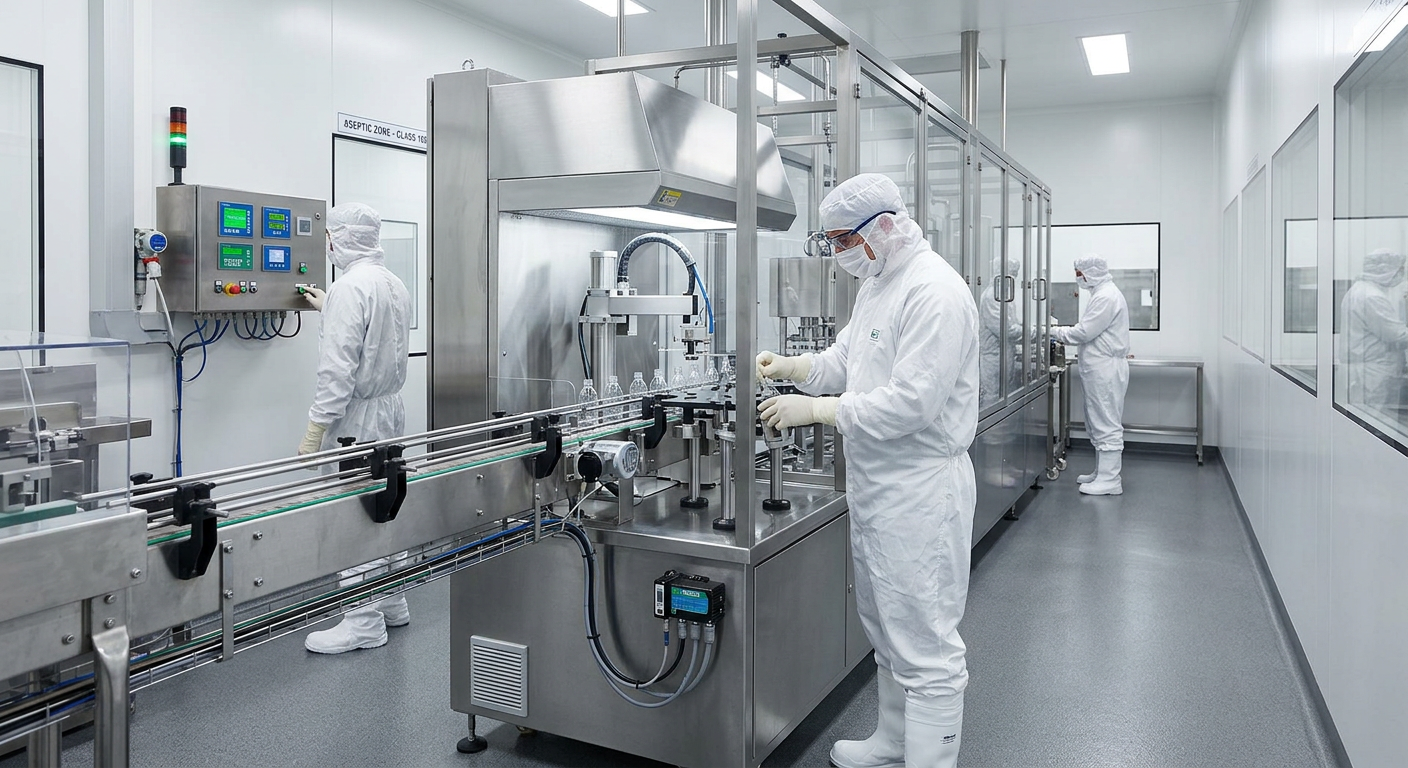
Beverage Mixing Tank Manufacturer
[trp_language language=”en_US”]
Beverage Mixing Tank Systems for U.S. Beverage Production
Choosing the right beverage mixing tank is not simply a matter of vessel size. In the United States, beverage producers must balance product quality, sanitation, carbonation retention, acid resistance, batch flexibility, utility efficiency, and compliance with FDA, SQF, BRC, and customer audit requirements. Whether you are blending juices in Florida, functional beverages in California, dairy drinks in Wisconsin, RTD cocktails in Texas, or syrups near major logistics hubs like Chicago, Charlotte, Los Angeles, Houston, or Newark, the tank design directly affects throughput, consistency, cleanability, and total operating cost.
Quick Answer

A beverage mixing tank for U.S. operations should be selected based on product viscosity, acid level, carbonation sensitivity, batch size, temperature needs, sanitation standards, and automation requirements. For many acidic, flavored, or carbonated products, 316L stainless steel is preferred because it offers stronger corrosion resistance than 304 stainless. Propeller agitators fit low-viscosity blending, turbines support stronger top-to-bottom circulation and powder incorporation, and paddle or sweep agitators work better for higher-viscosity or solids-sensitive products. Tanks intended for commercial beverage use should also be CIP-ready, have sanitary welds, suitable surface finish, well-placed baffles where needed, and controls that match the plant’s recipe and traceability requirements.
In practical terms, U.S. beverage manufacturers often look for a system rather than a standalone vessel. That means integrating the tank with ingredient handling, load cells, inline Brix monitoring, carbonation, pasteurization, transfer pumps, CIP skids, and plant utilities. For growing producers, the best investment is usually a mixing system designed around future expansion, not only today’s first SKU.
The current U.S. market also favors flexible systems that can handle multiple formulations, allergens, cleaning validations, and shorter production runs. Co-packers and multi-SKU beverage brands increasingly need tanks that can switch between sports drinks, energy beverages, flavored waters, dairy-based beverages, and syrups with minimal downtime. This is why engineering detail matters as much as tank capacity.
The chart above reflects a realistic trend seen across North American beverage capital spending: demand is rising as brands reshore production, co-packers add capacity, and manufacturers upgrade older vessels to cleaner, more automated, more flexible systems.
Beverage Mixing Tank Designs: Propeller, Turbine, and Paddle Agitators

Agitator selection is one of the most important design decisions because it determines blend uniformity, solids suspension, foaming tendency, and cycle time. In beverage processing, the wrong impeller can create excess vortexing, poor powder wet-out, flavor inconsistency, carbonation loss, or unnecessary energy use.
Propeller agitators are commonly used in low-viscosity beverages such as flavored water, tea bases, electrolyte solutions, and many syrup dilution steps. They generate axial flow, moving liquid vertically and creating rapid circulation. They are efficient and relatively simple, but they are not always ideal for heavier concentrates or products that need stronger shear.
Turbine agitators are often chosen when producers need a stronger mixing pattern, better gas or powder dispersion, or more controlled blending performance. Depending on the blade style, turbines can produce axial or radial flow. They are suitable for syrup rooms, ingredient blending, and formulations with functional powders, stabilizers, or moderate solids loading.
Paddle agitators are generally used for gentler mixing, broader wall coverage, and products that do not require aggressive shear. They can be useful in dairy beverage bases, pulp-containing beverages, or heavier flavor systems where minimizing damage to suspended particles matters.
| Agitator Type | Best For | Viscosity Range | Main Flow Pattern | Advantages | Watchouts |
|---|---|---|---|---|---|
| Propeller | Water-like beverages, dilution, light syrups | Low | Axial | Fast circulation, lower power draw | May create vortexing without baffles |
| High-efficiency hydrofoil | Energy-conscious blending lines | Low to moderate | Axial | High pumping efficiency, gentle on product | Not ideal for heavy powder incorporation alone |
| Rushton-style turbine | Powder dispersion, gas-liquid mixing | Low to moderate | Radial | Strong localized mixing | Higher shear, can increase foam |
| Pitched-blade turbine | Syrups, flavor blending, moderate solids | Low to moderate | Axial/radial hybrid | Balanced blending performance | Requires proper speed control |
| Paddle | Gentle beverage bases, pulp, dairy blends | Moderate | Broad sweeping flow | Low product damage, simple geometry | Longer mixing time in some formulations |
| Anchor or sweep | Higher viscosity concentrates | Moderate to high | Wall-following | Improves wall cleaning and heat transfer | Usually slower and more torque-intensive |
This table shows why no single agitator fits every beverage. U.S. buyers should ask suppliers for impeller recommendations based on actual product rheology, not assumptions drawn from water tests. A system designed for sports drinks may perform poorly with smoothie bases or dairy emulsions.
Why 316L Is Commonly Chosen for Acidic and Carbonated Beverage Mixing

Material selection is central to product safety and tank life. For many beverage applications, especially acidic drinks and carbonated products, 316L stainless steel is the preferred choice because it improves resistance to corrosion, pitting, and chemical attack. This is particularly relevant for products containing citric acid, phosphoric acid, fruit concentrates, flavor compounds, salt systems, or aggressive cleaning chemicals.
304 stainless still has a place in some non-aggressive beverage utilities or lower-risk applications, but when the process fluid is acidic, chloride exposure is possible, or long-term cleanability matters, 316L is typically the stronger investment. The “L” grade also supports better weld integrity for sanitary fabrication because of its lower carbon content.
| Material | Typical Beverage Use | Corrosion Resistance | Suitability for Acidic Products | Sanitary Fabrication Value | Relative Cost |
|---|---|---|---|---|---|
| 304 Stainless Steel | Basic water-like services | Good | Limited for more aggressive formulas | Good | Lower |
| 316 Stainless Steel | General beverage processing | Very good | Strong | Very good | Moderate |
| 316L Stainless Steel | Acidic, flavored, carbonated beverages | Excellent | Preferred | Excellent | Moderate to higher |
| Duplex Stainless | Specialty corrosive environments | Very high | High | Application-specific | Higher |
| Coated Carbon Steel | Rare for sanitary product contact | Variable | Generally poor fit | Weak | Lower upfront |
| Plastic-Lined Systems | Niche chemical applications | Variable | Not standard for sanitary beverage plants | Limited | Variable |
For U.S. beverage producers shipping nationwide, the longer equipment life of 316L often reduces total ownership cost. It also aligns well with premium sanitation expectations from major retailers, brand owners, and co-manufacturing customers. If your facility handles kombucha, juice concentrates, sodas, RTD cocktails, or functional drinks with low pH, 316L should be evaluated early instead of treated as an upgrade at the end.
Baffles, Sweeps, and High-Shear Mixing: Matching Agitation to the Product
Tank geometry matters as much as impeller style. Baffles, wall sweeps, and high-shear devices each solve different process problems.
Baffles are vertical strips installed on the interior tank wall to disrupt rotational flow and reduce vortexing. In low-viscosity beverages, they often improve top-to-bottom mixing and reduce air entrainment. However, for some sanitary applications or certain vessel sizes, the designer may use alternative anti-vortex strategies to simplify cleaning.
Sweeps or anchor agitators help move product along the vessel wall. They are useful when product viscosity is high enough that dead zones can form or when heat transfer through the jacket is important. Smoothies, concentrates, dairy bases, and certain flavor pre-mixes may benefit from this approach.
High-shear mixers are used when powders must be rapidly dispersed, gums need hydration, emulsions must be stabilized, or a formulation contains ingredients that do not easily wet out. They can be top-entry, bottom-entry, or inline. Many beverage systems use a hybrid design: a main tank agitator for bulk circulation plus an inline high-shear loop for powder induction.
| Feature | Primary Purpose | Best Product Types | Main Benefit | Potential Limitation | Typical U.S. Use Case |
|---|---|---|---|---|---|
| Baffles | Break vortex and improve circulation | Low-viscosity drinks | Better blend uniformity | Extra cleaning surfaces | Sports drink blending |
| Wall sweep | Move product near tank wall | Thicker concentrates | Reduced dead zones | Higher torque demand | Fruit base mixing |
| Anchor agitator | Gentle heavy-product mixing | Moderate to high viscosity | Good for heat transfer | Slower circulation | Dairy beverage premix |
| Inline high-shear mixer | Powder hydration and dispersion | Functional beverages | Fast ingredient incorporation | Can over-shear some products | Protein beverage systems |
| Bottom-entry high-shear | Strong tank shear | Emulsions and stabilizers | Efficient mixing zone | Mechanical seal complexity | Flavor emulsion prep |
| Recirculation loop | Blend through external circuit | Multi-step batching | Flexible process control | More piping and valves | Syrup room design |
The best approach depends on the product. For example, a clear carbonated beverage base may only need gentle agitation and careful anti-foam control, while a protein shake might require aggressive powder induction followed by slower finishing agitation. Matching agitation to the formula prevents quality complaints and avoids overspending on unnecessary horsepower.
This industry view highlights where future U.S. demand is strongest. Functional beverages and alcohol RTD continue to drive new blending projects, especially around major markets such as Southern California, the Carolinas, Texas, and the Midwest.
Temperature Control Methods: Dimple Jackets, Internal Coils, and Heat Transfer
Temperature control can be essential in beverage mixing. Some products require warming for sugar dissolution, some require cooling to protect flavors or carbonation, and others need precise thermal management before downstream pasteurization or filling.
Dimple jackets are common because they provide efficient heat transfer around the vessel exterior without placing obstructions inside the tank. They are sanitary, durable, and widely used for heating or cooling with glycol, chilled water, or hot water.
Internal coils can increase heat transfer area and are useful in certain applications, but they add internal surfaces that must be thoroughly cleaned. In sanitary beverage design, they should be used only when the thermal benefit justifies the added cleaning complexity.
Full jacket or half-pipe jacket arrangements may also be specified for special thermal loads. The choice depends on product fouling risk, utility availability, and target batch cycle time.
| Temperature Control Option | How It Works | Sanitary Advantage | Heat Transfer Performance | Cleaning Impact | Typical Beverage Use |
|---|---|---|---|---|---|
| Dimple jacket | External pressed jacket pockets | High | Very good | Minimal internal impact | Syrups, tea, juice blends |
| Full jacket | Outer shell around vessel wall | High | Good to very good | Minimal internal impact | General blending |
| Half-pipe jacket | External welded pipe channels | High | High for demanding duties | Minimal internal impact | Heavy thermal loads |
| Internal coil | Coil inside product zone | Moderate | High | More difficult CIP coverage | Special applications |
| External heat exchanger loop | Recirculates through exchanger | High with good design | Very high | More components to validate | Precision process control |
| Direct steam infusion/injection support | External thermal process support | Application-specific | Rapid | Depends on system design | Selected hot process steps |
For U.S. facilities where utilities vary by region, the thermal system must fit the site. Plants near the Gulf Coast may have different cooling strategies than those in Minnesota or upstate New York. Utility cost, water availability, and maintenance support all matter. Good heat-transfer design should be reviewed alongside process scheduling, not afterward.
Sanitary Design Standards for Beverage Blending and Flavor Systems
Sanitary design is non-negotiable for commercial beverage manufacturing. A mixing tank should support fast cleaning, repeatable validation, low contamination risk, and easy inspection. This includes hygienic weld quality, drainability, proper gasket materials, sanitary fittings, spray coverage, and elimination of dead legs.
For flavor systems and sensitive beverage bases, common sanitary design requirements include polished product-contact surfaces, sloped bottoms for drainage, sanitary manways, CIP spray devices, orbital welds where appropriate, and instrumentation selected for hygienic service. Valves, pumps, and transfer lines should be designed as part of the full process path.
Many U.S. producers also need the tank design to align with customer audits, not just regulation. Large retail and brand accounts often inspect more than code compliance. They review cleanability, documentation, preventive maintenance access, traceability, and operator safety.
Sanitary design becomes especially important in systems that handle allergen changeovers, dairy-based beverages, aseptic ingredients, fermented drinks, or high-sugar products that can leave residue. If the system cannot be cleaned and verified quickly, actual plant capacity drops regardless of the tank’s nameplate size.
The U.S. trend is clear: by 2026 and beyond, automated CIP-ready systems are becoming the standard, especially in facilities serving multiple brands or running high-SKU production schedules.
Batch Size Flexibility: Single-Tank and Multi-Tank Configurations
One large tank is not always better than multiple smaller tanks. The right configuration depends on SKU mix, scheduling, inventory strategy, utility constraints, and risk tolerance.
Single-tank systems may be cost-effective for simpler operations with stable volume, fewer recipes, and predictable production runs. They reduce equipment count and can simplify controls. However, they create a single point of failure and can reduce scheduling flexibility.
Multi-tank configurations offer better changeover management, product segregation, phased production, and redundancy. A co-packer in Atlanta or Dallas producing several beverage families may benefit more from three medium tanks than from one oversized vessel. Multi-tank systems also make expansion easier because capacity can be added in stages.
When reviewing batch sizing, manufacturers should consider minimum fill level, agitator performance at partial volume, and future SKU growth. Tanks that mix well only at full capacity can become operational bottlenecks if product demand shifts.
For startup and mid-market producers, modular planning is often the smartest capital choice. It keeps early spending aligned with demand while preserving a path to larger throughput as distribution expands across the United States.
Surface Finish and Cleanability: CIP-Ready Mixing Tank Specifications
Surface finish affects product hold-up, microbial risk, cleaning time, and inspection outcomes. In beverage applications, product-contact surfaces are commonly specified with a sanitary finish appropriate for the product and cleaning method. Smoother finishes generally improve cleanability and reduce residue retention.
A truly CIP-ready tank should include more than a spray ball. It should have documented spray coverage, proper return flow, pump sizing that supports cleaning velocities, compatible valve sequencing, and instrumentation that can confirm temperature, time, conductivity, or other cleaning parameters. Dead zones around nozzles, probes, jackets, and agitator shafts should be minimized.
U.S. buyers should review these details before placing an order:
- Internal finish target and verification method
- Weld finishing standards
- Bottom geometry and full drainability
- CIP spray device type and coverage pattern
- Gasket and elastomer compatibility
- Access for inspection and maintenance
- Integration with plant CIP skid and controls
These design details have direct financial impact. Faster, validated cleaning means more sellable production hours. In plants producing premium beverages with strict flavor-change control, cleanability can matter more than maximum motor size.
Calculating Mixing Time, Power Needs, and Operating Efficiency
Mixing time and motor horsepower should be calculated from actual process conditions, including tank geometry, fill volume, product density, viscosity, solids loading, and the target degree of homogeneity. Oversized motors waste energy and can damage product quality; undersized systems create long cycle times and incomplete blending.
As a rule, low-viscosity beverages can often be mixed efficiently with lower specific power inputs than thick concentrates or powder-heavy formulations. But power alone does not guarantee performance. Impeller type, diameter ratio, RPM, baffle arrangement, and batch level are equally important.
Operational efficiency should also include:
- Utility consumption
- Cleaning cycle duration
- Product loss during heel and transfer
- Operator intervention time
- Recipe repeatability
- Maintenance access and seal life
In modern beverage plants, the most efficient system is usually the one that balances product quality with automation, not the one with the largest mixer. Variable frequency drives, load cells, recipe controls, and inline instrumentation can reduce rework and improve consistency across shifts.
| Tank Size | Typical Beverage Type | Estimated Mixing Time | Typical Power Range | Best Agitator Style | Operational Note |
|---|---|---|---|---|---|
| 250 gallons | Flavor premixes | 5-15 minutes | 1-3 HP | Propeller or high-shear support | Ideal for small R&D or pilot runs |
| 500 gallons | Functional beverage batches | 10-20 minutes | 2-5 HP | Turbine or hydrofoil | Good small commercial flexibility |
| 1,000 gallons | Juice and RTD beverages | 15-30 minutes | 3-10 HP | Propeller, turbine, or hybrid | Common mid-scale size |
| 3,000 gallons | Syrups and line feeding | 20-45 minutes | 7.5-20 HP | Turbine with baffles | Check partial-batch performance |
| 6,000 gallons | Co-packing base blending | 30-60 minutes | 15-40 HP | Engineered case by case | Utilities and CIP sizing become critical |
| 12,000 gallons | Large-scale beverage production | 45-90 minutes | 25-75 HP | Multi-impeller or recirculation system | Requires detailed process modeling |
The values in this table are directional only, but they illustrate how scale changes design logic. A 12,000-gallon tank is not simply a larger version of a 500-gallon tank; circulation patterns, structural loads, cleaning dynamics, and transfer strategy become much more important.
U.S. Beverage Market, Applications, and Buying Advice
The United States beverage sector is broad, with strong regional clusters. California and the Pacific Northwest support functional drinks, kombucha, wine, and premium RTD products. Texas and the Southeast continue expanding in soft drinks, spirits, and contract manufacturing. The Midwest remains a core region for dairy beverages and large-scale food-grade stainless fabrication. Northeast corridors around New Jersey and Pennsylvania benefit from port access, dense population, and brand distribution infrastructure.
Common applications for beverage mixing tanks include:
- Syrup preparation and storage
- Ingredient hydration and powder induction
- Flavor batching
- Brix adjustment
- Acid blending
- Carbonated beverage base preparation
- Dairy and protein beverage premixes
- Fermented beverage process support
- CIP chemical preparation
When buying a system, U.S. manufacturers should ask these practical questions:
- Can the tank perform at both minimum and maximum batch size?
- Is the material of construction suitable for the product pH and cleaning chemistry?
- Will the agitator preserve carbonation, pulp, or emulsion quality as needed?
- Is the system truly CIP-capable and documented for sanitation review?
- Can the controls integrate with existing PLC, SCADA, and recipe systems?
- Does the supplier understand utility routing, installation, and startup in live plants?
These questions matter because many tank purchases fail not at fabrication but during integration. A vessel may look correct on paper yet create plant-wide bottlenecks if the controls, pumps, floor loading, access, drains, or utility tie-ins are not engineered correctly.
Technological Capabilities for Modern Beverage Mixing Projects
Advanced beverage mixing projects increasingly require multidisciplinary engineering. Beyond vessel fabrication, buyers need process design, mechanical and piping coordination, electrical integration, controls strategy, and utility planning. This is especially true for high-growth beverage facilities where blending systems interact with pasteurization, filtration, carbonation, filling, compressed air, glycol, steam, and water treatment.
Disruptive Process Solutions brings this broader technical view to projects across the United States and Canada. Rather than treating a tank as an isolated asset, the company approaches beverage processing as a connected production system. That includes process engineering, structural and mechanical coordination, automation support, PLC and SCADA integration, and planning for upstream and downstream process impact. For beverage manufacturers adding tanks to larger process lines, this systems perspective is often the difference between theoretical capacity and profitable capacity.
For operations seeking complete modernization, DPS also supports complex beverage technologies such as blending and batching with inline Brix monitoring, carbonation and bright tank systems, water treatment, pasteurization approaches, and aseptic or clean processing environments. More about this integrated engineering approach can be found on the company’s process and project services page.
Manufacturing Capabilities and Equipment Supply
Tank buyers often want to know whether a partner can only specify equipment or also deliver fit-for-purpose hardware. DPS has developed proprietary process equipment manufacturing capabilities, including storage and processing tanks up to 12,000 gallons, custom CIP systems, and related sanitary process equipment. This matters for beverage producers that want tighter alignment between design intent and fabricated equipment.
Because the company works in both beverage and food environments, equipment solutions are designed with practical plant realities in mind: sanitation, operator access, maintenance, utility connection, and future line expansion. Manufacturers comparing options can review the broader equipment scope through the equipment portfolio, where tanks are positioned as part of larger production solutions rather than standalone catalog items.
This manufacturing capability is particularly useful when a project needs custom nozzle orientation, specific agitator geometry, integrated skid structures, or site-driven modifications that off-the-shelf imported tanks may not address well.
Service Capabilities, Project Delivery, and Real-World Execution
For U.S. beverage companies, supplier value is measured after the PO as much as before it. Engineering support, installation coordination, startup, and project management often determine whether a tank system launches on time. DPS operates with a design-build-manage approach that combines engineering, general contractor-style execution where applicable, installation oversight, and system integration. That model can reduce handoff risk in capital projects, particularly when beverage brands are scaling fast or retrofitting active facilities.
The company serves manufacturers throughout all 50 states and Canada, supporting both emergency execution and long-range capital planning. Its experience spans brewing, spirits, wine, kombucha, RTD beverages, carbonated and non-carbonated soft drinks, juices, functional beverages, and dairy-based beverage systems. Businesses evaluating project partners can learn more on the company overview page.
In practice, this service scope helps when tank projects involve floor modifications, utility upgrades, CIP expansion, controls programming, commissioning, or phased cutovers that must happen without shutting down the whole plant.
Case Example and Supplier Comparison Considerations
One reason beverage producers seek experienced integrators is that capacity problems are not always solved by buying more stainless steel. In some projects, the true bottleneck is controls logic, transfer sequencing, or utility limitation rather than tank volume. DPS has built its reputation partly by identifying those issues early and steering clients away from unnecessary capital spend when a smarter process change can produce better returns.
That philosophy aligns well with co-packers and growing brands that need profitable expansion, not just visible expansion. Examples of project thinking and execution can be explored through selected case studies and project examples.
This comparison chart illustrates a common U.S. buying reality: the lowest upfront vessel quote may not deliver the best plant outcome. Suppliers that understand process integration usually score higher on scalability, sanitary execution, and long-term value.
Local Supply Considerations Across the United States
When sourcing beverage mixing tanks in the United States, location affects freight, startup support, and installation scheduling. Producers near ports such as Los Angeles, Long Beach, Houston, Savannah, Newark, and Seattle may have more import options, but imported vessels still require domestic sanitary review, documentation, and often field adaptation. Plants in inland manufacturing corridors like Chicago, Milwaukee, St. Louis, Charlotte, and Nashville may prioritize regional fabrication and faster on-site support.
Local supplier selection should be based on more than geography. Buyers should review:
- Sanitary fabrication quality
- Documentation package and QA records
- Ability to support FAT, SAT, and commissioning
- Understanding of beverage chemistry and CIP
- Access to controls and utility integration expertise
- Speed of service after startup
For national beverage operations, the strongest partner is often one that can manage design consistency across multiple sites while still adapting to local codes, labor conditions, and utility constraints.
2026 Trends: Technology, Policy, and Sustainability
Looking ahead to 2026, beverage mixing tank design in the United States will be shaped by three major forces: automation, compliance pressure, and sustainability.
Technology trends include wider use of recipe-driven controls, load-cell batching, inline quality measurement, remote support, and digital maintenance tracking. Smart mixing systems will increasingly connect to SCADA and MES platforms for traceability and performance optimization.
Policy and compliance trends include deeper customer scrutiny on sanitary documentation, allergen control, food safety plans, and validation records. More producers will expect equipment suppliers to support audit-ready documentation rather than just fabrication drawings.
Sustainability trends include lower water usage in CIP cycles, more efficient agitator geometry, heat recovery strategies, better insulation, and process layouts that reduce product loss. As energy and water costs remain volatile, tank efficiency will become a financial issue, not only an environmental one.
Manufacturers planning new capacity today should therefore think beyond the vessel shell. The most future-ready systems will combine corrosion-resistant materials, flexible agitation, strong cleanability, automated controls, and expansion paths that support new SKUs without rebuilding the room.
FAQ
What size beverage mixing tank is best for a startup?
It depends on SKU count, batch economics, and filling rate. Many early-stage producers start in the 250- to 1,000-gallon range, but the right choice should match future distribution plans and minimum efficient run size.
Is 316L always necessary?
Not always, but it is often the safest recommendation for acidic, flavored, or carbonated beverages and for plants using aggressive cleaning chemistry. It usually offers better long-term value than 304 in demanding beverage service.
Can one tank handle multiple beverage types?
Yes, if the design supports the full viscosity range, cleaning validation, allergen or flavor changeovers, and proper agitation at different fill levels. Multi-product flexibility should be engineered upfront.
Do carbonated beverages need special mixing?
Yes. Agitation must minimize CO2 loss and foaming. Gentle mixing, proper pressure considerations, and careful transfer design are important.
Are baffles always required?
No. They are common in low-viscosity blending, but some sanitary or product-specific designs use different strategies. The decision should be based on process needs, not habit.
What makes a tank truly CIP-ready?
Validated spray coverage, drainability, hygienic surface finish, proper return flow, suitable instrumentation, compatible seals and valves, and integration with the site’s cleaning system.
Should I buy a tank only or a complete system?
For most commercial beverage operations, a complete system approach is better. It reduces risk around utilities, controls, cleaning, and downstream performance.
How do I compare U.S. suppliers?
Compare sanitary quality, engineering depth, ability to integrate controls and utilities, project execution support, documentation quality, and after-installation service, not just vessel price.
What industries use these tanks besides soft drinks?
They are widely used in brewing, spirits, wine, kombucha, dairy beverages, juices, RTD coffee and tea, functional beverages, nutritional drinks, and syrup or flavor manufacturing.
What is the best next step before requesting a quote?
Prepare your product list, batch sizes, utility data, cleaning method, future capacity goals, and automation expectations. A better scope leads to a better tank design and a more accurate budget.
[/trp_language]
Complete Company Portfolio
About the Author: Disruptive Process Solutions (DPS)
The DPS team combines process engineering expertise with real-world food and beverage manufacturing experience. Our content focuses on process optimization, production efficiency, facility improvements, and practical solutions that help manufacturers operate more effectively in a rapidly evolving industry.
Share