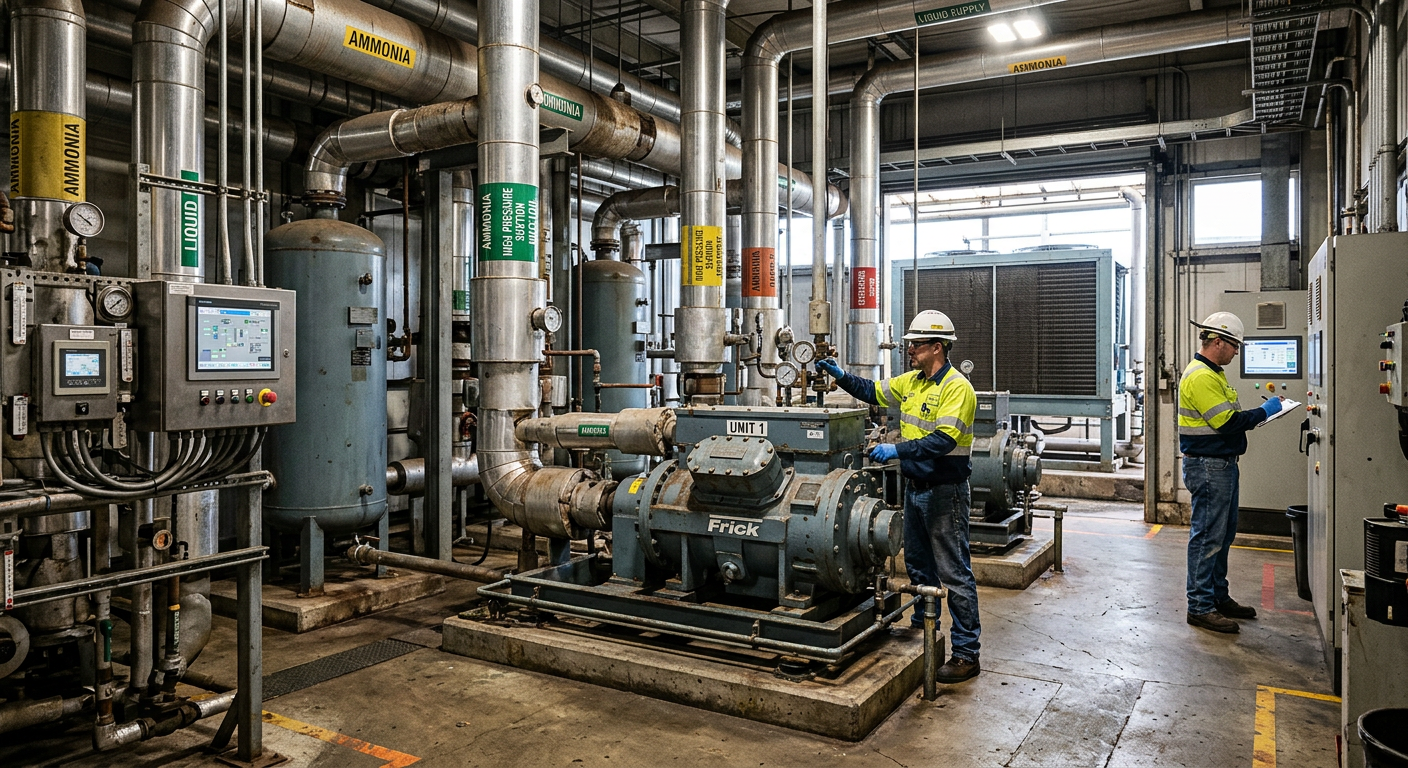
Beverage Plant Engineering and System Integration
[trp_language language=”en_US”]
Beverage Plant Engineering and System Integration in the United States
The U.S. beverage sector is expanding across carbonated drinks, RTD beverages, craft brewing, winery operations, dairy-based drinks, juice, functional beverages, kombucha, spirits, and aseptic products. That growth creates one core requirement: beverage plants must be engineered as integrated systems, not as isolated pieces of equipment. In practical terms, beverage plant engineering means aligning process design, utilities, controls, sanitation, packaging interfaces, compliance, and startup planning so the plant can reach throughput, quality, and profitability targets from day one.
Across major U.S. hubs such as Chicago, Dallas-Fort Worth, Charlotte, Atlanta, Los Angeles, the Inland Empire, Houston, the New Jersey corridor, and ports serving Savannah, Long Beach, and Newark, beverage manufacturers are investing in faster line changeovers, better chilled distribution, automation, and scalable utility infrastructure. Whether the facility is a craft brewery in Colorado, a winery in California, a co-packer in Texas, or a soft drink operation in the Southeast, engineering choices made early in the project determine operating cost, uptime, labor efficiency, food safety performance, and time-to-market.
Quick Answer

Beverage plant engineering projects in the United States combine process engineering, utility design, controls integration, sanitary construction, packaging coordination, and commissioning into one operating system. The most successful projects start with product requirements, production targets, cleaning strategy, and expansion goals, then build backward into ingredient handling, batching, thermal processing, carbonation, filling, refrigeration, CIP, electrical, and automation architecture.
For most beverage manufacturers, system integration is the difference between a plant that simply runs and a plant that runs profitably. A well-integrated project reduces startup delays, minimizes interface gaps between equipment vendors, improves regulatory readiness, and helps operators hit yield and throughput targets sooner. This is especially important in the United States, where labor constraints, utility costs, retailer expectations, and compressed launch timelines leave little room for fragmented execution.
Companies looking for results should evaluate engineering partners based on beverage-specific process knowledge, controls capability, utility expertise, field execution, and the ability to manage complex vendor interfaces. That is why many owners prefer firms that can engineer, build, and manage the entire delivery path rather than handing critical coordination across multiple disconnected contractors.
| Project Objective | Engineering Focus | Typical U.S. Plant Concern | Business Impact |
|---|---|---|---|
| Increase output | Debottlenecking, line balancing, utility sizing | Can existing utilities support added shifts? | Higher cases per hour |
| Launch new beverage SKU | Recipe handling, batching, sanitary design | Will allergens or flavor carryover create risk? | Faster commercialization |
| Improve uptime | Controls integration, preventive access, CIP design | Where do frequent stoppages originate? | Lower downtime cost |
| Reduce labor dependency | Automation, SCADA, recipe control | Can operator intervention be reduced? | Better operating margin |
| Expand distribution | Cold chain, packaging, storage, loadout flow | Can product quality hold across regions? | Broader market reach |
| Prepare for future growth | Modular utilities, spare capacity, phased layouts | Will the site support Phase 2 and Phase 3? | Lower future capital disruption |
The table above shows why beverage engineering is both technical and commercial. Every design decision should map to a measurable business outcome such as lower operating cost, faster startup, increased saleable yield, or stronger market reach.
Core Components of Beverage Plant Engineering Projects

A beverage facility is an interconnected production environment. The core components typically include raw material receiving, dry ingredient handling, sugar or sweetener systems, water treatment, blending and batching, thermal processing where required, carbonation or deaeration, storage tanks, transfer piping, filtration, filling integration, CIP systems, refrigeration, compressed air, steam or hot water, wastewater interfaces, electrical distribution, and control systems. In U.S. projects, these are often delivered across multiple vendors, which is why interface management becomes central to project success.
Process design begins with the beverage itself. Carbonated soft drinks require different pressure, temperature, and gas management than dairy beverages or tunnel-pasteurized craft beer. Wine processing has its own requirements around clarification, tank farm flexibility, cellar operations, and product movement. Spirits operations need fermentation, distillation, proofing, and often explosion-hazard considerations in certain areas. RTD cocktails and functional beverages may combine elements of high-acid processing, blending precision, package compatibility, and shelf-life validation.
Facility engineering must also consider the physical site. A greenfield plant outside Phoenix or Raleigh may offer expansion room but create heat-load and water-management considerations. An urban retrofit in Brooklyn, Seattle, or downtown Nashville may face floor loading, utility access, and traffic constraints. Plants near ports such as Long Beach or Savannah may prioritize import ingredient flow, while Midwest plants may optimize rail or truck access to corn sweeteners, cans, glass, or dairy inputs.
In modern projects, the strongest engineering teams connect process, building, and business planning. They ask not only “What equipment is needed?” but also “How will the plant make money under actual labor, utility, maintenance, and changeover conditions?”
| Component | Main Function | Design Priority | Common Failure If Overlooked |
|---|---|---|---|
| Water treatment | Achieve process water quality and consistency | Source variability, RO, disinfection | Flavor inconsistency and scaling |
| Ingredient handling | Receive, store, and transfer raw materials | Accuracy, sanitation, dust control | Losses, contamination, poor batching |
| Blending and batching | Create repeatable beverage formulation | Mixing, Brix control, recipe integrity | Out-of-spec product |
| Thermal or aseptic step | Deliver safety and shelf-life targets | Time, temperature, validation | Product spoilage or overprocessing |
| Filling interface | Transfer finished beverage to package | Pressure, buffer capacity, synchronization | Line starvation or excessive rejects |
| CIP and sanitation | Clean tanks, lines, fillers, and process loops | Coverage, chemical use, verification | Micro risk and long downtime |
| Utilities | Support process loads and reliability | Capacity, redundancy, energy use | Production interruptions |
For companies seeking a broad understanding of integrated capital execution, about the team at DPS provides a useful view of how beverage and food engineering projects can be approached with business-first discipline rather than just equipment procurement.
Process Flow Engineering: From Ingredient Handling to Filling

Process flow engineering translates a beverage formula into a stable, scalable manufacturing sequence. In the United States, owners often underestimate how many variables must be synchronized before the first commercial run. Ingredient receiving methods, sugar dissolving, liquid sweetener transfer, micro-ingredient dosing, water quality, heat exchange, hold times, buffer tanks, carbonation, package temperature, filler performance, and cleanability all influence final output.
A typical high-level process may start with ingredient receiving and storage. Dry ingredients may arrive in totes, bags, or bulk systems. Liquid ingredients can be stored in stainless tanks, IBCs, or dedicated sanitary totes. Water treatment then conditions municipal or well water to required mineral and microbiological standards. From there, blending systems combine ingredients through either batch tanks or in-line continuous systems with measurement points for Brix, pH, conductivity, flow, and temperature.
Depending on the beverage type, the next stages may include pasteurization, UHT treatment, flash pasteurization, filtration, deaeration, carbonation, homogenization, bright tank storage, or aseptic surge. The process then feeds the packaging line through carefully engineered interfaces that avoid pressure instability, temperature drift, oxygen pickup, or filler starvation. The right process flow also supports quick changeovers, clean segregation between allergen and non-allergen products, and validation of cleaning cycles.
For a brewery, the flow may include milling, mash conversion, lautering, wort boiling, heat exchange, fermentation, conditioning, filtration, carbonation, bright beer storage, and packaging. For a winery, the priorities shift toward crush logistics, fermentation vessel usage, cellar transfer routes, temperature control, stabilization, filtration, and bottling support. For soft drinks and RTD lines, syrup room design and line balancing around filler speed become especially important.
| Process Stage | Key Equipment | Critical Parameter | Why It Matters |
|---|---|---|---|
| Receiving | Unloading stations, tote handling, pumps | Material traceability | Supports quality and recall readiness |
| Water preparation | RO, filters, UV, ozone | Mineral and microbial control | Protects flavor and shelf stability |
| Blending | Mix tanks, in-line blenders, meters | Brix and ratio accuracy | Ensures formula consistency |
| Thermal treatment | HTST, UHT, tunnel, flash systems | Time-temperature profile | Delivers safety and quality |
| Storage/buffering | Surge tanks, bright tanks, aseptic tanks | Residence time and pressure | Protects filler continuity |
| Filling transfer | Sanitary pumps, valves, piping | Flow stability | Reduces filler rejects and foam |
| CIP recovery | CIP skids, return loops, controls | Verification and cycle time | Lowers water, chemistry, and labor use |
The process map should be completed before detailed equipment purchasing. Too often, beverage manufacturers buy tanks and skids first, then discover later that utility loads, elevations, flow rates, and packaging interfaces were never reconciled. That sequence increases change orders, startup risk, and schedule slippage.
The line chart reflects the realistic upward trend in U.S. beverage engineering activity, driven by co-packing growth, functional beverage launches, line modernization, and energy-efficiency upgrades heading into 2026.
Selecting Engineering Partners for Complex Beverage System Integration
Choosing the right engineering partner is one of the most important purchasing decisions in a beverage capital project. A capable partner should understand not only equipment specifications, but also process interaction, startup sequencing, utility dependency, sanitation strategy, and owner economics. In the United States, many projects fail to meet expectations because owners divide design, equipment, construction, controls, and commissioning among parties with no shared accountability.
When evaluating partners, manufacturers should review experience by beverage category, not just general industrial capability. The design logic for a kombucha line differs from a large carbonated soft drink facility. A dairy beverage plant needs expertise in hygienic zoning, thermal processing, and cleaning verification that may not be relevant to a distillery. The best engineering firms can work across categories while still understanding the nuances of each.
Buyers should also look for local execution strength. Projects in North Carolina, Texas, California, Illinois, Georgia, and Tennessee each present different labor markets, permitting environments, and subcontractor networks. A national partner with a vetted field network can often move faster than a firm that is strong only in one region. This matters for shutdown windows, utility tie-ins, and phased expansions where timing is tight.
Another differentiator is whether the firm can support owners strategically. A strong partner may tell a client not to spend millions on unnecessary capacity if programming changes, process debottlenecking, or utility rerouting can solve the true constraint. That level of honesty is rare, but it is often what protects capital and improves return on investment.
| Selection Criterion | What to Ask | Why It Matters | Warning Sign |
|---|---|---|---|
| Beverage process experience | Which beverage categories have you delivered? | Reduces design assumptions | Only generic industrial references |
| Controls capability | Do you handle PLC, SCADA, and recipe integration? | Prevents fragmented automation | Controls outsourced with no lead owner |
| Utility engineering | Can you size glycol, steam, air, and water systems? | Supports reliable production | Utilities treated as afterthought |
| Field execution | Who manages local trades and installation? | Improves schedule control | No clear site leadership |
| Commissioning approach | How do you plan startup, SAT, and ramp-up? | Shortens time-to-market | Commissioning left to vendors alone |
| Commercial alignment | How do you protect owner ROI? | Keeps project tied to profitability | Focus only on selling more equipment |
| Compliance readiness | Can you support FDA, SQF, BRC, or USDA expectations? | Reduces audit and launch risk | No sanitation or compliance planning |
Manufacturers comparing providers can learn more about full project support models through integrated engineering and project services, especially when a project includes process, utilities, controls, and construction coordination in one package.
Turnkey vs. Multi-Contractor Delivery Models in Beverage Engineering
One of the biggest strategic decisions in a U.S. beverage capital project is whether to use a turnkey delivery model or manage multiple contractors directly. Each approach can work, but the risk profile is very different.
In a turnkey model, one lead partner coordinates engineering, procurement, installation, scheduling, trade management, and often startup oversight. This reduces interface gaps because one organization is responsible for connecting the process equipment, utilities, controls, and field work. Owners usually gain speed, simplified communication, and clearer accountability.
In a multi-contractor model, the owner may separately hire process engineers, mechanical contractors, electricians, controls integrators, refrigeration specialists, equipment vendors, and construction managers. This can appear less expensive at the start, but it often creates scope gaps and change-order friction. If the filler starves because surge capacity was undersized, or if glycol piping conflicts with access routes, each party may argue that the problem belongs to someone else.
Turnkey is especially beneficial for fast-moving sectors such as energy drinks, co-packing, flavored malt beverages, and RTD cocktails where launch dates are tied to retailer commitments. Multi-contractor delivery may still be suitable for owners with large internal engineering teams, standardized sites, and strong project governance.
| Factor | Turnkey Model | Multi-Contractor Model | Best Fit |
|---|---|---|---|
| Accountability | Centralized under one lead | Distributed across vendors | Turnkey for speed-sensitive projects |
| Schedule coordination | Simplified | Owner must align all parties | Turnkey where shutdown windows are tight |
| Upfront flexibility | Moderate | High on paper | Multi-contractor for experienced owners |
| Change-order exposure | Often lower if scope is clear | Often higher at interfaces | Turnkey for complex integrations |
| Internal owner workload | Lower | Higher | Turnkey for lean client teams |
| Specialty vendor selection | Managed by lead integrator | Direct by owner | Depends on owner preference |
| Startup risk | Typically lower | Higher if no integration leader | Turnkey for first-of-kind facilities |
For many beverage manufacturers, the real question is not which model is theoretically cheaper, but which model produces the lowest total cost of delay, disruption, and underperformance. In a competitive U.S. market, missing a launch window by even one quarter can cost more than the savings from fragmented procurement.
The comparison chart illustrates why integrated delivery often wins in complex beverage installations: clearer interfaces, lower owner burden, and faster operational readiness.
Automation and Controls Engineering for Beverage Operations
Automation is no longer a luxury in beverage operations. It is central to quality, labor efficiency, traceability, and profitability. Modern beverage plants use PLC programming, HMI design, SCADA, recipe management, batch controls, historian tools, alarm strategy, and utility monitoring to turn a collection of tanks and skids into a manageable production system.
Automation has become especially important in the United States as labor markets tighten and operators manage broader portfolios of SKUs. A line producing flavored sparkling water in the morning, energy drinks in the afternoon, and limited-run promotional batches on weekends needs recipe integrity and rapid changeover logic. Without it, the plant loses time to manual verification, paperwork, and avoidable errors.
Controls engineering should be planned at the same time as process and utility design. If automation is added too late, key instrumentation may be missing, data tags may not be standardized, and sanitation sequences may require manual intervention. A well-designed controls architecture covers process skids, ingredient dosing, CIP, utility systems, tank farms, load balancing, and production reporting.
Technological capability is one area where experienced engineering firms separate themselves. Some providers only coordinate mechanical installation, while others can deliver controls engineering, PLC programming, SCADA integration, line communication, and operational analytics as part of the same project. That depth matters because bottlenecks often come from logic and sequencing, not hardware alone.
DPS is notable in this area because its technical scope extends across structural, mechanical, plumbing, electrical, process, and controls engineering, including PLC and SCADA support. For beverage manufacturers, that means automation can be designed as part of the broader plant operating model rather than bolted on after installation.
The bar chart shows where automation demand is strongest heading into 2026. RTD, functional beverages, and major soft drink operations lead because they combine high SKU complexity with tight retailer service expectations.
Typical controls priorities include:
- Automated ingredient dosing with batch verification
- In-line Brix and conductivity monitoring
- Electronic production and CIP records
- Remote troubleshooting and diagnostics
- Utility energy monitoring for compressors, pumps, and refrigeration
- Alarm prioritization to reduce operator overload
- Integration between process skids and packaging equipment
When automation is executed well, beverage plants reduce giveaway, improve consistency, shorten sanitation time, and ramp new products faster. When executed poorly, even high-quality equipment can remain trapped below its intended capacity.
Refrigeration and Chilled Distribution System Design
Refrigeration and chilled distribution are fundamental in many beverage facilities. Glycol loops, chilled water systems, cold rooms, cooling towers, process heat exchangers, fermentation cooling, carbonation temperature control, and packaged product conditioning all require disciplined engineering. This is particularly true for breweries, wineries, dairy beverage plants, and RTD operations with sensitive flavor and microbiological targets.
In hot-climate states such as Texas, Arizona, Nevada, and Florida, poorly designed chilled systems can cripple production during peak summer conditions. In colder climates, freeze protection, seasonal load swings, and exterior utility exposure become equally important. Refrigeration engineering must match the actual process profile, not just a nameplate equipment list.
Designers should evaluate peak and average loads, redundancy philosophy, tank jacket demand, process room heat gain, line lengths, insulation, pump control, and future expansion. Chilled distribution should also be coordinated with sanitation access, structural supports, drainage, and electrical redundancy. Beverage plants commonly encounter trouble when cooling capacity is sized without accounting for simultaneous fermentation peaks, filler support, and room load conditions.
Manufacturing capability also plays a role here. Integrated project teams that can supply or coordinate custom tanks, CIP skids, and other fabricated process equipment often make chilled system design easier because vessel interfaces are known earlier. DPS supports projects with proprietary process equipment such as storage and processing tanks and custom CIP systems, which can reduce integration uncertainty when matched with the broader plant design.
| System Element | Application | Design Concern | Operational Result |
|---|---|---|---|
| Glycol loop | Fermenters, bright tanks, process cooling | Temperature stability and pump control | Consistent product quality |
| Chilled water | Heat exchange and product cooling | Peak load matching | Better throughput control |
| Cold room | Ingredient or finished goods storage | Door traffic and load profile | Reduced spoilage risk |
| Cooling tower | Heat rejection | Water quality and maintenance access | Energy efficiency |
| Insulated piping | Distribution of chilled media | Condensation and thermal loss | Lower operating cost |
| Refrigeration controls | System sequencing and alarms | Sensor placement and logic | Fewer shutdowns |
| Expansion capacity | Future tanks or lines | Spare tonnage and headers | Lower future retrofit cost |
For manufacturers evaluating process assets and custom system hardware, process equipment capabilities can be an important part of the engineering discussion because vessel sizing, CIP architecture, and utility tie-ins affect the refrigeration design from the beginning.
Engineering for Craft Brewery, Winery, and Large-Scale Soft Drink Operations
Different beverage categories share common engineering principles, but they do not share identical project priorities. Craft breweries, wineries, and large-scale soft drink operations each require distinct design thinking.
Craft brewery projects often focus on brewhouse efficiency, cellar utilization, glycol reliability, yeast management, CIP, and packaging flexibility across cans, bottles, and kegs. Space is usually constrained, especially in urban markets such as Denver, Portland, San Diego, and Austin. Expansion planning matters because many breweries begin with ambitious taproom growth, then pivot into regional distribution faster than expected.
Winery engineering tends to emphasize harvest surge capacity, tank farm layout, crush season logistics, temperature control, transfer flexibility, cellar sanitation, and storage strategy. In California regions such as Napa, Sonoma, Paso Robles, and Lodi, site conditions, permitting, and water use can significantly affect the project model. Premium wineries may also require layout decisions that protect both operational efficiency and visitor experience.
Large-scale soft drink and RTD operations are often driven by throughput, syrup room design, utility robustness, filler integration, can depalletizing, palletizing, compressed air stability, and automated reporting. Co-packing operations in the Southeast and Texas frequently need capacity plans that scale rapidly, sometimes from tens of millions of cases in initial production to much higher volumes as contract demand builds.
This is where service capability becomes a major differentiator. The strongest engineering partners can support feasibility, capital planning, owner representation, project management, general contracting where licensed, installation, utility integration, and commissioning as one coordinated path. DPS has built its reputation around that kind of end-to-end model, applying design-build-manage thinking to help clients move from concept to profitable startup with fewer disconnects.
A practical way to evaluate category-specific needs is to compare typical engineering priorities:
| Operation Type | Top Priority | Key Utility Need | Main Integration Risk |
|---|---|---|---|
| Craft brewery | Cellar flexibility | Glycol and CIP | Packaging bottlenecks |
| Regional brewery | Throughput and consistency | Steam, glycol, compressed air | Fermentation-to-packaging imbalance |
| Winery | Harvest surge handling | Cooling and transfer infrastructure | Tank farm congestion |
| Soft drink plant | Line speed and syrup integration | Water treatment and compressed air | Filler starvation |
| RTD beverage plant | SKU flexibility | Automation and thermal systems | Changeover inefficiency |
| Dairy beverage plant | Sanitary control | Thermal processing and refrigeration | Cleaning validation gaps |
| Spirits/distillery | Fermentation and proofing control | Steam, cooling, hazardous area planning | Utility underdesign |
Owners also benefit from reviewing actual project examples and implementation stories. For that, project case studies can help illustrate how integrated engineering decisions translate into site execution and business outcomes.
The area chart highlights the continued migration toward more automated, fully integrated plants. By 2026, this trend will be accelerated by labor economics, traceability requirements, energy management, and pressure to reduce launch risk.
How System Integration Reduces Startup Risks and Time-to-Market
Startup is where all engineering assumptions are tested in real time. Plants that are engineered as disconnected packages often discover late-stage problems: pumps cavitate, utilities are undersized, recipes do not communicate with the HMI, CIP circuits miss dead legs, refrigeration struggles at peak load, or fillers lose efficiency because upstream buffers were not designed correctly.
System integration reduces those failures by creating one coordinated execution model. The process engineer, controls team, utility designer, equipment supplier, and field manager work from a common operating intent. This alignment improves installation quality, startup sequencing, SAT planning, training, and production ramp-up. It also shortens the time required to move from mechanical completion to saleable product.
For U.S. beverage manufacturers, time-to-market can determine whether a project meets its business case. Retail resets, seasonal programs, distributor commitments, and contract production windows rarely move just because a facility is not ready. Every week of startup delay can create lost margin, stranded overhead, and customer frustration.
Integrated engineering also supports 2026 priorities. Plants are being designed with tighter energy accountability, water reuse strategies, electrification analysis where practical, higher data visibility, and more resilient supply chain planning. Policy pressure around sustainability, wastewater, and utility efficiency is likely to intensify in several states. Owners that treat these as design inputs now will avoid expensive retrofits later.
Future-ready beverage plants should consider:
- Modular utilities sized for phased growth
- SCADA visibility into energy and water consumption
- Recipe flexibility for fast new product launches
- Advanced CIP recovery to reduce water and chemistry use
- Remote support architecture for controls and diagnostics
- Redundancy planning for critical chilled and compressed systems
- Layout pathways for future tanks, fillers, or warehouse automation
In the United States, local supplier networks still matter. Regional mechanical contractors, refrigeration specialists, electricians, riggers, and code experts can make or break shutdown execution. The most effective lead engineering firms combine national technical standards with strong local trade coordination in markets from Charlotte and Atlanta to Sacramento, Milwaukee, and Salt Lake City.
Ultimately, beverage plant engineering is not about drawing P&IDs alone. It is about creating a production environment that supports quality, compliance, labor efficiency, utility resilience, and profitable growth. Owners who approach projects this way are more likely to launch on time, scale cleanly, and avoid the hidden cost of fragmented decision-making.
FAQ
What is beverage plant engineering?
Beverage plant engineering is the planning and design of process systems, utilities, controls, sanitation, and equipment integration required to manufacture beverages safely and efficiently at commercial scale.
What does system integration mean in a beverage facility?
It means connecting process equipment, packaging, utilities, automation, and commissioning into one coordinated operating system so the plant runs reliably rather than as separate vendor islands.
Why is system integration important in the United States market?
Because U.S. beverage manufacturers face tight launch windows, labor shortages, rising utility costs, and strict quality expectations. Integration reduces startup delays and operational inefficiencies.
Which beverage categories need the most engineering support?
Soft drinks, RTD beverages, craft beer, wine, spirits, dairy beverages, juices, kombucha, and aseptic products all require tailored engineering, but high-SKU and high-throughput plants often see the biggest benefit from integrated design.
What is the difference between turnkey and multi-contractor delivery?
Turnkey delivery puts accountability under one lead partner for engineering, installation, and coordination. Multi-contractor delivery splits scope across separate firms and requires more owner management.
How early should automation be planned?
At the beginning of the project. Controls should be developed alongside process and utility design so instrumentation, recipe logic, CIP automation, and reporting are built into the plant from the start.
How important is refrigeration design in beverage projects?
Very important. Temperature affects quality, carbonation performance, fermentation control, shelf life, and process stability. Undersized or poorly distributed chilled systems can create major startup and operating problems.
Can a project be phased for growth?
Yes. Many U.S. beverage facilities are designed in phases, with utilities, floor space, and control architecture prepared for future lines, tanks, or packaging expansion.
What should owners look for in an engineering partner?
Beverage-specific process knowledge, utility expertise, controls integration capability, field execution strength, commissioning planning, compliance awareness, and a commercially honest approach to capital decisions.
How does DPS fit into beverage plant engineering projects?
DPS supports beverage manufacturers across North America with process engineering, capital planning, owner-side support, project management, equipment integration, installation, automation, and proprietary process equipment, using a design-build-manage approach focused on profitable outcomes.
[/trp_language]
Complete Company Portfolio
About the Author: Disruptive Process Solutions (DPS)
The DPS team combines process engineering expertise with real-world food and beverage manufacturing experience. Our content focuses on process optimization, production efficiency, facility improvements, and practical solutions that help manufacturers operate more effectively in a rapidly evolving industry.
Share