Beverage Plant Relocation Services
[trp_language language=”en_US”]
Beverage Plant Relocation Services for the United States Market
Relocating a beverage facility is far more complex than moving standard industrial machinery. A successful beverage plant relocation in the United States must protect product quality, preserve sanitary design, maintain utility compatibility, manage deadlines tied to production schedules, and reduce downtime from shutdown to restart. Whether the project involves a brewery in Denver, a juice line in California, a carbonated soft drink plant near Atlanta, or an aseptic filling operation in Texas, the relocation plan must be built around process risk, regulatory requirements, and return on capital.
For U.S. beverage manufacturers, plant moves are often triggered by mergers, capacity realignment, co-packing growth, lease changes, regional demand shifts, or strategic moves closer to ports such as Houston, Long Beach, Savannah, Newark, or Norfolk. In many cases, the best answer is not simply to buy new equipment. Reusing proven assets can be the smarter financial decision when engineering review, transport protection, utility redesign, and commissioning are handled correctly. That is why companies often look for partners with process engineering depth, field installation control, and project management discipline rather than basic rigging alone.
Disruptive Process Solutions supports these kinds of capital-intensive transitions across the United States and Canada through an integrated design-build-manage approach. Instead of treating a move as disconnected rigging, freight, and reinstall tasks, the work is organized as a full operating project: process review, dismantling, logistics, reinstallation, startup, documentation, and training. You can learn more about the firm’s background on the company overview page, its broader project support on the services page, its process hardware capabilities on the equipment page, and examples of execution on the case studies page.
Quick Answer

A beverage plant relocation is the planned dismantling, transport, reassembly, and restart of beverage processing and packaging assets at a new site. In the United States, the most successful relocations are led by teams that understand process systems such as carbonation, blending, pasteurization, HTST, UHT, clean-in-place, utility tie-ins, fillers, can lines, bottling lines, keg systems, and aseptic equipment. The goal is not just to move equipment, but to restore validated operation safely, quickly, and profitably.
The key buying advice is simple: choose a relocation partner that can handle engineering, utility mapping, sanitary installation, controls integration, and startup support in addition to rigging and freight. Beverage equipment contains sensitive seals, instruments, fillers, heat exchangers, valves, and controls that can be damaged or misaligned if moved without process-specific preparation. In regulated environments, poor documentation can be just as costly as physical damage.
| Decision Factor | Why It Matters | Risk if Ignored | Recommended Approach |
|---|---|---|---|
| Process compatibility | Ensures equipment fits the new product mix and throughput | Underperforming line after startup | Conduct a pre-move process audit |
| Utility verification | Confirms power, steam, glycol, water, air, and drains | Installation delays and redesign costs | Complete utility load mapping early |
| Sanitary handling | Protects food-safe surfaces and hygienic design | Contamination risk and rework | Use sanitary dismantling and packaging protocols |
| Controls integration | Supports PLC, HMI, SCADA, and recipe continuity | Longer debugging and poor OEE | Back up programs and test I/O before removal |
| Timeline control | Reduces production downtime | Lost sales and missed customer orders | Use phased shutdown and startup windows |
| Compliance planning | Addresses OSHA, FDA, SQF, and site standards | Safety incidents or failed audits | Build compliance into the relocation scope |
The table above shows why beverage relocation decisions should be made at the business-system level, not just at the transportation level. Capital efficiency depends on how well the old asset is adapted to the new facility.
Beverage Plant Relocation: Unique Challenges from CO2 Systems to Aseptic Lines

Beverage manufacturing includes one of the widest ranges of process conditions in food production. A craft brewery may focus on fermentation tanks, bright beer tanks, glycol loops, and kegging. A carbonated soft drink site may prioritize syrup rooms, in-line blending, deaeration, carbonation, and high-speed canning. A dairy beverage or protein shake facility may involve homogenization, heat treatment, and cold-chain design. An aseptic operation adds sterile boundaries, validated pathways, packaging integrity, and stricter environmental controls.
CO2 systems require special attention because storage tanks, vaporizers, regulators, piping, and carbonation skids involve pressure considerations and product quality implications. Improper reinstallation can affect dissolved gas control, foaming behavior, and package consistency. Aseptic lines carry even higher risk. Sterile tanks, UHT systems, aseptic fillers, sterile air systems, and barrier controls often require more than mechanical reinstall; they require restoration of validated functional conditions and microbiological control strategy.
There are also regional infrastructure differences across the United States. A relocation from Milwaukee to Charlotte may involve different utility standards, floor loading assumptions, local code interpretations, labor availability, and freight corridors. A move from a port-adjacent California site to inland Arizona may change lead times, water quality assumptions, and environmental permitting needs. Facilities receiving equipment in Chicago, Dallas, or Nashville often need a detailed review of plant layout, dock access, and crane or gantry restrictions.
DPS approaches these variables with multidisciplinary technical capability. Its teams work across structural, mechanical, plumbing, electrical, process, and controls disciplines, with experience in carbonation, blending, water treatment, pasteurization, aseptic processing, fermentation, and utility infrastructure. That matters because beverage relocation is rarely a one-trade job; it is a system reintegration project.
| Beverage Segment | Typical Equipment | Relocation Challenge | Critical Check at New Site |
|---|---|---|---|
| Carbonated soft drinks | Carbonators, syrup skids, fillers | Pressure control and CO2 stability | Gas supply, temperature, line balancing |
| Brewing | Fermenters, bright tanks, CIP, keg line | Tank handling and glycol integration | Floor anchoring, utility routing, sanitation |
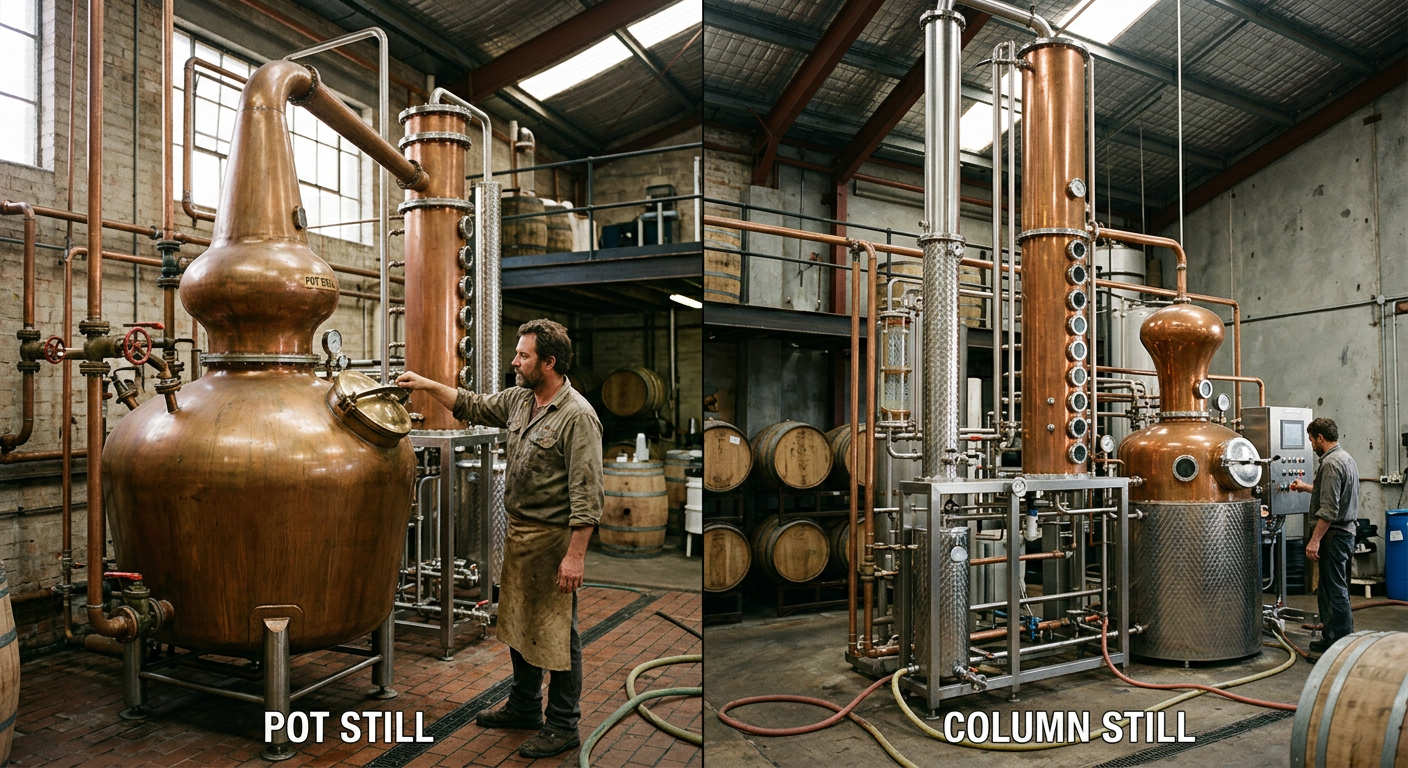
| Spirits | Stills, condensers, tanks | Hazard classification and utility adaptation | Ventilation, code review, fire safety |
| Juices and functional beverages | Blenders, HTST, fillers | Brix accuracy and hygienic piping | Instrumentation calibration, cleanability |
| Dairy beverages | Homogenizers, pasteurizers, tanks | Sanitary integrity and temperature control | Cold utility capacity, CIP validation |
| Aseptic products | UHT, sterile tanks, aseptic fillers | Validation and sterile boundary protection | Sterile air, SIP/CIP, environmental control |
This comparison highlights why “beverage” is too broad a label for move planning. Each category has a different failure mode, and the relocation plan should reflect those realities.
The line chart reflects realistic market growth drivers: reshoring, co-packing expansion, portfolio rationalization, and the push to redeploy assets rather than replace them immediately.
Dismantling and Transport-Safe Packaging for Sensitive Beverage Equipment

Good relocation outcomes are often decided before the first truck leaves the original facility. Dismantling must be sequenced around product residues, lockout/tagout, utility isolation, fluid removal, sanitary cleaning, and preservation of critical machine references. Equipment should be photographed, tagged, measured, and mapped to a relocation bill of materials. Instrument loops, I/O points, valve clusters, and hose sets should be identified before disassembly begins.
Transport-safe packaging is especially important for fillers, depalletizers, seamers, labelers, pasteurizers, heat exchangers, membrane systems, control panels, VFDs, load cells, and specialty valves. Stainless surfaces can be scratched, sensors can be shocked, and alignment can be lost from vibration. A simplistic shrink-wrap approach is rarely enough. Sensitive components often need custom crating, desiccants, shock indicators, corrosion protection, and internal bracing.
For beverage producers moving between states such as California, Texas, Ohio, and North Carolina, long over-the-road transport can expose equipment to moisture, impact, and thermal swings. International moves into the United States from Canada or Mexico add customs and border timing considerations. In both cases, the packaging method should match transport duration, mode, and sensitivity.
| Equipment Type | Main Transport Risk | Recommended Packaging | Extra Preservation Step |
|---|---|---|---|
| Filler and capper | Alignment drift | Custom skid with bracing | Mark calibration points |
| PLC/HMI panels | Moisture and vibration | Climate-protected crate | Full software backup |
| Plate heat exchanger | Plate damage and contamination | Sealed crate with padding | Cap all sanitary ports |
| CIP skids | Pump and instrument damage | Shock-labeled skid pack | Drain and dry fully |
| Membrane filtration units | Media degradation | Condition-specific packaging | Follow OEM preservation rules |
| Aseptic filler modules | Sterile interface damage | OEM-grade protected crating | Controlled revalidation plan |
The explanation here is practical: packaging is not an accessory cost. It is an insurance policy for line performance at the destination. The more specialized the beverage system, the more valuable disciplined preservation becomes.
Logistics Management: Coordinating Customs, Deadlines, and Multi-Site Coordination
Plant relocation logistics are usually more complex than a single pickup and delivery. Many projects involve multiple source locations, temporary warehousing, overseas or cross-border freight, crane appointments, escorts for oversized loads, and destination readiness issues. A carbonated line may leave one plant in St. Louis, collect spare parts from a warehouse in Indianapolis, receive controls components from Ontario, and land at a new site in Phoenix. Without strong coordination, one late truck can delay a full startup sequence.
Customs management is especially relevant for moves between the United States and Canada. Harmonized codes, documentation packs, equipment serial records, declarations, and inspection timing must be aligned well in advance. For imported or previously used machinery entering the U.S., supporting documents may also be needed for sanitation, electrical conformity, and ownership verification. Port and inland route planning matters when shipments move through Los Angeles/Long Beach, Houston, Seattle, Detroit, Buffalo, or Newark corridors.
Deadline management should also reflect commercial reality. Beverage manufacturers often work against summer peaks, holiday demand, promotional launches, and retailer reset calendars. A delay of two weeks can carry a much larger revenue impact than the transportation invoice itself. This is why experienced project teams create critical path schedules tied to shutdown windows, civil readiness, utility installation, controls integration, dry commissioning, wet commissioning, and first-sale timing.
The demand chart shows that relocation activity is spread across beverage categories, with aseptic ready-to-drink and carbonated products remaining particularly active due to growth, portfolio change, and asset optimization.
Reassembly and Commissioning: Functional Testing at the Destination Facility
Reassembly is where relocation becomes an operating asset again. The best field teams rebuild the process with attention to mechanical fit, utility alignment, instrumentation, hygienic weld quality, slope and drainability, electrical termination, and control logic integrity. This stage often includes modifications needed to adapt older equipment to a new line layout, throughput target, or packaging format.
Commissioning should progress in layers. First comes mechanical completion and punch listing. Then dry functional checks confirm motors, valves, sensors, conveyors, safety devices, and communications. Wet testing follows to verify pumps, CIP paths, heat transfer, temperatures, pressure behavior, flow rates, and leak integrity. Product trial runs should then confirm package quality, changeover capability, reject handling, and throughput stability. Aseptic lines may require additional sterile integrity and validation steps before commercial release.
This is also where technical capability matters most. DPS brings process and controls expertise that extends beyond rigging: PLC programming, automation, SCADA support, utility integration, water treatment, blending, carbonation, fermentation systems, pasteurization technologies, and aseptic process knowledge. That breadth helps avoid the common failure mode where equipment is physically installed but not truly production-ready.
| Commissioning Stage | Main Objective | Typical Deliverable | Go/No-Go Gate |
|---|---|---|---|
| Mechanical completion | Confirm equipment is installed correctly | Punch list and as-built walkdown | All critical deficiencies closed |
| Electrical verification | Validate power and control wiring | I/O and loop checks | Stable communications and safe energization |
| Dry run | Test movement and interlocks | Functional test sheets | No critical alarm or safety failure |
| Wet utility test | Verify process flow and thermal performance | Utility performance log | Pressure, flow, temp within target |
| Product trial | Confirm product and package quality | Startup batch report | Quality specs achieved |
| Performance ramp-up | Stabilize output and efficiency | OEE trend and final acceptance | Sustained target throughput |
The table shows why startup should be treated as a disciplined sequence rather than a single event. The handoff from installation to production must be measurable.
Documentation and Operator Training for Relocated Beverage Production Systems
Documentation is one of the most undervalued elements in a plant move. Yet in many beverage projects, it determines how quickly operators, maintenance teams, sanitation crews, and quality staff can regain control of the line. A professionally relocated system should include updated P&IDs, equipment lists, utility maps, panel schedules, cable references, spare parts lists, startup procedures, cleaning instructions, and changeover guidance.
Operator training should be tailored to the new plant, not copied from the previous one. Even when the equipment is the same, the line may have new routing, revised control sequences, different utilities, modified CIP logic, or different bottle/can formats. Maintenance staff should also receive practical training on sensors, wear components, lubrication points, troubleshooting, and restart recovery. For aseptic or sanitary systems, quality and sanitation teams need clear retraining on hygienic zones and critical control points.
In the United States, beverage companies increasingly prefer project partners who can support both physical installation and knowledge transfer. That is especially important when experienced staff do not fully transfer to the new site or when a co-packer is bringing on new operators quickly.
The area chart reflects a strong trend toward digital turnover packages, remote support records, and standardized training content. By 2026, this is becoming expected rather than optional in advanced beverage relocations.
Cost Efficiency Through Equipment Reuse vs. New Capital Investment Analysis
One of the biggest strategic questions in a beverage plant relocation is whether to move existing assets, buy used replacements closer to the destination, or invest in new equipment. The answer depends on age, sanitary condition, controls obsolescence, throughput, spare parts availability, packaging format needs, and the commercial timeline. There is no universal rule, but there is a disciplined way to decide.
Relocation often makes financial sense when the equipment is mechanically sound, process-fit for future volumes, and not burdened by severe obsolescence. New investment may be better when the line cannot meet required speed, package flexibility, energy standards, or sanitary expectations. In many real projects, the smartest path is hybrid: move tanks, utilities, and selected process skids while replacing outdated fillers, controls, or package-handling sections.
DPS often acts as a business-minded engineering partner in this decision process rather than simply pushing spend. That perspective matters. Sometimes a targeted controls or process upgrade releases capacity without major new capital. Other times, relocation is justified because the existing system still has meaningful economic life and can be integrated into a more profitable plant design.
| Option | Upfront Cost | Timeline | Main Benefit | Main Drawback |
|---|---|---|---|---|
| Move existing line | Medium | Medium | Lower capital than new purchase | Potential legacy constraints |
| Buy fully new line | High | Long | Latest speed and efficiency | Largest capital exposure |
| Hybrid relocation and upgrade | Medium-high | Medium | Balances reuse with modernization | Requires careful integration |
| Buy used local equipment | Variable | Short-medium | Can reduce freight and lead time | Condition and compatibility uncertainty |
| Lease or contract manufacture | Low-medium | Short | Fast capacity access | Less control over operation |
| Delay project | Low immediate | N/A | Preserves cash short term | Opportunity cost and capacity risk |
This table is useful as a buying framework. The “best” option depends on total cost of ownership, time to revenue, reliability risk, and strategic flexibility.
Safety and Compliance: Working to OSHA and Beverage Industry Standards
Safety must govern every phase of a beverage plant move. That includes lockout/tagout, fall protection, confined space entry, rigging plans, forklift routes, crane lifts, elevated work platforms, electrical isolation, chemical handling, pressure systems, and sanitary chemical residues. OSHA compliance is the baseline, but beverage projects also need alignment with food safety programs, site GMPs, and often customer audit standards.
For alcohol production, combustible environments and ventilation may require additional review. For dairy and aseptic systems, sanitary integrity and cleaning validation are especially important. For large tank farms and utility systems, structural review, anchoring, seismic considerations in states such as California, and pressure testing may also be needed. When a project spans multiple states, local permitting and contractor rules can vary significantly.
Service capability matters here as much as technical capability. DPS operates as an end-to-end engineering and project execution partner, offering process design, capital planning, owner’s representation, project management, general contractor functions where licensed, equipment supply, installation, integration, and commissioning. That full-scope model helps clients reduce the handoff gaps that often create safety and compliance failures during complex plant moves.
| Compliance Area | Relocation Relevance | Example Control | Responsible Team |
|---|---|---|---|
| OSHA safety | Worker protection during removal and install | LOTO, lift plans, PPE | Site safety and project management |
| FDA food safety | Sanitary condition of product-contact assets | Documented cleaning and inspection | Quality and engineering |
| SQF/BRC programs | Auditability and operational controls | Traceable change documentation | Quality systems team |
| Electrical codes | Power distribution and panel compliance | Panel review and field verification | Electrical engineering |
| Pressure systems | CO2, steam, compressed air, tanks | Testing and certification review | Mechanical/process team |
| Environmental rules | Wastewater, refrigerants, emissions | Permit check and utility redesign | Project and facility leadership |
The explanation is straightforward: compliance is not a post-install checkbox. It should be embedded in the schedule, budget, work packs, and acceptance criteria from the beginning.
Case Study: Minimizing Downtime During a Full Beverage Plant Relocation
Consider a realistic U.S. case: a beverage producer needed to relocate a mixed-use line from the Midwest to a new Southern facility serving faster-growing regional demand. The system included storage tanks, blending, a carbonation skid, CIP, conveyors, and package handling. The commercial goal was to restart production before peak seasonal demand with minimal customer disruption.
The relocation strategy began with a front-end audit covering asset condition, utility loads, layout fit, controls backups, and spare parts gaps. The team divided equipment into three categories: move as-is, move and modify, and replace. Shutdown sequencing was built around remaining customer orders so that upstream preparation started before final production ended. Dismantling used detailed tagging, photo records, and preservation steps for instruments, valve clusters, and control panels.
On the destination side, utilities and foundations were prepared before the first truck arrived. Parallel workstreams handled rigging, piping, electrical installation, and controls. Dry commissioning began as soon as the first modules were complete rather than waiting for the entire line. Operator training started during installation and continued through wet trials. Because critical-path decisions were made early, the plant moved from first energization to first saleable output significantly faster than a traditional sequential approach.
This model reflects how experienced relocation teams minimize downtime: early engineering, selective modernization, destination readiness, and disciplined startup sequencing. It also shows the value of manufacturing capability. DPS not only supports integration of third-party machinery, but also designs and manufactures selected process equipment such as tanks and CIP systems. That can be valuable when a relocated line needs supplemental hardware, replacement skids, or fit-for-purpose modifications without waiting on long OEM lead times.
The comparison chart illustrates a common market reality in the United States: logistics vendors and riggers can be valuable contributors, but they are not substitutes for a true process relocation partner when the system is complex.
FAQ
How long does a beverage plant relocation usually take in the United States?
It depends on scope. A limited skid move may take a few weeks, while a full production line or multi-system plant relocation can take several months including planning, dismantling, transit, reinstall, and commissioning. Projects tied to building readiness or major utility changes typically need more lead time.
Is it cheaper to relocate beverage equipment than buy new?
Often yes, but not always. If the assets are in good condition and still meet future production needs, relocation can be much more cost-effective. If the equipment is obsolete, too slow, or difficult to support, new investment may create better long-term value.
Can carbonation and CO2 systems be relocated safely?
Yes, if pressure components, regulators, gas piping, controls, and temperature-sensitive elements are properly isolated, preserved, tested, and recommissioned. These systems should always be handled by teams familiar with beverage gas control and plant safety.
Are aseptic lines harder to move than standard beverage lines?
Yes. Aseptic systems require higher control over sterile boundaries, documentation, validation, and startup protocols. The reinstall is not just mechanical; it must restore sanitary and sterile performance expectations at the destination facility.
What documents should I ask for during a relocation project?
Request equipment lists, tagged photo records, shipping manifests, control backups, updated P&IDs, utility maps, installation records, startup procedures, training materials, punch lists, and acceptance documents.
What industries benefit from beverage plant relocation services?
Breweries, distilleries, wineries, juice producers, functional beverage brands, carbonated soft drink manufacturers, dairy beverage plants, kombucha operations, ready-to-drink manufacturers, and co-packers all benefit from professional relocation support.
What should I look for in a U.S. relocation partner?
Look for process engineering capability, sanitary installation experience, controls knowledge, project management discipline, multi-site coordination strength, startup support, and documented safety performance. The best partners can advise whether to move, modify, or replace equipment based on business value rather than just scope volume.
Why do manufacturers choose a company like DPS?
Because the project often needs more than transport. It needs engineering judgment, technical integration, field execution, and startup accountability. DPS supports beverage and food manufacturers across North America with a lean, experienced team focused on profitable capital outcomes, rapid decision-making, and practical execution aligned with the client’s long-term business goals.
What are the key 2026 trends affecting beverage relocations?
Three trends stand out. First, automation and digital documentation are becoming standard, including remote diagnostics, PLC modernization, and data-driven commissioning. Second, policy and compliance pressure is increasing around worker safety, energy use, traceability, and food system resilience. Third, sustainability is shaping decisions more strongly, with companies reusing viable equipment, improving water and energy efficiency, and redesigning utilities to reduce waste and carbon intensity.
In summary, beverage plant relocation in the United States is a specialized project type that sits at the intersection of manufacturing strategy, process engineering, installation quality, and commercial timing. From CO2 systems to aseptic lines, from dismantling and crating to customs, reassembly, training, and startup, every phase affects the speed and profitability of reopening. Companies that approach the move as a full-system capital project, rather than a transport event, are far better positioned to protect production continuity and maximize the value of existing assets.
[/trp_language]
Complete Company Portfolio
About the Author: Disruptive Process Solutions (DPS)
The DPS team combines process engineering expertise with real-world food and beverage manufacturing experience. Our content focuses on process optimization, production efficiency, facility improvements, and practical solutions that help manufacturers operate more effectively in a rapidly evolving industry.
Share