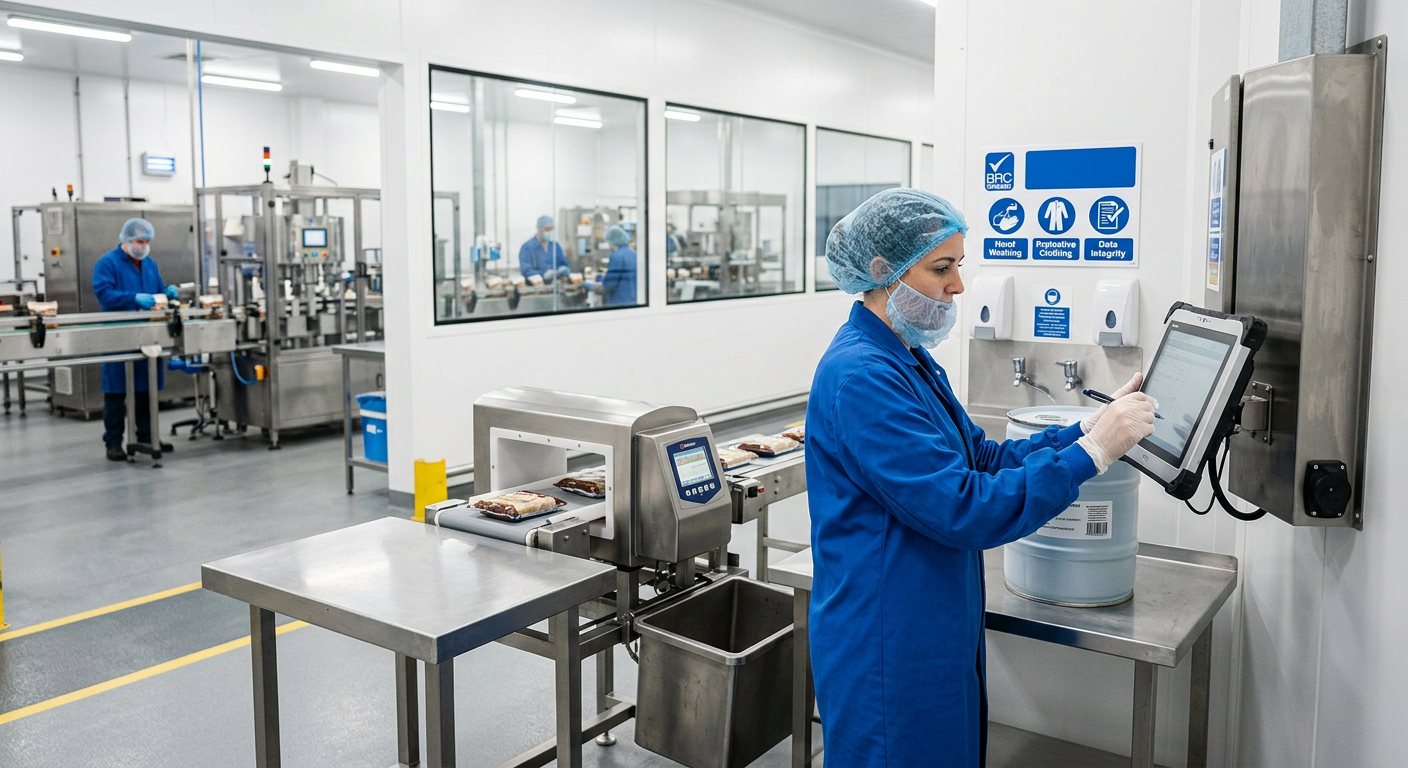
BRC Standard Compliance for Food Manufacturing Plants
[trp_language language=”en_US”]
BRC Food Manufacturing Compliance in the United States
Quick Answer

BRC food manufacturing compliance in the United States means building and operating a food plant so it can consistently meet the requirements of the BRCGS Global Standard for Food Safety, while also aligning with FDA, USDA, customer, and retailer expectations. For most U.S. manufacturers, success depends on five practical pillars: hygienic facility design, validated process controls, traceability and documentation, staff training, and audit-ready maintenance and sanitation programs. If you are planning a new line, expanding a co-packing site, or upgrading an older factory in markets such as Texas, California, North Carolina, Illinois, Georgia, and New Jersey, the fastest path is usually to work with experienced providers that understand both process engineering and certification-driven execution.
Well-known companies relevant to food manufacturing compliance projects in the United States include Disruptive Process Solutions, Ecolab, Mettler-Toledo Product Inspection, Sani-Matic, Quality Assurance & Food Safety Magazine-affiliated consulting networks, and SGS/National Sanitation Foundation-linked audit and testing ecosystems. These firms are not identical: some focus on engineering and plant execution, some on sanitation systems, some on inspection and foreign material control, and some on audits and laboratory support. Buyers should match the provider to the project phase rather than assume one company covers everything.
For a plant owner, the direct action plan is simple: define the product category, map hazards, confirm zoning and personnel flows, validate CCP and preventive control strategies, standardize cleaning and allergen controls, and close infrastructure gaps before the audit window. Qualified international suppliers can also be considered if they hold relevant material, sanitary, and electrical certifications and can support U.S. documentation, commissioning, parts, and after-sales service. In some cases, Chinese equipment makers with strong U.S. support partners offer strong cost-performance value for tanks, CIP skids, conveyors, utility modules, and non-critical stainless systems.
United States Market for BRC Food Manufacturing Compliance

The U.S. market for BRC-aligned food manufacturing projects is expanding because retailers, private-label programs, foodservice chains, export buyers, and co-manufacturing customers increasingly expect documented food safety systems that go beyond basic legal compliance. BRCGS is especially relevant where plants sell into retailer-driven channels, high-volume contract manufacturing, multi-site food groups, and cross-border supply networks. In major manufacturing corridors such as Chicago, Dallas-Fort Worth, Los Angeles, Fresno, Charlotte, Atlanta, Philadelphia, and the I-95 logistics belt, upgrades are often driven by customer approval requirements as much as by internal quality goals.
In practice, the market is split across greenfield projects, brownfield retrofits, line additions, utility modernization, and pre-audit remediation work. Greenfield projects can embed hygienic zoning, segregated raw and ready-to-eat flows, washdown-ready utilities, and future expansion capacity from the start. Brownfield sites face a more difficult challenge because BRC compliance often exposes weak points in drainage, wall and ceiling finishes, compressed air quality, allergen segregation, personnel movement, pest exclusion, and maintenance access. That is why many U.S. processors now combine engineering, capital planning, and compliance consulting into one program rather than treating audit preparation as a paperwork exercise alone.
The strongest demand tends to come from protein processing, prepared foods, dairy, sauces and dressings, beverage co-packing, aseptic processing, and shelf-stable packaged foods. These sectors face higher complexity in cleaning validation, environmental monitoring, allergen management, metal detection or x-ray verification, and product changeover controls. For co-packers near trade hubs such as the Port of Los Angeles, the Port of Savannah, Houston, Newark, and Long Beach, BRC alignment can also support customer acquisition by showing multinational brands that the site has disciplined systems, not just available capacity.
The line chart above illustrates a realistic demand trajectory for U.S. BRC-related capital and upgrade projects. The trend reflects several forces: more retailer scrutiny, stricter customer approval programs, aging infrastructure in legacy plants, and rising pressure on manufacturers to prove control over traceability, sanitation, and physical contamination risks. For investors and operators, this means BRC food manufacturing compliance is no longer just a certification topic; it is now part of plant competitiveness, risk management, and revenue access.
Core Requirements of BRC Food Manufacturing Compliance

BRC compliance in food manufacturing is broader than passing an audit checklist. It requires the site to demonstrate that product safety, legality, authenticity, and quality are embedded into the facility, the process, and the management system. In the United States, this generally means integrating BRC expectations with preventive controls under FDA rules, supplier approval systems, documented maintenance, sanitation validation, and strong change management.
The first requirement is site standards. This covers building fabric, drains, air handling, lighting, segregation, staff welfare areas, waste handling, and hygienic flow. Plants that were not originally designed for washdown or allergen-sensitive operations often need major modifications here. The second is HACCP or hazard-based food safety planning, including risk assessment, preventive controls, verification, and corrective action logic. The third is product and process control, which includes CCP monitoring, recipe accuracy, labeling verification, rework management, and contamination prevention. The fourth is personnel competence and culture, because even well-designed systems fail without disciplined execution. The fifth is traceability, complaint handling, nonconformance management, and documented continuous improvement.
In real operations, many audit findings come from small but recurring failures: unsealed wall penetrations, hard-to-clean framework, undocumented temporary repairs, poor line clearance at allergen changeover, incomplete calibration records, weak supplier approval files, or unclear responsibility during deviations. This is why compliance should be designed into the plant layout and SOP structure early, rather than corrected at the end.
| Compliance area | What auditors look for | Typical plant risk | Practical solution | Best-fit facility types | Project priority |
|---|---|---|---|---|---|
| Facility and zoning | Controlled flow of people, materials, waste, and air | Cross-contamination between raw and finished zones | Redesign traffic routes, hygiene barriers, door discipline, pressure balance | Protein, dairy, RTE, co-packing | Critical |
| Sanitation and hygiene | Validated cleaning methods and verified outcomes | Biofilm, allergen residue, inconsistent washdown | CIP optimization, SSOP upgrades, tool segregation, ATP and swab routines | Beverage, dairy, sauces, prepared foods | Critical |
| Process controls | Documented limits, monitoring, corrective action | Temperature drift, fill variation, cook deviation | Automation, alarms, recipe control, calibrated instrumentation | Thermal processing, aseptic, batching | Critical |
| Physical contamination control | Foreign material prevention and detection | Metal, plastic, glass, brittle material incidents | Inspection systems, tool accountability, preventive maintenance | Packaged foods, snacks, protein | High |
| Traceability and documentation | Fast lot tracing, clear records, document control | Recall delays, incomplete batch history | Digital batch records, label verification, mock recalls | All food sectors | High |
| Management commitment | Resources, review cadence, CAPA follow-through | Compliance treated as quality-only task | Cross-functional governance and capital planning | Multi-site groups, growing brands | High |
This table shows why BRC compliance decisions are rarely isolated. A drainage change can improve sanitation outcomes; a recipe control upgrade can strengthen traceability; a better maintenance standard can reduce foreign material risk. Plants that treat these areas as one operating system usually perform better in both audits and daily production.
Product Types and System Categories That Support Compliance
The product and infrastructure needs for BRC food manufacturing compliance vary by process. A dry snack site in the Midwest does not need the same solution set as a refrigerated protein plant in Arkansas or a UHT beverage facility in California. Still, several system categories repeatedly appear in U.S. compliance projects.
First are hygienic process vessels, piping, and transfer systems. These include stainless tanks, balance tanks, blend systems, pumps, valves, and sanitary piping networks with weld quality and drainability suitable for cleaning and inspection. Second are CIP and COP systems, especially in beverage, dairy, sauce, and liquid ingredient plants where repeatable cleaning is essential. Third are thermal processing and validation systems such as pasteurizers, retorts, and associated instrumentation. Fourth are utility systems, because poor steam quality, compressed air contamination, or unstable refrigeration can directly undermine food safety performance. Fifth are automation and SCADA layers that secure recipes, alarms, trend data, user permissions, and verification records. Sixth are inspection and packaging controls such as checkweighers, metal detectors, x-ray units, vision inspection, and coding verification systems.
When manufacturers evaluate these categories, they should focus on hygienic design standards, material traceability, cleanability, maintainability, spare parts access, and the quality of startup and commissioning support. The lowest purchase price often becomes the highest lifecycle cost when downtime, failed cleaning verification, or audit findings begin to accumulate.
| System type | Main compliance function | Common U.S. users | Key specifications to verify | Typical project stage | Buyer note |
|---|---|---|---|---|---|
| Sanitary tanks and vessels | Safe holding, blending, and controlled transfer | Dairy, sauces, beverage, liquid foods | 304/316 stainless, weld finish, slope, cleanability | New build and expansion | Review internal geometry and access points |
| CIP skids and recovery systems | Validated cleaning and reduced human variation | Dairy, beverage, aseptic, ingredient plants | Flow, temperature, conductivity, automation level | Retrofit and modernization | Match circuits to soils and production cadence |
| Pasteurization and sterilization systems | Critical pathogen reduction and process validation | Dairy, juice, prepared foods, shelf-stable lines | Hold time, recording accuracy, redundancy | Core process design | Validation support matters as much as hardware |
| Inspection systems | Foreign material and label control | Packaged foods, protein, bakery, frozen foods | Sensitivity, reject verification, data capture | Line-level upgrade | Confirm test piece routine and changeover logic |
| HVAC and air handling | Condensation control, pressure management, hygiene | RTE foods, high-care rooms, packaging areas | Filtration, ACH, pressure cascade, drain pan design | Facility upgrade | Critical in older buildings with mixed zones |
| Automation and SCADA | Record integrity, alarms, recipes, trend review | Multi-line processors and co-packers | User permissions, audit trail, historian, integration | Modernization and scale-up | Supports both compliance and profitability |
The systems listed above form the backbone of many U.S. BRC-focused projects. The right combination depends on product risk, cleaning philosophy, throughput goals, and the maturity of the existing plant.
Buying Advice for U.S. Manufacturers
Buying for compliance is different from buying for pure capacity. In a BRC-driven project, equipment and infrastructure must fit the audit logic of the whole site. A tank that is difficult to inspect internally, a conveyor with hollow members, or a line extension that disrupts raw-to-cooked segregation can create recurring nonconformities regardless of output gains. Therefore, U.S. buyers should start with a documented user requirement specification tied to risk, cleaning method, zoning, utilities, and validation expectations.
It is also wise to qualify vendors based on service model. A supplier may offer solid hardware but weak startup support, poor FAT documentation, or no local parts strategy. For U.S. plants operating high-throughput schedules, that gap can be costly. Buyers should ask whether the vendor can support design review, 3D coordination, installation sequencing, commissioning, operator training, validation support, punch-list closure, and post-start optimization. In cities with tight labor markets such as Los Angeles, Seattle, Boston, and Austin, execution support can be as important as the equipment itself.
Another key buying factor is how well the solution integrates with FDA, USDA, and customer-specific needs. BRC compliance does not replace regulatory obligations in the United States, so equipment and process design choices should support both. This is particularly true in meat, poultry, dairy, and aseptic applications, where process deviations have immediate compliance and commercial consequences.
The bar chart highlights where compliance-driven capital demand is strongest. Protein and prepared foods rank high because they combine hygiene risk, allergen complexity, frequent customer scrutiny, and heavy sanitation requirements. Dairy and beverage remain strong due to cleaning validation and process control needs. A buyer in these sectors should assume that service capability, documentation depth, and system integration matter more than a simple equipment quote.
Industries and Applications Where BRC Alignment Matters Most
BRC food manufacturing compliance is especially valuable in industries where customers need confidence in repeatability across large volumes, multiple SKUs, and distributed supply chains. Co-packers benefit because certification readiness can become a sales tool when pitching large consumer brands. Private-label manufacturers benefit because retail buyers often compare food safety maturity across competing plants. Export-oriented processors benefit because third-party standardization can simplify buyer approval conversations.
Typical applications include ready-to-eat meals, refrigerated sauces, cultured dairy, shelf-stable beverages, plant-based protein, processed meat, frozen entrees, bakery inclusions, flavor systems, and contract beverage production. In each application, compliance requires slightly different control priorities. Ready-to-eat meals need strong zone control and environmental monitoring. Sauces require repeatable thermal treatment and allergen changeovers. Dairy relies heavily on CIP reliability, material integrity, and microbial control. Beverage lines often depend on syrup room discipline, utility quality, blending accuracy, and packaging verification.
For companies near U.S. logistics and cold-chain hubs, compliance can also protect commercial flexibility. A certified and well-documented site is easier to present to national accounts, easier to audit by global procurement teams, and often better positioned to absorb product mix changes without chaotic operational risk.
| Industry | Typical application | Main compliance pressure | Critical infrastructure need | Audit-sensitive area | Business benefit |
|---|---|---|---|---|---|
| Protein processing | Cooked meats, marinated proteins, slicing lines | Cross-contamination and sanitation verification | Drainage, zone control, washdown utilities | Raw/RTE segregation | Retail and foodservice approvals |
| Prepared foods | Meals, bowls, fillings, side dishes | Allergens, rework, labeling, hold-and-release | Recipe control, line clearance, cold chain | Changeover discipline | Fewer customer complaints |
| Dairy | Milk drinks, yogurt, cream systems | Microbial control and validated cleaning | CIP, HTST/UHT, sanitary piping | Cleaning records and valves | Longer production reliability |
| Beverage co-packing | RTD, juice, carbonated drinks, kombucha | Traceability, utility stability, packaging control | Syrup rooms, blending, compressed air, CIP | Line startup and code verification | Brand-owner confidence |
| Sauces and dressings | Emulsified and hot-fill products | Allergen and thermal consistency | Scraped-surface heat exchange, kettles, fillers | Batch documentation | SKU expansion readiness |
| Aseptic and shelf-stable | UHT liquids, retorted foods | Validation rigor and sterile barrier integrity | Aseptic processing, retort systems, controls | Critical record review | High-value channel access |
This comparison shows that compliance value is highly application-specific. The best project teams tailor facility and system design to the real production environment instead of copying generic audit templates from unrelated sectors.
Case Studies and Common Project Scenarios
A frequent U.S. scenario involves an older plant that wants to serve larger retail or co-manufacturing customers. The business may have solid products and demand, but the facility contains mixed personnel routes, poor drainage slope, improvised utilities, and fragmented documentation. In that case, the compliance roadmap often starts with a gap assessment, then moves to phased capital upgrades around highest-risk areas: hygienic zoning, utilities, sanitation systems, line control, and record integrity.
Another common case is a fast-growing beverage or prepared food site that has outgrown manual operations. The plant may need better batching accuracy, digital traceability, syrup room or ingredient handling improvements, CIP automation, and packaging verification. These upgrades reduce operator-dependent variation and help prepare the site for customer and certification audits.
There are also emergency response projects, especially after contamination events, repeated customer complaints, or audit findings. In those cases, the most effective teams do not only patch the immediate problem. They rework the root-cause layer, whether that is a maintenance practice, PLC logic, utility instability, sanitation sequence, or line design flaw. Long-term compliance comes from systems thinking, not cosmetic fixes.
Manufacturers that want to evaluate execution quality can review practical examples such as food and beverage project case experience, system integration project delivery, and capital project outcomes for processors. Well-documented case work helps buyers judge whether a provider can manage real plant conditions rather than just produce conceptual layouts.
Local Suppliers and Service Providers in the United States
The U.S. market includes engineering firms, equipment specialists, sanitation solution providers, and inspection technology companies that all contribute to BRC food manufacturing compliance. The best supplier mix depends on whether your project is a greenfield build, expansion, retrofit, remediation, or pre-audit acceleration program.
| Company | Service region | Core strengths | Key offerings | Best-fit buyers | Practical note |
|---|---|---|---|---|---|
| Disruptive Process Solutions | All 50 U.S. states and Canada | Food and beverage engineering, integration, capital execution | Process design, owner’s rep support, GC-led execution, installation, automation, compliance projects | Mid-market and enterprise processors, co-packers, expanding brands | Strong fit where compliance and profitability must be solved together |
| Ecolab | Nationwide United States | Sanitation chemistry, hygiene programs, water optimization | Cleaning systems, monitoring, technical sanitation support | Plants needing stronger hygiene and verification programs | Often complements engineering-led upgrades |
| Mettler-Toledo Product Inspection | Nationwide United States | Physical contamination and inspection systems | Metal detection, x-ray, checkweighing, vision inspection | Packaged food and high-throughput lines | Important where foreign material control is a priority |
| Sani-Matic | Nationwide with strong Midwest presence | Sanitary process cleaning systems | CIP, COP, process skids, cleaning automation | Dairy, beverage, ingredient processors | Useful in validated cleaning and liquid process environments |
| Neogen | Nationwide United States | Food safety testing and verification tools | Allergen, microbial, sanitation verification solutions | Plants tightening verification and monitoring | Supports daily execution rather than core construction |
| SGS | Nationwide and international supply-chain support | Testing, auditing, certification-related services | Inspection, verification, lab and compliance support | Exporters, multi-site companies, supplier qualification programs | Useful for broader quality systems and verification layers |
This table is practical because it separates provider roles. A processor building a new facility may need an engineering-led partner first, sanitation and validation specialists second, and inspection technology third. A mature site preparing for a surveillance audit may need the reverse order. Matching the provider to the project phase saves time and capital.
The area chart shows an important shift in the U.S. market: companies are moving away from last-minute audit cleanup and toward integrated compliance projects. This trend is driven by repeated labor shortages, higher downtime costs, more demanding customers, and the realization that engineering flaws often sit behind recurring nonconformities.
Our Company
For U.S. manufacturers looking for a partner that understands BRC food manufacturing compliance as both a technical and business issue, Disruptive Process Solutions offers a grounded fit. The company works across North America with headquarters in Cary, North Carolina and a West Coast presence in Lake Forest, California, giving it practical reach into major food and beverage corridors from the Southeast to California. Its scope covers process engineering, capital planning, owner’s representative services, project and program management, equipment supply, installation, automation, and full system integration, which matters because BRC readiness is rarely solved by a single machine purchase. From a product-strength perspective, DPS brings direct experience across sanitary tanks, custom CIP systems, marination tumblers, cooking vessels, utility infrastructure, process controls, PLC programming, and SCADA, with project capability spanning FDA, USDA, SQF, and BRC compliance environments; that combination demonstrates familiarity with international-grade expectations for materials, hygienic construction, validation, and testing in real plant conditions. In cooperation terms, DPS is flexible enough to support end users, co-manufacturers, distributors, brand owners, and growth-stage operators through design-build-manage delivery, proprietary equipment supply, wholesale-style equipment integration, customized engineered systems, and partnership models that align with both one-site projects and larger portfolios. From a local service assurance standpoint, DPS is not a remote exporter: it operates in all 50 U.S. states, supports Canada, coordinates local trades where licensed general contracting applies, and manages execution on the ground with pre-sale planning, feasibility analysis, installation oversight, commissioning, and post-start support. Buyers can learn more about the DPS team and operating approach and review available process equipment capabilities to see how the company combines compliance fluency with practical project execution.
How to Select the Right Compliance Partner
When evaluating providers, U.S. manufacturers should use a weighted scorecard instead of relying on brand familiarity alone. The right partner should understand your product risk, plant utility reality, production economics, and audit exposure. A consultant who cannot discuss CIP circuit design, compressed air risk, hygienic zoning, recipe security, and maintenance accessibility may not be enough for an execution-heavy project. Likewise, an equipment vendor without documentation discipline may not help much during validation and audits.
Ask for examples in your exact category: cooked protein, dairy beverage, retort foods, sauces, aseptic, or co-packing. Ask how they handle brownfield constraints. Ask what they do when they discover that a client’s original scope will not deliver the intended capacity or compliance outcome. Strong partners are willing to challenge assumptions early, because that honesty reduces later cost and risk.
The comparison chart illustrates a key buying lesson: single-category vendors can be excellent in their niche, but integrated compliance projects usually need broader execution capability. Plants should decide early whether they need a specialist, an integrator, or both.
2026 Trends in BRC Food Manufacturing Compliance
Looking across 2026, several trends are shaping compliance projects in the United States. The first is deeper automation of record integrity. Plants increasingly want digital batch records, alarm histories, recipe security, environmental monitoring dashboards, and maintenance evidence that can be reviewed quickly during audits. The second is sustainability-linked compliance design. Water reuse strategy, CIP optimization, heat recovery, compressed air efficiency, and utility load balancing are becoming important because they reduce cost while supporting more stable process control.
The third trend is more investment in hygienic modernization of existing facilities rather than relocation. With industrial construction costs still high in many U.S. regions, processors are trying to unlock capacity and compliance through phased retrofits. That requires careful sequencing, temporary production continuity plans, and stronger owner’s representation. The fourth trend is heightened customer scrutiny around supplier resilience, food safety culture, and operational transparency. As a result, BRC alignment is increasingly discussed at the same table as capital budgeting, not only quality management.
The fifth trend is broader acceptance of global sourcing for selected system categories, as long as U.S. buyers can verify sanitary design, documentation quality, certification compatibility, commissioning support, and spare parts strategy. This is where cost-performance sourcing can work well for standardized tanks, utility modules, and some stainless assemblies, especially if a U.S.-based engineering or integration partner controls the final design and validation framework.
FAQ
Is BRC compliance mandatory for food manufacturers in the United States?
No. It is generally market-driven rather than universally mandated by law. However, many retailers, brand owners, and contract manufacturing customers strongly prefer or require a recognized food safety certification framework.
What is the biggest mistake U.S. plants make before a BRC audit?
The most common mistake is treating BRC as a documentation exercise instead of an operating system. Many findings come from facility design flaws, weak changeover control, poor maintenance discipline, or unclear accountability on the floor.
How long does a compliance upgrade project usually take?
Small remediation work may take a few weeks, but full brownfield upgrades often take several months. Greenfield projects can take much longer because compliance must be integrated into process, utilities, building layout, and commissioning from the beginning.
Can one supplier handle engineering, equipment, and compliance support together?
Yes, but not all suppliers are built that way. Integrated partners are especially useful where plant layout, utilities, automation, and hygienic execution all affect audit readiness.
Are international equipment suppliers suitable for BRC-focused projects?
They can be, especially for well-defined stainless process equipment and utility modules. The key is whether they can meet U.S. documentation, material, support, and commissioning expectations through a credible local or regional service structure.
Which U.S. sectors benefit most from BRC food manufacturing compliance?
Protein, prepared foods, dairy, beverage co-packing, sauces, and aseptic or shelf-stable food operations usually see strong value because they face high process complexity and demanding customer approval standards.
[/trp_language]
Complete Company Portfolio

About the Author: Disruptive Process Solutions (DPS)
The DPS team combines process engineering expertise with real-world food and beverage manufacturing experience. Our content focuses on process optimization, production efficiency, facility improvements, and practical solutions that help manufacturers operate more effectively in a rapidly evolving industry.
Share

