Building a Robust Food Safety Culture in Food Plants in 2026
[trp_language language=”en_US”]
How U.S. Food Plants Can Build a Strong Food Safety Culture in 2026
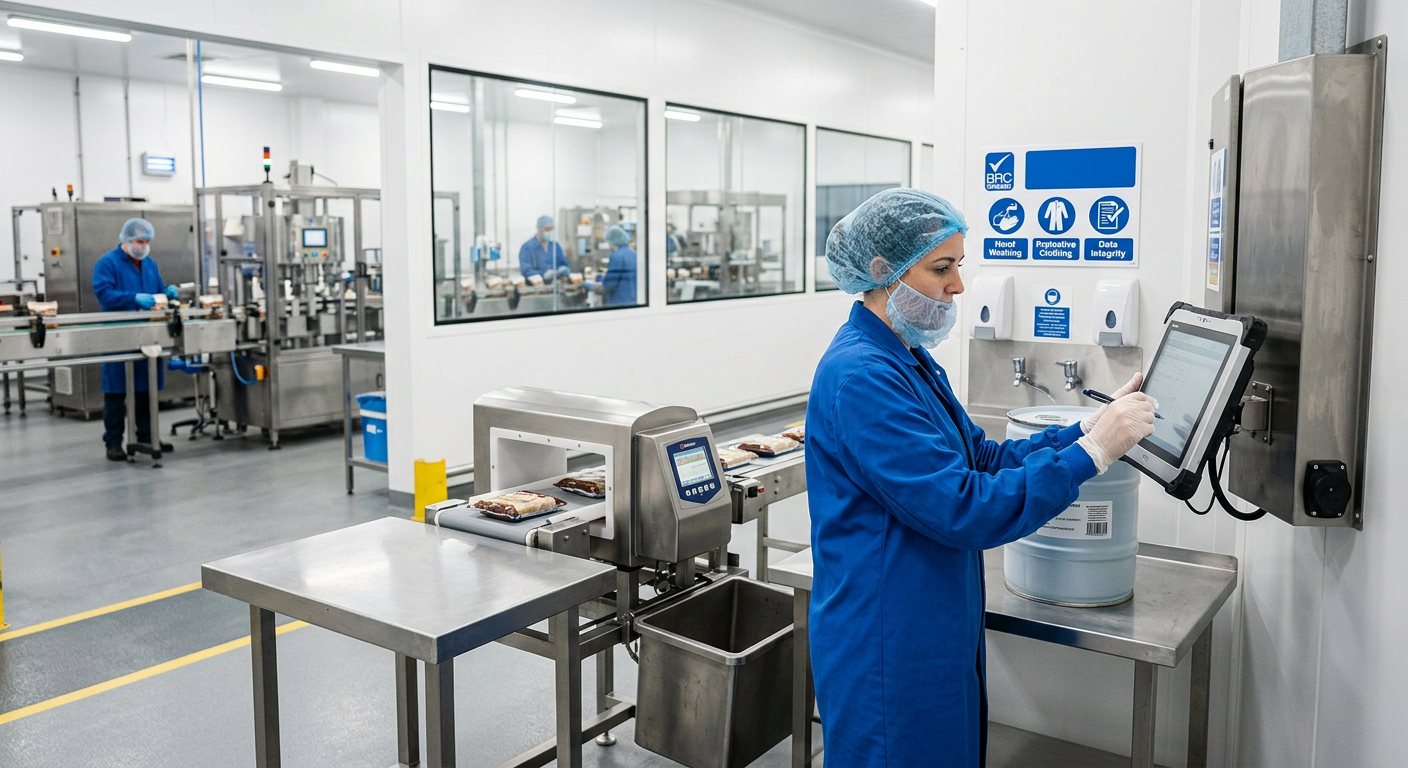
Food safety culture is no longer a soft concept or a poster on the wall. In the United States, it has become a measurable operating discipline that directly affects audit outcomes, recall risk, labor performance, customer trust, and plant profitability. By 2026, food manufacturers will be judged not only on whether they have HACCP plans, preventive controls, sanitation programs, and traceability systems, but also on whether plant teams consistently behave in ways that protect product integrity every shift, every line, and every handoff.
Across major U.S. processing regions such as the Midwest dairy belt, Arkansas poultry corridor, California’s Central Valley, the protein hubs around Omaha and Kansas City, and port-driven beverage networks tied to Los Angeles, Long Beach, Houston, and Savannah, food plants face the same challenge: technical controls only work when people use them correctly under real production pressure. That is why a robust food safety culture combines leadership expectations, practical training, communication systems, behavioral measurement, and continuous improvement inside daily operations.
Quick Answer

A strong food safety culture in a U.S. plant is built when leadership sets non-negotiable standards, supervisors reinforce them on the floor, employees understand both the “what” and the “why,” and management tracks behaviors with the same rigor used for yield, uptime, and cost. In 2026, the best-performing food and beverage facilities will treat food safety culture as an operational system rather than an awareness campaign.
For buyers, operators, and plant leaders, the direct answer is this: if you want better audit performance, fewer deviations, lower recall exposure, and more stable customer confidence, you must connect culture to plant design, line layout, automation, sanitation flow, maintenance access, training, and accountability. Culture is strongest when it is easy to do the right thing and hard to do the wrong thing.
The U.S. market increasingly rewards facilities that can show this operational maturity. Large retailers, branded manufacturers, and co-packers are asking tougher questions about hygienic zoning, environmental monitoring discipline, allergen control behavior, startup verification, and documentation integrity. In practical terms, food safety culture now influences supplier approval, customer retention, insurance discussions, and capital planning.
The most effective approach covers five business questions:
- What behaviors must happen every shift to protect product?
- How will management verify those behaviors in real time?
- What training is required by role, product, and risk?
- How do we correct drift before it becomes a deviation or recall?
- How do we build culture into expansion projects, new lines, and startup plans?
That final question matters more in 2026 because many U.S. processors are expanding capacity, modernizing legacy facilities, and adding automation. When plants redesign process rooms, utilities, CIP systems, traffic flows, and controls, they gain an opportunity to redesign food safety behavior itself.
| Culture Element | What It Means in Practice | Main Owner | Business Benefit |
|---|---|---|---|
| Visible leadership | Leaders make food safety part of daily meetings and site decisions | Plant manager | Reduces mixed priorities |
| Clear standards | Simple, role-based expectations for hygiene, checks, and escalation | QA and operations | Improves consistency |
| Targeted training | Training is practical, repeated, and validated on the floor | Training lead and supervisors | Improves compliance and retention |
| Behavioral verification | Plants measure observed behaviors, not just paperwork completion | Supervisors | Finds drift early |
| Fast feedback loops | Near misses and concerns are reported without fear | All employees | Prevents escalation |
| Continuous improvement | Issues are analyzed for root cause and permanently corrected | Cross-functional team | Lowers repeat deviations |
This table shows why food safety culture should be treated like a management system. Each element has an owner, a practical behavior, and a business result. Plants that define these links clearly are more likely to maintain performance during labor turnover, product changeovers, and periods of heavy demand.
The line chart reflects a realistic market direction: U.S. food and beverage manufacturers are allocating more resources to training systems, digital verification, environmental monitoring, hygienic design upgrades, and cross-functional culture programs. This upward trend is driven by labor shortages, audit scrutiny, customer expectations, and the need for fewer surprises during scale-up.
Leadership and Management Commitment

Food safety culture starts with management commitment because employees watch what leaders reward, tolerate, and prioritize. If daily production meetings focus only on throughput, scrap, labor, and downtime, then workers quickly learn that food safety is secondary. If leaders consistently stop lines for serious deviations, join floor walks, ask about corrective actions, and invest in better layouts or utilities, then the message changes.
In U.S. plants, commitment should be visible at three levels: executive, plant leadership, and frontline supervision. Executives set standards and approve resources. Plant leaders convert those standards into site routines. Supervisors make culture real during sanitation, startup, changeover, and troubleshooting.
By 2026, management commitment must include capital discipline. Many food safety failures are not caused by bad intentions; they come from poor equipment access, dead legs in piping, weak zoning boundaries, overloaded drain capacity, inadequate handwashing points, rushed line additions, or confusing material flows. A plant cannot lecture its way out of bad design.
That is why leading manufacturers involve engineering and operations early when building safety culture. For example, a protein or dairy expansion in Wisconsin, Texas, or North Carolina should evaluate not only capacity, but also hygienic separation, utility reliability, cleanability, operator access, and automation logic. Projects that ignore these basics often create recurring food safety workarounds.
Strong management commitment is also local. A beverage facility sourcing imported ingredients through the Port of Savannah may need heightened receiving controls and supplier verification discipline. A California aseptic processor may focus more heavily on sterile boundaries and environmental segregation. A poultry plant in Arkansas may emphasize personnel traffic flow and sanitation verification under wet processing conditions. Leadership must define priorities that reflect the actual site risk profile.
| Leadership Action | Weak Version | Strong Version | Expected Result |
|---|---|---|---|
| Plant walk-throughs | Monthly office-led inspection | Daily floor presence with coaching | Faster correction of unsafe behaviors |
| Resource approval | Delays sinks, barriers, and tools | Funds high-risk fixes quickly | Removes structural barriers |
| Meeting agenda | Food safety mentioned last | Food safety reviewed first | Clarifies priority |
| Deviation response | Focus on blame | Focus on containment and root cause | Improves reporting quality |
| Capital planning | Capacity only | Capacity plus hygienic design | Prevents built-in risk |
| Audit ownership | QA-only responsibility | Cross-functional responsibility | Raises plantwide accountability |
The difference between weak and strong leadership is usually operational, not rhetorical. Plants gain momentum when food safety is built into staffing, maintenance planning, shift startup, and project governance.
From a service standpoint, this is where structured project support matters. Companies looking for integrated planning often benefit from partners who can connect process design, utility scope, project execution, and compliance expectations. Manufacturers reviewing full service capabilities for food and beverage capital projects should look for teams that understand how layout and system design influence human behavior on the floor.
Employee Training and Education

Training is where many food safety culture programs either become practical or remain theoretical. In 2026, U.S. food plants need training that is role-specific, multilingual when necessary, repeated at the point of use, and validated through observation. A one-time orientation class does not create culture. Daily reinforcement does.
Effective education should cover foundational knowledge and product-specific risk. Employees handling ready-to-eat foods need a different emphasis than workers in raw meat receiving. Beverage operators on aseptic fillers need different failure awareness than workers in dry ingredient staging. Maintenance technicians need training on hygienic reassembly, temporary repairs, lubrication control, and line release expectations after intervention.
One reason modern training programs are improving is the growth of better process visibility and automation. When a plant uses SCADA, batch controls, line interlocks, or digital check verification, operators can learn cause and effect more clearly. That technological capability matters because people retain food safety expectations better when they can see how actions affect process outcomes. In complex U.S. facilities, especially those running HTST, UHT, retort, fermentation, or clean-in-place systems, technical clarity strengthens cultural discipline.
For manufacturers modernizing facilities, training should begin before startup. New equipment, new traffic patterns, new washdown zones, and new automation all change operator behavior. Plants that bring training in only after commissioning lose valuable time and increase early-life risk.
| Role | Training Focus | Frequency | Validation Method |
|---|---|---|---|
| Line operators | Hand hygiene, startup checks, escalation rules | At hire and monthly refreshers | Floor observation |
| Sanitation crews | Chemical use, SSOP steps, verification points | Weekly | Pre-op release scoring |
| Maintenance | Hygienic repair, tool control, post-work release | Monthly | Work order review and observation |
| Supervisors | Coaching, documentation checks, trend review | Monthly | Gemba walk performance |
| Warehouse staff | Receiving, allergen segregation, damage response | Quarterly | Dock audit |
| Temporary labor | Critical control basics and immediate do-not-do rules | Before each assignment | Buddy sign-off |
This table highlights an important idea: training frequency and validation should match risk. Higher-risk roles deserve shorter feedback loops. Plants with high turnover or seasonal demand should place even more emphasis on visual standards, buddy systems, and on-shift coaching.
Training also has a buying dimension. When evaluating new lines, vessels, CIP skids, or utility systems, ask suppliers how operator training is delivered, what documentation is included, and whether startup support reflects hygienic operation. Equipment that is technically capable but difficult to understand often creates unnecessary risk. Manufacturers reviewing a process equipment portfolio should prioritize cleanability, access, repeatability, and operator-friendly controls alongside throughput.
Communication and Feedback Systems
Communication is the connective tissue of food safety culture. Plants fail when important concerns stay trapped at the operator, mechanic, or sanitation lead level. They improve when concerns move quickly, clearly, and without retaliation.
In practice, communication systems should include pre-shift huddles, line-side visual boards, escalation trees, near-miss reporting, cross-shift handoff notes, and post-incident reviews. Food safety culture becomes stronger when employees know exactly who to call, what to document, and when to stop production.
U.S. processors with multiple shifts often struggle most during handoffs. The night sanitation team may identify recurring trouble spots that never reach day-shift production. Warehouse teams may see damaged inbound packaging at docks near Houston or Newark but fail to document a trend. Blending operators may notice CIP anomalies but assume maintenance already knows. These gaps are cultural weaknesses, not just communication errors.
Plants can strengthen feedback systems by simplifying what gets reported. Ask teams to flag five types of issues immediately: contamination risks, equipment cleanability concerns, unusual product behavior, documentation errors, and supplier or packaging anomalies. Keep forms short and response times fast.
Communication should also extend beyond the plant. U.S. manufacturers dealing with national customer networks, retailer audits, and multi-site production need stronger information flow between procurement, engineering, QA, and operations. A supplier change, formulation change, package redesign, or utility upgrade can all affect food safety behavior.
One of the most effective approaches is to tie communication into project execution. During line additions or facility upgrades, construction teams, equipment vendors, QA leaders, and operators should share a common startup checklist that includes zoning integrity, drainage, access, validation steps, and operator sign-off. This is where a design-build-manage approach often helps because communication remains connected from concept through commissioning rather than fragmented across vendors.
The bar chart shows likely demand intensity by segment. Aseptic, protein, dairy, and prepared foods often require the most robust culture systems because of pathogen risk, complex sanitation demands, allergen exposure, or highly sensitive process boundaries.
Behavioral Metrics and Measurement
If culture is important, it must be measured. Too many U.S. plants still rely only on lagging indicators such as audit findings, holds, complaints, or environmental positives. Those metrics matter, but they are not enough. By the time lagging indicators move, damage may already be developing.
Behavioral metrics measure whether people are acting correctly before failure occurs. Useful examples include handwashing compliance, gowning accuracy, pre-op verification completion, correct response to damaged packaging, allergen changeover checks, drain tool separation, line release timing, and escalation of abnormal conditions. These are observable actions tied to risk.
The best measurement systems mix leading and lagging indicators. They also avoid becoming paperwork traps. If a metric cannot influence action, simplify it. A practical dashboard should help a supervisor decide where to coach today, not just summarize last month’s trouble.
| Metric | Type | Target | Why It Matters |
|---|---|---|---|
| Hand hygiene compliance | Leading | 98%+ | Direct contamination prevention |
| Pre-op pass rate | Leading | 95% first pass | Reflects sanitation effectiveness |
| Escalation time for deviations | Leading | Under 15 minutes | Limits product exposure |
| Repeat documentation errors | Leading | Downward monthly trend | Signals discipline issues |
| Environmental positives | Lagging | Site-specific reduction | Measures control effectiveness |
| Customer complaints tied to handling | Lagging | Near zero | Shows real-world impact |
This dashboard structure helps leaders balance prevention and outcome metrics. For example, a plant may still have acceptable complaint rates while leading indicators worsen. That is the moment to intervene before a larger issue appears.
Measurement should also consider product type and application. A wet pet food co-packer, an RTE salad processor, a cultured dairy site, and a craft spirits facility will not use exactly the same metrics. The risk profile, sanitation pattern, and process technology differ. Plants should adapt scorecards to application, not copy generic benchmarks.
| Product Type | Main Behavioral Risk | Priority Metric | Best Verification Method |
|---|---|---|---|
| Ready-to-eat meat | Post-lethality contamination | Zoning compliance | Observation and EM trending |
| Dairy beverages | CIP execution drift | CIP completion accuracy | Digital review and swabs |
| Sauces and dressings | Allergen cross-contact | Changeover sign-off quality | Line clearance audits |
| Aseptic products | Sterile boundary errors | Intervention discipline | Event review and training checks |
| Frozen prepared foods | Handling shortcuts under pace pressure | Escalation timeliness | Supervisor verification |
| Fermented beverages | Sanitation and traceability drift | Cleaning and lot accuracy | Batch record review |
The table shows why behavioral measurement should be product-sensitive. Plants achieve better results when metrics reflect real hazards rather than generic administrative goals.
The area chart illustrates a key 2026 trend: U.S. food manufacturers are gradually shifting spend from reactive fixes to preventive programs. That includes digital checks, hygienic upgrades, better utilities, training systems, and line designs that support right-first-time behavior.
Recognition and Incentive Programs
Recognition can strengthen food safety culture when it rewards the right actions. Poorly designed incentives can do the opposite. If bonuses focus only on output or scrap reduction, employees may hide near misses or delay escalation. The better model is to recognize behaviors that protect product and show responsible decision-making under pressure.
Useful recognition examples include reporting a true near miss, identifying a sanitation design flaw, improving allergen changeover discipline, preventing a startup release error, or helping retrain peers after a repeat issue. These rewards do not need to be expensive. They need to be credible and timely.
In many U.S. plants, supervisor behavior is the biggest lever. When supervisors publicly thank workers for stopping a line, questioning a release, or escalating an abnormality, the plant learns that speaking up is safe. That is culture.
Plants should avoid incentives that unintentionally suppress bad news. For example, “zero issues reported” is not a sign of excellence in a complex processing environment. It may mean employees do not trust the system. Better targets include corrective action closure quality, participation in improvement activities, and improvement in verification scores.
Recognition programs work especially well when paired with local relevance. A Midwest cheese plant may celebrate sanitation team improvements in pre-op first-pass rates. A Gulf Coast beverage site may reward dock and warehouse teams for stronger ingredient segregation during high-volume seasonal receiving. A Pacific Northwest seafood processor may recognize intervention discipline tied to cold-chain protection and hygienic handling.
Continuous Improvement Framework
Food safety culture must improve over time or it will decay under staffing changes, growth, and operational pressure. A continuous improvement framework gives plants a method for learning from deviations, near misses, startup problems, and recurring weak spots.
The framework should be simple:
- Identify the issue.
- Contain risk quickly.
- Verify product disposition.
- Find the root cause.
- Correct the system, not just the symptom.
- Validate that the fix holds.
In 2026, the most effective frameworks will combine people, process, and technology. A repeat sanitation failure might involve training gaps, poor tool storage, and a hard-to-clean equipment modification. A packaging defect trend might involve supplier quality, receiving pressure, and missing dock inspection discipline. Sustainable improvement means connecting these factors instead of assigning blame to one department.
This is also where manufacturing capability matters. Plants with custom tanks, CIP systems, cooking vessels, utility skids, or integrated process lines should review whether equipment geometry, access points, automation logic, and maintenance interfaces support sanitation and verification. Better manufacturing and integration choices can eliminate recurring risks at the source.
For project teams planning new capacity, continuous improvement should begin before installation. Factory acceptance testing, site acceptance testing, line trials, water runs, CIP validation, changeover trials, and operator qualification all provide data that can shape standard work. Companies exploring recent project case studies often find that the strongest outcomes come from early alignment between engineering, operations, and compliance expectations.
| Common Problem | Surface Fix | True Root Cause Approach | Long-Term Improvement |
|---|---|---|---|
| Missed handwashing step | Retrain worker | Check sink placement, traffic, and pace pressure | Improve route and supervision |
| Repeat pre-op failures | Clean again | Review SSOP, access design, and tools | Redesign cleaning method |
| Allergen changeover errors | Remind crew | Assess labels, sequencing, and verification burden | Simplify changeover workflow |
| CIP inconsistency | Run longer cycles | Review sensor logic, recipe control, and operator prompts | Automate and validate parameters |
| Packaging contamination concerns | Inspect more often | Review dock flow, pallet quality, and staging discipline | Upgrade receiving controls |
| Late deviation escalation | Issue warning | Review escalation clarity and supervisor response culture | Build safer reporting norms |
The table shows how continuous improvement moves a plant from repetitive fire-fighting to durable control. If the response always stops at retraining, the same problem usually returns.
Future trends will push this framework further. U.S. plants are adopting more connected sensors, digital sanitation verification, stronger traceability expectations, and sustainability-linked utility improvements. Water reuse strategies, energy optimization, and chemical efficiency programs must be designed carefully so environmental goals do not weaken food safety barriers. The best plants will align safety, productivity, and sustainability rather than treat them as separate agendas.
Integration with Daily Operations
Food safety culture becomes real only when it is embedded in normal work. That means integrating expectations into scheduling, maintenance, sanitation, startup, receiving, warehousing, batching, filling, packaging, and shipping.
Daily integration starts with standard work. Every critical task should answer four questions: what must be done, when must it be done, who verifies it, and what happens if it fails? Operators should not have to guess. Supervisors should not rely on memory.
Plants should also integrate food safety with daily production systems. Morning meetings can review top risks by line. Maintenance planning can flag work that affects hygienic integrity. Warehouse teams can include allergen segregation and damaged goods review in shift checklists. Procurement teams can loop in QA before key supplier changes. Engineering teams can assess drainage, ventilation, and utility effects before moving equipment.
This operational integration is especially important during expansion and retrofit work. Many U.S. plants are adding fermentation systems, retort capacity, aseptic capability, automated batching, blending controls, or upgraded CIP infrastructure. These projects can strengthen culture if they improve repeatability and visibility. They can weaken culture if they create cramped access, confusing controls, or compromised zoning.
When manufacturers evaluate local suppliers, regional contractors, or national integration partners, they should compare more than price. They should ask whether the team understands process flow, sanitary design, utilities, controls, commissioning, operator training, and startup risk.
| Evaluation Factor | Local Trade Contractor | Equipment-Only Vendor | Integrated Engineering Partner |
|---|---|---|---|
| Process understanding | Limited | Focused on own equipment | Broad plantwide view |
| Utility coordination | Variable | Usually outside scope | Typically included |
| Hygienic design alignment | Depends on experience | Line-specific | Cross-functional planning |
| Startup support | Limited | Equipment startup only | System startup and handoff |
| Training depth | Low | Equipment-focused | Operational and system-focused |
| Risk of scope gaps | Higher | High between vendors | Lower with aligned ownership |
This comparison is useful for buying advice. A lower upfront purchase price can become costly if scope gaps create sanitary rework, startup delays, or behavior problems on the floor. Plants should match project complexity with partner capability.
The comparison chart reflects a common reality in food manufacturing projects: integrated delivery often performs better on startup readiness, scope control, and long-term food safety alignment, especially when multiple utilities, process systems, and operational teams are involved.
Our Company
Disruptive Process Solutions supports food and beverage manufacturers across the United States and Canada with an operating style built around profitable, practical execution. Rather than approaching projects as isolated construction jobs, the company works at the intersection of smart capital planning, process engineering, installation, and execution management to help clients improve plant performance over the long term.
On the technology side, DPS brings experience across process, mechanical, structural, plumbing, electrical, and controls engineering, including PLC programming, automation, and SCADA. That matters for food safety culture because modern facilities need systems that make the right action easier to perform and easier to verify. Whether the application involves fermentation, HTST, UHT, retort, aseptic processing, blending, carbonation, filtration, water treatment, or integrated CIP, technical design can either reduce operator error or quietly increase it.
On the manufacturing side, DPS supports plants with process equipment and integrated systems used in both food and beverage production. Capabilities span tanks, CIP systems, marination tumblers, cooking vessels, utility integration, and broader line support for applications such as protein processing, dairy, sauces, beverage processing, and aseptic environments. The value here is not just fabrication, but fit: the equipment and surrounding utilities must align with sanitation, access, cleanability, changeover, and production reality.
On the service side, DPS works through a design-build-manage model that helps clients connect planning, engineering, construction coordination, system integration, and commissioning. That structure can be especially useful for manufacturers expanding plants, relocating lines, building co-packing facilities, or upgrading utilities while maintaining commercial targets. Companies wanting to learn more about our team can explore how this approach supports both long-range portfolio planning and rapid-response execution.
For food safety culture, that integrated mindset is important. A project partner should understand that utility reliability, line layout, automation logic, and startup discipline all shape how people behave in the plant. Strong culture is easier to build when engineering, equipment, and execution are aligned from day one.
FAQ
What is food safety culture in a plant environment?
It is the shared pattern of decisions and behaviors that determine whether employees consistently protect food from contamination, mishandling, or process failure. It shows up in what people do when no one is watching, when production pressure is high, and when something unusual happens.
Why is food safety culture such a major issue in the United States for 2026?
Because U.S. manufacturers face tighter customer expectations, high labor turnover, stronger preventive control scrutiny, more complex supply chains, and continued investment in capacity expansion. Plants must show that systems work reliably in real operating conditions.
How can a plant measure culture without making it too administrative?
Use a short set of high-value leading indicators tied to observable behaviors, then combine them with a small number of lagging outcomes. Focus on metrics supervisors can act on during the current shift or week.
What industries need the strongest food safety culture systems?
All food and beverage sectors need them, but the pressure is often highest in protein, dairy, ready-to-eat foods, aseptic processing, prepared meals, and high-volume beverage operations where sanitation, zoning, and changeover discipline are critical.
How does plant design affect culture?
Design shapes behavior. Poor access, bad drainage, weak zoning, limited handwash points, crowded utilities, and confusing controls create shortcuts. Good design supports cleanability, verification, safe traffic flow, and repeatable operation.
Should food safety culture be part of capital project planning?
Yes. New lines, utility changes, warehouse expansions, and equipment replacements all influence how employees work. Food safety expectations should be built into user requirements, FAT, SAT, commissioning, startup, and training plans.
Do recognition programs really help?
Yes, if they reward honest reporting, smart escalation, and strong verification behavior. They hurt culture when they only reward output or discourage employees from surfacing problems.
What future trends will shape food safety culture after 2026?
Expect more digital verification, stronger traceability expectations, deeper automation support, more integration between sustainability and sanitation planning, and greater customer demand for proof that preventive behaviors are working across the site.
In short, building a robust food safety culture in U.S. food plants in 2026 requires more than policy language. It requires leadership, training, communication, metrics, incentives, and continuous improvement embedded in the everyday reality of manufacturing. Plants that connect people, process, equipment, and project execution will be best positioned to protect product quality and grow with confidence.
[/trp_language]
Complete Company Portfolio
About the Author: Disruptive Process Solutions (DPS)
The DPS team combines process engineering expertise with real-world food and beverage manufacturing experience. Our content focuses on process optimization, production efficiency, facility improvements, and practical solutions that help manufacturers operate more effectively in a rapidly evolving industry.
Share