Clean-in-Place Systems for Food Plants
[trp_language language=”en_US”]
Clean-in-Place Systems for U.S. Food and Beverage Plants
In food manufacturing, cleaning is not a support activity. It is a production-critical function that affects uptime, food safety, labor efficiency, environmental performance, and audit outcomes. For U.S. processors handling dairy, sauces, ready-to-eat foods, bakery fillings, beverages, and protein products, a well-designed clean-in-place system can reduce changeover time, standardize sanitation, and provide the validation records needed for FSMA-driven preventive controls.
This guide explains how CIP works, when it is a better fit than COP or manual washdown, what system types are available, which components matter most, and how to evaluate a system for a new line or retrofit project. It is written for operations leaders, plant engineers, sanitation managers, quality teams, and ownership groups planning capital investments in the United States.
Quick Answer

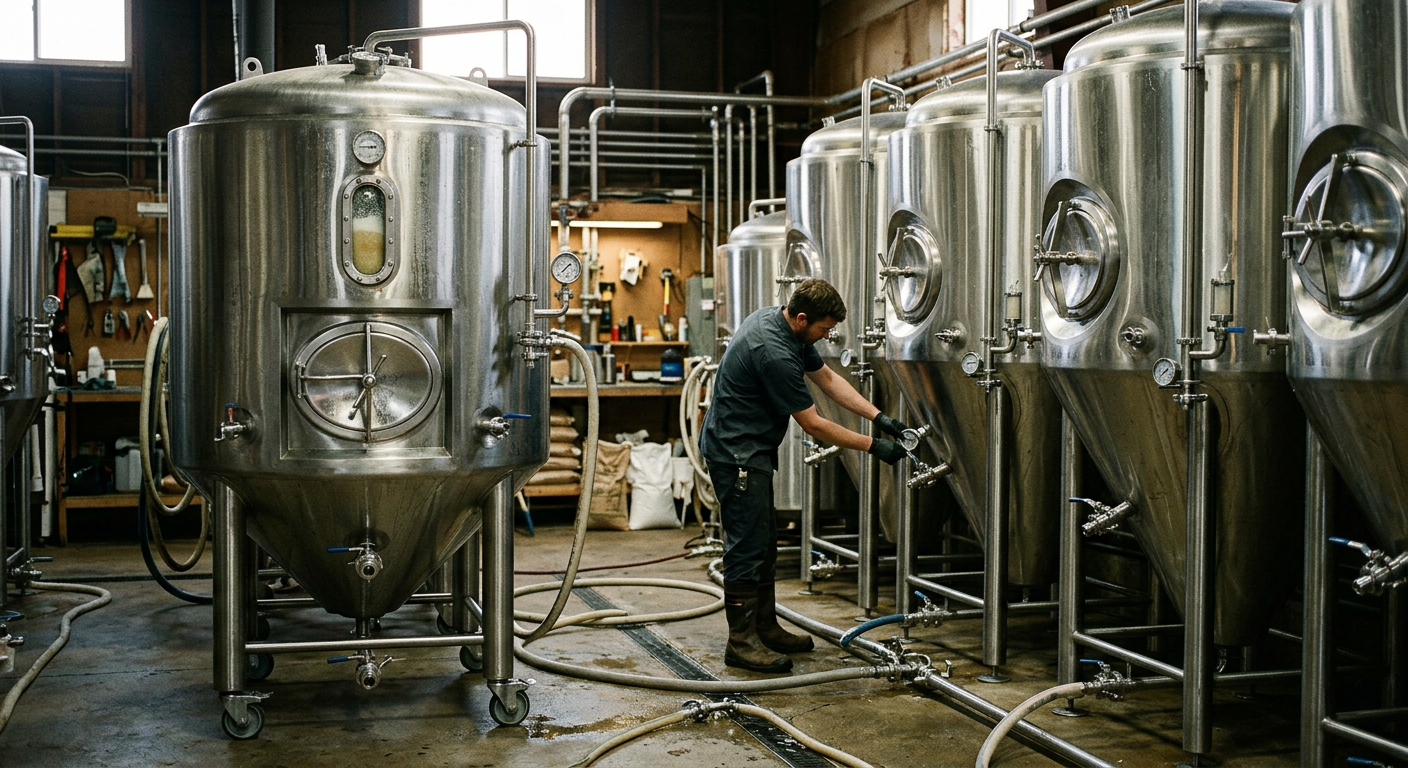
Clean-in-place, or CIP, is an automated or semi-automated method of cleaning the internal surfaces of process equipment without taking that equipment apart. In a typical U.S. food plant, a CIP skid circulates rinse water, detergent, and sanitizer through tanks, piping, pumps, heat exchangers, fillers, and related equipment at controlled flow, temperature, concentration, and time. The goal is repeatable sanitation with less labor, lower exposure to human error, and cleaner records for audits.
CIP is most effective when a process line is closed, product-contact surfaces are smooth and drainable, spray devices and return paths are engineered correctly, and the sanitation recipe is matched to the soil load. It is commonly used in dairy plants in Wisconsin, sauce facilities in Illinois, beverage co-packers in Texas, aseptic processors in California, and prepared-food operations across hubs such as Chicago, Atlanta, Dallas-Fort Worth, Fresno, and the Carolinas.
For many facilities, the strongest business case for CIP is not just sanitation. It is improved schedule reliability. A plant that can clean predictably can run more consistently, change products faster, and document compliance more easily.
| Plant Condition | Why CIP Fits | Expected Benefit |
|---|---|---|
| Frequent product changeovers | Automated recipes reduce reset time | Higher daily throughput |
| Closed piping and tanks | Internal circulation cleans without teardown | Lower labor exposure |
| Strict audit requirements | Cycle data can be recorded and reviewed | Better audit readiness |
| High sanitation risk products | Consistent chemical and thermal control | Improved food safety confidence |
| Multi-shift production | Repeatable cleaning reduces downtime variability | Improved schedule stability |
| Growing operations | Scalable skid and utility design supports expansion | Better long-term capital efficiency |
The table above shows why CIP is often selected for growth-oriented plants. The more complex the schedule, the more valuable repeatable cleaning becomes.
What Is Clean-in-Place (CIP) and How Does It Work?

CIP is a sanitary cleaning methodology in which fluids are circulated through process equipment to remove product residue, reduce microbial risk, and prepare the line for the next run. Instead of disassembling every valve body, pipeline, and tank connection, the plant uses a dedicated cleaning circuit that applies mechanical action, chemistry, temperature, and time in a controlled sequence.
The science behind CIP is often described by the four key cleaning variables: mechanical force, chemical action, temperature, and exposure time. If one variable is reduced, the others may need to increase. For example, a viscous dressing line may require stronger circulation velocity or a hotter caustic step than a light beverage blend line. Likewise, a dairy system with fats and proteins may need different chemistry than a sugar-based syrup system.
A standard CIP circuit usually includes supply tanks, a circulation pump, heat control, automated valves, instrumentation, return piping, and a control platform tied to PLC and HMI logic. During the cycle, the system may execute a pre-rinse, wash, intermediate rinse, acid step if required, final rinse, and sanitization. Conductivity, temperature, flow, and sometimes turbidity are measured to confirm the process is within validated limits.
In U.S. facilities, modern CIP systems are increasingly tied into plant-wide controls for recipe management, alarm history, and batch reporting. That matters especially in regulated environments where teams need traceability and proof that sanitation steps were executed correctly. A processor moving products through the Port of Los Angeles, the Port of Savannah, or cross-border distribution into Canada may also need standardized records across multiple sites and jurisdictions.
When a CIP system is engineered correctly, it does more than wash equipment. It becomes part of the plant’s production architecture.
Why design matters
Not every line is naturally CIP-able. Dead legs, poor slope, oversized valves, air pockets, rough welds, uncleanable pump selections, and incompatible elastomers can all undermine sanitation. That is why many processors work with firms that understand not only sanitation but full-system process integration. Integrated engineering and project delivery services are especially valuable when CIP must be aligned with utilities, controls, tank farms, fillers, heat exchangers, and expansion plans.
Comparing CIP, COP, and Manual Cleaning in Food Plants

Food manufacturers often use a mix of CIP, COP, and manual cleaning. The right choice depends on equipment geometry, soil type, risk category, labor availability, and required turnaround speed.
COP, or clean-out-of-place, requires components to be removed from the line and washed in dedicated tanks or parts washers. Manual cleaning uses operators with tools such as hoses, foamers, brushes, and hand-applied chemicals. Each method has a place. The issue is selecting the method that controls risk without overcomplicating the operation.
| Criteria | CIP | COP | Manual Cleaning |
|---|---|---|---|
| Disassembly required | Usually no | Yes | Sometimes |
| Best for | Closed systems, tanks, piping | Removable parts, small assemblies | Open equipment, exterior surfaces |
| Labor demand | Low to moderate | Moderate to high | High |
| Repeatability | High | Moderate | Variable |
| Data capture | Strong | Limited to procedural records | Limited unless digitally documented |
| Cycle speed | Fast once installed | Slower | Depends on crew and complexity |
| Capital cost | Higher upfront | Moderate | Lower upfront |
| Risk of operator variation | Low | Medium | High |
The comparison above makes one point clear: CIP is usually the best fit when consistency matters more than initial simplicity. COP remains essential for removable parts such as gaskets, fittings, and specialty components. Manual cleaning is still necessary for non-product-contact areas, equipment exteriors, and some open-process applications.
Plants in high-labor-cost markets like California and the Northeast often see especially strong CIP payback because automation offsets staffing pressure. In regions with older legacy facilities, such as parts of the Midwest, retrofit feasibility becomes the deciding factor. Not every plant needs a full central CIP room; some are better served by smaller skids dedicated to production cells.
Single-Pass, Multi-Line, and Recovery CIP System Types
CIP systems are not one-size-fits-all. The correct configuration depends on line count, product family, cleaning frequency, utility costs, sustainability goals, and the plant’s growth plan. In practice, U.S. manufacturers usually evaluate three broad approaches: single-circuit systems, multi-circuit systems, and recovery-based systems.
| System Type | Description | Best Fit | Main Advantage |
|---|---|---|---|
| Single-circuit CIP | One cleaning loop for one process path at a time | Smaller plants, pilot lines | Lower complexity |
| Multi-circuit CIP | One skid supports multiple lines or zones | Medium to large plants | Shared infrastructure |
| Recovery CIP | Reuses selected rinse or chemical streams | High-volume operations | Water and chemical savings |
| Centralized CIP | Dedicated CIP room serving broad plant network | Large campuses | Scalable control |
| Decentralized skid CIP | Localized skids near process areas | Retrofits, modular plants | Shorter piping runs |
| Mobile CIP | Portable unit moved between assets | Low-volume or flexible operations | Low initial investment |
Single-circuit CIP is common in smaller operations or targeted line expansions. It is easier to validate, simpler to maintain, and often a good entry point for processors moving away from labor-heavy manual cleaning.
Multi-circuit CIP is more appropriate for plants running multiple tanks, blending systems, HTST loops, filler paths, or sauce lines with overlapping production schedules. It takes stronger automation design and valve matrix planning, but it can support better asset utilization.
Recovery CIP is increasingly attractive as water, sewer, and energy costs rise. In markets such as California’s Central Valley, Arizona, and parts of Texas, utility constraints can materially affect project economics. Recovery designs can reduce waste loads, but they must be validated carefully to avoid cross-contamination and preserve cleaning effectiveness.
Buyers should also think beyond the skid. Tank sizing, heating source, return flow strategy, utility capacity, floor drainage, and control integration are just as important as the basic type selection.
Critical CIP Hardware: Spray Devices, Pumps, Valves, and Sensors
The performance of a CIP system depends on hardware selection as much as it depends on cycle logic. A strong sanitation recipe cannot overcome poor equipment choices. The most important elements include spray devices, supply and return pumps, hygienic valves, instrumentation, heat management, and the control layer.
| Component | Primary Function | What to Evaluate |
|---|---|---|
| Spray balls or rotary devices | Provide internal wetting and impact | Coverage, flow rate, tank geometry |
| Centrifugal pumps | Circulate rinse and wash solutions | Flow, head, NPSH, hygienic design |
| Automated valves | Route solutions through circuits | Seat design, leakage control, automation |
| Conductivity sensors | Track chemical concentration and interface points | Accuracy, response time, calibration |
| Temperature sensors | Verify wash temperature | Placement, response, integration |
| Flow meters | Confirm cleaning velocity | Range, sanitary design, repeatability |
| Heat exchangers or heaters | Raise and maintain cleaning temperature | Utility source, recovery potential |
| PLC/HMI controls | Automate recipes and data capture | Reporting, alarm logic, scalability |
Spray devices matter especially in tanks, vessels, and kettles. Static spray balls can work well where complete wetting is achievable, but rotary jet heads may be preferred where higher impact cleaning is needed. Pump sizing must ensure turbulent flow throughout the circuit, not just high pressure at the skid.
Valves are another frequent weak point. Poor seat leakage management or dead-leg-prone routing can compromise otherwise solid systems. Hygienic design standards, accessibility for inspection, and validation support are all critical. Sensors should not be treated as accessories; they are what convert CIP from a wash routine into a controlled sanitation process.
Technology capabilities to look for
Manufacturers planning capital projects often need more than a skid fabricator. They need expertise in process, controls, mechanical, electrical, plumbing, and utility integration. Firms such as Disruptive Process Solutions support food and beverage clients with cross-functional engineering, including PLC programming, automation, SCADA integration, and utility infrastructure needed to make sanitation systems perform in the real world. This broader technical scope matters when CIP must coordinate with boilers, chilled water, compressed air, batching systems, aseptic processes, or high-care environments.
CIP Cycle Stages: Pre-Rinse Through Sanitization
While cycle details vary by product and equipment, most CIP sequences follow a structured progression. The purpose of each step is different, and skipping or poorly tuning one step can reduce the effectiveness of all others.
| Step | Purpose | Typical Control Point |
|---|---|---|
| Product push or recovery | Remove saleable product before waste begins | Pigging, air blow, or timed displacement |
| Pre-rinse | Flush loose soils and reduce organic load | Flow, return clarity, temperature |
| Caustic wash | Break down fats, proteins, and residues | Concentration, temperature, circulation time |
| Intermediate rinse | Remove detergent carryover | Conductivity or rinse endpoint |
| Acid wash, if needed | Reduce mineral scale and inorganic films | Concentration and contact time |
| Final rinse | Clear residual chemicals | Conductivity, pH, water quality |
| Sanitization | Lower microbial risk before restart | Sanitizer concentration or thermal target |
| Drain and verification | Prepare line for production release | ATP, swab, visual, record review |
Product recovery is often overlooked, yet it can materially improve returns. In high-value lines such as dressings, dairy beverages, nutraceutical drinks, or flavor bases, product pushout can reduce waste before the wash even begins.
Pre-rinse removes the bulk load, making the chemical wash more effective. Caustic breaks down organic soils; acid may be required where mineral deposition is a recurring issue. Sanitization may be chemical or thermal depending on the validated standard. Final release should never rely on assumptions. It should be tied to measurable criteria and documented procedures.
For plants handling allergen changeovers, CIP timing and verification are especially important. The sanitation method must align with the facility’s preventive controls program and allergen management plan. That often means tighter endpoint validation and more disciplined swab review.
Manufacturing capabilities that affect performance
The quality of fabricated equipment has a direct impact on CIP results. Smooth internal finishes, sanitary welds, drainability, correct nozzle placement, and reliable tank geometry all matter. Processors evaluating custom skids or vessels should consider suppliers with hands-on manufacturing capabilities, including sanitary tank fabrication and custom process equipment. Custom process equipment for food and beverage plants can be especially useful when standard OEM offerings do not match line layout, throughput, or utility constraints.
Food Safety Compliance: FSMA, HACCP, and GMP Expectations
In the United States, CIP design and operation should support a plant’s broader food safety management system. CIP itself is not a regulation, but it is frequently part of how a facility meets sanitation, preventive control, and verification expectations under FSMA, HACCP, and GMP frameworks.
Under FSMA, plants must identify hazards and implement risk-based preventive controls. For many products, inadequate cleaning can create biological, chemical, or allergen hazards. A validated CIP program helps show that sanitation procedures are capable of controlling those risks. In HACCP environments, sanitation may support prerequisite programs or directly affect hazard control strategies, depending on the process. GMP requirements reinforce the need for cleanable equipment, hygienic operations, and documented procedures.
| Framework | CIP Relevance | Practical Requirement |
|---|---|---|
| FSMA Preventive Controls | Supports validated sanitation controls | Documented procedures and verification |
| HACCP | Backs prerequisite sanitation programs | Risk assessment and monitoring |
| Current GMPs | Requires cleanable equipment and proper maintenance | Sanitary design and employee practices |
| SQF | Emphasizes records, validation, and consistency | Trendable sanitation documentation |
| BRCGS | Supports site standards for hygienic operation | Controlled and verified cleaning methods |
| USDA environments | Demands robust sanitation discipline in protein operations | Routine verification and corrective action |
The value of CIP in audits is straightforward: it reduces variability and improves records. If conductivity, time, flow, and temperature are captured by the control system, QA and operations can review actual execution rather than relying only on handwritten checklists.
This becomes especially important in multi-site organizations or co-manufacturing networks. Standardized recipes help align plants in North Carolina, California, Texas, and the Midwest under a common sanitation logic. For enterprise clients, that consistency can simplify training, troubleshooting, and internal benchmarking.
Where CIP Delivers the Most Value: Dairy, Bakery, Sauce, RTE, and Processed Foods
CIP brings value across many sectors, but the business case and design priorities differ by industry.
Dairy: Dairy systems often involve proteins, fats, mineral films, and strict microbiological expectations. That makes CIP a natural fit for milk receiving, standardization, pasteurization loops, yogurt bases, cultured products, and dairy beverages. In regions such as Wisconsin, Idaho, and upstate New York, mature dairy operations often seek higher automation and water recovery.
Bakery: Not every bakery process is CIP-friendly, but fillings, liquid ingredients, syrups, chocolate handling, and batter preparation systems can benefit significantly. The key challenge is matching cleaning chemistry to sticky or viscous residues.
Sauces, marinades, and dressings: These lines often present high viscosity, oil phases, spices, particulates, and allergen concerns. CIP is valuable for changeover speed and allergen control, especially in co-packing operations serving multiple brands.
Ready-to-eat foods: RTE facilities need strong sanitation discipline because post-lethality contamination risks can have severe consequences. Closed-system mixing, transfer, thermal processing support, and filler sanitation all benefit from validated CIP routines.
Processed foods and ingredients: From soups to beverage bases to plant-protein slurries, any process involving closed transfer and repeated product families can often justify CIP when downtime costs are high enough.
| Industry | Primary Soil Challenge | CIP Priority Level |
|---|---|---|
| Dairy | Protein, fat, mineral scale | Very high |
| Beverage and RTD | Sugars, flavors, acid residues | High |
| Sauces and dressings | Oils, starches, particulates, allergens | Very high |
| Bakery liquid systems | Sugars, fats, sticky residues | Moderate to high |
| RTE foods | Mixed soils and contamination sensitivity | High |
| Protein and prepared foods | Fats, proteins, seasoning residues | High |
The chart above reflects the relative strength of CIP demand by segment. Demand is strongest where closed processing, high sanitation sensitivity, and frequent product changeovers overlap.
Benefits: Labor Savings, Repeatability, and Better Audit Readiness
The most visible benefit of CIP is reduced manual labor. But in well-run plants, the larger payoff often comes from consistency. A validated recipe that runs the same way every time reduces dependence on tribal knowledge and lowers the chance that a rushed crew will under-clean or over-clean a line.
Labor savings can be meaningful in labor-constrained markets, but so can utility optimization. Modern systems can reduce water usage through recovery logic, shorten changeovers through better endpoint detection, and lower chemical loss with conductivity-guided transitions. These gains add up across hundreds of annual cycles.
Audit readiness is another major benefit. Food safety and quality teams need records. CIP systems that capture cycle completion, alarm conditions, temperatures, concentrations, and operator interventions provide more defensible sanitation documentation than paper-only systems.
Buying advice for U.S. processors
When evaluating a CIP project, focus on total installed value rather than skid price alone. Ask whether the proposed design fits your current and future throughput. Review utility loads, control integration, line routing, sanitation validation, and operator usability. Clarify whether the provider can support engineering, installation, commissioning, and startup, not just fabrication.
This is where service capability matters. Companies with a full project model can manage the work from concept to production release, coordinating local trades, controls, utility tie-ins, startup, and schedule risk. Project case examples in food and beverage facilities are useful for understanding whether a partner has delivered under real plant conditions, especially where uptime and profitability matter.
Case-style examples
A Midwest sauce facility may justify CIP based on allergen changeover speed and reduced sanitation labor. A Texas beverage co-packer may prioritize centralized utility integration and production scalability. A California dairy processor may focus on water recovery and wastewater load reduction. An RTE plant near Atlanta may put the greatest value on validation, traceability, and consistent execution across shifts. The right system is the one that reflects the operating model, not just a generic specification sheet.
Local supplier and integration perspective
U.S. buyers often compare local stainless fabricators, OEM skids, and full-service integration firms. Local fabrication can be attractive for freight and access, particularly near manufacturing corridors such as Chicago, Charlotte, Raleigh-Durham, Los Angeles, and Houston. However, the best outcome usually comes from suppliers who can connect fabrication quality to process engineering, controls, and field execution. That is especially true when retrofitting active plants where tie-in windows are short and downtime is expensive.
Disruptive Process Solutions serves food and beverage manufacturers across all 50 states and Canada, with a practical focus on profitable capital execution. For CIP projects, that means aligning sanitary design, utility planning, custom equipment, controls, and installation into one accountable delivery model rather than treating the skid as a standalone purchase. This approach is particularly valuable for multi-discipline projects involving tanks, process piping, automation, and startup support.
2026 and beyond: technology, policy, and sustainability trends
Looking ahead to 2026, three trends are shaping CIP decisions in the United States. First is smarter automation: better analytics, recipe optimization, remote diagnostics, and stronger integration with MES and SCADA platforms. Second is policy and compliance pressure: sanitation documentation, allergen control, and environmental reporting are becoming more structured across enterprise operations. Third is sustainability: water reuse, chemical optimization, and energy recovery are gaining priority as utilities and wastewater costs rise.
Plants planning major expansions today should consider whether their CIP platform can support future digital reporting, additional circuits, and more aggressive sustainability targets. The cheapest system today may become the most expensive to operate or retrofit in two years.
FAQ
What equipment can be cleaned with CIP?
CIP is commonly used on tanks, pipelines, heat exchangers, fillers, blenders, HTST systems, dosing systems, and some vessels with internal spray coverage. It works best on closed, hygienically designed equipment.
Is CIP better than manual cleaning?
For closed systems that run repeatedly and require consistent sanitation, yes. Manual cleaning still has an important role for exteriors, open equipment, and specialty tasks, but it is harder to standardize and document.
How long does a CIP cycle take?
Cycle time depends on product, soil load, equipment size, and validation requirements. Some light-duty systems may clean in under an hour, while more demanding allergen or dairy applications can take significantly longer.
Does every food plant need an acid step?
No. Acid is often used where mineral scale or inorganic deposits are a problem, such as in dairy or hard-water environments. The need should be determined by soil type, water chemistry, and validation results.
Can a CIP system reduce water use?
Yes. Recovery designs, conductivity-based switching, better endpoint control, and optimized recipes can materially reduce water and chemical consumption, especially in high-cycle plants.
What is the difference between single-use and recovery CIP?
Single-use systems discharge more of the cleaning media after each cycle. Recovery systems reclaim selected rinse or chemical streams for reuse where validated and appropriate. Recovery offers savings but requires stronger controls.
How important is automation?
Very important if the goal is repeatability, traceability, and lower operator dependency. Automation enables consistent flow, temperature, timing, and documentation, all of which support food safety and throughput.
What should a U.S. buyer ask before purchasing?
Ask about validation support, utility requirements, future expansion, sanitary design details, control architecture, spare parts strategy, field installation scope, startup assistance, and record-keeping capabilities.
Can CIP be retrofitted into an older plant?
Often yes, but success depends on line geometry, drainability, valve arrangement, floor space, and utility capacity. Older facilities may need piping changes, control upgrades, or localized skids instead of a central system.
Who is a strong fit for a full-scope CIP project partner?
Manufacturers that want engineering, custom equipment, installation, controls integration, and accountable project management under one delivery structure are generally the best fit. This is particularly helpful for growing food and beverage operations managing complex timelines or multi-line expansions.
For U.S. food and beverage manufacturers, clean-in-place is no longer just a sanitation option. It is a strategic tool for safe growth, labor efficiency, and operational discipline. The right system should be designed around product realities, utility constraints, compliance needs, and future production goals. When those factors are aligned, CIP becomes a measurable driver of plant performance.
[/trp_language]
Complete Company Portfolio
About the Author: Disruptive Process Solutions (DPS)
The DPS team combines process engineering expertise with real-world food and beverage manufacturing experience. Our content focuses on process optimization, production efficiency, facility improvements, and practical solutions that help manufacturers operate more effectively in a rapidly evolving industry.
Share