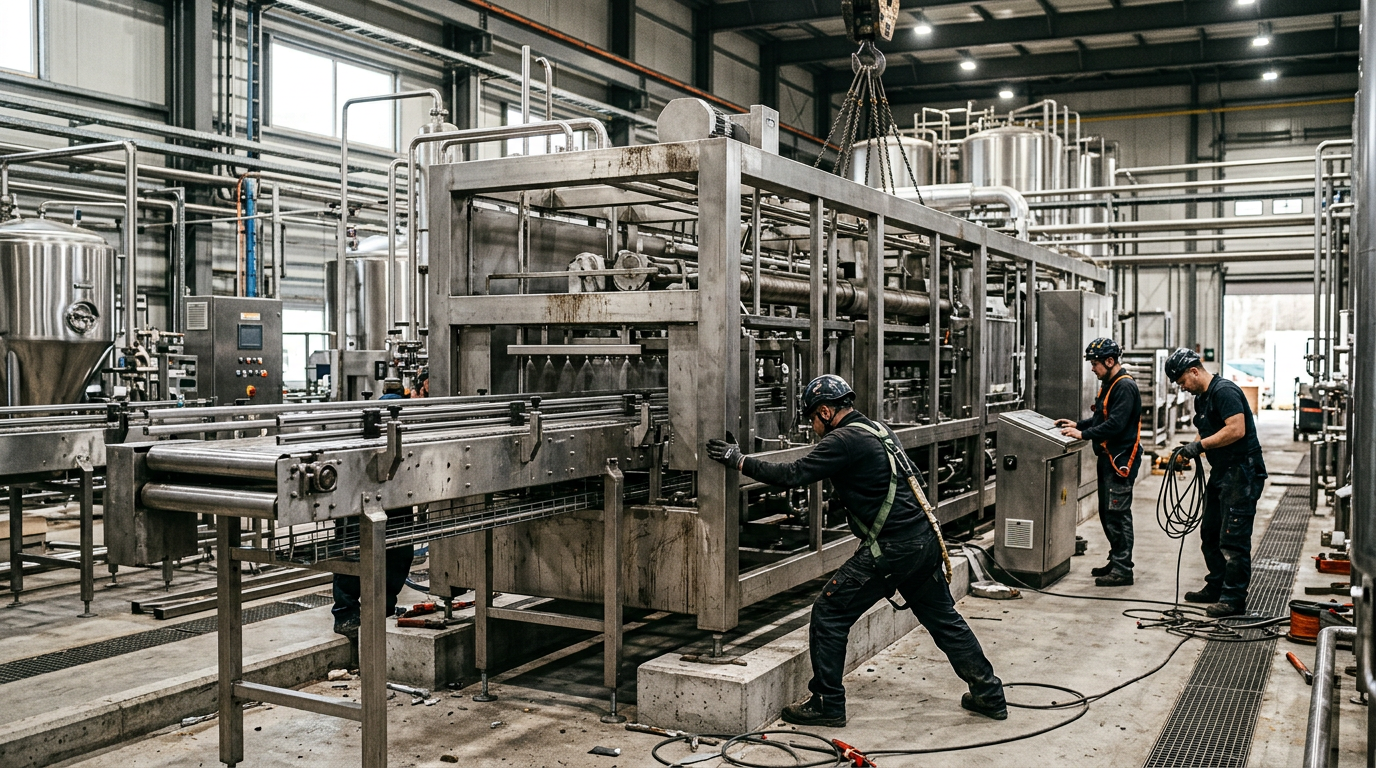
Cream Processing Equipment
[trp_language language=”en_US”]
Cream Processing Equipment for U.S. Dairy Manufacturers
Cream processing equipment includes the integrated systems used to separate cream from milk, standardize fat, pasteurize or sterilize the product, control texture and stability, produce whipped and cultured cream, manufacture butter, and clean the line hygienically. In the United States, the right cream processing line is usually defined by product mix, throughput, fat accuracy, shelf-life goals, food safety compliance, labor availability, and utility efficiency. For processors in major dairy regions such as Wisconsin, California, Idaho, Texas, and New York, equipment selection must also account for local milk supply, interstate distribution, and retailer requirements.
For most plants, the optimal approach is not buying a single machine in isolation. It is designing a complete process that links separation, balance tanks, standardization controls, heat treatment, homogenization where needed, fermentation, filling interface, and clean-in-place capability. That system view matters especially for co-packers and multi-SKU processors supplying foodservice, private label, and retail channels across hubs like Chicago, Los Angeles, Dallas-Fort Worth, Atlanta, and the Port of New York and New Jersey.
Companies seeking a practical project partner often look for a team that can combine engineering, equipment supply, installation, utilities, controls, and commissioning under one model. Disruptive Process Solutions operates in that role across North America, helping food and beverage manufacturers align capital spending with throughput, margin, and long-term plant performance.
Quick Answer

If you are evaluating cream processing equipment in the United States, focus first on six decisions: raw milk intake volume, target cream fat range, required shelf life, product portfolio, level of automation, and cleanability. A small cultured cream processor may need a separator, batch tanks, pasteurization, inoculation, fermentation hold, and packaging interface. A large-scale processor supplying whipping cream and butter may need high-capacity centrifugal separation, inline fat control, HTST or UHT treatment, aging tanks, churns, butter workers, and fully automated CIP skids.
Buyers should compare equipment by more than nameplate capacity. Important performance measures include fat recovery, solids losses to skim, separator discharge frequency, thermal efficiency, pressure drop, overrun consistency, microbial lethality, recipe repeatability, CIP validation, automation depth, and serviceability. In U.S. operations where downtime can delay truckloads bound for distribution centers in Phoenix, Memphis, or Newark, maintainability and parts access are often as important as throughput.
The strongest projects usually begin with process mapping, utility review, product quality targets, and expansion planning. A processor that wants to serve retail in the Southeast today but expand into foodservice and export tomorrow needs more than a machine list; it needs a scalable line architecture. That is why many manufacturers start with process engineering and project planning services before finalizing equipment purchases.
| Product | Typical Fat Range | Core Equipment | Heat Treatment | Key Control Point | Main Market |
|---|---|---|---|---|---|
| Table cream | 18% to 30% | Separator, standardization skid, pasteurizer | HTST | Fat accuracy | Retail and foodservice |
| Whipping cream | 30% to 40% | Separator, standardizer, pasteurizer, aging tanks | HTST or UHT | Overrun and stability | Bakery, dessert, retail |
| Half-and-half style cream blends | 10% to 18% | Blending, standardization, pasteurization | HTST or ESL | Homogeneity | Retail and coffee service |
| Sour cream | 14% to 20% | Pasteurizer, homogenizer, ferment tanks | HTST | Culture activity | Retail and prepared foods |
| Crème fraîche | 30% to 45% | Pasteurizer, fermentation tanks | HTST | Flavor and viscosity | Premium culinary channels |
| Butter cream feedstock | 35% to 42% | High-capacity separator, churn feed tanks | Pasteurized or ripened | Fat recovery | Butter plants |
The table above shows why equipment decisions should be product-driven. The more diverse the product mix, the more important automation, recipe management, and quick changeover design become.
Cream Separation Technology: Centrifugal Separators and Clarifiers

Cream separation is the foundation of most dairy cream lines. Modern centrifugal separators use high rotational speed to separate lighter fat globules from the heavier skim phase. In U.S. plants receiving milk from tanker routes spread across rural areas, separator performance must remain stable despite seasonal variation in raw milk composition, somatic cell levels, and temperature changes at intake.
There are two related machines commonly discussed together: separators and clarifiers. A separator splits milk into cream and skim. A clarifier removes suspended impurities and sediment. Some lines combine these functions depending on plant layout and raw milk quality. For high-volume operations in California’s Central Valley or Wisconsin dairy corridors, the choice between standalone and integrated configurations depends on throughput, maintenance strategy, and upstream raw milk handling.
Key separator selection criteria include bowl design, self-cleaning capability, automation level, feed temperature range, solids discharge frequency, fat loss to skim, and sanitary design. A processor making premium butter will usually place extra emphasis on maximizing fat recovery. A fluid cream processor shipping to supermarket chains may prioritize stable outlet fat content and seamless integration with inline analyzers.
| Factor | Why It Matters | Typical U.S. Concern | Operational Impact | High Priority For | Buying Note |
|---|---|---|---|---|---|
| Feed capacity | Determines line throughput | Peak seasonal milk intake | Prevents bottlenecks | Large plants | Size for future expansion |
| Fat loss to skim | Affects yield and profit | Butter and cream margins | Improves recovery | Butter operations | Track with startup trials |
| Self-cleaning discharge | Reduces manual intervention | Labor shortages | Longer run time | Automated plants | Confirm cycle reliability |
| Automation interface | Supports controls and data | SCADA integration | Better traceability | Multi-SKU plants | Review PLC compatibility |
| Sanitary design | Supports CIP and food safety | FDA and customer audits | Lower contamination risk | All processors | Inspect gasket and dead-leg design |
| Service access | Limits downtime | Remote plant locations | Faster maintenance | All processors | Check U.S. parts support |
The practical lesson is that separation equipment should be selected as part of the whole line. Feed balance, deaeration, heat conditioning, piping layout, and downstream controls all affect separator performance.
On the technology side, advanced integrators increasingly connect separators to plantwide PLC and SCADA platforms for alarm management, trend reporting, and recipe logic. This is one of the areas where DPS brings value through its controls and process engineering capabilities, especially for projects that require a coordinated approach across process, utilities, and automation rather than a standalone machine purchase.
The market growth trend above reflects steady investment in dairy automation, value-added cream products, and replacement of aging assets in legacy plants across the United States.
Cream Standardization: Fat Content Control and Inline Measurement

After separation, cream must be standardized to the target fat percentage. This is one of the most economically important steps in the line because small deviations can affect regulatory labeling, yield, functionality, and customer acceptance. Over-standardizing wastes valuable butterfat. Under-standardizing can trigger specification failures and customer complaints.
Modern standardization systems combine controlled blending with inline measurement. Instruments may monitor density, mass flow, and compositional variables in real time, while automated valves adjust the cream-to-skim ratio. In U.S. retail channels, where exact labeling is critical and large customers often impose narrow tolerances, inline fat control can quickly justify its cost.
Processors supplying multiple SKUs such as 18%, 36%, and cultured bases often benefit from recipe-driven changeovers. For co-packers near logistics centers like Chicago, Kansas City, or Inland Empire warehouses in Southern California, fast, repeatable standardization reduces rework and helps maintain on-time shipments.
| Method | Control Style | Accuracy | Labor Need | Best Use | Main Limitation |
|---|---|---|---|---|---|
| Manual batch adjustment | Operator sampling | Moderate | High | Small plants | Slower correction |
| Timed blend control | Preset valve timing | Moderate | Medium | Simple product ranges | Sensitive to feed variation |
| Mass flow ratio control | Automated flow balancing | High | Low | Continuous lines | Needs calibration discipline |
| Inline composition analyzer | Real-time feedback | Very high | Low | Premium and multi-SKU lines | Higher capex |
| Laboratory release verification | Offline confirmation | Very high | Medium | QA validation | Not instant control |
| Hybrid inline plus lab system | Closed-loop and QA check | Best overall | Medium | Most modern U.S. plants | Requires integrated data management |
The table shows why hybrid systems are increasingly preferred. Inline analyzers control the process, while lab methods verify compliance and support audits. This arrangement fits well with customer documentation expectations from national retailers and foodservice buyers.
Technological capability matters here because instrumentation is only as good as the integration around it. DPS supports food and beverage plants with process, mechanical, electrical, and controls engineering, including PLC programming and SCADA implementation. In cream standardization, that means the equipment can be connected into a broader production logic structure with trending, alarms, recipe management, and utility coordination rather than functioning as an isolated skid.
Cream Pasteurization and UHT Processing Systems
Heat treatment determines shelf life, safety margin, flavor development, and downstream functionality. Most fresh cream products in the U.S. use HTST pasteurization, while longer-life products may use ESL or UHT processing. The right choice depends on target distribution radius, cold-chain confidence, packaging format, and whether the product is intended for whipping, culturing, or butter manufacture.
HTST systems are common for refrigerated cream distributed regionally. UHT systems are more common when processors want extended shelf life or ambient distribution, although formulation, packaging, and end-use requirements must be considered together. In high-value freight lanes from the Midwest to the coasts, UHT can reduce spoilage risk and expand market reach. However, the thermal profile must be matched carefully to flavor and texture expectations.
For cream, thermal design also interacts with viscosity and fat destabilization risk. Efficient regeneration, accurate holding time, and hygienic valve arrangements are essential. In some products, homogenization may be applied before or after heat treatment depending on the target structure.
| System Type | Typical Shelf-Life Goal | Capital Cost | Energy Efficiency | Best Product Fit | Important Design Issue |
|---|---|---|---|---|---|
| Batch pasteurization | Short refrigerated | Lower | Lower | Small specialty runs | Longer cycle time |
| HTST plate system | Standard refrigerated | Moderate | High | Fluid cream products | Fouling management |
| HTST tubular system | Standard refrigerated | Moderate to high | High | Higher viscosity cream | Pressure drop design |
| ESL system | Extended refrigerated | High | Moderate | Premium regional brands | Aseptic interface discipline |
| UHT indirect | Long shelf life | High | Moderate | Shelf-stable cream formats | Flavor impact control |
| UHT direct | Long shelf life | High | Moderate | Sensitive formulations | Steam quality and flash cooling |
This comparison matters because processors often default to familiar heat treatment rather than the best commercial fit. A plant serving grocery chains across the Eastern Seaboard may prefer HTST. A processor serving broader ambient channels may justify UHT. The right answer depends on logistics, packaging, and price point, not just the process technology itself.
DPS also supports projects that extend beyond the cream line itself, including utility systems such as boilers, chilled water, glycol, compressed air, water treatment, and custom CIP skids. That broader manufacturing capability is important because pasteurization performance depends heavily on stable utilities and well-integrated plant infrastructure. More details on available systems can be found through its process equipment offerings.
Whipping Cream Production: Overrun Control and Stability Enhancement
Whipping cream is one of the most demanding cream products because it must perform in the hands of the end user, not just test well in the plant. Overrun, foam strength, mouthfeel, hold time, and syneresis resistance all affect customer satisfaction. Product sold into bakery and dessert channels in cities such as Las Vegas, Orlando, and Nashville often faces heavy handling, variable storage conditions, and pressure for long decorated-display performance.
Whipping performance depends on fat level, heat treatment, aging conditions, fat crystal structure, protein balance, stabilizer system if used, and processing shear history. Equipment normally includes precise standardization, controlled pasteurization, cooling, aging tanks, and gentle transfer systems. Inline instrumentation and recipe management help maintain repeatable functionality from batch to batch.
Overrun control is especially important for manufacturers supplying aerosol, foodservice, or industrial whipping applications. Too little air incorporation can reduce consumer appeal and margin. Too much or unstable incorporation can damage texture and collapse performance. Processors should test products under realistic downstream conditions, including transit, refrigerated storage, and final use.
The bar chart highlights how strong demand remains in bakery, dessert, and butter-adjacent applications, which is shaping investment priorities across the U.S. dairy processing sector.
From a buying perspective, manufacturers should ask suppliers to demonstrate whipping consistency over time, not just immediately after production. Request data on overrun variance, foam collapse, temperature sensitivity, and CIP impact on product-contact surfaces.
Sour Cream and Creme Fraiche: Culture Addition and Fermentation
Cultured cream products require a different process philosophy than straight fluid cream. Instead of focusing only on separation and heat treatment, the processor must control inoculation, fermentation temperature, residence time, cooling curve, and post-culture handling. Sour cream and crème fraîche each depend on a well-managed microbiological process to develop acidity, texture, and flavor.
In U.S. production, cultured cream systems are commonly designed around pasteurization, homogenization where needed, culture dosing, fermentation tanks, cooling, and packaging integration. The exact sequence varies with formulation and desired viscosity. High-shear treatment may improve consistency for some products, but excessive shear after fermentation can damage body and appearance.
Culture addition equipment must provide accurate dosing and protect culture viability. Fermentation vessels should support temperature control, sanitary mixing if required, and easy cleaning. A processor supplying premium culinary channels in New York, San Francisco, or Seattle may place extra emphasis on flavor development and traditional texture, while a large retail supplier may focus more on consistency and throughput.
For these lines, hygienic design is non-negotiable because post-pasteurization contamination can ruin both product quality and shelf life. Plants also benefit from quality systems that combine in-process pH tracking, viscosity checks, and microbiological verification.
| Control Point | Target Purpose | Equipment Involved | Common Risk | Operational Response | Business Impact |
|---|---|---|---|---|---|
| Pasteurization | Reduce microbial load | HTST system | Underprocessing | Validate time and temperature | Shelf-life protection |
| Culture dosing | Repeatable fermentation | Dosing skid | Inaccurate addition | Meter and calibrate | Flavor consistency |
| Fermentation temperature | Control acid development | Jacketed tank | Temperature drift | Automated loop control | Texture control |
| Hold time | Reach target pH | Fermentation vessel | Under or over-acidification | Timed release criteria | Reduced rework |
| Cooling curve | Stop fermentation safely | Plate or tank cooling | Late cooling | Rapid transition procedure | Stable shelf life |
| Post-fermentation handling | Preserve body | Pumps and fillers | Shear damage | Gentle transfer design | Consumer acceptance |
This kind of process detail is where a design-build-manage approach is valuable. The best projects do not stop at selecting tanks; they align fermentation flow, controls, operator procedures, QA checkpoints, and utility loads so the line performs in actual production, not just on a P&ID.
Butter Manufacturing: Churning, Washing, and Working Equipment
Butter manufacturing starts with cream but becomes a different mechanical process once fat inversion is induced. Key equipment may include cream storage and aging tanks, churns or continuous butter makers, buttermilk separation systems, washing stages, butter silos, workers, and packaging feed systems. Product goals can range from salted retail butter to cultured butter, bulk butter for food manufacturing, or specialty formats for chefs and bakeries.
For U.S. plants, butter equipment selection is shaped by scale and market channel. Large commodity production emphasizes capacity, yield, and labor efficiency. Premium butter brands may prioritize texture, moisture distribution, flavor retention, and flexible packaging handoff. Plants serving ingredient markets in the Midwest may run continuously, while specialty producers near urban demand centers may need shorter, more flexible campaigns.
Churning converts cream into butter granules and buttermilk. Washing can improve purity and flavor profile. Working develops texture and moisture distribution. Each stage affects finished quality. Poor control can result in free moisture, inconsistent salt distribution, or texture defects that show up later in cold storage or baking applications.
Manufacturing capability matters here because butter lines often require custom integration across tanks, sanitary piping, utilities, and packaging interfaces. DPS designs and supplies process equipment including tanks and CIP systems, while also integrating complete processing systems and utility infrastructure. That is particularly useful for processors expanding capacity without wanting multiple contractors managing process, mechanical, controls, and installation separately.
The area chart suggests a strong trend toward automation, especially in lines where labor constraints, quality consistency, and traceability are driving capital upgrades through 2026 and beyond.
CIP Systems and Hygienic Design for Cream Processing Lines
Cream is highly sensitive to fouling, microbial risk, and fat residue buildup. That makes CIP design central to performance, not just sanitation. A poorly designed CIP system can increase water and chemical use, extend downtime, leave residues in dead legs, and undermine product quality across the whole line.
Effective cream processing CIP typically includes dedicated circuits for separators, pasteurizers, balance tanks, fermentation systems, butter equipment where applicable, and filler interfaces. Key variables are flow velocity, temperature, detergent concentration, cleaning sequence, rinse verification, and recovery strategy. U.S. plants facing wastewater cost pressure in states such as California and regions with stricter discharge limits increasingly prioritize water reuse and optimized chemical consumption.
Hygienic design principles include smooth product-contact surfaces, proper drainability, minimized dead legs, sanitary valves, validated spray coverage, and access for inspection where needed. Cream lines should also be designed for operational reality. If a plant will switch between sweet cream, cultured cream, and butter feedstock, the cleaning philosophy must match those transitions.
This is also an area where service capability matters. DPS works as an engineering and project execution partner across design, installation, integration, capital planning, owner’s representation, and project management. For cream plants, that means CIP is considered alongside production scheduling, utilities, floor layout, commissioning, and audit readiness rather than treated as an afterthought.
| Design Element | Purpose | Common Failure Mode | Recommended Practice | Benefit | Priority Level |
|---|---|---|---|---|---|
| Dedicated CIP circuits | Targeted cleaning | Cross-contamination risk | Segment by process area | Better validation | High |
| Drainable piping | Remove residues | Standing product | Correct slope and routing | Reduced micro risk | High |
| Spray device coverage | Clean tanks fully | Shadow zones | Verify by riboflavin or equivalent testing | More reliable sanitation | High |
| Automated chemical dosing | Repeatable cleaning chemistry | Concentration drift | Use conductivity-based control | Lower chemical waste | Medium |
| Return conductivity monitoring | Confirm phase change | Incomplete rinse | Trend and alarm deviations | Faster, safer cycles | Medium |
| Sanitary valve matrix | Safe route management | Mix-up events | Interlocked valve logic | Operational protection | High |
The checklist illustrates why cleaning system design belongs in the early project scope. It affects uptime, sustainability, operator workload, and audit performance.
Quality Control: Viscosity, Fat Globule Size, and Microbiological Testing
Quality control in cream processing is not limited to end-product release. The best-performing plants combine inline monitoring with laboratory verification and trend analysis. Three core categories deserve continuous attention: viscosity, fat globule size or structure, and microbiological status.
Viscosity is critical in cultured cream, premium cream blends, and some whipping applications. It influences mouthfeel, pumpability, filling performance, and consumer perception. Measurements should be tied to product temperature and method consistency. Fat globule size matters because it influences stability, texture, and whipping behavior. Microbiological testing protects shelf life, confirms sanitation performance, and supports customer and regulatory compliance.
U.S. processors selling into retailer programs often need robust documentation packages, environmental monitoring, and trendable QA records. Plants near major distribution zones like Columbus, Jacksonville, and Denver particularly benefit from rapid-release strategies supported by strong in-process controls, because shipping windows are tight and cold-chain costs are meaningful.
| Test | What It Measures | Typical Frequency | Process Stage | Main Reason | Action if Out of Spec |
|---|---|---|---|---|---|
| Fat content | Standardization accuracy | Each lot or continuous check | Post-separation and final product | Label and yield control | Adjust blend ratio, hold product |
| Viscosity | Texture and flow behavior | Batch or shift-based | Finished product | Consumer performance | Review process temperature and formulation |
| pH and acidity | Fermentation progress | In-process | Cultured cream | Flavor and shelf life | Modify hold time or cooling |
| Microbial counts | Sanitation and safety indicators | Routine program | Finished product and environment | Risk control | Investigate CIP and hygienic practices |
| Fat globule size analysis | Structural consistency | Periodic or development stage | Post-homogenization or final | Stability and whipping behavior | Check homogenization settings |
| Sensory evaluation | Flavor, aroma, appearance | Each release lot | Final product | Market acceptance | Hold, investigate raw material or thermal profile |
Quality systems should also include data review loops. When viscosity drift, fat loss, or microbial exceptions repeat, the answer is rarely “test more.” Usually the underlying issue is process control, cleaning design, or operator workflow. A good engineering partner can connect QA findings back to equipment and automation improvements.
The comparison chart shows how buyers in the United States increasingly evaluate suppliers and integrators on system-level capability, not just on a single equipment quote.
That trend is particularly relevant for companies planning phased expansions. Reviewing real project examples can help clarify how integration partners solve bottlenecks, relocate assets, or scale utilities. Processors can explore selected project case studies to see how system-level thinking translates into measurable operational gains.
FAQ
What is the most important machine in a cream processing line?
There is no single answer. For many plants, the separator is the technical starting point, but overall profitability often depends just as much on standardization control, pasteurization design, and CIP effectiveness.
How do I choose between HTST and UHT for cream?
Choose based on target shelf life, distribution geography, packaging, flavor expectations, and customer channel. HTST is common for refrigerated regional distribution. UHT is more suitable when extended shelf life and broader shipping reach are priorities.
Do all cream products require homogenization?
No. Some do, especially when texture stability is needed. Others, such as certain whipping or butter-oriented products, may use different process strategies to preserve desired functionality.
What fat accuracy should a standardization system achieve?
The acceptable range depends on product and customer specification, but U.S. processors generally benefit from tight control because even small errors in butterfat content affect labeling, yield, and margin.
How important is inline measurement?
Very important for multi-SKU or high-volume plants. Inline measurement improves consistency, reduces giveaway, speeds changeovers, and supports better production records.
What are the biggest sanitation risks in cream processing?
Common risks include post-pasteurization contamination, poorly drained piping, incomplete separator cleaning, dead legs, inconsistent chemical concentration, and difficult-to-clean transfer points.
Can one line make whipping cream, sour cream, and butter feed cream?
Yes, but only if the plant is designed around campaign planning, hygienic segregation, recipe controls, and validated CIP strategies. The commercial and cleaning implications must be considered early.
What should U.S. buyers ask an equipment supplier before purchase?
Ask for product-specific performance data, utility requirements, FAT and SAT plans, spare parts strategy, U.S. service coverage, controls integration details, CIP validation approach, and references from similar applications.
How should processors think about 2026 trends?
By 2026, cream processing investments in the United States are likely to focus even more on labor-saving automation, predictive maintenance, water and chemical reduction in CIP, energy recovery, digital traceability, and flexible systems that can switch between retail and foodservice SKUs. Policy and customer pressure around sustainability will also push plants to document energy intensity, wastewater reduction, and hygienic design performance more clearly.
Who is a good fit for a design-build-manage partner?
Mid-sized and enterprise processors planning expansion, relocation, modernization, or multi-discipline upgrades are often the best fit. That includes manufacturers that need engineering, custom equipment, utility integration, installation management, and commissioning under one accountable team.
In summary, cream processing equipment should be evaluated as a complete production ecosystem. Separation, standardization, heat treatment, whipping functionality, culturing, butter manufacture, CIP, and QA all interact. For U.S. processors competing in demanding retail and foodservice markets, the winning investments are the ones that combine product quality, food safety, uptime, utility efficiency, and future scalability. A partner with strong technological, manufacturing, and service capabilities can help turn those requirements into a line that performs reliably from startup through long-term expansion.
[/trp_language]
Complete Company Portfolio

About the Author: Disruptive Process Solutions (DPS)
The DPS team combines process engineering expertise with real-world food and beverage manufacturing experience. Our content focuses on process optimization, production efficiency, facility improvements, and practical solutions that help manufacturers operate more effectively in a rapidly evolving industry.
Share